Cotton Stalk Baling | Pulp and Cardboard Industry
Cotton stalks are one of the most underutilised fibrous crop residues in global agriculture. For the cardboard and pulp manufacturing sector, they represent an alternative cellulosic feedstock that reduces dependence on wood fibre. Turning field-level cotton stalks into mill-ready bales requires the right round baler specification, the right bale density, and an understanding of how the material’s physical properties interact with pulp processing requirements.
The global paper and board industry consumes roughly 400 million tonnes of virgin and recycled fibre per year. In regions where forest resources are constrained — Central Asia, South Asia, the Middle East, East Africa, and parts of East Asia including Korea — non-wood agricultural fibre increasingly fills the gap. Cotton stalk is among the most promising of these alternatives: it contains approximately 40–45% cellulose by dry weight, a lignin content of 20–25%, and a hemicellulose fraction of 18–22%. These values place it in a comparable class to wheat straw and sugarcane bagasse as a pulping feedstock, with the additional advantage that cotton stalk fibre tends to be slightly longer than cereal straw fibre — a property that translates into stronger inter-fibre bonding and higher burst strength in finished board products.
The challenge has always been logistics. Cotton stalks, after harvest, are distributed across wide paddy and dryland fields in a low-density windrow or standing residue pattern. Transporting loose stalks to a pulp mill is economically inviable beyond very short distances. Compressing those stalks into high-density round bales using a गोल बेलर transforms the economics of the supply chain: a well-specified bale at 150–200 kg/m³ density carries five to eight times the dry matter per truck load compared with loose-tipped material, making long-haul supply chains to pulp mills commercially viable. This density target — and how to achieve it consistently across a cotton stalk harvest campaign — is the central engineering question this article addresses.
The round baler machine is not automatically suited to pulp-grade cotton stalk collection without attention to its pickup system, compression chamber design, bale density control capability, and the chain drive specification that sustains compression performance across an abrasive cotton stalk season. Each of these variables influences the delivered bale quality and, through it, the economics of the entire farm-to-mill supply chain for the cardboard and pulp industry.
1. Cotton Stalk Fibre Properties Relevant to Cardboard and Pulp Manufacturing
Before evaluating baling equipment, it is worth understanding what makes cotton stalk fibre valuable to pulp and board manufacturers — and what limitations they must work around. The central attraction is fibre length. Cotton stalk wood fibre, particularly from the secondary xylem of the main stem, produces kraft-pulped fibres in the 0.6–1.2 mm range. This is shorter than softwood kraft pulp (2.5–4.5 mm) but comparable to hardwood eucalyptus pulp (0.7–1.0 mm), and it is meaningfully longer than rice or wheat straw fibre (0.3–0.8 mm). For corrugating medium and test liner applications in the cardboard sector, this fibre length is sufficient to achieve the required tensile index and tear resistance without blending with imported softwood pulp — a significant cost advantage for Korean and Asian board mills seeking to reduce their exposure to fluctuating global pulp markets.
The cellulose content of cotton stalk — approximately 40–45% on a dry basis — is lower than that of wood (45–50%) but higher than rice straw (28–38%). The lignin fraction at 20–25% is higher than rice straw (9–14%) and requires more aggressive chemical pulping conditions, typically a higher active alkali charge and extended cooking time in the kraft process. Mill engineers sourcing cotton stalk bales need to account for this in chemical dosing, which affects the mill’s chemical recovery load. For cardboard mills rather than fine paper producers, this is generally manageable within existing process configurations, and the economics of using a low-cost local agricultural feedstock justify the minor process adjustments required.
Ash content in cotton stalk presents one of the most practically important quality variables from the baling perspective. Cotton stalk harvested from fields that have not been adequately cleaned — or where the pickup mechanism of the round baler ingests significant quantities of soil and root-zone material — can have ash contents of 8–15% on a dry basis. For a kraft pulp mill, ash at this level contaminates the pulp, interferes with fibre classification, and creates scale deposits in evaporators and recovery boiler tubes. Controlling ash content in the baled feedstock is therefore not merely a quality preference but a prerequisite for sustainable mill operations. The implication for गोल बेलर selection is that the pickup height adjustment must be precise, and the pickup mechanism must be capable of lifting the stalk cleanly above the soil surface without excessive root-crown incorporation.
Moisture content at baling is the other critical variable. Cotton stalk below 15% moisture content bales well at high density and stores without significant biological deterioration. Above 20% — which can occur when baling shortly after rain or when early-season defoliated stalks retain green stem moisture — the bale’s kraft pulping yield deteriorates through aerobic decomposition during storage. Monitoring stalk moisture with a hand-held meter before starting baling operations is a simple field practice that prevents entire bale lots from arriving at the mill below specification.
2. Manufacturing Structure of Round Balers Suited to Pulp-Grade Cotton Stalk Collection
The drum-roller compression chamber is the defining mechanical feature of round balers used in cotton stalk pulp supply chains. Unlike belt-chamber balers that form bales through friction with rubber belts, roller-chamber balers grip the forming bale mass through direct contact between the rotating steel rollers and the crop surface. For cotton stalk specifically, this direct roller contact provides better bale core formation at the initiation of each bale cycle — a critical advantage when the fibrous, branched structure of cotton stalks would otherwise resist the rolling action required to create a tight core.
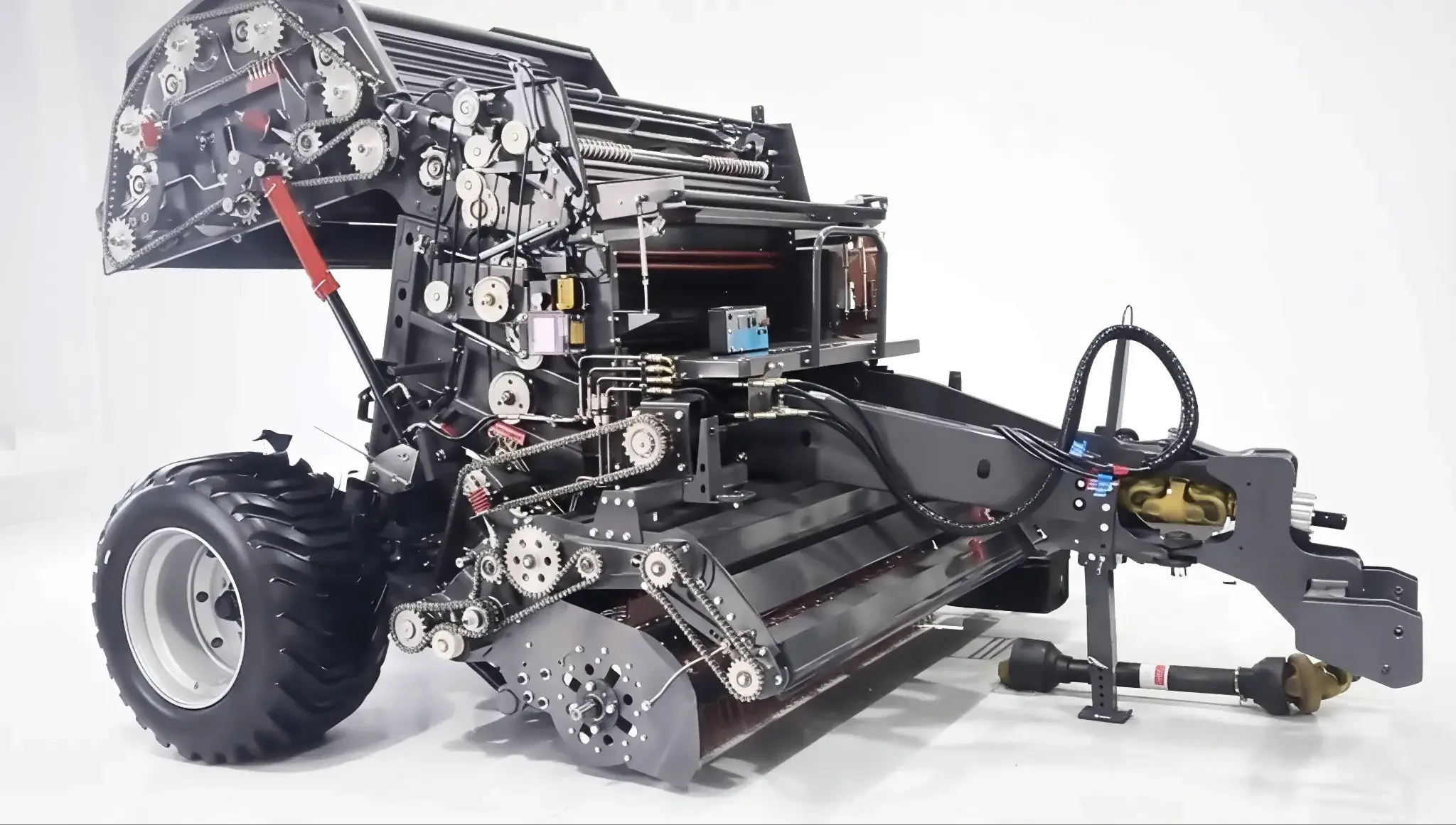
The 9YG-2.24D round baler series employs 18 compression rollers of 222 mm diameter, arranged around the inner circumference of a compression chamber 1400 mm wide and 1200 mm in nominal diameter. This roller count and chamber geometry achieves two things simultaneously: it provides a large number of grip points distributed evenly around the forming bale circumference, preventing the localised pressure concentrations that cause irregular bale shape in lower-roller-count designs; and it allows the chamber to accommodate the irregular geometry of cotton stalks — including the branched lateral stems and fractured woody sections — without creating the plugging events that occur in chambers with insufficient roller spacing relative to material particle size.
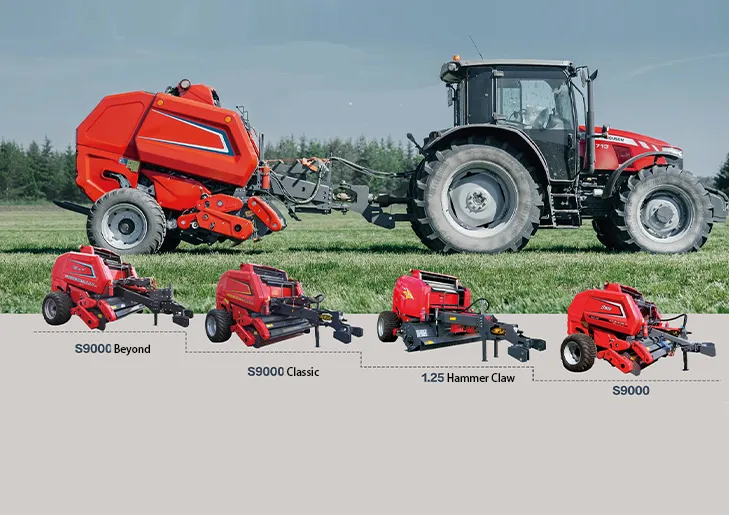
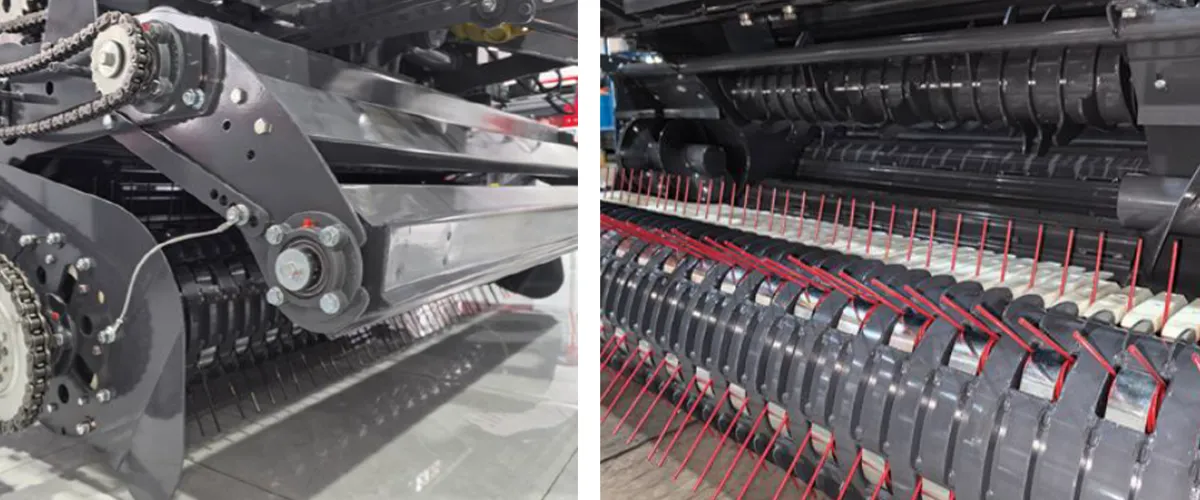
The pickup mechanism for pulp-grade cotton stalk collection requires particular attention. The EP-9YG-1.0C model incorporates a hammer claw pickup system specifically designed for collecting standing or windrowed crop residue that includes woody stems. The hammer claws — 20 units in the 9YG-1.0C — impact and lift the stalk material from a wider working width of 2400 mm, compared to 1900 mm for the spring-tine version. This wider pickup reduces the number of passes required per field width, which directly reduces fuel consumption and total field time per tonne of cotton stalk delivered to the mill gate. For pulp supply chain economics where the cost per tonne of delivered biomass must remain below a defined threshold, every reduction in field operation time contributes to the margin.
The axial-flow semi-forced feeding mechanism — proprietary to the 9YG-2.24D series — addresses the specific challenge of cotton stalk feeding consistency. Conventional pickup balers with cam-track tine systems can experience the tines bridging across dense cotton stalk bundles, creating intermittent blockages that reduce throughput and create uneven bale density across the cross-section. The axial-flow design replaces the cam-track with a direct-feed roller that orients incoming material into the chamber entry without the tine-bridging failure mode, maintaining consistent feed flow even in the densely tangled stalk conditions typical of machine-harvested cotton fields.
3. Material System: Bale Density Requirements for Cardboard and Pulp Feedstock
Cardboard and pulp mills purchasing cotton stalk as biomass feedstock specify minimum bale density thresholds in their supply contracts — typically expressed in kg/m³ at a reference moisture content. The commercial standard for round bales entering pulp supply chains ranges from 120 kg/m³ at the low end (acceptable for short-distance supply chains) to 180–200 kg/m³ for long-haul logistics where transport cost per tonne of fibre is the binding economic constraint. Understanding what drives bale density and how to control it through baler settings is therefore directly linked to whether a farmer or contractor can meet mill supply specifications.
Bale density in a roller-chamber round baler is primarily controlled by the compression resistance — the force required to increase bale diameter by one unit — which is set by the operator through the density control system. In the 9YG-2.24D series, a sensor-controlled density system continuously monitors chamber pressure and stops the bale formation cycle at a precisely defined pressure threshold corresponding to the target density. This sensor-based control is critical for consistent pulp-grade bale production because cotton stalk density varies significantly between fields, between harvest windows, and between different plant sections (stem versus branch material). Without sensor-based density control, achieving a consistent 150–180 kg/m³ across all bales in a lot is essentially impossible — and mill specification compliance depends on lot-level consistency, not just individual bale compliance.
The 20A heavy-duty chain drive in the rear chamber of the 9YG-2.24D sustains the elevated compression forces required to reach pulp-grade density targets in woody cotton stalk material. As noted in the manufacturing structure section, the dual-side sprocket arrangement in this model distributes the compression load symmetrically across both ends of the roller bank, which is a prerequisite for achieving uniform density across the full 1400 mm bale width. A bale that is denser at one end than the other will cause problems at the pulping stage — inconsistent fibre release during the chipping and cooking process — even if the average density meets the specification. Dimensional uniformity across the bale cross-section is therefore as important as the average density value when specifying a round baler for pulp feedstock production.
Net wrap material for cotton stalk pulp bales requires a specification note: standard polypropylene net is not biodegradable and must be removed at the mill gate before the bales enter the chipping or pulping process. Mill intake protocols for biomass bales typically require the net to be cut and separated before the bale enters the conveyor system, and the net waste must be managed as plastic agricultural waste. Some mills operating in regions with stringent plastic waste regulations are beginning to specify biodegradable or bio-based net wrap as a supply condition. Checking the applicable net wrap disposal regulation in the target mill’s jurisdiction is a practical step for any contract baling operation supplying the pulp sector.
4. Cotton Stalk Bale Quality Parameters for Pulp and Cardboard Industry Supply Contracts
| Quality Parameter | Minimum Acceptable | Target for Long-Haul Supply | How Baler Setting Affects This |
|---|---|---|---|
| Bale density (kg/m³) | 120 | 160–200 | Sensor density control setting; chain drive load capacity |
| Moisture content (%) | Below 20% | Below 15% | Field curing before baling; net wrap layer count |
| Ash content (%) | Below 10% | Below 6% | Pickup height setting; avoiding root-zone ingestion |
| Bale shape consistency | Cylindrical, no severe barrelling | Uniform end-face density, straight cylinder | Dual-side chain drive; auger feeding uniformity |
| Cellulose content (%) | 38% (dry basis) | 40–45% (dry basis) | Inherent to cotton variety; not baler-controlled |
| Foreign material (plastic, wire) | Zero tolerance | Zero tolerance | Pre-baling field inspection; pickup height management |
| Net wrap type | Standard PP (removable at mill) | Bio-based or standard PP per mill specification | Confirm mill intake protocol before baling season |
| Bale dimensions | Φ1000×1000 mm minimum | Φ1300×1400 mm (full-size) | Baler chamber size; density control stop point |
5. Supply Chain Logistics: From Cotton Field to Pulp Mill Gate
The economic viability of cotton stalk as a pulp feedstock depends almost entirely on the cost efficiency of moving baled material from dispersed farm locations to the mill gate. A round bale of Φ1300×1400 mm at 160 kg/m³ density contains approximately 390–420 kg of dry cotton stalk — based on the maximum bale diameter and width achievable with the 9YG-2.24D at its upper density setting. A standard Korean agricultural trailer or biomass transport vehicle can carry 8–12 such bales per load, delivering 3.1–5.0 tonnes of cotton stalk dry matter per trip. At these payload levels, a supply radius of up to 80–100 km from the mill becomes economically viable, particularly when baling cost, transport, and mill gate price are modelled together as a supply chain cost rather than separate isolated items.
Stacking configuration at intermediate storage and at mill receiving yards affects both bale integrity and unloading efficiency. Round bales of the dimensions produced by the 9YG-2.24D series are typically stacked in a single row lying on their curved surface, or in pyramid stacks up to three layers high. The key structural requirement for mill-side storage is that the bales do not deform or lose their cylindrical shape, as barrelled or distorted bales can jam in the mill’s automated intake conveyors. The dual-side chain drive and sensor-controlled density system in the 9YG-2.24D specifically contributes to bale shape consistency, as discussed in the manufacturing structure section — and this shape quality directly translates into handling efficiency at the mill intake, which is a factor that procurement teams at pulp mills increasingly evaluate when approving new bale suppliers.
For Korean pulp and cardboard mills sourcing cotton stalk from domestic producers — primarily in the southern Gyeongnam and Jeonnam cultivation areas where cotton is grown as a niche crop — the supply chain typically involves a combination of on-farm baling by the grower or a contracted गोल बेलर operator, intermediate outdoor storage at a collection point, and truck delivery to the mill on a scheduled intake schedule. Mills operating a just-in-time intake model prefer that bales conform tightly to density and dimension specifications because variation in bale weight directly affects their raw material inventory accounting and cooking batch calculations. Consistent baling output from a well-specified machine is therefore a supply chain quality requirement, not just a field efficiency objective.
International supply chains for cotton stalk pulp biomass — notably from Central Asian and South Asian cotton producers shipping to Korean and Japanese paper mills — introduce additional logistics complexity. Bales shipped in standard 40-foot high-cube containers can accommodate 14–18 full-size round bales of Φ1300×1400 mm per container, depending on stacking configuration and container floor load rating. Container shipment specifications may impose weight limits that determine whether density targets need to be moderated for export bales versus domestic supply.
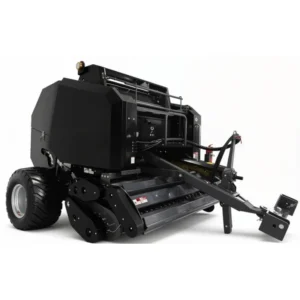
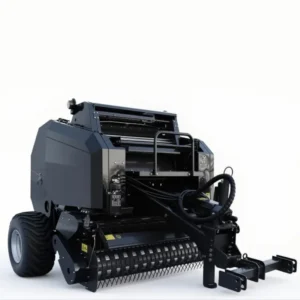
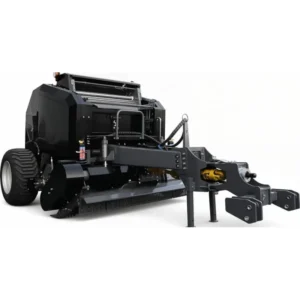
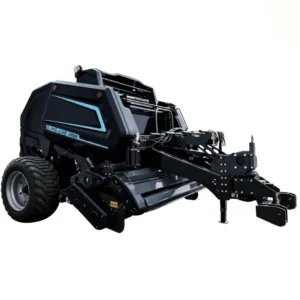
6. Round Baler Models for Cotton Stalk Pulp Feedstock Production

7. Regulatory and Legal Framework: Cotton Stalk Baling, Agricultural Machinery, and Biomass Supply
The use of cotton stalk as an industrial fibre feedstock intersects with multiple regulatory domains — agricultural machinery safety, biomass quality standards, plastic waste regulations, and in some markets, bioenergy and green procurement incentives. Understanding the relevant frameworks for your market is not optional when establishing a commercial cotton stalk-to-pulp supply chain, because regulatory compliance affects both operating permissions and the availability of government support.
Korea: Round balers operating in cotton stalk collection must comply with the Agricultural Mechanization Promotion Act and KS B 6906 (Safety of Agricultural Machinery). The round baler gearbox and PTO shaft connection must be properly guarded to the shielding standards specified therein. For biomass supply to the pulp and cardboard sector, the Resource Circulation Act (자원순환기본법) governs material flows of agricultural residues and requires that agricultural plastic waste — including used bale net wrap — be separated and deposited at K-eco registered collection sites under the Extended Producer Responsibility framework. For paper mills sourcing cotton stalk biomass, the Korean Ministry of Environment’s guidance on alternative fibres in the paper sector is relevant to the environmental impact assessment component of any new mill raw material program.
European Union: For cotton stalk biomass entering EU markets as a pulp feedstock, the EU Renewable Energy Directive (RED III, 2023/2413) sets sustainability criteria for agricultural biomass. Cotton stalk collected through mechanical baling and supplied to paper or board mills using the fibre for industrial applications may qualify for green procurement incentives under the EU Taxonomy for Sustainable Finance (Regulation 2020/852) if the supply chain meets land use, greenhouse gas emission, and crop residue management criteria. Agricultural machinery used in biomass collection — including round balers — falls under Machinery Directive 2006/42/EC and the forthcoming EU Machinery Regulation 2023/1230 for CE marking. EN ISO 4254-7 governs safety requirements specifically for round balers placed on the EU market.
India: India is the world’s largest cotton producer, and Indian pulp mills have actively sourced cotton stalk as a supplementary fibre since the 1980s. The National Action Plan on Climate Change (NAPCC) and its Missions on Sustainable Agriculture provide a policy framework encouraging residue utilisation rather than burning. Under the Air (Prevention and Control of Pollution) Act, open burning of agricultural residues including cotton stalks is regulated — often prohibited — by State Pollution Control Boards, creating a direct regulatory driver for mechanical baling. Round balers used for cotton stalk collection must comply with IS 9024 (Agricultural Machinery Safety) and IS 4468 (PTO Shaft Standards). The Bureau of Indian Standards certification scheme applies to imported agricultural machinery including round balers.
Pakistan and Central Asia: Pakistan’s cotton sector — centred in Punjab and Sindh provinces — is a significant potential source of cotton stalk for both domestic and export pulp supply. The Environmental Protection Act 1997 and its provincial implementing rules regulate open burning of agricultural residues, and Punjab’s smog crisis management plans have increasingly targeted cotton stalk burning as a priority abatement measure. Mechanised baling and supply to industrial users is explicitly encouraged under Punjab’s Clean Air Action Plans. Agricultural machinery safety in Pakistan follows standards aligned with SAARC regional frameworks and ISO standards. In Uzbekistan and Kazakhstan — both major cotton producers with established pulp and paper industries — agricultural machinery must comply with EAEU TR TS 010/2011 safety certification requirements, which carry CE-equivalent criteria for machinery placed on the Eurasian market.
Round baler gearbox regulations specifically: The gearbox of a round baler — which transmits and splits PTO power to the compression roller drive — is a safety-critical component regulated under agricultural machinery standards in all markets listed above. Gearbox housing must be enclosed and guarded, with oil fill and drain plugs accessible without exposing the operator to rotating elements. In the Korean market, gearbox design on imported round balers must comply with the safety verification requirements of the Rural Development Administration’s agricultural machinery approval process. In the EU, gearbox design falls within the Machinery Directive’s essential health and safety requirements for all power transmission elements.
8. Operational Best Practices for Producing Pulp-Grade Cotton Stalk Bales
Translating the technical specifications of a well-chosen round baler into consistently compliant pulp-grade bale output requires operator practices and field preparation disciplines that are not inherent in the machine itself. The following practices are the most impactful in commercial cotton stalk baling operations targeting industrial fibre markets.
Timing of baling relative to cotton harvest is the first decision. Cotton stalks should be baled as soon as practicable after the final cotton picking — ideally within two to three weeks — before weathering, insect activity, and fungal colonisation degrade the cellulose content and increase ash through particulate deposition. Stalks that have been exposed to one or more rainfall events after standing for several weeks can lose 5–10% of their cellulosic value through surface weathering alone. For mill supply contracts specifying minimum cellulose content, this timing discipline is non-negotiable. The productivity figures achievable with the 9YG-2.24D — 40–100 bales per hour depending on field conditions — mean that a well-managed operation with adequate tractor hours can complete a large cotton field before the quality window closes, provided the round baler machine is maintained in peak operating condition entering the harvest period.
Stalk conditioning before baling deserves consideration when field conditions permit. Running a mowing or flail-shredding pass over the stalks before baling reduces average particle length, which improves pickup uniformity and reduces the incidence of blockages at the chamber entry. Shredded cotton stalk also tends to form more geometrically uniform bales because the material packs more isotropically without the long stems that can create preferential density zones. The trade-off is an additional field operation pass and the associated fuel and equipment cost — but for high-value pulp supply contracts where bale quality specification compliance carries contractual penalties, the investment in a pre-conditioning pass often pays for itself.
Net wrap removal protocol at the mill gate is a final operational consideration that the baling contractor should discuss with the mill procurement team before supply begins. Some mills have automated net removal systems that cut and extract net from bales on the intake conveyor. Others require that bale suppliers use a specific net that is compatible with the mill’s removal system — for example, a net with a defined cut pattern or colour coding that allows optical detection on the conveyor. Confirming these requirements before the baling season prevents the situation where an entire bale lot is rejected at intake because the net type is incompatible with the mill’s automated handling system.
9. Compatible Accessories for Cotton Stalk Round Baling Operations
Complete one-stop system supply — round baler, drive shaft, and chain components matched for full-season cotton stalk performance.
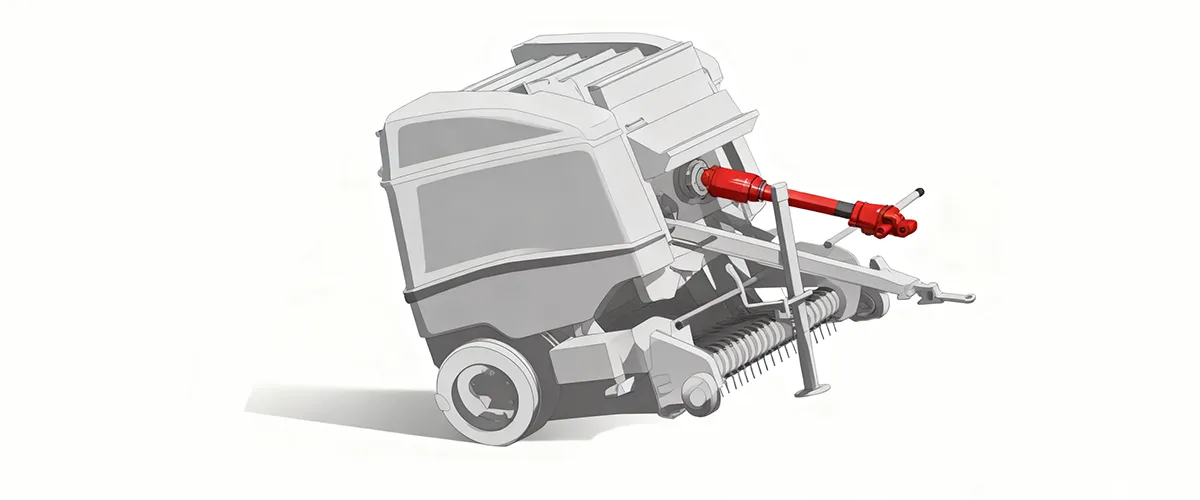
Agricultural PTO Shaft — Round Baler Drive
The PTO shaft connecting your tractor to the round baler gearbox is the foundation of the entire compression drive system. In cotton stalk baling, elevated PTO torque demands during the high-density compression phase place greater stress on the shaft than lighter crop applications. Our EP PTO Shafts for Round Balers are specified to handle the peak torque outputs of the 9YG series machines, with overload shear protection that limits transmission loads before they propagate into the chain drive and gearbox. Full guarding meets KS B 6906 (Korea), EN ISO 4254-7 (EU), IS 4468 (India), and TR TS 010/2011 (EAEU) requirements simultaneously, ensuring a single shaft product covers the primary regulatory frameworks applicable to international cotton stalk supply chains. For operations supplying pulp mills across national borders, this multi-standard compliance is a practical advantage.
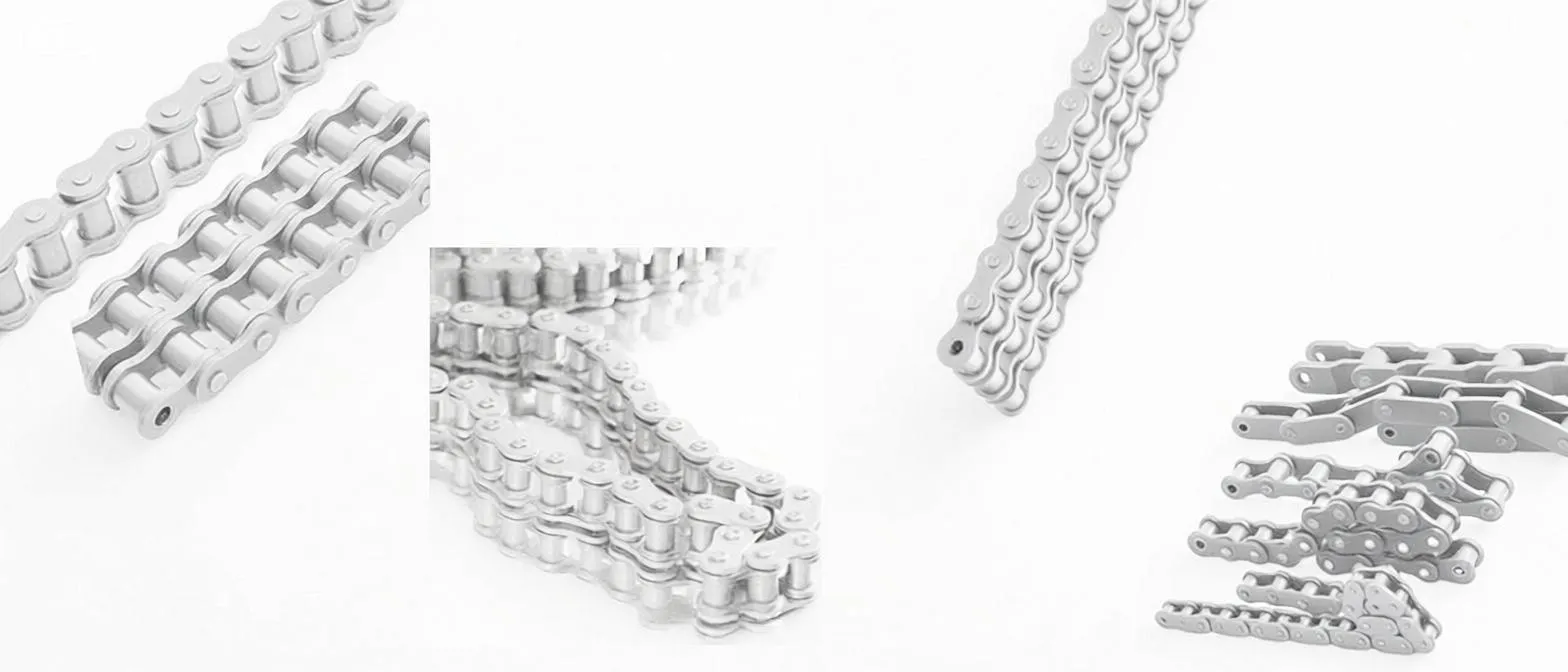
Agricultural Drive Chain — Compression Chamber Components
The 20A heavy-duty chain fitted to the rear compression chamber of the 9YG-2.24D is a critical wear component in cotton stalk baling. Genuine replacement chain matched to the original pin diameter, bushing hardness, and plate thickness specifications maintains the system’s ability to reach pulp-grade bale density targets throughout the season. Running worn chain in the final weeks of a cotton harvest degrades bale density consistency — the very characteristic that pulp mill intake teams evaluate most critically. Maintaining a replacement chain set and master link kit in the field repair kit for cotton stalk operations prevents end-of-season bale quality drift from undermining the supply contract value of the entire campaign. Replacement chain, sprockets, and matched master links are available through our after-sales supply network as verified-specification components.
Frequently Asked Questions
संपादक: पीएक्सवाई