Corn Stover Baling — Field Efficiency Guide
How to Eliminate Extra Field Passes When Baling Corn Stover with an Interchangeable Pickup
A practical field operations guide for Korean corn farmers and agricultural contractors on how the interchangeable pickup system of the 9YG round baler series eliminates the raking and windrow-formation passes that conventional baler configurations require — reducing time, fuel cost, and crop loss in corn stover collection.

1. The Hidden Cost of Extra Field Passes in Corn Stover Collection
For Korean corn farmers and agricultural contractors operating in the post-harvest stover collection window, every additional pass across the field carries a cost that is easy to overlook in the daily rush of harvest season logistics. The tractor burns fuel on every pass. Soil compaction increases with each traffic event. The window of dry field conditions that allows heavy equipment access narrows with every delayed operation. And the corn stover itself degrades with each handling cycle — losing dry matter to mechanical fragmentation and exposure to weather between the combine pass and the final bale ejection.
The conventional corn stover baling workflow requires at minimum three field passes: first the combine pass that cuts and spreads the stover; second a raking or tedding pass to form windrows of consistent width and density for the round baler’s spring-tine pickup; and third the baling pass itself. On heavier soils common in Korea’s corn-growing areas — particularly the clay-loam soils of Gyeonggi and Gangwon provinces — three passes in autumn conditions when soil moisture is elevated creates measurable compaction damage that affects the following season’s crop establishment. On lighter sandy soils of the southern corn belt areas, the problem is less about compaction and more about window: the three-pass sequence takes time that the dry weather interval may not provide in Korean autumn conditions where rainfall can interrupt field operations with 1–2 day notice.
The interchangeable pickup system — specifically the interchangeable spring-tine and hammer claw configurations available on the 9YG-1.25 Double round baler — directly addresses the extra-pass problem by enabling the round baler machine to collect standing or shallowly cut corn stover without a prior raking pass. This single operational capability, when properly matched to field conditions, eliminates the second of the three passes described above — reducing the total field pass count from three to two and compressing the crop exposure and compaction costs accordingly. This guide explains how the interchangeable pickup system works, what corn stover field conditions it handles best, and how to plan and execute a two-pass corn stover baling operation.
2. What Is an Interchangeable Pickup and How Does It Eliminate the Raking Pass?
A conventional round baler pickup is a fixed spring-tine reel — a rotating drum with spring steel tines that lifts windrow material off the ground and feeds it into the baler’s intake channel. This design works well for material that has already been gathered into a defined windrow of consistent width and density by a raking or tedding operation. It struggles with material that is spread broadly across the field, as the combine’s residue spreader typically leaves corn stover — because the spring tines cannot engage material lying flat and spread beyond the tine reel’s sweep path.
A hammer claw pickup replaces the passive spring tines with positively driven rotating claw elements. These claws actively reach into crop material, grasp it, and pull it into the intake channel with controlled mechanical force. Critically, the hammer claw mechanism can engage standing crop residue — stalks that remain at least partially upright after the combine pass — and direct-harvest lying material from a wider sweep pattern than a spring-tine system can manage. When corn stalks are cut and allowed to fall in row formation by the combine’s chopper, the hammer claw can collect this row-spread material without a prior raking pass to concentrate it into a narrower windrow.
The interchangeable pickup system on the 9YG-1.25 Double model allows the operator to switch between the spring-tine configuration and the hammer claw configuration in the field without specialised workshop equipment. This mechanical flexibility means a single round baler machine serves both conventional raked-windrow operations — where spring tines are appropriate — and direct-harvest corn stover collection — where hammer claws are necessary. For Korean farms running both a raked hay operation earlier in the season and a corn stover collection operation in autumn, this interchangeability represents a significant capital efficiency advantage: one machine covers two operational modes instead of requiring two separate machines or two separate baling attachments.
3. Field Pass Comparison: Conventional vs Interchangeable Pickup Workflow
The following comparison illustrates the field operation sequence for corn stover collection using a conventional spring-tine round baler versus the 9YG-1.25 Double with its interchangeable hammer claw pickup. The fuel, time, and compaction figures are indicative estimates for a 10-hectare corn stover collection block on medium-textured Korean autumn soils.
| Operation Step | Conventional Spring-Tine Workflow | Interchangeable Hammer Claw Workflow | Difference |
|---|---|---|---|
| Combine harvest | Pass 1: combine chops and spreads stover | Pass 1: combine chops and leaves in row formation | Minor combine setup difference |
| Windrow formation | Pass 2: rake or tedder forms windrows — 1–2 hours/ha, 5–8 litres diesel/ha | Not required — hammer claw handles row formation | Entire pass eliminated — saving 10–20 hours and 50–80 litres per 10 ha block |
| Baling | Pass 3: spring-tine pickup baler on formed windrows | Pass 2: hammer claw baler on row-formation stover | Same operation — baling time comparable |
| Total passes | 3 passes (combine + rake + bale) | 2 passes (combine + bale) | One full pass eliminated |
| Soil compaction events | 3 traffic events per field area | 2 traffic events per field area | 33% reduction in post-harvest soil traffic |
| Crop exposure window | Stover exposed for 2–4 extra days during raking wait | Baled within 1 day of combine pass | Reduced dry matter loss from weather exposure |
| Equipment needed | Combine + rake/tedder + spring-tine round baler | Combine + hammer claw round baler | Rake/tedder removed from equipment requirement |
4. Field Conditions Where Interchangeable Pickup Works Best for Corn Stover
The interchangeable hammer claw pickup is not equally effective in every corn stover field condition. Understanding which conditions favour the direct-pickup approach and which require a prior raking pass allows operators to maximise the two-pass workflow benefit where it is genuinely achievable, while avoiding the efficiency losses that come from forcing the hammer claw approach into conditions where it underperforms.
The hammer claw pickup performs at its best when corn stalks are standing or partially standing after the combine pass. In Korean autumn corn harvests where the combine uses a row-gathering header and a chopper discharge that cuts stalks at 20–30 cm above ground, the stalks typically remain partially erect in a row pattern that the hammer claw can engage cleanly. Stover moisture content at the time of baling is less critical for the hammer claw pickup than for a spring-tine system — the positive mechanical engagement of the claw elements grasps material at varying moisture levels without the intake inconsistency that spring tines show when material is too wet to flow freely through the tine sweep path. For Korean autumn conditions where stover moisture at the time of baling ranges from 25–45% depending on combine timing and weather, the hammer claw maintains consistent intake performance across this moisture range.
Conditions that still benefit from a prior raking pass include fields where the combine residue spreader was operating in full-spread mode — distributing stover evenly across the full cutting width in a flat, low-profile layer rather than leaving it in defined row formation. In this case, the stover layer is too thin and broadly distributed for the hammer claw to engage efficiently at reasonable operating speed, and a raking pass to gather the material into rows before baling recovers better collection efficiency. Operators should plan their combine header and discharge settings with the downstream baling workflow in mind: setting the combine to maintain defined row discharge rather than full spread substantially improves the subsequent hammer claw pickup performance and extends the two-pass workflow to a higher proportion of their corn hectarage.
Rocky or uneven terrain in Korean mountain-adjacent corn growing areas — particularly in Gangwon and North Gyeonggi — requires the operator to reduce travel speed and monitor pickup height carefully when using the hammer claw in direct-pickup mode. The claw elements run close to the ground surface to engage low-lying stover material, and excessive height variation from terrain undulation can cause the pickup to alternately scalp the soil surface or lift too high to engage the stover. Ground-following skids on the pickup unit, which are a standard equipment feature on the 9YG series, provide the contour-tracking needed for consistent engagement across moderate terrain variation. Very rough terrain may still require a raking pass to bring material into a defined elevated windrow that the pickup can follow at consistent height.
5. Manufacturing Structure: The Interchangeable Pickup System in the 9YG Round Baler
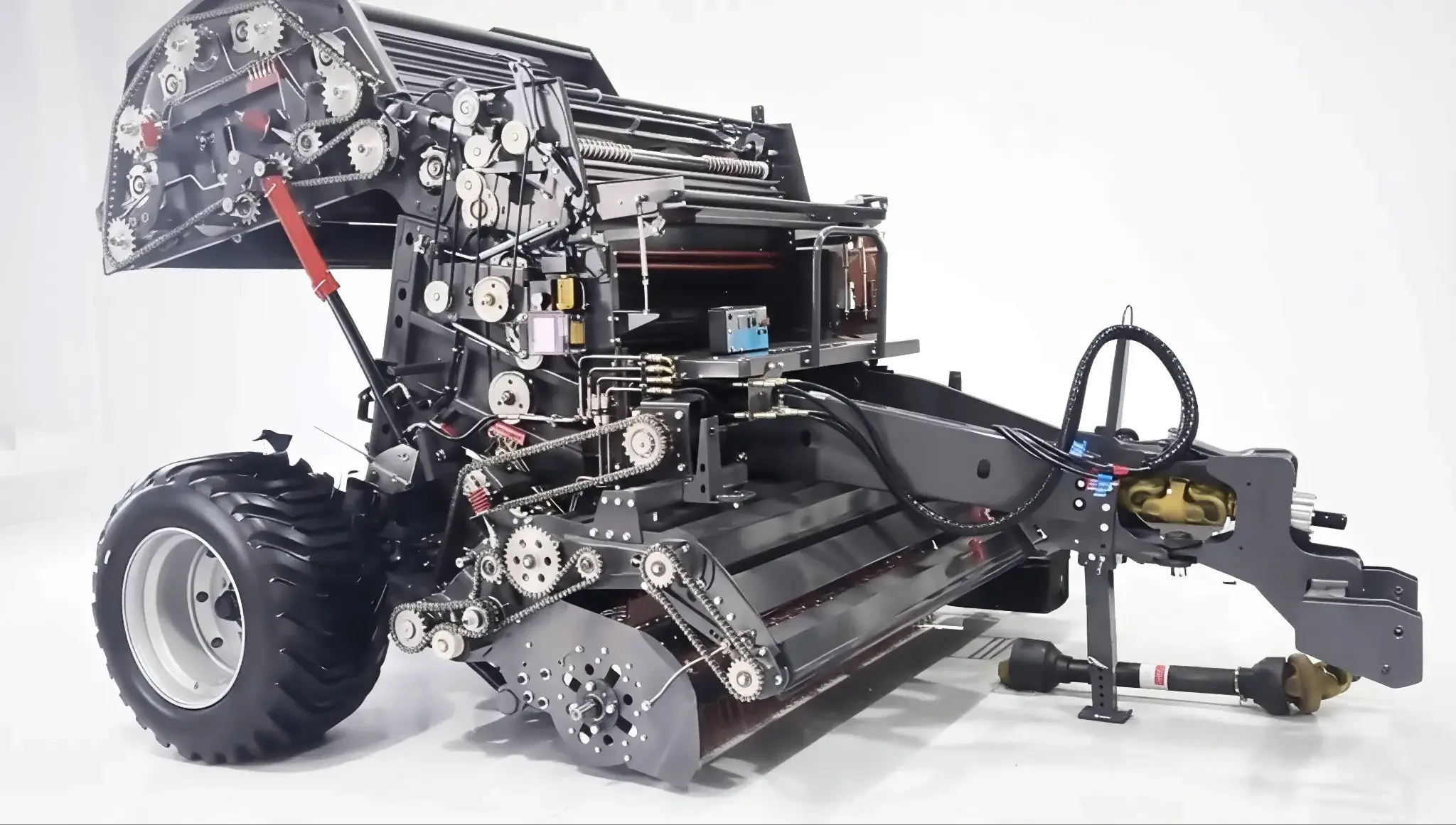
The interchangeable pickup mechanism on the 9YG-1.25 Double round baler represents an engineering approach to versatility that goes beyond simple accessory swapping. The pickup system is designed as a bolt-on module that shares a common mounting interface with both the spring-tine and hammer claw variants, allowing genuine field-ready interchangeability without workshop equipment or extended downtime. Understanding the mechanical architecture of this system explains both its capabilities and the maintenance considerations that keep it performing across multiple crops and seasonal roles.
Spring-Tine Pickup Module
The spring-tine pickup module uses a standard cam-track tine reel — spring steel tines mounted on a rotating shaft, controlled by a cam track that governs tine projection and retraction through the pickup arc. This configuration is optimised for collecting raked windrow material at high throughput rates, lifting and directing the material into the intake channel cleanly at operating speeds of 5–35 km/h. In hay, cut grass, and raked corn stover windrows, the spring-tine pickup is the highest-throughput option and the default choice for conventional windrow baling operations. The 9YG-1.25 spring-tine module has a 2240 mm pickup width, which matches the windrow width produced by most side-delivery rakes used in Korean corn-growing operations.
Hammer Claw Pickup Module
The hammer claw pickup module replaces the cam-track spring-tine assembly with a positively driven rotating claw reel. Each claw element rotates on its own axis as the reel turns, creating a grabbing and releasing action that actively engages crop material rather than relying on the crop’s weight and flexibility to guide it over the spring tines. For corn stover — which is heavier, less flexible, and more variable in height and angle than cut grass — this positive mechanical engagement is what enables consistent intake without the stover’s weight and rigidity causing bridging or intake gaps. The 9YG-1.0C model uses 20 hammer claw elements across a 2400 mm pickup width — the widest direct-pickup configuration in the 9YG range — while the interchangeable version on the 9YG-1.25 Double provides comparable claw engagement at the same 2240 mm frame width as the spring-tine module it replaces.
Compression Chamber and Density System
Regardless of which pickup module is fitted, the 9YG-1.25 series feeds material into the same 18-roller compression chamber of phi 1200 mm diameter. The rollers apply continuous circumferential pressure to the developing bale, achieving the 100–200 kg/m³ density range under sensor control. For corn stover, which has lower bulk density in its uncollected form than wheat straw or hay, the sensor-controlled density system is particularly valuable — it allows the operator to set a specific target density appropriate for the end buyer’s specification, and the baler forms bales to that target regardless of the variation in stover windrow density that results from the direct-pickup approach. Bale dimensions for the 9YG-1.25 series are phi 1300 mm diameter by 1250 mm width, a format accepted by most Korean livestock feed and biogas substrate buyers who take baled corn stover.
6. Material System: Durability Through Mixed-Crop and Seasonal Service
A round baler machine that is used interchangeably across multiple crop types — spring hay baling with spring tines, summer silage wrapping, and autumn corn stover baling with hammer claws — undergoes a more varied load cycle than a machine dedicated to a single crop application. The material specification of the 9YG-1.25 series components needs to support this multi-season, multi-application service life without degrading into a configuration that performs adequately in neither role.
The forming chamber rollers in the 9YG-1.25 series are manufactured from structural steel tube with a surface profile that provides consistent grip on materials ranging from fine grass to heavy corn stover — accommodating the different surface characteristics of each crop type without requiring roller replacement between applications. Corn stover in particular presents a challenge because its hollow stem sections can compress asymmetrically, creating higher localised stress on roller surfaces than uniform-density materials like hay. The phi 222 mm roller diameter provides adequate contact surface area to distribute this load without point-contact stress concentrations that would cause surface fatigue on narrower rollers.
The drive chain specification across the 9YG-1.25 series uses 16A industrial roller chain in the forming chamber drive circuits. For hay and corn stover baling in the density range of 100–150 kg/m³ that most Korean corn stover buyers specify, 16A chain provides adequate tensile rating with manageable elongation rates. Operators who run the machine at the upper end of the density range — particularly when baling green corn stover at higher moisture where compression forces increase — should check chain elongation at 50-hour intervals and plan replacement before elongation exceeds 2% of new-chain pitch length. Chain replacement is straightforward using the standard 16A chain available from Korean industrial hardware suppliers, which keeps the round baler parts maintenance accessible without specialist ordering even in remote agricultural areas.
The frame of the 9YG-1.25 series is produced from CNC laser-cut steel sections with automated welding, finished with electrostatic powder coating. For a machine that transitions between spring and autumn seasons in different crop conditions and potentially different soil environments, the powder coat’s resistance to the crop-specific chemical environments — silage acid from summer operations, alkaline soil from corn stover field conditions in autumn — maintains surface integrity through multiple seasons without the corrosion progression that affects brush-applied painted finishes exposed to the same range of chemical environments.
7. Round Baler Gearbox Considerations for Corn Stover Direct-Pickup Operations
The round baler gearbox in a corn stover direct-pickup operation handles a somewhat different load profile than in conventional windrow baling. The hammer claw pickup module adds a positively driven claw reel to the gearbox’s output circuit — a load that is not present in the spring-tine configuration, where the tines are cam-driven passively rather than positively powered. The hammer claw drive generates an additional continuous torque load on the gearbox output system, which must be accounted for in the lubricant specification and service interval planning when operating in the hammer claw configuration.
The gearbox on the 9YG-1.25 series operates at 720 revolutions per minute from its bevel gear set, with a PTO speed range of 540–1000 r/min depending on the tractor connected. When switching between spring-tine and hammer claw configurations, operators should verify that the gearbox oil level is at the correct operating mark before commencing the first session in the new configuration — and should check oil condition after the first 50 hours of hammer claw operation to confirm that the added claw drive load is not generating contamination or temperature elevation beyond the normal operating baseline established during spring-tine use. SAE 90 GL-4 gear oil is the correct specification for the 9YG series gearbox regardless of pickup configuration.
The dual gearbox on the 9YG-2.24D Transcend model — while not the specific model with interchangeable pickup — illustrates the broader design philosophy of the 9YG series toward operational flexibility and precision: independent lateral rotation at each gearbox allows maintaining PTO drive through tight headland turns in fragmented Korean corn plots, where field boundaries often allow little headland space for wide-turning single-gearbox balers. This turning flexibility is relevant across the 9YG product range for Korean corn-growing conditions where paddock sizes average 0.5–2 hectares.
| Region | Key Regulation | Corn Stover and Gearbox Relevance |
|---|---|---|
| South Korea | Agricultural Mechanisation Promotion Act; Safety Standards for Agricultural Machinery; Clean Air Conservation Act | PTO shaft guarding mandatory; gearbox certification for machinery subsidy; corn stover burning regulated — baling is primary approved disposal method in designated agricultural zones |
| European Union | EU Machinery Regulation 2023/1230; EN ISO 4254-7 (agricultural machinery — round balers); RED III biomass sustainability | CE marking mandatory; interchangeable attachments must be individually assessed under the Machinery Regulation for CE scope; corn stover qualifies as renewable energy feedstock under RED III sustainability criteria |
| United States | ASABE S331.4 (PTO shaft safety); EPA Renewable Fuel Standard (RFS); USDA Agricultural Research Service corn stover collection guidelines | PTO shaft master shield required; corn stover qualifies as cellulosic biofuel feedstock under EPA RFS; USDA guidelines recommend maintaining 30–50% stover soil coverage — baling should not collect all stover from each field |
| Japan | Agricultural Machinery Safety Standards; Law for the Promotion of Agriculture in Harmony with the Environment; JAS | Agricultural machinery safety certification required; corn stover baling supported under environmental farming subsidies; PTO guard inspection as part of regular safety check |
| India | BIS agricultural machinery standards; National Policy on Biofuels 2018; Stubble Burning Prevention Protocols (Punjab, Haryana, UP) | Corn stover burning prohibited in major states; BIS-compliant gearbox for subsidised machinery; interchangeable pickup enables cotton and corn stover baling from the same machine across multi-crop farms |
8. Operational Planning for a Two-Pass Corn Stover Baling Programme
Converting a conventional three-pass corn stover programme to a two-pass interchangeable-pickup workflow requires adjustments at three points in the operation: the combine header and discharge settings; the round baler’s density target setting; and the field traversal sequence to optimise coverage and minimise backtracking. Getting these three adjustments right before the start of the corn stover window is what separates a smooth two-pass operation from one that discovers its limitations mid-field when the harvest window is closing.
Combine setup for two-pass compatibility involves two key changes. First, the residue spreader should be deactivated or set to a narrow discharge mode so that stover is discharged in a concentrated row pattern matching the corn header row spacing rather than spread across the full cutting width. Second, the combine’s stalk chopper cutting height should be set to cut at 20–30 cm above ground level rather than as low as possible — leaving a stalk stub at ground level keeps the cut stalks partially elevated, which gives the hammer claw something to engage rather than a flat mat of horizontal material. Korean corn headers operating on 70 cm row spacing typically produce a stover row pattern that the 9YG-1.25 Double’s 2240 mm pickup width can collect across 3 rows per baler pass — a ratio that produces a manageable windrow volume per row for sensor-controlled bale formation.
Baler density target setting for corn stover should be determined by the end buyer’s specification before the season starts. Livestock feed buyers typically accept corn stover bales at 100–130 kg/m³, while biogas substrate buyers often specify higher minimums of 120–160 kg/m³ for volumetric efficiency in their digester intake systems. Setting the sensor target 10–15 kg/m³ above the buyer’s minimum provides the necessary buffer for natural density variation across field sections with different stover coverage levels — without this buffer, bales from thinner stover sections may fall below specification and require rejection or discounting at delivery. The sensor system on the 9YG-1.25 series manages this calibration automatically once the target is set, adjusting bale-eject timing to maintain consistent output across the varying material flow rates that the direct-pickup approach encounters.
9. The Soil Conservation Dimension: Why Partial Stover Removal Matters in Korean Corn Farming
The efficiency case for the two-pass interchangeable-pickup workflow is compelling on its own terms. But there is an agronomic dimension to corn stover management that Korean corn farmers and advisors from the Rural Development Administration increasingly raise alongside the logistics efficiency discussion: the question of how much stover to remove, and what leaving some in the field contributes to soil health across multiple cropping seasons.
Corn stover is a significant source of organic matter return to the soil. Research conducted at Korean agricultural research stations and by the Rural Development Administration estimates that leaving 40–60% of corn stover in the field as surface mulch reduces autumn and winter soil erosion by 40–70% on sloped Korean corn fields — a relevant consideration given that a substantial proportion of Korean corn area is on terrain with 3–15% slope gradients where water erosion during autumn rainfall events can be significant. Total stover removal through intensive baling strips this erosion protection and also reduces the organic carbon input to the soil system that sustains long-term soil structure.
The two-pass interchangeable-pickup workflow, when the baler is operated at a measured collection rate rather than a maximum-recovery mode, naturally leaves a residue fraction in the field. The hammer claw pickup, even when optimally calibrated, does not achieve 100% collection efficiency from a broadly distributed stover field — and this partial collection characteristic, rather than being a deficiency, aligns with the agronomic recommendation for partial stover removal. Operators can calibrate their collection intensity by adjusting operating speed and baler density target to manage the proportion of stover collected versus left on the field surface — effectively using the baling operation as a tool for both residue resource recovery and soil organic matter management simultaneously.
10. Round Baler Models for Corn Stover Collection: Range Overview
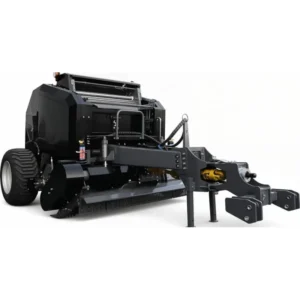
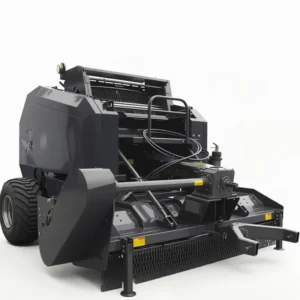
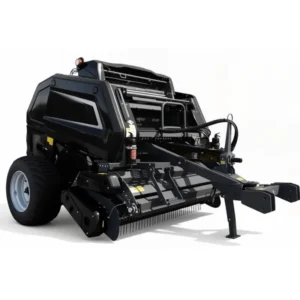
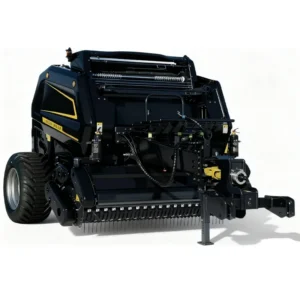
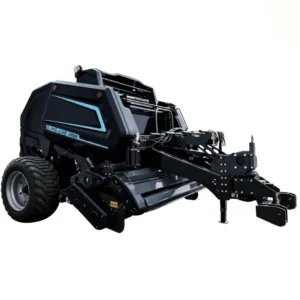
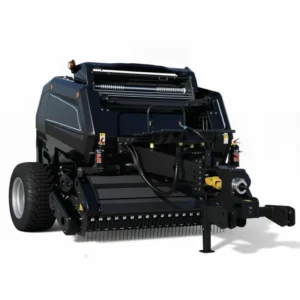
The following models are relevant to corn stover collection operations across the range of farm scales and operational requirements encountered in Korean and regional corn-growing areas. The 9YG-1.25 Double with its interchangeable pickup is the primary model for the two-pass direct-pickup workflow, while other models serve related corn stover application scenarios.
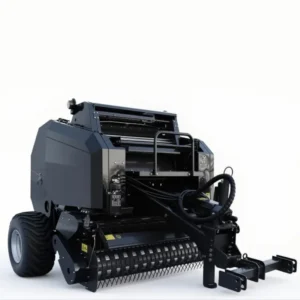
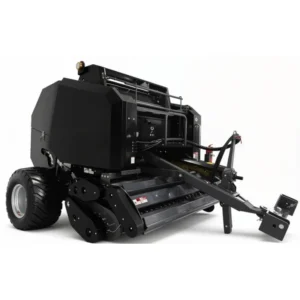
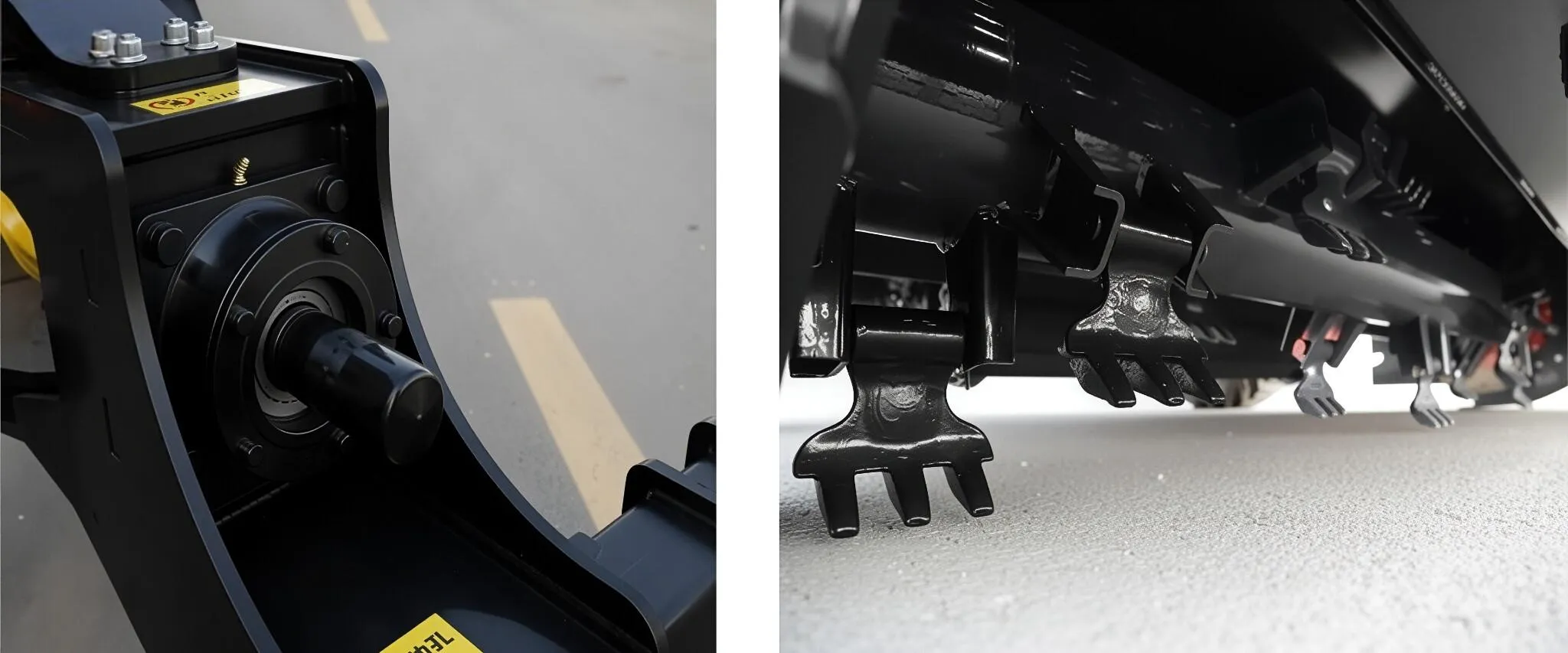
11. Compatible Systems: PTO Shaft and Agricultural Chain for Corn Stover Round Baler Operations
The interchangeable pickup system’s efficiency advantage over multiple crop seasons depends on the complete drivetrain being in specification at the start of each seasonal role. Matched PTO shaft and drive chain from a verified supply source ensures the system performs reliably across both spring-tine and hammer claw configurations throughout the year.
Agricultural PTO Shaft — Multi-Season Round Baler Compatibility
When the same round baler machine transitions between spring hay baling (spring-tine configuration) and autumn corn stover baling (hammer claw configuration), the PTO shaft must handle the different torque profiles of both roles without the operator having to inspect and adjust the safety clutch setting between seasons. Our Agricultural PTO Shaft for Round Balers is rated across the torque range that covers both light hay baling and the higher compressive loads of autumn corn stover baling in the density range Korean buyers require. Safety clutch engagement thresholds are factory-set at the correct value for the 9YG series baler models and the Korean tractor PTO output range. Including the PTO shaft inspection in the pre-season checklist at both the spring hay start and the autumn corn stover start — checking spline wear, universal joint play, and safety clutch friction disc condition — ensures the drivetrain protection function is available at the correct threshold for both seasonal applications. One-stop supply of baler plus PTO shaft from the same source simplifies specification verification for both seasonal configurations.
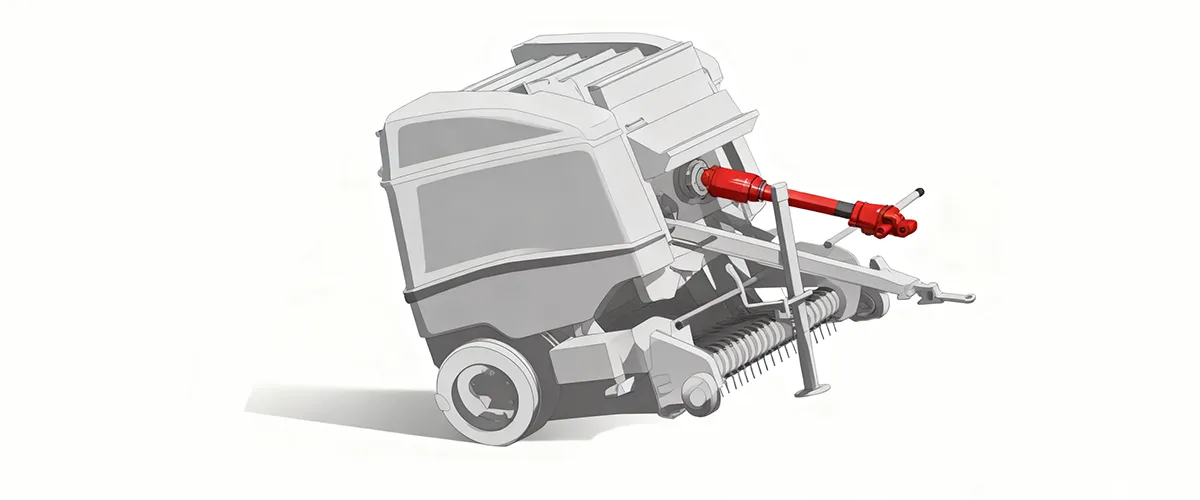
Agricultural Drive Chain — Season-to-Season Specification Consistency
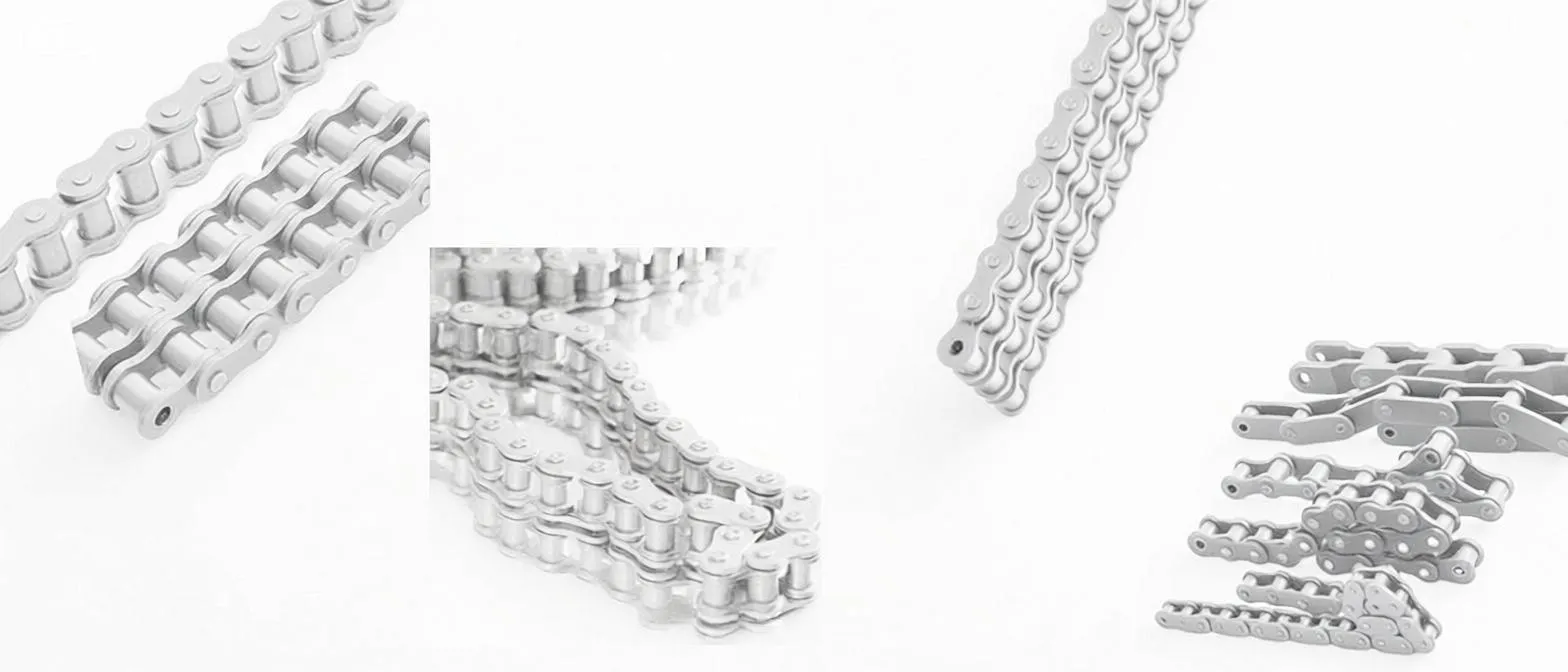
A machine that transitions between two seasonal crop types through an interchangeable pickup system accumulates combined operating hours across both seasons on the same forming chamber drive chain. Chain elongation progresses through both seasonal roles — and a chain that passed the spring hay season with acceptable elongation may be at or past replacement threshold by the time the autumn corn stover season begins. Pre-season chain elongation measurement before the start of each seasonal role — spring hay and autumn corn stover — ensures the chain’s pitch tolerance remains within the specification that maintains correct sprocket engagement geometry and stable roller drive timing. Our agricultural drive chain supply covers 16A standard for the 9YG-1.25 series chamber drives, with the same standard Korean-market sprocket profile used across both configurations, allowing field-side emergency replacement from any Korean industrial hardware supplier. Including a spare chain length on the machine at the start of each seasonal role gives the insurance against a mid-season failure during either the hay or corn stover window without the delay of supplier ordering time.
Frequently Asked Questions
संपादक: पीएक्सवाई