Cotton Stalk Baling — Equipment Comparison Guide
A practical, side-by-side equipment analysis for cotton farmers, agricultural contractors, and biomass supply operators choosing between a standard round baler and a shredder-baler for cotton stalk collection — covering capital cost, operating efficiency, buyer compatibility, and total cost of ownership across realistic operating scenarios.
1. Two Machines, One Problem — Choosing the Right Tool for Cotton Stalk Collection
Every operator entering the cotton stalk collection business eventually faces the same equipment decision: a conventional round baler machine or a shredder-baler combination unit. Both collect and compact cotton stalk residue into a manageable form. Both can be tractor-mounted and PTO-driven. But beyond those surface similarities, the two machines take meaningfully different approaches to the same problem — and those differences compound into significant cost and revenue implications over a realistic operating life. Getting this decision wrong in either direction is expensive: overpaying for shredding capability you do not need, or under-specifying a round baler that cannot handle woody cotton stalk structure and delivers inconsistent bales that biomass buyers reject.
This guide addresses the comparison methodically. It explains what a shredder-baler actually does differently from a round baler, where each machine type performs better, and how the total cost of ownership calculation shifts depending on your end market — whether you are selling to a biomass energy plant, a livestock feed cooperative, or a soil amendment programme. The analysis draws on realistic operating parameters for both machine types in a cotton-growing context, and references specific round baler models from the 9YG product series whose specifications are publicly available.
Cotton stalk collection is a growing activity across South Korea’s experimental cotton cultivation zones, Central Asia’s major cotton provinces, India’s Vidarbha region, and the Xinjiang cotton belt. Each region has different buyer requirements and different logistics constraints, and the right machine choice can differ accordingly. But the underlying cost-effectiveness framework is the same regardless of geography, and this guide gives you the analytical tools to apply it to your specific situation.
2. What Is a Shredder-Baler and How Does It Differ from a Round Baler?
A shredder-baler, also referred to in some markets as a grind-and-bale unit or a combine shredder-compactor, integrates two distinct mechanical operations into a single machine pass. In the first stage, a high-speed flail or hammer rotor shreds the standing or windrow cotton stalk into fragments — typically producing particle sizes in the 30–100 mm range depending on rotor speed and screen size. These shredded particles are then fed directly into a forming chamber where they are compressed into a bale. The result is a bale of shredded cotton stalk fragment material rather than whole-stalk bales produced by a conventional round baler.
This sounds like it might solve the main challenge of cotton stalk baling — the difficulty of compressing woody, branched whole stalks into a dense bale — and for some applications it does. Shredded particle material flows more freely through intake systems and compresses more uniformly under roller or ram pressure, which can produce bales with higher bulk density consistency than whole-stalk round bales produced by a machine with an inadequate pickup system. However, the shredding stage has its own set of costs and constraints that affect the total cost of ownership calculation significantly.
A standard round baler machine, by contrast, picks up the stalk material from a windrow in near-whole form, feeds it into a roller-type or belt-type forming chamber, and compresses it progressively into a cylindrical bale. The bale retains most of the stalk’s original physical structure. No energy-intensive shredding stage is required, which reduces the power demand on the tractor and simplifies the mechanical system considerably. The trade-off is that the pickup system and forming chamber must be capable of handling the woody, branched structure of cotton stalk directly — which a well-specified round baler with the right pickup configuration handles reliably, but which a poorly specified machine does not.
3. Round Baler vs Shredder-Baler: Side-by-Side Comparison
The following comparison covers the key dimensions that determine cost-effectiveness in a cotton stalk collection context. Each factor is assessed for both machine types, with the practical implication for a typical cotton farm or contractor operation noted in the final column.
| Factor | गोल बेलर | Shredder-Baler | Practical Implication |
|---|---|---|---|
| Capital Cost | Lower — single-function machine | Higher — integrated shred + compress | Round baler capital is recoverable faster at equivalent annual volume |
| Tractor Power Demand | 55–100 kW (9YG-2.24D class) | Often 110–160 kW (shredder rotor load) | Shredder-baler requires higher HP tractor; higher diesel consumption per hour |
| Operating Speed (field) | 5–35 km/h (9YG-2.24D rated) | 2–6 km/h (shredding limits speed) | Round baler covers more hectares per hour at same fuel cost |
| Bale Throughput | 40–100 bales/hour (9YG-2.24D) | 15–35 bales/hour (typical) | Round baler completes seasonal volume faster; reduces labour days |
| Bale Density Achieved | 100–200 kg/m³ (sensor-controlled) | 130–220 kg/m³ (shredded material) | Both can meet biomass plant minimums; round baler sufficient for most contracts |
| Maintenance Complexity | Pickup tines, rollers, drive chain, gearbox | All of above plus shredder rotor blades, screen, rotor bearings | Shredder-baler has more wear parts; rotor blades are high-turnover items |
| Buyer Compatibility | Biomass plants, livestock feed, soil amendment | Mainly biomass and composting; less suited to feed | Round baler serves a wider range of end markets |
| Field Preparation Needed | Row merging recommended for consistent windrow | Can work on standing or scattered stalk rows | Shredder-baler slightly more flexible on field prep; round baler benefits from windrow merging |
| Subsidy Eligibility (Korea) | Eligible under agricultural machinery programme | Eligibility varies; verify with local 농협 | Round baler subsidy more consistently available; reduces net capital outlay |
| Net Wrap Compatibility | Standard net wrap; widely available | Standard net wrap on most models | No significant difference in consumable cost |

4. Capital Cost, Operating Cost, and Total Cost of Ownership
The most common framing error in the round baler vs shredder-baler comparison is evaluating only the capital cost and not the full operating cost stack. Shredder-baler units typically carry a capital cost premium of 40–80% over a comparable-class round baler machine — a difference that is immediately visible on the purchase invoice and easy to quantify. What is less immediately visible is the operating cost difference that compounds across every field-hour over the machine’s operating life.
The shredder-baler’s rotor system adds a continuously powered high-speed rotating component that generates significant additional diesel consumption above what the round baler’s PTO circuit demands. At a typical field operating speed of 3–5 km/h for the shredder-baler versus 8–15 km/h for a round baler machine in merged windrow cotton stalk, the round baler covers 2–4 times as much area per fuel-hour. On a 100-hectare cotton stalk collection programme, a round baler operating at a practical field rate of 6–10 effective hectares per day completes the operation in 10–17 field days. A shredder-baler at 2–3 effective hectares per day requires 33–50 field days — more than double the labour and machine-day cost for the same area. For a contractor whose harvest window for cotton stalk collection is 4–6 weeks, this difference can mean the shredder-baler leaves part of the contracted area uncompleted before weather or field conditions close the season.
Rotor blade wear on a shredder-baler is also a material operating cost that is easy to underestimate before the first season. Cotton stalk’s woody, abrasive structure — particularly the main stem base sections with their higher lignin and silica content — accelerates rotor blade edge wear at rates significantly above what the same machine experiences on soft-stemmed cereal residues. Blade replacement sets are consumables that must be costed into the per-hectare operating cost alongside fuel and net wrap. A well-maintained round baler machine in the same application replaces pickup tines and drive chain at significantly lower per-tonne cost than a shredder-baler’s rotor blade replacement cycle. Over a 5–8 year machine life in cotton stalk service, this maintenance cost differential adds meaningfully to the total cost of ownership gap.
5. When the Shredder-Baler Has a Genuine Advantage
A fair comparison requires acknowledging the scenarios where the shredder-baler genuinely outperforms a round baler machine in cotton stalk applications. These exist, and operators entering specific markets or dealing with specific field conditions should consider them seriously before committing to either machine type.
The clearest shredder-baler advantage is in applications where the end buyer requires shredded-particle format rather than whole-stalk bale format. Some composting facilities and certain biogas digester operations specify that incoming material must be particle-size-reduced to less than 80 mm before entering their processing system — a specification that a round baler’s whole-stalk bale cannot meet without a separate on-site shredding step after delivery. If your primary buyer for cotton stalk has this requirement, a shredder-baler eliminates the shredding step at the receiving facility and may command a higher delivered material rate that offsets some of its higher operating cost. Verify the specific buyer specification before making the equipment decision — many biomass energy plants and feed operations do not require pre-shredded material and are fully compatible with whole-stalk round bales.
The second scenario where shredder-baler performance is genuinely superior involves extremely dense, tall-stemmed, branched cotton crop varieties in high-yield irrigated growing conditions — where the stalk volume per hectare is very high, the base stem diameter frequently exceeds 35–40 mm, and the branching density makes windrow formation difficult even with row merging. In these conditions, the shredder-baler’s ability to work on scattered or poorly windrow-formed material without requiring the pre-baling row-merging step can reduce total field operations. However, this advantage is narrower than often assumed: a round baler fitted with the correct hammer claw pickup — such as the 9YG-1.0C with its 20 hammer claw elements and 2400 mm pickup width — handles dense cotton stalk windrows reliably in most commercial cotton variety conditions without requiring pre-shredding.
Soil amendment and compost programmes that incorporate shredded cotton stalk as a tillage-incorporated organic matter source represent a third scenario where shredded-particle format has agronomic value: fine particle material breaks down faster in the soil system and can be incorporated by a standard rotary tiller, whereas whole-stalk round bale material requires a separate shredding step before incorporation. If your operation serves both biomass energy and soil amendment markets with the same stalk material, having shredded output from the start provides flexibility. That said, many soil amendment operators are equipped with their own shredding step and prefer to receive material in bale form for easier transport and handling.
6. Manufacturing Structure: Why the Round Baler’s Design Makes It More Cost-Effective for Most Cotton Stalk Operations
Understanding why the round baler is typically more cost-effective for cotton stalk baling requires looking at its mechanical architecture and comparing it to the added complexity of the shredder-baler. The round baler’s forming system is a closed-loop mechanical process: the pickup lifts material into the pre-chamber, the feed rollers or auger section transfers it to the main forming chamber, the compression rollers form the bale, and the net wrap system binds and ejects it. Each stage has a defined mechanical function with a limited number of wear components.
हैमर क्लॉ पिकअप
The 9YG-1.0C model uses 20 hammer claw elements across a 2400 mm pickup width — the widest pickup in the 9YG range and the most positively driven option for woody crop materials. Unlike the shredder-baler’s rotor, which must shred material at high speed and high power consumption, the hammer claw pickup ingests cotton stalk at moderate force, preserving most of the stalk structure intact for roller compression. Maintenance on the hammer claw assembly involves periodic tip inspection and replacement — a straightforward field operation requiring no specialised tooling — compared to the blade sharpening, balance checking, and screen clearing that the shredder rotor requires after each operational period.
Roller Compression Chamber
The 9YG series uses 16–18 compression rollers of phi 222 mm diameter in a phi 1000–1200 mm chamber. This geometry applies continuous radial pressure around the developing bale’s circumference — achieving the 100–200 kg/m³ density target needed for biomass energy compliance without requiring the material to be shredded first. The rollers are passive in the sense that they do not need to shred or fracture the stalk; they simply compress it progressively as the bale grows. This fundamental simplicity — compress rather than shred — is what gives the round baler machine its lower power demand, higher operating speed, and simpler maintenance profile compared to the shredder-baler.
Sensor-Controlled Density System
The sensor-controlled density system continuously monitors chamber pressure and triggers the net-wrap cycle when the preset target is reached — ensuring that every bale meets the buyer’s density specification without requiring the operator to judge bale completion manually. For cotton stalk baling where material variability makes manual timing unreliable, this system directly addresses the density consistency challenge that motivates some operators to consider a shredder-baler in the first place. With sensor control, a well-specified round baler machine reliably produces bales within the 100–200 kg/m³ range demanded by Korean and regional biomass energy buyers — eliminating the primary technical argument for the more expensive shredder-baler option in most operational contexts.
7. Material System: Durability That Supports Long-Term Cost-Effectiveness
Cost-effectiveness in any capital equipment decision is partly a function of how long the machine remains serviceable. A round baler that requires major structural repair at year four of a planned ten-year amortisation is not as cost-effective as its initial capital cost suggests. The material specification of the machine’s structural and drivetrain components determines how well its cost model holds up through sustained high-intensity cotton stalk operations.
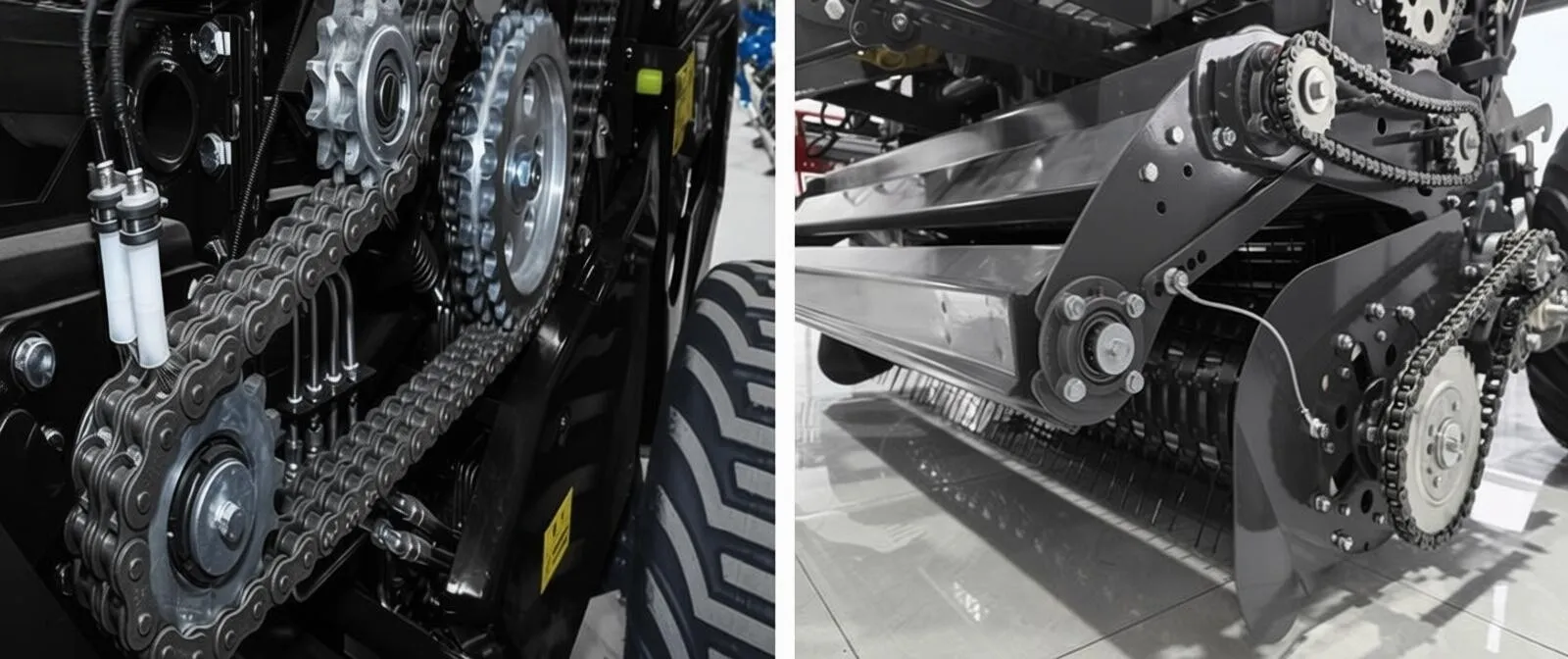
The 9YG-2.24D Classic model uses dual-side 20A heavy-duty roller chain in the rear chamber drive. The choice of 20A over the more common 16A specification reflects the higher instantaneous tensile loads generated when woody cotton stem sections pass through the maximum compression zone of the forming chamber. Standard 16A chain in this application elongates measurably within a single intensive season, requiring frequent tensioner adjustment and earlier-than-expected replacement. 20A chain in the same application maintains its specification across multiple seasons, reducing the annual round baler parts cost and the accumulated downtime from unplanned chain adjustments. In a total cost of ownership calculation that runs across 8–10 years, the cumulative chain replacement cost differential between 20A and 16A specification represents a real financial advantage for the higher-specification machine.
The structural frame on 9YG series machines is produced from CNC laser-cut structural steel sections joined by automated welding processes with consistent penetration depth and weld quality at all structural joints. The electrostatic powder coating provides a chemically bonded protective surface that resists the abrasive cotton fragment dust and soil particle environment of cotton field operations better than conventionally spray-painted finishes. Frame corrosion and structural fatigue at welded joints are the two leading causes of early machine retirement in round balers operating in high-intensity agricultural residue collection — and the manufacturing process specification directly addresses both. The torque limiter integrated into the dual cross-joint PTO drive shaft provides the final layer of drivetrain protection against the overload force spikes generated by thick cotton main stems, preventing gearbox and chamber roller damage that would otherwise interrupt the amortisation model with unplanned capital replacement costs.
8. Round Baler Gearbox Design and the Regulatory Landscape for Cotton Stalk Operations
The round baler gearbox converts tractor PTO rotation into the drive circuits that power the forming chamber, pickup reel, and net-wrap mechanism. In a cotton stalk application, the gearbox operates under higher sustained torque than in standard hay baling — a factor that affects both the technical specification required and the maintenance attention that protects machine longevity. In the cost-effectiveness comparison with a shredder-baler, gearbox reliability is relevant because the shredder-baler adds a second, independently driven rotor gearbox that creates a second potential failure point alongside the bale-forming gearbox. A well-designed round baler concentrates the mechanical complexity in a single, well-supported gearbox system.
The standard gearbox on the 9YG-2.24D series outputs at 720 r/min from a bevel gear set. Oil level and condition checks are accessible without disassembly. SAE 90 GL-4 gear oil — the correct lubricant specification — is a standard industrial product available from Korean suppliers including GS Caltex, S-OIL, and SK Lubricants without special ordering. The dual gearbox configuration on the 9YG-2.24D Transcend model provides the additional benefit of independent lateral rotation at each gearbox, reducing PTO shaft angular loading during headland turns and eliminating the power interruptions that otherwise add to the throughput gap between round baler and shredder-baler in fragmented field conditions.
| Region | Key Regulation | Cotton Stalk and Gearbox Relevance |
|---|---|---|
| South Korea | Agricultural Mechanisation Promotion Act; Safety Standards for Agricultural Machinery; Clean Air Conservation Act | PTO shaft guarding mandatory; gearbox certification for machinery subsidy eligibility; cotton stalk burning prohibited in most agricultural districts |
| European Union | EU Machinery Regulation 2023/1230; EN ISO 11684 safety signage standard; RED III biomass sustainability | CE marking mandatory; gearbox torque documentation required; cotton stalk biomass eligible under RED III sustainability criteria |
| India | National Policy on Biofuels 2018; State-level Prevention of Air Pollution Acts; BIS machinery standards | Cotton stalk burning banned in Maharashtra and Gujarat; biomass RECs available for qualifying stalk bale supply; BIS gearbox conformity for subsidised equipment |
| Uzbekistan | Presidential Decree No. 5285; GOST equipment standards | Cotton stalk burning restricted; GOST-compliant gearbox lubrication required; active biomass CHP contracts in Fergana and Tashkent regions |
| Turkey | Renewable Energy Law No. 5346 (YEKDEM); Agricultural Machinery Safety Regulation per TS EN ISO series | Cotton stalk eligible under YEKDEM biomass feed-in tariff; machinery gearbox must meet TS EN ISO safety standard equivalents for subsidy qualification |
| United States | ASABE S331.4 (PTO safety); OSHA 29 CFR 1928.57; EPA Renewable Fuel Standard | PTO master shield and gearbox torque rating mandatory; cotton stalk qualifies as advanced biofuel feedstock under EPA RFS D3/D5 pathway |
9. Which End Markets Favour the Round Baler for Cotton Stalk?
The cost-effectiveness of the round baler versus the shredder-baler is partly determined by which end markets are accessible in your region, and what format those markets accept. Round bale format is more widely accepted across the range of potential cotton stalk buyers, which gives the round baler operator more flexibility to shift between markets as conditions change — a practical advantage that is often underweighted in initial equipment selection discussions.
Biomass energy plants operating direct-combustion stoker grate systems accept round bales without preprocessing in most configurations. The intake conveyor and bale cutting equipment at these facilities is designed for whole-stalk round bale material, and the requirement is bulk density compliance — not shredded-particle format. Korean biomass facilities operating under the Renewable Portfolio Standard typically specify a minimum bulk density of 100–120 kg/m³ for cotton stalk round bales, which the 9YG-2.24D series achieves reliably at sensor-controlled target settings above 120 kg/m³. A round baler producing compliant bales at 40–100 bales per hour can service these buyers at commercial volume without any format disadvantage versus shredder-baler output.
Livestock feed programmes incorporating cotton stalk as a roughage supplement — primarily in the form of ammoniated or fermented stalk for ruminant feeding — specifically require whole-stalk or near-whole-stalk material. Shredded-particle cotton stalk from a shredder-baler has reduced suitability for this application because the particle size reduction alters the material’s physical form in ways that affect rumen mat formation in cattle — a nutritional consideration that makes whole-stalk bale format the preferred input for cotton stalk feed processing facilities. This market represents an additional revenue stream for round baler operators that is largely inaccessible to shredder-baler operators.
Finally, soil amendment programmes that incorporate baled cotton stalk as a carbon-rich organic matter amendment can accept round bales where the receiving operation has its own on-site straw shredder or rotary tiller. Many agri-environmental subsidy programmes targeting soil organic carbon improvement specifically support the use of crop residue material in bale form as the preferred input format for field application — which aligns with round baler output rather than the pre-shredded format of a shredder-baler.
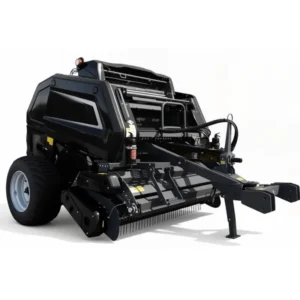
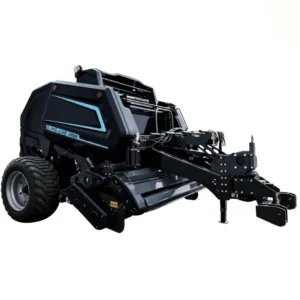
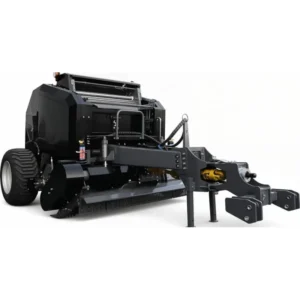
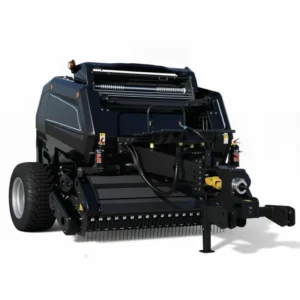
10. Round Baler Models for Cotton Stalk Collection: Full Range Overview
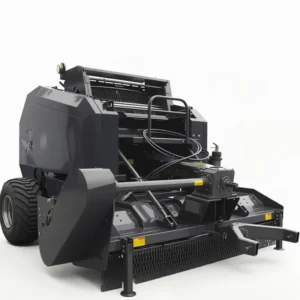
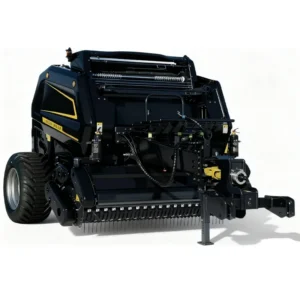
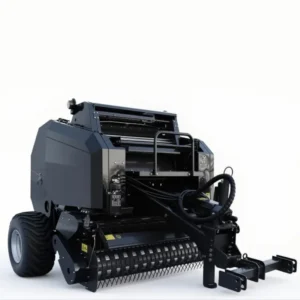
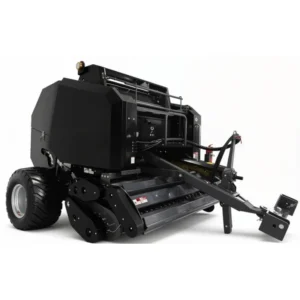
The following models cover the cotton stalk baling application across the range of operational scales — from smallholder cotton farms supplying local cooperatives to large commercial contractors running high-volume biomass supply agreements. Model selection should prioritise pickup configuration and drivetrain specification for the cotton stalk context.
11. Compatible Systems: PTO Shafts and Agricultural Chain for Cotton Stalk Round Balers
One of the practical advantages of the round baler over a shredder-baler is a simpler, more standardised drivetrain system. Our matched PTO shaft and agricultural chain supply ensures every component from the tractor output to the forming chamber roller drive operates within its rated specification — protecting the cost-effectiveness of your round baler investment across its full operating life.
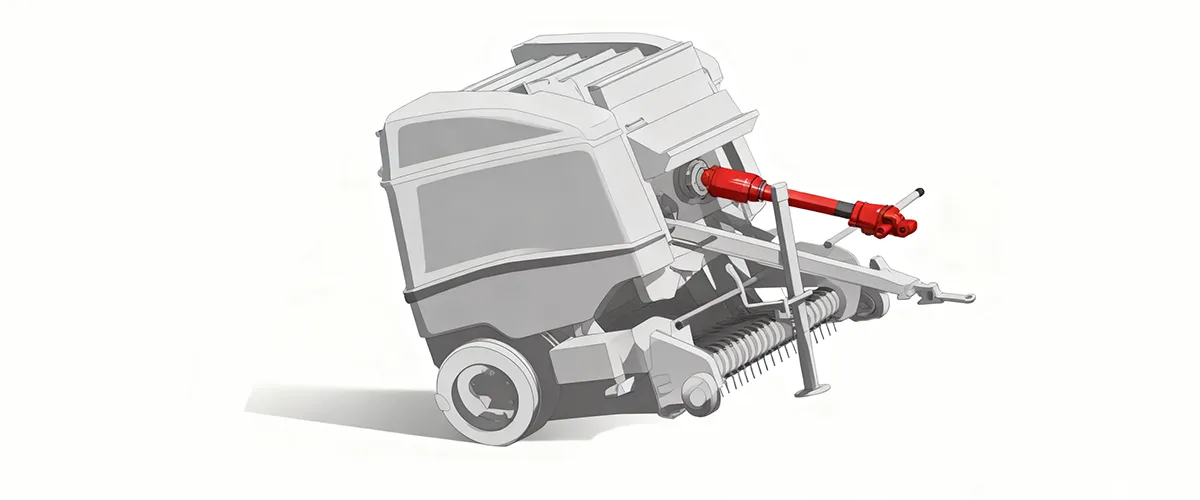
Agricultural PTO Shaft — Round Baler Cotton Stalk Rated
Cotton stalk baling generates higher instantaneous PTO torque loads than standard hay applications — making shaft specification a genuinely important variable rather than a commodity choice. An under-rated PTO shaft can fail at the universal joint under peak compression load from a thick cotton main stem, at exactly the moment when throughput matters most. Our Agricultural PTO Shaft for Round Balers covers the torque ratings, spline specifications, and telescoping length range needed for the 9YG series in both standard and dual-gearbox configurations. Safety clutch ratings are matched to the peak PTO output of Korean and Asian market tractor models commonly used in cotton farming — including LS Mtron, TYM, Kukje, and Branson. A correctly specified PTO shaft completes the drivetrain protection system that starts at the tractor output, continues through the safety clutch, and ends at the gearbox input — preventing the cascade failures that are one of the most disruptive and expensive events in a commercial cotton stalk baling season.
Agricultural Drive Chain — Specification-Matched for Round Baler Service
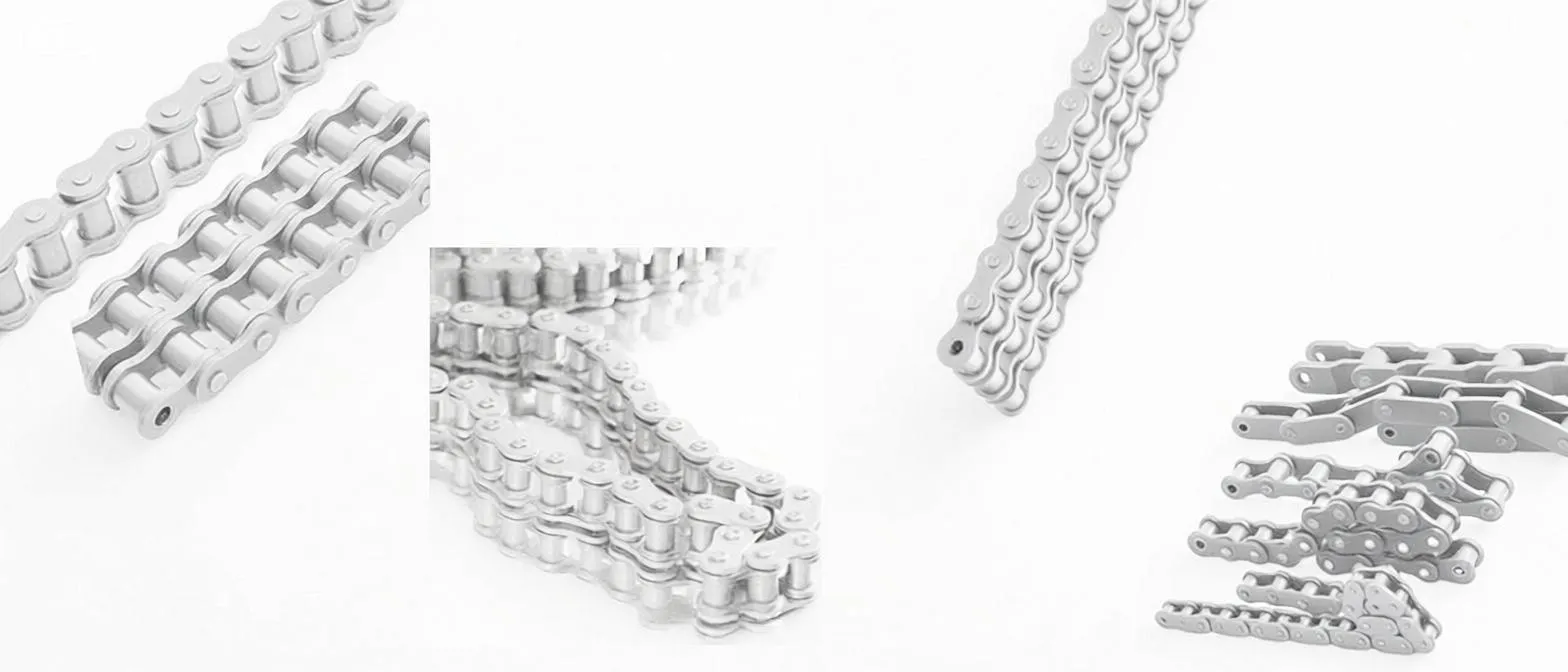
Drive chain is the consumable component most directly affected by cotton stalk’s higher compression forces. Supplying matched agricultural drive chain alongside the round baler machine ensures specification compatibility between chain pitch and the baler’s sprocket geometry — a detail that matters in terms of wear pattern and chain life. Our agricultural chain supply covers 16A standard (for 9YG-1.0 and 1.0C chamber circuits) and 20A heavy-duty (for 9YG-2.24D Classic dual-side rear chamber drive). Both standards are available as the same market-standard chain types that Korean industrial hardware distributors stock, making field replacement and pre-season procurement straightforward without specialist ordering. In the total cost of ownership comparison between a round baler and a shredder-baler, keeping replacement chain costs low and predictable is one of the round baler’s consistent operating cost advantages — and using correctly specified chain from the start is the most effective way to maintain that advantage through the machine’s operating life.
Frequently Asked Questions
संपादक: पीएक्सवाई