Corn Silage / Stover Baling — Technical Guide
How to Adjust Compression Chamber Pressure for High-Moisture Corn Silage Baling
A practical field guide for operators working with high-moisture corn stover and silage, covering chamber mechanics, pressure calibration, material behaviour under load, and compliance with regional agricultural machinery standards.
Baling high-moisture corn silage is a fundamentally different challenge from handling dry hay or wheat straw. The moment moisture content climbs above 55%, the material behaves in ways that can surprise even experienced operators — it sticks, bridges, expands after compression, and accelerates fermentation in ways that are sensitive to the density you achieve inside the chamber. Getting the compression chamber pressure right is not just about producing a neat, round bale. It is about creating the anaerobic conditions that make silage safe to store, nutritious for livestock, and economically viable for the operation. This guide walks through the mechanics behind chamber pressure, the material science of wet corn stover, a step-by-step adjustment process, and the regulatory context that governs silage machinery in key agricultural markets. Whether you are running a small round baler on a family farm or managing a large-scale forage operation with a high-capacity round baler machine, the principles covered here apply directly to your workflow.
Why Compression Chamber Pressure Matters in Corn Silage Baling
Silage quality is driven by fermentation, and fermentation quality is driven by oxygen exclusion. A bale that is too loose allows air pockets to persist between stalks, enabling aerobic spoilage organisms — primarily moulds and enterobacteria — to consume dry matter before beneficial lactic acid bacteria can establish dominance. Conversely, a bale that is pressed too tightly with high-moisture material can generate excessive heat, cause moisture to weep out through the net wrap before wrapping is complete, and create uneven pressure points that deform the bale during storage.
The target density for whole-crop corn silage bales is generally accepted in the range of 160 to 220 kg dry matter per cubic metre. Achieving this consistently requires that the round baler operator understands the relationship between hydraulic gate pressure, crop feed rate, roller speed, and the physical characteristics of the corn material being processed. High-moisture corn stover — typically harvested at 60 to 72% moisture — is significantly heavier per unit volume than dried straw, which means that even moderate hydraulic pressure can generate very high bale weights if feed rate is not managed carefully.
In markets such as South Korea, where Hanwoo beef cattle and dairy operations rely heavily on domestically produced corn silage to offset expensive imported feed, the pressure setting on the round baler machine directly affects farm profitability. Poor bale density translates to higher dry matter losses during storage, typically between 8 and 18% in poorly sealed bales versus 3 to 5% in well-formed, correctly sealed ones.
Manufacturing Structure of the Compression Chamber in Modern Round Balers
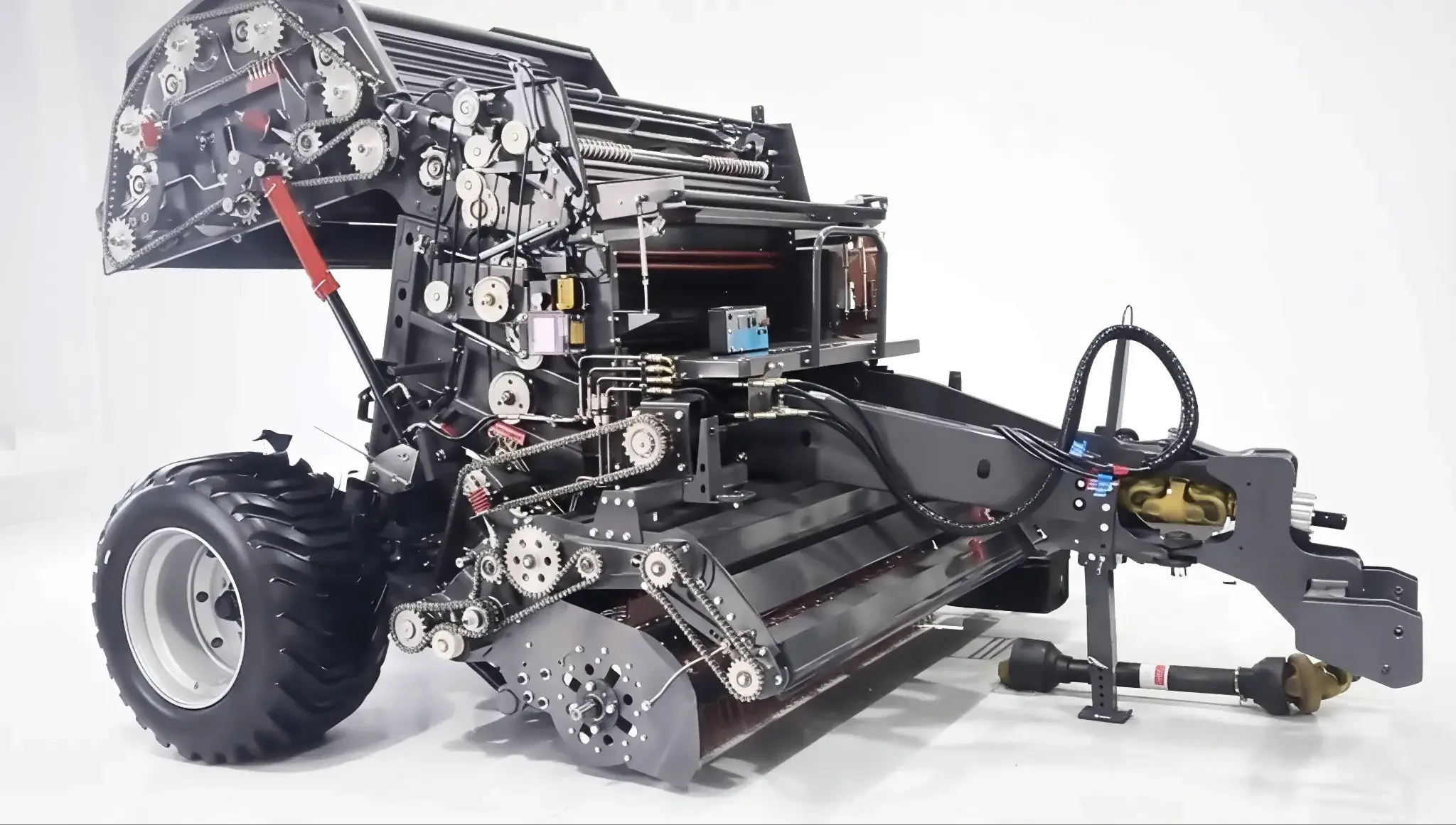
Understanding how a compression chamber is built is essential before attempting to adjust it. The roller-type fixed chamber is the dominant design used in professional-grade round balers intended for high-moisture silage work. In this system, a set of heavy-duty steel rollers — arranged in a circular formation — rotate simultaneously to tumble incoming crop material into an expanding core. As the bale grows, the hydraulic rear gate resists the outward pressure, and the operator can set the gate resistance through a hydraulic pressure valve, typically located near the tractor’s remote hydraulic outlets.
| Component | Material / Spec | Function in Silage Baling |
|---|---|---|
| Compression Rollers | 18 × high-strength steel, Φ222 mm diameter | Tumble crop inward, initiate bale core rotation, apply radial compression force |
| Rear Gate Frame | Heavy-section welded steel, pivot-hinged | Provides outward resistance; hydraulic cylinders control opening force |
| Hydraulic Accumulator Circuit | Nitrogen pre-charged accumulator, 180–250 bar operating range | Absorbs pressure spikes from moisture surges; maintains consistent gate resistance |
| Pickup Header | Spring-tooth or Hammer Claw, 2.24 m working width (model-dependent) | Gathers lodged or chopped corn stover from windrow without pre-shredding |
| Feed Auger / Tine Roller | Spiral-flighted auger, hardened tine tips | Forces bulky wet stover into chamber without bridging at the intake throat |
| Net Wrap System | Auto-tension net dispenser, 1.0–2.0 m wrap width | Seals outer bale layer; must engage quickly before moisture migration begins |
| PTO Driveline | 540 / 720 / 1000 RPM input, shear-bolt overload protection | Transmits tractor power to roller drive train; shear bolts protect against stover slugs |
The 18-roller chamber configuration, as seen in the 9YG-2.24D series, distributes compression force more evenly around the bale circumference compared to belt-type or 12-roller designs. This is particularly important when baling high-moisture corn stover, because wet material tends to deform unevenly under point loading — creating hard outer shells over soft interiors, which compromises fermentation quality. The uniform radial pressure from 18 rollers encourages consistent density from core to outer skin, producing bales that ferment predictably and hold their shape under the weight of stacked silage film.
Material System: What High-Moisture Corn Does Inside the Chamber
Corn stover harvested for silage has a very different mechanical profile from dry forage crops. The stalk wall is still partially green and turgid, which means it carries significant internal cell pressure. When the rollers begin to compress this material, the stalk does not crumble and mat the way dry straw does — instead it tends to spring back, slide against adjacent stalks, and resist forming a tight bale core in the early stages of filling. This springback effect is known among operators as the “kick phase” of bale formation, and it is the point where incorrect pressure settings cause the most problems.
Too little gate pressure during the kick phase allows the growing core to expand outward prematurely, reducing the density at the geometric centre of the bale. Once the core is loose, it cannot be corrected — adding more material simply adds to the outer layers. The finished bale will appear dense from the outside but will have a spongy, poorly compacted centre that harbours oxygen and produces clostridial silage rather than lactic acid silage.
The stalk moisture also affects lubrication between stalks — wet material has lower inter-particle friction, which assists bale rotation but requires the rollers to work harder to generate the outward compression force needed to push the crop against the gate. Operators should therefore expect higher PTO torque demand during high-moisture silage baling compared to dry hay work with the same round baler machine, and should not reduce ground speed in an attempt to reduce torque, as this tends to cause over-feeding and chamber bridging.
Moisture Range vs. Recommended Pressure Settings
The table below represents general guidance based on experience with roller-chamber round balers handling whole-crop corn silage. Always cross-reference with your specific machine’s operator manual, as hydraulic circuit ratings vary between models and manufacturers. The pressure figures refer to the setting on the baler’s own hydraulic pressure relief valve, not the tractor remote hydraulic output pressure.
| Crop Moisture Content | Suggested Gate Pressure | Target Bale Density | Key Risk at This Range |
|---|---|---|---|
| Below 50% | High (180–220 bar) | 150–180 kg DM/m³ | Material too dry for silage; risk of heating during storage |
| 50–60% | Medium-High (160–190 bar) | 165–200 kg DM/m³ | Acceptable silage window; bale shape generally stable |
| 60–70% (Optimal) | Medium (140–165 bar) | 170–215 kg DM/m³ | Ideal fermentation range; risk of moisture weeping if over-pressured |
| 70–75% | Medium-Low (120–145 bar) | 155–185 kg DM/m³ | Effluent leakage risk; reduce pressure, increase wrapping speed |
| Above 75% | Low (100–125 bar) | 140–165 kg DM/m³ | High effluent, clostridial fermentation risk; consider delaying harvest |
DM = Dry Matter. Bar figures are guidance values for roller-type fixed-chamber machines with hydraulic accumulator circuits. Variable-chamber belt designs require separate calibration.
Looking for a round baler designed to handle high-moisture corn silage with consistent pressure control?
Step-by-Step: How to Set and Verify Chamber Pressure Before and During Operation
Pressure calibration is not a one-time setup — it needs to be revisited every time crop conditions change, which can happen several times within a single day of baling as the sun dries windrows unevenly or as you move from one field to another with different crop stands. The sequence below gives a practical framework that applies to most roller-type round balers in the 9YG product family and to comparable machines from other round baler manufacturers.
Use a calibrated handheld moisture meter on freshly cut corn stalks from several points across the field. Do not rely on visual assessment alone — green colour is not a reliable proxy for moisture percentage in whole-crop corn. Record the reading and select your starting pressure from the guidance table above. The moisture meter investment typically pays for itself within a single season by avoiding spoilage losses.
Confirm that your tractor’s remote hydraulic circuit is delivering adequate flow and that the pressure is set above the baler’s own relief valve setting — typically 240 to 280 bar at the tractor outlet. A tractor output that is too low will cause the baler’s hydraulic cylinders to operate at reduced force, meaning the gate pressure gauge will read correctly but the actual clamping force delivered to the bale will be insufficient, particularly at the start of filling when the gate is fully open.
Confirm PTO speed matches the baler’s design input — most 9YG series machines are designed for 540 RPM at the PTO shaft. Running at lower RPM reduces roller surface speed and allows the crop to slip rather than tumble, which disrupts bale core formation. Higher-than-rated RPM can cause chain stress and abnormal wear. During high-moisture corn silage baling, roller traction on the wet crop surface is critical to preventing the low-density core problem described earlier in this guide.
Allow the first bale to complete fully. Do not adjust pressure during filling of this bale. When the bale is ejected, check its shape — it should be cylindrical with minimal flat spots on the ends and a consistent drum sound when tapped with a rod. Record the bale weight on a field scale if available. A round bale of whole-crop corn silage at optimal density will typically weigh between 300 and 480 kg depending on bale diameter settings and crop moisture content.
Make pressure adjustments in steps of 5 to 10 bar. After each adjustment, allow a minimum of two full bales to complete before re-evaluating — the chamber needs time to reach a new equilibrium after a pressure change. Do not chase individual bale-to-bale variation aggressively, as some variation is natural when baling crop from uneven windrows. The target is consistency across a run of 10 or more bales, not perfection in each individual unit.
Watch the base of each bale as it leaves the chamber. A small amount of surface moisture is acceptable, but visible streams of effluent running from the bale indicate that pressure is too high for the crop moisture level at that moment. Reduce gate pressure by 10 to 15 bar and increase ground speed slightly to reduce the volume of crop being fed per unit time. Effluent from over-pressed high-moisture silage bales carries significant nutrient load and can cause compliance issues under environmental runoff regulations in several markets.

Recommended Round Baler for High-Moisture Corn Silage
Mesin Pengepak Jerami Bundar 9YG-2.24D
The 9YG-2.24D is purpose-built for high-volume silage operations. Its 18-roller fixed compression chamber delivers consistent bale densities of 100 to 200 kg/m³, with peak performance bales regularly achieving 200 to 280 kg/m³ on well-conditioned corn windrows. The 2.24 m pickup width, available with optional Hammer Claw pickup for direct standing-corn harvesting, means this machine can work ahead of wrapping equipment without creating a bottleneck in the field operation. Hydraulic accumulator gate control absorbs the pressure spikes characteristic of high-moisture crop — a feature that is particularly relevant when moving from dry headland edges to wetter field centres within a single run. The auto-lubrication system supports continuous daily operation without the repeated grease-nipple work that would otherwise add significant downtime during peak harvest windows.
18 Roller Chamber
40–100 Bales/hr
CE & ISO Certified
Common Pressure Adjustment Errors and How to Diagnose Them
Most pressure-related bale quality problems can be diagnosed by examining the finished bale before it is wrapped. The following table summarises the most frequently encountered issues in corn silage baling operations and links each symptom to a specific pressure or operational cause. Recognising these patterns early in a baling session saves material, time, and the costly process of re-baling or disposing of spoiled silage later in the season.
| Symptom Observed | Most Likely Cause | Corrective Action |
|---|---|---|
| Bale soft at the core, dense outer shell | Gate pressure too low during initial fill phase | Increase pressure 10–15 bar; reduce feed rate at start of each bale |
| Effluent streaming from bale base | Pressure too high for current crop moisture; mechanical squeezing of cell water | Reduce pressure 10–15 bar; increase ground speed to reduce windrow volume per pass |
| Bale egg-shaped rather than round | Uneven roller chain tension; one or more rollers not spinning at full speed | Inspect roller chain for wear; retension drive chain; check for debris on individual rollers |
| Chamber bridging / blockage at intake | Long, uncut stover entering without pre-processing; feed auger speed inadequate | Reduce ground speed; check crop cut length; consider pre-conditioning windrow |
| Bale density reading inconsistent bale to bale | Fluctuating tractor hydraulic pressure; accumulator pre-charge pressure incorrect | Check accumulator nitrogen pre-charge; ensure tractor remote is operating at steady pressure |
| Net wrap not securing outer layer tightly | Bale diameter too small for wrap system sensor; gate opening too early | Adjust bale size sensor threshold; allow bale to reach full diameter before wrap trigger |
Regulatory Context: Agricultural Machinery Standards for Silage Baling Equipment
Operators and purchasing managers selecting a round baler machine for corn silage work need to be aware of the regulatory environment governing agricultural machinery safety, emissions, and silage effluent management in their respective markets. These requirements directly influence which machine specifications are appropriate for legal operation and for export compliance.
| Region / Country | Relevant Regulation | Practical Implication for Round Baler Operators |
|---|---|---|
| Korea Selatan | Agricultural Mechanisation Promotion Act (농업기계화 촉진법); Clean Air Conservation Act (대기환경보전법); Waste Management Act (폐기물관리법) | Open burning of corn stover is prohibited under environmental enforcement that intensified from 2019. Farmers baling stover rather than burning it may qualify for Rural Development Administration (RDA) mechanisation subsidies. Balers must carry relevant safety certification acceptable to domestic dealers — CE marking is widely accepted alongside KC mark provisions for imported agricultural machinery. |
| Uni Eropa | Machinery Directive 2006/42/EC (pending revision under EU Machinery Regulation 2023/1230); Nitrates Directive 91/676/EEC; Water Framework Directive 2000/60/EC | CE marking is mandatory for round balers sold in the EU. Silage effluent is classified as a controlled pollutant under the Nitrates Directive — bale sites adjacent to watercourses require effluent containment planning. High-moisture baling operations in Nitrate Vulnerable Zones require additional farm records documenting silage nutrient inputs. |
| United Kingdom | Supply of Machinery (Safety) Regulations 2008; Silage, Slurry and Agricultural Fuel Oil (SSAFO) Regulations 2010 (England & Wales) | SSAFO requires that silage effluent storage meets capacity thresholds where earthen bale pads are used. Round balers without CE or UKCA marking cannot legally be placed on the UK market post-Brexit. Silage effluent with a biological oxygen demand of up to 200 times that of raw sewage is classified as a high-risk agricultural pollutant. |
| Australia | Agricultural and Veterinary Chemicals Code Act 1994; various State Environmental Protection Acts; AS 4024 series (machinery safety) | No single national baler certification scheme, but machinery must comply with relevant state OHS requirements. Silage effluent discharge to surface water may constitute an offence under state EPA legislation. The New South Wales Environmental Protection Authority has issued specific guidance on silage effluent management on farms. |
| Canada | Canadian Agricultural Safety Association (CASA) standards; provincial environmental farm plans; Quebec’s Loi sur la qualité de l’environnement | Agricultural machinery imported into Canada requires compliance with Transport Canada and provincial safety standards where applicable. Silage production is recognised as a beneficial management practice (BMP) for nutrient management under most provincial agri-environmental frameworks. |
| Brazil | ABNT NBR standards for agricultural machinery; INMETRO certification for imported equipment; MAPA (Ministry of Agriculture) registration requirements | Imported round balers typically require MAPA registration and INMETRO testing for safety compliance before commercial sale. Corn silage is a primary feed source for Brazil’s large beef and dairy sector, making correctly operating round baler machines of strong commercial importance in the South and Centre-West regions. |
In South Korea specifically, the government’s push to reduce seasonal fine dust pollution has led to strict enforcement of the ban on agricultural burning. The Rural Development Administration’s annual machinery subsidy programme actively supports farmers in acquiring certified round baler machines as a compliant alternative to open stover burning. This regulatory environment has driven significant market growth for small round baler and mid-range round baler machine imports into South Korea, with demand concentrated in the Chungcheong, Gyeongbuk, and Jeolla provinces where corn cultivation is most extensive.
Pressure Management Across the Corn Silage Harvest Window
The corn silage harvest window is typically narrow — in most temperate growing zones, it runs for between 7 and 21 days before the crop either dries below the optimal moisture range or is damaged by frost. During this window, the crop’s moisture content and physical structure change daily, and operators running a round baler for silage need to respond to these changes with corresponding pressure adjustments. What worked at 9:00 AM when the windrow was still damp from morning dew may over-squeeze the same crop by 2:00 PM after several hours of sun exposure.
A practical approach used by experienced silage contractors is to divide the working day into morning, midday, and afternoon sessions, testing one bale at each transition and adjusting pressure if the moisture reading or bale weight has shifted by more than 5%. This sounds labour-intensive, but on a high-output round baler machine capable of 60 to 100 bales per hour, even a single hour of operation at the wrong pressure setting can produce dozens of under-density bales that will cost far more in silage losses than the time saved by skipping the check.
Another factor that is often overlooked is the variation in crop structure between the stover fraction and the ear fraction in whole-crop corn silage baling. The grain and cob component of whole-crop corn is significantly denser than the stalk material and responds differently to compression. If the crop has been harvested at the dough stage to include a high grain fraction, operators may find that the same gate pressure that produced dense stalk bales earlier in the season now produces bales that are unacceptably heavy because the grain compresses into a much smaller volume under the same force. Reducing gate pressure by 15 to 25 bar when baling high-grain fraction whole-crop is typically necessary to maintain practical bale weights and avoid over-stressing the machine’s rear gate pivot points.
Compatible Accessories: Building a Complete Corn Silage Baling System
A round baler machine is the centrepiece of the silage baling operation, but its effectiveness depends heavily on the quality of supporting components. Selecting accessories from the same production family as the baler ensures dimensional compatibility, matched torque ratings, and a consistent supply chain for spare parts — all of which matter when a breakdown during peak harvest has direct financial consequences.
Agricultural PTO Shaft for Round Balers
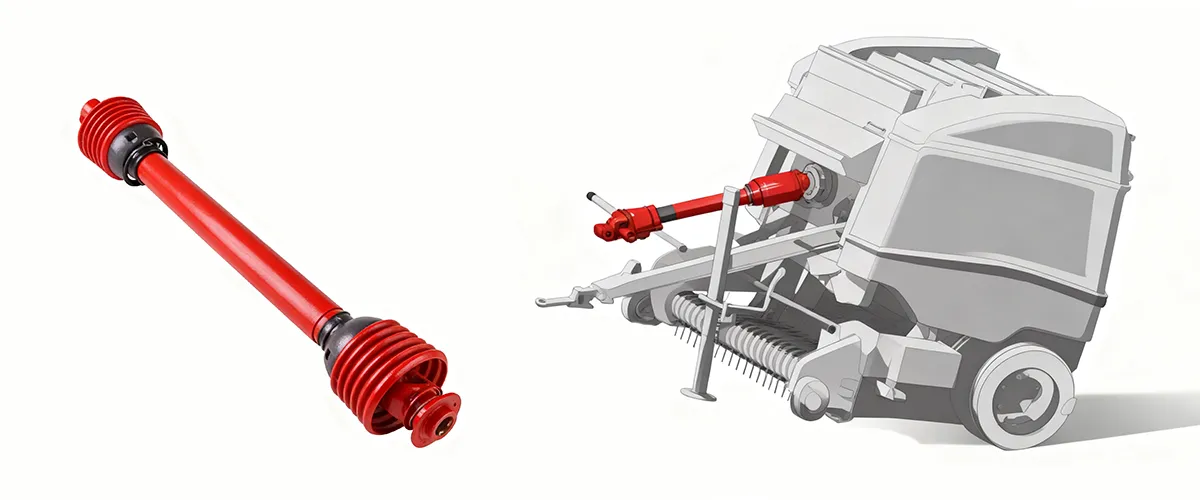
The PTO driveline is the primary power transfer path from tractor to baler. For high-moisture silage baling, the drive shaft experiences elevated torque spikes caused by the higher resistance of wet crop material inside the chamber. A properly rated Poros PTO with integrated overrun clutch and shear-bolt protection prevents these torque spikes from reaching the gearbox and roller chain. Using a mismatched or worn PTO shaft on a round baler during silage work is one of the most common causes of gearbox damage and unscheduled downtime.
Agricultural Chain Drive System
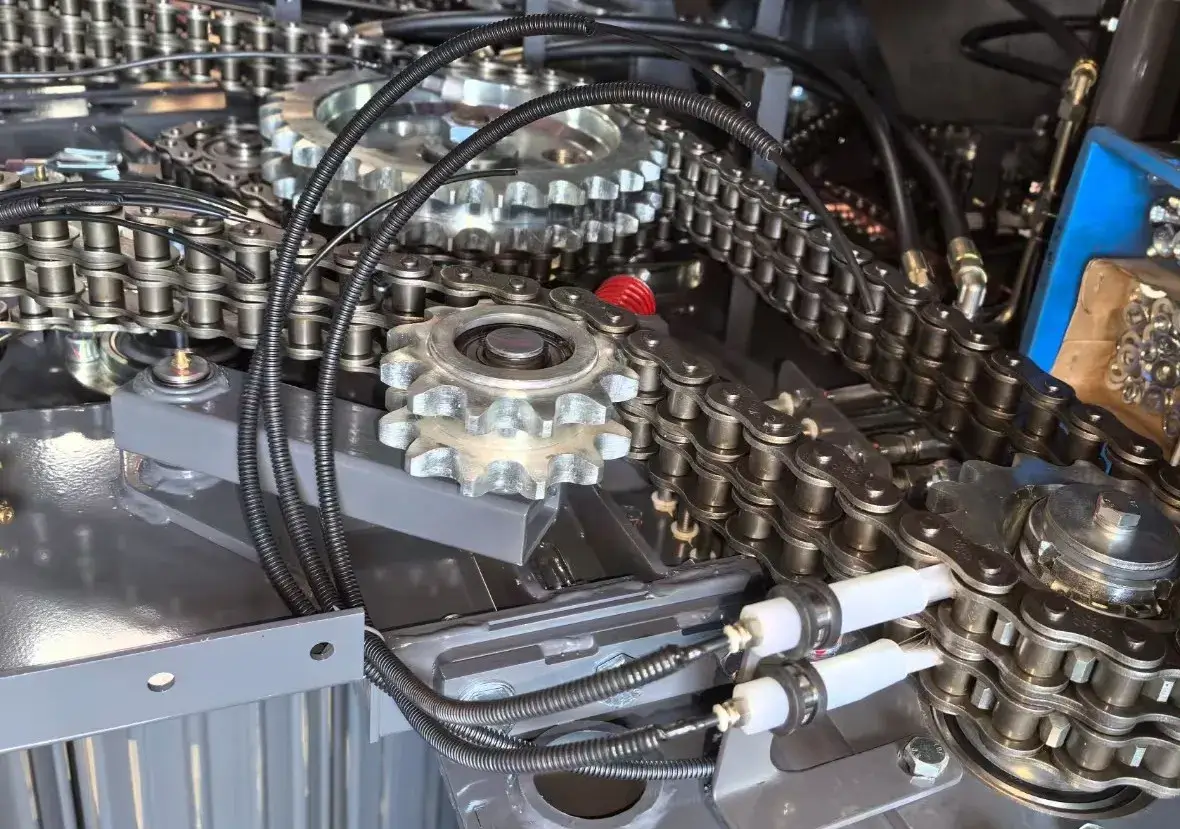
The roller drive chain within the compression chamber is one of the highest-wear components in any round baler handling tough crops like corn stover. Stalk fibres can accumulate around chain links and sprocket teeth, accelerating wear rates significantly compared to clean hay baling conditions. Using a matched agricultural chain designed for the load ratings of the 9YG roller drive system extends service life and reduces the frequency of in-season chain replacements. Stocking a spare set of matching chain links during the silage harvest window is strongly recommended for large-scale operations.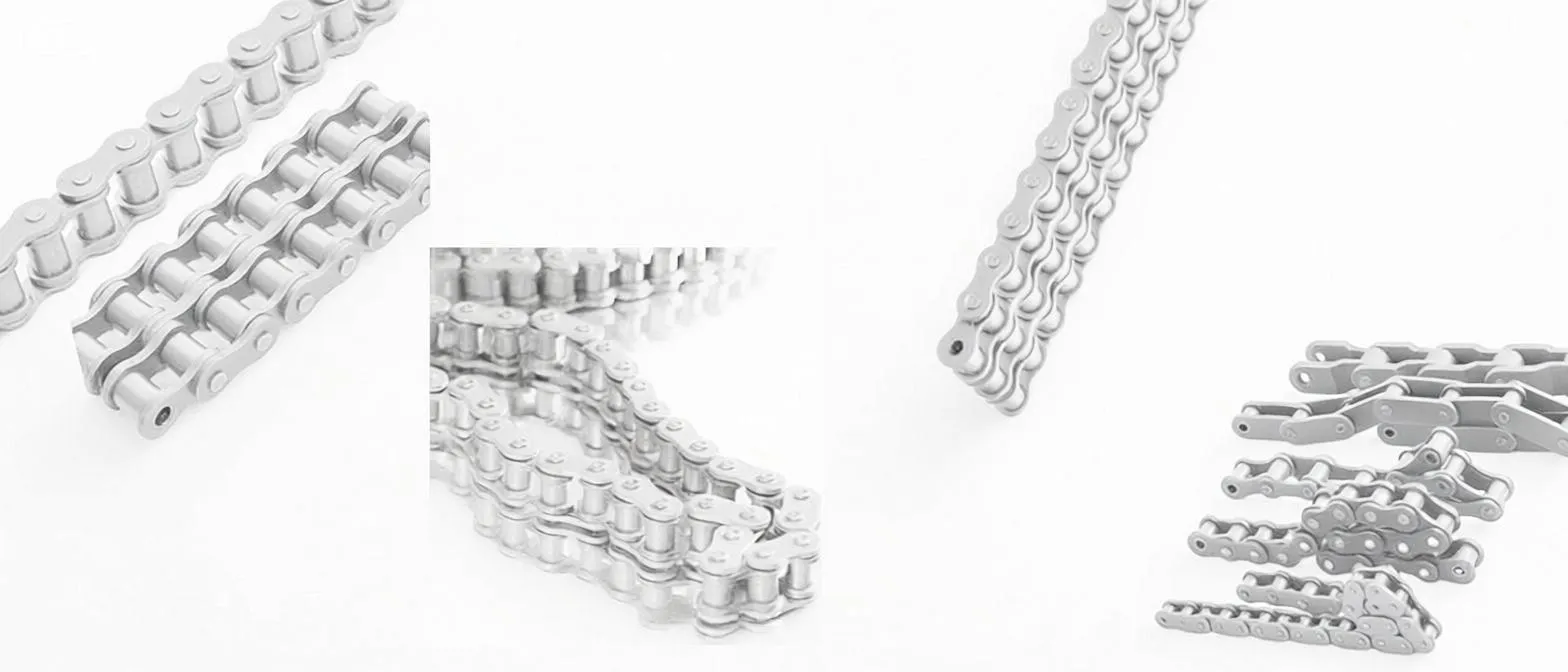
Field Observations: Corn Silage Baling in Korean Agricultural Conditions
South Korea’s corn silage production is concentrated in the central and southern provinces, where Hanwoo beef cattle farms have been increasing their reliance on home-grown forage to offset the cost of imported feed grain. The typical harvest period runs from late August through September, coinciding with late-summer humidity levels that keep field moisture content higher than might be expected from visual inspection alone. Operators running a round baler in these conditions routinely start their morning sessions at lower gate pressures than they might use in drier climates, then adjust upward as afternoon temperatures reduce crop moisture.
The paddy-field geography of many Korean corn-growing zones also introduces a specific challenge for round baler machine operation: the narrow headlands and irregular field shapes common on former rice paddy conversions mean that large-format balers with long pickup headers can struggle to turn within the field without leaving un-baled rows. The 2.24 m pickup width of the 9YG-2.24D performs well in open fields but may need to be operated with reduced ground speed on tight headlands to maintain consistent feed into the chamber without creating slug-feeding conditions at the pickup-to-auger transition.
Korean livestock producers who have adopted round baler silage systems report that the combination of domestic baling and timely wrapping has reduced total forage costs by 20 to 35% compared to purchasing wrapped bale silage from contractors or importing block silage. The capital cost of a round baler machine is typically recovered within two to four harvest seasons in operations running 200 or more bales annually, a threshold most medium to large Hanwoo operations meet comfortably.
Maintaining Pressure System Integrity Through the Silage Season
The hydraulic pressure system that controls gate clamping force is one of the most maintenance-sensitive circuits on a round baler machine. During silage season, when the machine may operate for 10 to 14 hours daily in dusty, humid conditions, small hydraulic oil leaks or gradual accumulator pre-charge loss can go unnoticed until the operator realises bale density has been declining across an entire run. A pre-season hydraulic inspection and a brief mid-season check are inexpensive insurance against these problems.
| Maintenance Task | Frequency During Silage Season | Why It Affects Pressure Performance |
|---|---|---|
| Check hydraulic oil level and condition | Every 50 operating hours | Low oil level causes cavitation in the accumulator circuit, producing inconsistent gate pressure delivery |
| Inspect accumulator nitrogen pre-charge | Pre-season and mid-season | Under-charged accumulator allows pressure spikes to reach gate cylinders directly, damaging seals and causing gate flutter |
| Check gate pivot grease points | Daily (or per auto-lube system schedule) | Dry gate pivots create additional resistance to opening that partially cancels the adjusted pressure setting |
| Inspect pressure relief valve for weeping | Weekly during heavy use | A leaking relief valve bleeds pressure continuously, reducing effective gate clamping force below set point |
| Check roller drive chain tension and lubrication | Every 8 operating hours during corn silage work | Slack chain causes shock loading that mimics pressure surges, producing bales with inconsistent density bands |
| Clean pickup tines and crop deflectors | Daily in wet conditions | Crop wrap-around on tines reduces pickup efficiency, causing slug feeding into the chamber and sudden pressure spikes |
About Us
We are a professional agricultural machinery manufacturer with over 12 years of dedicated focus on round baler design, engineering, and production. Our facility spans more than 40,000 square metres and operates a workforce of over 260 technical and production professionals, supported by CNC laser cutting systems, automated welding lines, and electrostatic spray finishing production. Our product portfolio covers more than 20 types of forage and harvest machinery, anchored by the 9YG series round baler machine line that has ranked first in domestic market share for four consecutive years.
Our machines carry ISO 9001 quality management certification and CE marking, and are exported to agricultural markets across Asia, Europe, Oceania, and the Americas. We hold close to 100 registered technology patents covering compression chamber design, pickup mechanisms, hydraulic control systems, and net wrap automation. For customers in South Korea and other export markets, we offer OEM and ODM customisation services that include PTO speed adaptation, colour and branding, and technical modifications to match locally prevalent tractor models.
Frequently Asked Questions
Editor: PXY