
EP-6500×2900×3360mm L×W×H Hammer-Claw Type Square Baler
Itu 9YF-2200S Square Baler is a heavy-duty, towed-type machine designed for harvesting and baling straw, cotton stalks, corn stalks, and various forage grasses. It features a 2200mm hammer-claw pickup and a dual-crushing mechanism with a negative-pressure fan to remove dust and impurities, significantly improving bale cleanliness and density. The compression chamber measures 460×360 mm, producing tightly bound rectangular bales via automatic rope tying. Requiring a minimum of 73.5 kW power, this unit weighs 2350 kg with overall dimensions of 6500×2900×3360 mm, making it ideal for large-scale operations seeking efficient, high-density baling with reduced field residue.
Heavy-Duty Agricultural Square Baler
EP-6500×2900×3360mm (L×W×H)
Hammer-Claw Type Square Baler
A professional-grade, trailed-type large square baler equipped with a negative-pressure fan dust removal system and dual-crushing mechanism — engineered for high-throughput wheat straw, rice straw, cotton stalk, corn stalk, and multi-crop forage baling across commercial farming and livestock operations worldwide.
1. Spesifikasi Teknis
All parameters below correspond to the EP-6500×2900×3360mm (L×W×H) Hammer-Claw Type Square Baler, based on the 9YF-2200S engineering platform.
| TIDAK. | Parameter | Satuan | Spesifikasi |
|---|---|---|---|
| 1 | Nama Model | — | EP Hammer-Claw Type Square Baler |
| 2 | Metode Pengait | — | Towed-type |
| 3 | Picking Width | mm | 2200 |
| 4 | Feed Inlet Width | mm | — |
| 5 | Picker Structure | — | Hammer-Claw Type |
| 6 | Feeder Structure | — | Fork Feeding Mechanism |
| 7 | Knotter Type | — | D Type |
| 8 | Number of Knotters | komputer | 2 |
| 9 | Compression Chamber Section Size (W×H) | mm | 460 × 360 |
| 10 | Metode Pengepakan | — | Automatic Rope Baling |
| 11 | Matching Power Range | kW | ≥73.5 |
| 12 | Dimensi Keseluruhan (P×L×T) | mm | 6500 × 2900 × 3360 |
| 13 | Berat Mesin | kg | 2350 |
2. What Is a Square Baler — and How Does This Model Raise the Standard?
A square baler is a type of agricultural baling machine that compresses harvested crop material — hay, straw, silage crop residue, and forage — into rectangular bale blocks for efficient storage, transport, and feeding. Square hay bales are preferred over round bales in many commercial contexts because they stack cleanly, store compactly in covered sheds, and can be handled and portioned with minimal equipment. The EP Hammer-Claw Type Square Baler, built on the 9YF-2200S engineering platform with an overall machine size of 6500×2900×3360mm, is a large square baler targeting professional farming operations, agricultural contractors, and livestock enterprises that need to process large volumes of crop residue during the tight harvesting windows of the "Three Summers and Three Autumns" — the critical multi-crop harvest periods common across Asian and global grain belts.
Unlike basic square baler machines that accept material at face value, this model is equipped with a core negative-pressure fan dust removal system built specifically for dusty crop environments. Wheat straw and rice straw windrows carry significant fine dust, sand, and organic debris that accelerate wear on conventional baler knotters and plunger mechanisms. The EP fan system separates and expels impurities before material reaches the baling chamber, resulting in cleaner, higher-purity bales — a genuine quality advantage for buyers reselling baled straw into markets where bale cleanliness and low-impurity content are purchasing criteria, such as mushroom cultivation substrate supply chains in South Korea, Japan, and across Southeast Asia.
3. Five Key Advantages of the EP Hammer-Claw Square Baler
01 — HAMMER-CLAW PICKUP
The Hammer-Claw Type pickup mechanism is a defining feature of this square baler machine. Conventional spring-tooth pickups rely on tine contact to lift material — hammer-claw designs actively shred and loosen compacted or lodged crop material as it is lifted, making the machine capable of cleanly picking up standing, lodged, or windrowed corn, sorghum, cotton stalk, and wheat straw in a single pass. For buyers in South Korea, Canada, and Australia where mixed crop residue recovery is common, this capability eliminates the need for separate shredding or chopping operations before baling.
02 — NEGATIVE-PRESSURE FAN CLEANING
The integrated negative-pressure fan continuously draws fine dust, soil particles, and light impurities away from the crop stream before it enters the baling chamber. This system significantly extends knotter service life — dust and grit are the primary cause of premature knotter wear and missed ties on conventional square baler machines — and raises the bale purity level to a standard suitable for food-adjacent applications such as mushroom growing substrate, animal bedding, and high-specification livestock feed where impurity content is a buyer-specified quality parameter.
03 — DUAL-CRUSHING MECHANISM
Twin crushing rollers shred and rub hard-stemmed materials — particularly corn and sorghum stalks — before they enter the compression chamber. This two-stage crushing action increases bale density for a given bale section size, improves bale shape stability and forming consistency, and produces a particle size distribution more suitable for ruminant digestion when bales are used for feed. For commercial cattle farms across Brazil, Colombia, and northern Korea where corn stover is a primary winter roughage source, bale density and digestibility are directly linked to seasonal feeding economics.
04 — WIDE CROP COMPATIBILITY
This square baler machine can reliably pick up and bale standing, lodged, or windrowed corn, sorghum, cotton, and wheat straw in varying field conditions. The machine's crop moisture operating range covers: forage grass and alfalfa at 17–23%; rice and wheat straw and corn stalk at 10–23%; with soil content below 12–25% and slope below 8°. This combination of moisture tolerance and crop-type versatility means a single machine can serve across the full annual rotation on diversified grain and livestock farms — eliminating the need for multiple baler configurations.
05 — AUTOMATIC ROPE BALING
The automatic rope baling system with dual D-type knotters applies two binding ties per bale automatically, without cab intervention. Dual knotters on a large square baler are a significant operational advantage: they reduce the frequency of bale breakage during handling, maintain bale geometry through transport and storage, and allow the machine to operate at full plunger speed without manual tying stops — keeping throughput high during peak field operations. The knotter design is compatible with standard sisal and synthetic baler twine widely available across global agricultural markets.
4. How Does a Square Baler Work — Working Principle
The EP Hammer-Claw Type Square Baler is a towed-type machine driven by the tractor's PTO shaft, which transfers power through the square baler gearbox to all operating systems. As the tractor pulls the machine forward over the windrow, the 2200mm wide Hammer-Claw pickup assembly rotates, actively lifting and shredding crop material from the field surface. The hammer-claw configuration differs fundamentally from spring-tooth pickup designs — rather than simply sweeping material up, the hammer claws engage and break apart compacted or tangled crop, making this square baler machine particularly effective on lodged corn stalk, cotton, and rain-matted wheat straw that would stall a conventional pickup.
Lifted material passes through the negative-pressure fan zone, where fine dust, sand, and lightweight impurities are separated from the crop stream and expelled before the remaining clean material enters the intake throat. The fork feeding mechanism then meters crop into the compression chamber in controlled charges. Before material is pushed into the bale chamber, the dual-crushing mechanism shreds and rubs hard stalks between two counter-rotating roller sets — improving fibre distribution within the bale, increasing pack density, and reducing the incidence of hollow pockets that cause bale shape instability during transport.
Inside the 460×360mm cross-section compression chamber, a reciprocating plunger compresses each charge of crop against the growing bale. When the bale reaches the operator's preset length, the two D-type knotters fire simultaneously, applying rope ties in a fully automated sequence without manual intervention. The finished square hay bales are then ejected onto the field or into an optional bale accumulator or chute. The entire cycle from material entry to bale ejection repeats continuously at the plunger rate dictated by the tractor's PTO speed and the volume of crop being fed, making cycle time a direct function of windrow density and field travel speed.

5. Materials & Construction
At 2350 kg, this large square baler is built to a structural specification that reflects the sustained mechanical demands of high-throughput commercial baling. The main chassis is fabricated from thick-section structural steel sections, welded and reinforced at the high-stress points that experience the greatest shock loading — particularly the plunger housing, the pickup mounting crossbar, and the knotter deck platform. All primary welds are inspected before surface treatment, which consists of corrosion-inhibiting primer followed by durable field-grade enamel topcoat, providing resistance against the moisture, UV exposure, and crop acid common in multi-season commercial use across humid Korean paddy regions and the temperate grain belts of Canada and the UK.
The Hammer-Claw pickup tines are formed from hardened high-carbon steel to maintain impact resistance through thousands of field cycles. Individual claw elements are bolted for field replacement without removing the full pickup assembly — an important serviceability feature given that pickup tines are the highest-attrition component on any square baler machine during heavy stalk baling work. The dual-crushing rollers are machined from solid steel billet with surface hardening to handle the shear loads from corn stalk rubbing and shredding at continuous duty cycle speeds required during peak harvest periods in Australia, Brazil, and Colombia.
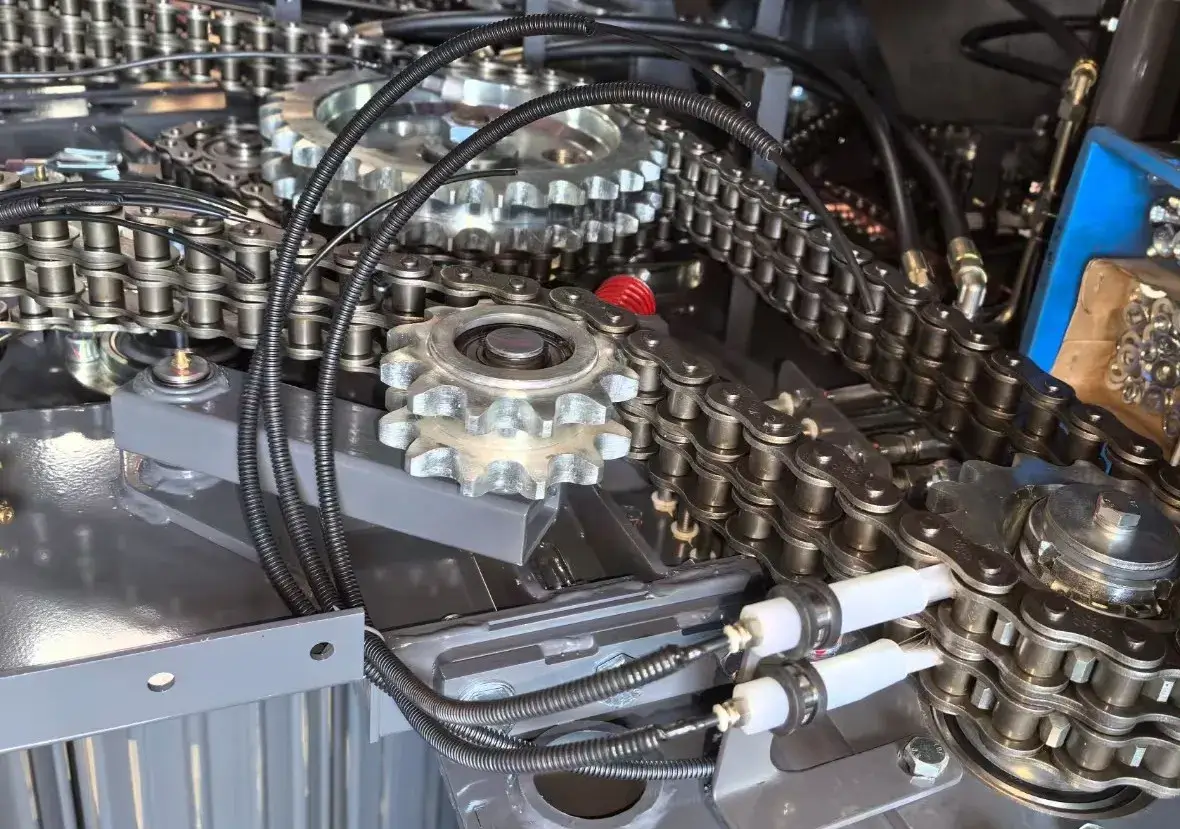
The two D-type knotters are manufactured from precision-cast knotter bill assemblies, a design format with a long track record in European and North American square hay baler manufacture that provides reliable tie formation across the full range of baler twine diameters and tensions. The compression chamber walls are fabricated from hardened wear-plate steel with a smooth bore surface to minimise crop-to-wall friction and maintain consistent bale density from front to rear of the chamber. Square baler parts that contact crop material directly — including feeder forks, plunger face plate, and chamber slide rails — are designed for individual replacement rather than whole-assembly substitution, keeping maintenance costs manageable over multi-year operational life.
6. Square Baler Application Scenarios
The EP Hammer-Claw Square Baler is purpose-built for demanding multi-crop commercial environments where a single machine must cover diverse residue and forage types across the full harvest calendar.
Wheat & Rice Straw Recovery
Following grain harvest across Korea, Japan, and the broader Asian grain belt, wheat straw and rice straw represent valuable co-products for mushroom cultivation, livestock bedding, biomass fuel, and soil amendment. The EP square baler's negative-pressure fan cleaning system produces particularly clean square bales from these fine-dust-heavy crops, meeting the purity standards expected by industrial buyers in mushroom substrate and paper pulp markets where contamination from soil or sand causes processing problems downstream.
Corn & Sorghum Stalk Baling
Corn and sorghum stalks are among the most mechanically demanding crops for any square baler machine. The dual-crushing mechanism on this model shreds hard stems before they enter the compression chamber, producing denser bales from bulky stalk material and reducing the risk of plunger overload or knotter jamming that affects conventional balers on these crops. For livestock operations in Colombia, Brazil, and the US Midwest where corn stover is a winter roughage source, the improved particle size also benefits cattle digestibility compared to uncrushed stalk bales.
Alfalfa & Forage Grass
Square hay bales of alfalfa and mixed forage grass are the preferred format for commercial hay trading, feedlot supply, and horse and dairy farm procurement across Australia, the Netherlands, and Canada. The consistent 460×360mm bale cross-section produced by this large square baler creates standard-size square hay bales that stack uniformly in hay sheds, palletise predictably for container export, and portion accurately for twice-daily TMR feeding schedules. How big are square hay bales from this machine? At 460mm wide and 360mm tall, with operator-adjustable length, this sits within the standard small-to-large square bale range compatible with most bale handling equipment worldwide.
Cotton Stalk Baling
Cotton stalks after harvest are among the few crop types that genuinely require a hammer-claw type square baler rather than a conventional spring-tooth model. The woody, branching structure of cotton stalks resists uptake by standard pickups and causes bridging at the feed inlet on machines without active crop shredding. The EP Hammer-Claw Type processes cotton stalk with reliable feeding and consistent compression, producing bales suitable for biomass fuel supply or as raw fibre for industrial board manufacturing — an increasingly valued application in regions where cotton is a significant rotation crop.
Dry Herb & Fresh Herbage
The moisture operating range of 17–23% for fresh forage grass and alfalfa covers typical field-wilted herbage conditions in temperate farming regions. Fresh herbage baling for livestock hay or dehydrated herb markets requires careful matching of baler compression settings to moisture content to avoid bale heating and mould during storage — a quality factor that experienced square baler operators manage through combination of cut timing, wilting period, and bale ventilation in storage. The fork feeding mechanism provides smooth, even material introduction to the compression chamber, avoiding the density surges that cause bale shape defects in high-moisture fresh material.
7. Regulatory Standards & Compliance by Market
Buyers importing and operating a large square baler in international markets must satisfy a range of machinery safety, gearbox mechanical standards, and agricultural equipment registration requirements specific to each country or region.
Korea Selatan
The Agricultural Mechanization Promotion Act governs machinery safety testing and subsidy eligibility in Korea, with type-approval conducted by the Rural Development Administration (RDA). Square baler machines must satisfy defined structural safety requirements for hitching systems, PTO shaft guards, and knotter covers before qualifying for government purchase subsidies widely used by Korean farms and agricultural cooperatives. Korean-language technical manuals and parts catalogues are typically required for dealer-level market entry.
Uni Eropa
CE marking under EU Machinery Directive 2006/42/EC (transitioning to EU Machinery Regulation 2023/1230) is mandatory for square baler machines placed on the EU market, including the Netherlands, Germany, and France. EN ISO 4254-7 specifically covers balers and baling presses and sets requirements for knotter guards, PTO shaft guarding, rear discharge safety, and bale ejection systems. The square baler gearbox must comply with applicable harmonised standards for non-electrical machinery in potentially dusty grain harvesting environments.
Australia
Safe Work Australia and state-level Work Health and Safety (WHS) Acts govern the use of trailed PTO-powered machinery. AS 1410 covers PTO shaft guarding, and state agricultural machinery safety codes address knotter guard requirements specifically. The machine weight of 2350 kg requires appropriate towball and hitch load assessment for road transport between farms, and operators must comply with state vehicle mass limits for farm machinery movements on public roads.
Canada
Provincial occupational health and safety legislation governs square baler use across Canadian provinces, with CEMA (Canadian Equipment Manufacturers Association) technical standards providing industry-recognised safety benchmarks. In Saskatchewan, Alberta, and Manitoba — Canada's primary grain and hay production provinces — agricultural machinery safety training for operators is increasingly mandated under farm safety programmes. The EP's ≥73.5 kW power requirement is comfortably met by most row crop and utility tractors operating on Canadian grain farms today.
Brazil & Colombia
Brazil's ABNT technical standards and MAPA Ministry of Agriculture regulations apply to imported agricultural machinery classification and registration. INMETRO product certification may apply depending on machine category and end-use market. Colombia's ICA and INVIMA frameworks govern agricultural equipment imports. Both markets offer significant commercial opportunities for square baler machines given the scale of cattle ranching, sugarcane, and forage crop production across their respective agricultural zones.
United Kingdom
Post-Brexit UK Machinery Regulations (SI 2008/1597 as amended) require UKCA marking for machines placed on the Great Britain market independently of CE requirements. PUWER 1998 regulations cover employer obligations for safe use of work equipment including square balers on farms. The Health and Safety Executive (HSE) publishes specific Approved Codes of Practice for agricultural machinery safety addressing knotter guarding and PTO shaft design — both directly relevant to this square baler's dual D-type knotter and gearbox-PTO configuration.
Note: Regulatory requirements evolve. Confirm current standards with your local agricultural machinery authority or qualified compliance specialist before finalising purchase and import arrangements.
8. Compatible Accessories & Drivetrain Components
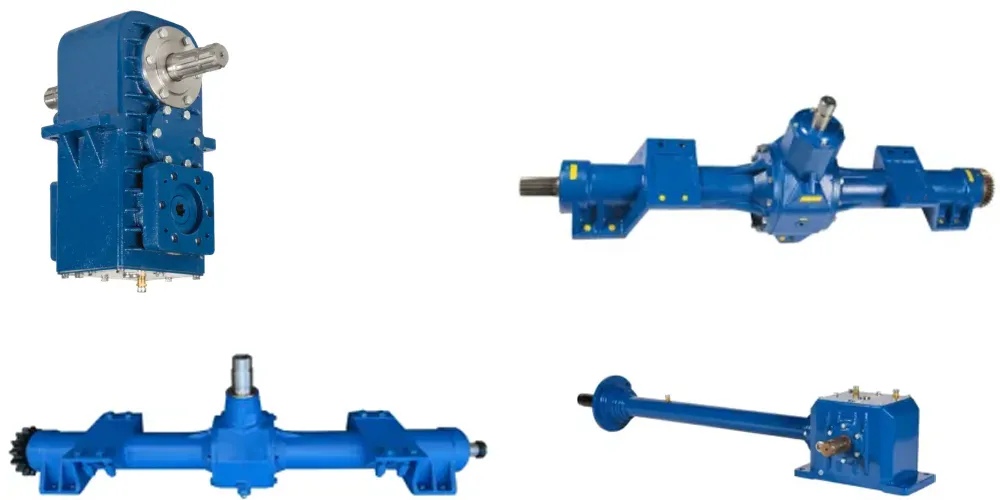
A square baler machine is only as reliable as its drivetrain. We supply matched gearbox and PTO shaft components alongside the EP square baler, providing complete one-stop procurement and guaranteed compatibility from tractor output shaft to bale chamber.
Square Baler Gearbox
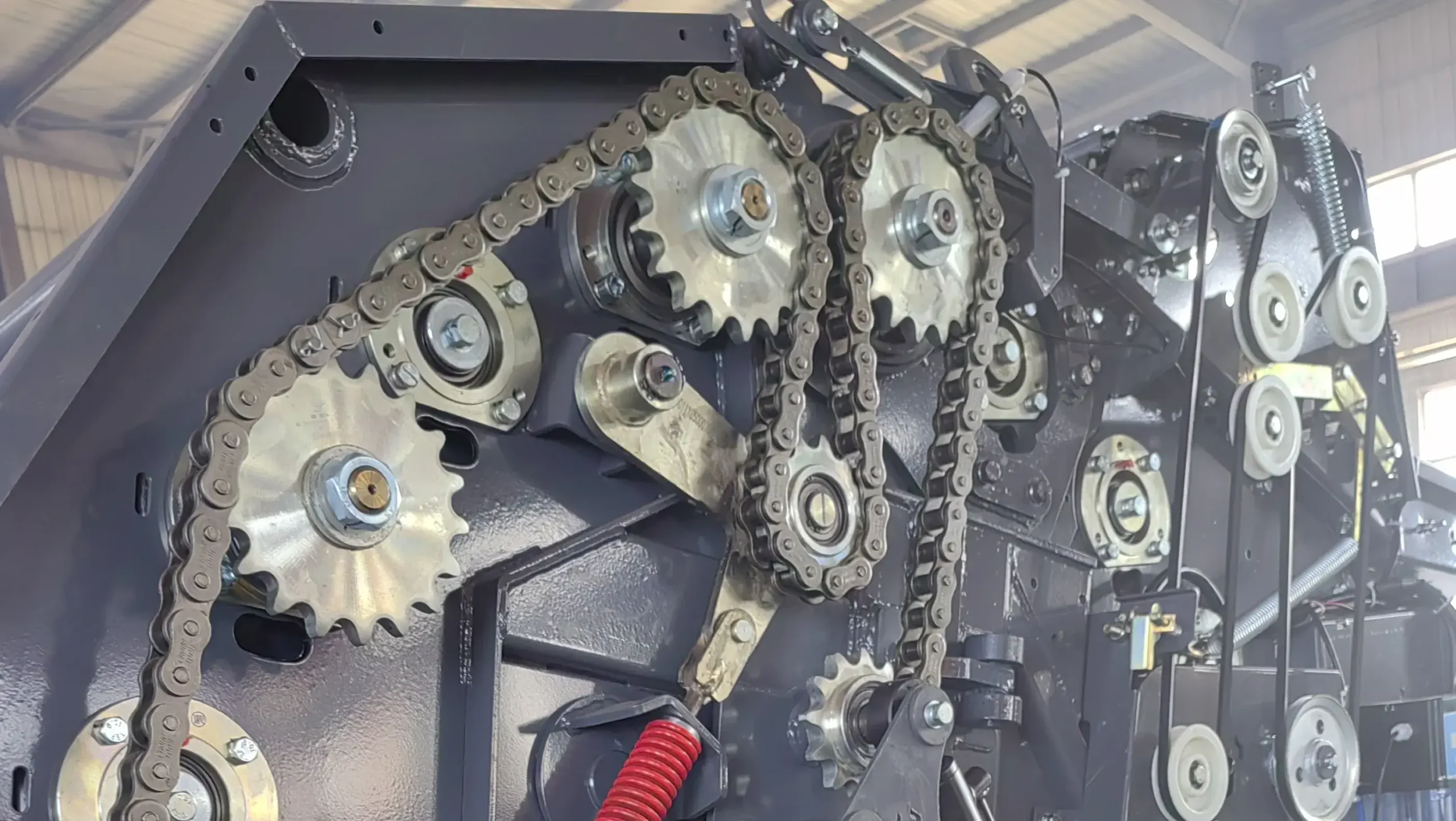
The gearbox on a square baler machine distributes PTO torque to the pickup, feeder, plunger, and knotter systems simultaneously — making it one of the most mechanically loaded components in the entire drivetrain. Our matched baler gearbox is rated for the ≥73.5 kW operating requirement of this EP square baler platform, with gear sets designed for the shock load profile generated by the plunger's rapid reciprocating action. Gear material is case-hardened alloy steel running in an oil-bath sealed housing. For buyers in the Netherlands, Australia, and South Korea requiring complete CE or RDA-compatible documentation packages, we supply full gearbox technical data sheets alongside the main baler unit, simplifying the compliance file preparation process.
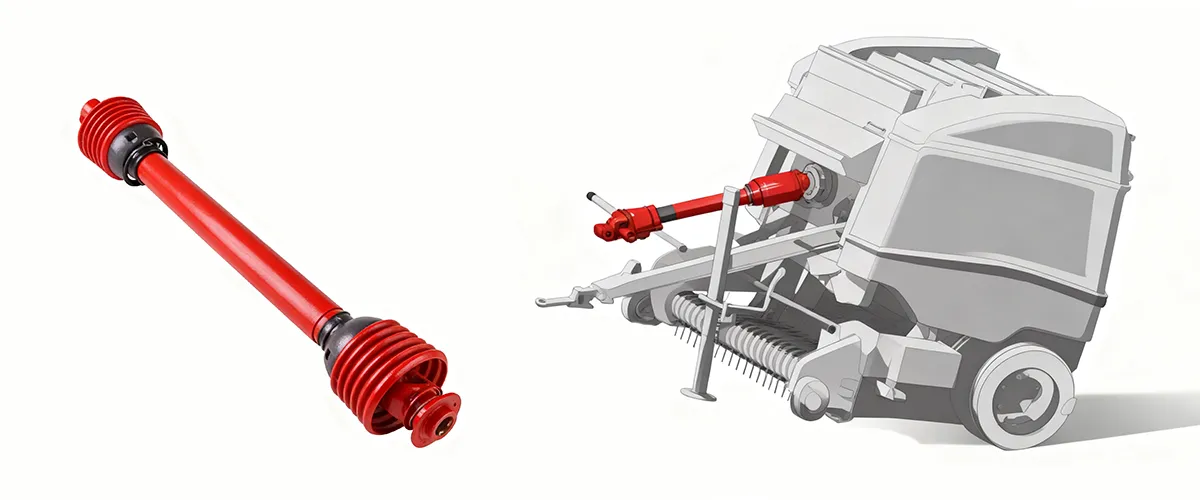
PTO Drive Shaft
Itu PTO shaft for square balers is a precision drivetrain component that must be matched to both the tractor's output speed and the gearbox input shaft specification. Our EP PTO shafts for baler applications are rated for the full power range of this square baler, with torque-limiting overrun clutches available to protect the gearbox from plunger impact peaks that can otherwise shorten internal gear life significantly. Safety guarding complies with EN 12965 standards applicable across EU, UK, and equivalent markets, and all shafts include grease nipple service points at cross-and-bearing assemblies. Sourcing gearbox, PTO shaft, and baler from a unified supplier removes the specification ambiguity that typically leads to premature component failure when multi-source procurement is used.
9. About Us — Over 10 Years in Agricultural Machinery
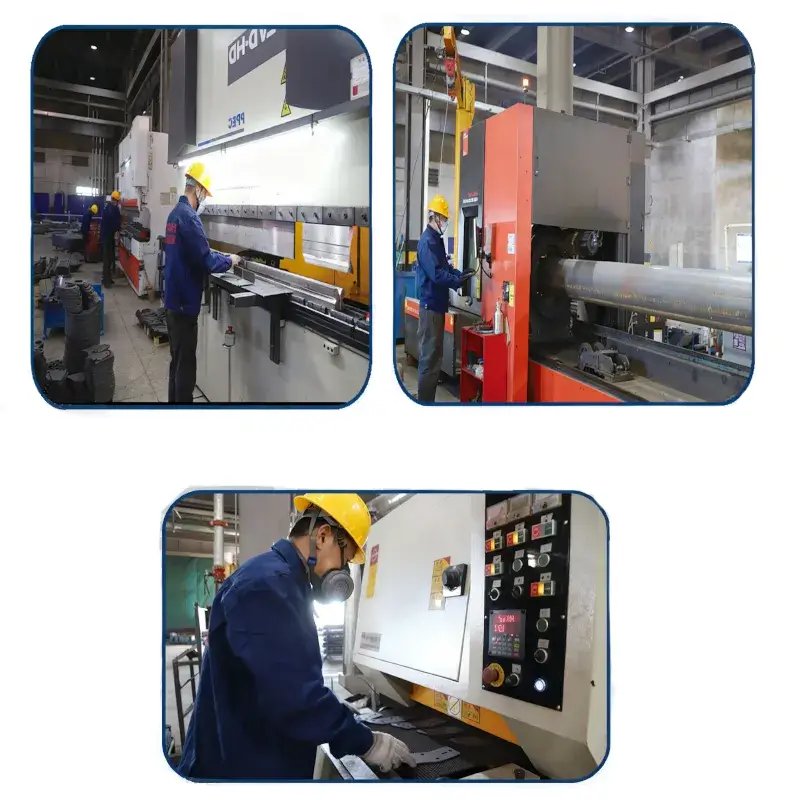
Founded in 2013, we are a modern integrated agricultural and animal husbandry machinery manufacturing enterprise with independent import and export rights. Our product portfolio covers the full spectrum of harvesting and baling equipment — from compact mini square baler units and small square baler machines for smallholder and hobby farm use, through to heavy-duty large square baler platforms like the EP Hammer-Claw series, as well as light and heavy round balers, disc mowers, rotary mowers, single- and double-side rakes, and a complete range of matched drivetrain accessories. The company holds ISO 9001 Quality Management System certification and operates with a clearly stated goal: to build globally recognised product quality while continuously raising the technical standard of agricultural machinery across the markets we serve.
WorkShop

Frequently Asked Questions
Editor: PXY


