Alfalfa & Hay Baling — Dairy Feed Application
Getting bale density right in alfalfa production is not a minor calibration detail — it is the single variable with the most consistent influence on fermentation outcome, dry matter retention, and ultimately milk yield in dairy herds. This guide explains what the science says about target density ranges, how a pengepres bulat achieves and maintains them, and what manufacturing and material choices determine whether your machine holds specification across the entire cutting season.
Why Bale Density Is the Most Underrated Variable in Dairy Feeding Programmes
Most dairy nutritionists who advise on total mixed rations spend considerable time on protein fractionation, fibre digestibility, and energy density — yet the single upstream variable that shapes all of these downstream parameters in alfalfa silage bales is the compression density achieved at the point of baling. A bale pressed to 140 kg/m³ and a bale pressed to 200 kg/m³ from the same windrow will produce different fermentation outcomes, different levels of dry matter loss during storage, different bale temperatures during aerobic exposure after opening, and ultimately different actual feed values per tonne as-fed. Understanding why this happens — and what it demands from a pengepres bulat in mechanical terms — is the foundation of a well-managed alfalfa forage programme for dairy operations.
Alfalfa is among the more demanding crops to bale at consistently high density. Its stem-to-leaf ratio, wilting behaviour, and the way its moisture content changes across the day mean that the bale density achieved in the morning cutting window can differ significantly from what the same machine produces on the same field three hours later. A round baler that lacks responsive hydraulic chamber control or that has a worn driveline will amplify this natural variation rather than absorb it — producing a batch of bales with inconsistent internal structure that will ferment at different rates and open at different temperatures, making it nearly impossible for the feedout manager to maintain ration consistency.
The Science Behind Target Density Ranges for Alfalfa Dairy Silage
For alfalfa used as wrapped round bale silage in dairy feeding systems, the research consensus on optimal bale density points to a range of 160–220 kg dry matter per cubic metre at the time of wrapping. This range reflects the balance between two competing physical requirements: sufficient oxygen exclusion to initiate and sustain Lactobacillus-dominated fermentation, and sufficient permeability to allow initial gas exchange that prevents the anaerobic acid front from stalling. Below approximately 140 kg/m³, oxygen pockets within the bale core are large enough to sustain aerobic microbial activity for several weeks after wrapping, generating heat that destroys a significant fraction of the water-soluble carbohydrates that fuel lactic acid production. Above approximately 240 kg/m³ in fresh alfalfa, the physical compression of plant cells at the time of baling causes cell rupture, releasing plant juice that carries soluble nutrients out of the silage mass — a condition that increases effluent production and reduces the final energy content of the silage.
The moisture content of the alfalfa at baling shifts these threshold values. At 50–55% moisture — which is on the wet side of the target wilting range — the optimal density window narrows because the material is already partly incompressible and the bale’s weight is dominated by water rather than dry matter. At 45–50% moisture, which is the more conventional wilting target for alfalfa silage, the 160–220 kg/m³ dry matter density range aligns with an as-baled density of approximately 200–280 kg per cubic metre of total bale volume. This is the figure your baler’s chamber pressure sensor and roller load system needs to be calibrated against — not the dry matter density, which cannot be measured in real time in the field.
| Alfalfa Moisture at Baling | Target As-Baled Density | DM Density Equivalent | Primary Risk at This Moisture |
|---|---|---|---|
| 60–65% (too wet) | 240–300 kg/m³ | 84–105 kg DM/m³ | Effluent loss, clostridial fermentation |
| 50–55% (slightly wet) | 220–260 kg/m³ | 99–117 kg DM/m³ | Reduced lactic acid yield, effluent |
| 45–50% (optimal window) | 200–250 kg/m³ | 110–138 kg DM/m³ | Minimal — ideal baling window |
| 35–45% (slightly dry) | 170–220 kg/m³ | 110–143 kg DM/m³ | Leaf shatter losses; lower feed value |
| <35% (too dry) | 140–180 kg/m³ | 105–135 kg DM/m³ | Aerobic instability, oxygen ingress, heating |
Manufacturing Structure: How the Bale Chamber Achieves and Holds Density
The ability of a round baler to consistently achieve and hold a target density in alfalfa hay is not primarily a software or sensor question — it is a manufacturing quality question. The physical architecture of the bale chamber, the engineering of the compression roller array, the hydraulic circuit that controls chamber pressure, and the structural integrity of the frame that absorbs baling loads all play active roles in the density the machine actually delivers in the field versus the density its specification claims. Understanding these relationships helps buyers make better-informed decisions when comparing round baler options for a dairy alfalfa programme.
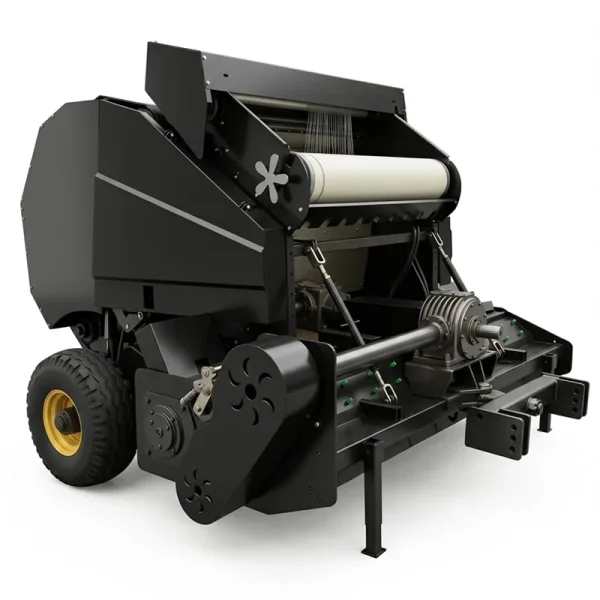
The EP Round Baler with Φ1220 mm compression chamber (overall dimensions 4100×2900×2400 mm) is designed around a large-diameter roller array that gives the compression geometry the mechanical advantage to produce high and consistent density in alfalfa without relying on extreme hydraulic pressures that fatigue the frame. The geometry of a larger-diameter chamber means that the inward radial force vector from the compression rollers acts across a longer arc of contact with the bale surface — distributing the compression load more evenly across the bale cross-section than is possible in a smaller chamber pressing the same material. The result is a bale with lower internal density gradient from core to surface, which is directly beneficial for fermentation because the outer annular zone — which is most vulnerable to oxygen ingress through the wrapping film — reaches the same density as the core.
For operations with smaller tractor fleets or tighter field layouts where a compact footprint is a priority, the EP Round Baler with Φ1000 mm compression chamber (overall dimensions 2950×2750×2050 mm) addresses the same density-consistency requirement through a different structural approach: a shorter, more rigidly braced frame section that minimises the torsional deflection under load that is the primary cause of density variation in smaller variable-chamber designs. Both models share the same core manufacturing philosophy — line-bored roller bearing housings machined as matched assemblies, CNC-profiled side panels, and a hydraulic circuit that maintains constant pressure independently of forward speed changes — but their chamber dimensions suit different operational scales and tractor horsepower classes.
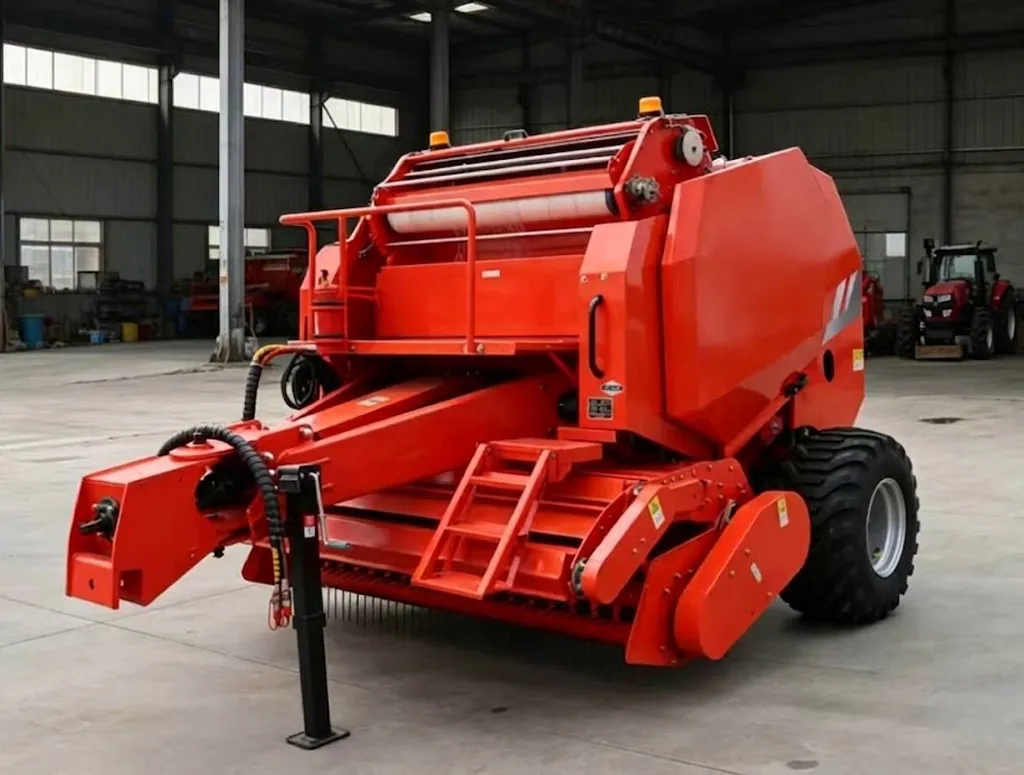
| Structural Feature | EP Round Baler Φ1220 mm | EP Round Baler Φ1000 mm | Effect on Alfalfa Bale Density |
|---|---|---|---|
| Overall dimensions (L×W×H) | 4100×2900×2400 mm | 2950×2750×2050 mm | Larger frame = more rigid, less deflection under load |
| Compression diameter | Φ1220 mm | Φ1000 mm | Larger dia. = broader arc of contact = even density gradient |
| Hydraulic pressure control | Constant-pressure circuit | Constant-pressure circuit | Maintains density irrespective of forward speed |
| Roller bearing housing | Line-bored matched assembly | Line-bored matched assembly | Eliminates angular misalignment and vibration |
| Frame side panel manufacture | CNC laser-profiled | CNC laser-profiled | Consistent geometry = repeatable density across batches |
| Suitable tractor HP | 80 HP and above | 65 HP and above | PTO power determines peak compression capacity |
Material System: What the Round Baler Is Made of and Why It Matters for Alfalfa
Alfalfa is chemically aggressive to agricultural machinery. The plant’s high potassium and calcium content, combined with the mildly acidic environment created by early fermentation on the pickup tines, attacks metal surfaces, lubricants, and seals at a higher rate than most cereal crop residues. This is why the material system used in the baler — the grades of steel, the surface treatments, the seal compounds, and the lubricant specifications — is not merely a background engineering choice but a factor that directly determines how quickly the baler’s density performance degrades between service intervals.
Compression rollers in alfalfa-duty balers need to deliver two properties simultaneously that partially conflict with each other: sufficient surface hardness to resist the abrasive action of silica particles in the leaf and stem tissue, and sufficient surface roughness to grip the incoming material stream and sustain bale rotation during the critical early core-formation phase. Rollers that are too smooth — a common outcome when a softer steel wears down after extended use — lose their grip on fresh alfalfa and allow the forming bale core to slip rather than rotate, producing a bale with an underdense, loosely structured interior. For this reason, compression rollers in the EP baler series are manufactured from high-carbon alloyed steel and surface-treated to maintain a controlled roughness profile throughout the roller’s service life, rather than wearing smooth as lower-grade steels do.
The frame’s structural steel section in both the Φ1220 mm and Φ1000 mm models is welded using an automatic MIG process to consistent penetration depth, which is important because bale ejection — the moment when the completed bale drops out of the chamber — applies a sudden shock load to the rear gate pivot points. Over thousands of bales per season, this shock load fatigues poorly welded joints and produces progressive frame deflection that changes the geometry of the compression roller array relative to the bale, introducing the density variation that an initially good machine develops over time. The automatic welding process used in production gives a consistent and full-penetration joint at these high-stress locations, extending the frame’s structural service life to align with the machine’s other major component intervals.
| Component | Material / Treatment | Why It Matters for Alfalfa Baling |
|---|---|---|
| Compression rollers | High-carbon alloyed steel, surface-treated | Maintains grip texture; resists silica abrasion from leaf tissue |
| Frame side panels | Structural steel, CNC laser-cut, electrostatic powder-coated | Corrosion resistance in damp silage and morning dew conditions |
| Frame weld joints | Automatic MIG, full penetration at pivot points | Prevents fatigue cracking from repeated bale ejection shock |
| Roller bearing seals | Double-sealed deep-groove bearings | Excludes alfalfa dust and fermentation moisture from bearing races |
| Pickup tine material | Spring steel, heat-treated | Flex resistance against stone strike; low leaf shatter in dry alfalfa |
| Gearbox housing | Ductile iron GGG50, CNC-machined | Dimensional stability; IP65 dustproofing for prolonged alfalfa season use |
| Hydraulic hoses | SAE 100R2 rated, UV-stabilised outer jacket | Maintains pressure consistency in summer field temperatures |
TECHNICAL REFERENCE
Field data from alfalfa silage operations shows that bales achieving 200–240 kg/m³ as-baled density — with less than 10% variation across a full day’s baling — produce final fermented silage with pH values below 4.5 within 21 days of wrapping. Bales in the 140–170 kg/m³ range under the same wrapping regime consistently ferment more slowly, with a higher incidence of aerobic spoilage zones at the bale surface and at the core-to-wrap interface. In dairy systems where silage provides 40–60% of the ration dry matter, this quality difference is visible in milk yield records within two to three weeks of the feed change.
The Round Baler Gearbox: Its Role in Sustained Density Control Through a Full Alfalfa Cutting Day
The round baler gearbox is the mechanical bridge between the tractor’s PTO shaft and the compression roller array. Its design and condition determine how efficiently power is transferred from the tractor into useful compression work inside the bale chamber — and therefore how consistently the machine maintains its target density setting across a working day rather than just at startup. A gearbox that is marginal in its torque capacity, or that has accumulated wear in its gear flanks and bearing surfaces, transmits power with more variability than a new or properly maintained unit. This variability shows up in the field as inconsistent bale firmness from one bale to the next, which is the pattern most operators notice first when their round baler is starting to need gearbox attention.
In the context of alfalfa baling, where the feedstock changes character as the day’s temperature and relative humidity change the moisture and brittleness of the wilted crop, the gearbox needs to handle a load profile that includes both sustained moderate torque during mid-morning baling of properly wilted material and episodic high torque spikes when the pickup encounters a heavier concentration of partially wilted material in the centre of the windrow. The round baler gearbox specification used in the EP series is rated for continuous torque exceeding 500 Nm at 540 RPM PTO input, with IP65-sealed housings to prevent the fine alfalfa dust that is characteristic of late-afternoon dry baling from contaminating the gear oil. The sealed bearing specification — 6208-2RS type with L10 life exceeding 10,000 hours — is chosen specifically to match the extended seasonal use pattern of alfalfa operations that run multiple cuts per year from the same paddocks.
Featured Round Baler: EP Round Baler Φ1220 mm Compression for Large-Scale Alfalfa Dairy Operations
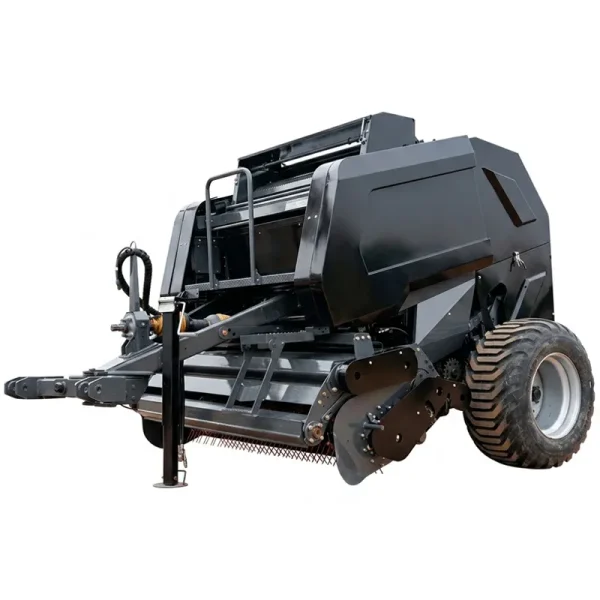
For dairy operations running multiple alfalfa cuts per season at scale, the EP Round Baler with Φ1220 mm compression chamber represents the primary recommendation. Its large-format chamber produces bales with the volume-to-density ratio that makes most efficient use of film wrapping material while still achieving the 200–240 kg/m³ density target that defines good dairy-quality alfalfa silage. At 4100×2900×2400 mm overall dimensions, the machine is designed to work behind tractors rated from 80 HP upward — a power class that covers the majority of commercial dairy farm tractor fleets in South Korea and neighbouring markets.
From Field to Feedout: How Bale Density Travels Through the Dairy Feed Chain
The bale density achieved at the point of baling does not remain static through the storage and feedout cycle. Understanding how density changes at each stage of the chain — and where the losses occur — helps operators make better decisions about target density settings at the baler, wrapping film layer counts, and stack management practices.
Immediately after ejection, a freshly formed alfalfa round bale loses a small amount of density as the spring-back of the compressed plant material partially relaxes before the net wrap fully restrains it. This relaxation effect is more pronounced in dry alfalfa than in high-moisture silage material, and it is one of the reasons why the net wrap tension and number of wraps are critical variables when baling alfalfa for subsequent film wrapping. A bale that relaxes significantly before wrapping may fall below the minimum density threshold for adequate oxygen exclusion even if it was nominally compressed to the correct setting inside the chamber.
During film wrapping and the first six weeks of fermentation, the bale core undergoes gradual densification as fermentation gas pressure builds, fluid redistribution within the silage mass occurs, and the bale settles under its own weight. Bales stored on a hard, level surface with appropriate stacking clearance will densify more uniformly than bales stored on irregular ground, because uneven support induces asymmetric compression that can displace the anaerobic core zone toward one side of the bale. At feedout, the bale’s effective density for ration formulation purposes should be measured from a core sample taken at 200–300 mm depth from the bale face — not from the outer annular zone, which has typically lost 8–15% of its initial density through aerobic respiration at the film interface.
| Stage | Density Change | Primary Driver | Operator Control Point |
|---|---|---|---|
| Baling | Target achieved | Chamber pressure, roller speed, feed rate | Hydraulic pressure setting, forward speed, crop moisture |
| Ejection & relaxation | Up to -5% in dry alfalfa | Plant material spring-back before net constrains bale | Net wrap tension, number of net passes |
| Film wrapping | +2–4% (compression from film tension) | Wrapper film pre-stretch and layer count | Film layer count (minimum 4 layers for alfalfa silage) |
| Fermentation phase (weeks 1–6) | Slight settlement increase | Gas release, fluid redistribution, gravity settling | Level storage surface, correct film integrity |
| Feedout (core zone) | High quality retained in core | Anaerobic fermentation preserved by adequate core density | Sample at 200–300 mm depth for ration formulation |
Leaf Loss in Alfalfa Baling: How Density Chasing Can Backfire
Alfalfa leaves contain the majority of the plant’s digestible protein and energy fractions. The stem fraction contributes fibre for rumen function but relatively little metabolisable energy. When a round baler is operated in conditions that maximise bale density at the expense of leaf retention — particularly when the crop is baled too dry or the pickup speed is too high relative to crop flow — the mechanical action of the pickup tines and compression rollers shatters the dry leaf blades into fine particles that fall through the bale chamber gap and accumulate on the ground behind the machine. This leaf shatter loss can represent 10–25% of the total crop dry matter in severe cases, and the fraction lost is nutritionally the most valuable part of the windrow.
The practical resolution of this tension — between the higher density achievable from drier alfalfa and the leaf retention achievable at slightly higher moisture — is to identify the crop’s leaf-attachment moisture threshold and set both the baling window and the density target to that constraint. For most alfalfa varieties harvested in temperate conditions, leaves begin to detach from stems at moisture contents below 38–40%. Setting the baling target to the 40–45% moisture window allows the operator to achieve adequate density for silage fermentation without crossing the leaf-shatter threshold. Matching this baling strategy to a round baler that responds quickly to hydraulic pressure adjustments — so the operator can dial the chamber pressure up to compensate for the lower moisture — is where equipment quality becomes part of the crop quality equation.
Regulatory Environment: Agricultural Baler Standards Affecting Alfalfa Feed Operations
Agricultural round balers used in dairy feed production programmes are subject to regulatory frameworks governing machinery safety, PTO system guarding, and — in markets with formal forage quality programmes — standards relating to silage hygiene and feed safety. Operators in South Korea and other primary export markets for alfalfa hay and silage bales should be familiar with the following frameworks.
| Region | Key Standard or Regulation | Relevance to Alfalfa Baling Equipment |
|---|---|---|
| Korea Selatan | Agricultural Mechanization Promotion Act; NAAS machinery evaluation; MAFRA feed safety guidelines (Livestock Products Sanitary Control Act) | Baler must pass NAAS evaluation for subsidy eligibility; silage fed to dairy cattle must comply with MAFRA hygiene standards covering mycotoxin limits and fermentation quality indicators |
| Uni Eropa | EU Machinery Directive 2006/42/EC; EN ISO 4254-7 (baling equipment); EC No. 183/2005 (feed hygiene regulation) | CE marking on baler required; feed hygiene regulation requires documented HACCP-equivalent systems for silage produced for commercial dairy feed; bale density records may form part of feed quality traceability |
| United States | ASABE S206.5 (PTO shaft guarding); FDA FSMA Preventive Controls for Animal Food (21 CFR Part 507) | PTO guarding must comply with ASABE standards; commercial alfalfa silage for dairy operations may fall under FSMA animal food safety requirements, requiring hazard analysis and documented process controls |
| Australia & New Zealand | AS/NZS ISO 11684 (PTO safety); Australian Agricultural and Veterinary Chemicals Code | PTO guarding compliance required; imported alfalfa bales for dairy use are subject to biosecurity inspection and must comply with national feed additive regulations under the ag-vet code |
| Japan | Agricultural Machinery Act; Feed Safety Law (Act No. 35, 1953, as amended); JIS B 7001 series | Type certification via NARO for machinery; alfalfa silage quality and mycotoxin limits for dairy feed governed by Feed Safety Law; bale density indirectly regulated through fermentation quality outcome requirements |
| Canada | CSA Z96 series (PTO guarding); Feeds Act and Regulations (SOR/83-593); provincial farm equipment safety codes | Alfalfa silage for dairy use must meet Feeds Regulations minimum quality standards; baler PTO systems must comply with CSA Z96 master shield requirements in commercial operations |
| Netherlands / EU-NL | EU Machinery Directive; GMP+ International Feed Safety Certification; Dutch fodder legislation under Wet dieren | GMP+ certification widely required by Dutch dairy cooperatives for silage suppliers; bale density documentation forms part of the production process record for GMP+ audits |
For South Korean dairy operations specifically, the intersection of MAFRA’s Livestock Products Sanitary Control Act and the NAAS machinery evaluation programme creates a dual compliance pathway: the baler must be approved for subsidy eligibility, and the silage it produces must meet documented fermentation quality standards for use as registered dairy feed. Bale density is the upstream variable that determines whether the silage achieves the fermentation endpoint required for compliance with MAFRA hygiene indicators — making the baler’s density performance directly relevant to the dairy farm’s regulatory standing, not just its feed economics.
For Mid-Scale Operations: EP Round Baler Φ1000 mm Compression
Dairy operations that run smaller tractor fleets or manage alfalfa in more segmented field layouts will often find the EP Round Baler with Φ1000 mm compression chamber the better-matched choice. At overall dimensions of 2950×2750×2050 mm, this model combines a compact footprint with the same matched-assembly manufacturing approach used in the larger Φ1220 mm model. The 1000 mm compression diameter produces a bale weight and volume that is well-suited to the typical silage feedout equipment available on farms running 100–200 dairy cows, where bale handling frequency is high and the ability to use smaller front-end loaders is an operational advantage.
Compatible Components: One-Source Supply for Your Round Baler Drive System
A round baler is only as consistent as its weakest driveline component. Sourcing the baler and its key consumable components from the same supply chain removes compatibility uncertainty and simplifies the warranty and spare parts process — particularly important for dairy operations where downtime during the alfalfa cutting window carries a direct cost to feed inventory. The two component categories below are engineered and verified to work with the EP round baler series.
Agricultural PTO Shaft for Round Balers
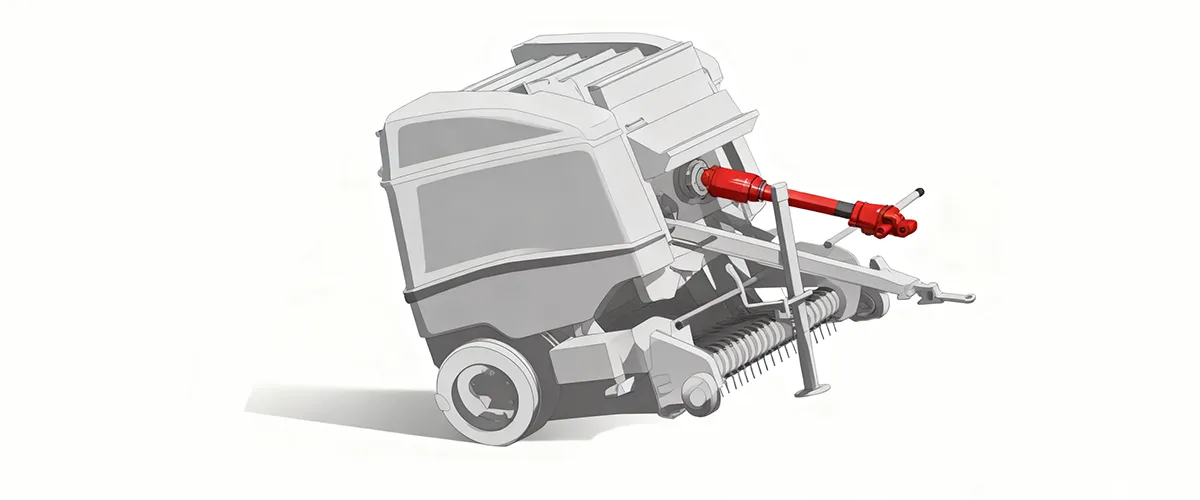
The EP-PTO shaft series connects directly to the EP round baler gearbox input via a standard 1-3/8-inch Z6 spline, with adjustable length between 600 and 1200 mm to accommodate a wide range of tractor hitch-to-baler distances. The shaft is rated for continuous torque above 500 Nm at 540 RPM — the sustained load level present during alfalfa baling at high chamber pressure settings — and delivers a stated 20% fuel-use reduction compared to oversized legacy PTO shafts. In alfalfa operations where PTO runtime per season is high across multiple cuts, this efficiency gain compounds across the season’s fuel cost. The articulated universal joint design allows smooth torque delivery through the steering angles encountered during headland turns, preventing the torsional pulsing that can momentarily drop roller speed and affect bale density at field-end positions.
Agricultural Chain for Bale Chamber Drive
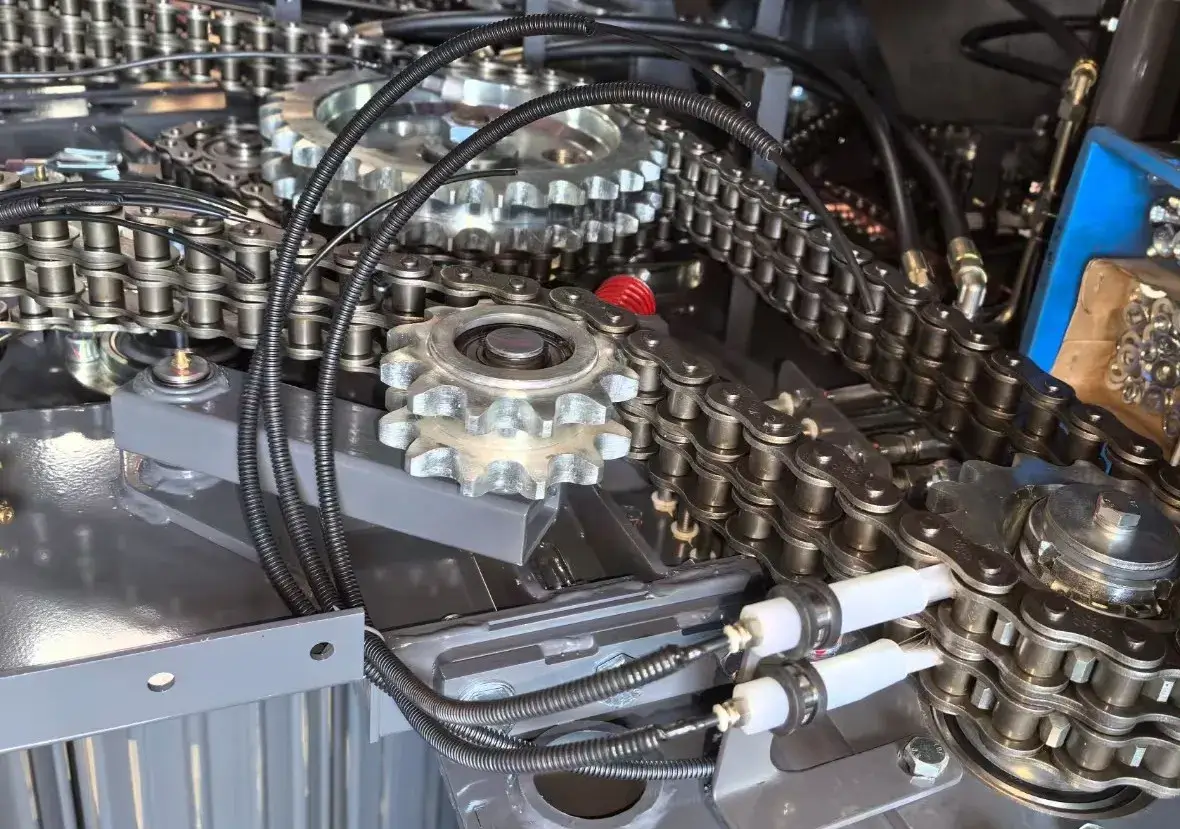
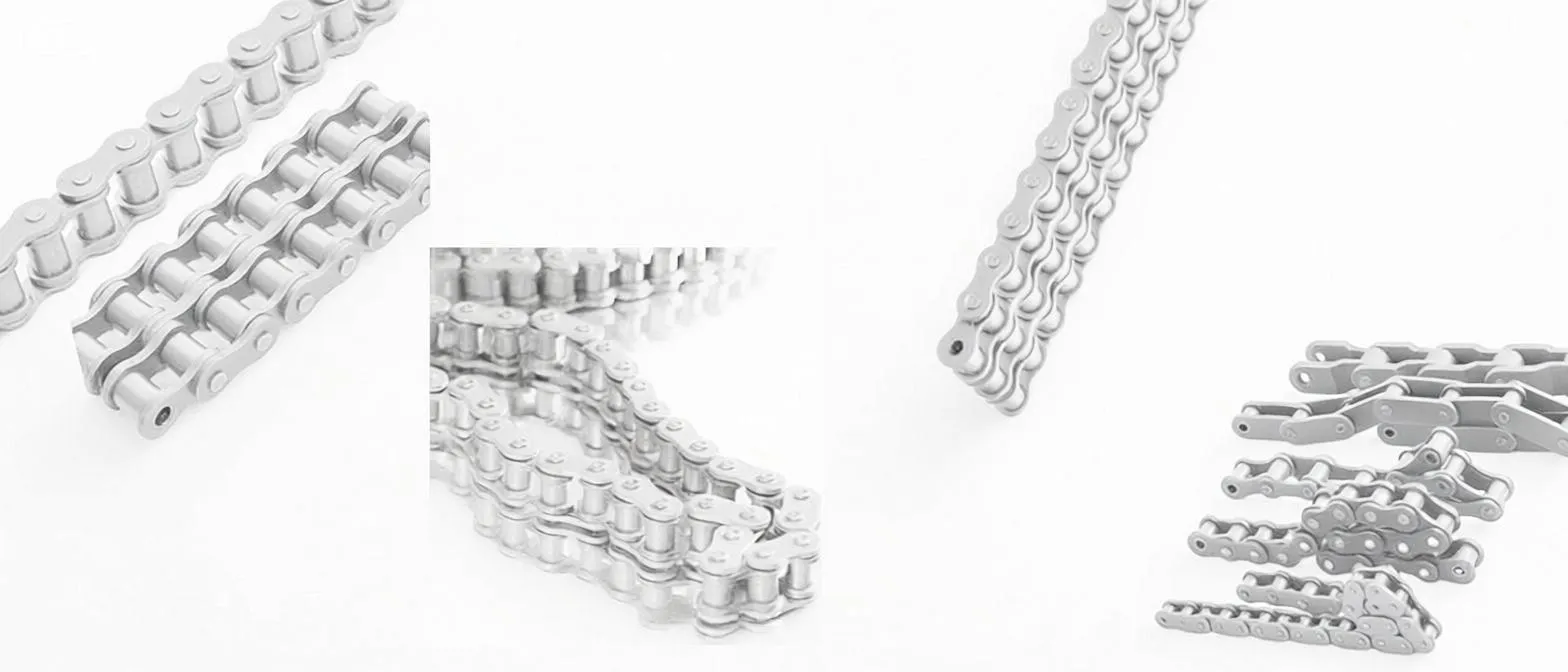
The roller compression chain that transmits drive from the gearbox output to the bale chamber is the highest-cycle component in the baler’s mechanical system. In a typical multi-cut alfalfa season, the drive chain completes more cyclic load events than in any other baling application, because the higher-density baling requirement means the chain operates under elevated tension for a larger proportion of each bale’s formation time. The agricultural chain sets specified for the EP round baler series are manufactured to ANSI B29.1 Class A pitch accuracy, which minimises the dynamic load variation as each link meshes with the sprocket — a source of micro-vibration that accelerates wear in both the chain and the sprocket flank when tolerance is loose. A heavy-series chain option provides 40% greater pin and roller wear resistance compared to standard-pitch chain, matching the higher continuous tension environment of alfalfa silage density settings.
About Our Agricultural Machinery Operation
Our manufacturing operation was established in 2013, growing over more than a decade into a modern, intelligent production enterprise within the agricultural and animal husbandry machinery sector. The product range covers light and heavy round balers, single and double blade mowers, disc rotary mowers, and single and double side rakes — all produced under ISO 9001 Quality Management System certification, with independent import and export rights. The facility operates more than 60 sets of large-scale production equipment including CNC laser cutting lines, automatic MIG welding systems, and electrostatic powder-coating lines, supporting an annual design production capacity of 2,000 units. Our engineering team works directly with market contacts in South Korea, Japan, the Netherlands, Brazil, and other target regions to ensure that product specifications reflect local tractor compatibility, regulatory requirements, and forage cropping system needs rather than generic global specifications.
Frequently Asked Questions
Q1. What is the optimal bale density for alfalfa silage used as the primary forage in a South Korean dairy feeding programme?
Q2. How does the round baler gearbox design affect the consistency of alfalfa bale density across a full day of baling?
Q3. Which round baler is best for a dairy farm in Korea that needs to bale alfalfa and mixed grass-legume hay in the same season?
Q4. When should alfalfa be baled to minimise leaf loss and still achieve the density needed for high-quality dairy silage?
Q5. How many film wrap layers are needed on an alfalfa silage bale to protect the density achieved by the round baler?
Q6. What round baler parts need to be checked most frequently when running a dairy alfalfa silage programme across multiple cuts per year?
Q7. How does bale density from a round hay baler affect the fermentation pH and nutritional value of alfalfa silage used in dairy TMR?
Editor: PXY