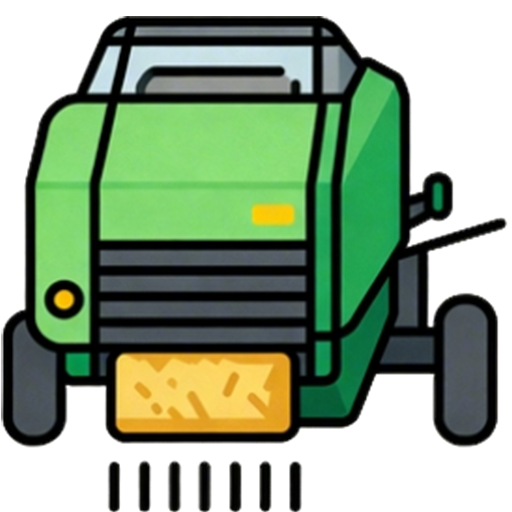

EP-4965×2500×1750mm Spring Tooth Type Square Baler
The EP-4965×2500×1750mm Spring Tooth Type Square Baler with a 1700mm picking width is a versatile, mid-mounted trailed square baler built for farms that need dependable throughput without the size overhead of the largest commercial models. It is engineered for collecting, compressing, and binding wheat straw, rice straw, cotton straw, corn straw, and various forage grasses into firm, uniform square hay bales that meet the handling and storage requirements of livestock operations, feed merchants, and agricultural contractors worldwide.
With an overall machine dimension of 4965×2500×1750 mm (L×W×H) and a weight of 1,750 kg, this square baler machine is compact enough for mid-size tractor operations yet productive enough for commercial acreage. The 460×360 mm compression chamber cross-section produces square bales of hay with the density and structural integrity needed for efficient warehousing, palletized shipping, and long-haul transport. The wide matching power range of 29.5–73.5 kW makes this one of the most tractable square hay balers in its class — a practical choice for farms running anything from a compact 40 HP utility tractor to a 100 HP row-crop machine.
Agricultural Machinery · Square Baler Series
EP-4965×2500×1750mm Spring Tooth Type Square Baler
1700mm Picking Width · Mid-Mounted Trailed · Automatic Rope Baling · 1750 kg
Spring Tooth Picker
29.5–73.5 kW Power Range
D-Type Dual Knotter
1. Specifiche tecniche
Complete parameter table for the EP-4965×2500×1750mm 1700mm Picking Width Square Baler:
| NO. | Articolo | Unità | Specifica |
|---|---|---|---|
| 1 | Nome del modello | / | EP-4965×2500×1750 Square Baler (1700mm Picking Width) |
| 2 | Metodo di aggancio | / | Towed-type (Mid-mounted Trailed) |
| 3 | Picking Width | mm | 1700 |
| 4 | Feeding Inlet Width | mm | / |
| 5 | Picker Structure | / | Tipo di dente a molla |
| 6 | Feeder Structure | / | Fork Feeding Mechanism |
| 7 | Knotter Type | / | D-Type Knotter |
| 8 | Number of Knotters | pc | 2 |
| 9 | Compression Chamber Section Size (W×H) | mm | 460×360 |
| 10 | Metodo di imballaggio | / | Automatic Rope Baling |
| 11 | Matching Power Range | kW | 29.5–73.5 |
| 12 | Overall Dimension (L×W×H) | mm | 4965×2500×1750 |
| 13 | Peso della macchina | kg | 1750 |

2. Five Key Advantages of This Square Baler
Exceptionally Wide Power Compatibility (29.5–73.5 kW)
Unlike models locked to a narrow power band, this square baler works effectively across the full range of 29.5 to 73.5 kW PTO output. This means a single machine can be deployed on different tractors across the same operation without modification — a meaningful operational advantage for farms that rotate equipment across multiple fields or lease tractor capacity during peak season.
Spring Tooth Pickup with Ground-Following Action
The spring tooth pickup reel delivers consistent crop lift even on uneven or slightly undulating surfaces common in paddy field margins and dryland paddocks. Flexible tines deflect around ground irregularities without digging in, recovering more material per pass and reducing leaf and seed loss compared to stiffer rigid-tine pickup systems. For rice straw recovery in Korean paddies, this translates directly to better per-acre straw capture rates.
Dual D-Type Automatic Knotters for Reliable Binding
Two D-type knotters handle the rope baling cycle automatically, with each knotter operating independently to maintain binding reliability even if one side encounters an unusual bale shape or rope tension variation. The automatic rope baling system eliminates hand-tying, which was once a major labor bottleneck in small-scale square hay baler operations. Consistent knot quality across every bale reduces post-harvest losses from bales that loosen during handling or storage.
Compact Footprint, Mid-Size Throughput
At 4965 mm in length and 1,750 kg, this machine is meaningfully smaller and lighter than a true large square baler, making it easier to maneuver in tighter field entrances, transport on standard flatbed trailers, and store in existing equipment sheds during the off-season. For small-to-medium farms in Australia, the Netherlands, and South Korea where storage space and headland room are limited, the compact footprint without sacrificed performance is a genuine selling point.
Multi-Crop Capability Across Paddy and Dryland Conditions
This square baler machine handles wheat straw, rice straw, cotton straw, corn straw, and mixed forage grasses without modification between crop types. Its flat-ground design delivers better results on level paddy fields and hard-surface dryland where stones are absent. The high bale density produced suits both animal husbandry feed programs and straw recycling industries that require consistent bale dimensions for downstream processing equipment.
3. How Does a Square Baler Work?
The working cycle of a square baler is a repeating mechanical sequence that runs continuously as the machine moves through the field. Understanding each stage helps operators identify where adjustments are needed to maintain optimal bale quality and machine longevity.
Windrow Pickup
The spring tooth reel rotates into the windrow, lifting and conveying cut crop material upward into the machine's throat. The tine geometry is calibrated to handle the typical windrow density and moisture range of rice and wheat straw after combine harvesting.
Controlled Feeding
The fork feeding mechanism meters the incoming crop into the compression chamber in controlled charges. This metering action is what determines bale density consistency — each charge is approximately equal in volume, so the plunger compresses a uniform layer with every stroke.
Plunger Compression
A heavy reciprocating plunger pushes each crop charge backward, compressing it against the growing bale column inside the 460×360 mm chamber. Repeated strokes build up the bale layer by layer until the bale length sensor triggers the knotting sequence.
Automatic Knotting
Both D-type knotters activate simultaneously, threading the rope around the completed bale and forming the binding knot. The entire knotting cycle completes in under two seconds without stopping the machine's forward movement, maintaining throughput during knotting.
Bale Ejection
The finished square bale is pushed rearward out of the chamber outlet and drops onto the field surface, ready for pickup by a bale loader or wagon. The cycle resets and the plunger resumes its compression stroke immediately without operator input.
A common question from first-time buyers is: how many horsepower do you need to run a square baler of this specification? The EP-4965 operates across a matching power range of 29.5 to 73.5 kW — roughly 40 to 100 HP. This generous range covers most farm tractor configurations, making this machine a practical square baler for compact tractor setups at the lower end and mid-size row-crop tractors at the upper end. The machine adapts its throughput naturally to available power, reaching peak bale density and speed when driven by tractors in the 50–75 HP range under normal field conditions.
4. Materials & Build Quality
Every component of this square baler is selected to handle the demands of continuous field operation across multiple harvesting seasons. The main chassis is fabricated from high-tensile carbon structural steel, with all critical load-bearing welds reinforced and inspected before the frame leaves the fabrication floor. The bale chamber itself uses a smooth-bore design in its interior liner surfaces, reducing crop drag during plunger compression while maintaining the lateral wall stiffness needed for consistent 460×360 mm bale formation under varying crop densities.
Spring tooth tines on the pickup reel are formed from spring alloy steel, chosen for its specific combination of yield strength and cyclic fatigue resistance. In practical terms, this means tines flex when they encounter surface irregularities and return to their working geometry without permanent deformation — a property that standard carbon steel does not reliably provide after repeated flex cycles. Tines are individually replaceable without the need to remove the full pickup reel assembly, which matters for field-side repairs during active harvest periods when downtime is particularly costly.
The dual D-type knotters are machined from hardened alloy steel on all sliding and rotating contact surfaces, with bore tolerances held to ensure smooth rope feed and consistent loop formation at the operating speeds typical of this square baler machine. Knotter castings are also sealed against dust and chaff ingress at the rope channel entry points, a detail that reduces abrasive wear on the bill hook and twine disc faces during dusty harvest conditions in Australia, the Netherlands, and the Canadian prairies. The result is a machine built to hold its performance across a full operating life with routine servicing rather than frequent component replacement.
5. Application Scenarios
This square baler handles a broad spectrum of field crops and farming environments. The following use cases reflect the most common real-world deployments for this model.
🌾 Rice Straw Recovery in Paddy Fields
Rice straw left after combine harvesting is a high-volume residue that paddy farmers in South Korea, Japan, and Southeast Asia must manage efficiently. This square baler's towed-type hitching and spring tooth pickup are well-suited to the flat, level surfaces and occasional soft spots typical of post-harvest paddy conditions. Square bales of hay produced from rice straw are used as livestock bedding, feed supplement, mushroom cultivation substrate, and biomass fuel — a versatile output that supports multiple local markets from a single baling pass.
🌿 Forage Grass Baling for Livestock Feed
Cut ryegrass, alfalfa, clover, and mixed pasture hay can be baled directly into small square hay bales for daily livestock feeding. The automatic rope baling system ensures consistent knot tension across variable forage moisture levels, reducing bale slippage during stacking and transport. For equestrian facilities in Australia and the Netherlands, which routinely specify square bale hay for sale due to portion control and manual handling advantages, the EP-4965 delivers the consistent bale dimensions and densities those buyers expect from a professional-grade square hay baler.
🌽 Corn Stover & Wheat Straw Processing
Following corn or wheat combine runs, this machine collects stover and straw windrows at field speed, producing dense square bales of hay that stack cleanly on trailers for delivery to feedlots, composting facilities, or straw board manufacturers. The fork feeding mechanism handles the bulkier, more irregular material profile of corn stover without the plug-up risk that troubles some mini square hay baler designs operating beyond their designed throughput capacity. This makes the EP-4965 a more reliable production tool across mixed-crop farming operations in Brazil and Canada.
🌱 Cotton Straw Recycling Operations
Cotton straw — the stalks and leaves remaining after cotton boll harvest — is a woody, relatively dry residue that benefits from the high-compression plunger design of this square baler. Dense cotton straw square bales hold their shape during transport to biomass pellet producers and industrial fiber processors. In regions where cotton straw burning is restricted by air pollution control regulations, as is increasingly the case across the EU and South Korea, baling and diverting straw to productive use is a compliance-driven growth area for square baler operators.
🏭 Contract Baling Services for Agricultural Regions
Agricultural contractors who offer baling services to multiple farms across a season benefit from the EP-4965's wide tractor power compatibility and straightforward maintenance requirements. A contractor running this square baler for sale across Korean or Australian farming communities can match the machine to various client tractors without PTO compatibility issues, reducing setup time between farms and maximizing billable baling hours during the limited harvest window each season.
6. Regulatory Compliance & International Standards
Farmers and importers operating in regulated markets should verify that any agricultural machinery they purchase complies with the applicable national safety, machinery, and environmental regulations. The following summaries cover the primary jurisdictions relevant to this square baler machine.
🇰🇷 Republic of Korea
Agricultural machinery imported into South Korea falls under the Agricultural Machinery Industry Promotion Act. Type-approval testing for safety compliance is administered by the Rural Development Administration (RDA), and machines must meet Korean Agricultural Machinery Safety Certification standards. PTO shaft guarding requirements are specified under KS B 5203. Importers should verify current HS Code 8433.40 tariff rates and whether applicable FTA preferential duties apply under the Korea–ASEAN or Korea–EU trade agreements.
🇪🇺 European Union (Netherlands, Germany, France)
All machinery sold in EU member states must be CE-marked and accompanied by a Declaration of Conformity under the Machinery Directive 2006/42/EC. For agricultural balers specifically, EN ISO 4254-7 defines the safety requirements for design and guarding. Dutch importers should check whether subsidy eligibility through RVO applies; certain efficient crop residue management equipment qualifies for SDE++ or GLB sustainability programs depending on end use.
🇦🇺 Australia
PTO-driven farm equipment in Australia must meet Safe Work Australia's model WHS regulations and state-level workplace health and safety acts. The primary machinery safety framework is AS 4024 (Safety of Machinery), which covers guarding, control systems, and operator protection for trailed agricultural implements. Imported balers arrive under HS 8433.40 with GST concessions available for primary production equipment used in registered agricultural businesses.
🇧🇷 Brazil
Agricultural machinery safety in Brazil is governed by ABNT NBR 14660 (safety of agricultural machinery). INMETRO certification may be required for specific mechanical equipment categories when imported commercially. Brazilian buyers using rural credit facilities under PRONAF or the ABC Program (Agriculture, Forest, and Climate) should confirm that the machinery model meets program eligibility criteria before purchase to qualify for subsidized financing rates.
🇨🇦 Canada
Canadian farm machinery safety is addressed through provincial occupational health and safety legislation, supplemented by CCOHS (Canadian Centre for Occupational Health and Safety) guidelines for PTO-driven equipment. Importers should verify current CUSMA (Canada-US-Mexico Agreement) rules of origin and determine whether preferential tariff treatment reduces import duties under HS 8433.40. Alberta and Saskatchewan provincial agricultural programs may offer equipment modernization grants applicable to new hay baler purchases.
🌐 ISO 9001 Certification
This square baler is produced in a facility certified to ISO 9001 Quality Management System standards. ISO 9001 certification provides buyers with documented evidence of consistent production process control, incoming material inspection, and product traceability. Many government agricultural procurement programs and commercial tender processes require ISO 9001 certification as a prerequisite from equipment suppliers, making it a meaningful credential for international B2B buyers across all target markets.
7. Compatible Drivetrain Accessories
A square baler operates as part of a connected drivetrain system. Matching the right gearbox and PTO shaft to your machine is essential for reliable performance and regulatory compliance across different markets.
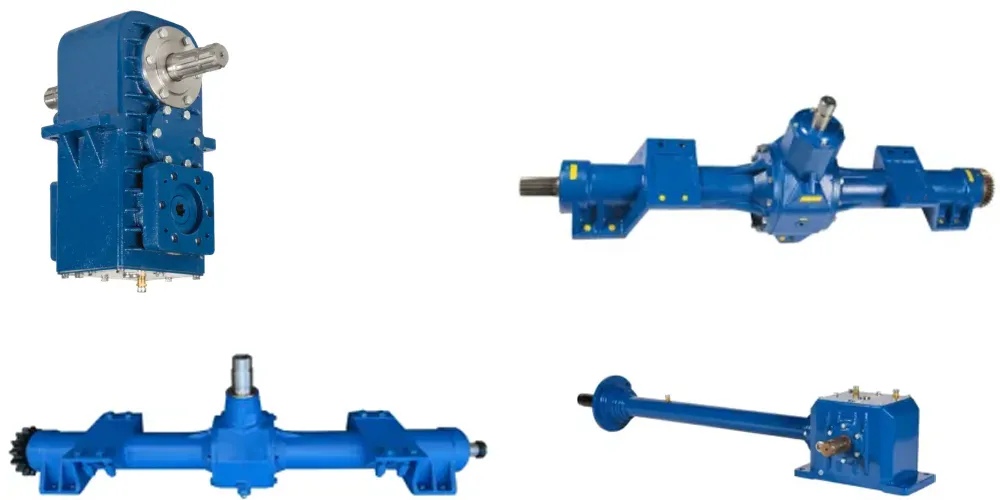
Square Baler Gearbox
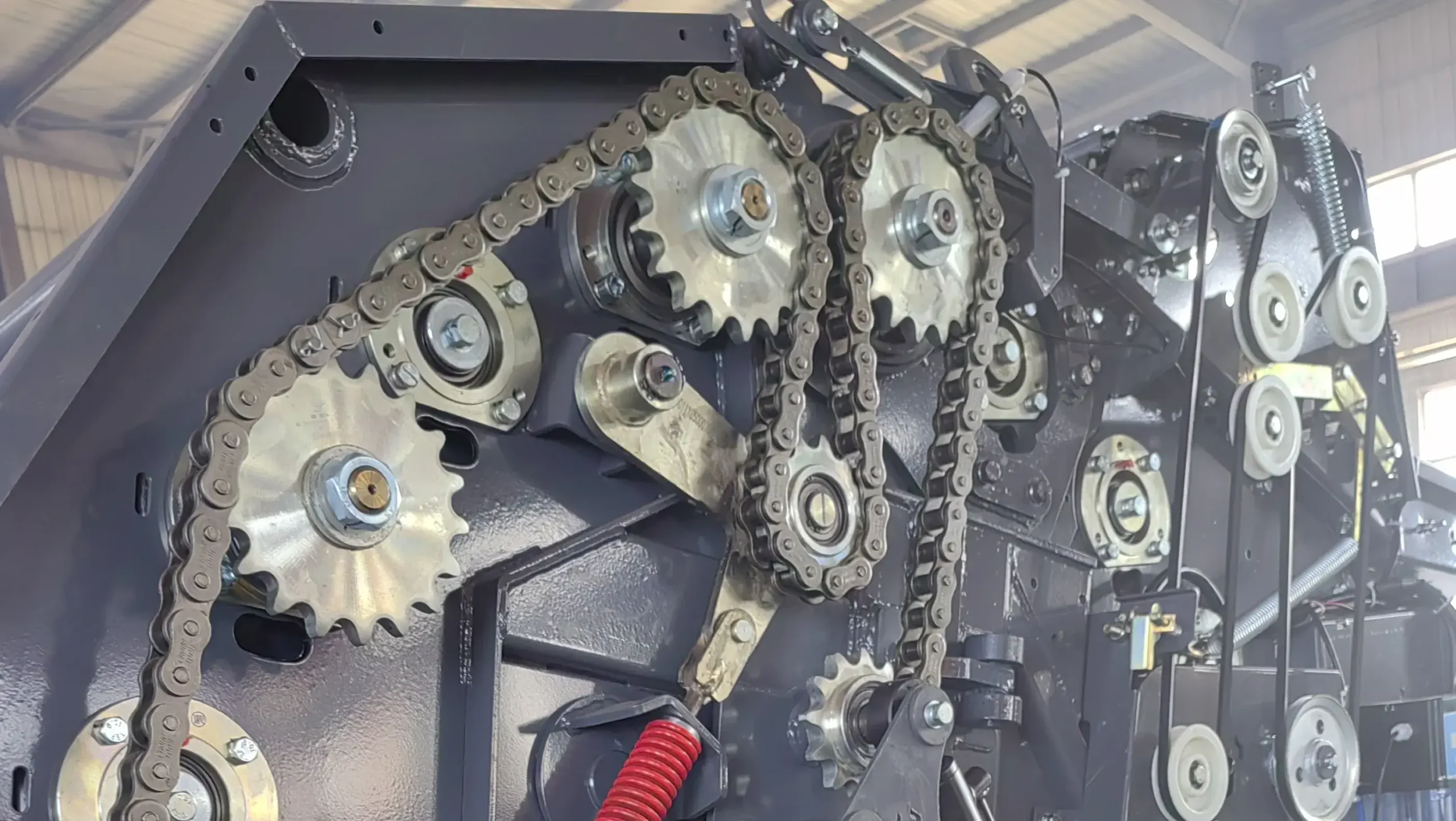
The gearbox distributes PTO input torque to the plunger drive, pickup reel, and knotter mechanism simultaneously. A correctly selected square baler gearbox prevents the overloading and bearing failures that occur when mismatched gearboxes are used across a wide PTO power range like 29.5–73.5 kW. Our EP-series-matched gearbox units use helical gear sets for quieter operation and longer service intervals compared to spur gear alternatives, and they are engineered to tolerate the torque spikes that occur when the machine transitions from feeding to plunger compression stroke. Keeping a spare gearbox unit on-site is a sound investment for operators running through high-tonnage seasonal baling programs.
PTO Drive Shaft
The PTO shaft connects the tractor output to the square baler's gearbox input, transmitting rotational force across the variable gap between hitch point and machine body. A correctly length-matched, guarded PTO shaft is not merely a performance component — it is a legal safety requirement under the machinery regulations applicable in the EU (EN ISO 4254-7), Australia (AS 4024), South Korea (KS B 5203), and most other regulated markets. Our EP-series PTO shafts are available in Category 2 configurations with telescoping tube lengths to suit the 4965mm frame geometry of this model, and include full guarding tubes with retaining chains meeting international safety standards. We supply these as standalone parts or in a matched system bundle with the square baler machine for streamlined procurement.
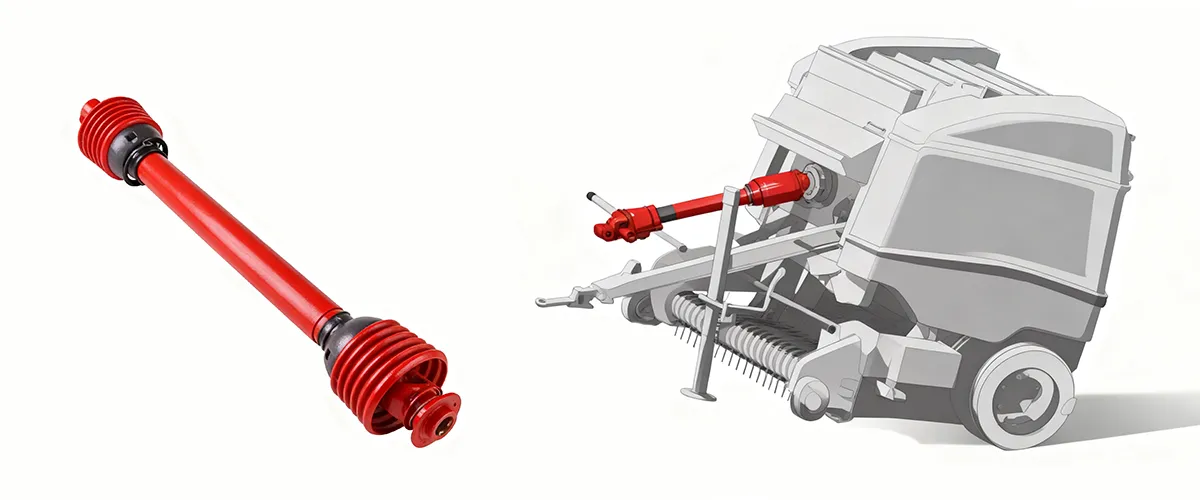
From the square baler machine itself through to the gearbox and PTO shaft, we offer one-stop supply of the complete matched system. This simplifies specification, reduces import handling complexity, and ensures every component is dimensionally and dynamically compatible before it reaches your farm.
8. About Us — 10+ Years of Agricultural Machinery Engineering
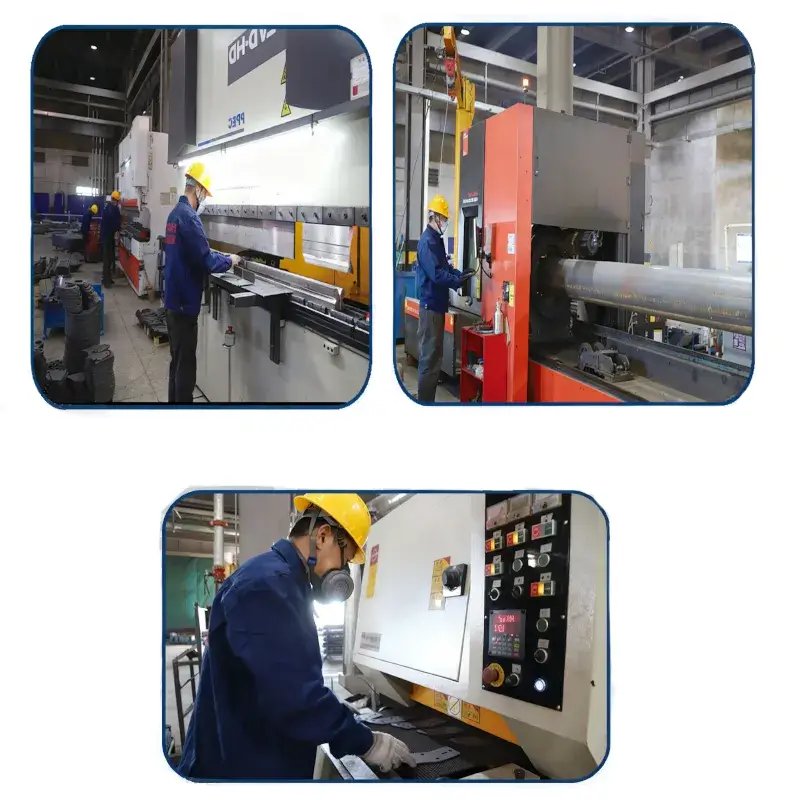
We have been designing and manufacturing agricultural harvesting machinery since 2013, building what has become a recognized portfolio of equipment for the global animal husbandry and crop residue management market. Our product line covers light and heavy round balers, single and double blade mowers, disc rotary mowers, single and double side rakes, and a comprehensive range of square baler machines — all developed, tested, and shipped under our own independent import and export rights.
Production quality is maintained under ISO 9001 Quality Management System certification, with more than 60 large-scale production machines running across our manufacturing facility. Annual design production capacity stands at 2,000 units, giving us the throughput to support both individual farm buyers and large agricultural dealer networks across Korea, Australia, the Netherlands, Brazil, Canada, the United Kingdom, and Colombia.
WorkShop

Frequently Asked Questions
Redattore: PXY


