Reed baling is one of the most mechanically demanding applications a round baler machine can be asked to handle. Phragmites australis — the common reed dominant in Korean coastal wetlands, riverside floodplains, and interior marshes — is a tall, hollow-stemmed plant with a natural tendency to bundle and lock when compressed laterally. Unlike ryegrass or timothy, which flow through a standard pickup reel and into the compression chamber with relatively predictable behaviour, reed stems are long, rigid, and prone to bridging across intake gaps. A single misaligned stem can trigger a chain of tangling that blocks the intake reel within seconds and requires manual clearing — stopping the baling run at exactly the wrong moment in a short seasonal harvest window.
The semi-forced feeding mechanism addresses this problem at the point where reed tangling most commonly originates: the transition zone between the pickup reel and the compression chamber inlet. This article explains the engineering behind the mechanism, the material choices that determine its durability in wetland conditions, and why understanding this component is essential for any operator or purchaser evaluating a round baler for reed and wetland grass applications in Korea or comparable East Asian harvesting environments.

Why Reed and Wetland Grass Tangles in a Standard Round Baler Intake
To understand what the semi-forced feeding mechanism solves, it is necessary to understand the problem it addresses. Standard cam-track pickup systems on conventional round baler machines were designed primarily for cereal straw and meadow grasses — materials that are relatively short, with limited stem rigidity and a low tendency to interlock once cut. Reed is fundamentally different in three structural respects that combine to make it prone to tangling.
First, Phragmites australis stems are long — typically 1.5 to 3.5 m at harvest in Korean coastal marshes — and they retain much of their lengthwise rigidity even after cutting and windrow formation. When a pickup tine carrier lifts a reed stem from the windrow, it does so from a single lateral point. If the stem end extends beyond the tine contact zone, it has enough stiffness to remain projecting into the path of the next carrier set rather than being swept cleanly through the intake throat. This is the beginning of a tangling event.
Second, reed stems are hollow and slightly flattened in cross-section in the lower stalk region. When compressed at a point contact — as happens with a cam-track tine at the moment of intake — they tend to buckle laterally rather than feeding forward. This lateral buckling is the physical mechanism by which a single stem becomes the anchor point for subsequent material to wrap around, building a blockage that grows faster than the operator can intervene.
Third, cut reed in a wetland environment often contains variable moisture — drier at the crown, wetter at the stem base — which means that stems at different positions in the windrow have different flex characteristics. A pickup system calibrated for the average material handles the extremes poorly, and the extremes are where tangling events begin. The semi-forced feeding mechanism was developed specifically to handle this variability.
Manufacturing Structure of the Semi-Forced Feeding System
Intake Rotor Assembly
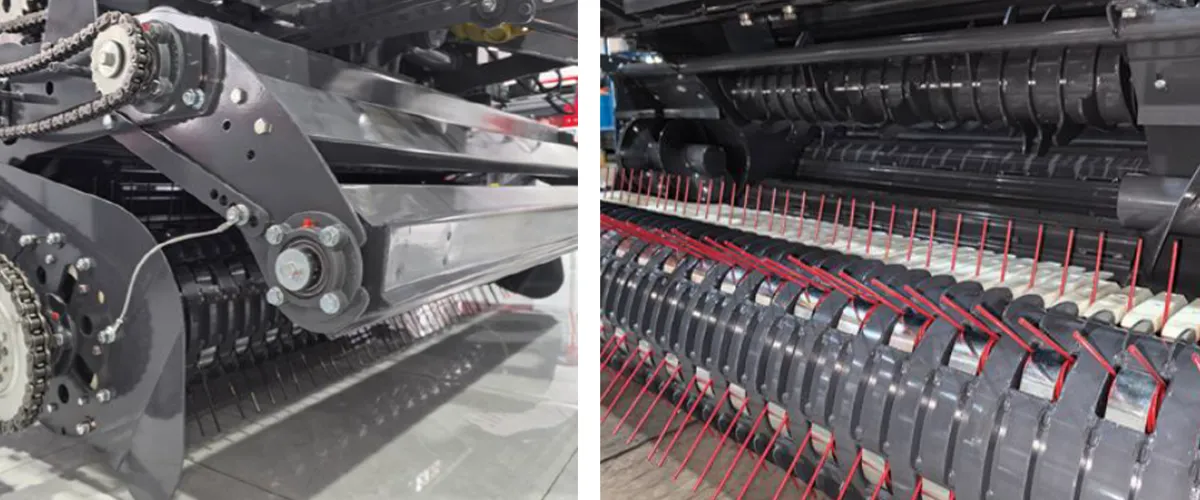
The defining component of the semi-forced feeding mechanism is an actively driven intake rotor positioned between the pickup reel and the compression chamber inlet. Unlike the passive guide plates and dead-band zones found in conventional cam-track designs, this rotor rotates continuously and positively drives material forward into the chamber regardless of stem length or lateral rigidity. The rotor is built around a central shaft, typically 50–65 mm in diameter, machined from 42CrMo alloy steel and through-hardened. Spiral finger carriers are welded to the shaft at calculated angular intervals, with each carrier set offset by 30–45 degrees from the previous to establish a continuous helical feed path rather than a synchronised batch push.
This helical motion is the key difference from conventional systems. Instead of pushing all material forward simultaneously — which creates a compression wave that can stall against a bridging reed stem — the spiral rotor applies a rolling forward impulse that progressively draws each stem through the intake throat in sequence. Long stems are effectively redirected lengthwise by the helix angle rather than being pushed broadside into the chamber opening, dramatically reducing the probability of lateral stem presentation that triggers tangling.
Pickup Reel Configuration for Reed
The pickup reel on a semi-forced feeding round baler designed for wetland grass applications uses a higher tine-tip density than standard grassland configurations — typically 5-tine carriers at 60–70 mm inter-tine spacing versus the 4-tine, 80–100 mm spacing common on general-purpose machines. The closer spacing reduces the gap between tine contact events on the same stem, minimising the window during which a reed stem can reorient into a bridging position before the next tine carrier takes over. Gauge wheels maintain tine clearance at 25–35 mm above ground level in wetland conditions, where the soft soil surface can vary by 20–30 mm between tyre tracks and the harvested zone.
Feed Throat and Transition Zone Geometry
The geometry of the transition zone between the rotor exit and the compression chamber inlet is engineered with a wider initial opening that tapers progressively as material enters the roller array. The wide entry — typically 350–400 mm throat width on models designed for reed — allows long stems to enter the chamber without requiring them to fold tightly at the transition point. The taper angle is shallow (typically 8–12 degrees per side) to maintain positive control on material as it accelerates from rotor speed to roller surface speed without creating a dead zone where stems can accumulate. This geometry contrast sharply with standard balers that use a narrower, more abrupt transition designed for short-stem crops, which creates exactly the dead zone that reed uses to initiate a tangling cascade.
Material System: What the Semi-Forced Feeding Mechanism Is Made Of
Reed and wetland grass baling presents a distinct material challenge compared to upland grass or cereal straw. The operating environment combines high abrasion from silica-bearing stems, elevated corrosion risk from continuous exposure to saturated soil conditions and saline groundwater in coastal Korean wetlands, and a higher impact frequency at the intake zone from the greater mass and rigidity of individual reed stems. The material system across the semi-forced feeding mechanism must address all three simultaneously.
| Component | Material | Surface Treatment | Reed / Wetland Relevance |
|---|---|---|---|
| Intake Rotor Shaft | 42CrMo alloy steel | Through-hardened HRC 45–52; epoxy primer | Resists bending fatigue from repetitive reed stem impact at higher-than-average mass |
| Spiral Finger Carriers | Q345B structural steel, laser-cut | Powder-coat over epoxy primer | Precision helix geometry maintained under repeated load; replaceable when worn |
| Pickup Tines | 65Mn spring steel | Shot-peened, zinc phosphate primed | Higher fatigue limit handles heavy reed stems; deflects on submerged debris without permanent set |
| Feed Throat Liner | Wear-resistant AR400 steel plate | No additional coating; Brinell 370–430 | Silica content in reed stems causes accelerated liner wear; AR400 extends replacement interval |
| Rotor Bearings | Sealed deep-groove ball bearing (6210-2RS) | Double-sealed; NLGI 2 grease packed | Wetland dust, chaff, and fine sediment excluded by double-seal design |
| Chassis Frame at Intake Zone | Q345 RHS, 80x60x6 mm section | Electrostatic epoxy primer + PU topcoat | Salt spray resistance essential for coastal Korean wetland operations |
| Drive Chain (rotor circuit) | ANSI #50 alloy steel, hardened rollers | Lubricated; sealed side-plates | Handles torque spikes during rotor contact with heavy reed stem bundles |
The corrosion protection specification for coastal Korean reed harvesting — salt spray resistance of 500 hours minimum on the epoxy-PU duplex system — is not the standard coating applied to general-purpose round baler machines. It is worth specifically confirming with any round baler manufacturer whether their wetland models carry this enhanced specification, as the difference between a standard powder-coat and a proper epoxy primer base coat becomes apparent in the second and third seasons of coastal operation when the standard finish begins to fail at cut edges and weld seams.
How Reed Behaves Inside the Compression Chamber Once Tangling Is Prevented
Once the semi-forced feeding mechanism has successfully delivered reed material into the compression chamber without tangling, a second set of behaviours comes into play that differentiates reed baling from conventional grass applications. Reed stems in the chamber begin forming the bale core in a predominantly longitudinal orientation — that is, with stem lengths running parallel to the chamber axis rather than wrapping circumferentially as meadow grass naturally does. This longitudinal orientation, while initially less efficient for density building, produces a bale core that is structurally more stable than a circumferential grass bale because the hollow reed stems interlock under radial compression more firmly than soft grass leaves.
The transition from a loose longitudinal core to a dense, uniform bale occurs between approximately 30% and 70% of the target bale diameter. During this phase, the chamber rollers must apply consistent, progressive pressure without causing the longitudinal stems at the bale surface to slip relative to the core — a failure mode that produces spiral surface defects called “streaks” in the finished bale and reduces wrapping film adhesion during subsequent silage or storage wrapping. The roller surface texture on models designed for reed — a coarser-pitch spiral pattern rather than the smooth or fine-ribbed surface used for grass — provides the additional grip needed to keep the bale surface rotating uniformly throughout the compression build phase.
At target diameter, density in a reed bale typically reaches 110–160 kg/m3, lower than silage grass bales (150–200 kg/m3) but consistent with the lower intrinsic density of the hollow-stemmed material. Net wrap application on a completed reed bale requires an additional half-revolution compared to grass, as the looser surface texture of reed requires more wrap overlap to secure the outer layer before discharge. Quality semi-forced feeding balers accommodate this by allowing the net wrap initiation parameter to be adjusted independently of the bale size trigger.
Recommended Model: 9YG-2.24D Round Baler S9000 for Reed and Wetland Grass
9YG-2.24D S9000 — 2.24 m Pickup, Semi-Forced Feeding, Reed-Ready
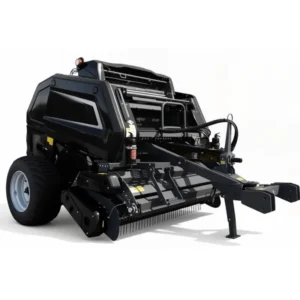
The 9YG-2.24D S9000 is the model in this series most directly matched to the demands of reed and wetland grass harvesting. The 2.24 m pickup width effectively covers the wide windrow profile that reed forms when cut at full harvest height in Korean coastal marshes, reducing the number of field passes required to achieve full windrow pickup and minimising the lodging of cut stems at windrow edges that causes tangling in narrower-pickup machines.
The semi-forced feeding intake system on the S9000 incorporates the spiral rotor described in this article, with the wider-than-standard feed throat geometry suited to long Phragmites stems. The 18-roller fixed-chamber compression system maintains consistent bale pressure across the full formation cycle, and the adjustable back-pressure hydraulic circuit allows the operator to calibrate chamber density for reed material specifically — typically at a lower setpoint than the grass silage setting — without affecting the net wrap trigger configuration. Compatible with tractors in the 55–90 hp range at 540 r/min PTO output, this model is practical for the Korean-market tractor fleet across coastal provinces.
Standard Cam-Track Pickup vs Semi-Forced Feeding: Reed Baling Comparison
The performance difference between conventional pickup systems and the semi-forced feeding design is most visible in reed and fibrous wetland grass applications. The table below summarises the key operational differences relevant to Korean wetland harvesting contexts.
| Criterion | Standard Cam-Track Pickup | Semi-Forced Feeding System | Reed Harvesting Impact |
|---|---|---|---|
| Long-stem handling | Passive; relies on windrow tension to pull stems through | Active rotor drives stems positively regardless of length | Semi-forced feeding handles 1.5–3.5 m reed stems without blocking |
| Tangling frequency | High on reed; 5–15 manual clearances per field hour typical | Near-zero under correctly calibrated operating speed | Eliminates the primary cause of operator downtime in reed harvest |
| Bale output rate (reed) | 5–12 bales/hour with frequent stops | 20–35 bales/hour continuous | 2–4x productivity improvement in Korean coastal wetland conditions |
| Operator intervention | Frequent; operator must leave tractor cab to clear | Rare; minor adjustments from cab only | Significant reduction in fatigue and harvest window loss risk |
| Bale uniformity | Variable; tangling events produce underweight or irregular bales | Consistent; continuous feed produces uniform density distribution | Consistent bales simplify transport, storage, and wrapping logistics |
| Rotor/cam wear rate | Cam guard accelerates wear in heavy reed conditions | Spiral rotor wears gradually; no cam guard contact points | Lower maintenance cost over multi-season wetland harvesting programme |
Round Baler Gearbox Specification for Reed and Fibrous Wetland Crops
Reed baling places distinctive demands on the round baler gearbox because of the torque profile generated by the semi-forced feeding rotor. While a standard grass baler gearbox handles relatively smooth, continuous loading from the pickup reel and roller drive, the intake rotor in a semi-forced feeding system generates short, high-torque pulses each time a bundle of rigid reed stems contacts the spiral fingers. These pulses propagate through the rotor drive chain and into the gearbox input stage, requiring a higher torsional fatigue rating at the input gear set than standard grass baler specifications provide.
For the 9YG-2.24D series, the primary gearbox uses a spiral bevel input stage (module 4, 20CrMnTi gear set, case-hardened to HRC 58–62) with a ductile iron housing rated for continuous torque of 550 Nm and peak torque of 900 Nm. The higher peak-to-continuous ratio compared to standard grass baler gearboxes reflects the spike loading pattern of reed intake. At 540 r/min PTO input, the gearbox delivers rotor drive at a shaft speed appropriate for spiral rotor operation in reed — typically 80–120 r/min at the rotor shaft, providing the positive feed rate needed without accelerating stems so rapidly that they shatter against the chamber wall on entry.
Gearbox oil specification for reed harvesting should follow the seasonal guidance relevant to Korean coastal environments: ISO VG 90 gear oil in the standard summer season, shifting to ISO VG 75W-90 synthetic for the pre-winter harvest window when morning temperatures in coastal Gyeonggi and South Chungcheong wetlands regularly fall below 5 degrees C. Oil change after the first 50 operating hours on a new machine, then annually, removes the metallic debris from the initial gear contact bedding phase before it accumulates at bearing surfaces.
Reed Harvesting in Korea: Seasonal Timing, Wetland Regulations, and Baling Logistics
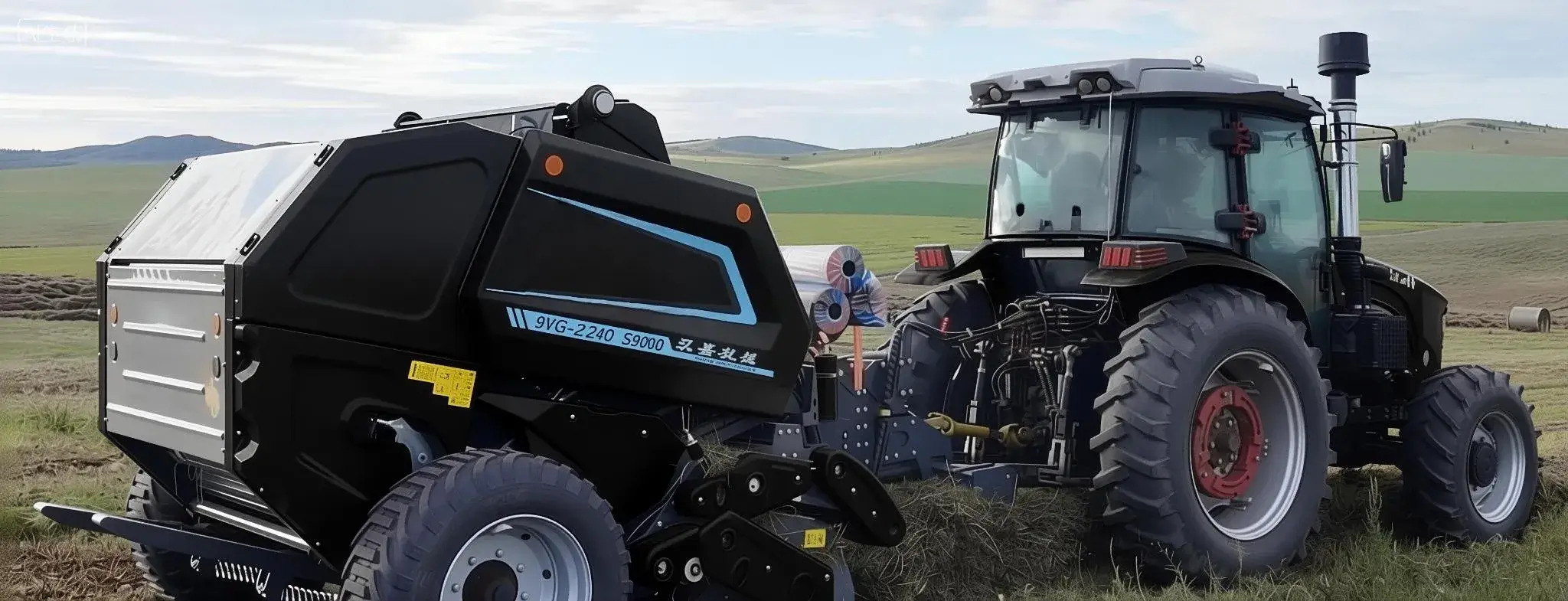
Korean coastal and riverside reed harvesting concentrates primarily in the November-to-February window, when Phragmites stems have cured sufficiently to maintain structural integrity in a bale without fermentation risk, and before new spring growth begins. The key harvesting zones are the Sihwa and Ansan tidal flats in Gyeonggi Province, the Nakdong River delta and associated reed beds in South Gyeongsang Province, and the extensive inland marshes of the Saemangeum reclamation area in North Jeolla Province.
Access conditions in these environments are challenging in ways that directly affect round baler selection. Ground bearing capacity in unfrozen wetland soil is typically 20–40 kPa, significantly below the 80–100 kPa common on upland grass fields. This limits tractor weight and implement tongue load — a relevant constraint when evaluating larger round baler models for reed applications. Compact Korean tractors in the 50–75 hp range with wide-base or flotation tyres are the practical standard for coastal Korean reed harvesting. The 9YG-2.24D series at its working weight of approximately 1,800–2,200 kg is within the tongue load capacity of this tractor class on moderately firm wetland ground.
The baled product from Korean coastal reed harvesting has several markets: thatching material for traditional architecture and tourism venue construction, livestock bedding, biomass combustion feedstock, and increasingly, ecological habitat restoration where reed mats are used to re-establish vegetation on reclaimed tidal flat margins. Each end market has specific bale density and geometry requirements, and the adjustable chamber back-pressure on semi-forced feeding balers allows a single machine to produce bales calibrated for different destination uses across the same harvest season.
Legal and Regulatory Context: Wetland Management, Machinery Safety, and Gearbox Standards
Republic of Korea
Reed harvesting in Korean protected wetlands is subject to the Wetlands Conservation Act (습지보전법) administered by the Ministry of Environment. Harvesting permits are required for commercial-scale reed removal in designated Ramsar sites and national protection zones, including portions of the Nakdong River delta. Agricultural machinery including round balers operating on licensed wetland areas must comply with MAFRA Agricultural Machinery Certification requirements for safety, and gearbox and PTO shaft guarding must meet the safety standards aligned with ISO 500-1. Machinery used by employed harvest workers is additionally subject to the Occupational Safety and Health Act (KOSHA regulations), which requires documented inspection records for PTO-driven implements including round baler machines.
The Korean government has in recent years expanded agricultural mechanisation subsidy eligibility to include wetland forage and biomass harvesting equipment where the operator can demonstrate compliance with wetland permit conditions. Round balers certified for wetland use and meeting MAFRA standards can qualify for subsidies offsetting up to 50% of purchase cost through the Korean Agricultural Mechanisation Support Programme.
EU and Europe
In EU member states, reed harvesting in protected wetlands is governed by the Habitats Directive (92/43/EEC) and the Birds Directive (2009/147/EC), which restrict activity timing and methods in Natura 2000 sites. Round baler equipment used in these environments must carry CE marking under Machinery Directive 2006/42/EC (transitioning to EU Machinery Regulation 2023/1230). Gearbox and PTO shaft safety requirements follow EN 12965 and ISO 11684 for guard design and safety signage. In the Netherlands and Poland — the two largest European markets for commercial reed baling — additional national wetland management regulations apply to harvest timing, ground disturbance limits, and the requirement for low ground-pressure machinery on protected peat soils.
Japan
Reed management in Japanese riverside and coastal wetlands is subject to the River Act and the Natural Parks Act, which between them control harvesting activity across most of the significant Japanese reed bed areas in Hokkaido, Aichi, and the Osaka coastal zone. Agricultural machinery used in these areas must conform to JIS B 9700 (Safety of Machinery) and the Japanese Agricultural Mechanisation Promotion Act. PTO shaft guarding requirements follow the ISO 500 series, aligned with Korean standards, allowing machines certified for Korean use to be registered for Japanese agricultural operations with minimal additional documentation.
Australia
In Australia, reed and wetland grass baling in coastal and riverine environments is subject to state-level environmental protection legislation and the Environment Protection and Biodiversity Conservation Act 1999 at the federal level. Agricultural machinery operating on wetland areas must comply with AS 4024 (Safety of Machinery) and Work Health and Safety Act requirements for PTO guarding and hydraulic system documentation. Victoria and South Australia — where the Murray-Darling Basin reed beds represent significant commercial harvesting potential — each have state agency permit requirements for commercial-scale reed removal from waterway management zones.
Before commencing commercial reed baling in any Korean wetland area, verify harvest permit status with the relevant Municipal Environment Office and confirm MAFRA Machinery Certification status of the round baler. Both are required for government subsidy eligibility, and the permit verification step is legally necessary regardless of subsidy intent.
Field Operating Guidance: Getting the Best from a Semi-Forced Feeding Baler on Reed
Even with a semi-forced feeding round baler, operator technique matters significantly in reed conditions. The mechanism eliminates most tangling events, but does not make the baler immune to operator-driven problems. Three areas of operating practice have an outsized effect on performance and machine longevity in wetland reed conditions.
Reed windrows are inherently denser than grass — a 2 m wide windrow of dried coastal reed can weigh 40–60% more per metre than a comparable grass windrow. Reducing forward speed to 2–4 km/h on dense reed sections, rather than maintaining the 6–8 km/h typical for grass baling, keeps the round baler intake rotor from overfeeding and producing a misshapen bale core in the first third of formation.
The 2.24 m pickup width works best when the reed windrow is prepared to match. A windrow narrower than 1.6 m leaves the outer tine carriers running empty, which allows reed stems at the windrow edge to lean into the untensioned tine path and initiate bridging. Raking cut reed to a consistent 1.8–2.0 m windrow width before baling maximises intake rotor engagement and reduces edge-tangling frequency.
Reed stems below 15% moisture content become brittle and shatter at the tine contact point rather than feeding forward intact. Baling during the morning hours in early winter — when ambient humidity is higher and stem surfaces retain surface moisture from overnight dew — produces cleaner intake behaviour than afternoon baling when stems have dried further. This is a practical seasonal adjustment that many Korean wetland operators discover through experience rather than specification guidance.
Compatible Components: Agricultural PTO Shaft and Drive Chain for Reed Baling
Reed baling places higher-than-average cyclic loads on both the PTO shaft and the internal drive chain of the round baler machine, because the semi-forced feeding rotor generates torque spikes each time the spiral fingers engage a bundle of rigid stems. The connecting components need to be matched to this load profile — not just to the nominal rated power of the tractor.
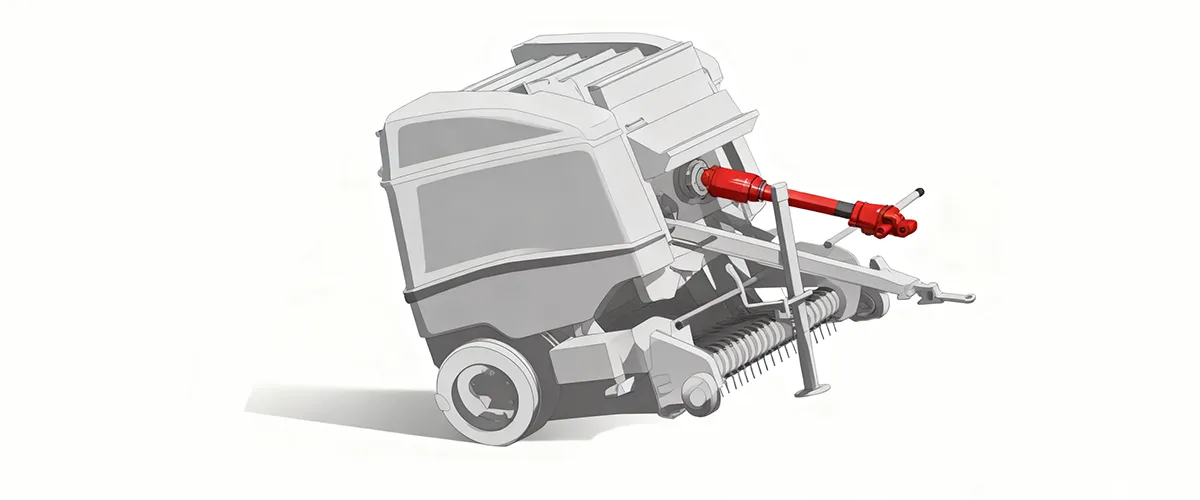
EP Agricultural PTO Shaft — Overrun Protection for Reed Intake
For reed baling, the PTO shaft connecting tractor to round baler should incorporate a friction-clutch overrun protector rather than a simple shear bolt, because reed intake torque spikes occur frequently enough that shear bolts would require replacement multiple times per session. The EP-PTO shaft series uses a 1-3/8 inch Z6 spline configuration with adjustable length 600–1200 mm and a friction-clutch overrun rated to absorb repeated cyclic overload events without requiring field resetting. This is the critical difference in shaft selection for reed versus grass applications.
Agricultural Drive Chain — Heavy-Duty Specification for Reed Rotor Drive
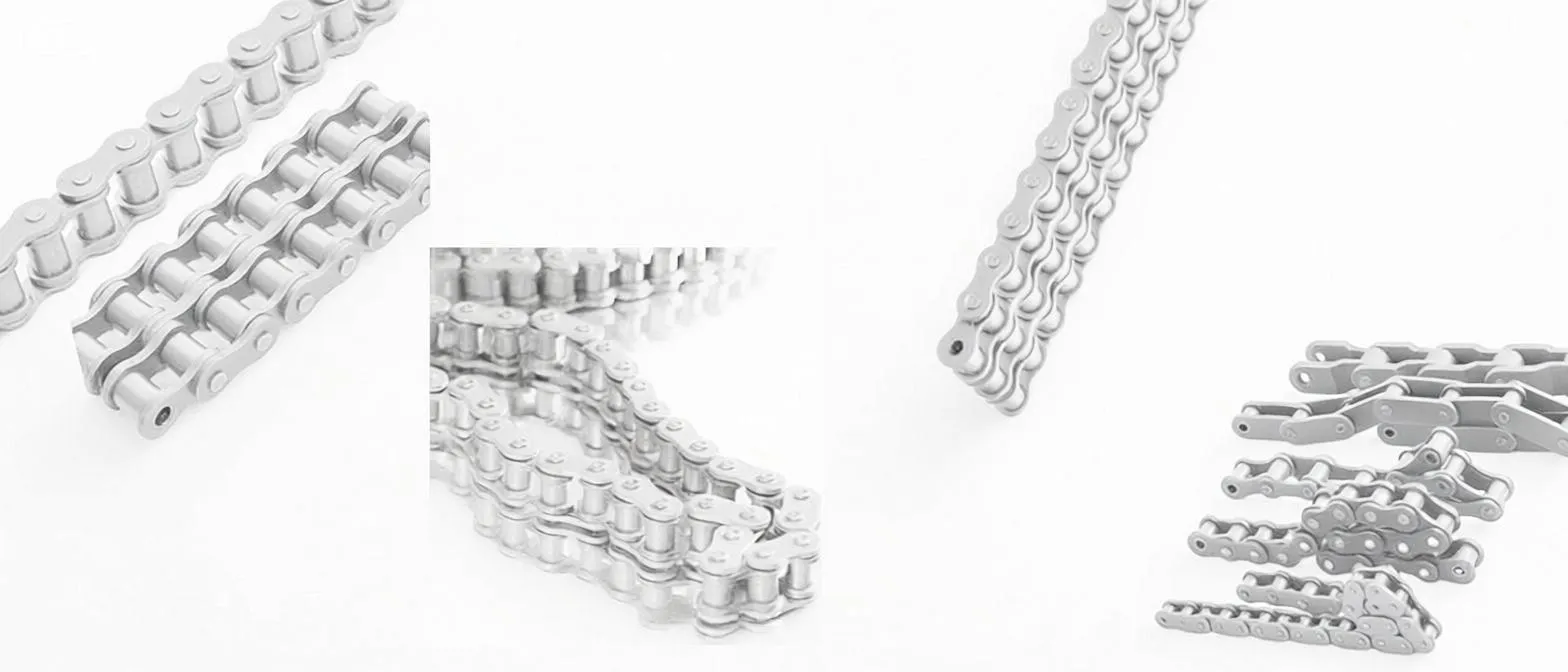
The rotor drive circuit in a semi-forced feeding round baler machine operates under more demanding chain loading than a standard pickup drive because of the repeated impact events during reed stem contact. ANSI #50 alloy steel chains rated to 60 kN minimum tensile, with hardened rollers and sealed side-plates, are the appropriate specification for this application. Chain tension requires more frequent checking during reed harvest — every 40–50 bales rather than the 80–100 bale interval typical for grass — because the torque spikes from reed intake accumulate slack faster at the chain midspan than continuous-load grass driving does.
Our Agricultural Machinery Manufacturing Programme
Since 2013, our manufacturing operation has focused on producing agricultural harvesting machinery that performs reliably in the demanding conditions of real-world commercial farming. We produce the full range of round baler machines — from compact small round baler models suited to marginal-land and small-acreage operations, through to heavy-duty units for commercial forage and wetland biomass harvesting — alongside mowers, disc cutters, and raking equipment that supports the complete harvest cycle from cutting through to bale discharge.
Our facility operates more than 60 large-format production units including CNC laser-cutting lines, robotic welding stations, and electrostatic coating systems. Annual production capacity reaches 2,000 units. All production is conducted under ISO 9001 Quality Management System certification. Independent import and export rights allow us to supply Korea, Japan, Australia, Europe, and North America without intermediary delays. Our team has specific engineering experience adapting semi-forced feeding round baler specifications for the demanding intake conditions of Korean coastal reed harvesting, including gearbox torque rating calibration and corrosion protection specification for coastal saline environments.
Frequently Asked Questions
How does the semi-forced feeding mechanism on a round baler prevent reed tangling compared to a standard cam-track pickup system?
Which round baler model is best suited for commercial reed harvesting in Korean coastal wetlands near Gyeonggi or South Chungcheong Province?
What round baler parts wear fastest when baling reed in wetland environments and what should I stock before the Korean winter harvest season?
Where can Korean wetland farmers get a quote for a round baler machine with semi-forced feeding designed for Phragmites harvesting?
When is the best time of year to bale Phragmites reed in Korean wetlands and how does seasonal timing affect the round baler performance?
編集者: PXY