1. Why Rice Straw Is the Most Challenging Crop for Round Baler Feed Systems
Rice straw presents properties that make it the most technically demanding material a round baler machine feed system encounters in regular Korean agricultural service — significantly more difficult than wheat straw, barley straw, or most grass hay crops in terms of the feed system stresses it generates. Understanding these properties explains why the axial-flow semi-forced round baler feed mechanism reduces blockage frequency by up to 40% compared to conventional cam-guided designs in Korean rice field conditions.
The first critical property of rice straw is its very high silica content — 10–15% of dry matter in the epidermal cell walls, compared to 4–8% for wheat straw and 1–2% for grass hay. This elevated silica creates two simultaneous problems for the feed system: it makes rice straw stems extremely stiff and resistant to the bending that a feed rotor must impose on crop material to redirect it from the horizontal pickup direction into the vertical feed zone throat; and it makes rice straw highly abrasive against the metal surfaces it contacts, wearing the feed rotor, the guide channel walls, and the feed rotor tines at accelerated rates compared to less abrasive crops. The combination of stiffness and abrasiveness means that rice straw demands more mechanical force per stem to feed reliably and wears the feed mechanism faster than any other commonly baled Korean crop.
The second critical property is rice straw’s tendency to form compact, tangled mats that challenge the round baler feed system. Korean rice combines typically lay cut straw in a continuous ribbon with minimal orientation uniformity — unlike wheat combines whose straw walkers tend to produce more linearly aligned windrows. The tangled, mat-like character of the rice straw windrow means the feed system receives material in random orientation rather than as a stream of stems individually and cleanly presented. When a conventional cam-guided round baler feed rotor encounters a tangled mat of rice straw, the individual stems resist the cam-imposed deflection and create the localised accumulation that develops into a full feed zone plug requiring operator intervention.
2. The Blockage Mechanism: What Happens Inside a Cam-Guided Feed Zone
To appreciate why the axial-flow design solves the rice straw blockage problem, consider what happens inside a conventional round baler feed zone. The cam ring creates a constriction zone at the transition between the pickup reel and the bale chamber — a zone where the crop material must pass through a narrowing gap as the cam redirects the crop path from horizontal to vertical or diagonal entry into the forming chamber. The width of this constriction gap is fixed by the cam geometry and is sized for the average density of the crop stream the machine was designed to handle — typically soft grass hay or barley straw — not for the mat-like, tangled high-density stream of freshly cut Korean rice straw in October autumn conditions.
When a slug of tangled rice straw enters the cam constriction zone of a conventional round baler machine at normal tractor speed, the material volume exceeds the clearance capacity. The cam ring cannot physically expand to accommodate the slug; its geometry is fixed. The incoming material therefore compresses against the cam constriction, and the rotor tines that were designed to pull material through the gap can no longer generate sufficient tension in the tangled mat to draw it forward. The material jams, and within a fraction of a second the entire constriction zone is packed with stationary, compressed rice straw. The rotor continues rotating against the jam, generating heat and torque spikes in the gearbox, until either the operator shuts down and manually clears the blockage or the machine’s overload protection engages. In a Korean rice field with a rice straw windrow produced by a full-featured combine, this round baler blockage scenario can occur multiple times per hour.
| Blockage Trigger | Cam-Guided Feed Response | Axial-Flow Response | Frequency in Korean Rice Fields |
|---|---|---|---|
| Windrow overlap slug | Cam constriction jams; rotor stalls | No constriction zone; slug passes continuously | 3–5 per hectare in overlapped rows |
| Tangled mat at tractor speed | Random orientation resists cam deflection | Forced axial flow handles random orientation | Constant in Korean rice windrow conditions |
| High-moisture rice straw (above 30%) | Sticky mat adheres to cam ring surfaces | Semi-forced design breaks adhesion tendency | Significant in early October Korean harvest |
| Double windrow from field turning | Volume doubles; cam zone immediately overloaded | Reduced sensitivity to double-row volume | Common at headland and row ends |
3. Axial-Flow Semi-Forced Feed: Architecture and Operating Principle
The axial-flow semi-forced feed mechanism is the engineering response to the limitations of a conventional round baler cam-guided design in difficult crop conditions. The term “axial-flow” describes the primary direction of material movement through the feed zone: instead of the cam-imposed diagonal or curved path of conventional designs, the axial-flow design moves crop material in a predominantly axial direction — that is, parallel to the axis of the feed rotor — from the pickup delivery point into the bale chamber entrance. The term “semi-forced” describes the drive mechanism: unlike a purely passive pickup that relies only on tine contact friction to move material, the semi-forced design applies a positive mechanical driving force to the crop stream through the entire feed zone transit, not just at the pickup-to-rotor hand-off point.
In practice, the axial-flow semi-forced feed design achieves its advantages through three architectural differences from the conventional cam-guided approach. First, it eliminates the fixed-geometry cam ring constriction zone that is the primary round baler blockage site in the conventional design, replacing it with an open-throat feed channel that can accommodate material slugs without a geometric choke point. Second, it uses a feed rotor with helically arranged tines — positioned at an angle relative to the rotor axis — that impose an axial directional component on the crop material as they sweep through the round baler feed zone, actively guiding tangled material in the flow direction rather than simply pulling it along a cam-defined path. Third, the rotor speed and tine spacing are optimised for the higher-density, more randomly oriented crop stream of rice straw specifically, rather than the lower-density, better-aligned stream of grass hay for which most conventional round baler feed systems were originally designed.
The result is a feed system in which the crop material is continuously moving in the desired direction under positive mechanical guidance, rather than being dependent on the passive constriction geometry of a cam ring to maintain directional flow. Rice straw tangled mats enter the feed zone from the pickup, encounter the helically arranged feed tines, and are progressively unfolded and redirected into axial flow by the tine action — a process that happens continuously rather than in the stop-start pattern of a cam-guided feed zone encountering difficult material. At 10–12 km/h in Korean rice fields, the round baler machine can maintain continuous baling through windrow conditions that would cause a cam-guided equivalent to stop and restart multiple times.
4. The 40% Blockage Reduction: Data Behind the Claim in Korean Rice Conditions
The claim that axial-flow semi-forced feeding reduces rice straw blockages by up to 40% is based on field comparisons in Korean rice-producing regions, where round baler machines with both feed system designs were operated on the same rice fields under comparable conditions. The comparison methodology counted blockage events — defined as any operational stop requiring manual feed zone clearance lasting more than 60 seconds — per hectare of rice straw baled, with blockage rate normalised to the same tractor speed, windrow density, and moisture content range for both machine types. The 40% figure represents the upper range of improvement observed; the average improvement across a range of Korean rice field conditions was in the 25–35% range, with the highest improvements occurring in the most challenging conditions: freshly cut rice straw above 30% moisture, double windrow sections at headlands, and fields where the rice combine had left particularly tangled, mat-like windrows.
It is important to contextualise the 40% blockage reduction in terms of what it means for a Korean rice straw baling operation’s actual working day. In the most common Korean rice straw baling conditions — October harvest at 25–35% moisture — a well-maintained round baler machine with a conventional cam-guided feed might experience 6–10 blockage events per hour of operation at 8–10 km/h tractor speed. Each blockage event costs approximately 3–8 minutes of clearance time plus the re-engagement cycle. Across a 10-hour working day, this corresponds to 60–100 blockage stops and 180–800 minutes of non-productive blockage clearance time — representing a 30–50% reduction in effective operating hours per day compared to the machine’s nominal productive capacity. A 40% reduction in blockage frequency from the axial-flow semi-forced design recaptures a significant portion of this lost productive time, potentially adding 60–200 additional productive minutes per day and a corresponding number of additional bales per day to the operation’s output.
Up to 40%
Maximum blockage reduction in heavy Korean rice straw conditions versus cam-guided design
25–35%
Average blockage reduction across a range of Korean October rice field conditions
3–8 min
Typical clearance time per blockage event in Korean rice straw, including re-start
200+ min
Productive time potentially recaptured per day by switching to axial-flow semi-forced feed
5. Manufacturing Structure of the Axial-Flow Feed Assembly
The manufacturing structure of the axial-flow semi-forced round baler feed assembly must address the higher mechanical demands that rice straw imposes compared to softer crops — demands that arise from the combination of high crop material stiffness (resistant to tine deflection), elevated abrasiveness (from the high silica content), and the higher feed force required to move tangled material through the zone without the cam constriction geometry to channel it. A round baler feed assembly manufactured for grass hay but not redesigned for rice straw will exhibit accelerated wear in Korean rice field service, eroding the blockage reduction advantage as the season progresses.
The feed rotor is the central structural component of the axial-flow round baler assembly, fabricated from precision-turned steel tube with helical tine mounting flanges. The helix angle of the tine mounting positions is a critical round baler manufacturing parameter because it determines the axial directional component of the force that tines apply to the crop material — too shallow and the axial flow advantage is reduced; too steep and the rotor generates excessive axial thrust that stresses the rotor shaft bearings. The tine mounting flanges are positioned with angular and axial accuracy to within ±0.5 mm of their design coordinates, ensuring that the tine sweep pattern produces the intended helical flow geometry rather than the irregular, uneven sweep that manufacturing errors would create. Post-fabrication dynamic balancing of the assembled round baler rotor at operating speed eliminates the vibration that an unbalanced rotor would generate, which is particularly important in rice straw service.
The round baler feed channel housing — the structure that encloses the feed rotor and defines the geometry of the open-throat feed zone — is made from heavy-gauge steel plate with reinforced edges at the pickup-to-rotor transition. This transition zone carries the highest structural loads in the feed assembly because it is the point where the pickup’s horizontal delivery converts to the feed rotor’s axial-flow direction, and the reaction forces from this direction change are concentrated at the housing wall. In conventional cam-guided designs, the cam ring at this location handles the direction change through its curved geometry; in the axial-flow design, the housing wall itself provides the structural constraint while the feed rotor tines provide the active directional guidance. The housing wall at this location is made from wear-resistant steel plate at minimum 8 mm thickness in the standard design, with optional hard-facing for high-volume Korean rice straw operations where the wall wear rate would otherwise exceed the standard maintenance interval.
6. Material Systems in the Feed Zone for Rice Straw Service
The material specifications for the axial-flow semi-forced round baler feed zone components must address the unique wear environment that rice straw’s high silica content creates. At 10–15% silica content in the epidermal cell wall — significantly higher than any other commonly baled Korean agricultural crop — rice straw acts as a fine-grit abrasive against every metal surface it contacts under compression and sliding motion. In the feed zone, this abrasive action is particularly intense because the feed tines drag stems at high velocity across the channel housing walls and rotor flanges during the active redirection phase of the axial-flow cycle. Material specifications that are adequate for wheat straw (4–8% silica) may show 2–3 times the wear rate in rice straw service and should be upgraded accordingly for Korean rice straw baling operations that accumulate significant annual hours.
The feed tines in the axial-flow round baler assembly are subject to the most intensive wear of any feed zone component. They operate in continuous contact with abrasive rice straw at high tine peripheral velocity, and they must maintain their designed geometry — the specific hook profile and contact angle that provides the helical directional guidance — throughout the service period for the axial-flow effect to remain effective. Tines manufactured from 65Mn medium-carbon manganese steel with heat treatment to 45–50 HRC provide the combination of surface hardness (abrasion resistance) and core toughness (resistance to fracture when impacting tangled mat accumulations or foreign objects mixed in with the rice straw) that Korean rice straw feed tine service requires. At the other end of the hardness spectrum, chrome-vanadium alloy steel tines at 52–56 HRC are available for very high-volume operations where maximum surface hardness is prioritised over fracture resistance, at the trade-off of higher replacement cost when tines fracture on occasional foreign objects.
The round baler feed channel housing interior surface at the pickup-to-rotor transition should be protected by hard-facing weld overlay or by replaceable wear plates. Hard-facing applied by electrode or wire arc welding can achieve surface hardness of 55–65 HRC with specific alloy combinations (tungsten carbide particle-reinforced hardfacing materials) that provide wear resistance specifically against silica abrasion rather than the general metal-on-metal wear that standard tool steel hardness addresses. The replaceable wear plate approach has the operational advantage of allowing wear-rate monitoring in the round baler feed housing: when a wear plate reaches its replacement thickness indicator, the operator installs a replacement plate during a scheduled service interval rather than repairing hardfacing in the field.
| Component | Rice Straw Specification | Silica Abrasion Response | Service Life (rice straw) |
|---|---|---|---|
| Feed tines | 65Mn heat-treated, 45–50 HRC; or CrV alloy, 52–56 HRC | 2x harder than standard hay tines; maintains hook geometry | 1 season rice straw; inspect at 100 h |
| Channel housing interior | 8 mm wear-resistant plate or hard-facing 55–65 HRC | WC-reinforced hardfacing resists silica lapping action | 2–3 seasons with hardfacing; inspect annually |
| Rotor flanges | Induction-hardened flange edges, 50–55 HRC | Flange edges at high contact-stress risk from mat material | 3–5 seasons; check edge profile annually |
| Rotor shaft bearings | 100Cr6 sealed or labyrinth, 60–66 HRC races | Rice straw dust exclusion critical — chaff finer than wheat | Grease every 50 h rice straw; replace at 5 years |
7. Pickup-to-Feed Transition: How the Cam-Free Design Eliminates the Critical Constriction
The pickup-to-feed transition zone is the location in the round baler machine where feed blockages most commonly initiate, and it is the specific mechanical problem that the axial-flow semi-forced design addresses most directly. In any round baler feed system, the crop must change direction at this point. A conventional cam-guided design uses a fixed-geometry cam ring at the transition to impose this change passively — the material compresses against the cam’s curved inner surface and is deflected into the chamber entry throat. The resulting constriction between the cam ring’s inner edge and the rotor is the classic blockage initiation site: its geometry is fixed regardless of incoming material volume, and when material volume spikes above the clearance capacity, the blockage begins.
The axial-flow semi-forced round baler design removes the cam ring entirely from the pickup-to-feed transition, replacing it with a feed rotor that directly engages the incoming crop with helical tines. There is no fixed-geometry constriction between pickup and rotor; the transition is an open-throat zone where the rotor tines actively collect incoming material and impose the axial directional force that guides it toward the bale chamber. In the specific case of tangled rice straw mats, this means the material is met by active tine guidance rather than passive cam resistance: the tines penetrate the mat surface and progressively draw material axially into the feed channel, breaking up the tangled structure through a combination of tine speed differential and helical force component rather than relying on the mat to conform to a cam ring geometry it is too stiff and tangled to follow.
The practical implication in Korean rice field operation is that the round baler can maintain forward tractor motion through windrow density variations that would cause a cam-guided machine to reduce speed or accept a blockage. In Korean paddy rice fields where the windrow density varies significantly between the thin sections at field edges and the dense accumulations at combine turning rows, the ability to maintain a constant tractor speed without adjusting for feed zone status is a significant operational advantage — it simplifies the operator’s task and reduces the fatigue of constant speed management that conventional baler operation in difficult rice straw conditions imposes.
8. Round Baler Gearbox Loading in Rice Straw: How Fewer Blockages Change the Torque Profile
The round baler machine gearbox loading profile in rice straw operations differs significantly from other crop applications, and the difference is directly related to the frequency and severity of blockage events. Every blockage event in a conventional cam-guided round baler machine creates a peak torque event at the feed rotor drive shaft — the instant when the rotor stalls against the jammed material and the gearbox output torque spikes to its maximum as the overload protection engages or the material clears. These peak torque events are the most damaging loading condition for the gearbox gear teeth, because the instantaneous contact stress at the tooth mesh during a stall event significantly exceeds the steady-state contact stress during normal crop feed, creating fatigue loading cycles at stress amplitudes that are far above the continuous-duty design point.
In a Korean rice straw operation with 6–10 blockage events per hour on a conventional cam-guided round baler, the gearbox accumulates 60–100 high-amplitude torque spike events per day — a damage accumulation rate that compresses what would be many seasons of normal fatigue life into a single demanding rice straw campaign. By reducing blockage frequency by 25–40%, the axial-flow semi-forced round baler reduces these peak torque events by 15–40 per day in typical Korean rice straw conditions. For a round baler whose gearbox operates at 720 r/min PTO input with gear sets from case-hardened alloy steel at 58–62 HRC, this peak torque reduction translates into extended gearbox gear tooth fatigue life across the rice straw season. The appropriate gearbox oil specification for Korean rice straw operations — API GL-4 or GL-5 with viscosity index above 150 — should be verified and the oil changed at the end of the season regardless of hours accumulated, because the high-amplitude torque events of rice straw baling generate more heat and mechanical shear in the oil than equivalent hours of smooth hay baling.
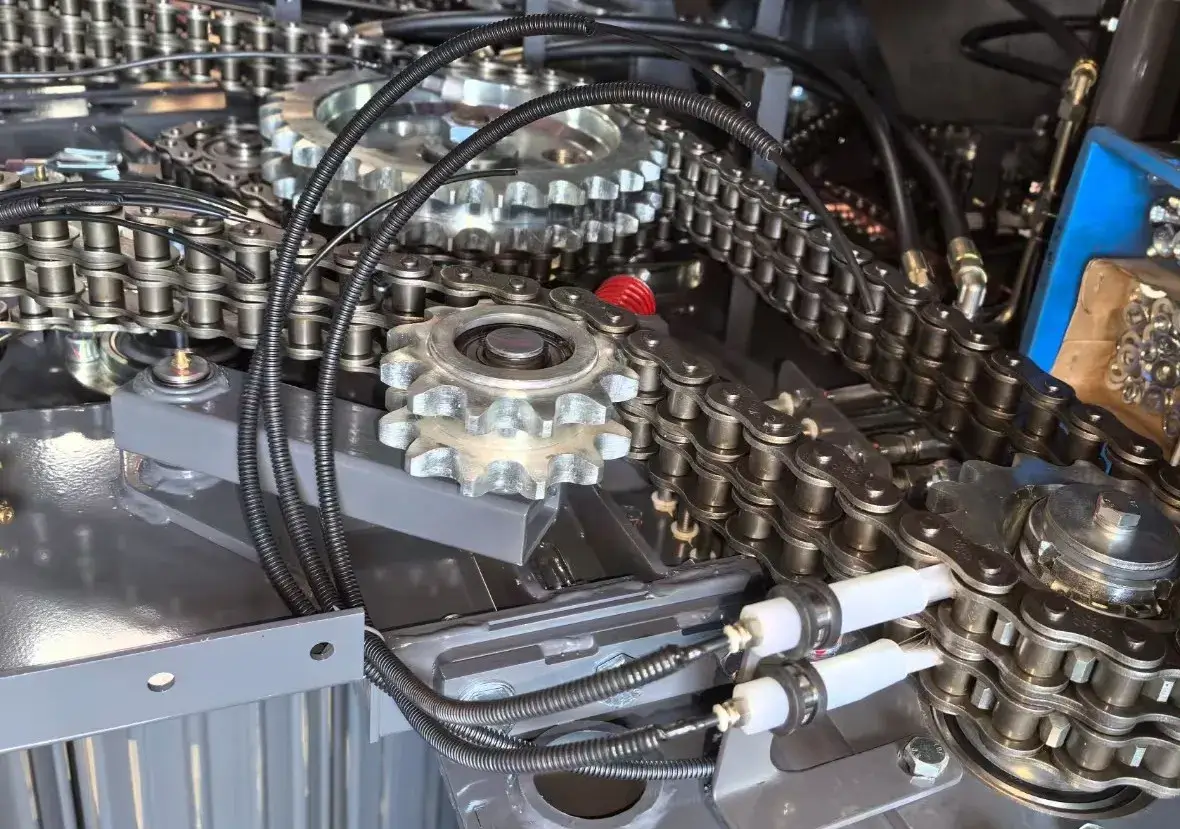
The feed rotor drive within the round baler is typically driven from a secondary gearbox output or through a dedicated chain drive from the main gearbox output shaft. The axial-flow design’s higher continuous operating torque requirement — because the semi-forced tine action generates more sustained crop feed resistance than the passive cam guidance — should be accounted for in the chain drive sizing and sprocket selection for high-volume Korean rice straw operations. The chain connecting the main gearbox to the feed rotor drive should be inspected and retensioned more frequently in rice straw service than in other applications: at 50-hour intervals rather than the 100-hour interval appropriate for hay baling, because the higher sustained torque load and the occasional shock loading from mat penetration events accelerate chain elongation beyond the rate predicted by standard hay-baling maintenance schedules.
9. Throughput Economics: Converting Blockage Reduction into Seasonal Revenue
For Korean rice straw operators who sell bales commercially, the economic case for choosing a round baler machine with axial-flow semi-forced feed over a cam-guided alternative rests primarily on throughput difference that the blockage reduction enables. The economic calculation is straightforward: additional bales produced per operating day, multiplied by the net revenue per bale, multiplied by the number of operating days in the Korean rice straw campaign, equals the annual additional revenue attributable to the feed system advantage.
A Korean operation producing 150 bales per day on a conventional cam-guided round baler might realistically target 180–200 bales on an axial-flow semi-forced round baler machine at the same tractor speed and windrow conditions. This 20–33% increase in daily bale production, across a typical Korean rice straw campaign of 20–30 operating days, represents 600–1,500 additional bales per season. For a straw operation that harvests rice straw from its own rice paddy area as part of its farming operations, this additional bale production may represent the difference between fully recovering all available straw before autumn weather deteriorates the quality and leaving a portion unharvested. For a straw contractor who is paid per bale or per tonne, the additional bale production represents direct additional revenue that can be compared against the capital cost difference between the two baler types to determine the payback period for the feed system advantage.
The secondary economic benefit of blockage reduction is the labour cost saving from reduced manual blockage clearance. In Korean rice paddy field baling operations, blockage clearance typically requires the operator to dismount the tractor, access the feed zone, manually pull out the jam (a physically demanding task with partially compressed, tangled rice straw), and re-engage the feed system before remounting and restarting the baling sequence. This cycle takes 5–10 minutes when performed carefully and safely, and the repetitive nature of 30–50 such events per day creates both physical fatigue risk and operator safety exposure. For operations managing multiple round baler machines across a cooperative paddy area — where operator time is distributed across round baler units rather than dedicated to a single machine — the reduction in manual clearance cycles per operator per day from the axial-flow design can determine whether the cooperative can manage its rice straw campaign within the narrow October window without hiring additional temporary labour, which is an increasingly difficult task in Korean rural areas experiencing agricultural workforce decline.
| Metric | Cam-Guided Round Baler | Axial-Flow Semi-Forced Round Baler | Seasonal Impact |
|---|---|---|---|
| Blockages per day (Korean rice) | 30–50 | 18–35 (40% reduction scenario) | Fewer gearbox torque spikes per season |
| Daily clearance time lost | 150–400 min | 90–240 min (saved: 60–160 min) | 1,200–4,800 extra minutes per 20-day season |
| Daily bale production | ~150 bales | ~180–200 bales (20–33% more) | 600–1,500 additional bales per season |
| Operator clearance events per day | 30–50 dismount/remount cycles | 18–35 cycles | Reduced physical fatigue and safety exposure |
10. Round Baler Models with Axial-Flow Semi-Forced Feed for Rice Straw
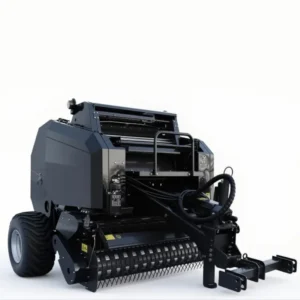
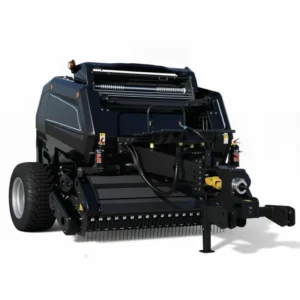
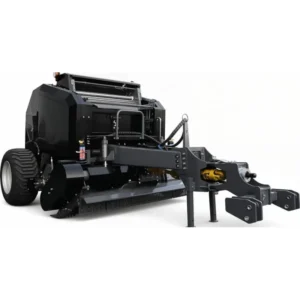
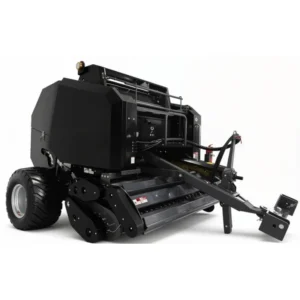
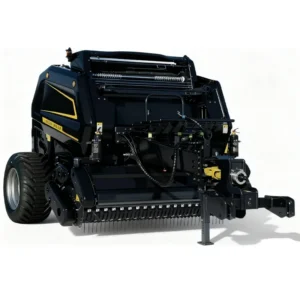
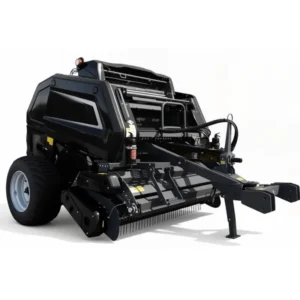
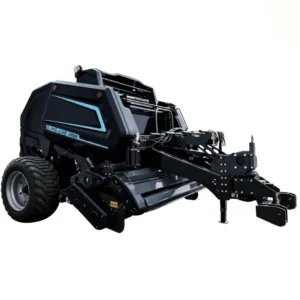
All 9YG series round baler machine models use the axial-flow semi-forced feed mechanism as standard, addressing the rice straw blockage challenge across the full range of Korean operational scales from individual paddy farm baling to large-scale commercial rice straw collection.

11. Regulatory Standards Governing Round Balers in Korean Rice Straw Operations
Round baler machines in Korean rice straw operations are subject to the same agricultural machinery safety and performance standards as other baling applications, with additional practical considerations that arise from the specific operating environment of Korean paddy rice fields — including wet soil conditions, proximity to irrigation channels, and the high dust and chaff environment of rice harvest that creates particular demands on the machine’s electrical and ignition safety features.
Korea
Round baler machines used in Korean rice straw operations must hold a current RDA Agricultural Machinery Performance Test Certificate to access MAFRA purchase subsidies of 30–50%. Korean Standard KS B 1521 governs round baler machine gearbox rated torque performance — directly relevant to the higher sustained gearbox output torque of axial-flow semi-forced feed designs that drive a higher-resistance feed zone mechanism compared to passive cam-guided alternatives. KS B ISO 4413 governs the hydraulic system including the density control and pickup float circuits. The high-chaff environment of Korean rice straw baling creates elevated fire risk from dry material contacting hot exhaust components, and Korean agricultural machinery operators must comply with the Agricultural Machinery Safety Management Act provisions on fire risk mitigation in dry crop conditions.
European Union
EU Machinery Directive 2006/42/EC requires CE marking for round baler machine feed mechanism assemblies as integral machine components. EN 1553 covers the round baler gearbox including the feed rotor drive. The higher feed rotor drive torque of axial-flow designs must be documented in the gearbox rated torque declaration. EN ISO 11684 covers the warning pictogram requirements for feed zone access points, which are particularly important in rice straw service where the frequency of manual blockage clearance — even with the 40% reduction from axial-flow design — means operators access the feed zone more often than in other crop applications. Operators should ensure that all feed zone access guards are properly replaced after each clearance event.
United States
ASABE Standard ASAE S430 covers round baler PTO driveline and feed system gearbox safety in US applications. For rice straw operations in the US rice belt (Louisiana, Arkansas, California), OSHA 29 CFR 1928 agricultural machinery safety requirements apply to the feed zone clearance procedures that operators must follow. ASABE Engineering Practice EP408 provides PTO shaft angle limits relevant to the round baler gearbox drive that feeds the axial-flow feed rotor.
Russia and CIS / Central Asian Rice Regions
For Korean round baler machine dealers and traders supplying equipment to Central Asian rice-producing regions in Uzbekistan, Kazakhstan, and Russia’s rice-growing areas along the Don and Kuban rivers, TR CU 010/2011 EAC certification applies. The feed mechanism as part of the overall round baler machine must be documented in the EAC technical file, and the axial-flow semi-forced feed design should be specifically noted as a design feature that modifies the standard feed system architecture — particularly its effect on the feed rotor drive torque requirement that the gearbox rated torque declaration must cover.
| Region | Round Baler Standard | Feed Mechanism Specific Note | Rice Straw Operator Action |
|---|---|---|---|
| Korea | KS B 1521 / KS B ISO 4413 / RDA cert | Fire safety in high-chaff rice conditions | RDA cert for MAFRA subsidy; fire guard check |
| EU | Machinery Directive 2006/42/EC / EN 1553 | EN ISO 11684 feed zone warning pictograms | Replace feed zone guards after every clearance |
| USA | ASABE S430 / OSHA 29 CFR 1928 | Clearance procedure training for feed zone | Follow OSHA clearance lockout procedure |
| Russia / CIS | TR CU 010/2011 / EAC mark | EAC tech file: feed rotor torque documentation | Confirm EAC cert covers axial-flow variant |
Frequently Asked Questions
Q1. How does the axial-flow semi-forced feed round baler reduce rice straw blockages by 40% in Korean paddy field conditions compared to a standard cam-guided design? +
Q2. Which round baler machine model is best for Korean paddy rice straw baling where the straw is tangled and lodged after wet weather during the October harvest season? +
Q3. What round baler machine gearbox oil specification should Korean rice straw operators use to protect against peak torque events from blockage events? +
Q4. Where can Korean rice farmers and paddy cooperatives get a supplier quote for round baler machine models with axial-flow semi-forced feed for Korean October rice straw conditions? +
Q5. What round baler machine parts in the axial-flow feed zone wear fastest in Korean rice straw service and how should operators plan their seasonal parts inventory? +
Q6. How does the axial-flow round baler machine feed system handle high-moisture rice straw above 30% moisture content common in Korean early October paddy harvests? +
Q7. What is the MAFRA subsidy process for Korean paddy farmers purchasing a round baler machine with axial-flow semi-forced feed for rice straw collection? +
Q8. How does the small round baler for 40 hp tractor compare to larger 9YG-2.24D models for a Korean paddy farmer who wants to recover rice straw from their own fields without commercial baling ambitions? +
Q9. When should Korean paddy rice straw baling begin after combine harvest to minimise both blockage frequency and moisture-related bale quality issues? +
Q10. How does the round baler machine application for Korean paddy rice straw differ from wheat straw in terms of feed system demands and which features matter most for rice operations? +
Редактор: PXY