Farm Baler Knowledge Series
How Does Net Wrap Work on a Round Baler — and Why Does It Matter?
If you’ve watched a дөңгелек пресс finish a cycle in the field, you’ve seen it happen in seconds: the rear gate opens, a completed bale rolls out, already wrapped and tight. That wrapping process — net wrap application — is one of the most consequential things the machine does, and understanding it well separates operators who get consistent, storable bales from those who fight spoilage, shape problems, and unnecessary downtime. This guide breaks down the full mechanics, material science, and real-world implications of net wrap on modern round hay balers, with a focus on the structural choices that affect Korean and global farm operations.
Net Wrap Technology
Farm Machinery Guide
Hay Baling
1. What Is Net Wrap on a Round Baler?
Net wrap is a loosely woven polyethylene mesh that a round baler machine feeds around a finished bale before the rear gate opens and releases it to the field. Unlike twine — which winds in parallel spirals and leaves uncovered gaps between each strand — net wrap covers the entire cylindrical surface of the bale in a single overlapping pass. This complete surface coverage is the core reason modern round hay balers have shifted heavily toward net wrapping as the default finishing method. The net holds every exposed fiber in place from the moment the bale hits the ground through storage and later feeding, dramatically reducing dry-matter losses compared to bales finished with conventional twine.
When people ask “what is a round baler?” they often focus on the pickup and compression functions — how a machine gathers windrowed material, feeds it into the baling chamber, and builds a cylindrical package through the action of rollers or belts. But the wrapping system is the final act that determines whether all that compression work translates into a bale with good shelf life and nutritional retention. A perfectly formed bale that leaves the field poorly wrapped can deteriorate rapidly: loose outer layers blow or wash away, water penetrates the bale core, and mould spreads inward in ways that cannot be easily detected from the outside until the bale is unrolled and fed.
2. How the Wrapping Mechanism Works — Step by Step
The net wrap sequence is automated on virtually all current production round balers. When the bale density sensor registers that target density has been reached — usually through a combination of pressure readings on the chamber walls and a hydraulic circuit threshold — the operator’s cab display signals wrap readiness. On many machines equipped with automatic net wrap, the sequence initiates without any operator input beyond the initial setup. Here is what happens mechanically during those 10 to 20 seconds:
Step 1 — Net Pickup
The net feed arm or knife mechanism advances to contact the net roll. The leading edge of the net is pulled toward the bale chamber entry point by a driven feed roller or a spring-loaded guide. The net must enter the chamber cleanly; any folding or jamming at this point causes a wrap failure.
Step 2 — Net Introduction
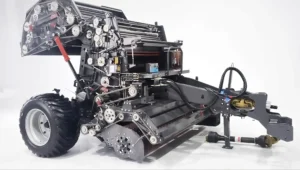
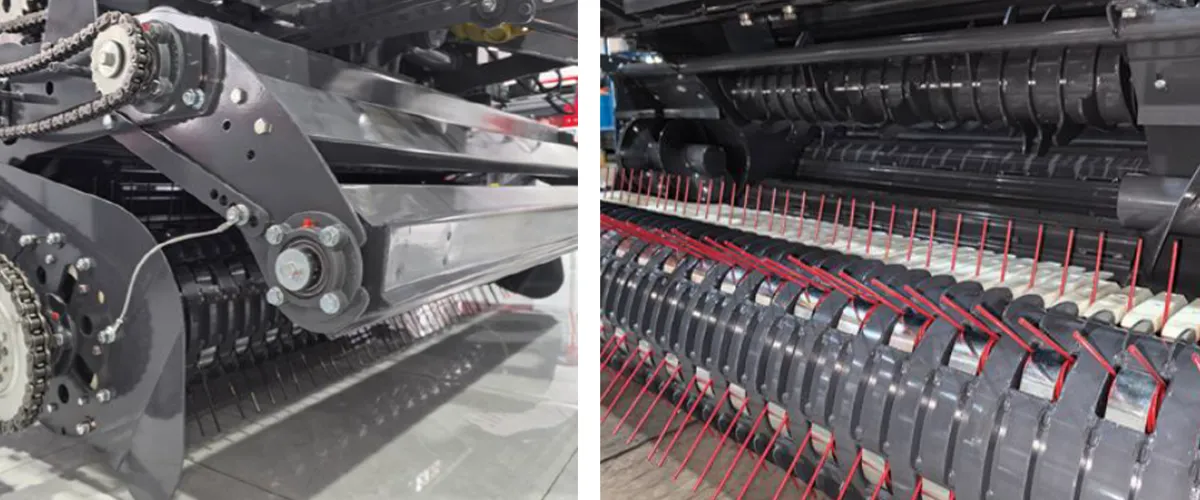
The net passes through a pair of pinch rollers and a spreader bar that keeps it at full working width. It is then fed between the last driven roller and the bale surface. The bale’s rotational speed — typically several hundred revolutions per minute at the outer surface — draws the net in with consistent tension.
Step 3 — Circumferential Wrap
As the bale rotates, the net wraps around its circumference. The number of rotations determines how many layers are applied. Most commercial operations apply 1.5 to 2.5 rotations of net coverage, creating a doubled overlap zone where the tail end of one revolution is covered by the start of the next.
Step 4 — Net Cut
Once the programmed wrap count is complete, a knife or blade — electrically or hydraulically actuated — cuts the net cleanly across its full width. The final wrap tail tucks under the previous layer through continued bale rotation, locking itself in place. Gate opening follows within seconds.
Step 5 — Gate Open & Bale Discharge
The rear gate swings open hydraulically and the bale rolls backward and down onto the field surface under gravity. Well-wrapped bales land and hold their shape; poorly wrapped ones can deform on impact if the net failed to cover the flat faces adequately. The gate closes and the next bale cycle begins immediately.
The entire wrapping sequence on a well-maintained machine should complete in under 25 seconds. Operators running a дөңгелек пресс at peak capacity during a narrow harvest window — typical in Korean rice straw and barley straw harvest seasons — will lose several bales of productivity per hour if the wrap system is slow or prone to misfeed. Proper pre-season checks on the spreader bar, feed rollers, and knife mechanism are therefore among the highest-value maintenance tasks on any round hay baler.
3. Construction & Material System of Net Wrap
Net wrap is not a single-spec product. The agricultural supply chain offers multiple grades that differ in weight, tensile strength, UV stabilizer content, and mesh geometry — each trade-off affecting how the wrap performs in the field and how quickly it degrades afterward. Understanding these variables matters when sourcing net wrap rolls for different crops and storage durations.
Base Polymer: High-Density Polyethylene (HDPE)
Standard agricultural net wrap is produced from high-density polyethylene tape yarns. HDPE provides the combination of tensile strength, flexibility at low temperatures, and resistance to UV-induced embrittlement needed for field use. The tape yarns are woven in a square or near-square mesh pattern, with typical mesh counts ranging from 4 to 8 openings per centimetre in both the machine and cross directions.
UV Stabilisation Package
Net wrap stored outdoors on finished bales is exposed to significant UV radiation. Standard-grade wrap incorporates carbon black or hindered amine light stabilisers (HALS) to resist embrittlement over a storage period of 6 to 18 months. When bales are stored outdoors in sunny Korean summers with high UV index conditions, specifying a net wrap with documented UV resistance rating is a practical requirement, not a luxury upgrade.
Wrap Width and Roll Length
Net wrap rolls are manufactured to match the working width of round baler chambers. The 9YG-2.24D series balers use a chamber width of 1,400 mm and accept net rolls with a specified width of 1.4 metres. The 9YG-1.25 series uses 1,250 mm chamber width and 1.25 m rolls. Standard roll lengths vary from 1,800 m to 3,000 m depending on the supplier, with longer rolls reducing the frequency of mid-field roll changes. Each bale consumes approximately 6 to 10 metres of net per wrap cycle.
Weight and Mesh Density
Net wrap weight ranges from approximately 14 g/m² (light economy grade) to 28 g/m² (heavy-duty grade). Heavier wraps have more material per unit area, providing higher tensile strength and better resistance to tearing during feeding operations where livestock or machinery contacts the bale. For hay crops — including the alfalfa and mixed-grass crops common in Korean livestock farming — a mid-weight wrap around 18–22 g/m² is generally the right balance of cost and performance.
The physical geometry of the mesh also matters in an often-overlooked way: mesh openings allow moisture vapour to escape from the bale surface, which is desirable if the crop was baled at slightly elevated moisture content. A dense, film-like wrap traps surface moisture and promotes mould initiation, whereas a properly open net wrap allows the bale to “breathe” during initial field storage. This is why standard practice in most markets specifies net wrap rather than plastic film for dry hay storage, reserving film wrapping for haylage and silage applications where anaerobic fermentation is the intended preservation method.
4. Net Wrap vs. Twine: Which Is Better for Your Operation?
The choice between net wrap and sisal or polypropylene twine is one of the most common questions in round baling. Here is a side-by-side comparison of the factors that matter most to Korean livestock and crop farmers.
| Factor | Торлы орау | Twine (Sisal or Polypropylene) |
|---|---|---|
| Wrapping Speed | 15–25 seconds per bale | 25–45 seconds per bale |
| Surface Coverage | Full cylindrical surface covered | Parallel spirals, gaps between strands |
| Dry Matter Loss | 2–5% outer layer loss | 7–14% outer layer loss |
| Bale Shape Retention | Excellent; resists flattening | Good; some settling on flat-sided bales |
| Input Cost per Bale | Higher per bale (but faster output) | Lower per bale |
| Biodegradability | HDPE: non-biodegradable | Sisal: biodegradable; PP: not |
| Feeding Compatibility | Remove before feeding; plastic removal critical | Natural sisal can remain; PP must be removed |
| Best Application | High-output commercial operations; long storage | Small operations; short storage; biodegradable preference |
The productivity advantage of net wrap — roughly 30–50% faster wrapping per bale — compounds significantly across a full harvesting day. At a production rate of 40–100 bales per hour achievable with large-format round hay balers, the time saved on each individual wrap cycle can add up to dozens of additional bales by end of day.
5. How Bale Density Affects Wrap Quality — and Why Sensor Control Matters
Net wrap does not operate in isolation from the rest of the baling process. The density of the bale at the point of wrapping is arguably the most important variable in determining whether the wrapped bale performs well over storage. A bale with insufficient density has a soft, yielding core; when the net is applied and the bale is discharged, the outer layers relax outward, and the net — which was tensioned against a firm surface — finds itself under-tensioned and loose. Loose net does not hold the outer crop layers in place and provides minimal protection against wind, rain, and animal contact.
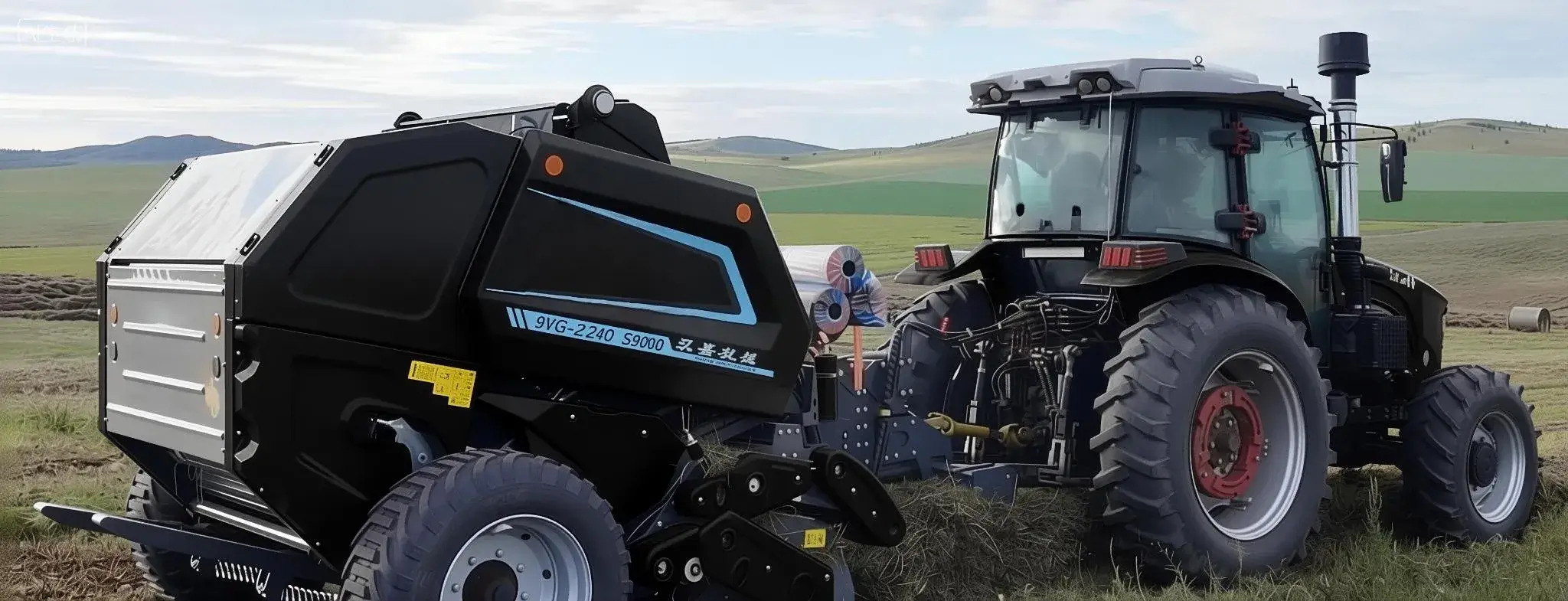
This is why modern round baler machines use sensor-controlled density management. The 9YG-2.24D series, for example, specifies sensor control for bale density management, enabling the operator to set a consistent target density in kilograms per cubic metre and have the machine hold that target automatically across varying crop conditions — thick swaths, thin passes, wet spots, and dry areas. The target density range is 100–200 kg/m³ depending on crop type; rice straw and barley straw typically bale toward the lower end of this range, while dense alfalfa and meadow hay can be compressed to the higher end.
When bale density is consistent, the net wrap application also becomes consistent: the same bale geometry, the same surface hardness, and the same rotation speed greet the net system on every cycle. This predictability eliminates the most common field complaint in round baling — variable wrap quality from bale to bale — and allows operators to set wrapping parameters once and run confidently for hours. For Korean farmers managing rice straw harvest within a narrow weather window, this operational reliability is a key factor in evaluating which round baler manufacturer to purchase from.
6. The Round Baler Gearbox and Drive System — The Engine Behind Net Wrap
The round baler gearbox is the central power distribution node of the machine. It receives input torque from the tractor’s PTO shaft — standardised at 720 rpm in most modern designs — and distributes it to the pickup rotor, the feed rollers, the baling chamber rollers, and ultimately the net wrap feed mechanism. The gearbox design has a direct impact on net wrap performance because any drivetrain lag, vibration, or speed irregularity at the chamber rollers translates into uneven net tension during the wrap cycle.
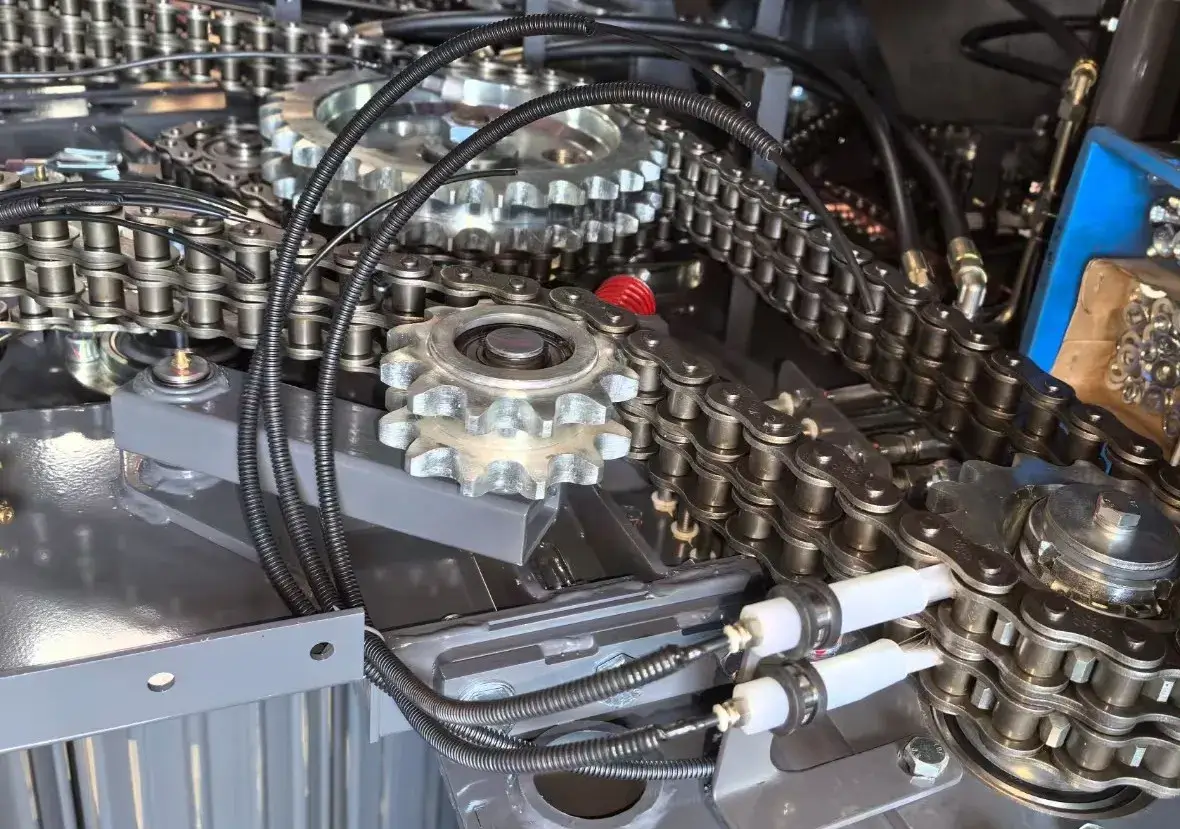
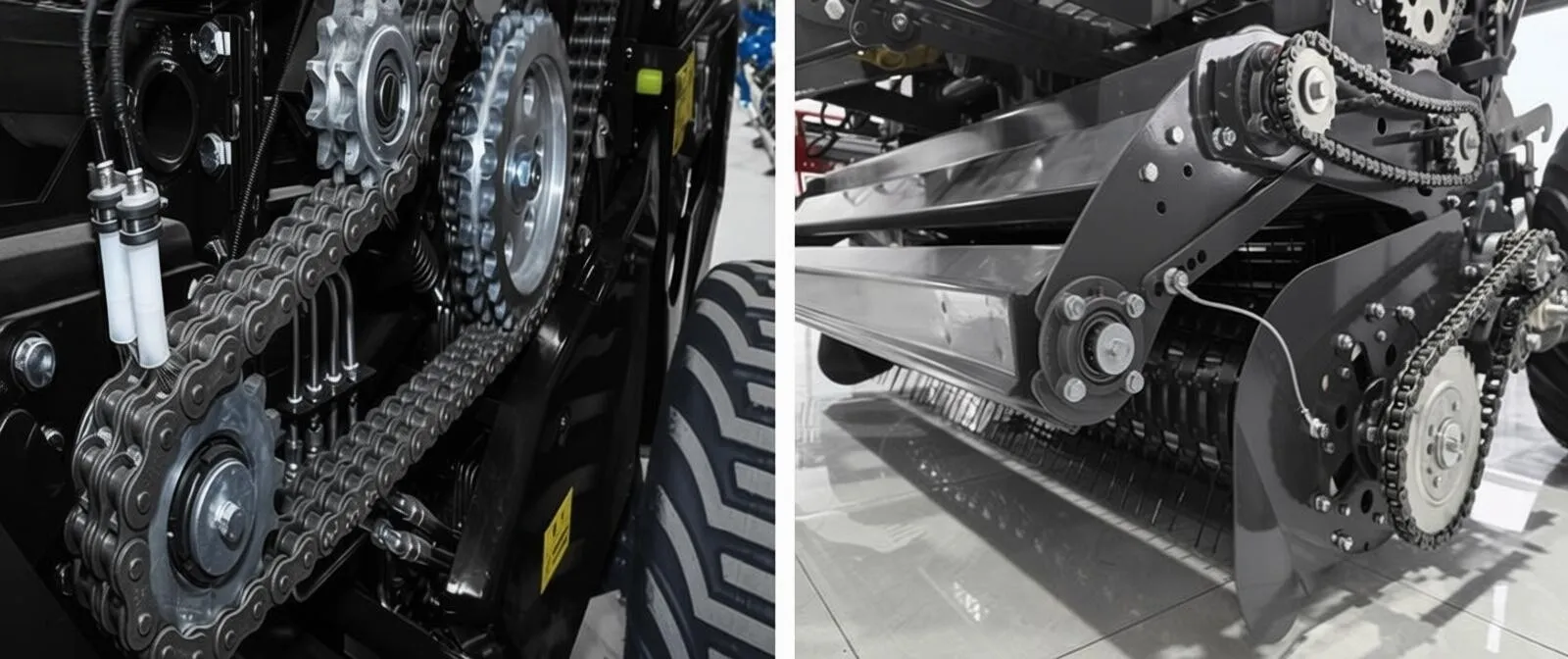
The 9YG-2.24D round balers feature a heavy-duty gearbox specifically designed to handle the high torque demands of the 18-roller compression chamber. The dual-side chain drive in the rear chamber ensures even load sharing between the two sides of each roller, reducing the differential speed that can cause net to feed crooked or bunch in one area. The hydraulic system, using H-type fitting connections for higher pressure rating, drives the rear gate and the net wrap knife with consistent actuation speed — important because a sluggish knife results in ragged cut edges that can catch on the net guide system during the next wrap cycle.
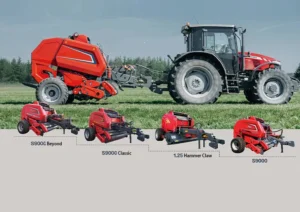
On the 9YG-1.0 and 9YG-1.0C compact models — which are engineered for small round baler operation with tractors in the 48–80 kW range — the axial-flow semi-forced feed mechanism allows higher throughput per unit of PTO power, which also benefits net wrap consistency. When the chamber is never overfed and the rollers maintain steady rotation speed, the net is pulled in at a constant rate on every cycle. The 16-roller chamber in the 1.0-metre width models produces bales of φ1,100 × 1,000 mm (9YG-1.0) and φ1,000 × 1,250 mm (9YG-1.0C), both of which are well within the working width of standard 1.0 m and 1.25 m net wrap rolls.
7. Removing Net Wrap Before Feeding — Livestock Safety and Environmental Responsibility
One of the most important practical matters with polyethylene net wrap is removal before feeding hay to livestock. Unlike natural sisal twine, which will pass through the rumen of cattle and sheep with relatively low risk of impaction, HDPE net wrap accumulates in the reticulum and rumen if ingested. Once a sufficient mass of plastic material builds up in the forestomach, it can cause hardware disease symptoms, reduced feed intake, and in severe cases rumen impaction requiring veterinary intervention or slaughter. Korean livestock farmers, particularly in the Hanwoo beef and dairy cattle sectors, are well aware of this risk because it has been documented in farm-level incidents nationwide.
Complete net removal before unrolling or breaking a bale for feeding is therefore non-negotiable in responsible farm management. The practical approach is to cut and peel the net in one or two pieces using a sharp knife, remove it immediately, and place it in a sealed bag for waste collection. Korea’s agricultural waste disposal regulations — administered under the Act on the Management and Use of Livestock Excreta and related Ministry of Agriculture, Food and Rural Affairs (MAFRA) guidelines — require that agricultural plastic waste including net wrap be segregated and sent to registered recycling or incineration facilities. Burying or burning net wrap in the field is illegal and contributes to soil and air contamination.
The environmental management of net wrap also touches on the emerging biodegradable net wrap market. Several manufacturers now offer net wrap made from partially or fully biodegradable polymers — polylactic acid (PLA) blends and thermoplastic starch composites — that decompose within 12 to 24 months after bale unsealing. These products are positioned as a solution to the plastic waste problem but currently carry a significant cost premium and have somewhat lower tensile strength than HDPE alternatives. As Korean agricultural plastic recycling infrastructure matures, the economic case for premium biodegradable wraps may improve, but for most current operations, responsible collection and disposal of HDPE net wrap remains the practical standard.
8. Regulatory Standards Affecting Round Baler and Net Wrap Use Globally
Understanding the regulatory landscape helps farms and dealers select equipment and consumables that meet compliance requirements across different markets.
Korea — MAFRA Agricultural Machinery Safety
The Ministry of Agriculture, Food and Rural Affairs enforces machinery safety certification standards for agricultural equipment sold in Korea. Round balers sold in Korea must comply with relevant KS (Korean Standards) harmonised with ISO standards. Net wrap materials are subject to agricultural plastic waste regulations under the Resource Recycling Act, requiring separate collection from general waste streams.
EU — EN ISO 8210 & Machinery Directive 2006/42/EC
European round balers must comply with EN ISO 8210 for round forage balers, covering safety requirements including guarding of the pickup, baling chamber, and wrapping mechanisms. The Machinery Directive requires CE marking, technical files, and operator manuals in local languages. Net wrap products sold in EU markets require REACH compliance documentation for any chemical substances present in the polymer formulation.
USA — ASABE Standards & OSHA
The American Society of Agricultural and Biological Engineers publishes ASABE S291 (safety for hay, forage, and straw balers) and related standards. OSHA regulations under 29 CFR 1928 cover agricultural machinery safety in general. EPA regulations under RCRA govern plastic farm waste disposal, though specific baler net wrap regulations vary by state, with some states offering agricultural plastic recycling collection programs.
Australia / New Zealand — AS/NZS & Farm Plastics
Australian agricultural machinery must meet AS/NZS standards for PTO-driven equipment. Australia’s Bin Trim and National Plastics Plan include provisions for agricultural film and net wrap recycling under the 2025 targets for reducing plastic waste to landfill. New Zealand’s National Action Plan on Plastic Waste identifies farm plastics as a priority stream for improved collection and recycling infrastructure.
Japan — JIS & Agricultural Machinery Law
Japan’s Agricultural Machinery Law requires type approval certification for major categories of farm machinery sold domestically. Round balers imported into Japan must comply with relevant JIS standards for safety and performance, and net wrap plastics are managed under the Container and Packaging Recycling Law, which imposes extended producer responsibility on manufacturers and importers.
ISO 8210 — Global Round Baler Standard
ISO 8210 provides the international reference standard for round baler safety requirements, covering minimum guarding specifications for the pickup, baling chamber, and wrapping mechanism, as well as operator controls and emergency stop functionality. Most national standards in the agricultural machinery sector reference or adopt ISO 8210 either directly or through harmonised national equivalents, making it the effective global baseline for round baler compliance.
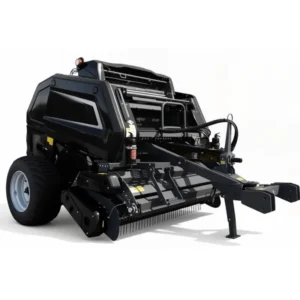
9. Our Round Baler Product Range
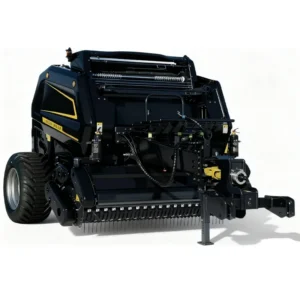
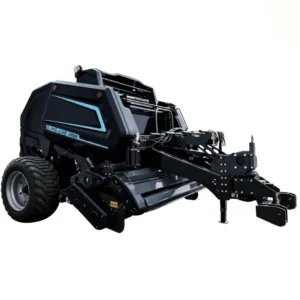
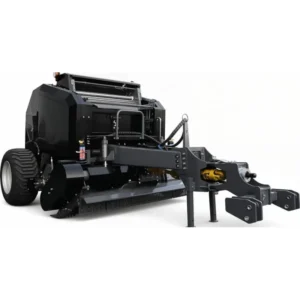
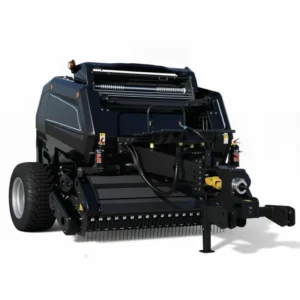
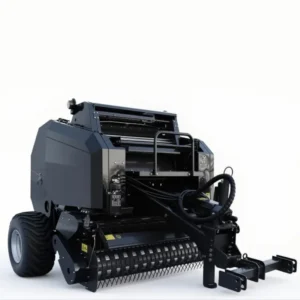
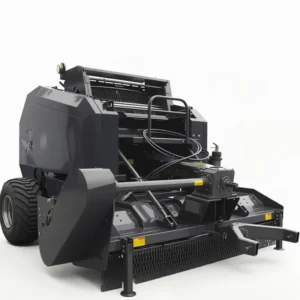
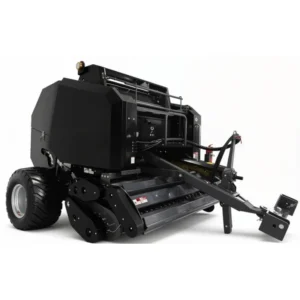
10. About Us
We are a dedicated manufacturer and global supplier of agricultural harvesting machinery — including the full range of round balers, mowers, and forage-handling equipment described throughout this guide. Our production facility spans over 32,000 square metres and operates two complete production lines for round balers and mowing-raking equipment, each with an annual capacity of 2,000 units. Production relies on CNC laser cutting, automated welding lines, and electrostatic spray painting — all contributing to consistent dimensional precision in the mechanical components that net wrap quality depends on: the chamber roller assemblies, the spreader bar, the knife mechanism, and the hydraulic circuit.
Our engineering team holds close to 100 technical patents, and product development uses computer-aided design throughout. We have passed ISO 9001 quality management certification and hold National High-Tech Enterprise status. For Korean buyers and dealers seeking a round baler manufacturer with documented export experience and consistent technical support, we offer direct supply, full documentation packages, and pre-delivery inspection records on request. Products from our range have been supplied to agricultural operations across East Asia, Central Asia, Russia, and Mongolia.
Frequently Asked Questions
Редактор: PXY