Wheat Straw Harvesting — Technical Guide
A field-engineering guide to pickup tine geometry, travel speed calibration, cam-less feeding design, and operational technique that collectively cut dry-matter losses in wheat straw round baling
1. Understanding Wheat Leaf Shatter and Why It Costs More Than Operators Realize
Wheat leaf shatter is one of the most underreported sources of dry-matter loss in the straw baling process. At harvest, wheat straw consists not just of the rigid main stem but also of leaf blade material that attaches along the internode. These leaf blades are the highest-protein component of the straw — in feed and substrate market terms, they are also the most commercially valuable fraction. When a round baler machine operates its spring-tooth pickup at excessive speed or with incorrect tine geometry relative to the windrow height, the aggressive mechanical contact between tine tips and brittle leaf material causes the leaves to detach and shatter into fragments too small to be picked up. These fragments either fall to the ground ahead of the baler or blow out of the windrow entirely, representing a net loss of the most nutritious part of the harvest.
The scale of this loss is larger than many operators appreciate. Leaf shatter rates in poorly configured wheat straw pickup systems can reach 8–15% of the total available leaf dry matter per hectare. For large-scale Korean wheat producers supplying export markets that value straw for equine bedding or ruminant feed supplement, this translates directly into fewer bales per field and lower bale quality — two outcomes that reduce revenue on both the volume and the per-bale price simultaneously. Understanding the mechanical causes of leaf shatter is the starting point for correcting it, and the solution involves a combination of pickup tine specification, travel speed management, feeding system design, and windrow preparation technique — all of which interact with the specific design of the round baler being used.
2. The Mechanics of Spring-Tooth Pickup and Where Shatter Originates
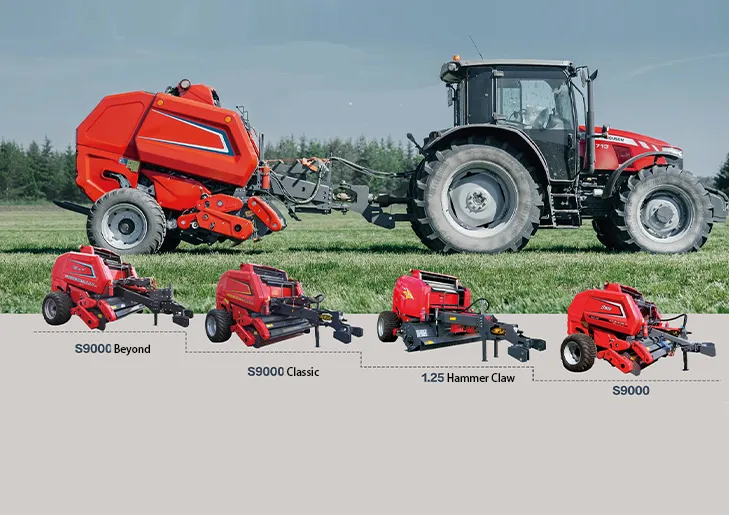
The spring-tooth pickup assembly on a round baler works by rotating a drum fitted with spring-steel tines that sweep through the windrow, lifting material upward and forward into the feeding mechanism. The tine tips travel in a path that ideally skims just above the soil surface at the windrow base, collecting the maximum proportion of available straw without digging into the ground. The spring-tooth designation refers to the fact that each tine has a degree of flex — it can deflect momentarily when it strikes a dense clump, a stone, or a soil crust, then return to position rather than bending or breaking. This compliance is essential for maintaining pickup efficiency across uneven field surfaces, but it also means the tine tip velocity during the pickup arc is not perfectly constant.
Leaf shatter occurs primarily in two mechanical phases of the pickup cycle. The first is the initial contact between the tine and the lying windrow material. When the tine tip strikes the straw at high tangential velocity, the impact energy is partly transferred to the attached leaf blades, which are less mechanically robust than the stem and detach at their attachment point before the stem itself is lifted. The second shatter zone is the transition point where the pickup tine releases material into the feeding mechanism — an aggressive change in material direction that causes inertial separation of the lighter leaf fragments from the heavier stem. Both of these mechanisms are worsened by higher pickup drum speed, and both are reduced by feeding system designs that smooth the transition between the pickup arc and the feeding channel.
The distance between the tine tip and the windrow surface — commonly called the pickup height or header height — is another critical variable. When the pickup rides too high, tine tips contact only the top of the windrow and miss the denser lower material, reducing throughput and increasing the proportion of multiple passes required to clear the field. When the pickup rides too low, tine tips drag on the soil and scoop ground-level debris including soil particles and stones, which abrade the leaf surface on contact and create additional fragmentation. The correct pickup height for wheat straw in Korean grain field conditions, where windrows are typically 150–250 mm high after combine discharge, places the tine tips within 20–35 mm of the soil surface throughout the windrow width.
3. Manufacturing Structure of the Spring-Tooth Pickup — What Sets Low-Shatter Designs Apart
The structural design of the pickup assembly determines how consistently the tine tips maintain their ideal trajectory across varying terrain and windrow conditions. Low-shatter pickup design begins with the tine mounting geometry: the angle at which each tine extends from the pickup drum, the path the tine tip describes through the windrow, and the rate at which the tine releases material at the top of the pickup arc. On pickup systems engineered specifically for low-shatter performance in dry cereal straw, the tine-to-drum angle is typically shallower than on general-purpose pickups, which lowers the tangential velocity component at the moment of initial windrow contact — the impact force that causes the first shatter phase described above.
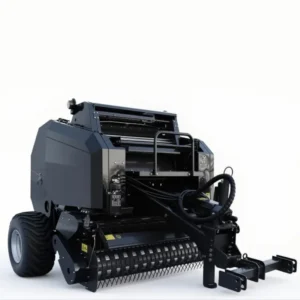
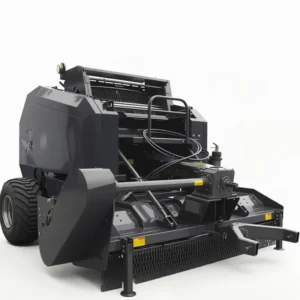
The 9YG series round balers use a spring-tine (弾歯式 in Korean agricultural terminology: 스프링 집게식) pickup mechanism across the standard lineup, with a cam-less guard design on the axial-flow models that removes the conventional cam-and-guard mechanism entirely. This cam-less approach is not simply a cost reduction — it fundamentally changes the motion profile of the tine tips through the pickup zone. Conventional cam-guided tines follow a defined non-circular path that was originally designed to improve material release from the tines after pickup. In dry wheat straw, this cam-defined path creates an abrupt velocity change at the release point that generates the second shatter zone. The cam-less design on the 9YG-series axial-flow variants allows the tines to follow a simpler, smoother arc, reducing the sharpness of the velocity transition and substantially lowering the leaf detachment rate at the release point.
The pickup width is a structural parameter that also affects shatter rate indirectly. A wider pickup relative to the windrow width means the tines at the outer edges of the pickup work in thinner, lighter material for longer portions of the pass — conditions where tine tip velocity is excessive relative to material mass and shatter rates are inherently higher. The 9YG-2.24D models with their 2,240 mm pickup width are well-matched to windrows produced by 5–6 m combine headers, where the windrow occupies most of the pickup width and the material loading is relatively even across the tine width. For smaller windrows from 4 m headers, the narrower 9YG-1.0 pickup at 1,900 mm or the 9YG-1.25A at 2,150 mm provides a better width match and lower tine-to-air-gap ratio at the pickup edges.
4. Material System — Tine Steel Grade, Spring Rate, and Tip Profile for Wheat Leaf Retention
The spring rate — the force required to deflect a tine a given distance — is the material specification with the most direct influence on wheat leaf shatter. A tine that is too stiff behaves more like a rigid rod at the moment of windrow contact, transmitting the full impact impulse to the attached leaf blades and maximizing the shatter force. A tine that is too soft deflects so much on contact that it fails to lift the lower stems cleanly, leaving ground-level material behind and requiring multiple pickup passes to clear the field. For dry wheat straw in typical Korean harvest conditions, the ideal spring rate lies in a range that allows the tine to deflect 15–25 mm under the contact force of a dense windrow slug, then return to position within the time between successive windrow contacts at the target travel speed.
Tine tip profile is a less-discussed but genuinely important design variable for shatter reduction. Rounded or tulip-profile tine tips distribute the contact force over a larger surface area of the stem-and-leaf bundle compared to pointed tips, reducing the peak stress at the leaf attachment point and lowering the probability of detachment. Pointed tips were historically favored because they penetrate dense windrows more easily, but in the light, dry wheat straw conditions of summer harvest, penetration force is rarely the limiting factor — the leaf retention at the attachment point is. Round balers with tulip or blunt-tip tine options show measurably lower shatter losses in wheat straw compared to the same machines fitted with standard pointed tines, often with no reduction in pickup throughput in the dry straw conditions where the comparison matters most.
Tine material is spring steel, typically manufactured to DIN 17221 (spring steel for cold-formed springs) or equivalent standard. The heat treatment and temper of the spring steel determines both the fatigue life under cyclic flexing and the consistency of the spring rate across the full set of tines on the pickup drum. Tines with inconsistent spring rates across the drum — a quality control failure at the manufacturing stage — produce uneven pickup action that creates local high-shatter zones across the windrow width. This is a specification to ask about when comparing round baler manufacturers: does the tine set carry a documented spring rate tolerance? The tighter that tolerance, the more consistent the pickup action across the full drum width.

5. Travel Speed and Pickup Drum Speed — Calibrating the Balance to Reduce Leaf Loss
The relationship between forward travel speed and pickup drum rotational speed is the primary operational variable controlling wheat leaf shatter in the field. The ratio of tine tip speed to forward travel speed determines whether tines sweep through the windrow with a smooth lifting action or an aggressive beating action. When this ratio — sometimes called the pickup speed ratio — is too high (fast drum relative to forward travel), the tines strike the windrow material multiple times across the same windrow cross-section, creating additional impact events that each contribute to leaf detachment. When the ratio is too low (fast forward travel relative to drum speed), the tines fail to clear the windrow cleanly before the next row of tines arrives, causing material to pile at the pickup entrance and increasing blockage risk.
For wheat straw in dry harvest conditions, the optimal pickup speed ratio sits lower than for hay or green forage crops. This is counterintuitive to operators who associate faster pickup drum speed with higher throughput, but it reflects the fundamental difference in material behavior. Green hay needs aggressive tine action to lift the tangled, moist mat of material; dry wheat straw is already lying loosely and needs only gentle, smooth lifting action — any excess tine speed beyond what is needed to lift the material cleanly is converted directly into leaf shatter energy. Most experienced wheat straw operators find that reducing drum speed by 10–15% from the hay-optimized setting, while maintaining forward speed, significantly reduces visual leaf dust and measurably improves bale quality without reducing hourly output.
| Crop Condition | Recommended Travel Speed | Pickup Drum Speed Adjustment | Expected Shatter Impact |
|---|---|---|---|
| Dry wheat straw <14% moisture | 8–12 km/h | Reduce 10–15% from standard | Significant shatter reduction; most effective zone |
| Wheat straw 14–18% moisture | 10–15 km/h | Standard or 5% reduction | Moderate benefit; leaves retain some flex |
| Wheat straw >18% moisture | Up to 20 km/h | Standard setting | Shatter minimal; moist leaves resist detachment |
| Narrow windrow (under-width for baler) | 6–9 km/h | Reduce 15–20% from standard | Edge tine shatter elevated; slower speed partially compensates |
| Wide windrow (full pickup width) | 10–15 km/h | Standard or 5–10% reduction | Even tine loading reduces edge shatter effect |
6. Axial-Flow Feeding Design — How the 9YG Series Reduces Shatter at the Pickup-to-Chamber Transition
Even after optimizing tine geometry and travel speed, a significant proportion of leaf shatter in conventional round balers occurs at the point where material transitions from the pickup assembly into the feeding mechanism and bale chamber. In cam-guided conventional pickups, the tine follows a path designed to release material abruptly into the feeder throat — a motion that works acceptably with moist, cohesive forage but creates a sharp impact event with dry wheat straw where individual leaf blades have no adhesion to adjacent stems. The 9YG-series round balers address this specifically with the proprietary axial-flow semi-forced feeding system, which generates a continuous progressive material flow from the pickup zone through the feeder throat and into the bale chamber, without the abrupt direction change that characterizes conventional cam-guided designs.
The practical effect of this continuous flow on leaf shatter at the transition zone is measurable. When material enters the feeder channel smoothly rather than being released in a batch pulse, the lighter leaf fragments stay entrained in the material flow rather than separating under inertia. In a pulsed-release system, each tine dump event creates a momentary high-velocity air stream within the feeder channel that carries leaf fragments backward against the incoming material flow, depositing them outside the bale chamber. In the axial-flow design, the steady material stream maintains a forward-biased airflow that carries even the lightest leaf fragments into the bale rather than recycling them to the ground. This is why operators who switch from conventional round balers to axial-flow designs for wheat straw work consistently observe less leaf dust in the field behind the machine — the leaves are going into the bale instead of onto the ground.
The cam-less pickup guard design removes an additional source of leaf contact between the pickup arc and the feeder throat. Conventional guard designs include stationary sections positioned around the pickup drum to guide material toward the feeder inlet — surfaces that dry leaf blades can contact, tumble against, and fragment on at high tine speed. The no-cam no-guard approach eliminates these contact surfaces entirely, creating an open transfer path where material moves from tine to feeder inlet under its own momentum rather than being guided by stationary components that impose additional impact events. This seemingly simple design choice has a disproportionate effect on leaf retention in dry wheat straw conditions, where every unnecessary contact surface is a potential shatter point.
7. Windrow Preparation — How Combine Settings and Raking Technique Affect Pickup Shatter Rate
Leaf shatter during pickup does not begin with the baler — it begins with the windrow presentation that the combine creates and that raking may subsequently modify. A well-formed windrow for low-shatter spring-tooth pickup has consistent cross-sectional density across its full width, a height that suits the pickup’s operating range, and minimal soil or stone contamination that would cause tine tip contact with hard surfaces at high speed. Each of these characteristics is controlled by upstream equipment decisions that the baler operator can influence through communication with the combine and raking crews, even if they have no direct control over those machines themselves.
Combine chopper and spreader settings are the first upstream variable. Modern combine choppers on Korean grain farms are often set to maximum chop for uniform straw distribution to aid subsequent tillage, but this produces very short stem sections that are inherently harder to pick up cleanly and that present a higher proportion of exposed leaf attachment points per unit length — maximizing the vulnerable surface area available for shatter during pickup. For baling operations, requesting that the combine be set to minimum chopper speed, or that the chopper be bypassed entirely and the straw discharged as a windrow without active spreading, produces material with longer stem lengths that are significantly more resistant to leaf loss during spring-tooth pickup. This single combine adjustment can reduce pickup leaf shatter by 20–35% compared to full-chop straw, according to field comparisons from Korean grain region operators.
Raking technique is the second controllable upstream variable. If raking is necessary to consolidate windrows to match the baler pickup width, the timing of raking relative to the harvest represents a genuine trade-off. Raking immediately after combining — when straw still retains some harvest-time moisture — produces less leaf shatter during the raking process itself than raking after the straw has fully dried to field equilibrium. However, early raking reduces the subsequent dry-down rate of the consolidated windrow and may increase bale moisture content. For Korean summer wheat harvests where dry weather windows are often short, most experienced operators prefer to rake at around 18–20% straw moisture, then allow the consolidated windrow to continue drying for 12–18 hours before baling, achieving both lower raking shatter and acceptable final bale moisture.
8. Round Baler Gearbox Regulations and Safety Standards — Korea and Global Markets
The gearbox and power transmission system of a round baler machine must comply with applicable safety and performance regulations in every market where the machine is used or where its output product is sold. For Korean wheat producers who operate domestically and export their straw internationally, understanding the regulatory status of their equipment helps with both operational compliance and the supply-chain documentation that export buyers increasingly request. Below is a market-by-market summary of the regulations most relevant to round baler drives and gearbox assemblies.
Оңтүстік Корея: The Agricultural Mechanization Promotion Act (농업기계화 촉진법) governs the type approval process for agricultural machinery including round balers, administered by the Rural Development Administration (RDA / 농촌진흥청). Under this framework, round baler gearboxes and PTO-driven power transmission elements must pass functional performance testing at rated PTO speed and operator safety assessments covering guard coverage of all rotating elements. The Industrial Safety and Health Act (산업안전보건법) applies supplementary workplace safety requirements for operators of PTO-driven equipment, including minimum guard dimensions for exposed shaft sections. Machines on the RDA approved equipment list qualify for the Agricultural Machinery Subsidy Program (농기계지원사업) that reduces net purchase cost by up to 50% for eligible smallholders — a commercially significant factor when specifying a round baler for a Korean wheat farm.
European Union: Round balers and their integral gearboxes sold in EU member states must carry CE marking under Machinery Directive 2006/42/EC, supported by a Declaration of Conformity and technical construction file. Safety standards EN ISO 4254-1 (Agricultural Machinery Safety — General Requirements) and EN ISO 4254-7 (Balers) specify the guard coverage requirements for PTO shafts, pickup drives, and compression roller drives, along with operator training manual requirements. The gearbox assembly must be shown to withstand the rated torque without failure, and torque-limiting overload protection on the PTO input is considered best practice under the EN ISO 4254 framework. Machinery Regulation EU 2023/1230 replaces the Directive from January 2027 with additional digital documentation requirements. Germany specifically applies DGUV Rule 114-015 to agricultural machinery drives, requiring documented inspection at defined operating hour intervals.
EAEU Markets: Russia, Kazakhstan, Belarus, and Mongolia require EAC certification under TR CU 010/2011 (Technical Regulation on Machine Safety). Gearboxes must meet the gear reliability standards of GOST 21354 and the agricultural machinery safety standard GOST R 12.2.111. ISO 9001 certification at the manufacturing facility simplifies the EAC conformity assessment pathway through recognized third-party testing bodies active in these markets.
North America: ASABE Standard S493 and ANSI/ASABE S296 set the design safety framework for round baler power transmission in the US and Canadian markets. OSHA 29 CFR 1928.57 specifically addresses guarding of PTO shafts and power take-off drives on agricultural equipment. California’s CDFA additionally regulates equipment dust emission standards that may apply to high-speed straw operations in confined or near-residential areas.
Japan: Round balers used or resold in Japan must meet the agricultural machinery safety standards administered by the Ministry of Agriculture, Forestry and Fisheries (MAFF / 農林水産省), with JIS B 9700 providing the base safety standard for machinery design. Type approval documentation is required for government subsidy eligibility under Japan’s Farm Machinery Promotion Program.
| Region | Gearbox / Drive Standard | Certification / Mark | Subsidy Available? |
|---|---|---|---|
| Оңтүстік Корея | Agricultural Mechanization Promotion Act; Industrial Safety and Health Act; RDA Protocol | RDA 농기계 형식검정 | Yes — up to 50% |
| European Union | Machinery Directive 2006/42/EC; EN ISO 4254-1; EN ISO 4254-7 | CE Mark + DoC | CAP member-state programs |
| Russia / Kazakhstan / Belarus | TR CU 010/2011; GOST 21354; GOST R 12.2.111 | EAC Mark | State agri programs |
| USA / Canada | ASABE S493; ANSI/ASABE S296; OSHA 29 CFR 1928.57 | ASABE Conformance | USDA EQIP eligible |
| Japan | MAFF Agricultural Machinery Safety Standards; JIS B 9700 | MAFF Type Approval | Farm Machinery Promotion Program |
| Australia / NZ | AS 4024; WHS Act; AS 2205 (welded assemblies) | WHS-compliant documentation | State rebate schemes |
9. 9YG Round Baler Models — Pickup Specifications for Wheat Straw Leaf Retention
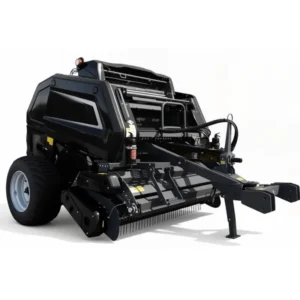
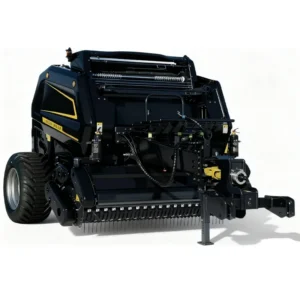
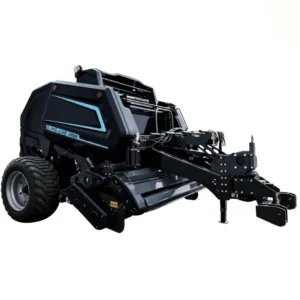
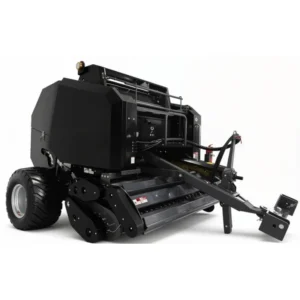
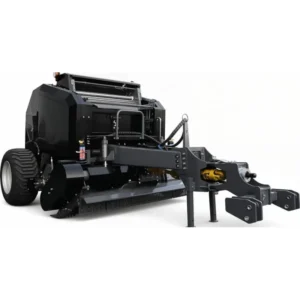
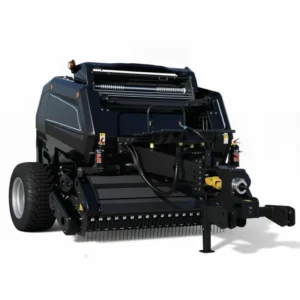
The pickup specification varies across the 9YG series, and selecting the model whose pickup width and feeding design best matches your windrow geometry is the foundation of effective shatter reduction. The product cards below highlight the pickup-relevant parameters for each model. For the full lineup and additional technical data, visit the complete round baler product listing.
10. Practical Pre-Season Checklist for Minimizing Wheat Leaf Shatter Losses
| Санат | Action | Effect on Leaf Shatter |
|---|---|---|
| Tine inspection | Replace bent, tip-worn, or cracked tines before the season; verify consistent spring rate across drum | Uneven tines create local high-speed impact zones; damaged tips concentrate stress on leaf attachment points |
| Pickup height | Set tine tips 20–35 mm above soil surface for wheat straw windrows 150–250 mm high | Soil contact at tine tips creates hard-surface impact that shatters leaves; riding too high increases edge-zone losses |
| Drum speed | Reduce pickup drum speed 10–15% below hay-optimized setting for dry wheat straw under 14% moisture | Each 10% drum speed reduction cuts initial-contact shatter force proportionally in dry material |
| Combine settings | Request minimum chopper speed or chopper bypass; target straw length >150 mm for baling | Longer stems have fewer exposed leaf attachment points per unit length; shatter rate drops 20–35% |
| Raking timing | Rake at 18–20% straw moisture; allow 12–18 h additional dry-down before baling | Moist raking reduces shatter during windrow formation; dry baling achieves target storage moisture |
| Windrow width | Rake to 80–90% of baler pickup width; avoid windrows narrower than 70% of pickup | Narrow windrows leave outer tines striking air — high-speed air contact with loose leaf material increases blow-out losses |
| Feeding system check | Verify feeder channel is clear of debris; check auger flight clearance on models with auger feed | Blocked feeder channels create back-pressure that reverses airflow and carries leaf fragments out through the pickup gap |
Frequently Asked Questions
Q1. How does reducing pickup drum speed on a round baler machine lower wheat leaf shatter losses during high-speed spring-tooth operation in Korean summer harvest?
Wheat leaf shatter is primarily caused by the impact force between tine tips and dry, brittle leaf tissue at the moment of initial windrow contact. This impact force increases with the square of tine tip velocity, so a 10–15% reduction in pickup drum speed produces a 20–27% reduction in impact force. In Korean summer wheat harvests where straw moisture drops below 14% by mid-morning, this speed adjustment represents the single fastest, lowest-cost intervention for reducing visible leaf dust and improving measured bale leaf content.
Q2. What round baler parts should Korean wheat producers inspect before the season to prevent tine-related leaf shatter losses in dry straw conditions?
The spring-tine set should be inspected for tip wear, shaft bending, and cracks near the mounting point before each harvest. Damaged tips concentrate contact stress on a smaller surface area and increase per-contact leaf detachment probability. The spring rate of any suspect tines can be checked by deflecting them by hand — tines that feel noticeably stiffer or softer than adjacent tines should be replaced with matched-grade spares. Carry at least 20–30 replacement tines per machine before the season begins, as unexpected tine failures during harvest should be repaired immediately rather than accumulated.
Q3. Which round baler manufacturer offers an axial-flow cam-less pickup feeding system that specifically reduces leaf shatter at the transition zone in wheat straw baling?
The 9YG series round balers use a proprietary axial-flow semi-forced feeding system with a cam-less, guard-less pickup design that eliminates the stationary guide surfaces that cause secondary leaf fragmentation at the pickup-to-feeder transition. This design is covered by exclusive intellectual property rights and is the primary reason operators switching from conventional cam-guide round balers to 9YG models report less leaf dust in the field and higher measured bale leaf content when processing dry wheat straw below 14% moisture.
Q4. How does combine chopper setting affect wheat leaf shatter losses in the round baler pickup and what adjustment should Korean grain farmers request?
Maximum chopper speed produces short-cut straw with a high ratio of exposed leaf attachment points per unit length — the vulnerable sites where tine impact causes leaf detachment. Requesting minimum chopper speed, or bypassing the chopper entirely with straight windrow discharge, produces straw sections typically above 150 mm in length that are significantly more resistant to tine-impact shatter. Field comparisons from Korean Gyeongbuk grain producers show shatter rate reductions of 20–35% when switching from full-chop to minimum-chop discharge with the same baler and field conditions. If the combine operator needs chopper operation for crop residue management, negotiate a compromise at 50% chopper speed rather than maximum.
Q5. What is the optimal pickup height for a round baler spring-tooth header when baling wheat straw windrows on Korean flat grain fields to minimize soil contact and leaf shatter?
For Korean flat grain fields where wheat windrows are typically 150–250 mm in height after combine discharge, tine tips should be set to clear the soil surface by 20–35 mm throughout the operating width. This range avoids soil contact that creates hard-surface tine tip impacts (which shatter leaves and contaminate the bale), while staying close enough to the ground to collect the lower stem material that carries the highest proportion of attached leaf blades. Check pickup height at the outer edges of the pickup as well as the center — camber in the field surface can cause the outer tine sections to ride higher than the center section in some conditions.
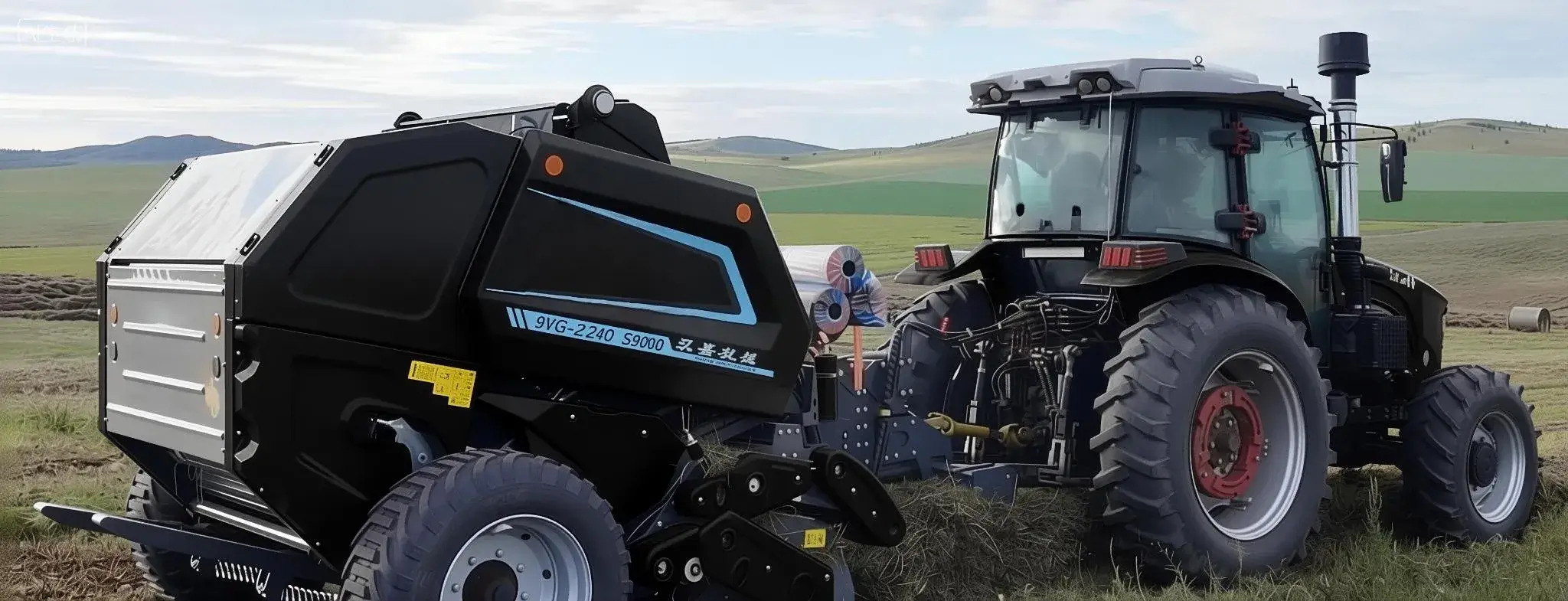
Q6. How does the round baler gearbox dual-joint design on the 9YG-2.24D S9000 reduce pickup bounce and associated leaf shatter on undulating Korean wheat fields?
On fields with surface undulation, a single-joint drawbar transmits terrain-induced vertical movement from the tractor hitch point to the baler frame, causing the entire machine to oscillate vertically at tractor ground speed frequency. This bounce propagates to the pickup header, causing the tine row closest to the ground to intermittently contact the soil surface — creating impact events that shatter whatever leaf material is in the tine path at that moment. The dual-joint gearbox on the 9YG-2.24D S9000, combined with its rigid coupling to the drawbar frame, provides a more stable three-point connection between tractor and baler that significantly damps the vertical bounce transmission on undulating terrain, keeping the pickup header at more consistent height throughout the pass.
Q7. When should Korean wheat producers rake windrows before baling to minimize leaf shatter losses during both the raking and the spring-tooth pickup phases?
Rake when straw moisture is in the 18–20% range — high enough that leaf blades retain some flexibility and resist impact-induced detachment during the raking process, but low enough that the consolidated windrow will reach the target storage moisture within 12–18 hours of additional field drying. Avoid raking in the hottest midday hours when straw moisture falls below 14% — at this point the material is at peak brittleness and raking shatter rates are highest. Early morning raking (before 10:00) or late afternoon raking (after 16:00) takes advantage of the residual moisture that naturally persists in the leaf tissue during periods of lower air temperature, even in mid-summer Korean harvest conditions.
Q8. What round baler application is best suited to Korean farms that need to minimize leaf shatter while baling both wheat straw and corn stover in the same season?
The 9YG-1.25 round baler with interchangeable pickup head is specifically designed for this dual-crop application. The spring-tine head is fitted for wheat straw harvest and configured for the lower drum speed that reduces leaf shatter in dry material. After wheat harvest, the spring-tine head is removed and a hammer-claw head designed for standing corn stover collection is installed. This head swap can be performed in the field with basic tools and takes approximately two to four hours for an experienced operator. The machine’s sensor density control, auger-plus-roller feeding system, and 2,240 mm working width remain consistent across both crop types.
Редактор: PXY