Wheat Straw Baling — Central Asian & Eastern European Markets
A buyer’s guide examining the exact machine specifications that matter most for wheat straw baling on the vast cereal plains of Kazakhstan, Russia, Ukraine, Poland, and beyond — with engineering detail, regional context, and compliance information relevant to importers, contractors, and large farm operators across these markets.
Q1. Why Machine Specification Matters More in Central Asia and Eastern Europe Than Almost Anywhere Else
Central Asia and Eastern Europe together represent the largest contiguous wheat production zone on the planet. Kazakhstan, Russia, Ukraine, Belarus, Poland, Romania, and the surrounding countries account for a combined wheat output that shapes global grain markets every season. Behind those grain harvests lies an enormous and often underutilized straw resource — hundreds of millions of tonnes of wheat straw left behind on fields ranging from compact Ukrainian family holdings of 50 hectares to vast Kazakh steppe blocks of 1,000–5,000 hectares managed by single agro-industrial enterprises. The specification of the round baler machine chosen for these environments is not a marginal purchasing decision. It is a primary determinant of operational economics, annual tonnage collected, and the machine’s survival through conditions that would rapidly destroy equipment designed for less demanding environments.
The operating conditions across Central Asia and Eastern Europe create three overlapping equipment demands that do not all exist simultaneously in other markets. The first is scale: fields are very large, distances between towns and service facilities are long, and the consequences of unplanned downtime during the 10–20 day post-harvest straw window are severe. The second is climate: temperature extremes from -40°C winter storage through +42°C summer harvest create material fatigue and lubrication challenges that temperate markets rarely face. The third is infrastructure: parts delivery logistics, workshop facilities, and trained technicians are less accessible per machine than in densely serviced Western European markets, placing a premium on design reliability and simplicity of on-farm repair when issues do occur.
Korean buyers importing wheat straw from Central Asian suppliers, and Korean-affiliated agro-industrial investors operating grain farms in Kazakhstan or Ukraine, have a direct commercial interest in understanding which round baler specifications deliver the best reliability and total-cost-of-ownership in these environments. This guide provides the technical detail needed to evaluate round baler machine options against the actual demands of Central Asian and Eastern European wheat straw baling.
Q2. Scale and Field Conditions: What the Machine Actually Faces
A round baler machine operating on a 2,000-hectare Kazakh grain block faces a fundamentally different operational environment from the same machine on a 30-hectare Korean family farm. Understanding the specific characteristics of Central Asian and Eastern European wheat straw conditions helps explain which specification choices matter most and which are secondary in this context.
Field size directly affects the economics of headland turns. On a 5 km long Kazakh steppe paddock, the ratio of productive run-time to headland-turn time approaches 95:5 — headland efficiency is essentially irrelevant to daily output. On a 200 m Korean field, that ratio might be 85:15 — headland turns cost 15% of available time. This means that the dual-joint PTO driveshaft feature that provides significant daily output gains in Korean irregular fields delivers proportionally less throughput benefit in Central Asian large-block conditions. For Central Asia, the prioritized specification is different: sustained output reliability over 12–14 hours per day, every day, for 15–20 consecutive days — and the ability to continue operating when the nearest service facility is 200 km away.
Summer temperature in Kazakh and southern Ukrainian harvest conditions reaches 38–42°C during the peak July baling window. At these temperatures, gearbox oil viscosity is at its lowest annual point, bearing film thickness is under maximum thermal stress, and chain lubricants evaporate faster than in temperate conditions. Machine designs with sealed oil-bath gearbox lubrication, heavy-gauge drive chain providing dimensional reserve against accelerated wear, and compressed-air-cleanable chain guides perform meaningfully better across these conditions than machines designed to specification minimums for temperate European operation.
Eastern European conditions — Poland, Romania, Hungary, Czech Republic — occupy a middle ground. Fields are typically 50–500 hectares, summer temperatures reach 28–38°C, and service infrastructure is generally better developed than in Central Asia but still places a premium on design reliability over feature complexity. Winter storage temperatures in Poland and Romania regularly reach -20°C to -30°C, requiring machines to tolerate cold soaking without hydraulic seal failure, lubricant stratification, or paint-to-steel adhesion failure from freeze-thaw cycling.
Q3. Manufacturing Structure: The Specifications That Matter Most for These Markets
When evaluating round baler machine specifications for Central Asian and Eastern European wheat straw applications, the most informative specification categories are structural frame design, drive chain specification, hydraulic system integrity, PTO driveshaft protection, and the density control system. Compression chamber roller count and bale size are relevant but secondary — most full-size commercial machines provide adequate chamber geometry for wheat straw; it is the surrounding systems that determine actual field reliability.
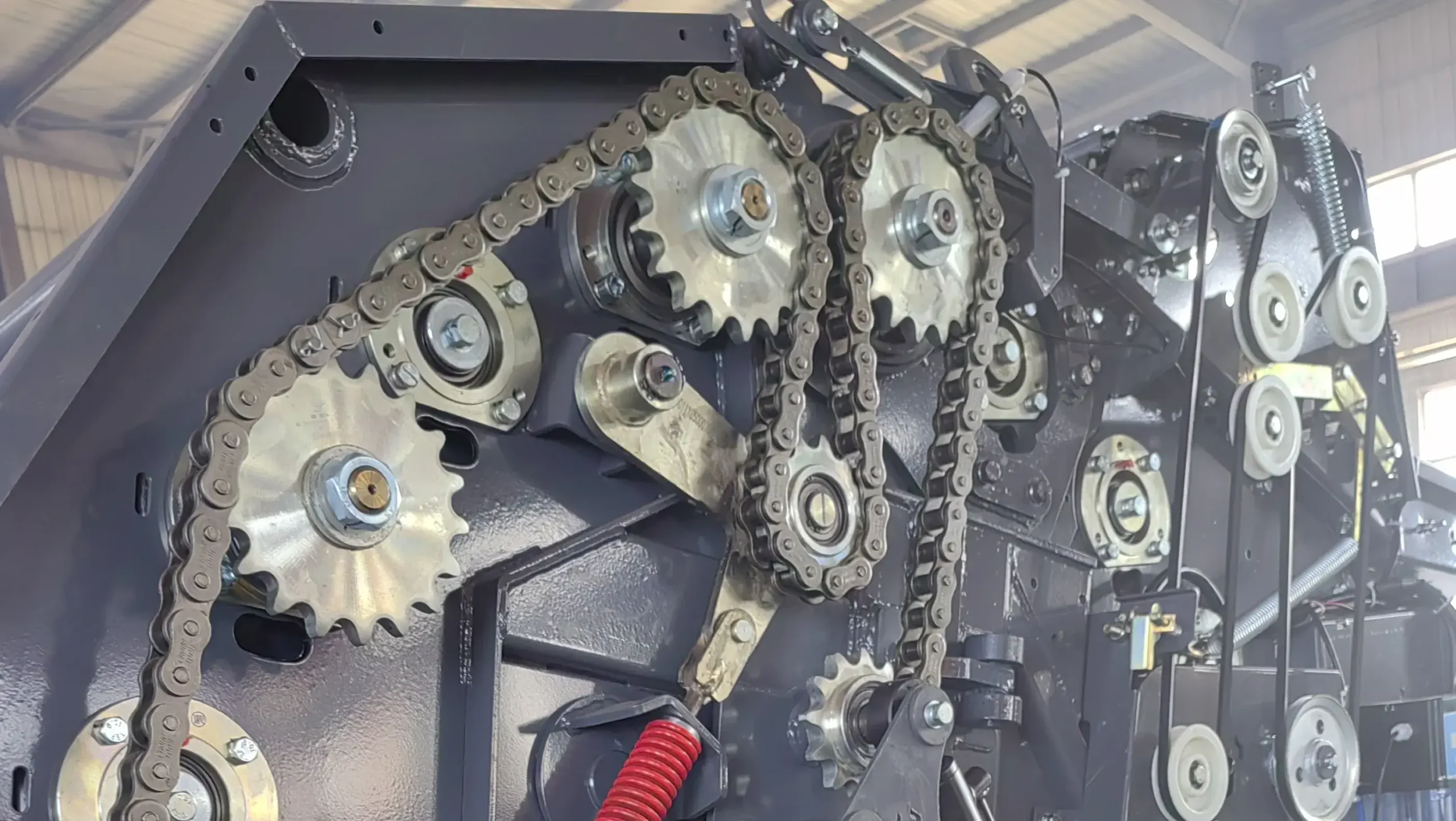
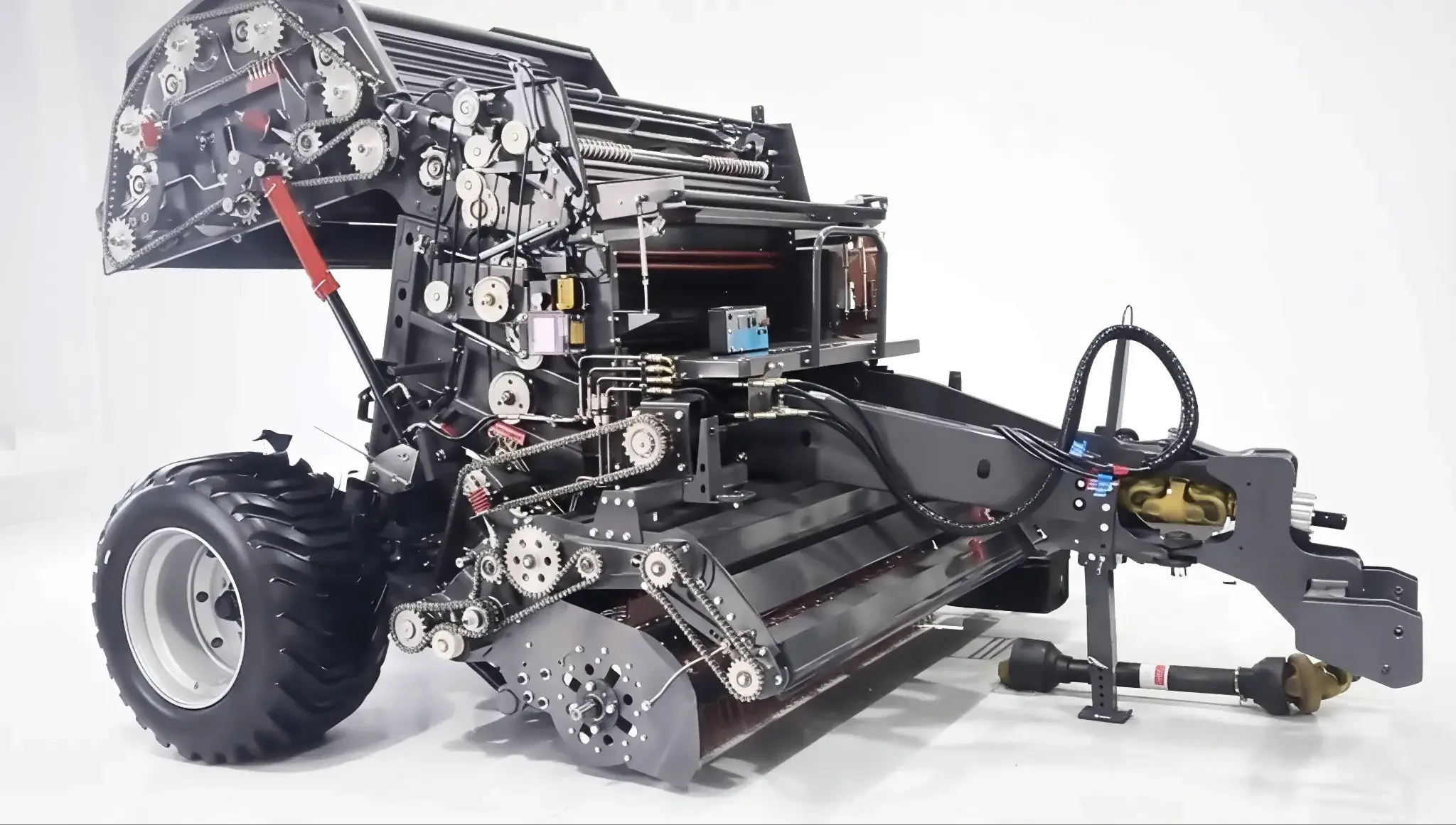
Frame steel specification is the starting point. S355 structural steel (355 MPa minimum yield strength) is the appropriate minimum for machines working in large-scale Central Asian conditions where frame fatigue from sustained high-load cycles and the lateral shock from debris-contact events accumulates over a season that may total 400–600 operating hours. Robot-welded joints with consistent penetration depth at all connections — rather than manually welded joints with variable quality between locations — provide the fatigue resistance needed for multi-season service in these intensive environments. The 9YG series uses laser-cut S355 plate and robot welding throughout the main chassis, with reinforcing gussets at the tailgate pivot brackets, pickup mounting points, and hitch receiver — the locations where field-induced fatigue most commonly initiates in other machine designs.
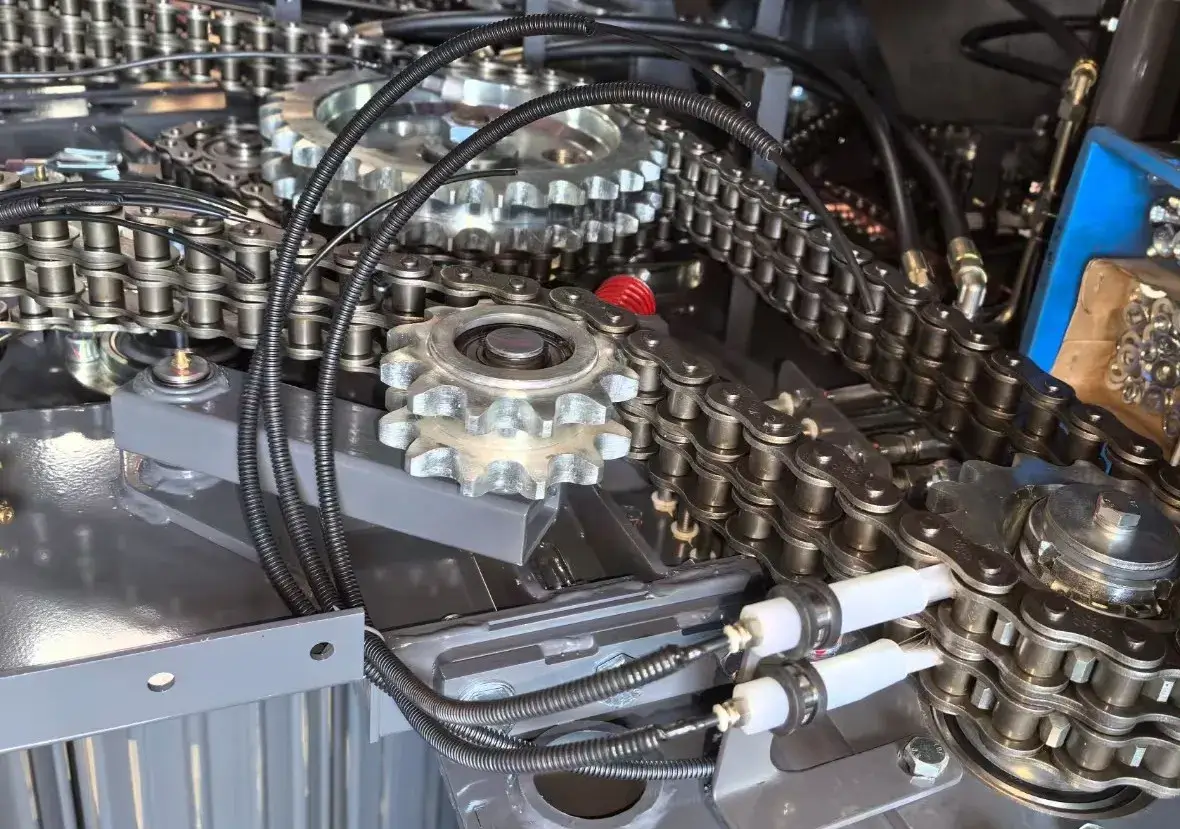
Drive chain specification is a critical differentiator in Central Asian wheat straw applications. A round baler machine operating 12–14 hours per day for 20 consecutive days in 38°C heat on abrasive straw accumulates enormous chain cycle counts in a single season. Light-gauge 16A roller chain in the compression circuit elongates measurably under these conditions within a single harvest, changing the chain-to-sprocket mesh geometry and initiating the sprocket tooth wear cycle that eventually requires both chain and sprocket replacement simultaneously — an expensive repair that the 20A heavy-duty chain specification in the 9YG series defers significantly. For operators in Central Asia or Eastern Europe who can only service their machine once per year, the chain specification that survives two seasons rather than one changes the total cost picture substantially.
The hydraulic system’s tolerance of temperature extremes is a specification area that buyers in these markets specifically should ask about. Hydraulic seals that perform correctly at 25°C may allow significant weeping at -25°C (cold morning starts) or develop compression set at 45°C (peak summer afternoon operation). H-type compression fittings at all hydraulic connections — rather than push-lock or friction-fit alternatives — resist the vibration-induced loosening and temperature-cycling seal degradation that causes the slow hydraulic fluid loss that becomes apparent on the field only when the tailgate begins moving too slowly to maintain bale output targets. The buffer cylinder in the tailgate closing circuit absorbs the dynamic shock of closing against a fully formed 200–350 kg wheat straw bale, protecting the latch mechanism from the metal fatigue that accumulates rapidly without it in machines doing thousands of bale cycles per season.
Specification Priority Matrix for Central Asian and Eastern European Wheat Straw
| Spesifikasi | Central Asia Priority | Eastern Europe Priority | 9YG Series Feature |
|---|---|---|---|
| Drive chain gauge | Critical | High | 20A heavy-duty dual-side, rear circuit |
| Frame steel grade | Critical | High | S355, laser-cut, robot-welded with gussets |
| Hydraulic fitting type | High | High | H-type compression fittings throughout |
| Torque protection system | Critical | High | Safety torque driveshaft + shear bolt protection |
| Gearbox sealing | Critical | High | Sealed oil-bath lubrication, sealed breather |
| Density sensor system | High | High | Electronic sensor, ECU-linked automatic trigger |
| Feed mechanism design | High | High | Axial-flow semi-forced, camless, proprietary |
| Dual-joint PTO driveshaft | Moderate | Moderate–High | ±90° lateral, ±30° vertical (Transcend model) |
| Corrosion protection system | High | Critical (freeze-thaw cycling) | Epoxy primer + polyurethane topcoat, powder coat |
Q4. Material System: Surviving the Central Asian and Eastern European Operating Spectrum
The material specification of every component that contacts wheat straw, or is exposed to the operating environment in these regions, must account for a temperature range from -40°C winter storage through +42°C peak summer operation — a spread of over 80 degrees Celsius. This thermal range creates material challenges that most temperate-market specification sheets do not address: paint-to-metal adhesion failure from repeated freeze-thaw cycling, hydraulic rubber seal hardening at low temperature, lubricant viscosity excursions at both temperature extremes, and metal fatigue from the stress cycling that accompanies temperature-driven dimensional change in constrained assemblies.
The paint and corrosion protection system matters more in Eastern European continental and Central Asian steppe environments than in temperate climates. The combination of summer heat, winter freeze, spring mud contact with alkaline steppe soil or clay-rich Eastern European field soil, and the organic acid exposure from wheat straw residue during harvest creates a corrosion environment that aggressive alkyd paint systems cannot withstand across a 10-year machine life. Epoxy primer over shot-blasted steel, followed by polyurethane topcoat, provides the adhesion and chemical resistance needed for long service in these environments. Inspection of the specific paint system applied — rather than accepting a generic “industrial paint” description — is a meaningful evaluation step when purchasing for Central Asian or Eastern European deployment.
Chain lubricant selection in extreme-temperature environments requires care. Standard mineral chain oils applied at 20°C have adequate viscosity for summer operation but may lose consistency in cold pre-dawn starts, where the lubricant thickens and does not flow into pin-and-bush contacts as rapidly as the chain begins operating. A synthetic chain lubricant with high viscosity index maintains adequate film thickness across a broader temperature range, reducing the morning wear event that occurs with conventional mineral oils in cold-climate straw operations. The 20A heavy-duty chain in the 9YG series provides the dimensional reserve that makes its service life tolerant of the occasional imperfect lubrication start that cold conditions create — a tolerance that lighter-gauge chain cannot provide.
Pickup tine material matters more in Central Asian fields than in most other environments because post-harvest steppe wheat fields frequently contain embedded stones, irrigation equipment fragments, and metallic debris from previous tillage operations. Spring steel tines with adequate yield strength flex around obstacles without permanent deformation but do not fracture on contact — the correct compromise between flexibility and strength for debris-containing steppe conditions. Excessively brittle tines snap cleanly on stone contact; excessively soft tines bend permanently and disrupt pickup geometry without providing obvious visual evidence of the problem. Verifying the tine steel specification and its heat treatment condition is a worthwhile step for buyers equipping machines for Central Asian deployment.
Q5. Round Baler Models and Their Suitability for Regional Wheat Straw Applications
The following models span the full range from compact small round baler machines for smaller Eastern European family farms to the full-size high-output models suited for large Central Asian grain enterprises. Technical parameters are drawn from verified product specifications.
Pengikat Bulat 9YG-2.24D (S9000)
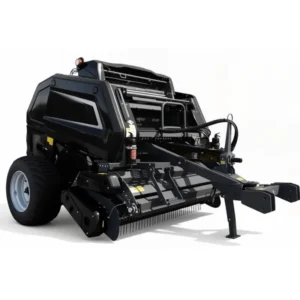
φ1,300×1,400 mm · 18 rollers · 55–100 kW · 4,262 kg · 40–100 bales/h · Sensor density control · Auto net wrap
Pengikat Bulat 9YG-2.24D (S9000 Klasik)
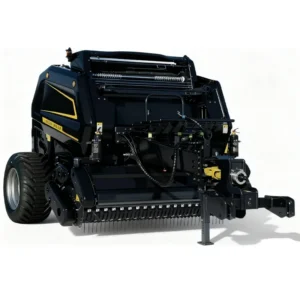
4,312 kg · Dual-side 20A heavy chain · H-type hydraulic fittings · Buffer tailgate cylinder · 55–100 kW
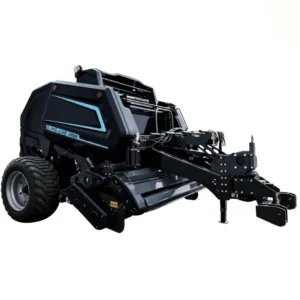
9YG-2.24D Round Baler (Transcend)
Dual-joint gearbox ±90° lateral · 4,570 kg · Safety torque driveshaft · 720 r/min PTO · 5–35 km/h
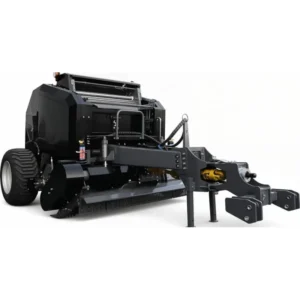
9YG-1.25 Round Baler (Double)
Interchangeable pickup · ≥88.2 kW · 4,558 kg · 1,200×1,250 mm · 40–80 bales/h · Auto net wrap
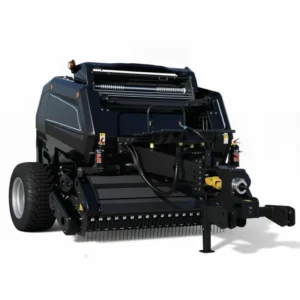
Baler Bulat 9YG-1.25A
540–1,000 r/min PTO · Density 100–200 kg/m³ · Net 2,000×1.25 m · 4,472 kg · ≥75 kW · 40–100 bales/h
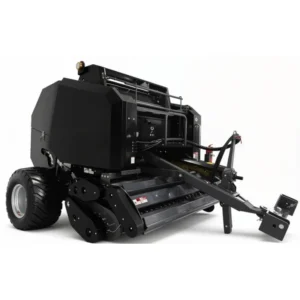
Pengikat Bulat 9YG-2.24D
Axial-flow semi-forced camless feed · 3,922 kg · 55–100 kW · φ1,300×1,400 mm · 40–100 bales/h
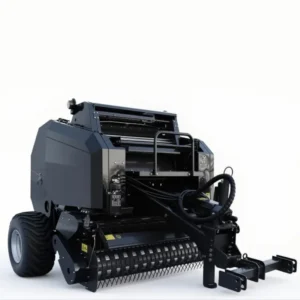
9YG-1.0 Round Baler (Mini Round Baler)
Small round baler for 40 hp tractor · 48–80 kW · Bale φ1,100×1,000 mm · 2,640 kg · 16 rollers
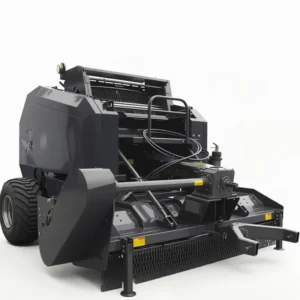
Baler Bulat 9YG-1.0C
Hammer-claw pickup option · Dual-side 16A heavy chain · ≥69.8 kW · Bale φ1,000×1,250 mm · 3,198 kg
Q6. Round Baler Gearbox: The Component That Defines Long-Season Reliability
In Central Asian and Eastern European wheat straw applications, the round baler gearbox is simultaneously the most critical and the most difficult to service component in the machine. Critical because it manages all power transmission from the tractor PTO to the pickup, feeder, compression rollers, and net-wrap system — any failure stops the machine completely. Difficult to service because it requires oil changes, seal inspection, and sometimes bearing replacement by someone with the right tools and knowledge, often in locations far from competent workshop facilities. Getting the gearbox specification right before purchase is therefore vastly more cost-effective than discovering its limitations during a 14-day harvest window 300 km from the nearest dealer.
The sealed oil-bath lubrication system in the 9YG series gearbox maintains consistent gear tooth and bearing film thickness throughout an operating shift — including the morning start period in cool conditions, when splash-lubrication systems can run partially starved until operating temperature brings oil viscosity down to design range. Oil-bath lubrication keeps the gear mesh continuously submerged regardless of operating temperature, eliminating the cold-morning wear event that is particularly relevant in spring straw operations in northern Kazakhstan or Poland where pre-dawn field temperatures can be below 5°C even during summer harvest periods.
The safety torque driveshaft on the 9YG-2.24D Transcend model is a specification feature with disproportionate importance in Central Asian conditions. Post-harvest Kazakh steppe fields frequently contain embedded steel — wire from bale remnants of previous years, irrigation pipe fragments, stones, and the occasional lost implement fitting — that the combine header pushed into the straw windrow during grain harvest. When the baler’s pickup header contacts a large embedded steel object at full operating speed, the resulting torque spike can exceed 300–400% of steady-state operating torque in a fraction of a second. A gearbox without torque protection will absorb this spike — typically by fracturing a gear tooth, deforming a bearing race, or cracking a housing. With the safety torque driveshaft, the overload is absorbed at the protection point and the machine resumes operation after clearing the obstruction, with no gearbox damage and the only cost being a few minutes of downtime.
Gearbox oil specification for Central Asian and Eastern European conditions must account for the full temperature range the machine experiences. ISO VG 150 GL-4 gear oil is the minimum specification for temperate summer conditions up to 35°C. For Kazakhstan and southern Ukraine where sustained ambient temperatures of 38–42°C occur during peak harvest, ISO VG 220 or a synthetic GL-5 formulation provides better film thickness retention at the upper temperature limit. For Eastern European machines that will be field-started at -10°C to -20°C in early season work, a synthetic GL-4 formulation with high viscosity index (VI 130+) maintains lower cold-start viscosity than straight mineral VG 150 while meeting the high-temperature film requirement — a genuine operating advantage in the continental temperature extremes these markets experience.
Q7. Regional Comparison: How Operating Conditions Differ Across the Zone
Central Asia and Eastern Europe are not a monolithic operating environment. The specific wheat straw baling conditions — field size, climate, service infrastructure, crop variety, and downstream straw end-use — vary significantly across the region. Understanding these differences helps buyers in different sub-regions prioritize specification features appropriately rather than applying a single specification template across all conditions.
| Region | Typical Field Size | Summer Temp | Winter Storage Temp | Top Spec Priority |
|---|---|---|---|---|
| Kazakhstan (north) | 500–5,000 ha | 35–42°C | -30 to -40°C | Chain gauge, gearbox sealing, torque protection |
| Russia (Krasnodar) | 200–2,000 ha | 32–38°C | -15 to -25°C | Chain gauge, hydraulic integrity, feed reliability |
| Ukraine | 50–500 ha | 28–36°C | -15 to -25°C | Frame durability, paint system, density sensor |
| Poland | 30–300 ha | 25–33°C | -15 to -25°C | Paint system, cold-spec oil, PTO articulation |
| Romania / Hungary | 30–300 ha | 28–36°C | -10 to -20°C | Density control, feed reliability, hydraulic seals |
| Uzbekistan / Kyrgyzstan | 10–200 ha | 35–42°C | -10 to -20°C | High-temp oil spec, torque protection, parts access |
Q8. Regulatory Compliance: Agricultural Machinery and Gearbox Standards Across the Region
Eurasian Economic Union (EEU) — Russia, Kazakhstan, Belarus, Kyrgyzstan, Armenia
All agricultural machinery sold commercially in EEU member states must comply with Technical Regulations of the Eurasian Economic Union TR EAEU 010/2011 (safety of machinery and equipment) and carry the EAC (Eurasian Conformity) mark. This requires a declaration or certificate of conformity issued by an accredited EEU conformity assessment body, technical documentation in Russian, and compliance with safety requirements including PTO shaft guarding (referencing GOST standards for agricultural machinery safety). Gearbox lubricant specifications in EEU markets reference GOST 23652 (gear oils for agricultural machinery), which defines performance classes comparable to GL-4 and GL-5 international designations. Importers of round baler machines to EEU markets must ensure EAC documentation is prepared before customs clearance, as non-compliant machinery may be detained or returned at border points.
European Union (Poland, Romania, Hungary, Czech Republic, Bulgaria)
Round balers sold in EU member state markets must carry CE marking under the Machinery Directive 2006/42/EC (transitioning to Machinery Regulation EU 2023/1230 from January 2027). Applicable harmonized standards include EN ISO 4254-7 (safety for harvesting machinery) and EN 12965 (PTO drive shafts with universal joints). EU wheat straw management is increasingly shaped by the Common Agricultural Policy (CAP) cross-compliance requirements that prohibit or restrict straw burning on agricultural land under GAEC (Good Agricultural and Environmental Condition) standards, which directly increases the demand for straw collection equipment across Eastern European EU member states. Gearbox oil standards in EU markets reference ISO VG 150 classified gear oils per ISO 6743-6, with DIN 51517-3 CLP (compounded lubricating oils) as the German / Central European standard equivalent.
Ukraine (EU Association Agreement context)
Ukraine’s Association Agreement with the European Union includes commitments to align Ukrainian technical standards progressively with EU norms. Agricultural machinery imported to Ukraine is currently subject to national technical regulations that parallel EEU requirements for machines entering from non-EU sources, though the regulatory landscape is actively evolving as Ukraine’s EU accession process advances. Buyers procuring equipment for Ukrainian operations should verify current import documentation requirements at the time of purchase, as certification requirements may change as standards harmonization with EU norms progresses.
South Korea (import and inspection context)
Korean agricultural enterprises importing wheat straw baled in Central Asian or Eastern European markets must comply with Korean Plant Protection Act (식물방역법) phytosanitary import requirements. Baled wheat straw imported to Korea requires fumigation treatment and phytosanitary certification from the exporting country’s competent authority. Korean operators managing farms in Central Asia or Eastern Europe should verify whether the round baler machine they procure for these locations meets the EAC or CE certification requirements applicable in those jurisdictions — Korean agricultural subsidy programs do not typically extend to equipment operated overseas.
Q9. Maintenance and Parts Support: Managing Service Far from Dealer Networks
Perhaps the most underappreciated specification consideration for Central Asian and Eastern European wheat straw baling is the parts and service support infrastructure behind the machine. A round baler machine with excellent specifications that breaks down during the 14-day straw collection window and cannot be repaired for three weeks because a critical part must be shipped from a distant warehouse has failed the operator regardless of its engineering quality. Evaluating the supply chain behind the machine is at least as important as evaluating the machine itself for these markets.
Key questions to ask of any round baler manufacturer when purchasing for Central Asian or Eastern European deployment include: What is the typical lead time for the ten highest-turnover parts (pickup tines, net-wrap knife blades, shear bolts, chain master links, hydraulic seal kits)? Are EAC or CE conformity certificates available for customs clearance purposes? Is the technical documentation available in Russian? Are there authorized service agents within a reasonable distance of the operating location? Does the manufacturer have a dedicated export support function rather than routing all after-sales inquiries through a domestic sales team?
Operators in remote Central Asian locations often address the parts supply challenge through the practice of carrying a comprehensive on-machine spare parts kit that covers the highest-probability failure modes for the straw season. For a round baler machine doing 15,000–20,000 bale cycles in a season on Kazakh wheat straw, the recommended on-machine kit includes: one complete set of pickup tines (full complement), two net-wrap knife blade sets, twenty shear bolts in the correct specification, three chain master links per circuit, one hydraulic tailgate seal kit, one gearbox oil filter (if fitted), and five litres of the correct gearbox oil. Carrying this kit costs a fraction of what a single day’s lost production represents and eliminates the most common productivity-limiting events in remote steppe baling operations.
Frequently Asked Questions
Editor: PXY