Product Selection Guide
A structured comparison of two fundamental round baler designs — examining structural mechanics, bale density characteristics, crop type suitability, and the farm-level factors that determine which configuration delivers the best long-term return for your operation.
The choice between a fixed chamber and a variable chamber prasa okrągła is one of the most consequential decisions a farm makes when selecting baling equipment, yet it is often made on incomplete information or by defaulting to whatever the local dealer stocks. The two designs produce very different bales, suit different crop types and farm scales, and carry different maintenance and capital cost profiles over a working life. Getting this selection right at the point of purchase determines whether the machine remains productive and economical across its expected 10–15 year service life, or whether the operator spends that period compensating for a design that does not suit the primary application. This article provides a technical and practical comparison of both designs across the variables that matter most in real farm decision-making — particularly for Korean mixed-crop and livestock operations where crop type diversity, field size variation, and seasonal throughput demands all influence the optimal choice.
The terms fixed chamber and variable chamber refer specifically to how the bale-forming space inside the round baler machine is constructed. In a fixed chamber, the forming space is defined by a ring of rigid rollers arranged in a permanent circular configuration — the bale always exits at the same diameter. In a variable chamber, the forming space is bounded by a set of belts that expand as the bale grows, allowing the operator to produce bales of different diameters on the same machine without mechanical adjustment. Both designs have legitimate strengths; the question is which strengths align with the demands of a specific farm operation.
How Fixed Chamber Round Balers Work: Manufacturing Structure
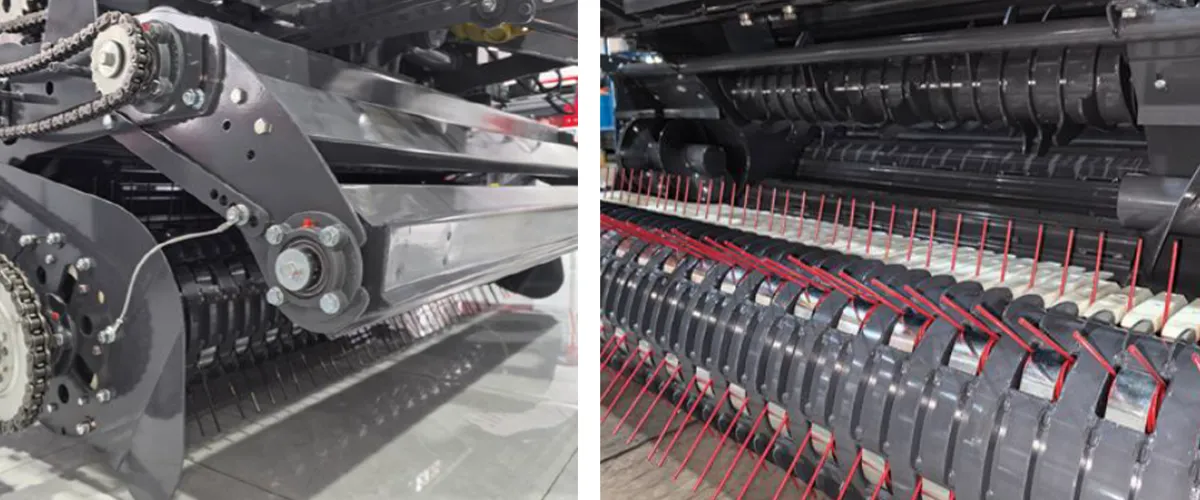
A fixed chamber prasa okrągła forms bales within a rigid ring of compression rollers — typically 16 to 18 rollers depending on the model — arranged in a permanent circular array. As crop material enters the chamber through the pickup and feed mechanism, it contacts the rotating rollers and begins forming a core. The rollers spin continuously, imparting rotation to the growing crop mass, and as more material is added, the bale diameter increases until it fills the fixed ring. At that point, the chamber is at rated capacity and the bale is ejected, always at the same predetermined diameter. The 9YG-2.24D series uses 18 rollers at φ222 mm each within a chamber diameter of φ1,200 mm — every bale that exits this machine is φ1,300 mm × 1,400 mm regardless of crop type or moisture content.
The structural advantage of this design is mechanical simplicity. With no belts, belt tensioning systems, or variable geometry mechanisms, the fixed chamber has fewer moving parts subject to wear and failure. Roller bearings are the primary wear components, and these are robust, well-understood elements that operators can inspect and replace without specialized training. The rigid frame that holds the roller array is welded from heavy-section structural steel and carries the full radial load of the bale compression force — typically several tonnes in a high-density machine — through the roller shafts and into the frame joints. This load path is direct and efficient, which is why fixed chamber machines generally show better structural longevity than variable chamber designs of comparable rated capacity when operated at or near their maximum density settings over extended periods.
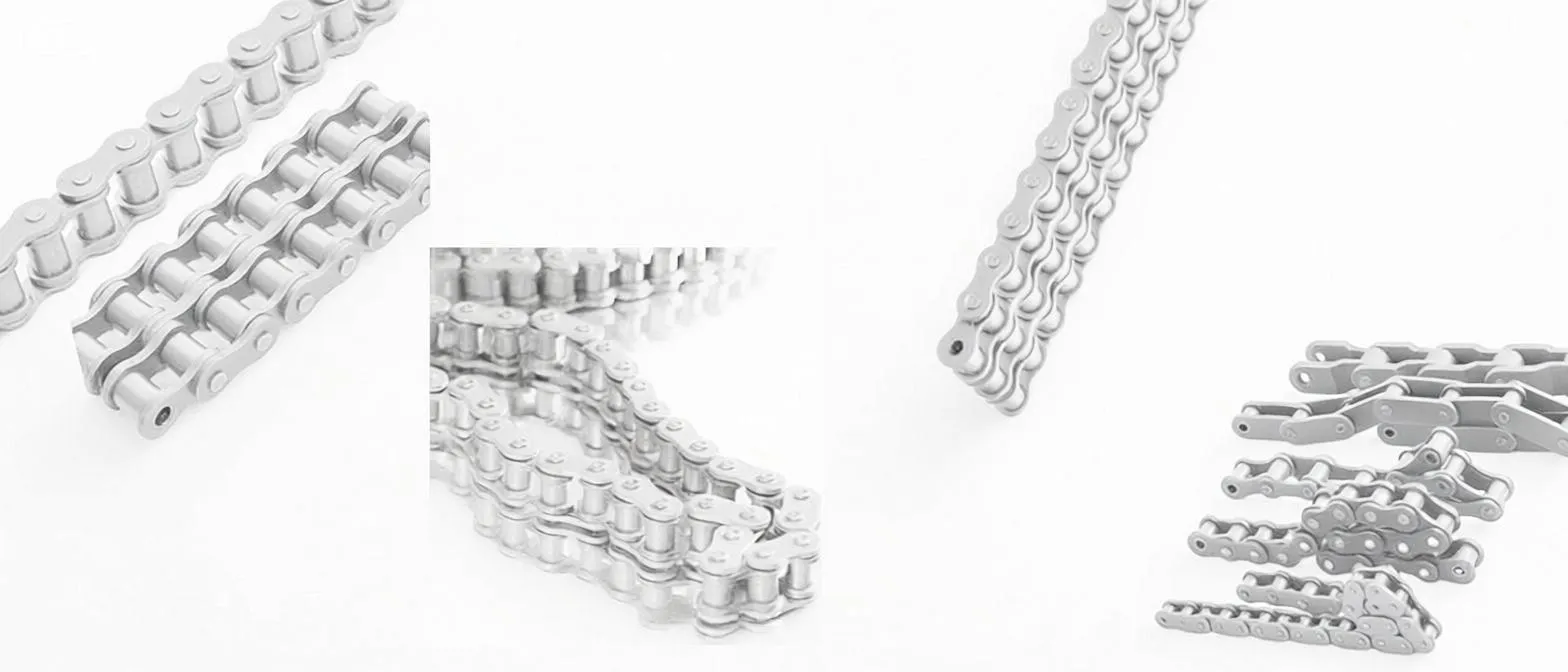
The material systems in a fixed chamber machine reflect this structural directness. Roller cylinders are typically fabricated from Q345B structural plate rolled and seam-welded into a tube, then fitted with shaft stubs machined from medium-carbon steel. The contact surfaces between roller and crop are either smooth, knurled, or spiral-ribbed depending on the primary crop application — ribbed surfaces aid bale core initiation in dry straw while smooth surfaces are standard for forage applications where friction build-up is not an initiation challenge. The dual-side 20A heavy chain that drives the compression rollers on the S9000 series provides even torque distribution across the full bale width, preventing the single-side density gradient that chain-and-sprocket systems with only one drive side can produce in wide-chamber models.
Fixed exit diameter means every bale is the same size — predictable for transport, storage stacking, and silage film wrapping calibration. No operator adjustment required between crop types.
No belts, belt-tensioning springs, or variable-geometry actuators. Roller bearings are the primary wear item — easily inspected and replaced in the field without specialist tools or dealer intervention.
Rigid roller ring maintains consistent compression force at full chamber capacity; achieves 100–200 kg/m³ with sensor-controlled density management; suitable for silage, hay, and mixed residue at high throughput.
How Variable Chamber Round Balers Work: Structure and Mechanism
A variable chamber prasa okrągła replaces the fixed roller ring with a set of endless rubber belts — typically three to five belts running side by side across the bale width — that form the bale-contacting surface. These belts are tensioned by a spring or hydraulic tensioner system that allows the belt loop to expand as the bale grows. The bale diameter at ejection is determined by when the operator chooses to stop filling — which can be any point within the machine’s rated diameter range. This variable exit diameter is the defining characteristic of the design and its primary selling point for operations that need flexibility in bale size without investing in multiple machines.
The structural complexity of the variable chamber is substantially higher than the fixed chamber. The belt tensioner mechanism — whether spring-loaded or hydraulic — introduces a dynamic load element that the fixed chamber design does not have. As the tensioner extends to accommodate a growing bale, the belt contact geometry changes, and the pressure distribution across the bale surface shifts. If the tensioner mechanism is not well-calibrated for the crop density at the time of baling, the pressure distribution can become uneven, producing bales that are denser at the belt entry point than at the belt exit, or that have a softer core due to insufficient initial tension before the bale reaches operating diameter. These density gradients are less common in fixed chamber roller designs because the rigid geometry of the roller ring applies consistent radial pressure across the entire bale circumference at all times during the fill cycle.
Belt material and replacement cost are the most significant long-term cost factors distinguishing variable chamber from fixed chamber designs in total-cost-of-ownership analysis. Agricultural belting of the grade required for bale chamber application — reinforced rubber with textile or steel cord internal structure — degrades under the combined effects of UV exposure, mechanical flexing, and abrasion from crop material and crop dust. Typical belt service life in intensive baling operations runs 200–400 operating hours before replacement is warranted, at which point the cost of a full belt set represents a meaningful operating expense. Roller bearing replacement in a fixed chamber machine, by contrast, is a lower-cost event with a longer replacement interval — typically 400–600 hours for the compression roller bearings under comparable operating conditions.
Matching Chamber Type to Your Farm Operation
The farm characteristics that most reliably predict which chamber type will perform better over a machine’s working life are: primary crop type and moisture range, required bale density for the intended use, field size and headland frequency, and whether bale size consistency matters for downstream handling and storage. Korean farms illustrate this matching challenge particularly well because the range of operations is wide — from small upland farms of 5–15 ha running a single tractor at 48–75 kW, through mixed paddy-and-upland operations of 30–60 ha, to commercial forage and livestock enterprises using 75–100 kW tractors on larger consolidated plots. Each of these scales and crop combinations has a different optimal chamber configuration.
For farms where the primary application is silage baling — perennial ryegrass, sudangrass, or mixed-sward forage cut at 55–65% moisture — the fixed chamber design has a clear advantage. High-moisture silage crop is the most density-sensitive application in round baling: the crop expands aggressively after ejection, and the bale must reach its rated density consistently to prevent the partial fermentation that degrades silage quality and creates waste during feedout. The rigid roller geometry of the fixed chamber maintains compression force uniformly across the growing bale at all moisture levels, while variable chamber belt systems can under-tension at high moisture content if the tensioner is not correctly set for the specific crop condition on the day. Korean beef and dairy farms running silage programs on ryegrass typically find that fixed chamber machines produce more consistent silage quality across a season than variable chamber alternatives of comparable specification — a quality difference that translates into measurable feed intake and milk production outcomes.
For farms where bale size flexibility is the primary driver — for example, a contractor who serves multiple customers with different handling equipment, or an upland farm that needs small bales for manual handling alongside larger bales for tractor-and-loader feedout — the variable chamber design offers genuine operational value that the fixed chamber cannot match without running two separate machines. A variable chamber baler that can produce bales from φ900 mm through to φ1,500 mm gives a single-machine contractor the ability to serve customers across a range of bale handling equipment without turning down work. In Korea, where agricultural contracting services are common on smaller farms without their own baling machinery, this flexibility has direct commercial value for a contractor operator who wants to maximize the utilization rate of a single capital investment.
Primary crop is silage forage at high moisture; consistent bale density is critical for silage quality; operation runs one tractor-baler combination at rated throughput; long-term maintenance simplicity is a priority; silage film wrapping requires uniform bale dimensions.
Multiple bale sizes are needed for different customers or uses; farm runs mixed dry hay and moderate-moisture silage with different density needs; operator wants to adjust bale weight for specific handling equipment; contracting business serves diverse bale-size requirements.
Dry hay baling at 15–20% moisture; rice straw and wheat straw residue collection; mixed-crop farms where a single consistent bale size suits all downstream needs; operations where the tractor power is within the rated range of both designs at the required throughput.
Round Baler Gearbox & Drive System Differences Between Chamber Types
Ten round baler gearbox configuration differs between fixed and variable chamber designs in ways that affect both maintenance complexity and operating cost. In a fixed chamber roller-type machine, the main gearbox drives the compression rollers through a chain-and-sprocket train, with each roller receiving power from the main drive chain loop. This is a direct, low-slip power transmission path — the energy from the tractor PTO reaches the bale surface through steel-to-steel contact at every step in the chain. The dual-linked gearbox arrangement on the 9YG-2.24D series adds the benefit of tractor-baler pivot without PTO power interruption, which matters in fixed chamber designs because the high-density bale forming process is best not interrupted mid-cycle — breaking and restarting the PTO during a headland turn in a high-density silage bale cycle can cause the forming bale core to lose its rotational momentum, producing a soft-centre bale that does not eject cleanly.
Variable chamber belt-drive machines add an additional power transmission element: the belts themselves are the driven surface, powered by drive rollers connected to the main gearbox through a separate belt-drive shaft or direct chain connection. The belt surface velocity must be maintained consistently across all three to five belts to prevent one belt running faster than its neighbours, which would cause the growing bale to drift laterally within the chamber and produce an off-centre, unbalanced bale that can cause vibration on the stretch film wrapping table. This belt synchronization requirement adds a degree of gearbox and drive-shaft calibration complexity that the fixed roller design, where all rollers share a single drive chain loop, does not require.
For Korean farm operators who carry out their own routine maintenance without dealer support — a common situation on smaller farms where the nearest authorized service center may be 30–60 km away — the simpler drive architecture of the fixed chamber design is a practical consideration. Checking and adjusting the compression roller chain tension, replacing individual roller bearings, or swapping a worn sprocket are tasks that an experienced tractor operator can perform with standard workshop tools in a day. Replacing a full belt set, re-calibrating the tensioner, and ensuring correct belt tracking typically requires either factory documentation for that specific belt configuration or a service technician visit — an additional cost and scheduling constraint during a harvest season where downtime has direct impact on crop quality.
Chain-and-sprocket drive to all rollers from a single loop; no belt synchronization requirement; dual-linked pivot gearbox allows headland turns without PTO interruption during bale forming; simpler field maintenance with standard tools.
Belt synchronization across multiple parallel belts requires precise calibration; belt-drive shaft adds an additional power transmission stage; tensioner calibration must be checked seasonally and after each belt replacement to maintain consistent bale density.
Featured Fixed Chamber Model: EP 9YG-2.24D Transcend Round Baler
A production-proven fixed chamber roller baler suited to high-throughput Korean silage and hay operations.
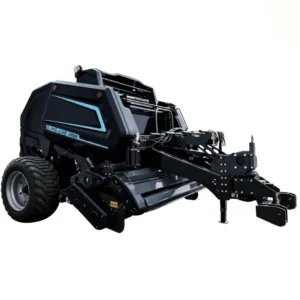
| Chamber Type | Fixed roller (18 rollers, φ222 mm) |
| Chamber Diameter | φ1,200 mm |
| Chamber Width | 1,400 mm |
| Bale Size (Ø × W) | φ1,300 mm × 1,400 mm |
| Szerokość odbioru | 2,240 mm |
| Gęstość beli | 100–200 kg/m³ (sensor-controlled) |
| Wymagana moc | 55–100 kW |
| Prędkość WOM | 720 r/min |
| Siatka do owijania | 2,000 × 1.4 m per bale (automatic) |
Total Cost of Ownership: Parts, Maintenance & Longevity
When farm operators compare fixed and variable chamber machines, the purchase price difference often dominates the initial conversation. Variable chamber belt balers are generally priced higher than comparable fixed chamber roller models because of the additional mechanical complexity in the belt and tensioner system. But purchase price is only one component of total cost of ownership over a 10–15 year machine life. The more relevant comparison for most Korean farm operators is the annual running cost of round baler parts and maintenance across that period, compared against the productivity and crop quality outcomes that each design delivers for the primary application.
Belt replacement is the dominant variable in the variable chamber’s long-term cost profile. A full belt set for a typical variable chamber baler represents a significant consumable expense that recurs every 200–400 operating hours depending on crop abrasiveness and belt grade. At 200 operating hours per season — a realistic figure for a mid-scale Korean forage operation running two cuts per year — this equates to a belt replacement event every one to two seasons. The roller bearing replacement schedule on a fixed chamber machine of comparable output capacity runs at roughly twice this interval, and individual bearings can be replaced selectively rather than as a complete set, smoothing the replacement cost across time rather than concentrating it in a single invoice.
Hydraulic system maintenance is comparable between the two designs for the door actuator and density control functions. Where they diverge is in the variable chamber’s belt tensioner: if hydraulic tensioner models are specified, the tensioner cylinder and valve circuit add a further hydraulic maintenance obligation — seal replacement, fluid contamination monitoring, and tensioner calibration checks — that the fixed chamber design does not carry. Spring-tensioner variable chamber designs avoid this hydraulic element but require periodic spring rate verification and spring replacement when fatigue causes incorrect tensioner force at operating diameter, a condition that produces bale density inconsistency before any obvious mechanical symptom appears.
Regulatory Considerations: Agricultural Machinery Standards in Korea & International Markets
Both fixed chamber and variable chamber round baler machines fall under the same regulatory framework for agricultural machinery safety, though the variable chamber’s additional mechanical complexity introduces more safety-relevant components that require guarding and inspection under applicable standards. In Korea, the Agricultural Mechanization Promotion Act and MAFRA machinery certification requirements apply equally to both designs. The relevant safety standard — KS B ISO 4254-7 for agricultural machinery balers — specifies guarding requirements around all moving components including belt drives, tensioner mechanisms, and roller drive chains. Variable chamber machines with exposed belt tensioner arms that move through a significant arc during the bale fill cycle require guarding geometry that accommodates this motion, which is a design and inspection consideration that fixed chamber roller-guard designs handle more simply.
Korean importers bringing variable chamber belt balers into the market under the HS 84.33 tariff classification must confirm that the belt tensioner guarding meets KS B ISO 4254-7 geometric requirements and that the operator manual includes Korean-language belt-replacement safety procedures — a documentation requirement that is sometimes overlooked on equipment sourced through smaller import channels. Fixed chamber roller machines typically have simpler guard geometry that is more consistently documented in standard operator manuals, making compliance verification more straightforward at the customs and KAMICO certification stage.
In the European Union, the Machinery Regulation EU 2023/1230 applies to both chamber types, with CE marking required for market entry. Variable chamber belt systems must specifically document the dynamic guard geometry around the tensioner arc under Annex I essential safety requirements, which has led some EU-market variable chamber designs to use enclosed tensioner housings rather than open spring-and-arm arrangements. In Australia, the Work Health and Safety (WHS) Regulations under the AS 4024 Safety of Machinery series apply the same principle: all moving parts with the potential to trap or entangle an operator — which includes belt tensioner arms during operation — must be guarded to the specified exclusion zone. Japan’s JIS B 9700-series machinery safety standards take a comparable approach, with prefectural agricultural safety extension services specifically identifying baler belt tensioner arms as inspection focus points during the seasonal machinery safety check programs that many Korean-origin round balers also participate in through shared technical standards.
Agricultural Mechanization Promotion Act; KS B ISO 4254-7 baler safety; KAMICO certification; HS 84.33 import classification; MAFRA subsidy eligibility; Korean-language operator manual requirement.
Machinery Regulation EU 2023/1230; CE marking required; Annex I essential safety requirements for dynamic guarding; ISO 4254-7 harmonized standard; tensioner arc guarding documentation required.
Work Health and Safety Regulations; AS 4024 Safety of Machinery series; belt tensioner arm guarding to specified exclusion zones; state WHS authority inspection authority applies to all farm machinery in operation.
JIS B 9700-series machinery safety standards; prefectural agricultural safety seasonal inspection programs; belt tensioner arms identified as inspection focus; Agricultural Machinery Safety Law procedural requirements.
System-Compatible Drive Components
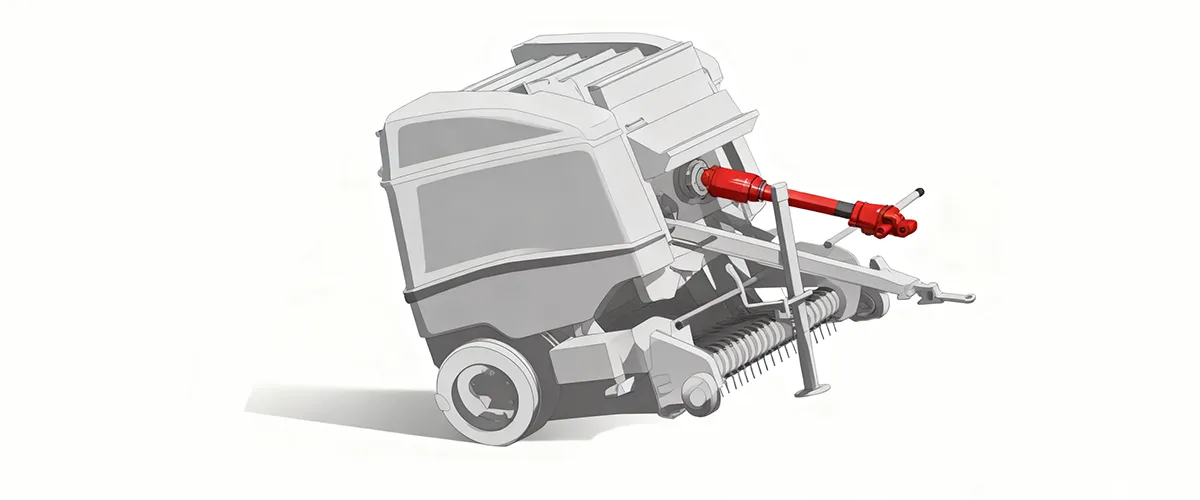
Selecting the right round baler chamber type is one part of the equipment decision — matching the drive components ensures the full system performs to specification.
Over Ten Years Building Agricultural Harvesting Machinery
We have been manufacturing agricultural and animal husbandry harvesting machinery since 2013, with a range that covers light and heavy round balers, single and double-blade mowers, disc rotary mowers, and single and double-side rakes across the full harvest chain. Independent import and export licensing and ISO 9001 Quality Management System certification underpin every machine that leaves our production floor.
With over 60 large-scale production equipment units and an annual capacity of 2,000 machines, we have the manufacturing scale to maintain consistent build quality across all models and to stock replacement parts — roller bearings, compression roller chain sets, pickup tine kits, and hydraulic components — for customers in Korea, Australia, Europe, and other markets who need reliable service support without extended import lead times.
The design decisions behind our fixed chamber range — roller count, roller diameter, chain specification, gearbox torque rating, and density sensor calibration range — are shaped by field data from operators across diverse crop types and climate conditions. We do not offer variable chamber models in our current range because the operational feedback from our customer base across Korean and comparable markets consistently shows that fixed chamber roller designs deliver better crop quality consistency, lower annual maintenance cost, and longer structural service life for the primary silage and hay applications that define this market.
Frequently Asked Questions
Which type of round baler chamber is better for Korean dairy farms that need consistently dense silage bales every season? +
How often do Korean round baler operators typically need to replace the main compression roller drive chain on a fixed chamber machine? +
What are the key round baler parts that need to be checked before the spring silage cutting season starts on a Korean forage farm? +
Where can Korean agricultural contractors find a reliable round baler manufacturer that supplies both fixed chamber models and matched PTO shafts for mid-power tractors? +
How does the round baler gearbox dual-linked pivot design benefit Korean farmers working on small irregular paddy field plots during silage season? +
Redaktor: PXY