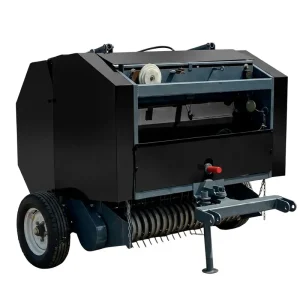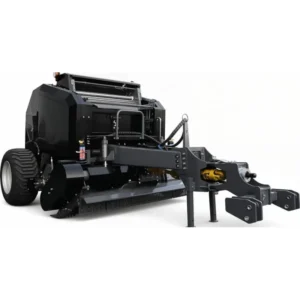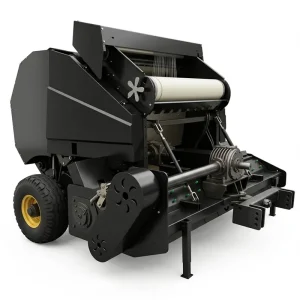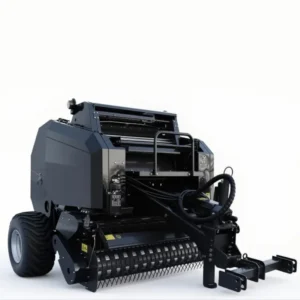
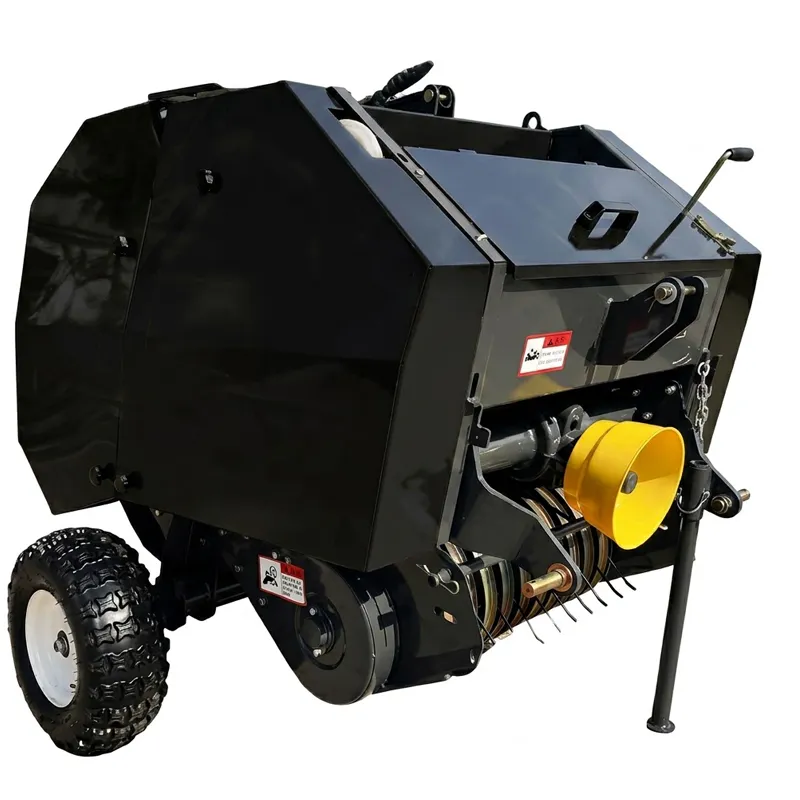
EP-Round Baler -Φ630×700 mm Bale Size 1300×1300×1350mm (L×W×H)
The EP-9YK-870 Round Baler is a trailed agricultural machine engineered for efficient hay and straw collection. It features an 800mm spring-tooth pickup and a roll drum compression chamber (Φ630×700mm) to produce dense, rope-wrapped round bales. Operating at speeds of 2–5 km/h with a 540 RPM PTO requirement, this unit is compatible with tractors in the 25–50 hp range. Weighing 440 kg with overall dimensions of 1300×1300×1350 mm, it offers a compact yet robust solution for small to medium-sized farms requiring reliable baling performance and ease of transport.
Agricultural Round Baler Machine
EP Round Baler — ∅630×700 mm Bale Size1300×1300×1350 mm (L×W×H)
A compact, tractor-trailed agricultural round baler engineered for 25–50 hp tractors, producing tight Φ630×700 mm hay round bales at a working speed of 2–5 km/h.
1. Specyfikacja techniczna
The table below lists the full parameter set for the EP round baler (∅630×700 mm bale size). All dimensions are in millimetres unless stated otherwise. Verify tractor PTO compatibility before ordering.
| NIE. | Parameter | Jednostka | Specyfikacja |
|---|---|---|---|
| 1 | Nazwa modelu | — | EP Round Baler (∅630×700 mm) |
| 2 | Metoda zaczepiania | — | Zaczepiony |
| 3 | Picking Width | mm | 800 |
| 4 | Picker Structure | — | Spring tooth type |
| 5 | Feeder Structure | — | Directly feed by spring tooth |
| 6 | Prędkość robocza | km/h | 2 ~ 5 |
| 7 | Type of Compressing Bale Chamber | — | Roll drum type |
| 8 | Width of Compressing Room | mm | 700 |
| 9 | Diameter of Compression | mm | Φ630 |
| 10 | Bundling Type | — | Rope wrapping |
| 11 | Rozmiar beli (średnica × szerokość) | mm | Φ630×700 |
| 12 | Wymiary całkowite (dł. × szer. × wys.) | mm | 1300×1300×1350 |
| 13 | Tire Size | — | 18×6.50-8-4PR |
| 14 | Weight | kg | 440 |
| 15 | Matching Power Range | hp | 25 ~ 50 |
| 16 | Match the PTO Speed | rpm | 540 |
2. What Is a Round Baler — and Why Does This Model Stand Out?
A round baler is a tractor-mounted or tractor-trailed piece of agricultural equipment that gathers cut crop material from the field, compresses it into a cylindrical shape, and secures it with twine, net, or rope so it can be stored, transported, or fed to livestock. Understanding what is a round baler helps farmers select the right capacity for their acreage and livestock numbers. This EP model is classified as a small round baler purpose-built for family-scale and mid-scale operations — the kind of farm where versatility and low maintenance cost matter more than raw throughput.
The EP round baler machine forms Φ630×700 mm hay round bales using a roll drum bale chamber, which means the bale builds up layer by layer around a central axis rather than being pushed through a fixed-geometry chamber. The resulting bales have excellent density and consistent shape, which is important for hay nets for round bales to fit correctly and for silage wrap to seal without air pockets. Farmers across South Korea (한국), Australia, the Netherlands, and Brazil have used this class of agricultural round baler successfully on bermudagrass, ryegrass, oat straw, rice straw, and legume hay.
If you have ever wondered how much does a round bale of hay weigh, the answer depends on crop type and moisture content. With this machine, a typical dry grass bale in the Φ630×700 mm format weighs between 80–130 kg — easy enough for a standard front-end loader to handle without specialised bale handling attachments. That is roughly equivalent to 10–14 conventional square bales, so when farmers ask how many square bales are in a round bale, the answer for this bale size sits comfortably in that range.

3. Five Key Advantages of This Round Baler Machine
At just 1300×1300×1350 mm (L×W×H) and 440 kg, this mini round baler fits easily behind a compact utility tractor. It navigates narrow farm tracks, orchard rows, and terraced paddocks where larger machines simply cannot operate. Farmers in hilly regions of South Korea and the mountainous zones of Colombia specifically benefit from this agility. The machine's low overall weight also reduces soil compaction — an increasingly important consideration under modern sustainable farming regulations.
How many HP do you need to run a round baler of this class? This model pairs with tractors rated at just 25–50 hp, making it one of the most accessible round hay baler for sale options in its size category. Many small-scale Korean and Brazilian farms operate Kubota, LS, or Yanmar tractors in this horsepower range, and this machine integrates seamlessly without additional hydraulic modifications. The 540 rpm PTO speed is the global standard, ensuring broad compatibility.
The 800 mm spring tooth picker reliably lifts lodged or tangled crop from uneven terrain without clogging. Spring tooth pick-up tines flex on contact with stones or hard ground, reducing mechanical damage and extending the service life of round baler parts compared to rigid-tine alternatives. The directly-fed feeder structure — where spring teeth push material straight into the compression chamber — eliminates a separate auger stage, simplifying maintenance and reducing the number of failure points operators need to monitor.
The roll drum compression chamber type consistently builds bales with uniform density from core to outer layer. This matters for both storage and animal feed quality: a loosely-formed core allows moisture ingress and accelerates spoilage. The Φ630 mm compression diameter and 700 mm chamber width combine to produce hay round bales that shed rainfall effectively when left in the field and stack without collapsing. This consistency also makes round bale net wrap application more predictable and reduces film wastage.
Rope (twine) wrapping is one of the most widely used bundling methods in the small round baler segment globally. It is significantly cheaper per bale than net wrap or film, making it ideal for regions where production margins are tighter — common in Southeast Asia, South America, and parts of Eastern Europe. The rope system on this machine is straightforward to re-thread and adjust, reducing downtime during peak harvest windows when every hour counts.
4. How a Round Baler Works — Step by Step
Understanding the round baler working cycle helps operators fine-tune field speed, crop moisture targets, and bale ejection timing to maximise throughput. The process on this machine follows a four-stage sequence that repeats continuously as the tractor moves through the windrow.
As the machine advances at 2–5 km/h, the 800 mm spring tooth pickup reel lifts the windrowed crop off the ground and feeds it rearward. Flexible tines accommodate ground contour variation without scalping the soil surface.
Spring teeth feed crop directly into the roll drum bale chamber. There is no separate auger or transfer conveyor — the direct-feed design reduces leaf loss in legume hay and keeps the feed channel clear at higher throughput rates.
Rotating drums in the 700 mm wide compression room grip incoming material and roll it against itself until the bale reaches Φ630 mm. The operator monitors bale diameter via a simple indicator and triggers the wrapping cycle when full diameter is reached.
Rope wrapping is applied automatically around the rotating bale for the programmed number of passes, then the tailgate opens and the finished hay round bale rolls to the ground. The tractor continues forward as the tailgate closes, resuming the next bale cycle immediately.
5. Material Construction & Build Quality
The longevity of any round baler machine depends less on its specification sheet and more on the material choices made by the design team. This model uses a high-strength low-alloy steel mainframe that resists the torsional loads generated when the pickup encounters dense, tangled windrows. The frame sections are MIG-welded with full-penetration joints at all stress concentration points and are then treated with an epoxy primer before topcoat to guard against rust in humid climates — important for Korean coastal farms and tropical regions in Southeast Asia.
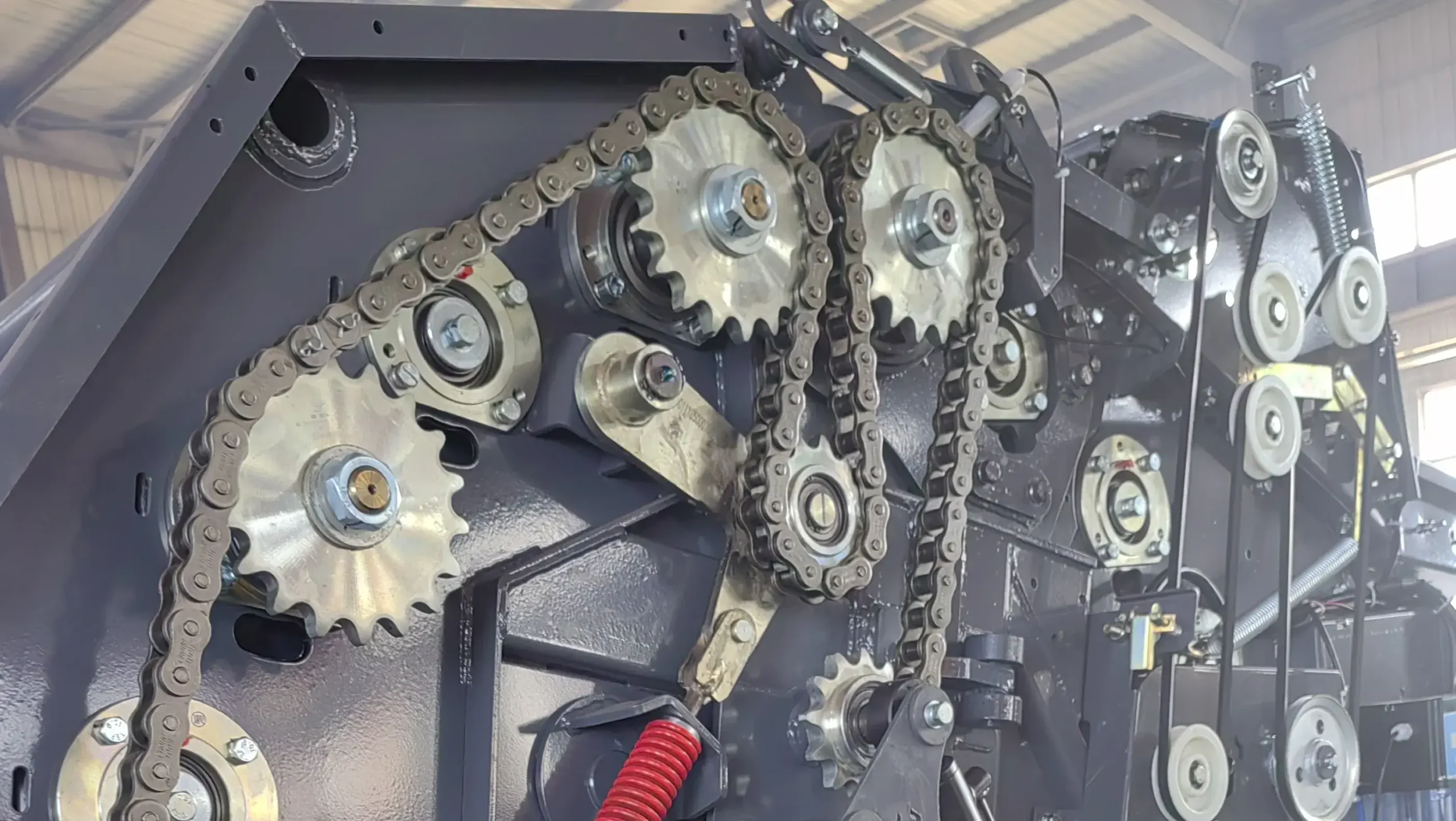
The compression drums are manufactured from seamless steel tube, ground to close tolerances and fitted with sealed rolling element bearings rated for continuous field operation. Unlike plain bushing designs, sealed bearings in this application do not require daily greasing, which reduces maintenance burden during the harvest season. The pickup tine bar assemblies are fabricated from spring steel with hardness in the 40–45 HRC range, providing the right balance between flexibility to absorb impact and stiffness to return to position quickly for clean crop flow.
Exterior body panels are pressed from galvanised sheet steel and attached to the structural frame with stainless fasteners. The tailgate hinge pins are oversized relative to load and are case-hardened, since the tailgate open/close cycle is the single most repeated mechanical action on any agricultural round baler over a season. All round baler parts exposed to crop abrasion — tongue plates, pickup guards, and bale chamber floor sections — are replaced with heat-treated wear strips so service life is extended without needing to replace entire assemblies.
6. Round Baler Applications — Where This Machine Performs Best
The purpose of a round baler is to convert loose, cut crop material into a manageable, storable unit. This EP model's compact dimensions and modest power requirement make it well-suited to a wide range of field types and farming systems. The following scenarios represent the most common round baler application use cases encountered by operators globally.
South Korean cattle and dairy farms, Australian beef operations, and Dutch equine yards all share a common need: reliable, dense hay round bales that can be stored outdoors or in open-fronted sheds for extended periods. The Φ630×700 mm bale format slots neatly into standard bale feeders designed for this size class, and the rope wrapping holds the bale together through multiple handling cycles with front-end loaders or bale spikes.
In rice-growing regions of South Korea (경기도, 전라남도) and grain belt areas of Brazil and Colombia, vast quantities of rice or wheat straw remain in the field after combine harvesting. A mini round baler like this model makes it economically viable to collect that straw for use as livestock bedding, mushroom substrate, or bio-energy feedstock. The direct-feed spring tooth design handles dry cereal straw without the bridging issues sometimes seen with belt-and-roller pickup systems.
When baling is followed immediately by round bale net wrap or plastic film application, the Φ630×700 mm bale is an ideal format for high-moisture silage destined for sheep and goat herds. The moderate bale weight — typically 100–160 kg when baled at 60–70% DM — can be moved and stacked by a compact telehandler, making this workflow practical even on farms without a large tractor fleet. The roll drum chamber ensures even fermentation through consistent density throughout the bale cross-section.
The compact 1300×1300×1350 mm overall dimensions of this round hay baler allow it to be towed through vineyard row spacings that would exclude any standard-width agricultural machine. Inter-row grass swards in vineyards and orchards require cutting and removing regularly to manage nutrient competition and fire risk. With a 25 hp tractor, this small round baler can process the cuttings into mini hay bales that are easily sold to local horse owners or used on-farm as dry matter supplement during drought.
Municipal green waste contractors and biomass energy co-operatives in the Netherlands, Germany, and South Korea increasingly use agricultural round balers to collect roadside grass cuttings and verge trimmings. The spring tooth pickup handles partially composted and variable-density material well, and the resulting bales can be transported in standard round bale trailers to processing facilities. This round baler application expands the machine's economic life beyond the traditional hay harvest season into year-round commercial use.
7. Compliance & Agricultural Machinery Regulations by Region
Operating a round baler machine on public roads or within agricultural zones is subject to national and regional machinery safety and roadworthiness standards. The following summary covers the principal regulations applicable to buyers of this small round baler in key target markets. Always consult your local agricultural authority before first use.
Agricultural machinery in South Korea is regulated under the Agricultural Mechanization Promotion Act (농업기계화 촉진법) administered by the Ministry of Agriculture, Food and Rural Affairs (농림축산식품부). Imported balers must comply with the Act's safety performance standards and may require KS (Korean Standards) conformity assessment. PTO driveline guards must meet the provisions set out in the Agricultural Machinery Safety Management Regulations. The Rural Development Administration (RDA) publishes annual machinery performance test data that Korean buyers commonly reference before purchasing a round hay baler for sale.
All agricultural machinery sold within the EU must conform to the Machinery Directive 2006/42/EC (currently transitioning to Machinery Regulation 2023/1230/EU effective January 2027). This requires a CE marking, a Declaration of Conformity, and a technical construction file. Specific standards applicable to this agricultural round baler include EN ISO 4254-1 (agricultural machinery — safety) and EN ISO 11684 (safety signs). Round baler gearbox units used in EU machines must additionally comply with the Ecodesign Regulation if they contain oil sumps above a minimum volume threshold.
Agricultural machinery in Australia operates under the Work Health and Safety (WHS) Acts in each state and territory, which impose a duty of care on machinery designers, importers, and operators. The National Standard for Agricultural Workplace Health and Safety, published by Safe Work Australia, covers PTO driveline guarding and baler operator safety specifically. Australian states also have roadworthiness standards for trailed agricultural equipment; slow-moving vehicle emblems (reflective triangles) are required for road transit in all mainland states when towing a round hay baler machine on public roads.
Brazil's National Institute of Metrology, Standardisation and Industrial Quality (INMETRO) regulates agricultural machinery certification through Resolution 488/2021, which requires conformity assessment for certain machine categories. Imported balers may be subject to Brazil's ABNT NBR standards (e.g., ABNT NBR 9460 for agricultural machinery safety). The round baler gearbox and PTO shaft must comply with ABNT NBR standards for mechanical transmission components. Importers should consult MAPA (Ministério da Agricultura, Pecuária e Abastecimento) for up-to-date registration requirements.
In Canada, agricultural machinery is addressed by provincial Occupational Health and Safety regulations. The Canadian Agricultural Safety Association (CASA) guidelines on PTO safety, guarding, and baler operator training are widely adopted. Ontario's Regulation 851 (Industrial Establishments) and Alberta's OHS Code Chapter 18 both include machinery guarding provisions relevant to balers. Federal transport regulations under the Motor Vehicle Safety Act govern road transit of trailed equipment above certain dimensions, including this round baler machine when transported between fields.
Colombia's agricultural machinery safety framework falls under the Ministry of Agriculture and Rural Development (Ministerio de Agricultura y Desarrollo Rural) and ICONTEC technical standards. ICONTEC NTC 4116 covers safety requirements for agricultural machinery, including baler equipment. Colombia participates in the Andean Community's harmonised machinery regulations, and machinery imported from non-CAN countries must demonstrate conformity with the applicable technical standards. Operators should also verify local departmental regulations in major crop-producing regions such as the Llanos Orientales and Valle del Cauca.
8. Compatible Accessories — One-Stop Supply Advantage
A complete baling system extends beyond the round baler machine itself. The drivetrain components connecting your tractor to the baler and the internal gearbox transmitting power within the machine both determine overall reliability. We supply the full drivetrain package to ensure confirmed compatibility and simplified sourcing.
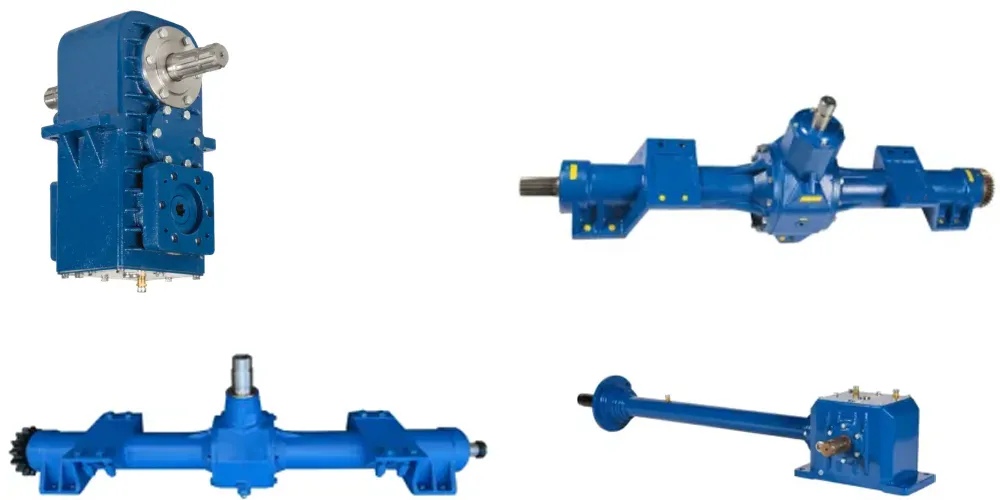
The round baler gearbox is the mechanical heart of the machine, stepping down PTO speed and distributing torque to the pickup reel shaft, drum drive, and wrapping mechanism simultaneously. Our baler gearboxes are matched to 540 rpm input and sized for the torque loads generated by the roll drum compression chamber. Heat-treated helical gears and gear case machined from GGG50 ductile iron ensure long service intervals even under continuous duty in silage applications. Replacement parts and ratio options available for multi-season service.
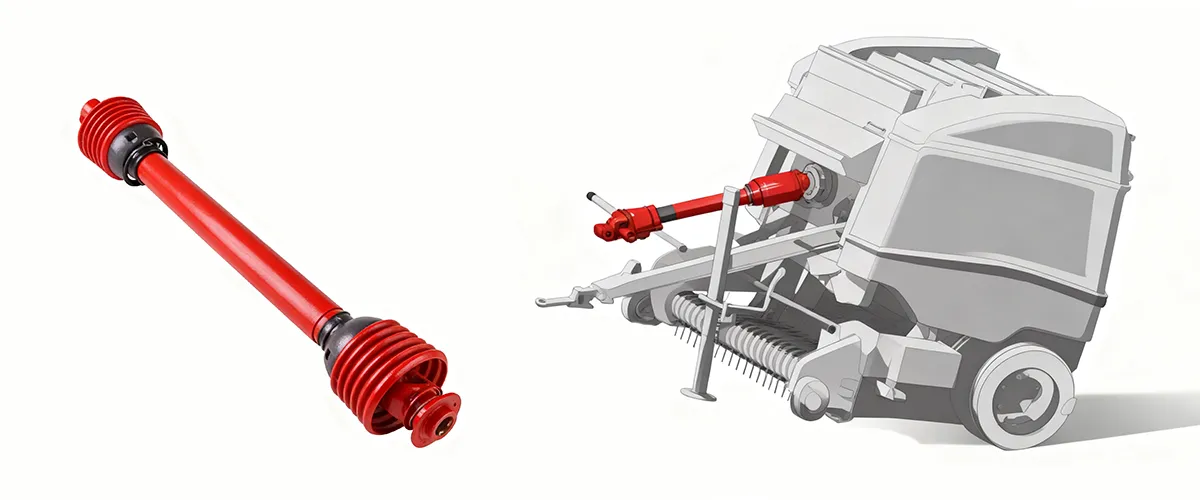
The PTO shaft transmits power from your tractor's rear PTO output to the round baler's input gearbox. A correctly specified shaft prevents vibration, reduces wear on gearbox input bearings, and incorporates overrun and shear-bolt protection to guard against sudden blockages. Our shafts are available in matched lengths for a wide range of tractor-to-baler drawbar distances, with CE-compliant PTO guards included. For a durable and compatible driveline, view our PTO shaft range — including models suited to square and round baler applications.
9. About Us
Our engineering focus has always been on machines that deliver dependable results for working farmers — not trade show concepts.
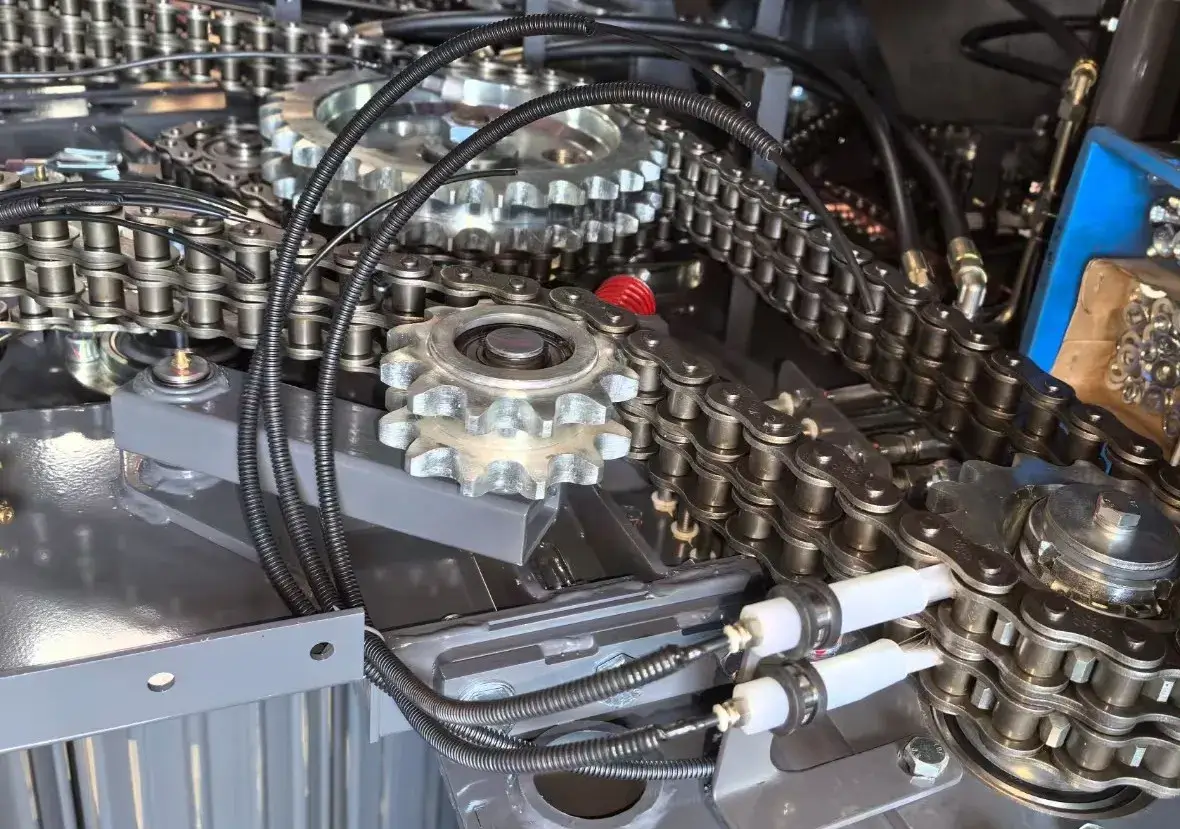
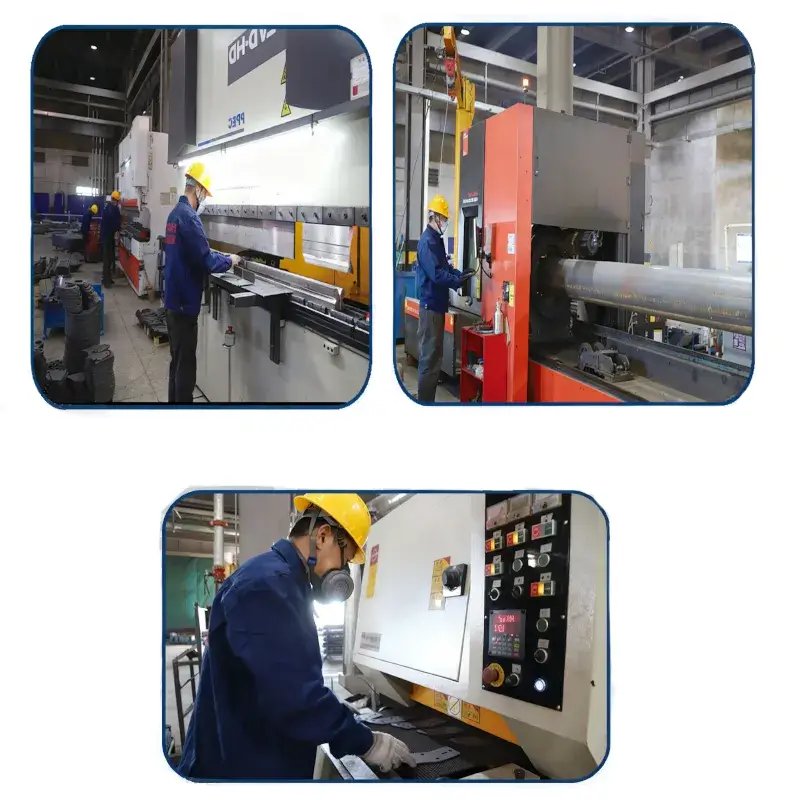
Our production facility operates an integrated quality management system aligned with ISO 9001 principles, covering incoming material inspection, in-process dimensional checks, and finished-product function testing. Every round baler machine that leaves the production line undergoes a no-load function test of the pickup, chamber, and wrapping systems before packing. We maintain a structured spare parts programme so that round baler parts — from tine bars and drum bearings to wrapping needles and gearbox seals — are available with short lead times to minimise field downtime for our customers worldwide.
WorkShop
Frequently Asked Questions
Q1. What is a round baler and how does it differ from a square baler for small Korean farms?
A round baler gathers cut crop into a cylindrical roll rather than a rectangular block. For smaller Korean farms (소규모 농가), the round bale format is often preferred because the bale can roll off the machine onto the ground without a mechanical bale chute, reducing mechanical complexity. Round bales also shed rainfall better than square bales when stored outdoors, which suits the Korean monsoon climate. Square balers remain preferable when bales need to be stacked in a confined barn.
Q2. How many HP do you need to run a round baler of this size reliably in the field?
This EP model requires a matched tractor power range of 25–50 hp. In practice, 30–35 hp is sufficient for dry grass or straw at a working speed of 3–4 km/h. If you intend to bale heavier or higher-moisture crops such as lucerne at 50–60% dry matter, using the upper end of the power range — around 45–50 hp — will maintain throughput without excessive PTO slip. South Korean compact tractors from Daedong, LS Tractor, and TYM in the 30–45 hp range pair well with this machine.
Q3. How much does a round bale of hay weigh when produced by this machine, and is that easy to handle?
How much does a round bale of hay weigh from this machine depends on crop type and moisture, but the typical range is 80–130 kg for dry grass or straw and 120–180 kg for higher-moisture silage bales. A standard tractor with a front-end loader rated at 600 kg or more will handle these bales easily. Most farms operating in the 25–50 hp tractor class already have loader equipment within this capacity range. The compact Φ630×700 mm bale size also means bales can be moved by two people if required on smaller holdings.
Q4. What is the purpose of a round baler compared to leaving cut hay loose in the field after mowing?
Loose cut hay deteriorates rapidly through rainfall leaching and microbial breakdown. The purpose of a round baler is to compress and bind that material so it can be stored for months without significant dry matter loss, transported economically on trailers, and fed to livestock in controlled quantities. A single Φ630×700 mm hay round bale produced by this machine contains the equivalent energy of roughly 12–15 conventional small square bales, occupies a fraction of the handling time, and can be fed out using a bale spike or unroller without manual labour for each feeding event.
Q5. Which crops can this small round baler handle effectively, and are there any crops it is not suited to?
This mini round baler performs well with grass hay, ryegrass, oat straw, rice straw, wheat straw, barley straw, lucerne (alfalfa), and mixed pasture species. The spring tooth pickup is well-suited to fine-stemmed and medium-stemmed crops. For very coarse-stemmed material such as maize stover or sunflower stalks, a crop chopper attachment is advisable to prevent feed channel blockages. The machine is not optimised for green maize silage at full plant height — that application requires a forage harvester and a dedicated silage baler with higher compression force.
Q6. How many square bales are in a round bale of this size, and how does that affect feeding management for a sheep flock?
How many square bales in a round bale from this machine? A Φ630×700 mm bale at typical dry grass density contains the equivalent of roughly 10–14 conventional small square bales (each weighing ~15 kg). For a sheep flock, one of these hay round bales provides approximately 4–7 days of supplementary feed for 30–40 ewes depending on the stage of production. Using a simple bale roller or unroller feeder allows gradual rationing rather than exposing the full bale at once, which reduces waste — a significant practical consideration when feeding hay nets for round bales is not an option on a budget operation.
Q7. What round baler parts typically need replacement first, and how easy is it to source spares internationally?
The parts that see the most wear on any agricultural round baler are the pickup tines, tine bar drive chain, compression drum bearings, and the rope guide and needle assembly. Under normal use, tines typically last 2–3 seasons before replacement. Drive chain should be inspected and tensioned at 50-hour intervals. We hold fast-moving round baler parts in stock and can ship air freight for urgent requirements to South Korea, Australia, the Netherlands, and Brazil. Critical spare kits — containing tines, chain links, needle guide sleeves, and gearbox seals — are available as a single order to avoid multiple sourcing runs.
Q8. When is the best time of year to purchase and commission a round baler machine for a Korean or Australian farm operation?
For Korean farms (대한민국 농가), the main rice straw baling window falls in late October to November, and ryegrass or Italian ryegrass hay baling runs from May to early June. Ordering in March for Korean delivery ensures the machine arrives before the early-season cutting. For Australian farms in temperate regions, the main hay baling window is September to December; ordering in June or July allows comfortable pre-season delivery and setup time. We can coordinate ocean freight schedules to align with your harvest calendar — contact us to confirm current lead times.
Q9. What is the difference between round bale net wrap and rope wrapping, and which should I choose for my operation in the Netherlands or Germany?
Round bale net wrap applies a plastic mesh over the outside of the bale before ejection, which maintains bale shape better during outdoor storage and allows quicker cycle times because fewer wrapping passes are needed. Rope wrapping — the standard system on this machine — uses polypropylene twine applied in a helical pattern and is significantly lower in cost per bale and easier to set up and troubleshoot in the field. For the Netherlands and Germany, where bales are typically moved into covered storage within a few days of baling, rope wrapping is entirely adequate and the lower consumable cost is a genuine economic advantage over the course of a full cutting season.
Redaktor: PXY