Round Baler Technical Guide
How Do Round Balers Handle Different
Crop Types Without Adjustment?
An in-depth technical breakdown of how modern round baler machines self-adapt across hay, straw, rice, corn stover, and more — covering action mechanisms, structural engineering, and material handling science.
1. What Is a Round Baler and Why Does Crop Adaptability Matter?
A round baler is a tractor-powered agricultural machine that collects cut or windrowed crop from the ground, compresses it into a cylindrical shape, binds it with twine or net wrap, and ejects the finished bale for later collection. Round bales are preferred over square bales in many operations because they shed rain from their curved surfaces, are easier to handle mechanically, and can be wrapped with silage film for fermented forage production.
Crop adaptability — the ability to process different plant materials without operator reconfiguration — is not a minor convenience feature. It determines whether a machine is commercially viable on a working farm. A single Korean beef cattle operation might need to bale spring-cut orchard grass, summer-cut rice straw, and fall-harvested corn stalks in the same season. Switching between dedicated machines or spending hours on adjustment each time is not realistic. Machines with well-engineered axial-flow feed systems, sensor-based density control, and interchangeable pickup heads allow operators to move between crop types with minimal lost time — sometimes with no changes at all.
The engineering behind that adaptability is what this guide unpacks.
2. Action Method: The Mechanical Sequence from Pickup to Bale Ejection
Stage 1 — Pickup and Initial Collection
The first point of contact between the machine and the crop is the pickup head, which sweeps cut material off the ground using rows of spring-loaded tines mounted on a rotating reel. The tines flex on contact with the soil surface, preventing damage on uneven terrain while maintaining consistent crop engagement. Pickup width on full-size round baler machines typically spans 2150–2400 mm, which covers standard windrow widths produced by mower-conditioners across most field types. The 9YG-2.24D series features a 2240 mm spring-tooth pickup, while the compact 9YG-1.0 model uses a narrower 1900 mm head suited to smaller field scales.
The speed differential between pickup tine rotation and forward ground speed creates a lifting and metering action that feeds crop into the machine in a relatively controlled stream rather than in uneven surges. This matters most with light, fluffy crops like early-cut grass that can easily over-feed and cause blockages in conventional systems. The design of the pickup reel directly influences how smoothly different crops — from dense, heavy straw to fine, leafy legumes — transition into the feeding zone.
Stage 2 — Axial-Flow Feed System
After the pickup, material enters the feed mechanism — and this is where modern round balers most significantly differ from older designs. The axial-flow semi-forced feed system used across the current product range eliminates the cam-and-guide-ring mechanism found in many conventional machines. In traditional systems, that cam assembly metered material flow but created several persistent problems: elevated power consumption, sensitivity to irregular material volumes, and a higher rate of crop blockages particularly with materials that have variable stem lengths (corn stover, mixed grass-legume stands, wet straws).
The axial-flow approach replaces the cam with a continuous rotary feed action that keeps crop moving through the feed zone without discrete metering pulses. The result, validated across extensive field use, is a roughly twofold increase in operational throughput compared to equivalent conventional systems, with a substantial reduction in the frequency of blockage events. This design is covered by proprietary intellectual property and represents one of the core technical differentiators of this round baler family.
For materials with very different flow characteristics — fine hay versus coarse straw — the system’s continuous-action design means the machine does not need to be reconfigured between crop types. The feed rate adjusts passively based on the resistance presented by the incoming material stream, without operator input.
Stage 3 — Baling Chamber Compression
Material moves from the feed zone into the baling chamber, where 16 or 18 press rollers (depending on model) arranged around the chamber interior rotate to continuously roll the crop inward and compress it into a cylinder. The rollers are φ222 mm in diameter on all current models, and chamber diameters vary from φ1000 mm on compact models to φ1200 mm on full-size machines. As the growing bale increases in diameter, the rollers apply progressively greater compression force, building density from the core outward.
This roller-type compression chamber handles different crop types more tolerantly than belt-type chambers because the roller gaps can accommodate significant variation in material volume and density without requiring mechanical adjustment. A chamber designed for 1300 mm diameter bales of hay will produce bales in that same size range when running straw, rice stalks, or mixed materials, with the internal roller pressure adjusting automatically to the material’s compressibility. Sensor-controlled bale density monitoring activates the binding cycle when the target density is reached, ensuring consistent finished bale weights regardless of material type.
Stage 4 — Binding and Ejection
When the sensor confirms target bale density, the net wrap or twine system activates automatically. Net wrap is applied in 1–2 revolutions across the full bale width, completing the binding cycle in under 10 seconds. The rear gate opens hydraulically, and the bale rolls out of the chamber onto the field surface. On models equipped with an H-type ferrule hydraulic connection — such as the 9YG-2.24D series — the hydraulic pressure capacity of the gate system is increased, allowing faster and more consistent gate operation even under heavy bale weights. A rear-mounted buffer cylinder prevents damage from high-force gate closure on uneven terrain.
3. Structural Engineering: How the Machine Is Built to Handle Crop Variation
Frame and Hitch Architecture
The chassis of a round baler must absorb continuous asymmetric loading as the baling chamber fills unevenly — a reality when processing irregular windrows or transitioning between light and dense materials. Full-size machines in the 9YG-2.24D family are built around a heavy welded steel frame with a structural mass of 3,922–4,570 kg depending on variant. This substantial base mass is intentional: it stabilizes the machine during high-speed baling at up to 35 km/h field speeds and prevents the lateral oscillation that can disrupt net wrap application on lighter machines.
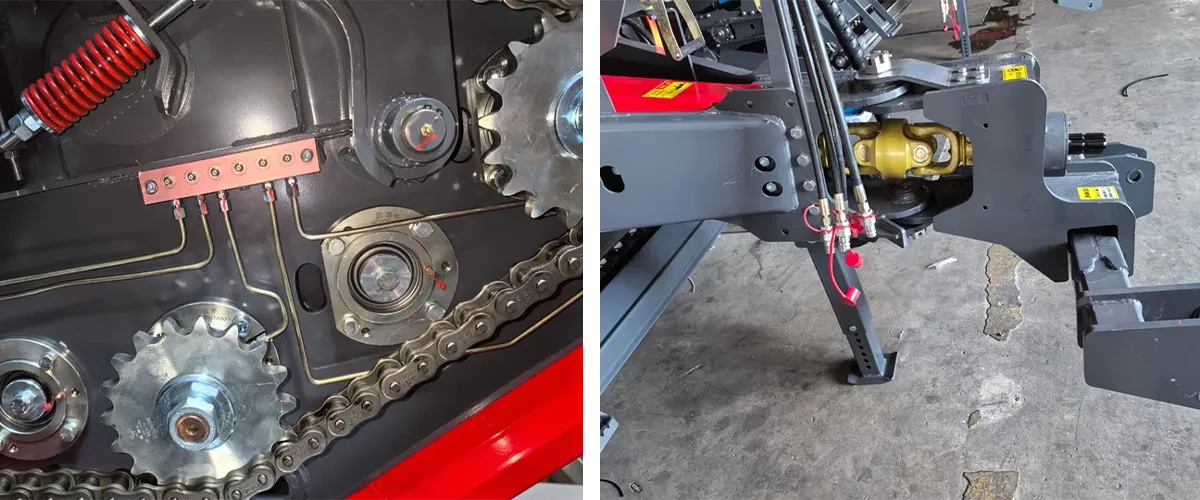
The hitch system is equally important. The dual cross-joint drive shaft design used on S9000 series machines introduces a torque-limiting safety shaft that protects the drivetrain components during sudden material blockages — a critical feature when operating with abrasive or high-density materials like mature corn stover or dense legume stems. The dual gearbox design allows the baler to rotate 90 degrees left or right without disconnecting PTO power, enabling headland turns on small fields without cycle interruption.
Chain and Roller Assembly Design
The press roller chain systems differ meaningfully between model variants. The S9000 classic uses dual-side 20A heavy-duty chains in the rear baling chamber — a specification that increases compression pressure and allows the machine to produce consistently high-density bales (500–1,000 jin / 250–500 kg per bale) across diverse crop types. The dual-sprocket chain drive design also distributes drive load more evenly than single-side configurations, reducing wear rates on high-throughput operations. For the 9YG-1.0C compact model, bilateral 16A reinforced chains achieve a similar density range (200–400 jin / 100–200 kg per bale) appropriate for its smaller 1000 mm chamber size.
Interchangeable Pickup Head System
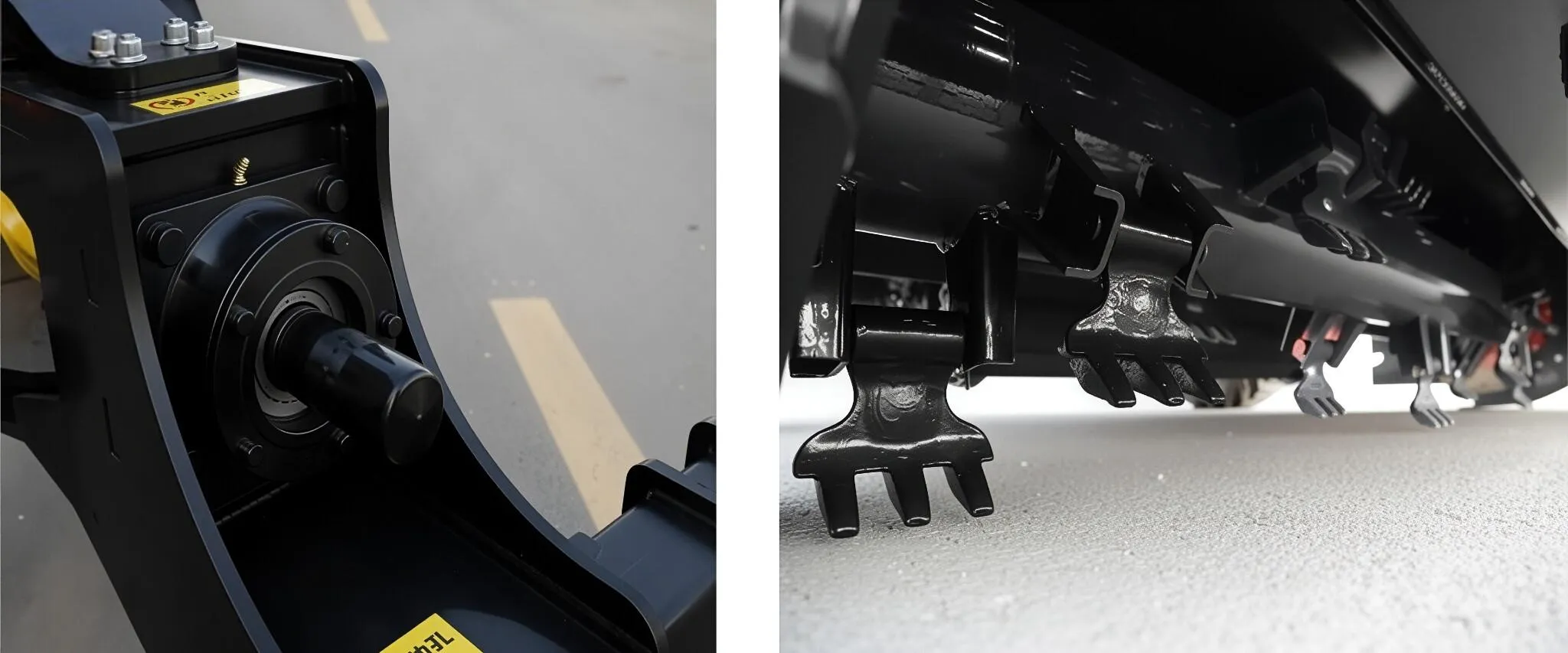
One of the most practically significant structural features for multi-crop operations is the interchangeable pickup design on certain models. The 9YG-1.25 and 9YG-1.0C support field replacement of the standard spring-tooth pickup reel with a hammer-claw (锤爪式) collector head specifically designed for standing corn stalks. The hammer-claw system processes upright stalks directly without prior windrowing — the 18 hammer claws on the 9YG-1.25 variant and 20 on the 9YG-1.0C shred and collect material simultaneously, eliminating one entire field operation from the corn stover harvest workflow. This interchangeability is achieved through a standardized mounting interface that operators can swap in the field without specialized tools.
4. Crop Handling Compatibility by Model
| Model | Hay / Grass | Straw / Rice | Corn Stover | Soybean / Mixed | Power Required |
|---|---|---|---|---|---|
| 9YG-2.24D S9000 | Excellent | Excellent | Dobry | Dobry | 55–100 kW |
| 9YG-2.24D Classic | Excellent | Excellent | Dobry | Dobry | 55–100 kW |
| 9YG-2.24D Transcend | Excellent | Excellent | Dobry | Dobry | 55–100 kW |
| 9YG-1.25 (Double) | Excellent | Excellent | Excellent (hammer-claw) | Very Good | ≥88.2 kW (120 hp) |
| 9YG-1.25A | Excellent | Very Good | Dobry | Dobry | ≥75 kW |
| 9YG-1.0 | Very Good | Very Good | Moderate | Dobry | 48–80 kW |
| 9YG-1.0C | Dobry | Very Good | Excellent (hammer-claw) | Dobry | ≥69.8 kW (95 hp) |
5. Material Handling Science: How Different Crops Behave Inside the Baler
Hay and Forage Grasses
Timothy, orchardgrass, alfalfa, and ryegrass are among the most forgiving crops for round baler operation. When properly wilted to 15–25% moisture before baling, these materials compress predictably under roller pressure, build consistent bale density from center to surface, and accept net wrap cleanly without excessive surface irregularity. The primary challenges with fine-stemmed forage grasses are: (1) leaf loss during pickup, which reduces dry matter yield; and (2) over-feeding at high windrow volumes, which can overwhelm the feed zone before the chamber is ready. The axial-flow feed design handles the second issue particularly well, moderating intake without creating backpressure that strips leaves from delicate legume stems. For Korean producers targeting quality hay for dairy or beef cattle, these crops are where the technology delivers its most consistent results.
Straw: Wheat, Rice, and Barley
Straw presents very different physical characteristics compared to forage grass. It is brittle, low in density, and tends to form loose, irregular mats in the windrow. Rice straw — the dominant straw type in Korea’s major agricultural regions — is particularly challenging because it compresses to a much lower bulk density than wheat straw, meaning more material must pass through the machine per bale. The 9YG-2.24D’s 2240 mm pickup width and 18 press rollers provide adequate capacity to build dense, stable rice straw bales at the upper end of the 100–200 kg/m³ density range, particularly with the high-compression 20A chain variant.
A common operational issue with straw baling is the tendency of dry, smooth stems (especially rice) to slip across the pickup tines rather than being lifted cleanly. The spring-tooth design — where tines flex slightly under load — helps maintain positive engagement with smooth-surface straws without causing tine breakage. Net wrap is strongly recommended over twine for rice straw bales stored outdoors, as the enclosing mesh improves shape retention of what is inherently a low-cohesion material.
Corn Stover: Standing Stalks and Windrowed Residue
Corn stover represents one of the most technically demanding round baler applications. Standing or freshly cut stalks are coarse, variable in moisture, and include both fine leaf material and thick, woody internodes that can resist compression. The standard spring-tooth pickup can process windrowed corn stover satisfactorily, but standing stalk collection — a workflow increasingly important for Korean and East Asian operators working within tight harvesting windows — requires the specialized hammer-claw (锤爪式) pickup head. On the 9YG-1.25 and 9YG-1.0C models, this head replaces the spring-tooth assembly without additional tools, processes upright stalks directly, and feeds shredded material into the baling chamber in a more uniform stream than unprocessed stalks would produce. The 9YG-1.0C variant, specifically designed around this application, uses a 2400 mm hammer-claw head with 20 claws.
Soybean and Mixed Legume Materials
Soybeans and mixed legume-grass stands are particularly sensitive to leaf damage during both pickup and feed stages. Legume leaves shatter at moisture levels below 15–20%, making timing critical for quality preservation. The gentle tine action of the spring-tooth pickup limits leaf stripping at the ground level, but the feed zone presents a secondary risk point. The cam-free axial-flow feed design again plays a critical role here — the absence of discrete mechanical metering pulses means legume material flows through the feed zone more continuously and with less turbulence than in conventional systems, reducing the breakage and leaf loss that would otherwise degrade bale nutritional quality. For high-value soybean straw intended for TMR (total mixed ration) feeding, this feeding geometry difference translates directly into measurable feed quality improvements.
6. Sensor-Based Bale Density Management Across Crop Types
One of the most significant engineering advances in modern round balers is the integration of sensor-controlled density management that replaces the purely mechanical density-setting systems found on older machines. In current-generation round baler machines, pressure sensors or displacement sensors mounted on the press roller assembly continuously monitor the resistance applied to the growing bale. When this resistance reaches the operator-set threshold — which corresponds to a target bale density — the binding system is triggered automatically.
The practical significance of this for multi-crop operations is considerable. A machine set for, say, 150 kg/m³ bale density will reach that density faster with dense, compact alfalfa than with light, fluffy straw — but it will trigger the binding system at the same measured density regardless. The bale diameter at trigger point will be nearly identical between crop types, which means consistent bale handling logistics (bale weight per load, stacker capacity planning, transport weight per truck) even when the crop species changes during the season. Without sensor control, a machine set for one crop type will produce over-dense or under-dense bales when the material changes, complicating storage and handling planning.
The 100–200 kg/m³ density range achievable across the 9YG-2.24D series represents the practical envelope within which most commercial forage and straw crops can be baled at quality. At the lower end, bales are stable and handleable but lighter per unit. At the upper end — achievable on high-density materials like mature wheat straw with the 20A chain configuration — bale weights reach the 500–1,000 jin (250–500 kg) range that represents optimal transport economics for Korean agricultural logistics.
7. Round Baler Range — Built for Multi-Crop Versatility
All models feature axial-flow feed systems, sensor density control, and automatic net wrap.
9YG-2.24D S9000
55–100 kW
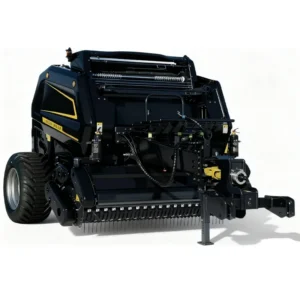
9YG-2.24D Classic
55–100 kW
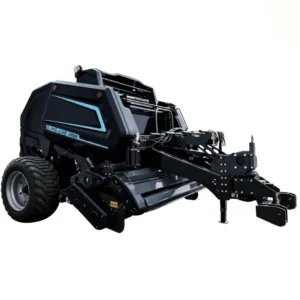
9YG-2.24D Transcend
55–100 kW
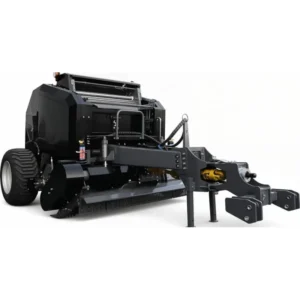
9YG-1.25 (Double)
≥88.2 kW
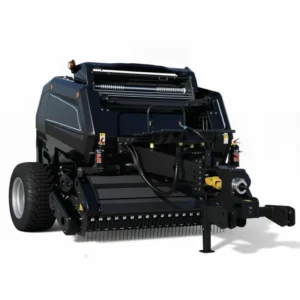
9YG-1.25A
≥75 kW
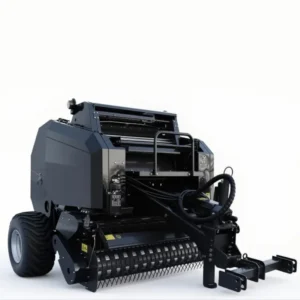
9YG-1.0
48–80 kW
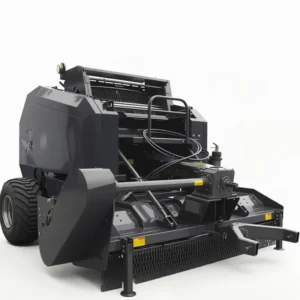
9YG-1.0C
≥69.8 kW
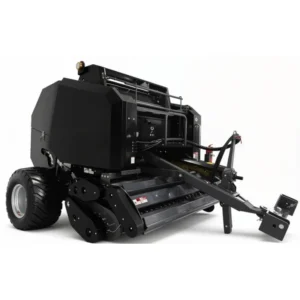
9YG-2.24D
55–100 kW
8. Round Baler Gearbox Design and International Regulatory Standards
Gearbox Engineering and Crop Handling Performance
The round baler gearbox is more than just a power transmission component — its design directly influences how well the machine can sustain continuous operation across different crop densities and resistances. A gearbox that lacks sufficient torque margin will bog down when processing dense, dry corn stover or high-moisture silage grass, causing feed zone jams that interrupt the baling cycle. The reinforced heavy-duty gearbox on the 9YG-2.24D S9000 classic variant provides increased transmission torque capacity, specifically to handle the higher rotational resistance encountered when compressing coarse or mixed-density materials. On the Transcend and S9000 super-advanced variants, the dual cross-joint drive shaft system introduces a safety torque shaft that protects both the gearbox and drivetrain components from overload spikes — the type of sudden resistance surge that occurs when a dense clump of material enters the feed zone.
The dual-articulation gearbox design that allows 90-degree rotation left and right on the S9000 series also enables continuous PTO engagement during headland turns. In practical multi-crop field operations, this eliminates the common problem of baling cycle interruptions at field ends — a particularly significant efficiency gain when baling short or irregularly shaped fields common in Korean mountainous agricultural regions.
South Korea: Agricultural Machinery Certification and Safety Standards
In South Korea, round balers and associated gearbox components intended for commercial sale must meet safety and performance standards administered by the Rural Development Administration (농촌진흥청, RDA). Machines must pass the agricultural machinery inspection process to qualify for national and provincial subsidy programs under the Agricultural Mechanization Promotion Act (농업기계화 촉진법). Gearbox safety requirements, specifically relating to PTO driveshaft guards and torque overload protection, are addressed under Korean Industrial Safety and Health standards and the Act on the Safety of Agricultural Machinery. For operators purchasing imported round baler machines, confirmation of applicable Korean safety certification and subsidy registration should be obtained from the supplier before purchase.
European Union: Machinery Safety Directive and PTO Standards
European Union operators work under Machinery Directive 2006/42/EC, which mandates CE marking for all agricultural machinery including round balers. This directive specifically addresses PTO driveshaft guarding requirements, operator exposure zones, and emergency stop functionality. The related standard EN 703 covers specific safety requirements for agricultural harvesting machinery. Gearbox-related PTO shaft guards must comply with ISO 4254-1 (general safety for agricultural machinery) and, for round balers specifically, elements of ISO 8210. These standards require that driveshaft guard components remain in place under field operating conditions and that overload protection devices (shear bolts or friction clutches) be provided at defined intervals in the driveline.
United States: ASABE Standards for Round Baler Gearboxes
In the United States, the American Society of Agricultural and Biological Engineers (ASABE) publishes standards that govern round baler safety and performance, including ASAE S365 (safety for agricultural equipment) and ASAE EP282 (agricultural tractor PTO applications). While these standards are not federal law, they form the basis for liability determinations in insurance and legal contexts, and most commercial round baler manufacturers — including those supplying global markets — design to these specifications as a baseline. PTO overload protection and driveshaft guarding requirements under ASABE standards are broadly consistent with EU requirements, reflecting the convergent regulatory influence of global trade.
Russia and CIS: GOST Certification
Round balers sold into Russian and CIS markets must carry GOST R certification covering performance parameters including bale density, field loss rates, and operational safety. GOST standards for forage harvesting equipment (GOST 28510 series) specify minimum baling density thresholds and permissible field loss percentages for standard crops. For gearbox components specifically, Russian machine-building standards (GOST 2.103) and agricultural equipment safety standards impose requirements on lubrication systems, gear material specifications, and rated torque labeling. Operators in Mongolia — an emerging market for round baler equipment — reference Russian GOST standards alongside locally issued agricultural machinery registration requirements.
9. Practical Tips for Multi-Crop Round Baler Operation
Windrow Preparation Matters
Even with a highly adaptable feed system, consistent windrow formation significantly improves throughput and bale uniformity. Using a matching tedder-rake combination before baling — such as the 9LZY-9.0 or 9LZ-6.0 finger-wheel rakes — produces windrows with consistent width and density that the baler can process at maximum efficiency regardless of crop type.
Moisture Content Timing
For dry hay, target 15–22% moisture at baling. Below 15%, leaf shatter losses increase significantly on legumes. Above 25%, mold risk during storage rises. For straw, lower moisture (below 18%) is generally acceptable. The baler’s sensor-based density system works within all of these ranges, but storage outcomes depend on hitting the right window for each specific crop.
Net Wrap vs. Twine by Crop
Use net wrap as the default for outdoor-stored bales of any crop type. Twine is appropriate for sheltered storage operations with rapid turnover. For rice straw specifically, 2–2.5 net wrap revolutions improve bale surface integrity compared to the 1.5-revolution setting that is adequate for denser hay crops. Check net roll width matches the baler’s chamber width before switching crops.
Ground Speed Management
The 5–35 km/h operational speed range of the full-size 9YG-2.24D models provides significant flexibility, but optimal baling speed for different crops varies. Heavy, high-volume windrows (second-cut alfalfa, dense straw) call for speeds in the 6–10 km/h range to avoid over-feeding. Lighter first-cut grass or thin straw windrows can be processed at 12–18 km/h without compromising bale quality or feeding consistency.
Frequently Asked Questions
Redaktor: PXY