Alfalfa / Hay Baling — Practical Field Guide
A structured technical guide covering pickup unit mechanics, forward speed management, tine geometry, chamber design considerations, and dew-point timing — everything that governs how much leaf material reaches the bale versus the ground on each pass of your round baler.
The Leaf Loss Problem: Why It Costs More Than It Looks
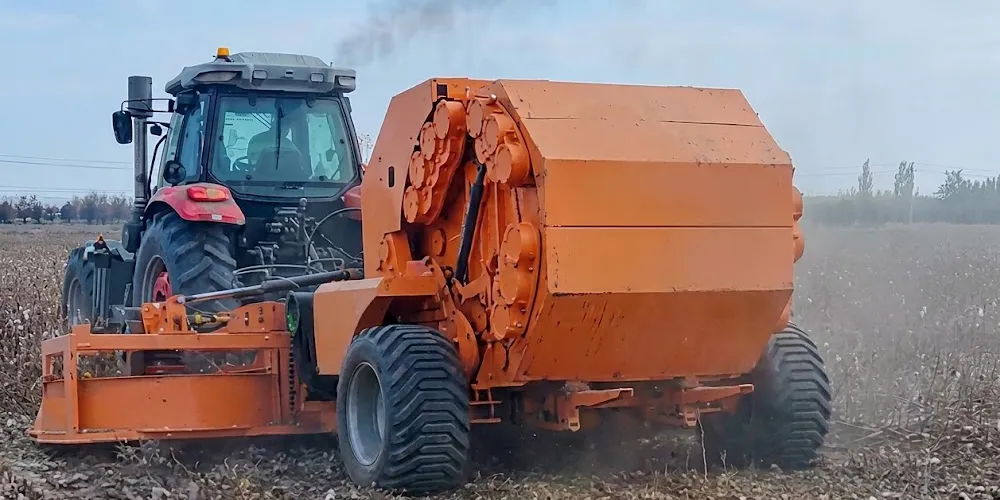
Anyone who has watched a round baler machine moving through a windrow of first-cut alfalfa knows the discomfort of seeing a fine dust trail of leaf fragments settling back onto the stubble. Those fragments are not merely cosmetic waste — they represent concentrated crude protein, digestible energy, and vitamin fractions that are the primary reason alfalfa commands a premium over grass hays in livestock and dairy rations globally. In Korean Hanwoo beef and Holstein dairy operations, where alfalfa is imported or domestically grown for precision ration formulation, a 5–10% leaf loss at baling translates directly into reduced total digestible nutrients per tonne purchased, negating a portion of the cost advantage that round baling offers over small square baling.
The mechanics behind leaf shatter are well understood agronomically, yet they remain underappreciated in round baler selection and operating decisions. Alfalfa leaves are attached to their stems by petiolules — short, slender stalks that become fragile when moisture content drops below approximately 40%. At this point, mechanical impact from a pickup tine moving through the windrow at excessive speed, or the turbulence created by a poorly designed pickup guard, is sufficient to detach and shatter leaf lamina. The resulting particle size — typically under 2 mm — is too small to be reliably captured by the pickup assembly and is instead blown backward or downward by the airflow generated by the rotating tine bars. Understanding each point in this mechanical sequence is the starting point for meaningful leaf retention improvement.
Moisture Window: When to Start the Round Baler for Maximum Leaf Retention
No pickup design improvement fully compensates for baling at the wrong moisture. The biochemical reason is straightforward: alfalfa cell walls retain structural flexibility when water content remains above 40–50%, meaning the petiolule flexes rather than snaps under tine impact. This is why experienced alfalfa producers in regions with reliable dew — including parts of South Korea’s mountain-adjacent forage zones — deliberately schedule baling to begin in the early morning while the windrow retains overnight dew absorption, even if this means operating at slightly elevated moisture levels that require additional curing time in the bale itself.
The practical target moisture range for round baling alfalfa with minimum leaf loss is 18–25% on a wet-weight basis. Below 15%, the leaves become extremely brittle and the leaf:stem shatter ratio increases dramatically with any pickup speed above 6 km/h. Above 30%, fermentation risk in tightly wrapped bales rises sharply unless inoculant treatment is applied, and bale density also suffers as moisture pockets resist compression. The 18–25% window represents the intersection of acceptable storage risk, adequate leaf flexibility, and sufficient stem curing to prevent excessive heating in the bale core. On-farm moisture monitoring — either through hand-held NIR sensors or the grab-twist test — is a non-negotiable prerequisite for consistent, low-loss alfalfa baling with any round baler.
Timing also interacts with cut stage. Second-cut alfalfa harvested at early bud stage typically dries more uniformly than first-cut material because the stem:leaf ratio is lower and air circulation through the swath is better. In Korean growing conditions, where humid summer weather can compress drying windows to 36–48 hours between cuts, producers who use a mower-conditioner that both cuts and flattens the stem node between rollers at cut time will achieve faster, more even drying — reducing the baling window pressure and allowing pickup speed to be kept within the leaf-retention range more reliably.
Manufacturing Structure: Pickup Unit Design and Its Effect on Leaf Loss
Tine Geometry and Material System
The pickup assembly on a round baler machine is the first contact point between the machine and the windrow, and its design determines the initial leaf disturbance event. Tines are typically manufactured from spring steel wire formed into a curved profile — the curvature is critical because it governs the angle at which the tip contacts the windrow material and the velocity profile of the tip as it lifts the crop upward into the feeder throat. A tine with an aggressive curvature concentrates impact energy at a narrow point on the windrow surface, which is efficient for heavy, dense straw but damaging for the fragile leaf-stem junctions in alfalfa. By contrast, a more gently curved spring tine with a wider tip spreads the impact force over a larger contact area, reducing peak stress at individual petiolule attachment points.
Tine spacing — the distance between tines on the same bar, and between bars on the reel — affects how many impacts each unit of windrow material receives as it is lifted into the throat. Narrower spacing increases the total number of impacts per kilogram of material and therefore the cumulative risk of leaf detachment. For dedicated alfalfa round baling, configurations using wider tine spacing relative to grass hay specifications are worth specifying when ordering a round baler from a manufacturer who offers pickup customisation. The spring tension of each tine also matters: overtensioned tines recover too quickly after deflection and apply a secondary impact as they snap back, while correctly tensioned tines absorb the deflection energy and return to position gradually enough to avoid secondary crop disturbance.
Guard Design and Windrow Airflow
Pickup guards — the fixed metal fingers that alternate between the rotating tine bars to strip and guide crop from the tines into the feeder throat — create localised airflow disturbance as the tine bars rotate past them. In poorly designed or worn guard configurations, this airflow becomes turbulent enough to lift dry alfalfa leaf fragments upward and backward rather than forward into the bale chamber. Well-engineered guards are profiled to minimise cross-sectional area at the point of greatest tine velocity and are positioned to channel the crop flow smoothly into a confined transition zone before it enters the baler’s intake rollers or auger system. Regular guard inspection and replacement when worn is as important as tine maintenance — bent or corroded guards alter airflow patterns in ways that are difficult to diagnose without observing the machine operating at normal forward speed in actual windrow conditions.
Camless vs Cam-Driven Pickup Systems
Traditional pickup reels use a cam mechanism to keep tine tips pointed consistently downward through the lower arc of travel — ensuring effective windrow penetration — then rotate the tines to a feathered position as the bar passes over the guard strip, releasing the crop. Camless designs achieve the same result through mechanical geometry rather than a separate cam track, eliminating a wear point and reducing vibration at higher forward speeds. For alfalfa operations, the smoother rotational profile of a camless pickup produces more consistent tine tip velocity across the full width of the working swath, reducing the variation in impact energy that produces uneven leaf loss — more loss from the windrow edges where tine tip speed is effectively higher relative to crop approach velocity. Machines in the EP round baler range adopt camless or low-wear cam configurations suited to high-volume forage harvesting, a design choice that becomes particularly relevant when operating in dry alfalfa conditions where every reduction in mechanical impact translates to retained leaf matter.
Forward Speed Management: The Single Most Controllable Variable
Of all the factors governing alfalfa leaf loss during baling, tractor forward speed — and therefore the relative velocity of pickup tine tips against the windrow — is the one most immediately controllable by the operator. At a given PTO speed (typically 540 RPM), the pickup reel rotates at a fixed rate. As forward speed increases, the ratio of tine tip speed to forward speed decreases, meaning each tine tip is effectively striking the windrow more aggressively rather than lifting it smoothly from below. At 8–10 km/h, a typical pickup reel running at 540 RPM operates near its optimal tine-to-ground-speed ratio, which produces a smooth rolling action in the windrow. At 12–14 km/h, the same reel begins to beat the windrow rather than lift it, and the incidence of leaf shatter increases dramatically in the dry conditions where alfalfa is best baled.
The standard field recommendation for minimising alfalfa leaf loss during round baling is to maintain forward speed between 5 and 8 km/h when windrow moisture is below 20%. At moisture levels of 20–25%, speed can be extended to 10 km/h without significant additional leaf loss, provided the pickup design is appropriate. Above 25% moisture, speed limitations shift from leaf-loss concern to bale density management — faster forward speeds in wet conditions produce lighter, less dense bales with higher risk of fermentation hot spots at the bale core. These speed targets should be treated as upper limits rather than optimal targets; slightly slower speeds in critical conditions will consistently outperform threshold speed operation in terms of leaf retention.
| Alfalfa Moisture at Baling | Recommended Max Forward Speed | Estimated Leaf Loss Risk | Primary Concern at This Moisture |
|---|---|---|---|
| Below 15% | 4–5 km/h | Very High | Extreme leaf brittleness; even slow pickup damages petiolules |
| 15–20% | 5–7 km/h | Moderate–High | Leaf impact loss; best to wait for overnight dew |
| 18–25% (target) | 6–10 km/h | Niski | Optimal window; leaves retain flexibility |
| 25–30% | Up to 12 km/h | Niski | Fermentation risk in bale; consider inoculant |
| Above 30% | Delay baling | Minimal | Bale density loss; heating risk; spoilage under net wrap |
Material System: Bale Chamber Design for Alfalfa Leaf Retention
Roller-Type vs Belt-Type Chambers in Alfalfa Applications
Once alfalfa material enters the bale chamber through the intake throat, the forming process itself introduces a second leaf-loss opportunity. In belt-type variable-chamber balers, the moving rubber belts create a tumbling, rotating bale core. The surface friction between the crop material and the belts generates the centripetal force that builds the bale. In dry alfalfa conditions, this surface friction can also abrade leaf material from the bale surface during the final compression phase before binding, particularly when belt tension is set high to maximise bale density. Periodic belt inspection for surface wear and correct tension calibration is important for alfalfa operations specifically because worn belts with reduced friction may compensate by requiring faster intake to maintain bale formation speed — which in practice means the operator increases forward speed beyond the optimal leaf-retention range.
Roller-type fixed-chamber balers use a set of hardened steel rollers — typically 16 to 18 in the chamber — that rotate to form and compress the bale. The roller surfaces interact with the incoming crop differently from belts: rather than continuous surface friction across the whole bale face, rollers apply intermittent, localised compression impulses as the bale rotates within the cage. For alfalfa, this can be advantageous in that the leaf material is less exposed to prolonged abrasive surface contact during bale formation. Roller chambers also handle high-moisture silage materials well, which is relevant for Korean producers who may use the same machine across different crops and seasons. The trade-off is that roller chambers are less forgiving of windrow width variation — material feed must be relatively even across the full working width to prevent bale shape irregularities that complicate net wrap application.
Intake Auger and Rotor Configurations
Between the pickup unit and the main bale chamber, most modern round balers incorporate an intermediate crop transfer component — either a pair of intake rollers, an auger cross-conveyor, or a combination of an auger and tine roller. The purpose of this system is to meter crop flow into the chamber at a consistent rate and distribute it evenly across the full working width. For alfalfa, the design of this transition zone has direct leaf-retention implications: aggressive auger speeds or tine roller configurations with high surface velocity can fragment dry leaf material before it even enters the chamber, with the fragments subsequently falling through gaps in the intake structure back onto the field.
The 9YG series round balers use a composite intake approach combining auger, tine roller, and drum elements that operate at coordinated speeds to deliver even distribution without excessive crop agitation. For alfalfa baling, the critical parameter is the ratio between intake auger tip speed and forward crop travel velocity — maintaining this ratio within a range that produces a smooth, consistent curtain of material entering the chamber rather than a pulsed, turbulent flow. Producers who have experienced periodic surging at the intake — where the baler periodically clogs and then releases a large slug of material — will recognise this as a symptom of mismatched auger-to-forward-speed ratios, and it is in precisely these surge events that the highest concentrations of leaf loss occur as the sudden slug of material creates local turbulence within the transition zone.
Featured Round Baler for Alfalfa and High-Value Hay Operations
Recommended for Alfalfa & Premium Hay
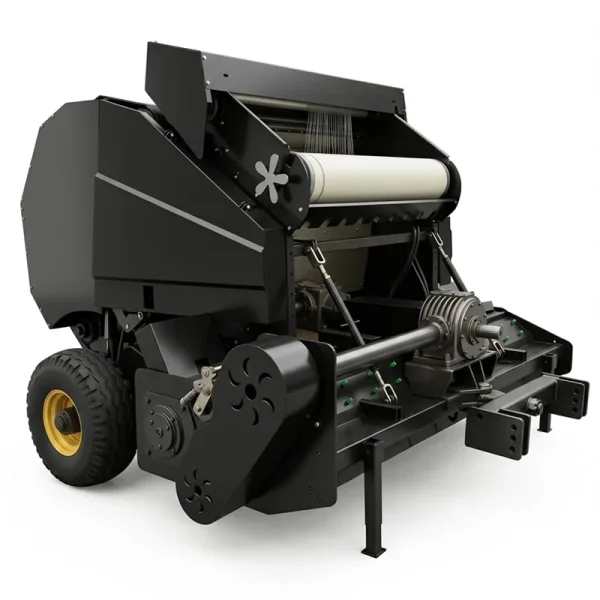
EP Round Baler — 1000 mm Compression (2950×2750×2050 mm)
Designed for medium-to-large forage operations, this round baler machine delivers a 1000 mm bale compression diameter with an overall footprint of 2950×2750×2050 mm, making it compatible with a wide range of mid-to-high HP tractors. The chamber configuration is suited to the demanding feed requirements of alfalfa baling — consistent compression across varying windrow densities, smooth intake transitions that reduce crop agitation at the vulnerable transfer zone, and a wrapping system fast enough to maintain throughput without requiring forward speed increases that compromise leaf retention. For Korean dairy and beef operations where alfalfa bale quality directly affects animal performance metrics, this machine offers a production-grade solution with one-stop supply support across the baler, drive shaft, and auxiliary component system.
Windrow Preparation: How Swath Shape and Density Affect Pickup Performance
Before the round baler ever enters a field, decisions made at mowing and raking have already determined a portion of the achievable leaf retention. Windrow shape — specifically the height-to-width ratio of the swath that the pickup must process — directly affects how deeply pickup tines must penetrate the windrow to collect the full crop without leaving a trail of un-picked material. A tall, narrow windrow requires the pickup to dig more aggressively to reach the bottom of the swath, increasing the probability of impact at the base of the leaf-bearing stems. A wide, flat windrow presents more material to the outer tines — which are moving at the highest effective tip speed relative to the centre tines — and risks exposing fragile leaf material to the most abusive portion of the pickup’s rotational velocity profile.
The agronomic consensus for alfalfa intended for round baling favours a moderately fluffy, medium-width windrow that presents consistent density across the full pickup width without requiring the tines to penetrate more than 60–70% of the windrow’s maximum height. In practice, this means avoiding very thin swaths left by raking multiple passes into very narrow rows — these force the pickup to work at high penetration depth while also creating gaps where tines reach through the windrow and contact the bare stubble below, an impact event that generates a significant secondary cloud of leaf fragments from the disturbed lower layer of the swath.
Tedding — deliberately spreading the cut swath to accelerate surface drying — should be avoided after 20% moisture has been reached in a second or third cut alfalfa crop. At this moisture level, tedding creates exactly the conditions that cause maximum leaf shatter: mechanical disturbance of dry leaf material from multiple directions simultaneously. Tedding remains useful for first-cut, heavy alfalfa crops harvested in cool or cloudy conditions where the dense, heavy swath would otherwise dry too slowly from the centre — but the timing of tedding is as important as the decision to ted at all, and any tedding pass done after the crop has reached 25% moisture is more likely to cost leaf material than gain drying speed.
Regulatory and Industry Standards Relevant to Alfalfa Baling Equipment
Agricultural machinery used for hay and forage baling operates within a framework of national and international safety, environmental, and quality standards that influence both equipment design and operational obligations for the producer. Understanding the applicable regulatory context helps farms evaluate round baler purchases from a compliance standpoint as well as a performance standpoint.
South Korea
The Agricultural Mechanisation Promotion Act (농업기계화 촉진법) governs the testing, certification, and subsidy eligibility of agricultural machinery in South Korea. Round balers and associated hay harvesting equipment must pass Rural Development Administration (RDA) performance evaluations for PTO-driven machinery before they can be registered under the government’s agricultural machinery subsidy programme (농기계 구입지원). Korean producers who procure a round baler through an internationally certified manufacturer and register it through approved channels can access subsidy support that substantially reduces the net equipment cost. The Act also mandates that machinery meet minimum safety standards for operator protection around rotating PTO shafts and moving intake components, making proper guarding of pickup assemblies a legal requirement rather than merely a safety best practice.
European Union
In EU member states, round balers fall under the Machinery Directive 2006/42/EC (currently undergoing revision as the Machinery Regulation EU 2023/1230, applicable from 2027), which requires CE marking and a Declaration of Conformity before commercial sale. Specific requirements relevant to hay baler design include guarding standards for rotating shafts, emergency stop provisions, and clear marking of maximum PTO input speeds. EU regulations on agricultural plastic waste — including bale net wrap and silage film — under the Packaging and Packaging Waste Regulation create additional obligations for farms using wrapped bales, with material collection and recycling compliance increasingly required through extended producer responsibility schemes in Germany, France, the Netherlands, and Denmark.
Australia
Australian Standards AS 4024 (Safety of Machinery) and the associated Model Work Health and Safety (WHS) laws across all states require that PTO-driven agricultural machinery including round balers be fitted with appropriate shaft guarding and that operators receive documented safety training before use. In Western Australia and South Australia — the states with the highest alfalfa production acreage — SafeWork SA and WorkSafe WA have issued specific guidance on baler operation near irrigation infrastructure, requiring minimum clearances that influence round baler machine selection, particularly working width.
United States
ASABE Standard S358.3 establishes test protocols for agricultural round baler performance evaluation in the United States, covering bale density, binding reliability, PTO power requirements, and field capacity. OSHA 29 CFR 1928 (Agriculture) sets federal safety standards for PTO-driven equipment, including mandatory shielding of drive shafts and rotating pickup assemblies. Many US states with significant alfalfa production — California, Idaho, Montana, Nevada, and Arizona — also impose regulations on dust suppression during field operations, which intersects with hay baling in that excessive forward speed creating leaf dust during pickup operations can trigger compliance obligations under state air quality regulations, particularly in drought years when windrow material is extremely dry.
Field Operating Adjustments That Reduce Alfalfa Leaf Loss
Most round baler machine manufacturers specify a nominal PTO operating speed of 540 RPM for standard conditions. In dry alfalfa baling, operating at 520–530 RPM — within the standard range but at the lower end — reduces pickup reel tip velocity by 3–4%, which translates to measurable leaf retention improvement at forward speeds in the 6–8 km/h range. This minor reduction does not meaningfully affect bale formation rate or binding quality but can prevent the “tapping” impact pattern that dry tine tips create when approaching the nominal rotation rate in very brittle crop conditions.
The pickup assembly’s float — the degree to which it can rise and fall to follow ground contour independently of the main baler frame — should be set to the lightest spring tension that still maintains consistent tine-to-windrow contact across the working width. Excessive downward spring pressure on the pickup forces tine tips into the base of the windrow and through it to the stubble surface, multiplying the leaf impact events per metre of forward travel significantly. In fields with minor surface undulations common in Korean upland alfalfa zones, a sensitive float setting also reduces the risk of sudden tip-strike events when the pickup drops into a hollow and impacts the windrow base abruptly.
In variable-chamber round balers, the hydraulic pressure controlling belt tension determines the force required to expand the chamber as the bale grows. A higher pressure setting produces denser bales but also means the forming bale exerts greater back-pressure against incoming material at the intake throat, creating a brief resistance event with each new slug of crop entering the chamber. In dry alfalfa, this throat resistance can cause the incoming material to momentarily stall and be subjected to multiple tine impacts in rapid succession at the pickup-to-throat transition — a cascade of impact events that fragments leaf material disproportionately. Reducing chamber pressure slightly and compensating for the lower initial density with a tighter final wrap setting is a practical adjustment that improves leaf retention without sacrificing bale integrity for transport.
Bent, fatigued, or missing pickup tines create gaps in the tine bar coverage pattern, forcing adjacent tines to each carry a wider slice of windrow — effectively increasing local tip-to-crop contact force at these tines. In dry alfalfa, a single bent tine that diverts its crop load to adjacent positions increases leaf impact frequency at those positions by 15–20% compared to a fully populated tine bar. A pre-season and mid-season tine inspection and replacement protocol — replacing any tine that has deviated more than 8 mm from its specification profile — is one of the highest-return maintenance tasks available for leaf retention improvement. This applies equally to any round baler from a small hay baler for a compact farm to a large commercial-grade machine.
Net Wrap vs Twine Binding: Which Protects Alfalfa Leaf Quality Better at Feedout?
The leaf retention discussion does not end when the bale is formed. The choice of binding material affects leaf quality at feedout — particularly the leaf material at the bale surface, which is the first fraction consumed when the bale is opened. Net wrap, by virtue of the close mesh contact it maintains with the bale outer surface, holds leaf fragments that would otherwise be lost during transport, stack movement, or during the initial unrolling when feeding livestock. Twine-wrapped alfalfa bales lose surface material every time the bale is handled after ejection, and this surface loss is disproportionately leaf-rich compared to the interior, because the centrifugal forming action in the bale chamber tends to concentrate leaf material toward the bale circumference during the final rotation cycles.
For high-value alfalfa destined for dairy operations where leaf content drives the nutritional specification the producer is contracted to deliver, net wrap is strongly preferred over twine. The additional consumable cost per bale — typically 20–30% above twine cost — is almost always offset by the improved leaf retention between field and feedout, which in turn preserves crude protein and digestible energy levels close to what was achieved at cutting. Producers who track alfalfa bale quality analytically through NIR or wet chemistry testing on a per-cutting basis will generally find the leaf retention differential between net wrap and twine most pronounced in third and fourth cuts — the cuts with the highest leaf:stem ratio and therefore the greatest inherent risk of surface leaf loss from handling.
| Factor | Siatka do owijania | Twine |
|---|---|---|
| Surface leaf retention during transport | Excellent | Moderate |
| Wrapping cycle speed | Fast (4–8 sec) | Slower (12–20 sec) |
| Consumable cost per bale | Higher | Lower |
| Suitability for alfalfa 3rd/4th cuts | Strongly preferred | Acceptable |
| Field throughput impact | Minimal | Moderate reduction |
| Regulatory recycling compliance | Requires collection (mixed PP) | Simpler disposal (PP twine) |
Compatible System Components: One-Stop Supply for Round Baler Operations
Maximising the leaf retention performance of your round baler depends not only on the baler itself but on the reliability and specification-accuracy of the drive components that power it. The following accessories are designed to integrate directly with the 9YG and EP round baler series, supporting complete system supply from a single source.
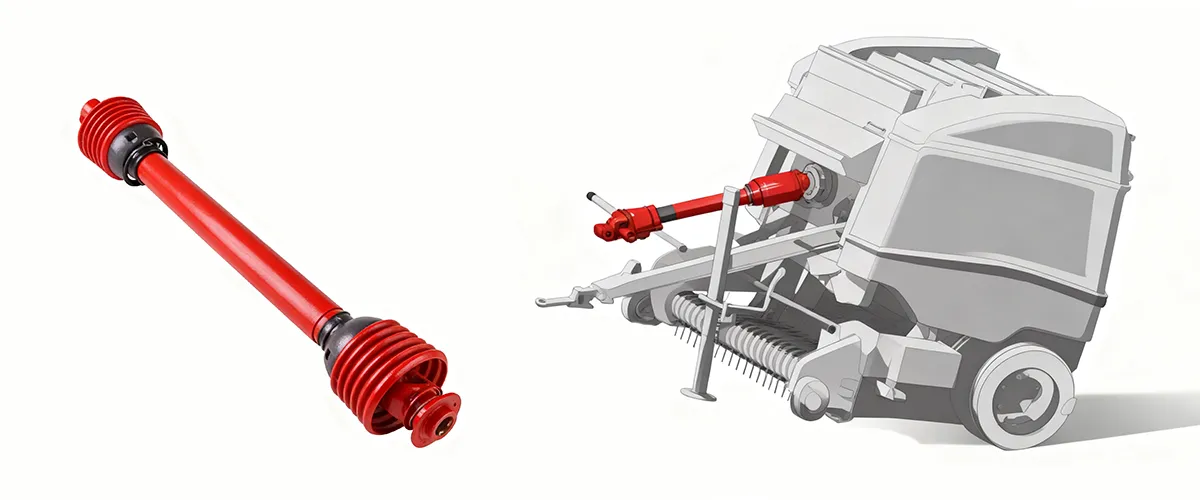
Agricultural PTO Shaft
Drive shaft assemblies matched to the PTO input specification and operating torque range of each round baler model. For alfalfa operations where PTO speed precision matters — particularly when optimising tine tip velocity in the 520–540 RPM band for leaf retention — using a correctly sized and balanced PTO shaft eliminates vibration that can masquerade as pickup speed instability at the tine level. Cross-joint and constant-velocity shaft options available for compatibility with the full range of tractor coupling geometries common in Korean and international markets.
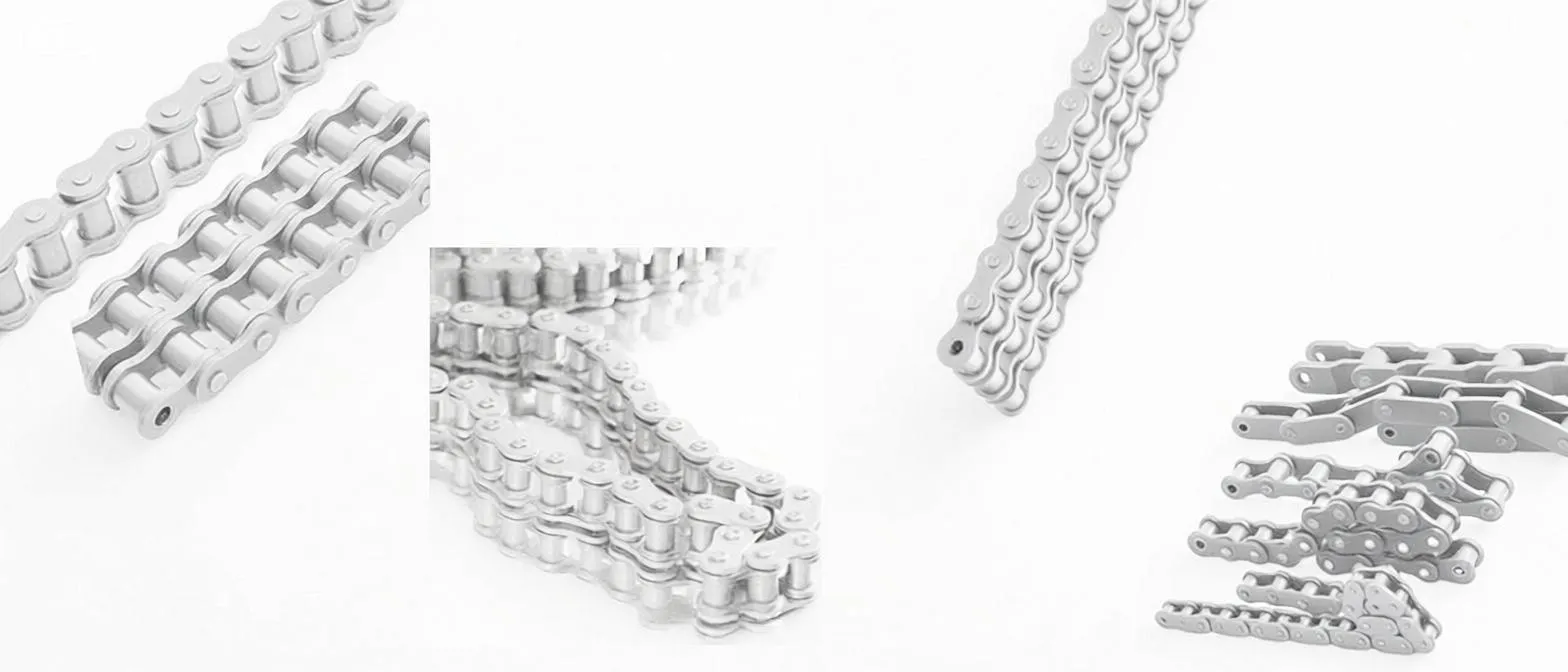
Agricultural Drive Chain
Heavy-duty roller chain for round baler internal drive systems, manufactured to DIN 8187 and ISO 606 standard pitches. Alfalfa baling at consistent lower forward speeds — the operating profile required for leaf retention — does not reduce chain loading; in fact, the periodic surge loads associated with dense windrow sections at reduced speed can be higher peak-load events than continuous moderate-speed operation. Chain tensioner maintenance and periodic elongation measurement are therefore just as important in dedicated alfalfa operations as in mixed-crop baling. Matched replacement chain sets for 9YG and EP series balers available for direct replacement with no modification.
Over a Decade of Agricultural Machinery Manufacturing
Founded in 2013, our enterprise has grown into a modern, intelligent manufacturing operation within the agriculture and livestock machinery sector. We produce a comprehensive range of harvesting equipment — including light and heavy round balers, single and double blade mowers, disc rotary mowers, and single and double side rakes — holding independent import and export certification and ISO 9001 Quality Management System accreditation. With a philosophy centred on building world-class agricultural machinery, we operate over 60 sets of large-scale production equipment and maintain an annual design capacity of 2,000 machines, consistently investing in advanced international production technology to serve farmers across global markets.
Frequently Asked Questions
Answers to the practical questions that come up most often when producers are optimising their alfalfa round baling setup for leaf retention and feed quality.
Specify a Round Baler Configured for Alfalfa Leaf Retention
Whether you are setting up a new alfalfa baling programme, upgrading existing equipment, or sourcing round baler parts for a current machine, reach out to discuss your specific crop, tractor, and operational requirements. We supply round balers, matched PTO shafts, drive chain, and auxiliary components as a complete system from one source.
Redaktor: PXY