
Corn Silage & Stover Baling — In-Depth Guide
An evidence-based comparison of the two primary bale-finishing systems used in high-moisture corn silage and stover operations — covering material science, fermentation biology, storage loss data, and real-world applicability for Korean and international dairy and beef producers.
Why the Bale Finishing System Matters More Than You Think
For farmers raising Hanwoo beef cattle or operating high-production dairy herds across South Korea’s corn-growing regions — from Gangwon-do to Jeollabuk-do — the quality of corn silage bales directly shapes animal performance and profitability. Most producers invest considerable time selecting the right round baler, optimising cut timing, and calibrating bale density. Yet the choice between net wrap and stretch film wrapping remains surprisingly underexplored in practical on-farm decision-making.
The two systems differ not merely in materials but in the entire oxygen-exclusion strategy they rely on. Net wrap holds a bale together mechanically and relies on separately applied stretch film wrapping to create an anaerobic environment. Stretch film applied directly to the bale surface performs both functions simultaneously. Each approach has distinct implications for fermentation speed, aerobic spoilage risk at the bale surface, dry matter loss during storage, and overall feed value retention — particularly over the extended storage periods common in Korean livestock operations, where indoor feeding phases can span six months or more.
This guide breaks down the technical, biological, and economic dimensions of this choice in plain language, with reference to both the mechanical capabilities of modern round balers suited to corn stover and the agronomic realities of high-moisture bale storage in humid continental climates. Whether you operate a small-scale operation compatible with a compact round hay baler or manage a large contract baling service running a commercial-grade machine, the principles here apply directly.
Manufacturing Structure & Material Systems
Net Wrap: Construction and Mechanical Role
Net wrap is a woven polypropylene mesh produced through extrusion and weaving, typically with a weight range of 22–35 g/m². Its primary structural function is to hold the bale shape together after ejection from the baler chamber — preventing the bale from unrolling during transport, stack handling, and the wrapping stage. Net wrap does not provide any meaningful oxygen barrier on its own; it is an open-mesh substrate with a porosity that allows free gas exchange across the bale surface.
The tensile strength of net wrap must be sufficient to contain the bale under compressive rebound pressure immediately after the bale leaves the variable-pressure chamber of the round baler. In a corn stover application — where fibre length is often longer and bulk density lower than grass silage — the bale has higher rebound energy, making net wrap specification particularly critical. Low-grade net wrap can tear or fail during high-speed ejection when bale chamber pressure exceeds 140 bar, which is common during peak corn stover throughput in dry autumn conditions when farmers are racing ahead of early frost.
When used for silage, net-wrapped bales require immediate secondary wrapping with at least four to six layers of 25-micron UV-stabilised stretch film to create a sealed anaerobic environment. Any delay between net wrapping at the baler and film wrapping — even two to four hours under sunny, windy conditions — allows surface aerobic microbial populations to establish, increasing the spoilage inoculum load before fermentation suppresses them.
Stretch Film: Construction and Oxygen-Exclusion Properties
Silage stretch film is produced from a multi-layer co-extruded linear low-density polyethylene (LLDPE) base, typically with three to five functional layers engineered to provide puncture resistance, UV stability, oxygen barrier performance, and cling adhesion simultaneously. The oxygen transmission rate (OTR) of a quality 25-micron silage stretch film should not exceed 250 cc/m²/day at standard test conditions — a specification that directly governs how rapidly the residual oxygen trapped within the bale at the time of wrapping is consumed by aerobic respiration, and therefore how quickly the anaerobic fermentation phase initiates.
When stretch film is applied directly to the bale in a dedicated bale-wrapper immediately after the round baler ejects, it replaces net wrap entirely — the film provides both structural cohesion through adhesive cling between overlapping layers and the gas-tight barrier required for lactic acid fermentation. This approach, sometimes called direct-film or film-only wrapping, reduces the total consumable cost per bale by eliminating net wrap purchase costs while simultaneously reducing the delay between bale formation and oxygen exclusion. The trade-off is that direct-film bales are slightly more susceptible to puncture during stacking compared to net-wrapped bales that have already achieved structural rigidity before film application.
Fermentation Biology: How Each System Affects Feed Value
The Aerobic Phase: Where Feed Value Is Won or Lost
Immediately after baling, every corn silage bale undergoes an obligate aerobic phase in which residual oxygen trapped between plant particles is consumed by plant respiration enzymes and aerobic microorganisms, primarily yeasts and moulds. This phase generates heat and CO₂, consuming water-soluble carbohydrates (WSC) that would otherwise become substrate for lactic acid bacteria (LAB). The faster oxygen is excluded — whether by rapid film wrapping, high bale density reducing inter-particle void space, or a combination of both — the shorter this phase is and the more WSC remains available for fermentation, directly translating into higher final lactic acid concentration and lower final pH.
Corn silage baled at 60–70% moisture typically reaches a target pH of 3.8–4.2 within 21–28 days under good conditions. Bales that experienced prolonged aerobic phases due to delayed wrapping, damaged film, or insufficient film layers can stall at pH 4.8–5.2, which is insufficient to inhibit Clostridium species under high-moisture conditions — resulting in butyric acid fermentation, elevated ammonia nitrogen, protein degradation, and reduced energy density. Korean Hanwoo beef producers and dairy operators are particularly sensitive to these outcomes because high-quality silage is central to achieving the marbling scores and milk output their production systems require.
Dry Matter Loss: Net Wrap vs Film Comparison
Field data from multiple silage research programs indicates that the total dry matter (DM) loss from well-managed net-wrapped-plus-film bales over a six-month storage period typically ranges from 8–15%, with losses concentrated at the bale surface (the outer 10–15 cm that experienced the longest aerobic exposure). Direct-film bales that achieved wrapping within 30 minutes of ejection from the round baler machine routinely record DM losses of 5–10% over the same storage period, with the surface loss layer reduced to 3–6 cm of aerobically compromised material. At a silage value of roughly 80,000–90,000 Korean Won per tonne of DM, a 5 percentage point difference in DM loss over a 200-bale storage programme represents a financially meaningful outcome across a single season.
| Parameter | Net Wrap + Film | Direct Stretch Film |
|---|---|---|
| Oxygen barrier speed | Delayed (two-stage process) | Rapid (single-stage) |
| Bale structural integrity | High (net holds shape) | Moderate (relies on film tension) |
| Avg. DM loss (6 months) | 8–15% | 5–10% |
| Consumable cost per bale | Higher (net + film) | Lower (film only) |
| Puncture resistance during stacking | High | Moderate |
| Plastic waste at feedout | Higher (net is non-recyclable in most markets) | Lower (single plastic type) |
| Fermentation quality potential | Good (if wrapped promptly) | Excellent (when using 6+ layers) |
| Suitability for corn stover (low density) | Very good | Good (requires adequate bale density) |
Corn Stover Baling: Unique Challenges for Both Wrapping Systems
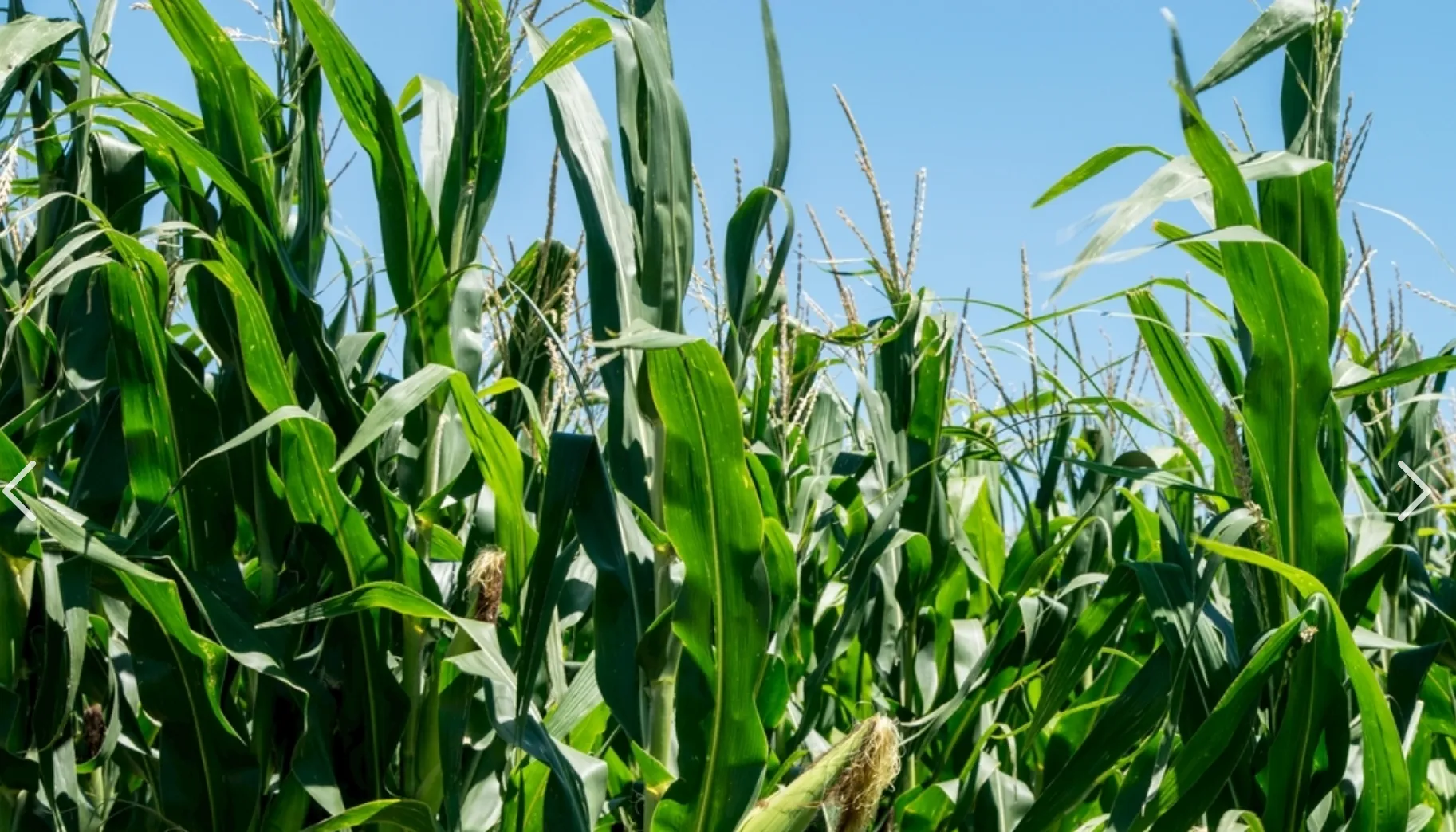
Corn stover — the leaf, stalk, husk, and cob fractions remaining after grain harvest — presents a substantially more challenging baling profile than grass silage. The material is heterogeneous in density, highly variable in moisture content across the windrow (dry upper leaves vs. moist base of stalks), abrasive to pickup tines and baler rollers, and prone to forming low-density bales with high residual void space. Each of these characteristics interacts with the choice of wrapping system in ways that affect final silage quality.
High void space in corn stover bales means a larger trapped oxygen reservoir at the time of wrapping. For net-wrapped stover bales awaiting secondary film wrapping, this translates to a more aggressive and prolonged aerobic phase. Trials comparing same-day wrapping versus next-day wrapping of corn stover bales consistently show surface DM losses 40–60% higher in the delayed group. This makes workflow management — specifically, the proximity and capacity of bale-wrapper equipment relative to baler output — a key determinant of silage quality outcomes, regardless of which wrapping system the farm uses.
Moisture content at baling also matters. Corn stover baled above 65% moisture creates an anaerobic environment faster, favouring both net wrap and direct-film systems, but increases the risk of Clostridium fermentation if pH drop is slow. Stover baled below 40% moisture does not ferment meaningfully at all — in this case, stretch film wrapping still excludes oxygen and prevents weathering losses, but the preservation mechanism shifts from fermentation to simple sealing against rain and UV, more closely resembling the role film plays in dry hay storage.
Round Baler Design Features That Influence Wrapping System Performance
The downstream quality of silage — regardless of whether the farm opts for net wrap or direct-film finishing — starts inside the round baler itself. Bale density, bale shape consistency, and wrapping cycle speed all originate in the design and mechanical condition of the baler. Understanding which baler features directly support better silage outcomes helps producers choose not just between wrapping materials, but between baler configurations suited to high-moisture silage and corn stover work.
Variable Chamber Pressure
Hydraulic belt tension systems that maintain consistent compression across varying crop densities produce rounder, harder bales with reduced inter-particle void space — directly reducing the oxygen reservoir that either wrapping system must overcome at baling time.
Axial-Flow Feeding System
An auger-and-roller feed system distributes crop material evenly across the full width of the bale chamber, preventing the formation of soft spots or density voids — which are precisely where aerobic spoilage initiates after wrapping, regardless of film type.
Net Wrap Speed and Film Compatibility
Fast net binding cycles (under 8 seconds) minimise bale chamber dwell time and accelerate field ejection throughput. For farms switching between net wrap and direct-film operations across different crops or seasons, baler compatibility with both consumable formats is a practical advantage worth specifying at purchase.
Featured Round Baler
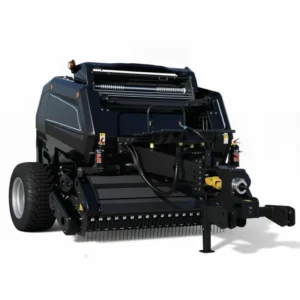
Prasa okrągła 9YG-1.25A
Purpose-built for silage and stover applications, the 9YG-1.25A features a roller-type compression chamber engineered to handle high-moisture crop materials without the belt slippage that plagues standard belt-chamber designs. Its robust feeding mechanism produces dense, cylindrical bales that hold their shape through the wrapping stage — reducing film wastage from irregular bale geometry and improving oxygen-exclusion efficiency whether the operator uses net-and-film or direct-film finishing. With a bale diameter range suited to farm-scale Korean operations and PTO compatibility with 50–80 HP tractors including popular LS Mtron and TYM models, it bridges the gap between compact round baler convenience and silage-grade density performance.
Storage Environment and Long-Term Feed Value Retention
Even the best wrapping system performs poorly if storage site conditions introduce physical or biological stress to the wrapped bale. In Korean silage storage contexts, where summer temperatures regularly exceed 30°C and humidity is high, the thermal cycling that bales undergo between day and night creates micro-pressure differentials across the film surface. This cycling process, repeated over 150–180 days of storage, gradually fatigues the film’s adhesive cling bonds between layers — progressively reducing the oxygen barrier performance of the outer film layers without producing visible damage. Wrapping systems that use six or more film layers rather than the minimum four provide a meaningful buffer against this fatigue-driven barrier degradation.
Net-wrapped bales that use net as a sub-layer beneath stretch film exhibit a specific failure mode that pure-film bales do not: at the net-film interface, micro-channels can form along net strands, creating pathways that allow gas migration across what appears to be an intact film surface. This is particularly common when heavy-gauge net is used, or when film wrapping equipment applies insufficient pre-stretch (below 55%). Producers who notice persistent surface mould on net-wrapped corn silage bales stored indoors under otherwise good conditions should examine whether this interfacial gas migration is occurring before attributing the problem to silage additives or crop moisture.
For Korean livestock farms that store bales outdoors in the open — whether on concrete pads or directly on grass — UV degradation of stretch film is a material concern. Quality 25-micron silage film with 18-month UV stabilisation provides adequate protection through a single storage season under Korean sun exposure. However, bales intended to bridge from one grain-growing season to the next — held from October through May — should use film specified to 24-month UV stability, particularly on east- and south-facing bale surfaces that receive peak daily solar radiation.
Regulatory Context: Agricultural Film and Waste Obligations by Region
Choosing a wrapping system is not purely a technical or economic question — regulatory frameworks in multiple countries place explicit obligations on agricultural plastic waste from silage and bale wrap operations, and these obligations increasingly influence which wrapping approach is operationally viable in a given market.
South Korea
Under the Act on the Promotion of Saving and Recycling of Resources (자원재활용법) and the Agricultural Wastes Management Regulations enforced through the Ministry of Environment and Ministry of Agriculture, Food and Rural Affairs (MAFRA), agricultural plastic waste — including silage wrap film and net wrap — must be collected and disposed of through designated collection systems. As of 2023, the government has substantially strengthened penalties for open burning of agricultural plastic, which was previously common practice for net wrap disposal. Farmers transitioning to direct-film wrapping find compliance easier because single-polymer LLDPE film is more readily accepted by agricultural plastic recycling programmes than mixed-material net wrap.
MAFRA also provides machinery subsidies under the Agricultural Mechanisation Promotion Act (농업기계화 촉진법) that cover qualified round baler purchases — a factor worth noting for operations considering equipment upgrades alongside a wrapping system change.
European Union
EU Directive 2019/904 on single-use plastics and the associated Packaging and Packaging Waste Regulation (currently under revision as of 2024) place agricultural films in an “extended producer responsibility” category requiring certified collection and recycling pathways. In Germany, the Netherlands, Denmark, and France, agricultural plastic collection schemes are well-established through cooperative networks. The emphasis on recyclability under these frameworks favours mono-material stretch film systems over composite net-and-film systems, since net wrap polypropylene mesh cannot be co-processed with LLDPE film in standard agricultural plastic recycling streams without additional sorting. UK farm operations post-Brexit remain bound by similar obligations under the UK Packaging Waste Regulations 2007 (as amended) and the FarmCare collection scheme run by the Agricultural Industries Confederation.
Australia & New Zealand
In Australia, the National Waste Policy Action Plan 2019 targets for agricultural plastics have accelerated state-level collection programmes, with Victoria, New South Wales, and Queensland all operating AgStewardship collection programmes for agricultural plastic by 2024. In New Zealand, the Waste Minimisation Act and the Plastics Action Plan specifically identify agricultural silage wrap as a priority material. Both markets are moving toward recyclable-only classifications for farm plastics — a trend that again favours single-polymer direct-film systems as the industry prepares for more prescriptive rules expected by 2027.
Brazil
Brazil’s National Solid Waste Policy (Lei 12.305/2010 — Política Nacional de Resíduos Sólidos) mandates reverse logistics for agricultural packaging, including bale wrap plastics in the rubber and chemical product categories. In practice, enforcement through IBAMA has focused primarily on crop input packaging such as pesticide containers, but silage film disposal is increasingly monitored under municipal and state environmental agencies in major Cerrado grain and livestock states including Mato Grosso, Mato Grosso do Sul, and Goiás. Brazilian beef and dairy producers baling corn silage and elephant grass should verify local compliance obligations with SENAR (National Rural Learning Service) before making long-term decisions about wrapping systems.
Practical Decision Framework: Which System Should Your Operation Choose?
The net wrap vs stretch film decision is best approached not as a binary choice but as a systems optimisation question that depends on the interaction of crop type, moisture profile, baler throughput, wrapping equipment configuration, storage duration, and local regulatory context. The following framework distils the technical content above into a structured guide for Korean corn silage producers and international round baler users.
| Farm Scenario | Recommended System | Rationale |
|---|---|---|
| High-moisture whole-crop corn silage, wrapping on same day | Direct Film | Fastest oxygen exclusion, lowest DM loss, reduced consumable cost |
| Corn stover baled at <50% moisture, long transport before wrapping | Net Wrap + Film | Net holds bale shape through extended handling; film applied at centralised wrapper |
| Large-scale silage contract operation, 200+ bales/day | Net Wrap + Film or Direct Film with integrated wrapper | Throughput logistics determine which system keeps wrapping within the 2-hour aerobic window |
| Small round baler operation, 40–60 HP tractor, under 80 bales/day | Net Wrap + Film | Simpler workflow; bale formation and wrapping can alternate within one operator’s capacity |
| Korean beef (Hanwoo) or dairy operation, 6+ month storage target | Direct Film (6+ layers) | Eliminates interfacial gas migration risk; superior long-term barrier performance |
| Outdoor bale storage, high UV exposure, tropical/subtropical climate | Net Wrap + Film (white film) | White outer film reflects solar radiation, reducing bale temperature cycling and film fatigue |
Nutrient Retention Deep Dive: What Feed Analysis Actually Shows
Laboratory silage analyses comparing bales finished with the two wrapping approaches reveal consistent patterns when samples are drawn from comparable bale positions at the same storage age. Crude protein (CP) content in direct-film corn silage bales typically registers 0.5–1.5 percentage points higher on a DM basis compared to same-crop net-wrapped bales stored under equivalent conditions. This difference is attributable to the shorter aerobic phase in direct-film bales, which limits protein deamination by aerobic bacteria during the pre-fermentation window. In practical terms, for a Hanwoo beef ration targeting 14% CP from silage, this difference may shift whether purchased protein supplements are required during the winter feeding period.
Net fibre fractions — specifically neutral detergent fibre (NDF) and acid detergent fibre (ADF) — are generally similar between the two systems, reflecting the fact that cell wall digestion by aerobic organisms is limited relative to the soluble fractions lost in longer aerobic phases. However, NDF digestibility (NDFd), which correlates strongly with dry matter intake and milk yield in dairy cows, tends to be higher in direct-film bales because the higher lactic acid concentration achieved through more complete fermentation further softens cell wall matrix, improving rumen microbial access to the fermentable fibre fraction.
Starch concentration in corn silage deserves separate attention. High-moisture corn — whether whole-plant or ear fraction-enhanced — retains substantially more starch in directly-filmed bales because the rapid pH drop inhibits amylolytic bacteria that degrade starch during extended aerobic or slow-fermentation phases. For Korean dairy producers formulating rations with corn silage as a primary starch source, this can translate to meaningful improvements in energy density without increasing the proportion of dry concentrate feeds in the ration.
Related Products: Complete System Compatibility
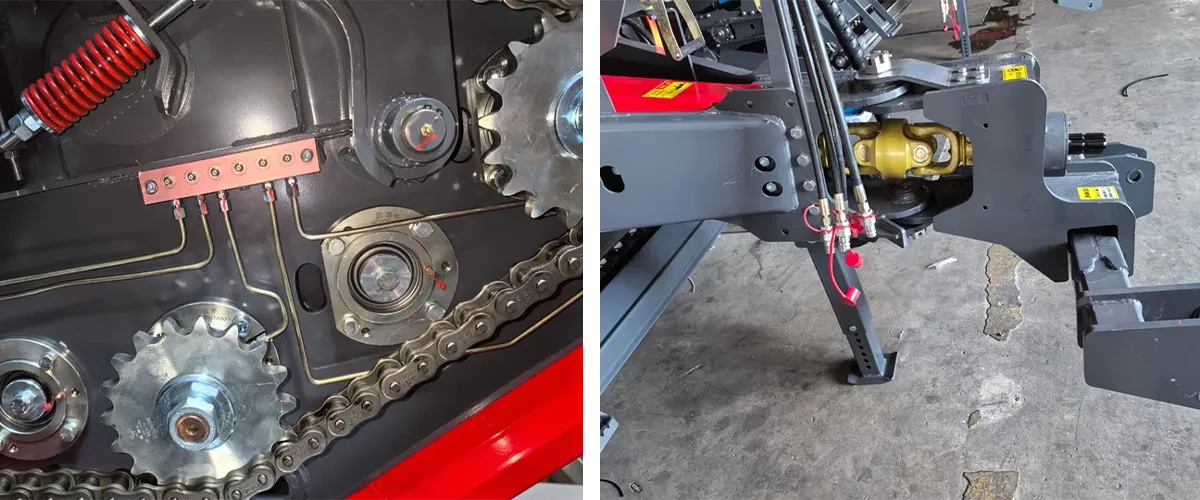
A round baler does not operate in isolation — its productivity and long-term reliability depend on the quality of matched drive components. The following accessories are engineered for seamless integration with the 9YG series round baler range, supporting one-stop procurement for complete baling system setup or component replacement.
Agricultural PTO Shaft
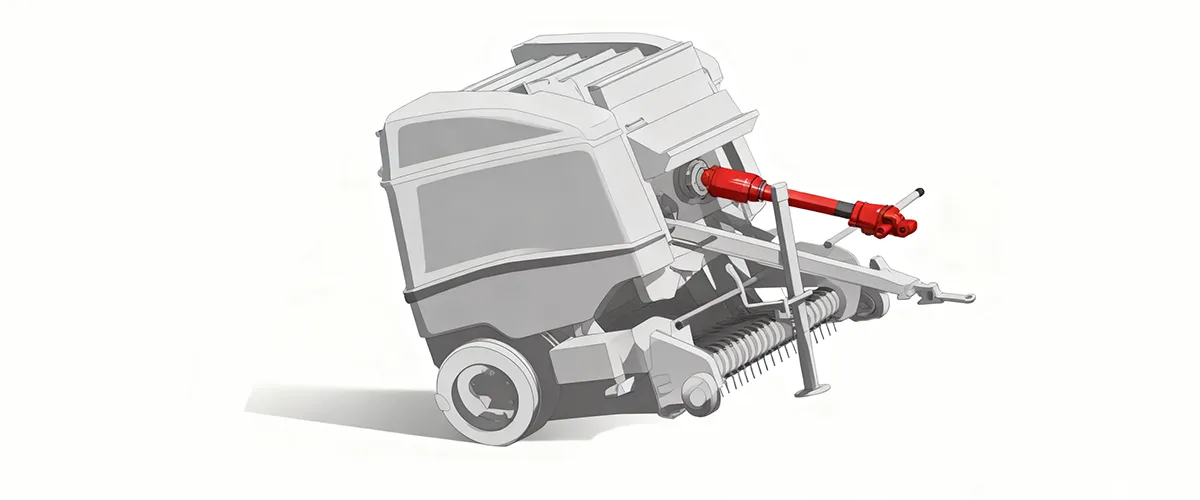
High-torque PTO shafts compatible with the full 9YG round baler series, available in cross-joint and constant-velocity configurations. Engineered for the elevated torque demands of high-moisture silage and tough stover baling cycles — significantly longer operating lives compared to generic replacement shafts. One-stop supply from the same production network as your baler means dimensional compatibility is assured.
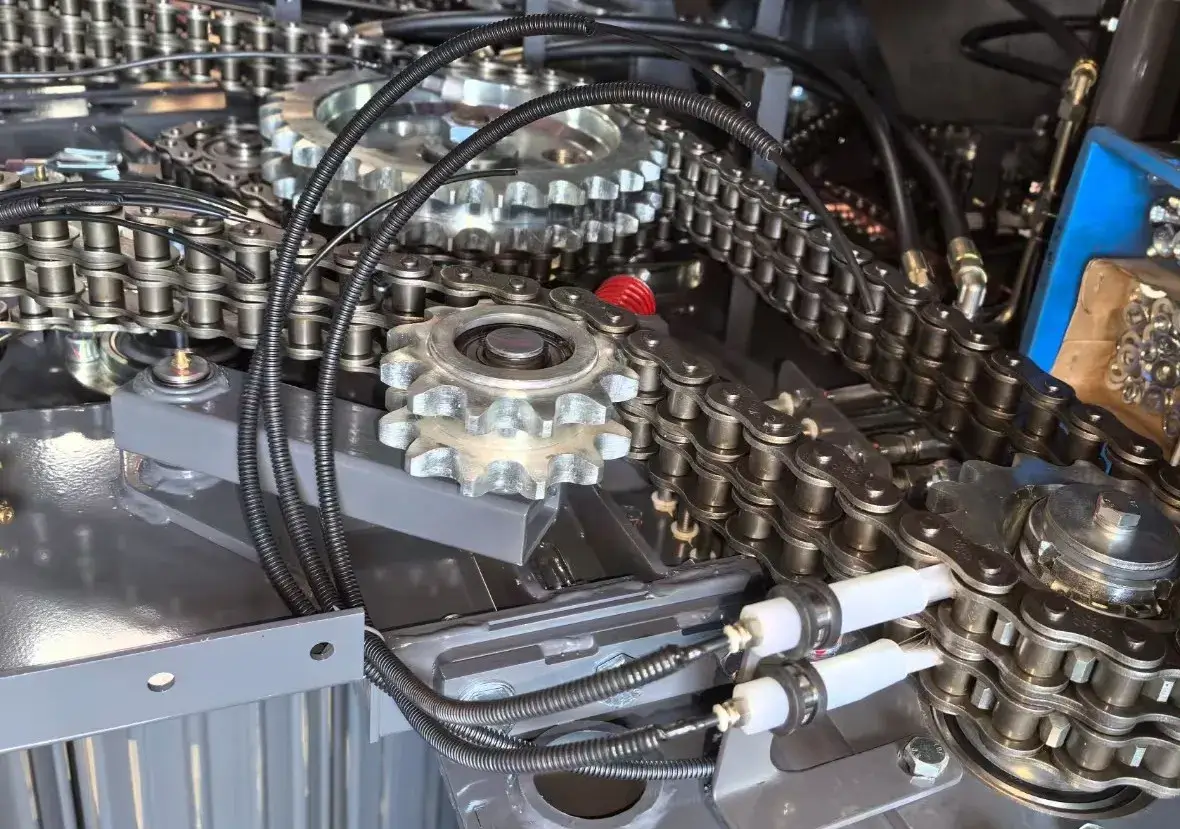
Agricultural Drive Chain
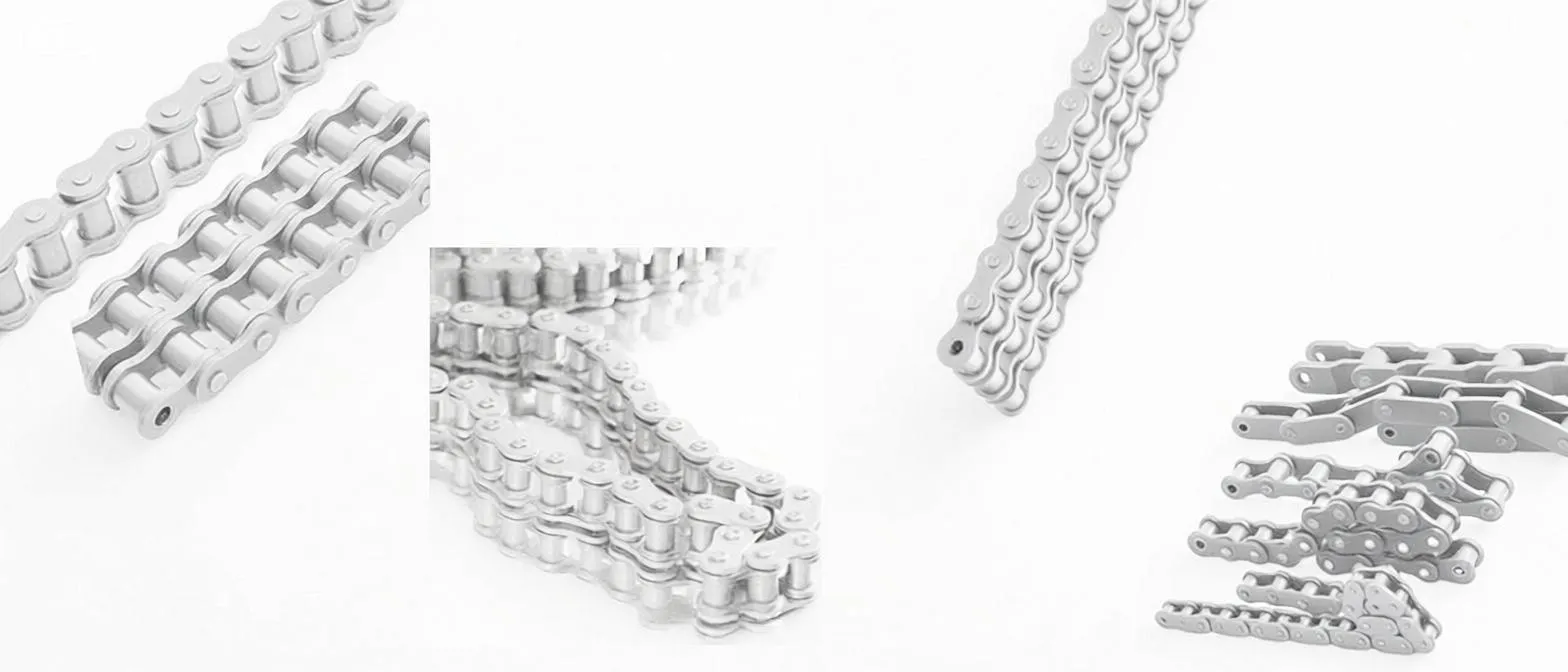
Heavy-duty agricultural roller chain for round baler internal drive systems, manufactured to DIN 8187 / ISO 606 standards. The drive chain within a round baler experiences peak loading during bale formation against maximum chamber pressure — a demanding duty cycle that exposes substandard chain to rapid elongation and wear. Matched chain lengths and pitches for all 9YG series models are available as direct replacement components, keeping downtime to a minimum during peak baling seasons.
Practical Tips for Maximising Feed Value Regardless of Wrapping System
Target whole-crop corn at 55–68% moisture for optimal fermentation — the window where both WSC concentration and lactic acid bacteria populations are at their peak seasonal levels. Harvesting beyond 70% moisture increases Clostridium risk; below 50% reduces fermentation depth regardless of wrapping system.
Corn stover harvested immediately after grain combines typically sits at 45–60% moisture. A brief 4–6 hour field wilt on a dry sunny day concentrates WSC while aerating the crop to drive off surface moisture — benefiting bale density and fermentation initiation equally, with positive downstream effects for both net-and-film and direct-film finishing.
Applying a heterofermentative LAB inoculant containing Lactobacillus buchneri at the baler intake reduces aerobic spoilage during feedout regardless of wrapping system — but has greatest impact on aerobically stable direct-film bales where the fermentation environment is most homogeneous. Apply at 100,000 CFU/g of fresh crop weight minimum.
Store bales on well-drained sites with bale long axes aligned north-south so both sides receive approximately equal sun exposure, reducing thermal gradients across film layers. Inspect the entire bale stack monthly for puncture damage — a single unrepaired hole in a silage film surface allows a 30 cm sphere of aerobic spoilage to develop per month of exposure under warm storage conditions.
About Our Round Baler Manufacturing
We are a specialised manufacturer of the 9YG series round balers, backed by ISO 9001 certification, nearly 100 proprietary patents, and a production facility spanning over 32,000 square metres equipped with CNC laser cutting lines, automated welding, and electrostatic spraying. Our engineering team has spent years developing and iterating designs specifically for the silage and stover baling demands of international markets, including South Korea, Australia, Brazil, and the European Union.
Frequently Asked Questions
Practical answers to the questions we hear most often from Korean livestock farms and international round baler operators considering their corn silage baling and wrapping approach.
Ready to Specify the Right Round Baler for Your Corn Silage Operation?
Whether you are establishing a new corn silage programme on a Korean livestock farm or scaling up a contract baling service, the right round baler machine configuration is the foundation of consistent silage quality. Get in touch to discuss your crop type, field conditions, tractor compatibility, and wrapping system preferences — and we will match you to the right model from the 9YG series range.
Redaktor: PXY