Grassland Operations Technical Guide
A technical reference for forage farmers, Hanwoo cattle producers, and agricultural machinery buyers operating round balers across sloped, terraced, and ridge-divided Korean pastureland.
The gearbox in a round baler is one of the most terrain-sensitive components on the machine, yet it is rarely discussed in the same sentence as field terrain — yet the two are deeply connected in practice. On flat, uniform crop ground, gearbox compatibility with the PTO input and the baler’s internal drive system is mostly a matter of matching rated torque to the crop throughput requirement. That calculation changes substantially the moment the terrain stops being flat. On uneven grassland — hillsides, terraced paddocks, ridge-divided paddy fields, or the rolling hill pastures of Gangwon and South Gyeonggi provinces in Korea — the gearbox must simultaneously handle variable input torque from the PTO driveline operating at changing angles, variable load from the compression chamber cycling through thick and thin sections of windrow, and the moment loads introduced when the baler frame tips laterally relative to the tractor.
Getting round baler gearbox compatibility wrong in these conditions does not produce a minor inconvenience. It produces a broken input shaft, a stripped bevel pinion, or a driveline seizure in the middle of a narrow Korean rice-straw harvest window when every day matters. Understanding what gearbox specifications actually determine terrain compatibility — and how those specifications map onto the round baler models available for Korean and similar-temperate-zone pasture operations — is what this guide is about.
We cover round baler gearbox mechanical structure, the material systems that determine durability under terrain-induced stress, the PTO interface requirements for uneven ground, the regulatory standards that govern these systems across key markets, and a practical compatibility table for matching round baler gearbox specifications to terrain severity categories.

1. Why Round Baler Gearbox Compatibility Matters on Uneven Ground
A round baler’s primary gearbox — typically an input gearbox mounted at the PTO hitch point — has two jobs: step down or step up the tractor PTO speed to the required internal drive speed, and distribute that rotational power to multiple internal systems including the pickup drum, feed rotor, and compression roller drives. On flat terrain, these power flows are predictable and the gearbox operates within a narrow band of its rated capacity. On uneven terrain, the situation is fundamentally different.
When a tractor climbs a ridge or traverses a slope while the baler remains at a lower or different angle, the PTO driveshaft — and therefore the gearbox input — operates at an angle from the designed axis. Every universal joint in the driveline introduces a cyclic velocity variation at its output proportional to the sine of the joint angle. At small angles below five degrees, this variation is negligible. At angles of fifteen degrees or more, which are routinely encountered in Korean terraced paddy operations and Gangwon hillside pasture work, the cyclic velocity variation at the gearbox input can reach twelve to eighteen percent of nominal speed. This translates into a torque ripple at the gearbox input shaft that causes premature fatigue in the input pinion gear teeth, even when the average operating load is well within the gearbox’s rated torque.
A second terrain-specific stress source is lateral frame tipping. When the baler is operating across a slope and its two wheels are at different heights, the machine tilts and introduces a bending moment into the hitch coupling and the gearbox housing. In a conventional rigid tow bar connection, this moment is transmitted directly to the gearbox mounting bolts and through the housing to the input shaft bearings. Sustained operation under these loads accelerates bearing inner race fatigue and eventually produces the characteristic grinding noise that precedes gearbox input shaft failure.
The third terrain stress source is compression chamber load cycling. On flat ground, a round baler working through a uniform windrow experiences relatively steady compression forces. On uneven terrain, the tractor and baler often pass through windrow sections of varying density caused by material sliding downhill or accumulating at the base of slopes. These density transitions cause sudden torque spikes in the bale chamber drive, which propagate back through the gearbox to the input shaft and out to the PTO connection. Without adequate gear face width and case hardening depth, these spikes cause micro-pitting on gear flanks that reduces gear life to a fraction of its flat-ground rating.
2. Mechanical Structure of a Round Baler Gearbox for Terrain Duty
2.1 Input Stage — Bevel Gear Set and PTO Interface
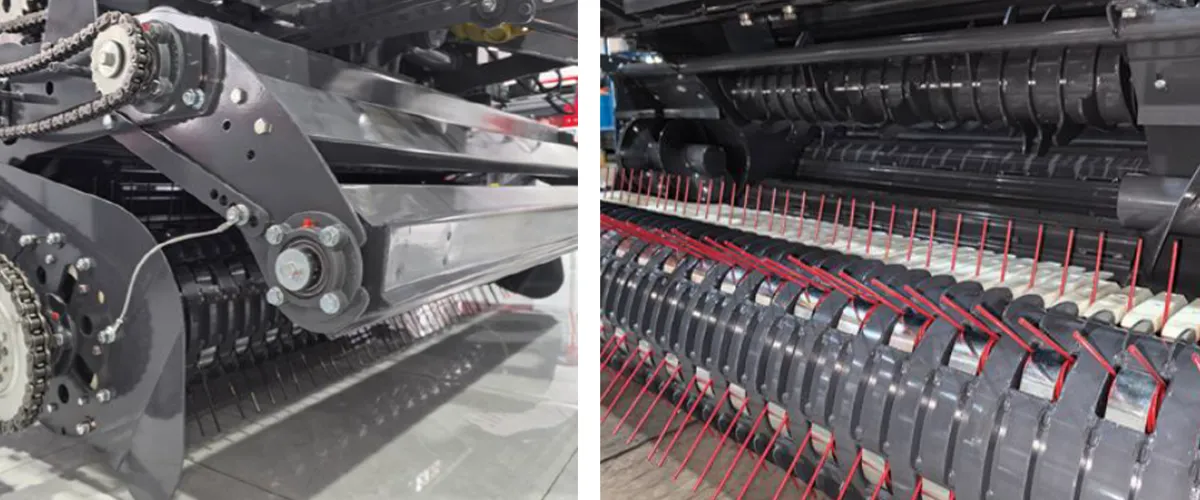
The input stage of a round baler main gearbox typically consists of a bevel gear pair that converts the horizontal PTO rotation (aligned with the tractor’s travel axis) into the transverse rotation required to drive the baler’s internal transverse-axis systems. The bevel gear ratio is chosen to match the tractor’s PTO speed — 540 or 720 RPM — to the baler’s designed internal drive speed. For terrain-duty applications, the bevel gear set must be rated for the peak torque inputs associated with driveline angle variation, not just the average operating torque.
The PTO interface is the 1-3/8 inch or 1-3/4 inch spline coupling at the gearbox input. In terrain-duty round balers, this coupling must incorporate sufficient axial float to accommodate driveline length changes as the baler articulates relative to the tractor on uneven ground. Without this float, the PTO shaft transmits compressive axial forces to the gearbox input bearing when the hitch geometry changes on slopes, accelerating bearing wear by adding axial load to a bearing designed primarily for radial duty.
2.2 Distribution Stage — Multi-Output Gearbox Architecture
From the input stage, power is distributed to the pickup drum chain drive, feed rotor drive, and compression roller drive. In most commercial round baler designs, this distribution occurs through a combination of chain and sprocket drives rather than a single multi-output gearbox body — but the main gearbox still carries the full input torque from the PTO before it is split among these subsystems. The distribution stage must be sized for the sum of all driven subsystem peak torques, not just the average distribution.
On uneven terrain, the distribution stage experiences additional cyclical loading from the pickup drum when the tines engage dense windrow sections on downhill approaches where material accumulates. This can produce pickup chain drive impulses that propagate into the distribution gears and, if the gear tooth profiles are not correctly relieved, cause the tip-loading gear failures that are the most common gearbox-related breakdown in Korean autumn straw baling operations on terraced fields.
2.3 Traction Hitch and Gearbox Interaction
The traction hitch device in terrain-duty round balers is where gearbox stress management and terrain adaptation engineering intersect. A conventional rigid tow hitch connects baler to tractor in a fixed-angle relationship, meaning all lateral and vertical tilt of the baler relative to the tractor is transmitted directly through the hitch coupling and into the PTO driveline and gearbox input. An adjustable traction device with rated tilt capacity separates the baler frame kinematics from the tractor frame kinematics — absorbing slope-induced angular differences in the hitch mechanism rather than transmitting them to the gearbox. This separation is the primary mechanical reason why round balers with adjustable traction hitches show significantly lower gearbox failure rates in uneven terrain operations compared to machines with rigid hitch connections, even when operated at identical tractor power levels and windrow densities.
3. Material System — What Goes into a Terrain-Duty Round Baler Gearbox
The longevity of a round baler gearbox in uneven terrain service is almost entirely determined by the materials used in its construction. The following table covers the critical components and the material specifications that differentiate a terrain-duty gearbox from one designed purely for flat-field operation.
| Gearbox Component | Material Specification | Terrain-Duty Relevance |
|---|---|---|
| Bevel Input Gear | 20CrMnTi case-hardened alloy steel, carburized to 0.8–1.2 mm case depth, HRC 58–62 surface hardness | Deep case hardening resists the micro-pitting fatigue caused by cyclic torque ripple from PTO angle variation on slopes; HRC 58–62 surface hardness prevents abrasive wear from debris contamination during field operations |
| Input Shaft | 42CrMo4 chromium-molybdenum alloy steel, through-hardened, HRC 32–38 core | Chromium-molybdenum composition provides the fatigue strength needed to survive the bending moments transmitted through the PTO coupling when the baler tilts laterally on Korean slope terrain; core hardness resists torsional fatigue crack initiation |
| Input Shaft Bearings | Tapered roller bearing, C3 internal clearance, paired preloaded arrangement | Paired preloaded tapered roller bearings manage combined radial and axial loads simultaneously; the C3 clearance grade accommodates thermal expansion during sustained high-load terrain operations without preload increase that would cause premature cage failure |
| Gearbox Housing | GG25 gray cast iron, minimum wall thickness 8 mm, pressure-tested | Gray cast iron’s vibration damping properties reduce the amplitude of resonance-induced gear noise and bearing load fluctuation that terrain-induced torque ripple can excite; minimum 8 mm wall thickness prevents housing flexure under the combined gear reaction and mounting bolt loads experienced on slopes |
| Output Sprocket Shaft | 40Cr chromium steel, induction hardened journal surfaces | Induction-hardened journal surfaces maintain dimensional tolerance under the radial loads from heavy-duty drive chain tension; on uneven terrain, chain tension fluctuates more than on flat ground due to varying compression chamber loads, making journal surface hardness a direct fatigue life determinant |
| Oil Seal System | Viton fluoroelastomer lip seals, double-lip configuration on input shaft | Double-lip Viton seals at the input shaft maintain oil containment when the shaft operates at the dynamic angles encountered in terrain duty; single-lip seals are adequate for flat-field use but allow oil loss when the shaft runs off-axis on hillside Korean pasture operations |
| Olej przekładniowy | GL-5 rated gear oil, ISO VG 150, with EP (extreme pressure) additive package | GL-5 EP additive chemistry provides a sacrificial film on gear tooth flanks that prevents direct metal contact during the micro-slip events caused by torque ripple; VG 150 viscosity maintains adequate oil film thickness at the gearbox temperatures reached during sustained hillside operation |
| Traction Device Coupling | High-tensile alloy steel pivot pins, spherical self-aligning bearing blocks | Spherical bearing blocks in the traction device allow the hitch to articulate freely in the tilt plane, absorbing the slope-induced angular misalignment that would otherwise transmit bending moments directly to the gearbox input shaft bearing housing |
4. PTO Interface Requirements for Terrain-Duty Round Baler Gearboxes
The PTO driveshaft connecting tractor to round baler gearbox is the component most directly exposed to the terrain-induced angular misalignment described above. Selecting the correct PTO shaft specification for the terrain severity of your operation is as important as selecting the correct gearbox torque rating, and the two decisions must be made together.
Joint Type Selection
For terrain severity up to ten degrees sustained operating angle, standard Hooke joint (universal joint) driveshafts are adequate when operating within the manufacturer’s rated angle. Beyond ten degrees, constant-velocity (CV) joints or double-Cardan joints are required to prevent the speed ripple that causes gearbox input torque pulsation. Korean terraced paddy field operations regularly involve PTO angles of twelve to eighteen degrees during terrace-ridge crossing, placing them squarely in the range where double-Cardan shafts are appropriate for gearbox protection.
Shaft Length and Telescoping Ratio
As the baler turns or traverses a slope change, the effective distance between tractor PTO output flange and baler gearbox input changes. A PTO shaft with insufficient telescoping range goes into compression or tension at the extremes of hitch articulation, transmitting axial forces to the gearbox input shaft. The telescoping range should exceed the maximum calculated hitch length change by at least 50 mm in both extension and compression to provide a safety margin across all terrain articulation events.
Overload Clutch Rating
Most terrain-duty PTO shafts incorporate an overload clutch or shear bolt protection system between the shaft and the gearbox input coupling. For round baler gearboxes in uneven terrain service, the overload clutch slip torque must be set above the peak terrain-induced torque ripple to prevent nuisance tripping during normal operation, yet below the gear root bending fatigue limit of the bevel pinion to provide genuine overload protection. For a 1000 Nm rated traction device, the PTO shaft overload clutch should be calibrated to slip at 900 to 1100 Nm.
Spline Profile and Engagement Length
The spline coupling at both ends of the PTO shaft must maintain adequate engagement length throughout the full telescoping range. Minimum engagement length should be verified for the most compressed condition of the shaft — typically reached when the baler is pushed forward on a downhill approach. A spline engagement length below 60 mm at any operating position creates the fretting wear pattern at the spline root that eventually produces spline stripping under peak terrain-induced torque loads.
Terrain Severity and Recommended PTO/Gearbox Specifications
| Terrain Severity | Typical Korean Field Type | Max PTO Operating Angle | PTO Joint Type | Gearbox Traction Device |
|---|---|---|---|---|
| Flat (Grade 0) | Gimje plains, Honam flat paddy zones | Below 5 degrees | Standard Hooke joint | Rigid tow bar acceptable |
| Gently Rolling (Grade 1) | Gyeonggi foothills, Chungnam upland pasture | 5 to 10 degrees | Hooke joint rated for grade | Adjustable horizontal swing recommended |
| Moderately Sloped (Grade 2) | Gangwon terraced pasture, Gyeongbuk hillside forage | 10 to 20 degrees | Double-Cardan or CV joint required | Full tilt-adjust hitch (min 20 degree tilt capacity) required |
| Steeply Terraced (Grade 3) | Jeju island pasture slopes, Gangwon narrow terrace ridges | 20 to 30 degrees | CV joint with torque limiter mandatory | 1000 Nm rated adjustable traction device, 30 degree tilt limit |
5. Gearbox Oil Management for Sloped Operation
A gearbox oil management issue that is rarely documented but consistently problematic in Korean hillside pasture baling is oil starvation of the bevel gear mesh when the machine operates on a sustained lateral or longitudinal slope. In a gearbox with a side-mounted oil drain plug and a fixed oil level window, the designed oil level assumes the gearbox is horizontal. When the machine tilts fifteen to twenty degrees on a slope, the oil surface in the gearbox sump shifts to the low side, potentially exposing the uphill-side bearing and upper gear mesh zone to oil-starved running conditions for the duration of the slope traverse.
The solution used in terrain-duty round baler gearbox designs is an oil level adequate to maintain coverage at the calculated minimum sump depth when tilted to the maximum operating angle — which typically means filling the gearbox to a higher level than the flat-ground mark on the inspection window. The exact fill correction for a given gearbox geometry and maximum operating angle can be calculated from the trigonometry of the sump dimensions, but a practical field rule for Grade 2 and Grade 3 terrain (ten to thirty degrees) is to fill approximately 15 to 20 percent above the nominal flat-ground level mark.
Oil change interval also shortens significantly in terrain-duty operation. The increased torque ripple and bearing load cycling characteristic of uneven terrain service generates metallic particles at a higher rate than flat-ground operation. These particles act as abrasives in the oil film and accelerate gear flank and bearing race wear in a self-reinforcing cycle if the oil is not changed before particle concentration rises above acceptable limits. For Grade 2 terrain service, halving the manufacturer’s flat-ground oil change interval is a standard recommendation. For Grade 3 terrain, reducing the interval to one-third of the flat-ground specification is appropriate.
A magnetic drain plug that captures ferrous particles from the oil is a low-cost addition that provides diagnostic value alongside its filtering function. Monitoring the amount and character of particles on the plug at each oil change — fine gray powder from normal gear mesh, coarser metallic flakes from accelerated fatigue — provides early warning of developing gearbox problems before they progress to catastrophic failure in the field.
6. Regulatory Standards Governing Round Baler Gearboxes in Key Markets
Round baler gearboxes and their associated PTO drivetrains are subject to technical standards that vary by market. Compliance with applicable standards affects market access, insurance liability, and eligibility for government machinery subsidies. The following overview is relevant to operators and buyers in Korean and international agricultural markets.
South Korea — KS and MAFRA Standards
The Ministry of Agriculture, Food and Rural Affairs (MAFRA) oversees agricultural machinery policy including round baler gearbox requirements under the Agricultural Mechanization Promotion Act. The Korea Rural Development Administration (RDA) issues Korean Standards (KS) for agricultural machinery, including KS R ISO 4254-1 for general safety and KS B ISO 6336-1 through 6336-6 for gear load capacity calculation — the standard directly applicable to round baler gearbox tooth sizing for uneven terrain service. PTO driveshaft guarding must comply with KS B ISO 11684-1 through 11684-3 safety sign standards. Machines eligible for Korean government farm mechanization subsidies must demonstrate compliance with relevant KS standards as part of the type approval process under the Agricultural Mechanization Promotion Act Article 9 regulations. Gearbox oil specifications for Korean temperature range operations should account for the winter ambient temperatures in Gangwon Province, where lubricant cold-flow properties become relevant to bearing run-up performance in early morning field starts.
European Union — Machinery Regulation and Gear Standards
EU Regulation 2023/1230 on machinery (replacing Directive 2006/42/EC from January 2027) governs safety of round balers including their gearboxes. Gear tooth load capacity calculations for gearboxes must follow ISO 6336 series, which has been adopted as EN ISO 6336 in the EU context. EN 12965 covers PTO driveshafts and their guards, specifying the angular velocity variation limits for Hooke joint shafts as a function of operating angle — directly relevant to terrain-duty PTO selection. The Machinery Regulation mandates a Technical Construction File demonstrating gearbox design compliance with rated torque and safety factor requirements before CE marking is issued. Round baler gearboxes with IP54 or higher ingress protection ratings satisfy the operational environment requirements for field-exposed gearboxes under the harmonized standards supporting the Machinery Regulation.
United States — ASABE and OSHA Framework
ASABE Standard S296.6 defines PTO driveshaft dimensions, rotational speeds, and rated torques for agricultural machinery applications including round baler gearboxes. Gearbox input torque ratings for terrain-duty round balers should be validated against the ASABE S296 overload factor requirements that account for dynamic loading from field operations. OSHA 29 CFR 1928 requires that all rotating drive components — including round baler gearboxes and PTO shaft coupling guards — be fully enclosed and interlocked. ISO 6336 gear rating methods are referenced in ASABE technical standards as the accepted calculation methodology for gear tooth sizing in agricultural machinery gearboxes sold in the North American market.
Australia and New Zealand
Safe Work Australia’s Code of Practice for Quad Bikes and Farm Vehicles references AS 4024 machinery safety series requirements for PTO-driven equipment including round balers. The Agricultural and Veterinary Chemicals Code Act indirectly influences gearbox oil selection in Australia by classifying certain EP gear oil additive chemistries as controlled agricultural chemicals requiring safe handling documentation. New Zealand’s Health and Safety at Work Act 2015 requires documented risk assessment for PTO-driven machinery operating on slopes above fifteen degrees — a provision that directly applies to round baler gearbox and traction device selection for New Zealand hill country sheep and beef properties operating round hay balers during autumn baling seasons.
ISO International Standards for Gearboxes
ISO 6336-1 through 6336-6 form the international standard suite for calculating load capacity of spur and helical gears — applicable by extension to bevel gears in round baler main gearboxes. ISO 8210 covers round baler terminology and test methods, providing the framework within which gearbox performance is measured and reported. ISO 4254-1 addresses general agricultural machinery safety and includes gearbox housing structural integrity requirements. ISO 23409 specifies PTO connection dimensions between tractors and towed machinery, ensuring that round baler gearbox input flange geometry is compatible with the range of tractors used on Korean and international farms.
Brazil — NR 12 and ABNT NBR
NR 12 (Norma Regulamentadora 12) under Brazil’s Ministry of Labor requires mandatory guarding of all rotating components on agricultural machinery including round baler gearboxes and their PTO input couplings. ABNT NBR standards govern material certification for structural components, and round baler gearbox housings sold in Brazil must be manufactured from materials certified to equivalent ABNT NBR standards. The Brazilian ABC Plan for green agricultural machinery requires ISO 9001 quality certification from round baler manufacturers, which implies verified gearbox design documentation as part of the quality management system scope. Gearbox oil disposal is regulated under CONAMA Resolution 362/2005, which mandates collection and recycling of used lubricating oils from agricultural machinery maintenance activities in Brazil.
7. Featured Round Baler — 9YG-2.24D S9000 for Uneven Terrain Grassland Operations
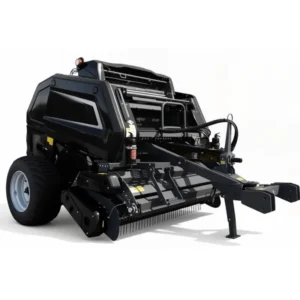
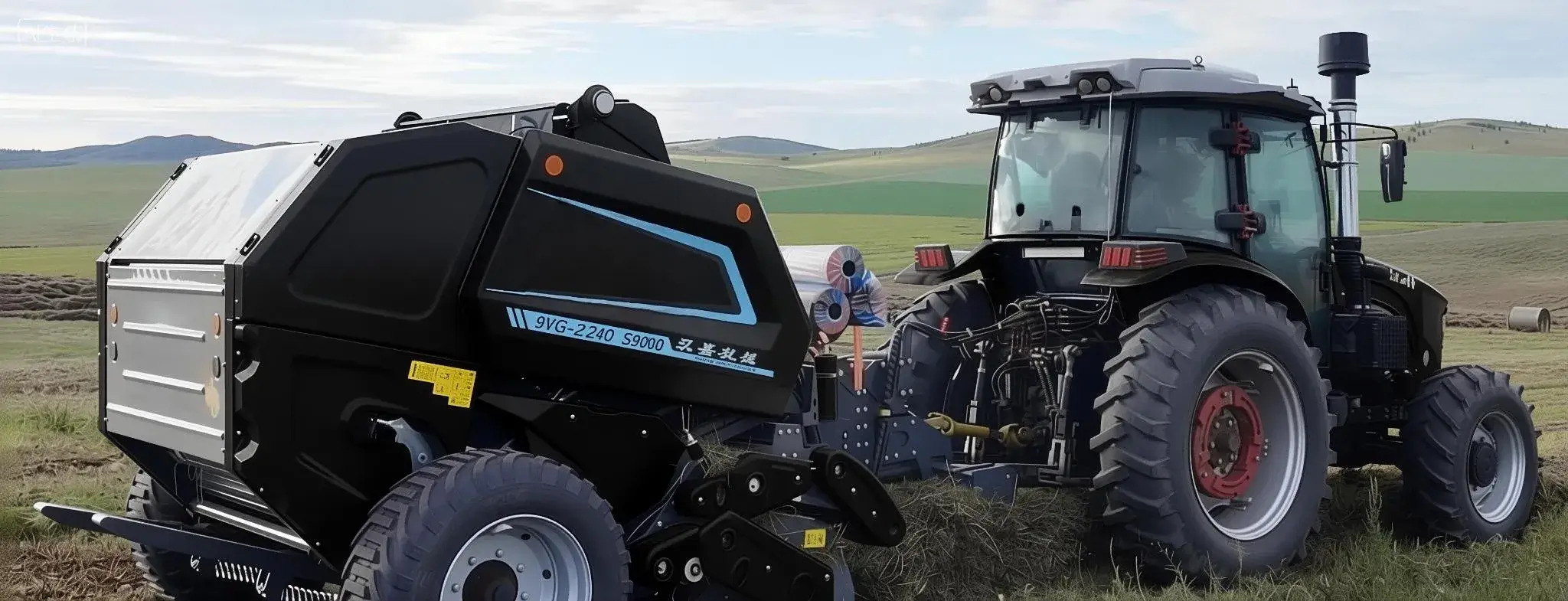
Among available prasa okrągła models, the 9YG-2.24D S9000 is purpose-built for the terrain conditions that most stress gearbox and driveline systems. Its 1000 Nm rated adjustable traction device with 100-degree lateral steering range and 30-degree tilt limit addresses the primary terrain-induced gearbox stress mechanism described throughout this guide — by absorbing slope-induced angular misalignment in the hitch mechanism rather than transmitting it to the gearbox input shaft.
9YG-2.24D Round Baler S9000 — Key Terrain-Relevant Specifications
The S9000’s traction device design directly addresses the three terrain stress sources identified in Section 1. The 1000 Nm rated pivot assembly absorbs lateral bending moments that would otherwise reach the gearbox housing. The 30-degree tilt limit manages PTO angle variation across Korean terrace ridges, keeping the PTO shaft operating within safe angle limits for the connected double-Cardan shaft. The dual-sided 20A heavy-duty compression chain system maintains consistent bale chamber loading, which reduces the torque spike amplitude that the gearbox must absorb from the compression side of its output distribution.
| Specyfikacja | Value | Terrain Relevance |
|---|---|---|
| Traction Device Torque Rating | 1000 Nm | Absorbs slope-induced bending moments before they reach gearbox housing |
| Lateral Steering Range | 100 degrees | Accommodates tight headland turns in narrow Korean paddy ridge fields without driveline stress |
| Maximum Tilt Limit | 30 degrees | Covers Grade 3 terrain severity; protects PTO shaft from operating beyond double-Cardan safe angle range |
| Compression System | Dual-sided 20A heavy-duty chains, 18 rollers | Reduces bale chamber torque spike amplitude reaching gearbox output stage |
| Bale Density Range | 100 to 200 kg/m3 | Sensor density control reduces load cycling variation caused by uneven windrows on terrain |
| Matched PTO Input | 720 RPM, 55 to 100 kW | 720 RPM input reduces PTO shaft cyclic velocity variation magnitude relative to 540 RPM equivalent at the same joint angle |
| Szerokość odbioru | 2240 mm (Spring Tooth) | Wide pickup reduces the number of field passes required on terrain, limiting cumulative gearbox load cycles per hectare |
| Waga strukturalna | 4262 kg | Mass provides frame stability on slopes; reduces lateral rocking that amplifies gearbox housing bending load cycles |
| Bale Size | Phi 1300 mm x 1400 mm | Full-size bales justify the heavy terrain-duty gearbox specification by delivering high per-bale forage volume |
8. Maintenance Schedule for Round Baler Gearboxes in Terrain-Duty Service
The maintenance intervals described below for round baler gearbox components are adjusted for terrain-duty service and represent shorter intervals than those specified in the flat-ground operating manual. Operating on Korean Grade 2 and Grade 3 terrain in most cases justifies moving to these shorter intervals to prevent in-season gearbox failures during the narrow rice straw and ryegrass harvest windows.
| Interval (Terrain-Duty) | Round Baler Component | Action | Notes for Korean Slope Operations |
|---|---|---|---|
| Daily (before use) | Gearbox oil level | Check level with machine on flat ground; correct for slope fill if regular terrain exceeds 15 degrees | Gangwon and Jeju slope operators should fill 15 to 20 percent above nominal flat-ground mark |
| Every 8 hours | PTO shaft universal joint cross bearings | Grease all cross bearing nipples; check for side-play indicating bearing wear | Operating at high angles consumes cross bearing grease faster than flat-ground service; grease before side-play develops |
| Every 25 hours (terrain-duty) | Traction device pivot bearings and pins | Grease all pivot points; check pin cross-section for wear groove formation | High-cycle tilt articulation on Korean terraced paddy ridges accelerates pivot pin wear; early replacement prevents bearing housing elongation |
| Every 50 hours (terrain-duty) | Gearbox magnetic drain plug inspection | Remove plug, photograph particle accumulation, clean and reinstall; change oil if coarse metallic flakes appear | Coarse flake appearance at 50-hour inspection on slope service typically signals accelerated gear face fatigue; early oil change and full inspection is cheaper than emergency gearbox replacement mid-harvest |
| At gearbox oil change (terrain-duty: every 100 hours) | Full gearbox oil drain and refill | Drain hot, inspect drained oil for particle content, refill with GL-5 VG 150 EP gear oil to corrected slope-operating level | Terrain-duty oil change at 100 hours versus 300 hour flat-ground interval; the additional oil cost over a season is minimal compared to one gearbox replacement |
| Seasonally (post-harvest) | Complete gearbox internal inspection | Remove gearbox cover, visually inspect bevel gear flanks for pitting, measure input shaft bearing play against spec | This inspection is the most cost-effective way to predict gearbox remaining life and plan pre-harvest replacement of worn components before they cause emergency field stops during the Korean ryegrass or rice straw season |
9. Compatible Accessories — Complete Drivetrain Supply for Round Baler Systems
The gearbox is only one component in the round baler drivetrain system. Matching the PTO shaft and drive chain to the gearbox specification is essential for achieving the terrain-duty performance described in this guide. Both accessories are available as part of a complete one-stop supply system.
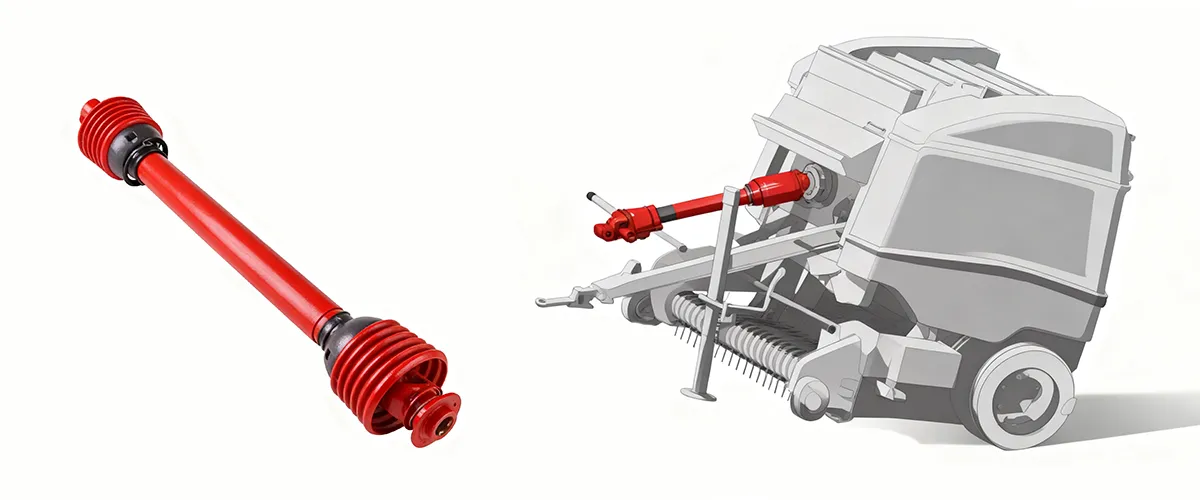
Agricultural PTO Shaft
For Grade 2 and Grade 3 Korean terrain, the PTO shaft must be specified with double-Cardan or constant-velocity joints capable of operating at the angles described in Section 4. The EP PTO shaft range for round balers includes models with CV joint configurations, adjustable telescoping lengths, and overload clutch ratings compatible with the 1000 Nm traction device specification of the S9000 series. Selecting the correct PTO shaft is as important as selecting the correct round baler gearbox specification — both must be compatible with each other and with the terrain severity category of your operating environment.
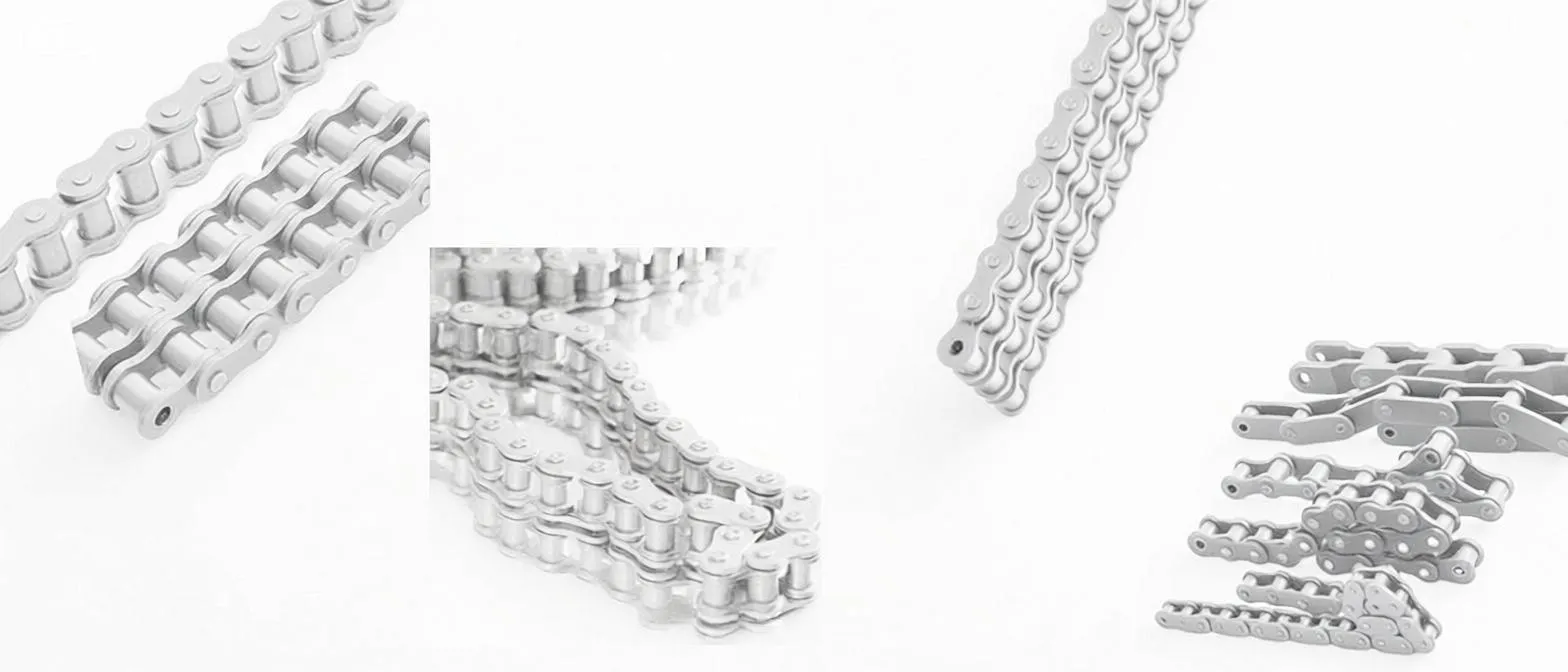
Agricultural Heavy-Duty Drive Chain
The internal drive chains of the round baler transmit gearbox output torque to the pickup drum and compression system. In terrain-duty service, these chains experience higher peak loads than in flat-field operation due to the density variation and load cycling from uneven windrows on slopes. Heavy-duty roller chains matched to the round baler model specification maintain the pitch consistency that preserves gear tooth contact geometry in the sprocket drives throughout a full baling season. Replacement with genuine heavy-duty chain — rather than standard commodity chain of the same nominal pitch — is the most cost-effective way to maintain gearbox output stage life in Korean slope operations.
10. Over a Decade of Agricultural Machinery Engineering Experience
Operating since 2013, we have spent more than ten years developing, producing, and refining agricultural harvesting machinery for the specific demands of livestock and forage farming operations in Korea and across global export markets. Our round baler product range spans from compact light-duty units suited to smallholder Korean operations through to the heavy terrain-duty round balers covered in this guide. Alongside round balers, our production covers single and double disc mowers, disc rotary rakes in single and twin-side configurations, mower-conditioner units, and towed lawn mowers for grassland management.
Our manufacturing facility operates under ISO 9001 Quality Management System certification and is equipped with more than 60 large-scale production machines including CNC laser cutting systems, plasma cutting equipment, automated welding production lines, and electrostatic powder coating systems. Annual design production capacity stands at 2,000 units across the full product range. We hold independent import and export rights, enabling direct supply to Korean agricultural operators and global customers without intermediary delays.
Every round baler we produce is supported by a genuine spare parts program covering all major wear items including gearbox service components, PTO shaft assemblies, drive chains, and compression system parts. Our after-sales team conducts annual field follow-ups with Korean operators during harvest seasons and provides technical training to first-season users — ensuring that the terrain-duty engineering described in this guide is backed by practical field support throughout the machine’s working life.
Founded
2013 — 12+ Years in Production
Annual Capacity
2,000 Units Per Year
Production Lines
60+ Large-Scale Machines
Quality Standard
ISO 9001 Certified
Frequently Asked Questions — Round Baler Gearbox for Uneven Terrain Operations
Redaktor: PXY