Product Selection Guide
A practical selection guide for Korean and global producers who need to match a round baler capacity to their existing tractor power rating without overloading or underutilising either machine.
Why Tractor Horsepower Is the First Round Baler Selection Variable
Pairing a round baler to the wrong tractor is one of the most common and costly mistakes in agricultural equipment planning. An undersized tractor running an oversized machine will stall on heavy windrows, wear its transmission prematurely, and produce poorly formed bales with inconsistent density — all of which erode the return on investment from both machines. An oversized tractor running a small round baler wastes fuel and capital on capacity that cannot be utilised. The right match between tractor horsepower and baler specification produces consistent bale quality, acceptable tractor load factor, and realistic throughput per operating hour that justifies the combined investment across a working season.
In Korean farming, where tractor fleets tend to cluster around the 40–80 kW range and field plots are often irregular in shape and size, round baler selection requires additional attention to pickup width, turning radius, and PTO speed compatibility — not just raw power matching. Operators who already own a tractor should start with its PTO horsepower rating, not engine horsepower, because the round baler is driven from the PTO output shaft, which delivers approximately 80–85% of engine power in most modern Korean tractor models. This article works through the full selection framework from power assessment through to machine specifications, helping producers find the right baling machine for their combination of tractor, crop type, and seasonal volume.
Tractor Power to Round Baler Model — Matching Reference Table
The table below maps the EP round baler model range to tractor power bands, typical Korean farm size categories, and crop applications. Use PTO horsepower as your primary input, not engine horsepower. If your tractor engine is rated in HP, multiply by 0.82 to estimate PTO HP available at 540 or 720 rpm.
| Round Baler Model | Required PTO Power | Tractor Engine HP (approx.) | Bale Diameter | Best Crop Match | Farm Scale |
|---|---|---|---|---|---|
| EP 9YG-1.0 | 48–80 kW | 65–110 HP | Φ1,100 × 1,000 mm | Rice straw, corn stover, pasture | Small farm, up to 50 ha |
| EP 9YG-1.0C | ≥70 kW | 95 HP+ | Φ1,000 × 1,250 mm | Corn stalk (standing), silage | Small–Medium farm |
| EP 9YG-1.25 | ≥75 kW | 100–120 HP | 1,200 × 1,250 mm | Rice straw, soybean, alfalfa | Medium farm, 50–150 ha |
| EP 9YG-1.25A | ≥75 kW | 100–130 HP | Φ1,300 × 1,250 mm | Mixed hay and straw, oat straw | Medium farm, 50–200 ha |
| EP 9YG-2.24D (S9000) | 55–100 kW | 74–134 HP | Φ1,300 × 1,400 mm | All crops, high-volume baling | Large farm / Contractor |
| EP 9YG-2.24D Classic | 55–100 kW | 74–134 HP | Φ1,300 × 1,400 mm | Hay, straw, silage | Large farm / Contractor |
| EP 9YG-2.24D Transcend | 55–100 kW | 74–134 HP | Φ1,300 × 1,400 mm | Premium baling, silage, hay | Commercial contractor |
Manufacturing Structure | Material System
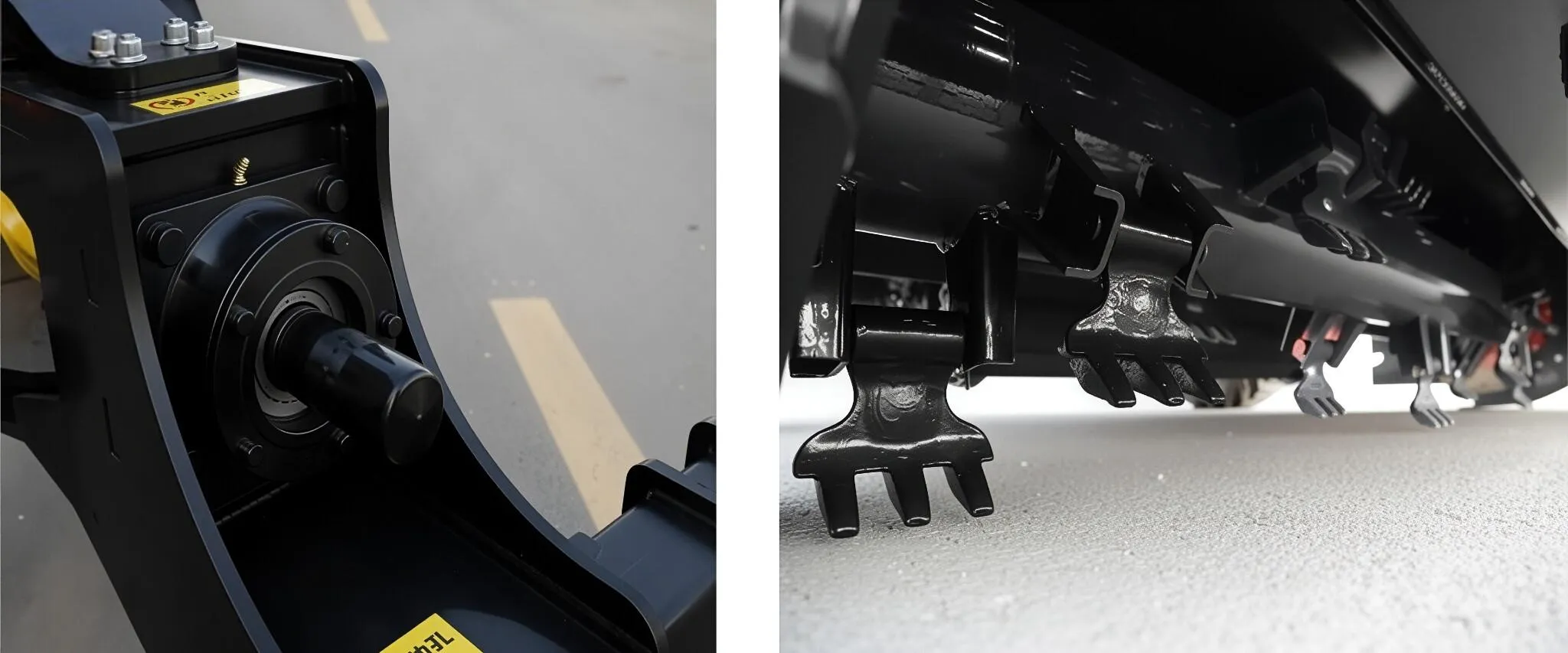
Understanding why different round baler models carry different power requirements begins with how the compression chamber and drivetrain are built. A compact machine in the 9YG-1.0 class uses 16 compression rollers in a drum-roller configuration inside a 1,000 mm diameter chamber. The smaller chamber footprint and fewer rollers mean lower mechanical resistance during bale formation — which is why this model operates comfortably on tractors from 48 kW upward. Moving to the 9YG-1.25 series, the chamber diameter increases to 1,200 mm and the compression roller count rises to 18, requiring proportionally more torque to maintain consistent roller speed under load. The commercial 9YG-2.24D series uses the same 18-roller drum configuration but in a 1,200 mm diameter chamber that is 1,400 mm wide, creating a larger bale volume that demands sustained torque throughout the compression cycle — hence the 55–100 kW power requirement for consistent high-density operation.
The round baler gearbox design differs between size classes in ways that directly affect tractor compatibility. The 9YG-1.0 series uses a single-stage gearbox configuration with a PTO input speed of 720 r/min and a standard Category II three-point linkage or tow hitch. The 9YG-2.24D commercial series uses a dual-gearbox configuration where twin gearboxes allow the machine to rotate 90 degrees to either side for tighter turning — a feature that also increases the total drivetrain mass and inertia, contributing to the higher tractor PTO demand during bale formation. For Korean operators with limited field access widths, the dual-gearbox turning advantage of the 9YG-2.24D can be as important a selection factor as raw power matching.
Frame material grade scales with model size across the range. The compact 9YG-1.0 uses standard-grade structural steel with a finished mass of 2,640 kg. The 9YG-1.25 series uses heavier-gauge sections that bring structural mass to 4,060–4,558 kg. The 9YG-2.24D sits at 3,922–4,570 kg depending on variant, incorporating additional reinforcement at the hitch point and rear door hinge. These mass differences matter to tractor selection because front-axle loading changes significantly when a heavy round baler is hitched — compact tractors near the bottom of the power range may need front ballast to maintain safe steering response when towing the heavier models on slope terrain.
Three Tractor Power Scenarios and the Right Round Baler for Each
Korean tractor fleets fall into three broad power categories that map reasonably clearly onto the EP round baler model range. Each scenario below describes the operating conditions, the recommended model, and the specific reasons why that match works in Korean farming conditions.
40–65 HP Tractor: Small Round Baler Class
Tractors in the 40–65 HP range are the most common class in Korean paddy and upland farming. They are well-matched to the EP 9YG-1.0 compact model, which requires 48–80 kW (64–107 HP) at the PTO. In typical Korean rice straw conditions with moderate moisture content (18–25%), a 65 HP tractor running a 9YG-1.0 will operate at 60–70% of its PTO capacity during bale formation — a comfortable working range that avoids overheating the tractor transmission. The 1,900 mm pickup width on the 9YG-1.0 matches well with the narrower windrow widths produced by standard Korean paddy cut-and-rake operations. Operators looking at a small hay baler for lawn mower scale plots or very small fields should note that this model is the minimum practical size for commercial rice straw collection — anything smaller produces bales too light for efficient transport and storage.
75–100 HP Tractor: Mid-Range Round Baler Class
The 75–100 HP tractor bracket is the most versatile range for Korean commercial baler selection. Tractors in this class can run either the 9YG-1.25 or 9YG-1.25A comfortably, and can operate the 9YG-2.24D at lighter crop loads. The 9YG-1.25 with its 2,240 mm pickup width is particularly effective on Korean alfalfa and mixed hay operations where windrows are wider and more uniform than paddy straw windrows. At 75 kW, the tractor operates at approximately 65–75% PTO load during peak bale formation in dense alfalfa — within the sustained-load comfort zone for most Korean tractor brands including LS Mtron, TYM, and Kukje. Operators looking to step up from a small round baler will find the 9YG-1.25 a substantial throughput improvement without requiring a tractor replacement.
100–135 HP Tractor: Commercial Round Baler Class
Tractors in the 100–135 HP range are typically operated by Korean forage contractors and larger livestock feed producers baling across multiple farms or at commercial scale. This power bracket is the natural match for the 9YG-2.24D series — the S9000, Classic, and Transcend variants all operate within the 55–100 kW specification, and a 100–134 HP tractor sits comfortably at the upper working range of these models, providing sufficient torque reserve for heavy first-cut silage and high-density alfalfa without operating the tractor at peak load factor for extended periods. At this power level, the baling machine productivity of 40–100 bales per hour is fully achievable in suitable field conditions, and the sensor-controlled density system becomes the primary driver of consistent output quality.
Featured for Mid-Range Tractors: EP 9YG-1.0C Round Baler
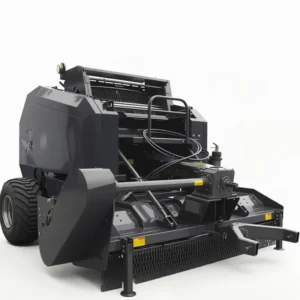
The 9YG-1.0C is the interchangeable-pickup variant of the compact 9YG-1.0 series, designed specifically for operators who bale corn stalks alongside rice straw and other residues in the same season. Its hammer-claw pickup replaces the standard spring tooth without structural modification, making it the most versatile small round baler in the range for Korean mixed-crop upland operations running at 70–95 kW tractor power.
| Ширина звукоснимателя | 2,400 mm |
| Тип пикапа | Hammer-claw (interchangeable with spring tooth) |
| Диаметр камеры сжатия | Φ1,000 mm |
| Ширина камеры сжатия | 1,250 mm |
| Roller Count | 16 (drum-roller) |
| Размер тюка (диаметр × ширина) | Φ1,000 × 1,250 mm |
| Плотность тюков | 115–200 kg/m³ |
| Производительность | 40–80 bales/h |
| Power Requirement | ≥70 kW / 95 HP |
| PTO Output Speed | 540 r/min |
| Метод привязки | Automatic net-wrap |
| Структурная масса | 3,198 kg |
| Рабочие габариты (Д×Ш×В) | 3,800 × 2,850 × 2,200 mm |
| Hammer Claw Count | 20 |
PTO Speed, Round Baler Gearbox Compatibility, and Korean Tractor Standards
PTO speed compatibility is a frequently overlooked part of baler selection. Korean and most Asian tractors operate their PTO at 540 r/min as the primary speed, with some larger models also providing 1,000 r/min. The EP models in the 9YG-1.0 and 9YG-1.0C compact range input at 540 r/min, which makes them directly compatible with the full range of Korean tractor brands without any gearbox adaptation. The 9YG-1.25A operates at 540–1,000 r/min, giving additional flexibility for tractors that run a high-speed PTO. The commercial 9YG-2.24D series inputs at 720 r/min — compatible with modern Korean tractors that offer this intermediate speed but requiring confirmation of PTO speed range before purchase on older tractors that may only offer 540 or 1,000 r/min.
Regulations That Affect Round Baler and Tractor Compatibility in Key Markets
Regulatory requirements in round baler operating markets influence not just which machines are approved for use, but also which tractor-baler combinations qualify for subsidy schemes and safety compliance. Understanding these requirements before finalising equipment selection can avoid costly certification issues after purchase.
Южная Корея
The Agricultural Mechanization Promotion Act regulates the safety certification and subsidy eligibility of agricultural machinery in South Korea. Round balers must pass NAAS (National Academy of Agricultural Science) registration or carry equivalent CE certification for import approval. Subsidy eligibility under the national farm machinery purchase support programme is tied to registered machine specifications — including the PTO speed and power range documented at registration. If a round baler is registered for use with 75 kW tractors and above, pairing it with a 60 kW tractor may not satisfy the subsidy conditions and could affect machine warranty claims under Korean commercial law. Confirm tractor power documentation before applying for subsidy on any round baler purchase.
European Union
CE marking under Machinery Directive 2006/42/EC requires that agricultural baler product documentation specifies the minimum and maximum tractor power range for safe operation. EU operators who run a CE-marked machine outside its documented power specification risk invalidating their CE compliance and, in some jurisdictions, their third-party liability insurance coverage. ISO 500:2021 standardises PTO shaft speed specifications and the universal joint angles that must be respected within the documented tractor power range — exceeding angle limits at low PTO speeds is a specific safety risk that the standard is designed to prevent. Round baler selection in EU markets should always reference the CE documentation’s tractor specification range, not just the manufacturer’s nominal power recommendation.
Australia
Australian WHS legislation requires PCBU operators of agricultural machinery to ensure that equipment is used within its documented safe operating parameters — which includes the tractor power range and PTO speed. Running a baler with an underpowered tractor creates identifiable mechanical stress risks (PTO shaft over-torque, hydraulic system underperformance) that would be cited in a workplace incident investigation as a foreseeable failure that a competent operator could have prevented. Australian operators should also note that round baler selection for broadacre grain crop residue baling in the southern states involves different power matching to Korean paddy operations — wheat straw at 10–14% moisture requires less PTO torque than high-moisture rice straw at 20–25%, allowing somewhat lighter tractor pairing for equivalent throughput.
System Compatibility: Agricultural PTO Shaft Selection
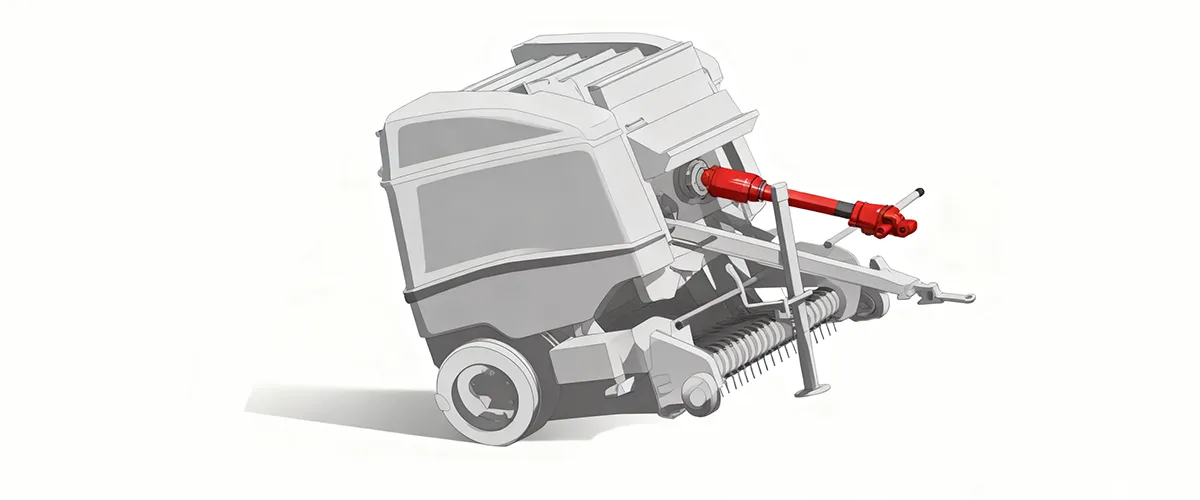
Selecting the right baler model for a given tractor power is only part of the drivetrain equation. The PTO shaft connecting the tractor output to the round baler input must be rated for the torque that will flow through it at the maximum operating load. An agricultural PTO shaft that is undersized for the round baler’s peak torque demand — particularly during blockage events or heavy windrow entry in wet conditions — can twist apart or trigger the torque limiter repeatedly, both of which disrupt productive baling. A shaft matched to the specific round baler model and the tractor’s maximum PTO output torque provides the reliability margin that supports uninterrupted operation across a full day’s baling.
10+ Years Engineering Round Balers Across the Full Power Spectrum
In production since 2013, this manufacturing operation has built a round baler range that deliberately covers the full spectrum of tractor power classes used in Korean and global forage operations — from the compact 9YG-1.0 for small farm tractors through to the commercial 9YG-2.24D Transcend for professional forage contractors. The engineering focus across all models is mechanical reliability within the specified power range: each model is designed, tested, and documented for a specific tractor power class so operators receive honest performance expectations rather than optimistic ratings that only hold in ideal conditions.
The facility holds ISO 9001 Quality Management System certification and independent import and export rights across all major agricultural markets. More than 60 sets of large-scale production equipment support an annual designed output capacity of 2,000 round baler units. The product range also includes single and double-blade mowers, disc rotary mowers, and side rakes, allowing operators to source the full upstream harvesting system — tractor-matched mowers through to matched round baler models — from a single production source.
Frequently Asked Questions
What is the minimum tractor horsepower needed to run a commercial round baler efficiently on Korean rice straw without overloading the drivetrain?
For Korean rice straw at typical autumn moisture levels (18–25%), the practical minimum is a tractor delivering at least 64 PTO HP (48 kW), which matches the 9YG-1.0 compact model’s lower power boundary. However, operating at the absolute minimum means zero torque reserve — in dense or damp windrow sections, the tractor will labour and bale density will drop. A more comfortable working arrangement is 75–85 PTO HP for this compact class, which keeps the tractor at 60–70% load factor and provides the reserve margin to handle variable windrow conditions without disrupting baling rhythm.
How do I match a small round baler to my 40 HP tractor for a Korean mixed-crop upland farm baling rice straw and soybean stems?
A standard 40 HP Korean tractor delivers approximately 32–34 PTO HP. No commercial model in the EP range is rated for operation below 48 kW (64 HP) at the PTO, which means a 40 HP tractor is below the practical power threshold for any drum-roller commercial baler. At this power level, a belt-type mini hay baler producing smaller bales in the 500–800 mm diameter range may be more appropriate. If upgrading to a 60–65 HP tractor is feasible, the 9YG-1.0 compact round baler becomes a viable option for rice straw and soybean stem baling in Korean upland conditions.
Which round baler model works best for a 100 HP Korean LS Mtron tractor used in commercial hay baling across multiple farms in the Jeolla region?
A 100 HP LS Mtron tractor delivers approximately 82–85 PTO HP (61–63 kW), placing it at the mid-to-upper range of the 9YG-1.25 and 9YG-1.25A specifications and at the lower-mid range of the 9YG-2.24D specification. For commercial hay baling across multiple Jeolla region farms, the 9YG-1.25A is the recommended match — it provides 1,300 mm diameter bales suitable for hay marketing, operates within comfortable tractor load factor, and its 2,150 mm pickup width suits the windrow widths typical of Korean forage grass cut operations. The 9YG-2.24D would also function but the tractor would be at 70–75% PTO load in demanding conditions, leaving less reserve margin than ideal for sustained contractor-scale operation.
What round baler gearbox specification should Australian broadacre wheat straw producers check when selecting a machine for their 120 HP John Deere tractors?
Australian broadacre operators pairing a baler with a 120 HP John Deere should confirm that the gearbox input speed matches the tractor’s PTO speed (typically 1,000 rpm on modern John Deere tractors at that power level, though 540 rpm is also available). The EP 9YG-2.24D range inputs at 720 r/min — verify that the tractor can be set to 720 r/min PTO output or that a speed-matched intermediate shaft is available before purchase. The round baler gearbox should also be confirmed for the tractor’s maximum PTO torque output to ensure the housing is rated for the load the 120 HP John Deere can deliver under peak conditions in heavy straw windrows.
Where can Korean round baler manufacturers offer technical selection support for operators who are unsure which model fits their tractor power and crop type?
Operators who need model-specific selection guidance based on their tractor power rating, PTO speed, crop type, and seasonal volume can request direct technical consultation through the product inquiry form at farm-balers.com. The EP range covers compact models from 48 kW tractor pairings through to commercial machines for 100 kW and above, and the technical team can confirm which model matches documented tractor specifications, advise on PTO shaft selection, and provide the product documentation required for Korean NAAS registration and subsidy applications.
Need Help Selecting the Right Round Baler for Your Tractor?
Whether you operate a compact Korean farm tractor or a commercial-scale contractor fleet, our team can confirm the correct round baler model for your power rating, PTO speed, crop type, and subsidy eligibility requirements. We supply the full EP round baler range with matched PTO shaft and drivetrain components for Korean and international markets.
Редактор: PXY