
EP-5600×2780×1790mm (L×W×H) Spring Tooth Type Double-Chamber Square Baler
The EP-5600×2780×1790mm is a trailed-type square baler built on the 9YFS-2.2 double-chamber engineering platform — a design concept that sets it apart from conventional single-chamber square baler machines by running two independent 460×360mm compression chambers side by side from a single pickup pass. For commercial forage contractors and large livestock farms in South Korea, Australia, Canada, and the Netherlands, this double-output configuration fundamentally changes the economics of baling: the same tractor pass, the same fuel burn, and the same operator time produce twice the number of finished square hay bales compared to an equivalent single-chamber machine. At a matched power requirement of ≥51.5 kW (approximately 69 HP), the machine is accessible to a wide range of mid-sized tractors already operating on mixed farms, making it one of the more commercially versatile large square baler options in its class.
Double-Chamber Agricultural Square Baler
EP-5600×2780×1790mm (L×W×H)
Spring Tooth Type — 2200mm Picking Width
Double-Chamber Square Baler
A compact yet high-output trailed-type double-chamber square baler with spring tooth pickup, dual 2×2 D-type knotters, and twin 460×360mm compression chambers — delivering two simultaneous bale streams from a single pass for maximum field productivity across hay, straw, and forage operations worldwide.
1. Технические характеристики
All parameters below correspond to the EP-5600×2780×1790mm (L×W×H) Spring Tooth Type Double-Chamber Square Baler, based on the 9YFS-2.2 engineering platform.
| Нет. | Parameter | Единица | Спецификация |
|---|---|---|---|
| 1 | Название модели | — | EP Spring Tooth Type Double-Chamber Square Baler |
| 2 | Метод привязывания | — | Трейловый |
| 3 | Picking Width | мм | 2200 |
| 4 | Feeding Inlet Width | мм | — |
| 5 | Picker Structure | — | Пружинный зубчатый тип |
| 6 | Feeder Structure | — | Fork Feeding Mechanism |
| 7 | Knotter Type | — | D Type |
| 8 | Number of Knotters | ПК | 2×2 (4 total) |
| 9 | Compression Chamber Section Size (W×H) | мм | 460 × 360 × 2 (Double Chamber) |
| 10 | Метод прессования | — | Automatic Rope Baling |
| 11 | Matching Power Range | кВт | ≥51.5 |
| 12 | Габаритные размеры (Д×Ш×В) | мм | 5600 × 2780 × 1790 |
| 13 | Вес машины | кг | 3115 |

2. Five Key Advantages of the EP Spring Tooth Double-Chamber Square Baler
01 — DOUBLE-CHAMBER OUTPUT
Twin 460×360mm compression chambers operating in parallel from a single tractor pass is the defining commercial advantage of this square baler machine. Where a conventional single-chamber large square baler produces one bale per cycle, this model produces two — effectively doubling per-hour bale output from the same tractor, fuel, and operator investment. For commercial hay contractors in Australia and Canada billing by the bale or by the paddock, this output multiplier directly improves the return on every field hour worked during peak season.
02 — SPRING TOOTH PICKUP
The 2200mm wide Spring Tooth Type (弹齿式) pickup is well-proven across a wide range of crop types and field conditions. Spring tines flex on ground contact rather than breaking, extending their service life through multi-season use and reducing round baler parts replacement frequency. The generous 2200mm pickup width covers the full windrow width left by most twin-blade mower conditioners and wide rotary rakes, minimising the need for windrow merging passes and keeping total field operations per cut to a minimum — a time and cost saving that accumulates across a full baling season.
03 — 2×2 D-TYPE DUAL KNOTTERS
Four D-type knotters in a 2×2 configuration — two per chamber — apply two rope ties to every bale from each chamber simultaneously, producing structurally robust square hay bales that resist breakage through mechanical handling, transport, and storage. The D-type knotter is a well-established design format with a long service record on commercial square hay baler machines across Europe, North America, and Asia-Pacific, offering consistent tie formation across standard sisal and synthetic baler twine grades available through dealer networks worldwide.
04 — COMPACT MACHINE FOOTPRINT
At 5600×2780×1790mm overall dimensions and 3115 kg, this double-chamber square baler maintains a more manageable transport envelope than many large square baler designs producing equivalent output. The lower machine height of 1790mm is particularly relevant for road transport under bridges and overhead power lines on farm laneways — a practical consideration for contractors moving between multiple farm clients across hilly or infrastructure-dense regions in Korea, the Netherlands, and the UK. Compact dimensions also simplify implement shed storage between seasons.
05 — BROAD POWER COMPATIBILITY
A matching power requirement of ≥51.5 kW (≥69 HP) is notably accessible for a double-chamber large square baler with this output capacity. This means the machine can be deployed on tractors already working on many mixed farms without requiring a dedicated high-powered tractor purchase, keeping total cost of ownership lower than comparable double-bale output configurations requiring 90 HP or more. The square baler for compact tractor market segment will find this power threshold within reach of many modern utility and compact utility tractors, expanding the addressable farm size for this machine type.
3. How Does a Square Baler Work — Double-Chamber Operating Principle
The EP Spring Tooth Double-Chamber Square Baler is a towed-type machine powered by the tractor's PTO shaft. Power flows from the PTO through the square baler gearbox, distributing drive simultaneously to the spring tooth pickup, the fork feeding mechanism, and the two independent plunger-and-knotter assemblies that serve each compression chamber. As the tractor pulls the machine forward, the 2200mm wide spring tooth pickup assembly lifts crop material from the windrow using its array of flexible high-carbon steel tines. Unlike hammer-claw designs suited to tough stalk crops, spring tooth pickups excel at cleanly lifting conditioned hay, short-stemmed wheat straw, and paddy straw at higher field travel speeds without wrapping or bridging — making this square baler machine well-matched to the grass hay, alfalfa, and cereal straw baling that constitutes the majority of commercial baling work across Korea, Australia, and the Netherlands.
After pickup, the fork feeding mechanism divides the incoming crop stream and distributes material evenly into both compression chambers. Each chamber receives crop charges independently, and each plunger operates on its own cycle — the two plungers working in coordinated alternation to balance the machine's dynamic loads and maintain a stable towing behaviour behind the tractor. Inside each 460×360mm chamber, the reciprocating plunger compresses each crop charge against the growing bale, building density with every stroke until the preset bale length is reached. At that point, the two D-type knotters for that chamber fire, applying two rope ties automatically before the bale is ejected from the rear of the machine. Because both chambers operate simultaneously and independently, each forward field pass produces two finished square hay bales, one from each chamber, at whatever bale length the operator sets.
The automatic rope baling system uses standard baler twine fed from onboard twine boxes, with each chamber's knotter pair operating independently from its own twine supply. This independence means a twine run-out or knotter fault on one chamber does not stop the other — a practical operational resilience advantage during long baling sessions in the field.
4. Materials & Structural Construction
The EP double-chamber square baler frame is fabricated from heavy-section structural steel, with the dual-chamber plunger housing representing the most complex welded subassembly in the machine. The frame must carry the combined dynamic loads of two reciprocating plungers operating in alternation, which places specific requirements on the rigidity and fatigue resistance of the central chassis structure. Primary frame members are welded from high-tensile steel plate and profile sections, with all critical joints inspected before priming and topcoat application. The exterior finish uses field-grade enamel paint resistant to crop acid, UV exposure, and the moisture cycling common across multi-season use in temperate and subtropical farming regions from Korea to Brazil and Colombia.
Spring tines on the 2200mm pickup are formed from high-carbon spring steel with heat treatment to optimise flex-to-recovery ratio. The tine mounting design allows individual tine replacement without disassembling the full pickup reel — an important field serviceability feature since pickup tines are the highest-frequency wear item on any spring tooth square baler machine. The fork feeding mechanism uses hardened steel fork arms that direct crop into the twin chamber inlets, with arms designed for the higher material throughput rate of the double-chamber configuration. Both sets of D-type knotters are manufactured from precision-cast components — the same design platform proven on commercial European square hay baler machines — offering reliable tie formation across the full twine grade range used by farmers in Australia, Canada, the Netherlands, and South Korea.
Compression chamber bore surfaces are formed from hardened wear-plate steel with a smooth internal finish to minimise friction and maintain consistent bale density across the full chamber length. The twin plunger face plates are individually replaceable as square baler parts when wear eventually affects compression performance, avoiding the cost of replacing the entire plunger assembly. At 3115 kg, the machine's weight provides useful towing stability during field operation, keeping the machine tracking straight in the tractor's rear path even at higher field travel speeds on long straight paddocks.
5. Application Scenarios
The double-chamber format of this square baler machine is most valuable wherever bale volume per field hour is a primary productivity driver. Here are the key scenarios where this model delivers the strongest commercial return.
Commercial Hay Contracting
Agricultural contractors in Korea, Australia, and Canada rely on bale output per day as the primary revenue driver. A double-chamber square baler machine that produces two bale streams simultaneously from the same tractor pass effectively lowers the per-bale time cost of baling without doubling tractor or fuel expenditure. For contractors running tight schedules across multiple farm clients during the short hay harvest window, this throughput advantage can translate to fitting one additional farm into the daily schedule — a meaningful revenue impact compounded across a full season.
Wheat & Rice Straw Recovery
Post-harvest wheat and rice straw recovery in South Korea, Japan, and Southeast Asia operates under tight time constraints — the stubble field must be cleared for next crop establishment within days of grain harvest. The EP's 2200mm spring tooth pickup efficiently lifts and clears the straw windrow in a single pass, and the double-chamber output ensures the available baling hours between grain harvest and the next sowing deadline are used at maximum productivity. Small square bales of hay and straw at 460×360mm cross-section are also the preferred format for mushroom substrate buyers who specify consistent bale weight and dimensions for their processing operations.
Alfalfa & Mixed Grass Hay
Spring tooth pickups are the preferred configuration for alfalfa baling because they handle the leafy, brittle nature of wilted alfalfa with lower leaf loss than hammer-claw or belt-based alternatives. The spring tines lift alfalfa cleanly from the windrow without shredding the leaf fraction that carries the bulk of the plant's protein and energy value — critical for hay destined for high-producing dairy cows or competition horses on farms across the Netherlands, Australia, and Canada where hay quality is purchased on protein and energy density analysis, not just visual grade.
Biomass & Fibre Crop Baling
Square bale format is the preferred delivery format for many biomass plant purchasing specifications, with bale weight and dimensions required to meet specific volumetric loading targets for biomass trucks and boiler feed systems. The consistent 460×360mm bale cross-section from the EP double-chamber square baler meets standard biomass purchasing specifications used across Korean and European district heating and power plant procurement programmes. Double-chamber output keeps the biomass supply chain running at the throughput rates required by industrial purchasing contracts that specify delivery volumes per day or per week.
Export Hay Production
Small square hay bales are the dominant format for hay exported in shipping containers to markets in the Middle East, Southeast Asia, and East Asia from Australian and Canadian production farms. Container stuffing efficiency for small square bales relies on consistent bale dimensions across the entire consignment — the 460×360mm format from this machine stacks tightly and fills a standard 40-foot high cube container to near-maximum volumetric capacity. Double-chamber output reduces the number of field hours needed to produce a full container load, shortening the time from cut crop to ship-ready product during the weather-sensitive export hay season.
6. Regulatory Standards & Compliance by Region
Operators and importers of square baler machines in international markets must ensure compliance with the applicable machinery safety, gearbox mechanical standards, and agricultural equipment registration frameworks in their jurisdiction. The following outlines the key regulatory considerations by market.
Южная Корея
Under the Agricultural Mechanization Promotion Act, square baler machines imported for use by Korean farms or eligible for government purchase subsidies must pass RDA (Rural Development Administration) type approval testing. This covers PTO shaft guarding, hitching system structural integrity, and knotter guard completeness. The double-chamber design requires certification of the knotter guarding configuration for all four knotters as a unified system. Korean-language operator manuals are expected by dealers and end-users in the Korean market as a standard deliverable with the machine.
European Union
CE marking under EU Machinery Directive 2006/42/EC (transitioning to EU Machinery Regulation 2023/1230) is required for sale in all EU member states including the Netherlands, Germany, Belgium, and France. EN ISO 4254-7 (balers and baling presses) is the primary harmonised safety standard, covering knotter guarding, PTO connection, bale ejection safety, and rear gate design. For a double-chamber baler with four knotters, the risk assessment scope under EN ISO 4254-7 is expanded to cover all knotting system access points and guards around each chamber.
Australia
Safe Work Australia and state-level WHS regulations govern trailed agricultural machinery. PTO shaft guarding must comply with AS 1410. The machine weight of 3115 kg and 2780mm transport width require compliance with state over-dimension vehicle movement permits when transporting on public roads between farms. Queensland, New South Wales, and Victoria each have specific overwidth permit thresholds that should be checked before road transport. Operators should also note workplace noise exposure requirements under their state noise regulation where sustained baler PTO operation is involved.
Canada
Provincial WHS Acts govern farm machinery safety in Canada, with CEMA (Canadian Equipment Manufacturers Association) standards providing the recognised technical benchmark for baler safety and PTO shaft guarding. The ≥51.5 kW power requirement aligns with the lower-to-mid range of tractors commonly operated on Saskatchewan, Alberta, and Ontario grain and hay farms. Canadian buyers should also verify current import duty classification under the Canada-EU CETA agreement or the CUSMA framework, which may offer duty relief on agricultural machinery categories.
Brazil & Colombia
In Brazil, ABNT standards and MAPA Ministry of Agriculture import classification apply to agricultural machinery. INMETRO certification requirements should be confirmed per the specific machine category and intended market. In Colombia, ICA and INVIMA frameworks govern agricultural equipment imports. Both markets have growing commercial forage and biomass sectors where high-output square baler machines are finding demand, particularly among large-scale cattle ranching and sugarcane co-product operations seeking to monetise crop residue or reduce purchased feed costs.
United Kingdom
Post-Brexit UKCA marking under UK Machinery Regulations (SI 2008/1597 as amended) applies for the Great Britain market. PUWER 1998 covers employer obligations for safe use of farm equipment. The HSE publishes agricultural machinery Approved Codes of Practice that specifically address knotter guarding — relevant to the EP's four-knotter dual-chamber configuration. The 2780mm machine width requires standard overwidth movement notice in England and Wales when transporting between farm locations on public A and B roads.
Regulatory frameworks are periodically updated. We strongly recommend verifying current requirements with a local agricultural machinery compliance specialist or import authority before finalising procurement.
7. Compatible Accessories & Drivetrain Components
The EP double-chamber square baler is designed for one-stop supply alongside its matched drivetrain components. Sourcing gearbox and PTO shaft from the same manufacturer removes specification uncertainty and simplifies warranty and parts logistics across export markets.
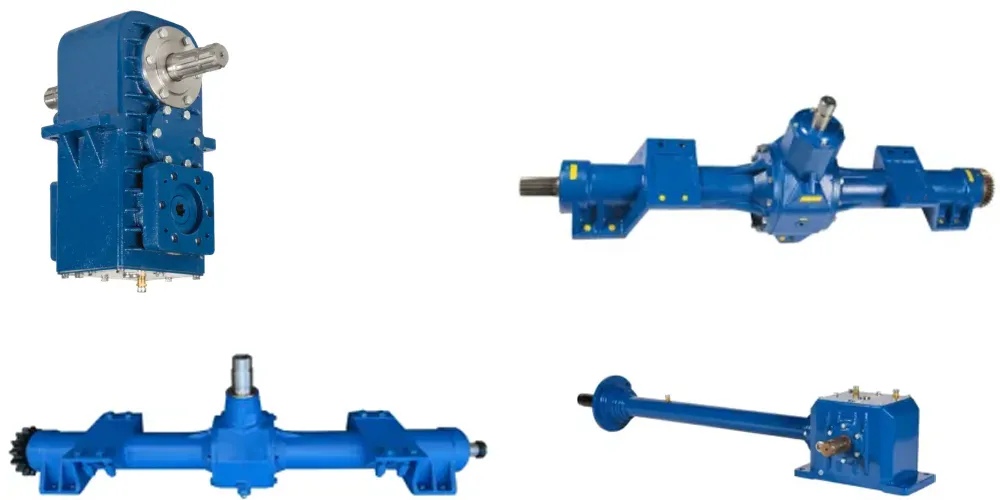
Square Baler Gearbox
On a double-chamber square baler machine, the gearbox carries the combined PTO torque demand of two plunger assemblies and a wider-than-average pickup — a more demanding duty cycle than equivalent single-chamber machines. Our matched baler gearbox for the EP spring tooth platform is engineered to the specific torque and speed requirements of the dual-plunger drive layout, using case-hardened helical or bevel gear sets in an oil-bath sealed housing with oversized shaft bearings to handle the alternating plunger shock loads. For buyers in South Korea and the Netherlands requiring CE or RDA compliance documentation, we supply full gearbox technical data alongside the baler as a standard part of the export documentation package, reducing the compliance file burden for importers dealing with local machinery registration authorities.
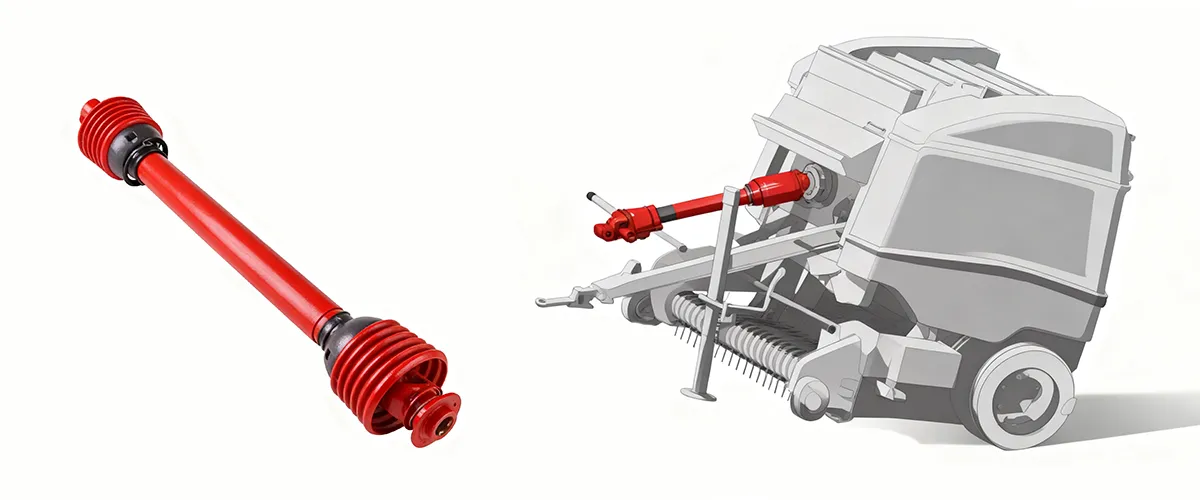
PTO Drive Shaft
Он PTO shaft for square balers connecting the tractor to this double-chamber square baler must be rated for the combined drive loads of both compression systems operating simultaneously. Our matched EP PTO shafts include torque-limiting overrun clutch options that protect the gearbox from the peak impact loads generated when both plungers reach maximum compression simultaneously — a load condition unique to double-chamber machines that is not adequately addressed by standard single-chamber shaft ratings. Safety guarding complies with EN 12965 across EU, UK, Australian, and Canadian regulatory frameworks, and telescoping length is specified to match the EP baler hitching geometry without any field modification. All cross-and-bearing joints include grease nipple fittings at service points that align with the baler's standard maintenance schedule intervals, reducing the total number of independent service operations per season.
8. About Us — Over 10 Years of Agricultural Machinery Expertise
Established in 2013, our company is a modern, integrated manufacturer in the agricultural and animal husbandry machinery sector, holding independent import and export rights and certified under ISO 9001 Quality Management System. Over more than a decade, we have built a comprehensive product range spanning light and heavy round balers, small square baler and large square baler machines including the double-chamber platform described here, single and double-blade mowers, disc rotary mowers, and single and double-side rakes. Our operational goal has remained consistent from the beginning: to develop world-class agricultural machinery products that genuinely serve the needs of commercial farming operations across international markets, rather than simply meeting minimum specification thresholds.
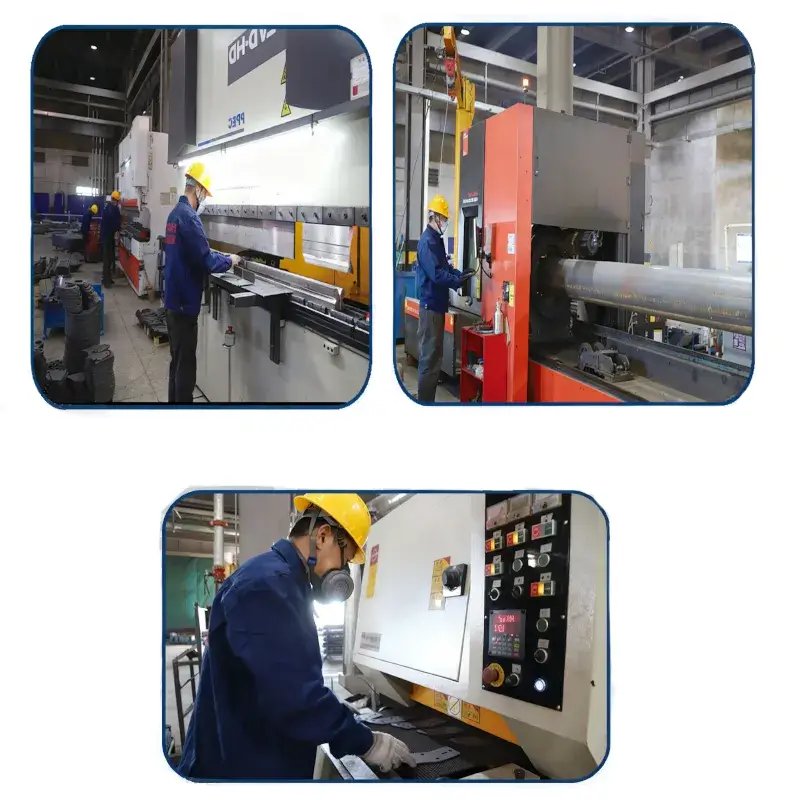
Our production facility now operates more than 60 sets of large-scale manufacturing equipment, with an annual design capacity of 2,000 machines. We continuously upgrade our production technology in line with advances in agricultural machinery engineering, and our export documentation team handles CE technical files, UKCA dossiers, RDA-compatible data sheets, and full commercial export paperwork as a standard service.
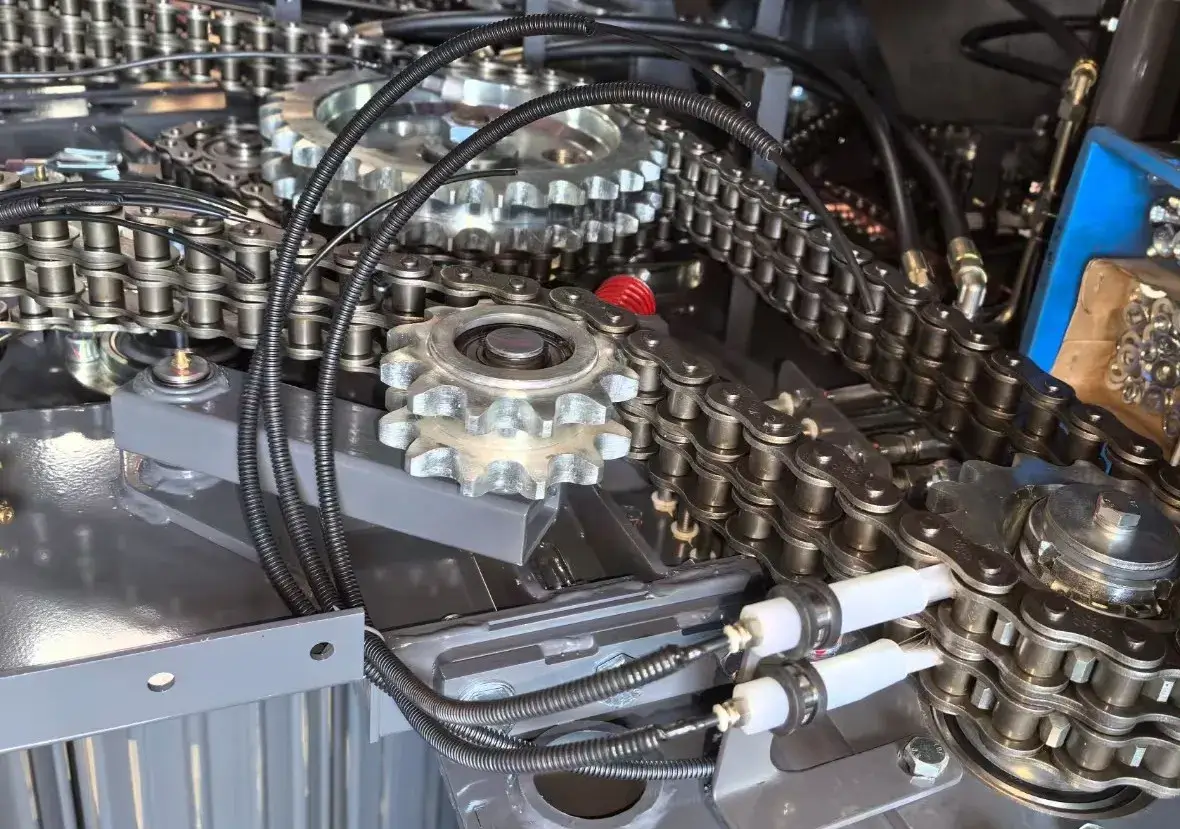
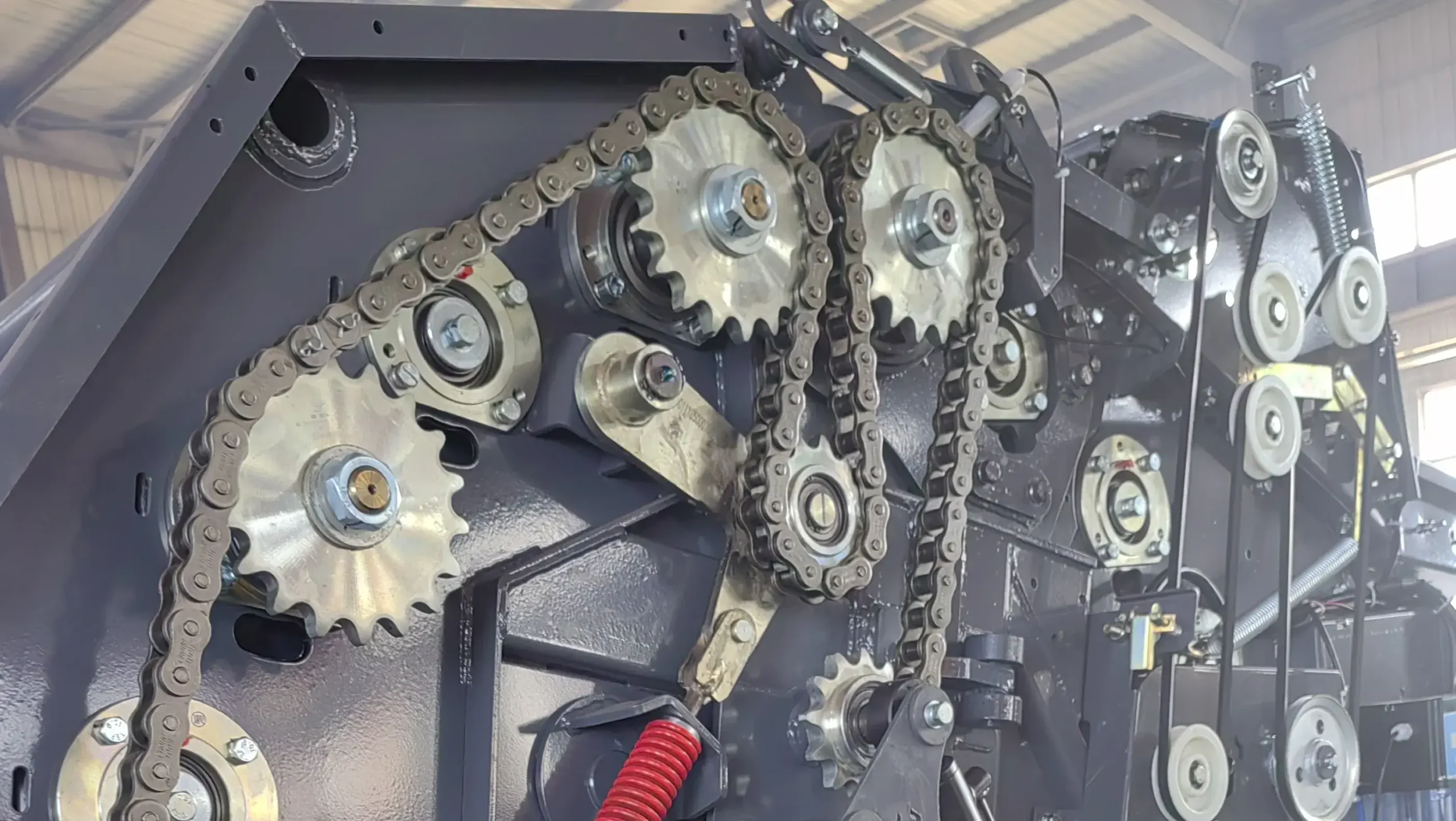
WorkShop

Frequently Asked Questions
Редактор: PXY


