Rice Straw Baling — Livestock Feed Application Guide
A practical knowledge guide for Korean and Asian feed processors, livestock operators, and agricultural contractors on understanding how bale density from a round baler directly affects feed quality, compliance, and profitability.
1. Why Bale Density Matters More Than You Think
For livestock feed processors across South Korea, Japan, Southeast Asia, and beyond, the question of what constitutes an acceptable rice straw bale is no longer a casual field decision — it has become a technical specification with measurable financial consequences. Feed mills, TMR (Total Mixed Ration) centers, and cattle cooperative purchasing offices have progressively tightened their acceptance criteria, requiring that round bale deliveries meet minimum density thresholds before they are accepted, weighed, and compensated. This shift reflects the broader professionalisation of ruminant nutrition supply chains across Asia’s growing beef and dairy industries.
A round baler, at its core, is a machine that compresses crop material into a cylindrical form bound with net wrap or twine. But not all round balers produce the same density outcomes, and this gap in output quality is precisely where purchasing specifications diverge between operators. Feed processors require consistency above all: a bale arriving at the feed lot gate that measures 100 kg/m³ on Tuesday but 62 kg/m³ on Friday is a logistical problem and a nutritional variable that complicates ration formulation. This guide examines what feed processors actually require, why those thresholds exist, and how machinery selection — particularly the round baler model and its compression mechanism — determines whether your harvested straw meets the grade.
Rice straw (벼짚, byeo-jjip in Korean) remains one of the most abundant crop residues in East Asia. South Korea alone produces approximately 5 million tonnes of rice straw annually, with a meaningful portion destined for the livestock feed market under government-supported programmes designed to reduce field burning. Understanding the technical requirements placed on this material by buyers — including minimum density, moisture targets, wrapping specifications, and physical dimensions — is essential for any contractor or farmer operating a small round baler, a mid-range round baler machine, or a high-capacity commercial system.
2. What Is Bale Density and How Is It Measured?
Bale density is expressed in kilograms per cubic metre (kg/m³) and represents the ratio of a bale’s total dry mass to its geometric volume. For a cylindrical round bale, volume is calculated as π × (radius)² × width. A standard bale measuring φ1300 mm in diameter and 1400 mm in width has a volume of approximately 1.86 m³. If that bale weighs 250 kg, its gross density is approximately 134 kg/m³. At 15% moisture correction, the dry-matter density is somewhat lower — and this distinction matters greatly to feed buyers who typically purchase on a dry-matter basis.
Korean feed purchasing specifications generally distinguish between three density categories: low-density bales below 90 kg/m³, which are typically rejected or heavily discounted; medium-density bales in the 90–130 kg/m³ range, which qualify under most regional cooperative buying schemes; and high-density bales from 130–200 kg/m³, which attract premium pricing at specialized TMR centers and large dairy cooperatives. Commercial feed processors running automated mixing lines increasingly prefer the upper range, as uniform bale mass simplifies their volumetric and gravimetric ration calculations.
Measurement at point of delivery is typically done by weighbridge plus dimensional tape, with a certified moisture meter reading applied as a discount factor. Some larger Korean livestock cooperatives now use mobile density probes that insert into the bale core at multiple points, generating an average bulk density figure. Operators whose round baler machine cannot reliably produce bales above the 100 kg/m³ threshold will find themselves systematically below the purchasing floor — a situation that no business arrangement can easily repair after harvest season has passed.
3. Standard Feed Processor Requirements: Rice Straw Bales
The table below summarises the typical acceptance specifications published or communicated by Korean livestock feed purchasing organisations, TMR centers, and major agri-cooperative buyers. These figures represent the practical baseline; individual buyers may apply stricter or looser criteria depending on end-use and livestock species.
| Parameter | Minimum Acceptable | Preferred Range | Premium Grade |
|---|---|---|---|
| Bale Density (kg/m³) | 90 | 100–150 | 150–200+ |
| Moisture Content (%) | ≤ 20% | 14–18% | 12–16% |
| Bale Shape Uniformity | Cylindrical, no severe flat spots | Consistent cross-section | Tight, symmetric, hard core |
| Net Wrap Layers | 1 layer minimum | 2 layers standard | 2–3 layers |
| Foreign Material | No plastic, soil <1% | Virtually clean | Zero contamination |
| Bale Diameter (mm) | 900–1400 | 1100–1300 | 1300 (standardised) |
| Crude Protein (% DM) | ≥ 3.5% | 4–5% | 5%+ with additive treatment |
| ADF (Acid Detergent Fibre, % DM) | ≤ 48% | 38–44% | 35–40% |
Note: Values reflect general market expectations across South Korean regional livestock cooperatives and private TMR centres as of recent seasons. Specifications may vary by buyer and end use.
4. Manufacturing Structure: How a Round Baler Achieves Target Density
The ability of a round baler to consistently hit the density thresholds demanded by Korean feed processors depends almost entirely on three mechanical subsystems: the pickup and intake assembly, the compression chamber configuration, and the net-wrap binding system. Understanding these structures helps operators make informed decisions about which round baler machine is appropriate for their production targets.
Pickup and Intake Assembly
The pickup device — typically a spring-tine or camless type — is the machine’s first point of contact with the windrow. For rice straw baling specifically, the camless (guard-ring-free) design used in models such as the 9YG-2.24D and the 9YG-1.0 offers a significant advantage. Rice straw after harvest is characteristically silica-rich, brittle, and prone to bridging at conventional cam-track pickups. The camless axial-flow feeding mechanism reduces intake friction, prevents the material from wrapping around fixed guards, and substantially lowers the rate of plugging incidents — which is one of the most disruptive events in a high-volume rice straw operation. The 2240 mm pickup width on the 9YG-2.24D series handles broad, merged windrows efficiently, while the 1900 mm pickup on the smaller 9YG-1.0 suits narrower paddy field swaths where tractor turning radius is a constraint.
Compression Chamber Design
The compression chamber determines final bale density. Roller-type chambers — as used throughout the 9YG series — apply continuous, even pressure as crop material rotates within the forming zone. The number of rollers, their diameter, surface profile, and chain transmission design all affect the uniformity of compression. The 9YG-2.24D uses 18 rollers of φ222 mm each in a φ1200 mm compression chamber, producing bales of φ1300 × 1400 mm at densities of 100–200 kg/m³ under sensor control. This variable density output means the operator can set a target density on the machine’s sensor-controlled indicator and the baler will continue feeding material until that pressure is reached before initiating the wrap cycle. For feed processors needing minimum 130 kg/m³ deliveries, this sensor-feedback system is not optional — it is the operational mechanism through which consistency is achieved across different field and crop conditions.
Net Wrap System
Once the bale reaches target density, the net wrapping system engages. All models in the 9YG series use automatic net wrap as standard, which distributes wrap tension evenly across the bale circumference. For rice straw intended as livestock feed, net wrap is strongly preferred over twine by Korean feed buyers because it maintains bale shape integrity during outdoor storage, reduces weather-related moisture ingress at the bale ends, and limits the loosening of surface material that creates feed dust and storage losses. The standard net roll format used across the 9YG-2.24D range — 2000 m × 1.4 m per roll — aligns with the Korean market’s net wrap supply chain, meaning replacement materials are readily available from domestic suppliers without importing specialized non-standard net dimensions.
5. Material System: Structural Steel, Rollers, and Drive Chain Selection
Feed processors in Korea sometimes request documentation on the material composition of the baler being used, particularly when working with contractors under long-term supply agreements. This is partly due to the growing prevalence of machinery failure claims after compressed rice straw bale deliveries that showed irregular density — a situation traceable in many cases to worn rollers or stretched drive chains in under-specified balers. The material system of a round baler determines its longevity and performance consistency over a full season.
In the 9YG-2.24D Classic model, the rear chamber uses dual-side 20A heavy-duty chains — a specification step up from the standard 16A chains used in lighter-duty machines. The significance of this for rice straw baling is that 20A chains tolerate the repeated load cycling of high-density compression without the elongation that degrades drive timing and eventually leads to erratic roller speed — which manifests as irregular bale density within the same batch. The φ222 mm rollers are manufactured from structural steel tube with a surface profile that provides positive grip on slippery, silica-coated rice straw without causing excessive fragmentation, which would compromise the nutritional particle-length of the final feed product.
The dual cross-joint drive shaft used in traction-configured models transmits PTO power with minimal energy loss across varying terrain angles. The addition of a safety torque limiter shaft in the S9000 series specifically addresses the risk of overload events when an unexpectedly dense windrow section enters the pickup during high-speed operation — a failure mode that is relatively common in silica-heavy rice straw fields when the machine encounters a bunched section left by a previous pass of a mowing-tedding combination. The hydraulic system throughout uses H-type compression fittings capable of sustaining elevated working pressures, ensuring the rear gate (仓门) opens and closes with consistent speed — critical for maintaining throughput at the 40–100 bales/hour productivity rates that commercial rice straw contracts typically require.
6. Nutritional Context: Why Rice Straw Density Affects Feed Value
It might seem counterintuitive that the density of a bale influences the nutritional value of the feed it contains — after all, the crop chemistry is set at harvest. But in practice, bale density has a meaningful secondary effect on the post-harvest fermentation environment and the physical particle length distribution of the straw, both of which affect ruminant digestibility and feed intake rate.
Tightly compressed bales — those in the 130 to 200 kg/m³ range — exhibit lower oxygen penetration into the bale interior, which reduces aerobic microbial activity during outdoor storage. For rice straw, which is already low in readily fermentable carbohydrates, preventing aerobic deterioration is important for maintaining the residual nutritional value of the material. Feed processors who source from operators using round balers set to minimum density targets often report elevated NDF (Neutral Detergent Fibre) degradation in delivered bales compared to those from high-density operations — even where the field source and harvest timing are identical. The physical explanation is that looser bales allow heat to build up in the outer layers during warm storage periods, accelerating cell wall degradation.
Additionally, tightly formed bales from a well-maintained round baler machine tend to preserve longer physical particle lengths in the straw. Korean Hanwoo beef researchers have noted that particle length in rice straw roughage above approximately 50–70 mm contributes positively to rumen mat formation and supports the rumination time necessary for healthy rumen function in confined cattle. Over-compressing in a poorly calibrated machine with worn rollers can fragment straw excessively, reducing effective particle length below these targets. The take-away for field operators is that the round baler’s mechanical condition and density setting simultaneously affect bale density — the commercial acceptance criterion — and feed physical structure — the nutritional outcome. Both matter.
7. Regulatory Framework: South Korea and Regional Compliance for Rice Straw Baling
The use and commercialisation of baled rice straw as livestock feed in South Korea takes place within a well-defined regulatory and policy environment that directly shapes what feed processors require from their supply chain. Understanding these regulations is essential for operators selecting a round baler intended for the Korean market and for exporters supplying Korean buyers.
Южная Корея
The Clean Air Conservation Act (대기환경보전법) prohibits open field burning of agricultural residues in most provinces between the autumn harvest period and spring planting. Violation carries fines of up to KRW 1 million per incident. This legislation, enforced by the Ministry of Environment (환경부), has been the primary driver of rice straw baling adoption in Korea since the early 2010s, and the government’s accompanying Direct Payment Programme for Preserved Field Fodder (들녘경영체 직불금) provides per-bale subsidies to farmers who deliver certified rice straw bales to registered livestock operators. To qualify for these payments, bales must meet the minimum density and physical condition criteria published by the Rural Development Administration (농촌진흥청), which broadly align with the commercial specifications shown above. The Livestock Industry Act (축산법) governs the quality and traceability of feed materials, requiring registered TMR centres to document the source and specifications of roughage inputs — including bale density as recorded at point of delivery.
Japan
Japan’s Law for the Promotion of Agriculture and Fisheries in Harmony with the Environment encourages reduction of crop residue burning and supports mechanised collection. The Japan Agricultural Standards (JAS) framework does not set specific bale density minimums for rice straw as feed, but Japan’s Livestock Industry Technical Standards reference guidelines suggest densities above 110 kg/m³ as operationally preferable for storage and handling. Agricultural machinery safety certification in Japan falls under the Japanese Agricultural Machinery Safety Standards , which balers must satisfy for domestic market use.
Taiwan
Taiwan’s Air Pollution Control Act similarly restricts field burning and includes incentive programmes for mechanised straw collection. The Council of Agriculture publishes guidelines for straw resource utilisation and cooperates with livestock industry bodies on quality specifications for roughage materials used in domestic feed production.
European Union (Relevant for Export Equipment)
For round baler machines sold or manufactured in EU-accessible supply chains, the Machinery Directive (2006/42/EC) — transitioning to the Machinery Regulation (EU) 2023/1230 — governs equipment safety certification requirements. CE marking is mandatory for all agricultural machinery placed on the EU market. Importers of round baler equipment into EU member states must verify CE compliance documentation, risk assessments, and Declaration of Conformity from the manufacturer before operation or resale. ISO 8210:1989 provides technical standards for round baling machines used internationally, covering bale dimension tolerances and machine performance test methodologies.
ASEAN Region
Vietnam, Thailand, and the Philippines have introduced regulations limiting rice straw burning consistent with their ASEAN clean air commitments under the ASEAN Agreement on Transboundary Haze Pollution. Vietnam’s Circular 76/2004/TT-BNN and subsequent provincial ordinances encourage straw collection for livestock use, creating a growing market for small round baler and mini round baler equipment suited to smallholder paddy operations. Thailand’s National Environmental Quality Act and the Pollution Control Department’s seasonal burning bans have made mechanised straw collection commercially relevant in major rice-producing provinces such as Chiang Rai, Suphan Buri, and Nakhon Ratchasima.
8. Recommended Round Baler Models for Rice Straw Feed Production
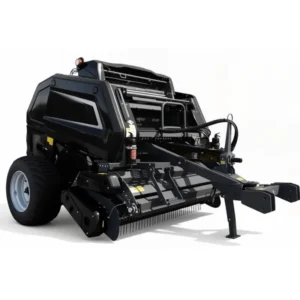
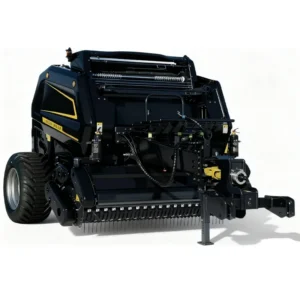
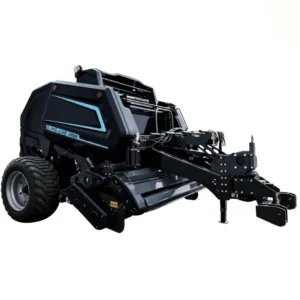
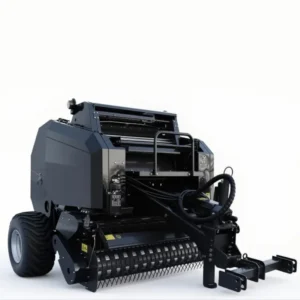
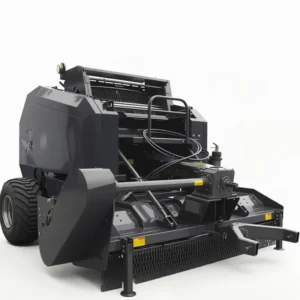
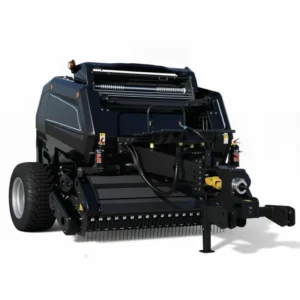
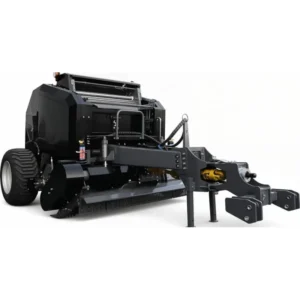
Selecting the right round baler for rice straw feed contracts involves matching pickup width, compression chamber size, and tractor power to your field conditions, target bale density, and contractual delivery volumes. The following models cover the main operational scenarios encountered in Korean and broader Asian rice straw baling.
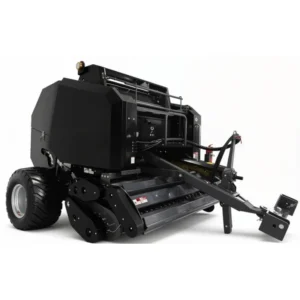
9. Model Comparison: Matching the Round Baler to Your Feed Contract Density Target
| Model | Ширина звукоснимателя | Bale Diameter | Density Range | Tractor Power | Best Use Scenario |
|---|---|---|---|---|---|
| 9YG-1.0 | 1900 mm | Φ1100 | 115–200 kg/m³ | 48–80 kW | Small paddy fields, compact tractor, local cooperative supply |
| 9YG-1.0C | 2400 mm | Φ1000 | 115–200 kg/m³ | ≥69.8 kW | Direct pickup of standing crop residues, no pre-raking needed |
| 9YG-1.25 | 2240 mm | φ1300 | 100–200 kg/m³ | ≥75 kW | Mixed straw/hay operation, interchangeable pickup type |
| 9YG-1.25A | 2150 mm | φ1300 | 100–200 kg/m³ | ≥75 kW | Flexible PTO compatibility (540–1000 rpm), mid-scale operation |
| 9YG-2.24D | 2240 mm | φ1300 | 100–200 kg/m³ | 55–100 kW | Commercial contractors, 40–100 bales/hour throughput target |
| 9YG-2.24D Classic | 2240 mm | φ1300 | 100–200 kg/m³ | 55–100 kW | Premium feed contracts, 20A chain, dual-side sprocket drive |
| 9YG-2.24D Transcend | 2240 mm | φ1300 | 100–200 kg/m³ | 55–100 kW | Fragmented plots, hilly terrain, reduced turning radius requirement |
10. Post-Bale Handling: Storage, Transport, and Feed Processor Acceptance
Even a well-produced bale can fail feed processor acceptance criteria if it is handled improperly between the field and the delivery gate. This section covers the post-harvest chain requirements that are increasingly formalised in Korean livestock cooperative buying agreements and TMR centre supply contracts.
Round bales intended for livestock feed should be placed end-on in rows on a dry, level surface within 24 hours of baling. Extended outdoor storage on wet ground promotes wicking of soil moisture into the bale base, which raises overall moisture content and creates conditions for anaerobic mould development in the lower layers — both of which reduce accepted delivery weight and quality grade. Korean cooperative purchasing officers conduct random probe moisture readings at the time of delivery, and bales measuring above 20% moisture at core depth are typically rejected or subject to significant weight discounts.
Transport loading of large round bales — particularly the φ1300×1400 mm format produced by the 9YG-2.24D series — requires a front loader or round bale handler capable of handling the 250–400 kg gross weight range. The 9JYY-4.5 round bale pick-up transporter, capable of handling bale diameters of 1000–1400 mm and bale widths up to 1500 mm, is an efficient complement to large round baler operations where self-loading transport capability reduces labour requirements between field and farmyard. Korean delivery logistics typically use 5-tonne flatbed trucks for local cooperative deliveries, loading four to six φ1300 bales per trip. Tight, high-density bales load and stack more securely and experience less deformation in transit — an additional practical reason why feed processors prefer minimum-density deliveries even when the nutritional margin may be small.
11. Round Baler Gearbox: The Power Transmission Core
Он round baler gearbox is often overlooked in machine selection conversations focused on chamber size or pickup width, but it is one of the most operationally critical components — particularly in high-intensity rice straw baling where the machine runs continuously through multi-day seasons. The gearbox transmits PTO power from the tractor’s output shaft to the machine’s internal rollers, pickup drive, and net-wrap mechanism. Its design directly affects transmission efficiency, energy loss, heating, and maintenance interval requirements.
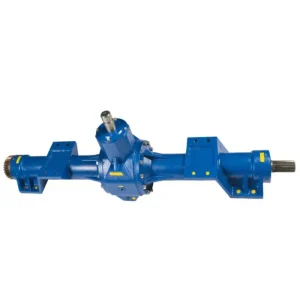
In the 9YG-2.24D Transcend model, the dual gearbox configuration allows independent left and right rotation of up to 90° each — a significant mechanical innovation that translates directly to field productivity when working on Korea’s characteristically small, irregularly shaped rice paddy parcels. Conventional traction-type round balers lose significant time during headland turns when the PTO shaft reaches its angle limit and the operator must cut power and reposition. The dual gearbox eliminates this limitation, maintaining uninterrupted power transmission through headland turns and reducing the total non-productive time per field by an estimated 15–25% in typical Korean paddy conditions.
Gearbox lubrication maintenance is a key service point. Most gearboxes in this class of equipment require an oil level check every 50 operating hours and a full oil change at 300 hours. Korean operators should verify that the replacement lubricant specification is readily available domestically — the 9YG series uses industrial gear oils that are compatible with standard Korean-market equivalents from domestic brands such as S-OIL or GS Caltex, reducing supply chain friction for field maintenance.
Frequently Asked Questions
Редактор: PXY