
A practical technical reference for Korean rice farmers pairing a round baler with LS Mtron or TYM tractors — covering PTO speed matching, shaft geometry, gearbox torque requirements, hitching considerations, and the specific models that deliver reliable compatibility across autumn paddy field baling sessions.
The two most widely operated domestic tractor brands across Korea’s rice-growing regions are LS Mtron — formerly LG Electronics’ agricultural division, now operating as a standalone manufacturer — and TYM (Tong Yang Moolsan), whose blue-and-white machines are a fixture of paddy fields from the Honam plain to the terraced uplands of Gyeongnam province. Both brands produce tractors across a wide power range that overlaps directly with the PTO power requirements of the round baler models covered in this guide. However, matching a round baler to a Korean tractor is not simply a matter of checking that horsepower figures align. The round baler gearbox, PTO shaft geometry, hitch category, and operating speed requirements must all be verified before the combination can function reliably through a full autumn harvest session.
This guide works through each of these compatibility variables systematically. It draws on the verified specifications of the round baler models in this range and maps them against the known PTO and hitch configurations of the main LS Mtron and TYM tractor series relevant to Korean paddy field use. It also covers the broader regulatory and safety framework that applies to PTO-driven machinery in Korea and reference markets, so operators have the full picture before making a purchasing or pairing decision. If you are a Korean rice farmer or contractor evaluating which round baler machine to purchase for pairing with your existing tractor, this is the technical reference you need.
1. Understanding PTO Compatibility: The Variables That Matter
PTO compatibility between a tractor and a round baler involves five distinct technical variables, and all five must be confirmed before a combination can be operated reliably. The first variable is PTO output speed — whether the tractor’s rear PTO delivers power at 540, 720, or 1000 revolutions per minute, and whether the round baler gearbox is designed to accept input at that speed. The second is PTO shaft spline specification — the number, size, and pitch of the splines on the tractor’s PTO output stub, which must match the female spline coupling on the PTO shaft connecting tractor to baler. The third is hitch category — whether the tractor’s three-point hitch meets Category II or Category III specifications, which determines whether the baler’s drawbar hitch point geometry is compatible. The fourth is available tractor PTO power in kilowatts, which must meet or exceed the round baler’s minimum power requirement at the operating PTO speed. The fifth variable is PTO shaft length and operating angle — the distance between the tractor’s PTO output and the baler’s gearbox input flange, and whether this distance (combined with the turning radius used in the field) keeps the PTO shaft within its safe operating angle range.
Korean rice farmers who have not previously operated a traction-type round baler often underestimate the importance of the fifth variable. In a flat field with gentle turns, PTO shaft operating angles are rarely a problem. But Korean paddy fields — particularly on small plots in Gyeongnam, Gyeongbuk, and Gangwon provinces — frequently involve tight headland turns, and the combination of a short PTO stub distance on certain TYM and LS Mtron mid-range models with a long baler gearbox housing can create shaft operating angles that exceed the maximum safe limit of standard cross-joint (Cardan) shaft configurations. Understanding this before purchase prevents both equipment damage and the operator safety risks that accompany PTO shaft failure under excessive angle load.
2. Korean Tractor PTO Standards: LS Mtron & TYM Overview
LS Mtron and TYM both manufacture tractors according to international ASABE (American Society of Agricultural and Biological Engineers) standards for PTO specifications, which are the same standards applied globally to agricultural machinery interfaces. This means the physical PTO stub shaft dimensions on LS Mtron and TYM tractors are directly compatible with international PTO shaft manufacturers and baler designs — the shaft spline profiles are not proprietary Korean specifications. However, the power range and default PTO speed configurations vary across the tractor model lines, and Korean dealers and operators sometimes make assumptions about PTO speed that are not supported by the tractor’s actual specification sheet.
LS Mtron tractor lines relevant to rice straw baling in Korea: The LS MT3 and MT4 series cover the 45–100 hp (33–75 kW) range commonly used with smaller and mid-size round balers. These tractors typically output 540 r/min at the rear PTO as the base configuration, with some higher-power models in the MT5 and MT6 range (75–115 hp, 55–85 kW) offering a switchable 540/1000 r/min PTO. The LS XR series (compact utility, 24–46 hp, 18–34 kW) does not provide sufficient PTO power for any of the round baler models in this range and should not be considered for baling applications. LS Mtron’s Korean-market tractors use ASABE Category II hitch specifications for models above 55 hp, and Category I/II for models below that threshold.
TYM tractor lines relevant to rice straw baling in Korea: TYM’s T series and TS series cover the 50–130 hp (37–97 kW) range. The T574, T604, T754, and T804 models fall within the power range compatible with the mid-to-large round baler models in this guide. TYM tractors in the 50–75 hp range typically produce 540 r/min PTO output; models above 90 hp may offer 540/1000 dual-speed PTO. TYM has expanded its Korean market presence in flat paddy regions of South Chungcheong and North Jeolla where large-area rice farming is most common — precisely the regions where higher-throughput round baler configurations are most economically justified. TYM’s three-point hitch specifications follow the ASABE Category II standard for their relevant power range models.
Both brands also distribute through dealer networks that include agricultural machinery financing programs, which affects the total cost of the tractor-baler combination. Korean buyers evaluating round balers for sale near them should confirm the PTO speed and hitch category with the dealer for the specific tractor model number — not the model family name — as these specifications sometimes differ between production years within the same model designation.
3. Round Baler Gearbox: How It Interfaces with the Tractor PTO
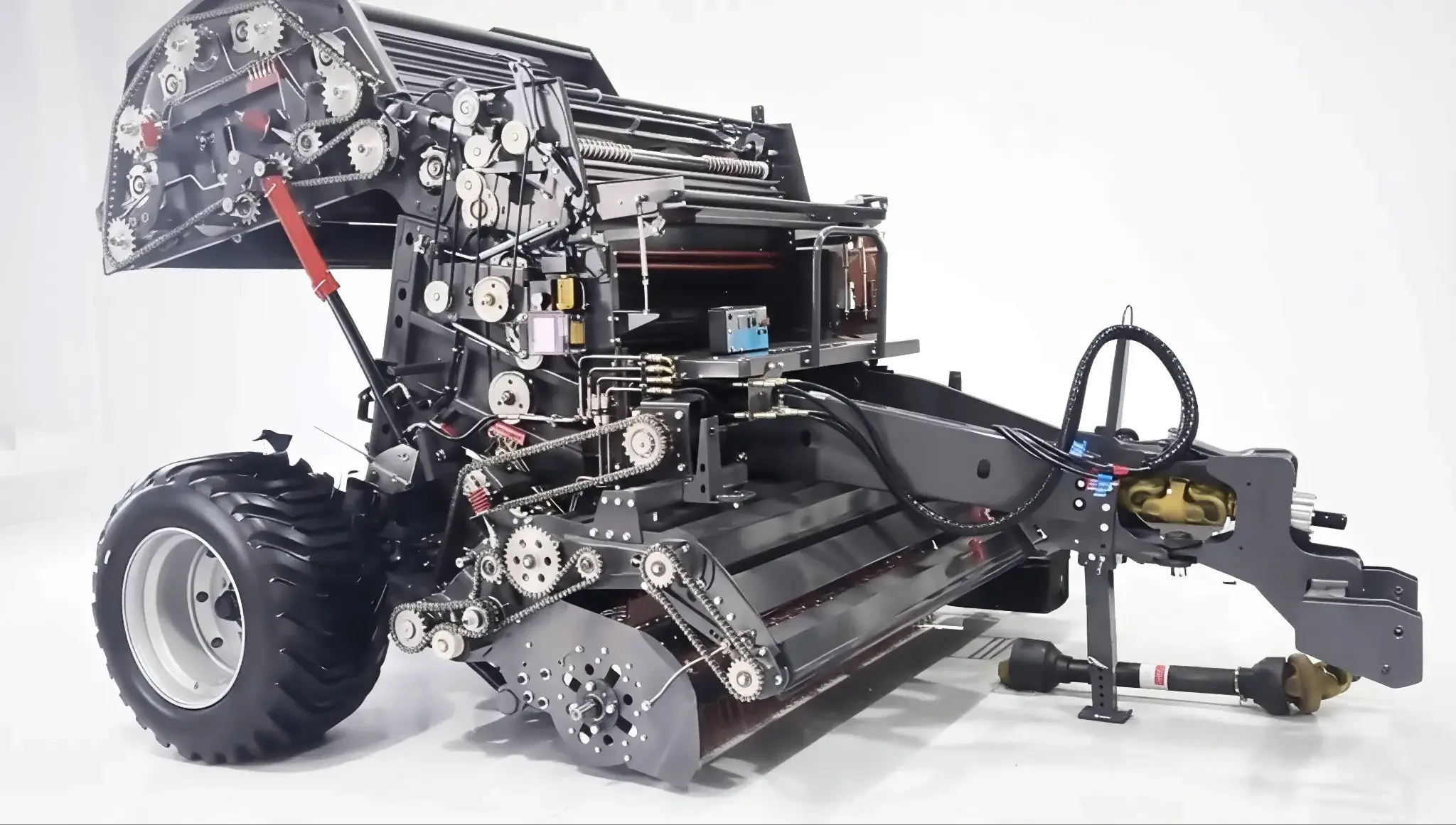
The round baler gearbox is the primary connection point between the tractor’s PTO and the round baler’s internal drive systems. It receives rotational input from the PTO shaft and distributes this power to the compression roller chain drives, the pickup rotor, the feedroll system, and (when triggered) the net wrap mechanism. In the round baler models covered by this guide, the gearbox is positioned at the front of the baler where the tow hitch connects to the tractor’s drawbar, placing it as close as practical to the tractor’s PTO output stub to minimize the PTO shaft length and the associated angle management requirements.
The standard PTO input speed across the main 9YG-2.24D series variants is 720 r/min. This is a specification that requires careful attention when pairing with Korean tractor brands. Most Korean tractor buyers are accustomed to 540 r/min PTO equipment — the vast majority of Korean-market rotary tillers, disc mowers, and smaller implements run at 540 r/min. A baler designed for 720 r/min input connected to a tractor PTO running at 540 r/min will produce roller speeds approximately 25% below design, which results in under-compression, reduced bale density, and potential feeder blockage if the reduced roller speed causes material to accumulate faster than the rollers can process it. This is the single most common pairing error in Korean rice straw baling operations, and it is entirely preventable with the correct model selection.
The 9YG-1.25A model is specifically designed to address this: its PTO speed compatibility range is stated in product documentation as 540–1000 r/min, which means it accepts input across the full range of PTO configurations commonly found on Korean tractors. For operators running older LS Mtron or TYM tractors with fixed 540 r/min PTO outputs, the 9YG-1.25A is the recommended model in the mid-format platform. For operators with newer tractors that can be switched to 720 or 1000 r/min, the standard 9YG-2.24D series provides the higher throughput capacity of the 2240mm pickup platform.
4. Manufacturing Structure: Gearbox Design & Drivetrain Architecture
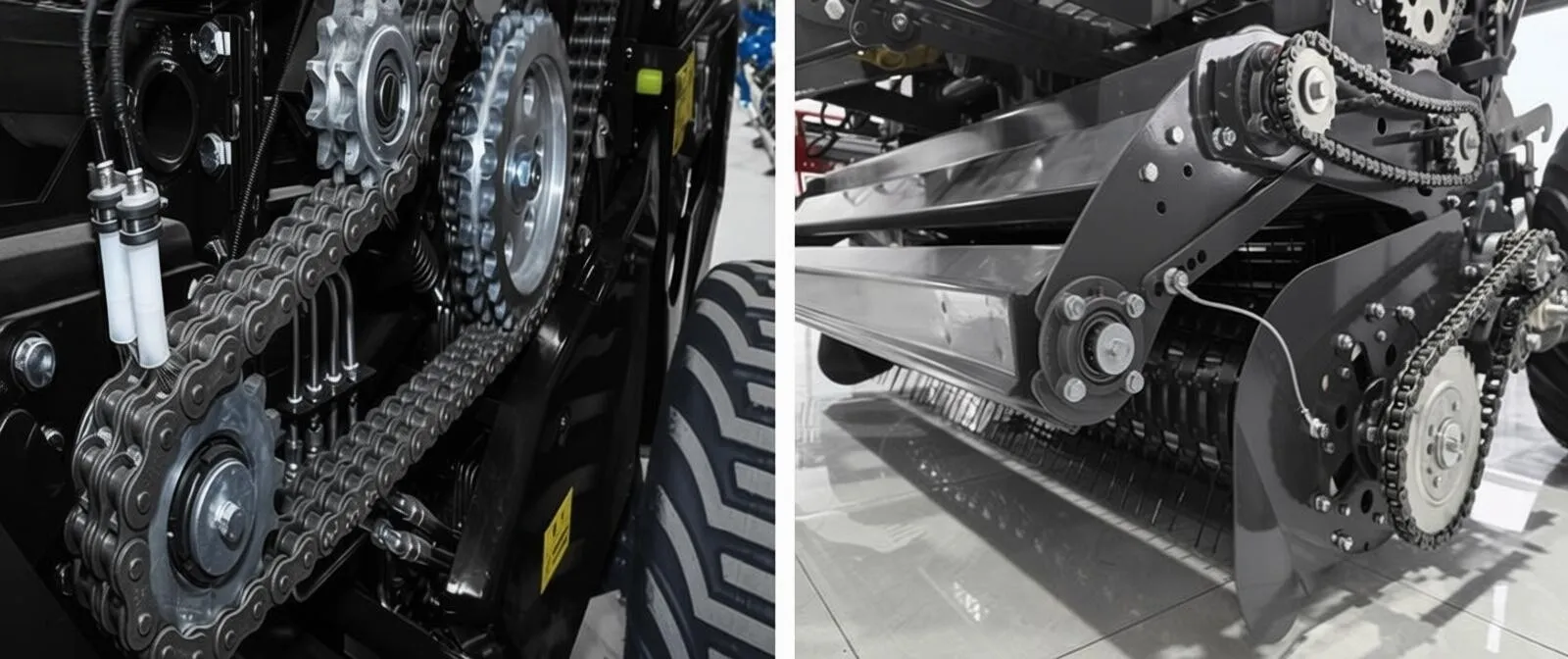
The round baler gearbox across this product range is a multi-stage parallel-shaft gear unit housed in a cast iron casing. The gear set uses case-hardened steel gears calculated to ISO 6336 and DIN 3990 standards for load capacity, with gear tooth geometry selected to provide the transmission ratio required to convert PTO input speed to the target roller peripheral speed. The gearbox output connects directly to the roller chain drive system via a heavy-duty sprocket assembly — on the 9YG-2.24D series, a dual-sprocket arrangement at both sides of the rear chamber ensures even torque distribution across all 18 compression rollers.
The S9000 Beyond variant introduces the dual-coupled gearbox assembly that provides the 90-degree lateral rotation capability described in other product documentation. From a Korean tractor compatibility perspective, this design is particularly relevant: the dual-coupled gearbox allows the PTO shaft to remain within a safe operating angle even when the tractor has executed a 90-degree turn relative to the baler’s travel direction. Standard single-gearbox designs on conventional round balers require the operator to disengage the PTO before executing tight turns because the shaft angle would otherwise exceed the safe limit of approximately 15–20 degrees for standard Cardan cross-joint shafts. With the dual gearbox design, the baler’s gearbox housing rotates with the tractor’s direction change, keeping the PTO shaft angle within safe limits throughout the turn cycle. This is a specific advantage in Korean paddy fields where headland areas are constrained and tight turns are routine.
The 9YG-2.24D Transcend variant takes a different approach to the same problem: its hitch assembly features a maximum torque rating of 1000 Nm with a lateral steering angle of 100 degrees and a tractor lateral tilt tolerance of 30 degrees. This wide-angle hitch geometry reduces the frequency at which the operator needs to manage PTO shaft angles manually, supporting faster field cycling on tight Korean paddy plots without requiring the dual gearbox arrangement of the S9000 Beyond. Both approaches address the same fundamental Korean field geometry challenge through different mechanical solutions.
5. Material Systems: Gearbox Construction & Shaft Specifications
The gearbox housing on the round baler models in this range is manufactured from ductile iron casting, which provides the combination of dimensional precision and impact resistance required for agricultural gearbox applications. Ductile iron — also called nodular cast iron or spheroidal graphite iron — has a tensile strength in the 400–600 MPa range depending on grade, which is significantly higher than standard grey cast iron and provides the housing with sufficient rigidity to maintain gear mesh alignment under the cyclical load variations inherent in round baler operation. These load variations arise from the irregular feed rate of harvested straw and from the momentary peak loads during net wrap initiation, when multiple drive systems are active simultaneously.
Internal gears are manufactured from 20CrMnTi or equivalent case-hardening steel, carburized to a surface hardness of approximately 58–62 HRC (Rockwell C hardness) while maintaining a tough core. This two-layer hardness profile allows the gear tooth surface to resist wear and pitting under contact stress, while the softer core absorbs shock loads without brittle fracture. For Korean operating conditions — where autumn paddy fields can include concealed soil ridge impacts and occasional stone ingestion through the pickup — this metallurgical specification provides meaningful durability advantage over gearboxes using through-hardened gears without the tough core property.
Lubrication uses ISO VG 220 gear oil appropriate for the seasonal temperature range encountered in Korean agricultural use, from summer preventive maintenance sessions at 30–35°C through autumn baling sessions that can start below 5°C in northern provinces. The gearbox is sealed with lip seals at all shaft exits to prevent moisture and paddy dust entry, which is critical for longevity in the high-humidity, fine-particle environment of rice harvest operations. Initial oil fill and first change intervals are specified in the operator manual and should be followed precisely — underfilling is the primary cause of early gearbox bearing failure in Korean field service.
6. PTO Speed Matching: 540 r/min vs 720 r/min vs 1000 r/min
PTO speed matching is the most operationally critical compatibility variable for Korean operators. The three standard PTO speeds in international use — 540, 720, and 1000 r/min — each have specific implications for round baler performance, and selecting the wrong combination produces problems that are not always immediately obvious to an operator unfamiliar with the machine’s internal dynamics.
Running a 720 r/min baler gearbox at 540 r/min (because the tractor has a fixed 540 r/min PTO) produces approximately 75% of the design roller peripheral speed. In rice straw baling, this manifests as slower bale formation, higher probability of feeder blockage in dense windrow sections, and density readings from the sensor system that may appear adequate (pressure rises as the bale forms) but correspond to a lower actual bale mass than the sensor was calibrated to read at design speed. Operators in this situation often find their bale weights are lower than expected and their blockage rate is higher than it should be.
Conversely, running a 540 r/min baler gearbox at 720 r/min (if the tractor is switched to a higher speed and the baler is not rated for it) overdrives the roller system and produces excessive heat in the gearbox, accelerated chain wear, and elevated risk of chain breakage during the high-load bale compression phase. This scenario is less common because most operators do not intentionally overseed PTO speed, but it can occur if a tractor with a switchable PTO is left in the wrong setting between field sessions.
| Round Baler Model | PTO Input Speed | LS Mtron Compatibility | TYM Compatibility | Notes |
|---|---|---|---|---|
| 9YG-2.24D S9000 Beyond | 720 r/min | MT5, MT6 (switchable PTO) | T804, TS series (90+ hp) | Confirm PTO is switchable to 720 r/min |
| 9YG-2.24D S9000 Classic | 720 r/min | MT5, MT6 (switchable PTO) | T754, T804 (switchable) | Damped hydraulic chamber; requires stable PTO speed |
| 9YG-2.24D Standard | 720 r/min | MT5, MT6 | T604, T754, T804 | Standard Korean large-plot pairing |
| 9YG-2.24D Transcend | 720 r/min | MT5, MT6 | T754, T804, TS series | 100° lateral hitch; suitable for tight Korean paddies |
| Пресс-подборщик 9YG-1.25 | 720 r/min | MT4, MT5 (≥88.2 kW) | T574, T604 (≥88.2 kW) | Interchangeable spring-tooth / hammer-claw pickup |
| Пресс-подборщик 9YG-1.25A | 540–1000 r/min | MT3, MT4, MT5 — all PTO speeds | T504, T574, T604 — all PTO speeds | Best fit for older Korean tractors with 540 r/min fixed PTO |
| 9YG-1.0 Round Baler | 720 r/min | MT3 (48–80 kW range) | T474, T504 (48–80 kW) | Small farm / terraced paddy; confirm 720 r/min PTO |
| Пресс-подборщик 9YG-1.0C | 540 r/min | MT3, MT4 (≥69.8 kW) | T474, T504, T574 (≥69.8 kW) | 540 r/min input; wide compatibility with Korean tractors |
Note: Tractor model numbers above are indicative reference points. Always verify the exact PTO speed of the specific tractor serial number with your LS Mtron or TYM dealer before finalizing the pairing.
7. Hitch Category Compatibility: Category II vs Category III
All round baler models in this range use a traction-type (drawbar pull) hitch rather than a three-point hitch. This is an important clarification for Korean operators who may be accustomed to fully mounted implements: the round baler runs behind the tractor on its own wheels, connected by a drawbar pin and a PTO shaft only. The tractor’s three-point hitch is not involved in the baler connection. This means that three-point hitch category compatibility — Category I, II, or III — is not a direct concern for the baler connection itself.
However, hitch geometry still matters for two reasons. First, the height and position of the tractor’s drawbar pin must align with the baler’s tow hitch vertical adjustment range for the baler to run at the correct ground angle during field operation. If the tractor’s drawbar pin is positioned significantly higher or lower than the baler’s hitch expects, the baler will angle upward or downward during operation, which shifts the pickup height relative to the ground surface and can cause either excessive soil pickup (too low) or incomplete straw collection (too high). LS Mtron and TYM tractors in the relevant power range provide adjustable drawbar positions that cover the hitch height requirements of this baler range.
Second, the hitch articulation characteristics of the baler affect the turning radius the combination can achieve without binding. On Korean paddy fields with headland widths as narrow as 3–4 meters, the turning radius of the tractor-baler combination is a practical constraint that determines whether the operator can make a full turn within the headland or must reverse. The dual-coupled gearbox on the S9000 Beyond variant, which allows the gearbox assembly to rotate 90 degrees laterally, and the 100-degree lateral hitch on the Transcend variant both reduce the effective turning radius of the combination for tight Korean paddy headland maneuvers.
8. PTO Shaft Length & Angle: Geometry for Korean Tractor Configurations
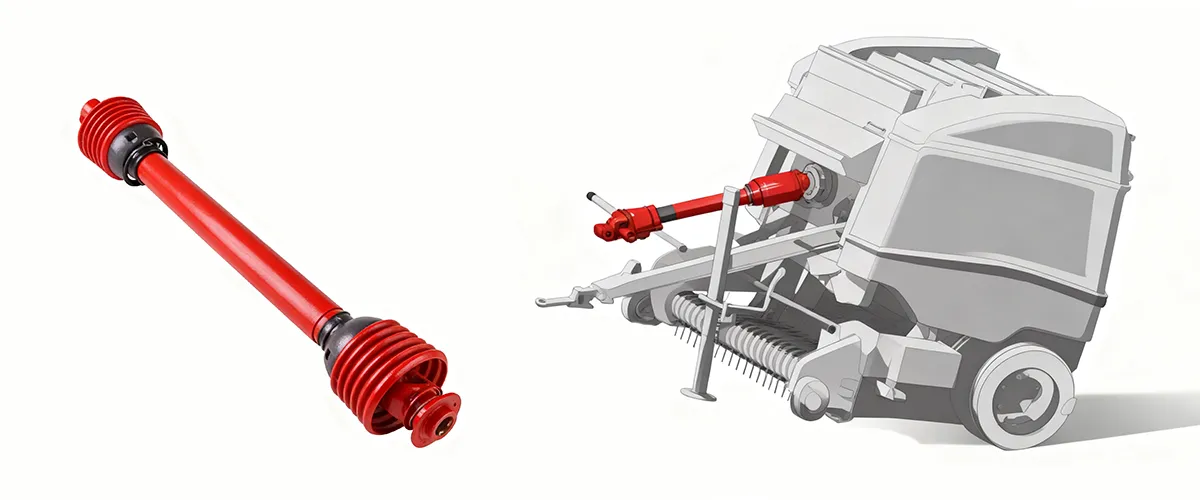
The PTO shaft connecting the tractor to the round baler gearbox must be sized for the specific distance between the tractor’s PTO output stub and the baler’s gearbox input flange. This distance varies between tractor models and between baler models, and the correct shaft length is not always the shaft that comes with the baler from the factory — Korean dealers sometimes need to source a shaft that is shorter or longer than standard to achieve the correct compressed and extended length ratios for the specific tractor-baler pairing.
Standard cross-joint (Cardan) PTO shafts for agricultural equipment are designed to operate safely within an angle range of ±15 degrees in straight-line travel, and require that the yokes at each end of the shaft are timed correctly (phased) to minimize velocity fluctuation during rotation. When the tractor turns relative to the baler during a headland maneuver, this angle increases. For a standard Cardan shaft, angles above 15–20 degrees during operation cause velocity fluctuation in the shaft that produces vibration, accelerated wear, and in severe cases shaft fracture. For Korean paddy headland turns with tight turning radii — particularly when the tractor needs to approach the next windrow at a sharp angle — monitoring this operating angle is important.
The dual-coupled gearbox on the S9000 Beyond variant addresses this directly by allowing the gearbox housing to physically follow the tractor’s lateral direction change, reducing the angle that the PTO shaft must accommodate. Wide-angle CV-joint PTO shafts, which can operate safely up to 35–40 degrees, are an alternative solution for any model in the range where standard Cardan shaft angle management during Korean paddy turns is a concern. The EP PTO Shaft range includes wide-angle CV-joint options matched to this round baler series for exactly this application.
9. Torque Requirements: Matching Gearbox Demand to Tractor Output
Each round baler gearbox creates a specific PTO torque demand on the tractor during operation, and this demand varies depending on the bale formation phase. During the initial stages of bale formation — when the chamber is nearly empty and the rollers are running against a small core — torque demand is relatively low. As the bale grows and compression pressure increases, torque demand rises progressively. At peak compression — the point immediately before the sensor triggers the net wrap sequence — torque demand is at its maximum, typically 2–3 times the average running torque. This peak demand event must fall within the tractor’s available PTO torque at the operating speed, with a margin to avoid PTO speed drop during the peak event.
The 9YG-2.24D series requires a tractor PTO power of 55–100 kW. At 720 r/min PTO speed, this corresponds to a shaft torque range of approximately 730–1325 Nm at the PTO stub. LS Mtron MT5 and MT6 series tractors in the 75–100 hp range provide PTO output torque in the 900–1300 Nm range at 720 r/min, which covers the full operating range of the 9YG-2.24D platform including peak compression events. TYM T754 and T804 models provide similar or higher PTO output torque in this power range.
For the 9YG-1.25A model running at 540 r/min with older Korean tractors, the lower PTO speed means that the same power corresponds to a higher torque. A tractor delivering 75 kW at 540 r/min produces approximately 1326 Nm of shaft torque — sufficient for the 9YG-1.25A platform and well within safe operating margins for the LS Mtron MT4 and TYM T574 models in the relevant horsepower range. Operators should avoid running any baler model at PTO power levels below the specified minimum, as insufficient input power causes the gearbox to experience prolonged peak-demand periods that accelerate internal wear more significantly than occasional overload events.
10. Korean & International Regulatory Framework for PTO Machinery & Gearboxes
PTO-driven agricultural machinery in Korea operates within a regulatory framework that covers both the machinery and the tractor providing PTO power. Understanding this framework matters for procurement decisions, insurance coverage, and operator liability.
Южная Корея
Agricultural Mechanization Promotion Act (농업기계화촉진법): This act requires agricultural machinery models — including round balers — to complete type-approval examination by the Korea Agricultural Machinery Inspection Center (농기계 검사소) before they can be sold with government purchase subsidy eligibility. The type-approval examination specifically evaluates PTO shaft guarding, operating safety under normal PTO-coupled conditions, and performance against the machine’s stated specifications. Machines that pass type-approval and appear in the approved machine list maintained by MAFRA (Ministry of Agriculture, Food and Rural Affairs) are eligible for purchase subsidies of 30–50% depending on province and budget year.
Industrial Safety and Health Act (산업안전보건법): While primarily applicable to workplaces rather than farm operations, this act’s provisions on machinery guarding — specifically the requirement for PTO shaft guards covering the full rotating shaft length — are referenced in Korean agricultural machinery safety guidance. Unguarded PTO shafts are a leading cause of serious injury in Korean agricultural accidents, and both LS Mtron and TYM require their dealers to confirm that PTO-driven implements connected to their tractors carry appropriate shaft guarding before completing delivery inspections. The round baler models in this range include factory PTO shaft guarding that meets Korean safety requirements as part of the standard delivery configuration.
Korean Industrial Standards (KS) for PTO Shafts (KS B ISO 500): This standard adopts the international ISO 500 specification for agricultural tractor PTO connections, governing shaft stub dimensions, rotational speed designations, and guarding requirements. Both LS Mtron and TYM manufacture to this standard, and the round baler gearbox input interface in this range is designed to the same specification — ensuring physical dimensional compatibility at the shaft-to-gearbox connection point.
European Union
Machinery Regulation EU 2023/1230: This regulation (replacing Machinery Directive 2006/42/EC) requires CE marking for machinery placed on the EU market. For round balers, relevant harmonized standards include EN ISO 4254-1 (agricultural machinery safety — general), EN 703 (agricultural machinery — silage and straw equipment), and EN ISO 11684 (safety signs). The CE conformity assessment evaluates PTO shaft guarding, shaft dimension compliance with ISO 500, maximum operating torque safety margins, and operator protection from rotating components. Machines certified under EU Machinery Regulation meet the same PTO safety standards referenced in Korean type-approval guidelines.
EN 1553 (Agricultural Machinery — Self-Propelled, Mounted, Semi-Mounted and Trailed Machinery): This European standard covers general safety requirements for trailed agricultural machinery — the category to which traction-type round balers belong. Compliance with EN 1553 is evaluated as part of CE marking and covers hitch geometry safety, stability under loaded conditions, and PTO shaft operational requirements.
ISO International Standards
ISO 500 (Agricultural Tractors — Rear-Mounted Power Take-Off): This is the foundational international standard governing PTO shaft dimensions, speed designations (540, 720, 1000 r/min), spline specifications (6-spline for 540 r/min, 21-spline for 1000 r/min series), and guarding requirements. Both Korean tractor manufacturers and the round baler gearbox in this range conform to ISO 500, which is the technical basis for the physical compatibility described throughout this guide.
ISO 6336 (Calculation of Load Capacity of Spur and Helical Gears): The primary international standard for gear tooth strength calculation, applied in the gearbox design of the round baler models in this range. Gear sets calculated to ISO 6336 have documented load capacity margins that define the safe operating torque range for each mesh, providing the engineering basis for the tractor power specifications stated in the round baler documentation.
ISO 9001 (Quality Management Systems): The manufacturer of this round baler range holds ISO 9001 certification, which governs process quality control throughout the manufacturing cycle including gearbox assembly, gear mesh inspection, and shaft alignment verification. This certification provides the systematic quality assurance framework that ensures gearbox-to-gearbox consistency across the production run.
Japan (Reference for Regional Trade Context)
Japan’s Agricultural Machinery Safety Standards (JIS B 9655 — Safety of Agricultural Machinery) and associated JGAP (Japan Good Agricultural Practice) guidance reference PTO shaft guarding requirements that are stricter than minimum Korean standards in some respects. Korean farmers who also supply product to Japanese market channels may find that their tractor-baler combination’s PTO guarding configuration is reviewed during JGAP compliance assessments if Japanese buyers audit their production practices. The round baler range’s factory PTO shaft guarding configuration is consistent with Japanese market requirements.
11. Compatible Round Baler Models for Korean Tractor Pairings
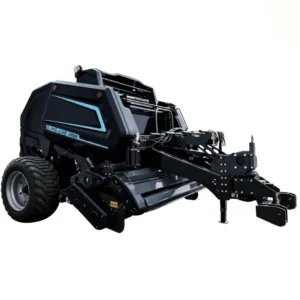
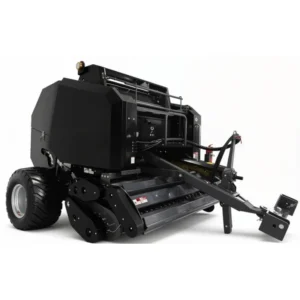
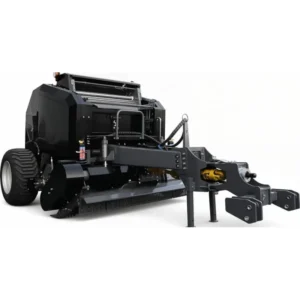
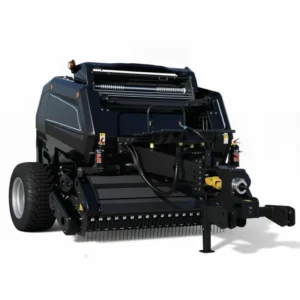
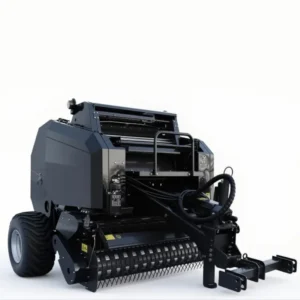
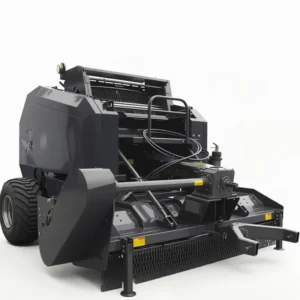
The eight models in this range cover the full power range of LS Mtron and TYM tractors used in Korean rice paddy operations. Model selection should be based on your specific tractor’s PTO speed, available PTO power, and the scale of your paddy field operation.
12. Related Equipment: Agricultural PTO Shaft & Agricultural Chain
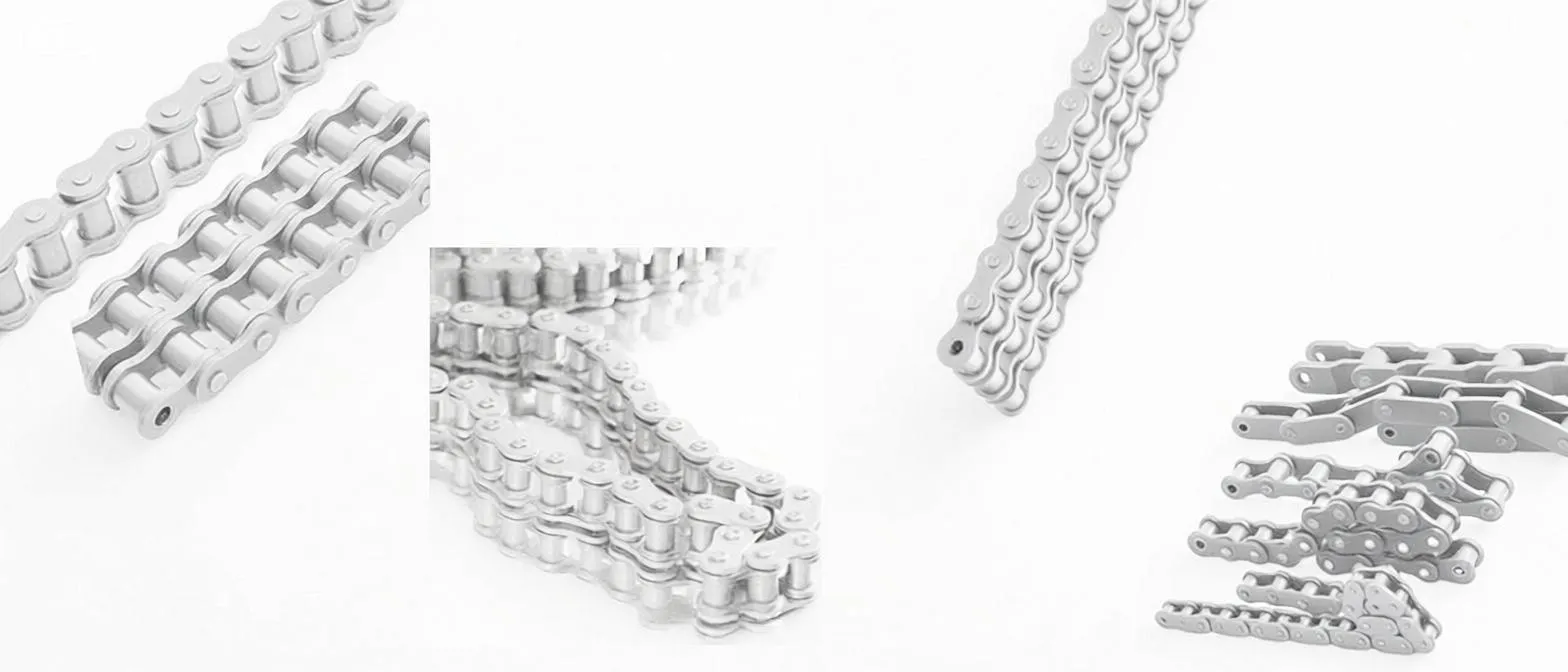
Correct tractor-to-baler power transfer depends not just on the gearbox design but on the quality and specification of the PTO shaft and the agricultural chain drive system inside the baler. These components form the complete power transmission chain from the tractor’s engine to the final compression rollers — and failure or misspecification at any point in this chain creates the same performance problems as a gearbox mismatch.
FAQ: Round Baler Gearbox & PTO Compatibility for Korean Tractor Operators
Редактор: PXY