Round Baler Parts & Wheat Straw Operations
A practical maintenance and procurement guide covering every wear part in the round baler machine that wheat straw conditions affect, how fast each wears, how to detect when replacement is needed before it costs you productivity, and how to source parts reliably for Korean and Asian farm operations.
1. Why Wheat Straw Is Harder on Round Baler Parts Than Grass or Silage
Ask any experienced round baler operator which crop type costs the most in replacement parts per season, and the answer almost always comes back the same: dry wheat straw. It is not that wheat straw creates the highest per-cycle mechanical loads — wet silage grass is substantially heavier per bale and creates higher compression forces. What wheat straw does is sustain abrasion at a level that no other common baling crop matches. Its silica content (3–7% by dry weight) combined with the fine dust generated during baling creates an erosive environment that acts on every moving metal surface the machine contains. Pickup tines grind through the soil-level contact zone. Compression rollers face tens of millions of rotations against abrasive stems. Chain pins and bushes wear at their mating faces. Knife blades lose their edges against the gritty residue that coats every pass of the net.
Understanding which round baler parts wear fastest in wheat straw operations, and in what sequence the degradation develops, is the practical knowledge that separates farms that manage parts costs proactively from those that react to failures — always at the worst possible time during the harvest window. This guide maps the complete wear hierarchy for wheat straw round baling operations, explains the physical mechanism behind each wear mode, and provides guidance on detection and replacement timing that keeps machines productive and parts budgets predictable.
The guide also addresses the sourcing question that many Korean and Asian operators find equally challenging: how to obtain genuine replacement parts at reasonable cost with acceptable lead times, especially for operators in regions where local dealer networks are thin or where the post-harvest wheat straw window gives almost no tolerance for delayed parts delivery. Building a parts sourcing strategy before the season begins — not after the first failure — is one of the highest-return preparation steps any wheat straw baling operation can make.
2. Pickup Tines: The Highest-Frequency Replacement Part in Wheat Straw
Pickup tines are the round baler part that fails most frequently in wheat straw applications, by a significant margin. They are thin curved steel fingers mounted on rotating tine bars that sweep beneath the windrow, lifting straw from the ground and channeling it toward the feed system. In a typical full-size round baler with a 2,240 mm pickup header, there may be 80–120 individual tines arranged across five to seven tine bars. In wheat straw, particularly on the compacted, stone-bearing soil surfaces typical of post-harvest Korean and Central Asian cereal fields, these tines contact the ground continuously — and ground contact at speed is the primary wear and breakage mechanism.
Two failure modes dominate. The first is tip erosion: the last 20–30 mm of each tine gradually loses its original curved profile as silica-laden soil abrades the steel surface. As the tip rounds, the tine’s ability to get beneath flat-lying straw windrow material decreases — it pushes against rather than lifting under the straw, reducing pickup efficiency and leaving a strip of unrecovered material behind on each pass. This failure mode is progressive and invisible until an operator notices the crop recovery rate dropping or finds a consistent line of unrecovered straw along the field. The second failure mode is tip fracture or permanent bending from contact with embedded stones or irrigation infrastructure fragments. This happens suddenly and leaves an obvious gap in the tine array.
Detection of tine wear is straightforward with regular inspection. Run a gloved hand along each tine row from tip to root after every 50–80 baling hours. Tips that have lost their pointed profile to a rounded end are within 20–30% of their effective life limit. Any tine that is bent more than 15 degrees out of the operating plane should be replaced immediately — it will strike the pickup guard on the next pass and damage the guard or cause the tine bar to jam. Best practice for Korean wheat straw operators is to carry a full spare set of tines on the machine and replace any damaged units on the field rather than running with gaps that reduce crop recovery rate across the remaining operation.
3. Net-Wrap Knife and Counter-Blade: The Silent Productivity Thief
The net-wrap knife and its matching counter-blade perform the shearing cut that severs the binding net after each bale cycle. This sounds like a simple operation, but in wheat straw conditions the knife edge deteriorates faster than in any other common baling crop. The reason is the dust environment: fine wheat straw dust, which is silica-laden and abrasive, settles on the knife contact zone and acts as a lapping compound against the blade edge with every cutting stroke. At 40–100 bale cycles per hour, this is an enormous number of micro-abrasion events — and they accumulate in the knife’s edge geometry before the operator notices anything unusual.
A net-wrap knife in good condition cuts net cleanly in one definitive stroke, leaving a clean edge on both the secured bale portion and the new leading edge that enters the chamber for the next bale. A knife that has dulled to a radius of 0.3–0.5 mm at the tip begins tearing rather than cutting. The torn edge of the net on the bale side is ragged and does not lie flat — it catches in the compression roller gaps as the tailgate closes, creating a trailing strand that wraps around the nearest roller or tine bar. In wheat straw operations at high throughput, this trailing net wrap event happens on the closure stroke, and the operator may not notice until two or three bales later when the machine jams. Clearing the wrapped net takes 10–20 minutes on average — a productivity loss that far exceeds the cost of a timely knife replacement.
Knife inspection should be done by touch, not sight alone. The degraded edge is often invisible in field lighting but can be felt: drag your gloved thumb carefully along the edge — a sharp knife edge catches the glove material slightly; a rounded edge slides along without catching. Replacement is needed as soon as the catching sensation has gone. In wheat straw operations running at 60–80 bales per hour, knife life may be as short as 200–300 bales per knife — a single intensive day of operation. Carrying two full knife and counter-blade sets per wheat straw campaign is the standard recommendation for Korean wheat straw operators.

4. Manufacturing Structure: How Machine Design Influences Wear-Part Longevity
The round baler machine’s design directly determines how quickly its wear parts consume themselves in wheat straw conditions. Two machines of nominally similar specification — same bale diameter, same power range, same bale output rate — can have dramatically different wear-part consumption rates depending on the engineering choices made in the feed mechanism, compression chamber, and binding system. Understanding this relationship helps buyers evaluate machines not just on purchase cost but on total lifecycle cost including parts.
The feed mechanism is the most important design variable for wear-part consumption. Conventional cam-guided feed mechanisms have multiple projecting cam surfaces against which long wheat straw stems can catch, wrap, and build up. This wrapping imposes lateral and tensile loads on the tines, tine bars, and cam guide brackets that accelerate wear at these contact points. The camless axial-flow feed design in the 9YG series eliminates these catch points — there are no cams for straw to wrap around. Material passes through the feed zone along smooth transition surfaces without the impedance that cam designs create. The result is lower lateral loading on tine bars, less wear on the feed zone surfaces, and fewer blockage events that would require forced clearing and the associated mechanical stress.
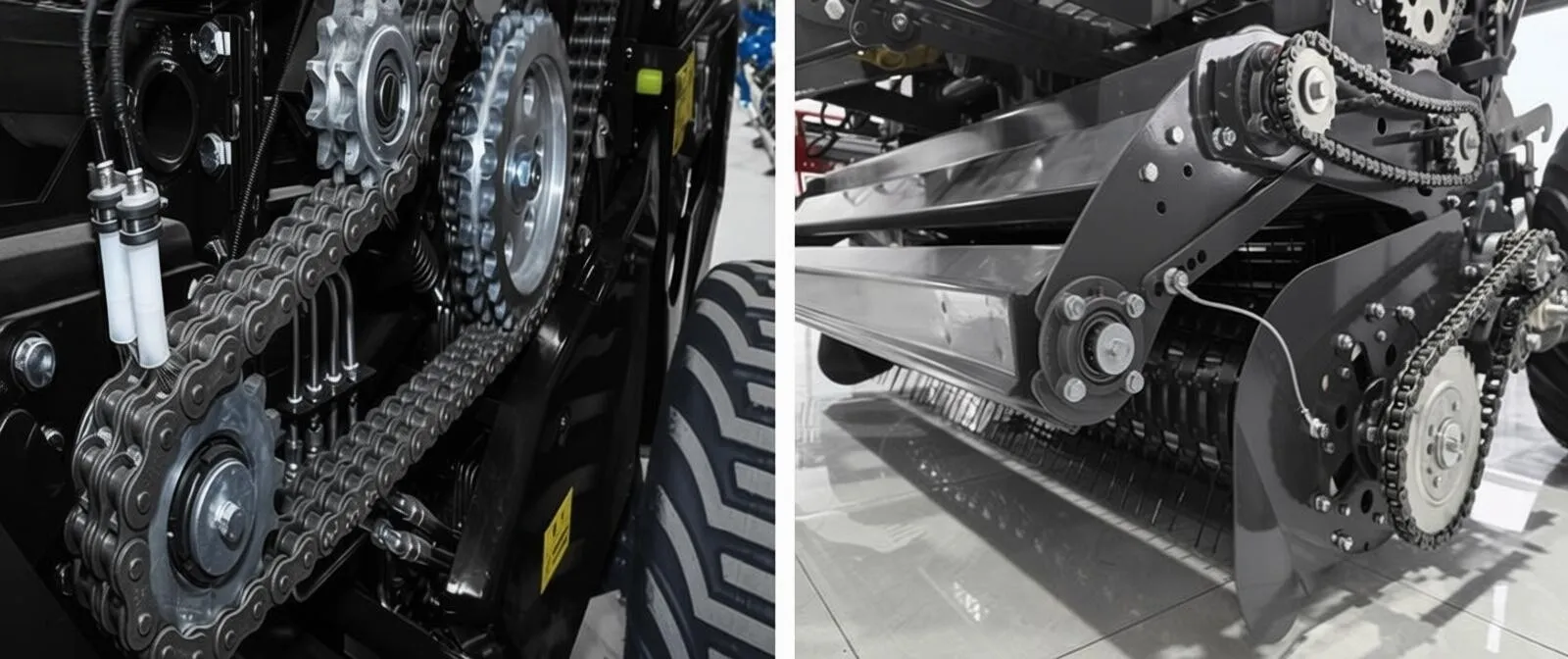
The compression roller arrangement — 18 rollers of φ222 mm in the standard 9YG chamber — determines the abrasive load on each individual roller surface. More rollers means lower material force per roller contact point, which slows the surface wear rate on each individual roller. The case-hardened or hard-chrome roller surface treatment extends the period before roller geometry degrades enough to affect bale shape and density — deferring this replacement from one season to three or four in typical wheat straw conditions. The dual-side 20A heavy-duty drive chain in the rear compression circuit provides dimensional reserve against elongation, reducing the rate of chain-to-sprocket mesh geometry change that accelerates sprocket wear when elongated chain begins riding tooth tips rather than valleys.
Wear-Part Hierarchy for Wheat Straw Round Baling
| Part | Wear Mechanism | Typical Wheat Straw Service Life | Detection Method |
|---|---|---|---|
| Pickup tines | Tip erosion / fracture | 50–120 hr or first stone contact | Manual tip profile check every 50 hr |
| Net-wrap knife blade | Micro-abrasion from straw dust | 200–400 bale cycles per blade | Touch-test edge — sharp catches glove material |
| Net-wrap counter-blade | Shear wear at cutting face | 2–4 knife blade sets per counter-blade | Inspect for step or nick at cutting edge |
| Compression rollers | Surface abrasion / corrosion-fatigue | 2–4 seasons (case-hardened) | Diameter measurement, groove depth inspection |
| Drive chain (compression circuit) | Pin-and-bush elongation | 1–2 seasons (20A); less for 16A | Ruler measurement against new-length specification |
| Shear bolts (PTO protection) | Single-event shear on overload | Unpredictable — stock ≥20 per season | Visual check after every debris-contact event |
| Tailgate hydraulic seals | Compression set / thermal cycling | 2–4 seasons typical | Visible weeping at cylinder rod; slow tailgate |
| Pickup guard and tine bar | Impact deformation, fatigue | Multi-season if no stone contact | Visual distortion check; tine clearance gap check |
| Sprockets (chain circuit) | Tooth-face wear accelerated by chain elongation | Replace with chain when hook-shaped teeth visible | Visual tooth profile — new is symmetrical |
| Gearbox oil | Thermal degradation / dust contamination | 200 hr change interval in straw conditions | Color change to dark / gritty texture / burnt smell |
5. Round Baler Models and Their Parts Ecosystem
Sourcing round baler parts correctly requires knowing which model is in the field. The following models share many common wear parts across the range, which simplifies parts stocking for operators running multiple machines, but each has specific components unique to its design configuration. Verified parameters from each model help identify correct part specifications when ordering replacements.
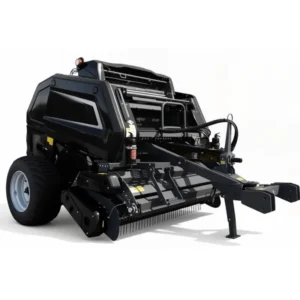
9YG-2.24D rundbalpress (S9000)
18 rollers φ222 mm · Pickup 2,240 mm · 55–100 kW · 20A dual-side chain · Auto net wrap 2,000×1.4 m/bale
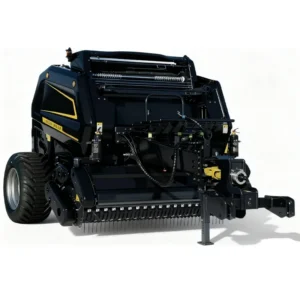
9YG-2.24D Round Baler (S9000 Classic)
18 rollers φ222 mm · 4,312 kg · 20A dual-side rear chain · H-type hydraulic fittings · Buffer tailgate cylinder
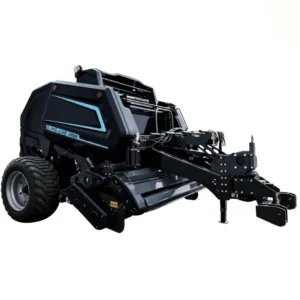
9YG-2.24D Round Baler (Transcend)
Dual-joint gearbox · Safety torque driveshaft · 4,570 kg · 720 r/min PTO · 18 rollers φ222 mm
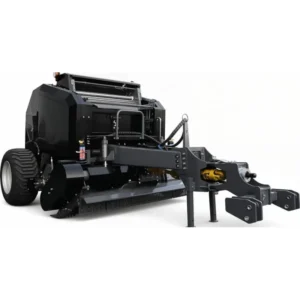
9YG-1.25 Round Baler (Double)
Interchangeable pickup (2,240 mm) · 18 rollers · ≥88.2 kW · 4,558 kg · Auto net wrap 2,000×1.25 m
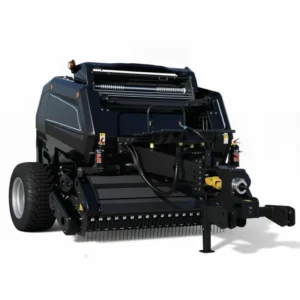
9YG-1.25A rundbalpress
540–1,000 r/min PTO · 18 rollers φ222 mm · Pickup 2,150 mm · 4,472 kg · ≥75 kW
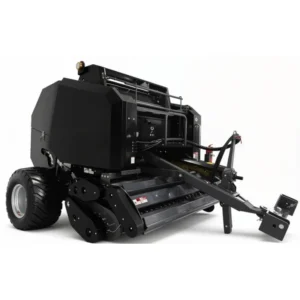
9YG-2.24D rundbalpress
Axial-flow camless feed · 18 rollers φ222 mm · 3,922 kg · 55–100 kW · Pickup 2,240 mm
6. Material System: What Round Baler Wear Parts Are Made Of and Why It Matters
The material specification of each round baler wear part determines how long it lasts, how it fails, and whether failures are predictable gradual degradations or sudden catastrophic breaks. In wheat straw operations, this distinction matters operationally because gradual degradation can be managed with planned replacement during a brief daily inspection; sudden catastrophic failure happens without warning at the worst possible moment and requires immediate response.
Pickup tines are manufactured from spring steel — typically 65 Mn (manganese spring steel) or 60Si2Mn (silicon-manganese spring steel) — heat-treated to a Rockwell hardness of HRC 40–50. This combination provides the tensile strength to resist permanent deformation from ground contact and the elasticity to flex around obstacles and return to operating geometry without fracturing. Tines that are too hard fracture cleanly on stone contact; tines too soft deform permanently and disrupt pickup geometry. The heat treatment quality of the specific spring steel used is the primary differentiator between tines from established manufacturers and cheaper replacements that may use under-specified material. Aftermarket tines made from inferior steel may have the correct geometry but fail rapidly in stony straw field conditions.
Compression rollers use a core of mild to medium-carbon steel for structural strength and a surface treatment for abrasion resistance. Case hardening produces a 1–3 mm surface layer at HRC 58–62 that resists the abrasion of wheat straw particles while maintaining a ductile core that absorbs cyclic compression loading without fracturing. Hard-chrome plating provides an even harder outer surface (typically HRC 65+) with low coefficient of friction, reducing material adhesion to the roller surface and the buildup of straw resin that can otherwise cause irregular bale surface texture. Rollers with neither treatment — a few manufacturers still supply unhardenened mild steel rollers in the lowest-cost configurations — typically wear to the geometry-affecting limit within one or two wheat straw seasons.
Drive chain material in the 20A specification uses pin steel of DIN 17222 or equivalent quality, with a surface hardness of HRC 58–62 at the pin and bush working faces achieved by induction hardening. The 20A chain’s larger cross-section (bigger pin diameter, wider inner plates, higher plate height) relative to 16A chain means more hardened material at each wear interface — which directly translates into higher elongation resistance across the wheat straw campaign’s accumulated cycle count. Net-wrap knife blades are typically made from high-carbon tool steel (D2 or equivalent, HRC 58–62) for wear resistance, with some premium designs using powder metallurgy high-speed steel for even longer edge retention in abrasive straw conditions.
7. Round Baler Gearbox: Parts Within and Oil Specifications for Wheat Straw
The round baler gearbox is not a consumable wear part in the same sense as pickup tines or net-wrap knives — it is a capital item with an expected service life of 10,000–15,000 operating hours if properly maintained. However, the components within the gearbox — bearings, oil seals, and the gear oil itself — do require planned maintenance and periodic replacement, and neglecting them in wheat straw conditions is the most common cause of premature gearbox failure in machines that otherwise have adequate design specification.
The gearbox oil is the first critical service item. In wheat straw operations, fine straw dust penetrates gearbox breathers more readily than in grass silage work because dry straw creates substantially more airborne fine particles per tonne processed than wet silage does. This dust contamination enters the oil through the breather, accumulating as an abrasive suspension that accelerates gear tooth face and bearing wear at rates invisible until the bearing develops audible roughness or the gear mesh shows scoring. The 200-hour change interval appropriate for general agricultural use should be tightened to 150 hours in intensive wheat straw operations, or whenever a visual oil sample shows darkening, cloudiness, or a gritty texture when rubbed between fingertips. Use ISO VG 150 GL-4 classified gear oil as the minimum specification; synthetic GL-4 or GL-5 at ISO VG 150 or 220 is preferable for machines operating in summer ambient temperatures above 35°C.
Gearbox input shaft oil seals are the most commonly replaced internal gearbox component in round baler machines doing intensive wheat straw work. The seal lip faces the exterior of the machine where dust accumulates, and the fine straw dust that penetrates between the seal lip and the shaft creates an abrasive track that gradually cuts a groove in the seal lip. Once the seal lip has grooved, oil begins to seep outward at the shaft entry point — first visible as a slight oil film around the shaft, then as an active drip. Seal replacement is a workshop task that requires gearbox disassembly, but early replacement when first seeping is detected costs far less than bearing replacement made necessary by the bearing damage that oil-starved or contaminated conditions cause if the seal is allowed to fail completely.
The gearbox breather should be cleaned at each 50-hour service interval during wheat straw campaigns. A blocked breather prevents the gearbox from equalizing pressure with the atmosphere during the heating and cooling cycles of daily operation — the resulting pressure differential can pump fine dust past otherwise adequate seals at a higher rate than unimpeded breathing would produce. Cleaning the breather takes two minutes; failing to do so can halve the effective life of gearbox seals in dust-intensive straw operations.
8. How to Source Round Baler Parts Reliably for Korean and Asian Wheat Straw Operations
The practical sourcing question for Korean operators is not simply where to find parts — it is how to ensure that the parts obtained are genuine, correctly specified, and available within the lead time that the post-harvest wheat straw window allows. Korea’s domestic dealer network for specialist agricultural machinery is thinner than in major Western European markets, and many Korean wheat straw baling operations depend either on factory-direct supply from the machine manufacturer or on general agricultural equipment importers who may not stock the full range of wear items needed.
The most reliable sourcing approach is establishing a direct supply relationship with the machine manufacturer before the season begins, not after the first failure. A manufacturer with active export operations and an established order-to-delivery process can often supply standard wear items — pickup tines, net-wrap knife sets, chain master links — within 7–14 days by air freight to Korean buyers. Sea freight takes longer but is appropriate for planned off-season restocking where lead time tolerance is four to eight weeks. Identifying the specific part numbers for your machine’s pickup tines, knife blade assembly, chain specification, and hydraulic seal kits at the time of machine purchase — and documenting them in the machine file — eliminates the identification uncertainty that slows parts sourcing when a need arises urgently in the field.
A structured pre-season parts procurement should be completed no later than four weeks before the anticipated first wheat straw baling date. The minimum recommended stock for a Korean wheat straw operation running one full-size round baler machine includes: 10–15% of the total pickup tine count as spares (for a 100-tine header, carry 10–15 spares); two complete net-wrap knife blade sets plus one counter-blade; 20 correct-specification shear bolts; three chain master links per circuit; one hydraulic tailgate seal kit; five litres of the correct gearbox oil; and a small hydraulic hose repair fitting selection. Operators running machines in remote areas or managing multiple machines should scale this stock upward proportionally. Korean agricultural cooperative (농협) networks can sometimes facilitate collective parts ordering that improves individual farm access to imported parts from manufacturers without local distributor networks.

9. Avoiding Substandard Replacement Parts: What to Check Before Buying
The aftermarket for agricultural machinery wear parts includes a wide range of quality levels, from genuine manufacturer-quality replacement parts through licensed equivalent-spec alternatives to substandard imitations made from inferior materials. In wheat straw applications, where abrasive wear is the dominant failure mechanism, the consequences of using substandard parts are particularly clear: parts made from under-specified steel reach their wear limit in 30–40% of the normal service life, creating much higher annual replacement frequency and the associated labor cost, and sometimes failing suddenly in ways that damage the surrounding machine components they contact.
Pickup tines are the part where substandard quality is most common and most consequential. A tine made from under-specified steel without correct heat treatment may appear identical to a genuine part and fit correctly in the tine bar mounting — but will either bend permanently on the first stone contact (if too soft) or fracture cleanly and send a broken tip into the compression chamber (if too brittle from incorrect heat treatment). In the second case, the broken tine tip can reach the compression rollers and cause scoring or chip a roller surface — turning a tine replacement that costs a few dollars into a roller repair or replacement that costs several hundred.
When evaluating replacement parts suppliers for round baler parts, request the steel material specification and heat treatment documentation for pickup tines — any reputable supplier should be able to provide this. For chain, request DIN or ANSI compliance certification that confirms the stated pitch, plate height, and tensile strength. For net-wrap knife blades, the correct blade dimension (cutting edge length and profile angle) must match the counter-blade exactly to achieve a clean shear rather than a tearing cut — sourcing knife and counter-blade as a matched set from the machine manufacturer eliminates the fit uncertainty that arises when mixing parts from different suppliers.
10. Regulatory Context: Gearbox Oil Standards and Equipment Safety Across Markets
Sydkorea
Round baler machines and their replacement parts used in Korean wheat straw operations fall under the Act on the Promotion of Agricultural Mechanization (농업기계화 촉진법) and related product safety legislation. The Industrial Safety and Health Act (산업안전보건법) requires that PTO-driven machinery used by employed agricultural workers is properly guarded — including PTO shaft protection and intake zone covers — which must remain in place and undamaged when replacement parts are fitted. Replacing pickup tines or adjusting the feed mechanism should not remove or compromise original safety guarding. Gearbox oil for Korean agricultural machines is not subject to a specific national standard but must meet the manufacturer’s stated specification; ISO VG 150 GL-4 is the appropriate reference standard for all 9YG series gearboxes.
European Union
In EU member states, replacement parts fitted to CE-marked agricultural machinery must maintain the machine’s conformity with the relevant Machinery Directive safety requirements — fitting non-conforming replacement parts that alter guarding or safety function can void the machine’s CE status. Gearbox lubricants in EU markets are classified under ISO 6743-6 and DIN 51517-3 (CLP gear oils); VG 150 CLP grade is the standard specification for most commercial round baler gearboxes. Biodegradable alternatives (ISO 6743-6 Category E gear oils) are required in several EU member states when machinery operates in environmentally sensitive areas near watercourses.
Russia and Kazakhstan (EEU)
Replacement parts for agricultural machinery in EEU member states must maintain the machine’s TR EAEU 010/2011 technical regulation compliance. Gearbox oil standards reference GOST 23652 (gear oils for agricultural machinery and tractors), which defines performance classes comparable to GL-4 and GL-5 internationally. Parts imported into Russia and Kazakhstan for use on registered agricultural machinery are subject to standard customs procedures; operators should retain spare parts purchase documentation for potential customs audit purposes when importing significant quantities of parts with commercial value.
United States
ASABE S318 (agricultural equipment safety) requires that replacement parts fitted to PTO-driven agricultural implements do not reduce the safety of the original machine below the standard’s requirements. OSHA 29 CFR Part 1928 imposes employer obligations regarding maintenance of guarding on equipment operated by farm employees — an obligation that specifically includes ensuring replacement parts maintain the guarding effectiveness of the original configuration. Gearbox oil specifications for US agricultural markets typically reference AGMA 9005 (industrial gear lubrication standard) or SAE 80W-90 / 85W-140 equivalent viscosity grades depending on the application temperature range.
Frequently Asked Questions
Redaktör: PXY