Mixed Grain Straw Operations Guide
A practical configuration guide covering pickup settings, density control, gearbox management, and material system considerations for grain farms that bale both wheat and barley straw in the same season
1. Why Mixed Wheat and Barley Straw Operations Require a Different Configuration Approach
Many Korean grain farms grow both winter wheat and winter barley in rotation, harvesting the two crops within a few weeks of each other in late spring and early summer. While they look similar in the field and are both collected by the same round baler, wheat straw and barley straw have meaningfully different physical properties that affect every aspect of the baling process — from pickup behavior and feeder channel loading to bale density and net-wrap tension. Treating them identically and using the same baler configuration for both crops is a common source of sub-optimal bale quality in mixed-grain operations: bales that are too loose from one crop and too dense from the other, windrow pickup rates that fluctuate between crops, and net-wrap failures at the bale end where material transitions from the softer wheat straw to the coarser, sharper-awned barley straw within a single bale formed from a mixed windrow.
The key differences that drive configuration changes are stem diameter, awn structure, stem stiffness, and typical harvest moisture. Barley straw tends to have slightly narrower, more flexible stems than wheat — but the presence of long, stiff awns on barley varieties is the main operational distinction. Awns act like mechanical anchors in the bale chamber, increasing material cohesion and effective bale density compared to awn-free wheat at the same compression setpoint. A round baler machine configured for wheat straw at 160 kg/m³ will typically produce barley straw bales 10–20% denser at the same setpoint if the operator does not adjust, because the awn structures interlock with each other and increase resistance to compression. Understanding this difference and building it into your configuration routine is the foundation of running a mixed-crop straw operation efficiently.
2. Physical Comparison — Wheat Straw vs. Barley Straw in the Round Baler Chamber
Getting the baler configuration right for each crop starts with understanding how the two straws behave inside the compression chamber and pickup system. The table below summarizes the key physical characteristics that drive configuration differences between wheat and barley straw baling operations. These are general figures representative of common Korean winter wheat and barley varieties; specific farm values will vary with soil type, growing season conditions, and variety selection.
| Property | Winter Wheat Straw | Winter Barley Straw | Round Baler Impact |
|---|---|---|---|
| Awn presence | Awn-free or short awns (most varieties) | Long, stiff awns (most varieties) | Awns increase interlocking; barley bales denser at same setpoint |
| Typical harvest moisture | 12–18% | 10–16% | Barley often drier; lower moisture increases brittleness and shatter risk |
| Stem diameter | 3–5 mm | 2–4 mm | Narrower barley stems create denser pack per roller contact; feeding is smoother |
| Stem stiffness | Moderate | Low to moderate | Barley stems collapse more readily; reduces feeder channel resistance |
| Windrow height after combine | 150–250 mm | 120–200 mm | Lower barley windrows require adjusted pickup height for clean collection |
| Net-wrap adhesion | İyi | Variable — awns can catch or disrupt net | Awn interference at net-wrap guide requires extra net overlap setting for barley |
| Dust generation at pickup | Moderate | High (awn fragments) | Barley baling generates more fine debris; bearing sealing and sensor housing protection more critical |
3. Manufacturing Structure — What Round Baler Design Features Support Mixed-Crop Flexibility
A round baler that handles both wheat and barley straw well in the same season needs structural features that support both smooth feeding and consistent density control across two crops with genuinely different mechanical properties. The compression chamber design is the starting point. Drum-type (roller-type) chambers used throughout the 9YG series provide positive, consistent material transport through the chamber regardless of how the material flows in from the feeding mechanism — the rollers grip and advance material actively, rather than relying on the material’s own cohesion the way a belt-chamber baler does. This roller-drive mechanism is particularly important for barley straw, where the awn structures can create unpredictable adhesion between adjacent stem bundles that sometimes pulls material sideways rather than advancing it uniformly into the growing bale.
The feeding system design has an outsized effect on mixed-crop versatility. The 9YG series uses a proprietary axial-flow semi-forced feeding system that generates continuous material progression from the pickup into the bale chamber, without the pulsed entry pattern of conventional cam-guided designs. For mixed-crop operations, this matters because wheat straw and barley straw have different bulk densities as they enter the feeder channel — barley straw, with its narrower stems and awn interlocking, packs more densely in the windrow and enters the feeder at a higher mass per unit volume than wheat. A feeding system that responds only to material volume will deliver excess mass when barley straw enters and insufficient mass when wheat straw follows in the next windrow. The axial-flow design, combined with sensor-controlled chamber density adjustment, compensates for this difference automatically, maintaining consistent bale formation across the crop transition without operator intervention.
The tailgate assembly — which forms the rear half of the baling chamber — requires robust hinge and hydraulic components to handle the variation in bale ejection forces between the two crops. Barley straw bales, which are typically denser at equivalent compression setpoints due to awn interlocking, develop higher outward pressure on the tailgate at bale completion than wheat straw bales under the same conditions. On the 9YG-2.24D Classic, the H-type ferrule hydraulic fittings and the buffer cylinder together ensure that the tailgate opens smoothly and absorbs the ejection impulse from denser barley bales without the frame stress peaks that characterize simpler tailgate designs. This structural robustness translates directly into lower maintenance frequency when the machine is working both crops in the same season.
4. Material System — Chain Grade, Tine Specification, and Surface Protection for Mixed-Crop Durability
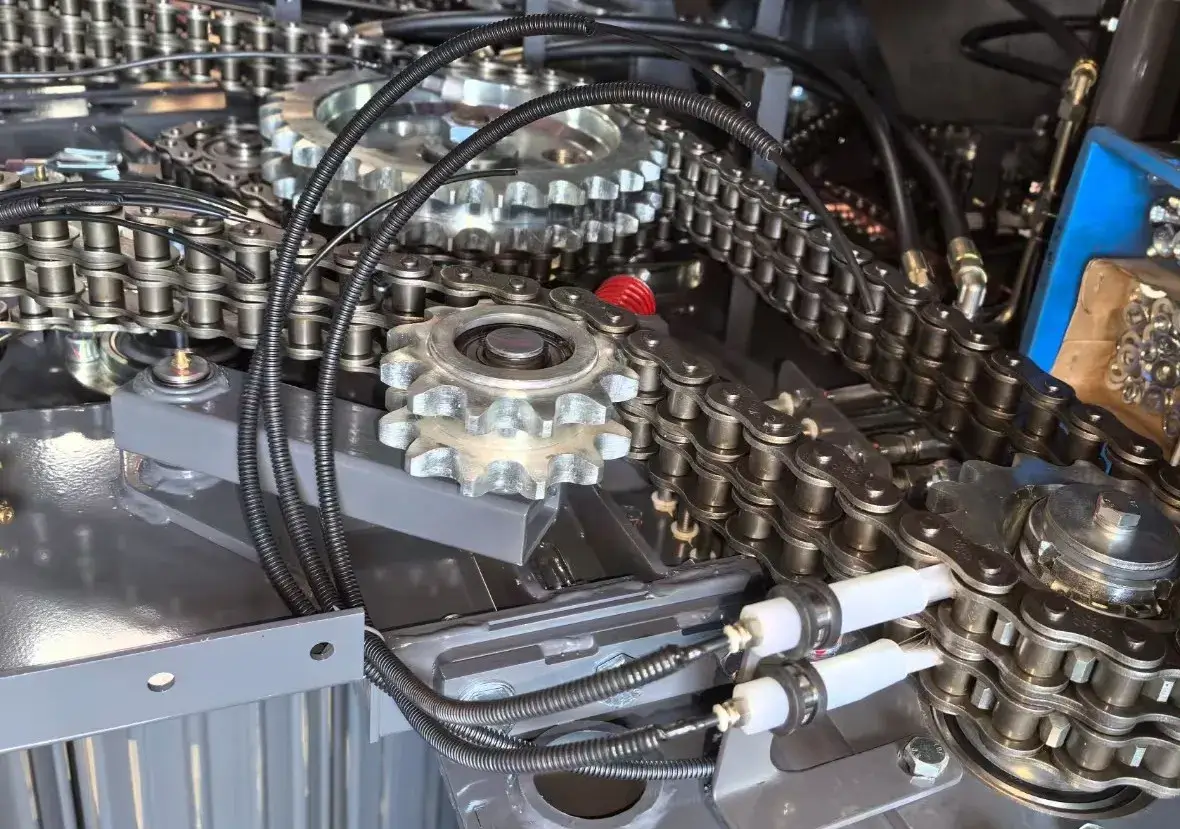
Barley straw’s awn structure creates a more abrasive operating environment than wheat straw inside the baler. The fine silica-bearing awn fragments that break off during pickup and feeding are harder than the stem tissue itself, and they infiltrate bearing seals, chain link plates, and sensor housings with greater efficiency than the larger debris from wheat straw operations. For round balers that process significant barley straw volumes, the material specification of the chain drive, the bearing seals, and the sensor housing protection all have more relevance than in a pure wheat straw operation.
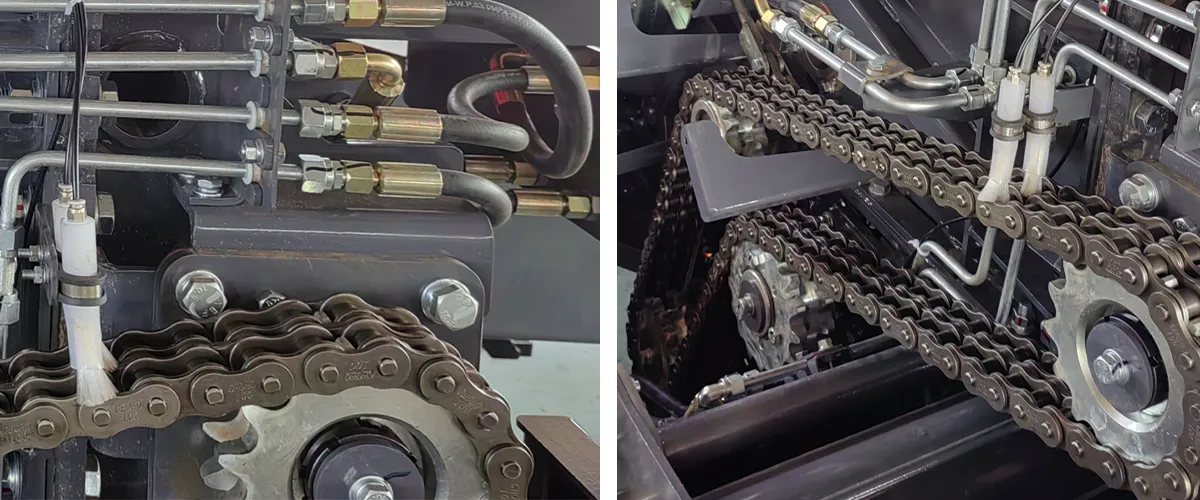
Chain grade determines how quickly the drive develops backlash under the higher compression loads generated by awn-interlocked barley bales. The 9YG-2.24D S9000 and Classic use 20A heavy-duty chain (1.25-inch pitch) in the dual-side rear chamber drive — a grade that develops stretch significantly more slowly than 16A chain under equivalent compression loads. For an operation splitting its season between wheat and barley straw, the higher compression loads from barley baling accelerate chain wear faster than wheat-only baling, making the 20A specification particularly relevant when the barley volume is substantial. Operators using 9YG-1.0 or 9YG-1.0C models with 16A chain in mixed-crop operations should plan for more frequent chain tension checks during barley baling periods — specifically, checking every 25–30 operating hours rather than the standard 50-hour interval.
Spring-tine specification for the pickup header also deserves attention in a mixed-crop context. The tine spring rate that works well for wheat straw may be marginally too stiff for the narrower, more flexible barley stems that lie closer to the ground in lower windrows — causing tine tips to impact the soil surface more frequently during barley pickup and accelerating both tine wear and soil contamination of the barley bales. Reducing pickup header height by 5–8 mm when transitioning from wheat to barley windrows helps maintain the correct 20–35 mm soil clearance for the lower barley windrow profile. The frame and tine mounting structure on 9YG pickup headers supports this height adjustment without special tools, making the transition a routine field procedure rather than a workshop task.
5. Practical Configuration Adjustments When Switching Between Wheat and Barley Straw
The core configuration changes a round baler operator needs to make when moving from wheat to barley straw — or back — can be organized into three categories: density setpoint adjustment, pickup height setting, and net-wrap parameter change. The good news is that on sensor-controlled 9YG-series round balers, the first of these is a simple electronic setpoint change that takes under two minutes. The other two involve brief mechanical adjustments at the machine that most operators can complete in 10–15 minutes with basic tools. Establishing a written switch procedure and posting it in the tractor cab means these adjustments happen consistently rather than being skipped when the crew is under time pressure during a narrow weather window.
| Parameter | Wheat Straw Setting | Barley Straw Setting | Reason for Change |
|---|---|---|---|
| Sensor density setpoint | e.g. 160 kg/m³ | e.g. 145–150 kg/m³ | Barley awn interlocking produces higher actual density at same pressure; reduce setpoint to match target output density |
| Pickup header height | +25–35 mm above soil | +20–28 mm above soil | Barley windrows are 30–50 mm lower; reduce height slightly to maintain soil clearance without missing lower material |
| Pickup drum speed | Standard or 10–15% reduced for dry straw | 10–20% reduced from standard | Barley straw typically drier than wheat at harvest; lower speed reduces awn-fragment shatter and dust generation |
| Net-wrap overlap setting | Standard — 1.5–2 wraps at bale end | Increased — 2–2.5 wraps at bale end | Awns can catch and disrupt net-guide; extra overlap compensates for any net tracking irregularity caused by awn interference |
| Chain tension check interval | Every 50 operating hours | Every 25–30 operating hours | Higher barley compression loads accelerate chain wear; more frequent check preserves density control loop accuracy |
| Sensor housing / bearing inspection | Pre-season; post-season | Add mid-barley-season check | Awn fragments are harder and finer than wheat debris; more aggressive ingress into seals and sensor housings during barley baling |
One practical shortcut that experienced mixed-crop operators use is to calibrate the barley setpoint by running three test bales at the wheat setpoint, weighing them, and then calculating the barley-specific setpoint based on the observed density difference. If the test bales at wheat setpoint came out at 175 kg/m³ against a target of 160 kg/m³, the operator reduces the setpoint by approximately the proportional difference (about 8–9%) and runs three more test bales to confirm. This in-field calibration takes about 30 minutes but removes uncertainty from the crop transition entirely.
6. Round Baler Gearbox Performance and Regulatory Requirements for Mixed-Crop Operations
In a mixed wheat and barley straw operation, the gearbox experiences a wider range of instantaneous torque demands than in a single-crop operation. Barley straw baling generates higher peak compression loads due to awn interlocking, while wheat straw baling generates more variable loads due to windrow density inconsistency from combine header discharge variation. The gearbox must handle both extremes reliably within the same season, making torque capacity, overload protection, and oil thermal management more important than in single-crop contexts. The dual-joint gearbox on the 9YG-2.24D S9000 provides the mechanical robustness needed for this variable load profile, distributing torque across two articulation points and maintaining stable driveshaft geometry even during the tight headland turns that are common on Korean mixed-grain farm parcels where wheat and barley fields are often interleaved.
Güney Kore: Under the Agricultural Mechanization Promotion Act (농업기계화 촉진법) and the Rural Development Administration (RDA / 농촌진흥청) type approval process, round baler gearboxes are evaluated at rated PTO speed under functional load conditions. For mixed-crop operations where barley straw creates higher peak torque, confirming that the machine’s rated PTO power covers the full range of load conditions — not just the lighter wheat straw operating point — is a relevant specification check during type approval. Machines on the RDA approved equipment list are eligible for the Agricultural Machinery Subsidy Program (농기계지원사업) covering up to 50% of purchase cost. The Industrial Safety and Health Act (산업안전보건법) applies additional PTO guard and inspection requirements that are independent of crop type. Barley straw producers supplying the Korean RPS biomass market may also need to demonstrate equipment quality compliance under the Renewable Energy Act (신재생에너지법).
European Union: CE marking under Machinery Directive 2006/42/EC is required for round balers marketed in EU countries. EN ISO 4254-7 specifies performance and safety standards for balers including PTO-driven gearboxes, torque-limiting overload protection requirements, and guard coverage for all rotating drive elements. The Machinery Regulation EU 2023/1230 applies from January 2027 with enhanced digital documentation requirements. For German operators, DGUV Rule 114-015 mandates documented gearbox inspection at defined operating hour intervals — particularly relevant for mixed-crop operations where gearbox load cycles are more varied than in single-crop baling.
EAEU Markets: TR CU 010/2011 and EAC certification govern gearboxes and complete round baler machines in Russia, Kazakhstan, Belarus, and Mongolia. GOST 21354 gear reliability standards specify fatigue life documentation that must account for the full expected load range — covering both the lighter wheat straw operating point and the higher barley straw loads. GOST R 12.2.111 covers agricultural machinery safety including power transmission guarding.
North America: ASABE S493 and ANSI/ASABE S296 provide the design safety framework for round baler PTO drives and gearboxes in US and Canadian markets. OSHA 29 CFR 1928.57 specifies PTO shaft guard requirements. For mixed-grain operations in US Midwest barley-producing regions (North Dakota, Montana), local state extension service guidelines on equipment configuration for different cereal straw types provide supplementary operational guidance beyond the regulatory minimum.
Japan: MAFF Agricultural Machinery Safety Standards and JIS B 9700 cover round baler power transmission safety in Japan. MAFF type approval is required for government subsidy eligibility — relevant for Korean producers re-exporting straw or equipment to Japanese markets.
Australia and New Zealand: Work Health and Safety Act and AS 4024 machinery safety standards govern PTO-driven agricultural equipment. In Australian barley-growing regions (South Australia, Western Australia), additional state WHS guidance addresses dust exposure management for operators during barley straw baling — awn fragments and fine chaff create a higher respiratory exposure environment than wheat straw.
| Region | Gearbox Standard | Mixed-Crop Relevance | Mark / Certification |
|---|---|---|---|
| South Korea | Agricultural Mechanization Promotion Act; RDA Protocol; Industrial Safety and Health Act | Rated PTO load must cover barley peak torque; subsidy available up to 50% | RDA 농기계 형식검정 |
| European Union | Machinery Directive 2006/42/EC; EN ISO 4254-1; EN ISO 4254-7 | Torque overload protection required; DGUV inspection intervals apply in Germany | CE Mark + DoC |
| Russia / Kazakhstan / Belarus | TR CU 010/2011; GOST 21354; GOST R 12.2.111 | Gear fatigue life documentation must cover full load range | EAC Mark |
| USA / Canada | ASABE S493; ANSI/ASABE S296; OSHA 29 CFR 1928.57 | State extension guidance on barley straw dust management supplementary to federal regs | ASABE Conformance |
| Japan | MAFF Agricultural Machinery Safety; JIS B 9700 | MAFF type approval needed for subsidy eligibility; relevant for Korean re-export | MAFF Type Approval |
| Australia / New Zealand | WHS Act; AS 4024; state barley-region dust guidance | Barley awn dust management is a WHS consideration in high-volume operations | WHS-compliant documentation |
7. 9YG Round Baler Models — Configuration Flexibility for Mixed Wheat and Barley Operations
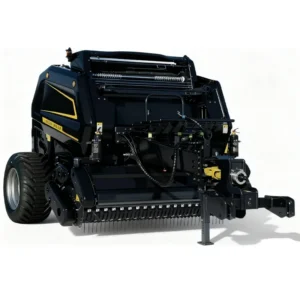
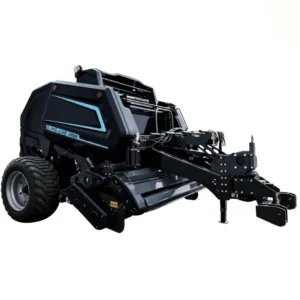
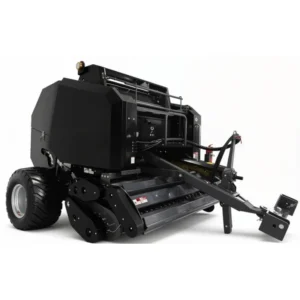
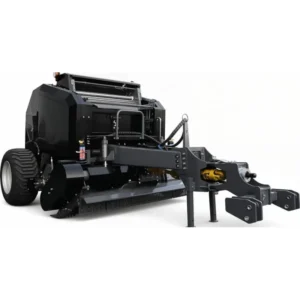
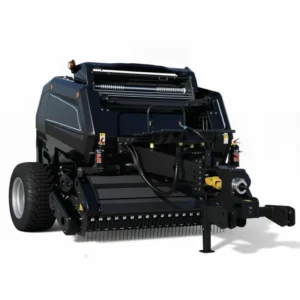
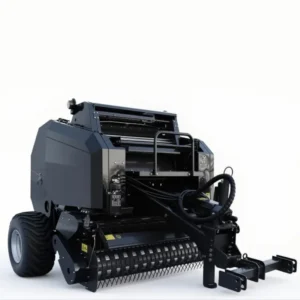
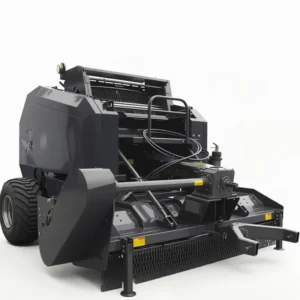
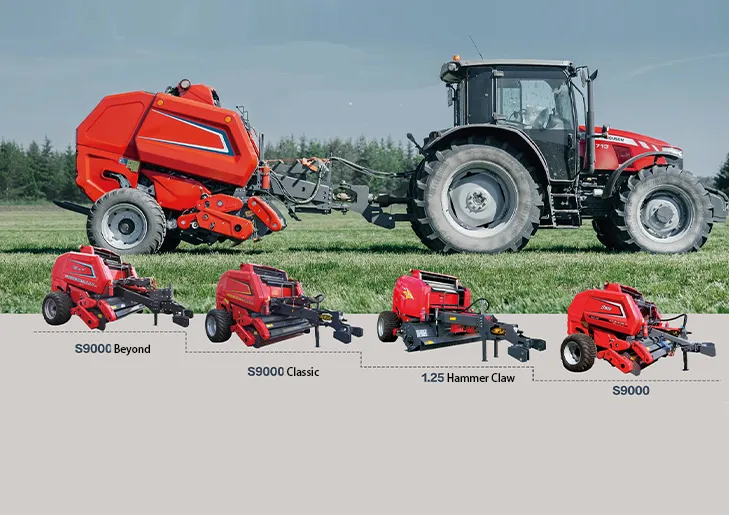
The 9YG series offers a range of models suited to different scales of mixed-crop operation. The key features to look for in a mixed wheat and barley straw baler are sensor density control (to compensate for the awn-density effect without manual adjustment), a feeding system that handles both crop types without slugging, and gearbox robustness sufficient for the higher peak loads of barley baling. Browse the full round baler lineup here.
8. Full Specification Comparison — 9YG Series for Mixed Wheat and Barley Straw
| Model | Pickup (mm) | Bale Dia. (mm) | Bale Width (mm) | Power (kW) | Chain Grade | Density (kg/m³) | Output (bales/hr) |
|---|---|---|---|---|---|---|---|
| 9YG-2.24D S9000 | 2,240 | 1,300 | 1,400 | 55–100 | Dual 20A | 100–200 | 40–100 |
| 9YG-2.24D Classic | 2,240 | 1,300 | 1,400 | 55–100 | Dual 20A | 100–200 | 40–100 |
| 9YG-2.24D Standard | 2,240 | 1,300 | 1,400 | 55–100 | Standard | 100–200 | 40–100 |
| 9YG-1.25 (Double) | 2,240 | 1,200 | 1,250 | ≥88 | Standard | 115–200 | 40–80 |
| 9YG-1.25A | 2,150 | 1,300 | 1,250 | ≥75 | Standard | 100–200 | 40–100 |
| 9YG-1.0 | 1,900 | 1,100 | 1,000 | 48–80 | Standard | 115–200 | 40–100 |
| 9YG-1.0C | 2,400 (claw) | 1,000 | 1,250 | ≥70 | Dual 16A | 115–200 | 40–80 |
Frequently Asked Questions
Q1. How does barley awn interlocking affect bale density compared to wheat straw at the same round baler sensor setpoint on Korean grain farms?
Barley awn structures act as mechanical anchors between adjacent stems inside the compression chamber, increasing the effective resistance to bale expansion after the compression rollers pass. This interlocking effect typically produces bales that are 10–20% denser than wheat straw bales formed at the same sensor pressure setpoint, because the material locks together and resists springback more strongly than the smooth wheat stems. To produce barley straw bales at the same target density as wheat, Korean mixed-grain operators should reduce the sensor density setpoint by approximately 8–10% when transitioning from wheat to barley windrows and verify against weighed test bales before committing to a full production run.
Q2. What round baler parts should Korean grain producers inspect more frequently during barley straw baling compared to wheat straw operations?
Barley awn fragments are harder and finer than wheat straw debris, creating a more aggressive abrasive environment inside the baler. The round baler parts that need more frequent attention during barley baling are: chain tension (check every 25–30 hours instead of 50), sensor housing seals (inspect mid-season for barley fragment infiltration), roller bearing seals (inspect for awn-fragment ingress), and the net-wrap cutting blade (barley awn debris accumulates in the blade guide more rapidly than wheat straw, dulling the blade and causing partial net cuts). Pickup tine inspection frequency should also increase because lower barley windrows create more frequent tine-to-soil contact events than the higher wheat windrows.
Q3. Which round baler manufacturer offers sensor density control with a dual-joint gearbox that handles the higher peak torque of barley straw baling on Korean mixed-grain farms?
The 9YG-2.24D S9000 Surpass combines electronic sensor density control with a dual-joint gearbox rated for the higher peak torque loads generated by awn-interlocked barley bales. The dual-joint design distributes torque across two articulation points, reducing the stress concentration at the single gearbox-to-drawbar connection that characterizes conventional single-joint designs. The 20A heavy-duty dual-side chain drive in the rear chamber maintains tight mechanical response for the density control loop even under the sustained higher compression loads of barley baling. This combination addresses the two main gearbox-related challenges of mixed wheat and barley straw operations in a single machine configuration.
Q4. How does the round baler gearbox regulatory requirement in South Korea apply to mixed wheat and barley straw commercial operations?
Under the Agricultural Mechanization Promotion Act (농업기계화 촉진법) and RDA type approval protocol, round baler gearboxes are tested at rated PTO speed under functional load conditions. For mixed-crop operations where barley straw generates higher peak torques than wheat, verifying that the machine’s rated power specification covers barley operating loads — not just the lighter wheat straw point — is a relevant check during type approval review. Machines with RDA type approval are eligible for the Agricultural Machinery Subsidy Program (농기계지원사업), which covers up to 50% of purchase cost for eligible Korean smallholders and represents a significant reduction in effective capital cost for farms considering an upgrade to sensor-controlled round baler capability.
Q5. What is the best round baler application configuration for a Korean farm running winter wheat and winter barley in adjacent fields with a single tractor fleet?
For a Korean farm baling both crops with the same round baler machine and tractor, the most practical configuration approach is to establish two saved setpoints on the sensor density control interface — one for wheat straw (target output density) and one for barley straw (10% lower pressure setpoint to achieve the same target density after awn interlocking). Combined with a brief pickup height adjustment of 5–8 mm and a net-wrap overlap increase for barley runs, this two-setpoint system allows the operator to transition between crops in under 15 minutes without returning to the workshop. The 9YG-1.25A with its wide 540–1,000 r/min PTO speed range also allows barley drum speed reduction through tractor PTO speed control — a useful secondary adjustment option when awn fragment generation is high.
Q6. How does net-wrap performance differ between wheat and barley straw bales, and what adjustment should Korean operators make to prevent wrap failures during barley baling?
Barley awn structures at the bale surface can catch the leading edge of the net during the wrap initiation phase and deflect it away from the guide path — particularly at the bale ends where the wrap transitions around the circular edge. This awn-interference effect can cause partial or uneven wrap coverage that leaves the bale end exposed to moisture and reduces storage life. Korean operators baling barley straw should increase the net-wrap overlap setting to deliver 2–2.5 wraps at each bale end rather than the standard 1.5–2 wrap setting used for wheat straw. Inspect the net guide channel for awn fragment accumulation at the end of each daily run during barley baling, as buildup in the guide creates tracking errors that compound the awn-interference problem.
Q7. How does the round baler machine gearbox in a mixed wheat and barley straw operation compare to single-crop applications in terms of annual service requirements and cost of ownership?
Mixed wheat and barley straw operations impose a wider torque load range on the gearbox than single-crop wheat baling, because barley awn-interlocked bales generate higher peak compression loads. In practical terms, this means gearbox oil degradation is slightly faster in mixed-crop operations due to higher average thermal load, and annual oil changes are particularly important rather than every-other-year intervals sometimes used in light wheat-only applications. The more significant cost-of-ownership factor is chain wear: the 20A chain specified on S9000 and Classic models stretches roughly 30–40% more slowly than 16A chain under barley-level compression loads, making the chain grade upgrade economically justified on farms where barley volumes are significant. For the gearbox itself, maintaining the torque-limiting driveshaft in functional condition is the highest-value preventive measure — replacing a worn coupling before it fails costs a fraction of the time and parts cost of a downstream gearbox overload failure during peak barley harvest.
Editör: PXY