1. What Is a Headland Loss and Why Does It Matter in Korean Wheat Straw Baling?
In round baler machine wheat straw operations, a headland loss is the quantity of cut straw that remains uncollected on the field after a baling pass because the tractor and baler combination cannot execute a tight enough turn at the field boundary to pick up material in the headland zone. When a round baler mounted on a standard fixed-tongue drawbar completes a pass along a field and must turn to begin the adjacent return pass, the tractor must travel some distance beyond the last baling position to execute the turn — and the straw lying in the windrow over that distance is either run over, pushed aside, or left behind as the combination swings around. The width of this uncollected zone multiplied by the windrow density and the number of headland turns per season gives the total headland straw loss for the farm over a full wheat straw campaign.
For Korean wheat farmers in the main producing provinces of Jeonnam, Jeonbuk, Gyeongnam, and the reclaimed coastal paddy areas of Chungnam, where field shapes often include the irregular headlands typical of Korean parcelling, round baler headland losses can be a more significant fraction of total harvestable straw than they would be on the large, geometrically regular paddocks of continental wheat farming regions. A Korean wheat field of 0.5–2 hectares — typical for individual farm units in the main producing areas — has a higher ratio of headland perimeter to total field area than a 50-hectare paddock, meaning that every improvement in headland management efficiency translates into a proportionally higher gain in total straw recovery for Korean conditions compared to large-field equivalents. The dual-coupled gearbox tongue on the 9YG-2.24D S9000 round baler machine addresses this specifically, and its value is greatest precisely in the irregular, small-to-medium field conditions that characterise Korean wheat straw baling.
2. The Physics of Headland Turning: How Baler Geometry Determines Loss Area
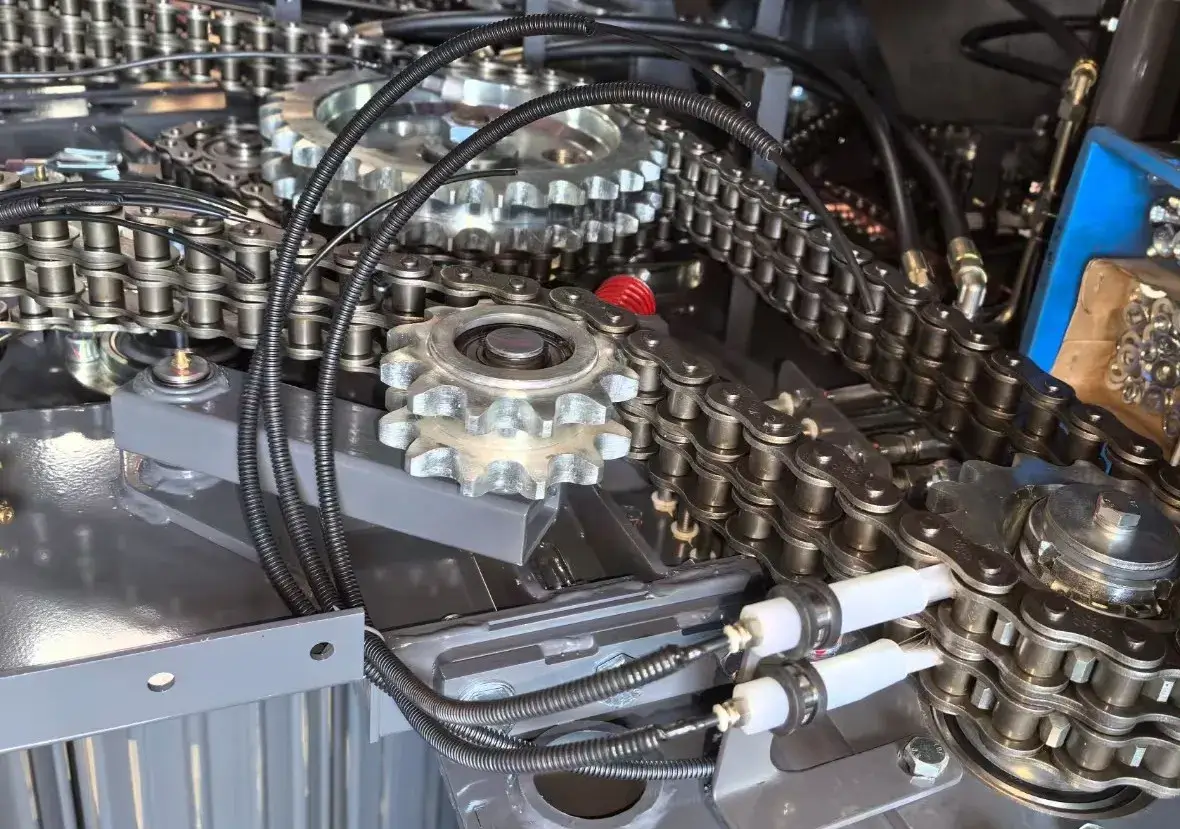
The minimum turning radius of a tractor and round baler machine combination is determined by three geometric parameters: the tractor’s own steering lock angle (fixed for a given tractor model), the length of the drawbar and tongue connecting the tractor’s lower link hitch to the baler’s pickup axle centreline, and the offset geometry between the PTO shaft connection point and the drawbar hitch. In a conventional round baler machine with a fixed-angle drawbar, the PTO shaft runs at a fixed longitudinal angle relative to the tractor’s centreline, and the geometry of the PTO universal joint imposes a maximum operating angle limit — typically 12–15 degrees from the shaft axis — that constrains how sharply the tractor can turn while maintaining power transmission to the baler.
This PTO angle constraint is the fundamental reason why fixed-drawbar round baler machines have a relatively large headland turning requirement. If the tractor turns sharper than the PTO joint’s maximum operating angle, the universal joint experiences high cyclic stress, the output speed variation from the joint increases, and in severe cases the joint seizes or fractures. To avoid this, operators must restrict their turning arc to keep within the PTO angle limit, which means the tractor must travel further along the headland before the turning arc has progressed far enough to begin the return pass — leaving a larger uncollected strip of straw at each headland turn.
The uncollected headland strip width can be estimated as a function of the minimum turning radius (R), the implement width (W), and the field perimeter. For a typical fixed-drawbar round baler machine with a minimum turning radius of 6–8 metres and a pickup width of 2.24 metres, the headland loss zone at each end of a pass is approximately 1.5–2.5 metres wide. Across a 100-metre field with 50 passes, this creates approximately 100 headland turns and a total uncollected strip of 100 x 2.0 x 2.24 = 448 square metres, or about 45 kg of dry straw at a typical Korean wheat straw windrow density of 100 g/m2. Multiplied across a large farm or straw contractor operation covering 100 hectares of wheat per season, the annual headland loss from fixed-drawbar round baler machine baling can reach 200–400 kg of saleable straw — a commercially meaningful loss that the dual-coupled gearbox tongue geometry directly reduces.
| Parameter | Fixed-Drawbar Round Baler | Dual-Coupled Gearbox Tongue |
|---|---|---|
| Maximum PTO operating angle | 12–15 degrees (shaft constraint) | Up to 90 degrees tongue rotation (PTO angle unchanged) |
| Minimum headland turning radius | 6–8 m at standard drawbar geometry | 3–5 m (tractor steering lock limited) |
| Uncollected headland strip width | 1.5–2.5 m per headland turn | 0.3–0.8 m per headland turn |
| Seasonal straw loss (100 ha) | 200–400 kg | 40–80 kg |
| Extra headland passes required | 1–2 cleanup passes per field | None or minimal |
3. How the Dual-Coupled Gearbox Tongue Changes the Turning Equation
The dual-coupled gearbox tongue on the 9YG-2.24D S9000 round baler machine represents a fundamental rethinking of how the implement’s tongue geometry interacts with the tractor’s turning capability. In a conventional fixed-tongue arrangement, the tongue is a rigid member that transmits both the drawbar pull force and the PTO shaft — and the PTO shaft geometry limits how sharply the tongue can deviate from the tractor’s centreline during a turn. The dual gearbox tongue separates these functions: a primary gearbox receives PTO input from the tractor and transmits power to a secondary gearbox at the baler through a short, rigid intermediate shaft, while the tongue itself rotates 90 degrees laterally relative to the tractor’s centreline through a pivot bearing at the primary-to-secondary gearbox junction.
The practical implication of this architecture is that the baler can sit in a position laterally offset from the tractor by up to 90 degrees during the initial phase of a headland turn — the period that determines how much uncollected straw is left at the boundary. As the tractor begins its headland turn, the tongue pivots while the baler continues to move forward along the windrow for a fraction of a second longer than it would with a fixed tongue, effectively allowing the pickup to follow the windrow to within 0.3–0.8 metres of the field boundary before the turn forces the baler off the windrow line. This additional 1.5–2.0 metres of windrow coverage per headland turn — which is what the dual gearbox tongue enables — accounts for the majority of the headland straw loss reduction that the system delivers in practical wheat field conditions.
The 90-degree rotation also changes the return-pass geometry. On a fixed-tongue round baler machine, the tractor must complete the full headland turn arc and the baler must be fully aligned with the new windrow before the pickup can be lowered to begin collecting. With the dual gearbox tongue, the tractor can begin angling back toward the windrow before the full headland turn is complete, because the tongue rotation allows the baler to track toward the windrow independently of the tractor’s exact centreline alignment. This enables the pickup to engage the new windrow earlier in the return pass, capturing material that would otherwise lie in the uncollected zone between the end of the previous headland turn and the point where a fixed-tongue baler would first be aligned well enough to begin pickup. In Korean field conditions with short headlands and irregular boundary shapes, this geometry change is what makes the dual gearbox tongue approach genuinely valuable rather than a marginal improvement.
4. Quantifying Headland Loss Reduction: Seasonal Calculations for Korean Wheat Farms
The commercial value of the dual-coupled gearbox tongue to a Korean wheat straw operation is most clearly expressed through a seasonal loss reduction calculation that translates the geometric improvement described in the previous section into kilograms of additional straw recovered and the revenue that additional straw represents. The calculation parameters used below are based on typical Korean wheat straw conditions in the major producing provinces. Actual round baler headland conditions vary with field shape, windrow density, and operator skill.
A typical Korean wheat farm or straw contractor covering 50–200 hectares per season with a round baler machine would encounter approximately 1,500–6,000 headland turns across all fields, based on an average field size of 1–2 hectares with 10–30 headland turns per field. At a fixed-drawbar round baler headland loss of 1.5–2.5 metres of uncollected windrow per turn and a Korean wheat straw windrow density of approximately 80–120 grams per square metre (representing a typical post-harvest windrow after combine threshing and field drying to 15–18% moisture), the total seasonal headland loss from fixed-drawbar operation is approximately 270–900 kg of straw per 100-hectare operation. The dual-coupled gearbox tongue reduces the uncollected strip to 0.3–0.8 metres per turn, cutting the seasonal headland loss to 55–180 kg per 100-hectare operation — a reduction of 72–80% in headland straw losses.
In monetary terms, Korean wheat straw at mid-range commercial values for the livestock bedding market represents a recovery improvement that, over a multi-year equipment ownership period, contributes meaningfully to the return on the additional capital cost of the S9000 variant with dual gearbox tongue relative to the Standard model. For straw contractors who operate on a per-bale or per-tonne payment basis with farm clients — where every uncollected kilogram is lost revenue — the seasonal headland recovery improvement directly reduces the amount of straw that is billed to them as field coverage but not actually recovered into commercial bales, improving the efficiency metric of tonnes recovered per hectare billed.
| Farm Scale | Headland Turns / Season | Fixed-Drawbar Loss | Dual Gearbox Loss | Improvement |
|---|---|---|---|---|
| Small farm (10 ha) | 300–600 | 27–90 kg | 6–18 kg | ~78% reduction |
| Medium farm (50 ha) | 1,500–3,000 | 135–450 kg | 27–90 kg | ~80% reduction |
| Straw contractor (150 ha) | 4,500–9,000 | 405–1,350 kg | 81–270 kg | ~80% reduction |
| Large cooperative (300 ha) | 9,000–18,000 | 810–2,700 kg | 162–540 kg | ~80% reduction |
5. Manufacturing Structure of the Dual-Coupled Gearbox System
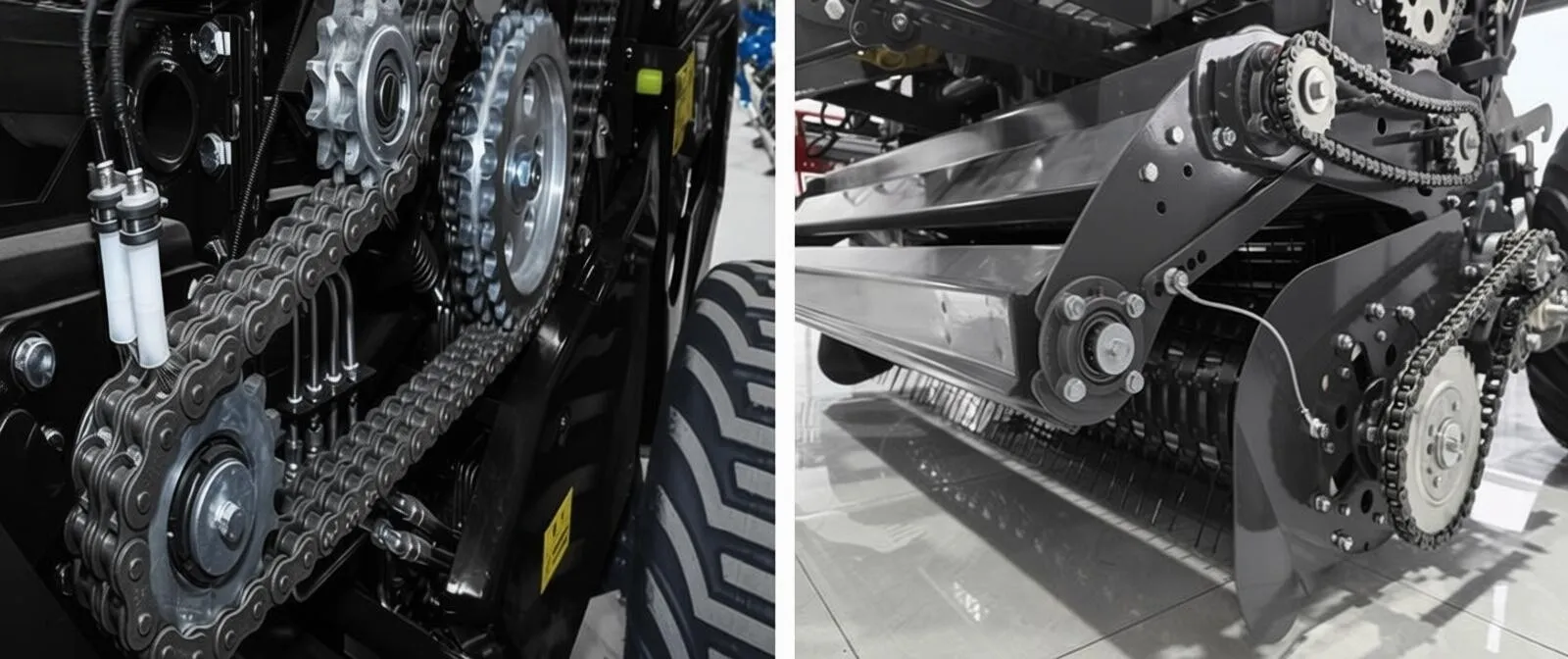
The dual-coupled gearbox tongue is the most mechanically complex structural element of the 9YG-2.24D S9000 series round baler machine, and its manufacturing quality determines not just whether it delivers the headland loss reduction described above but also how reliably it maintains that performance across years of commercial wheat straw operation without developing the play, vibration, or geometric drift that would gradually reduce its effectiveness and introduce the driveline wear that an imprecise pivot geometry creates. The engineering reflects the insight that a mechanically elegant round baler solution to the headland problem is only commercially valuable across the full machine service life.
The primary gearbox housing is machined from alloy casting to achieve the dimensional accuracy at the pivot bearing bore and the output shaft bore that maintains the geometric relationship between the tractor PTO input axis and the intermediate drive shaft axis across the full 90-degree rotation range. The pivot bearing that allows tongue rotation is a large-diameter spherical or angular-contact bearing assembly that must simultaneously carry the drawbar pull force transmitted through the tongue and the bending moment created when the tongue is rotated laterally and the baler’s weight acts eccentrically relative to the pivot axis. These two loads combine to create a complex multi-axial bearing load that only a purpose-designed bearing arrangement can sustain reliably across the high cycle count of a commercial wheat straw season — where the tongue may be rotated in and out of angled positions thousands of times as the round baler navigates headlands throughout the campaign.
The intermediate shaft between the primary and secondary gearboxes is enclosed in a rigid tube that protects it from straw wrapping and from the bending forces that would develop if it were exposed and subject to the reactions of the pivoting tongue. This tube is fabricated from high-strength steel with welded end flanges that bolt to the respective gearbox housings, and its length and wall thickness are designed to maintain the shaft alignment within the runout tolerance that prevents vibration at 720 r/min PTO operating speed. The rigid tube design makes the entire primary-gearbox-shaft-secondary-gearbox assembly a self-contained structural element that can be disconnected from both the tractor hitch and the baler drawbar for transport or replacement without disturbing the gearbox housings on either machine.
Pivot Bearing Assembly
Large-diameter angular-contact or spherical bearing. Carries combined drawbar pull and eccentric bending moment of rotated tongue through 90 degrees of lateral arc across thousands of headland cycles per season.
Primary Gearbox Housing
Alloy casting machined to micron-level bore accuracy at pivot and output shaft positions. Maintains geometric relationship between tractor PTO input and intermediate drive shaft across the full rotation range.
Rigid Intermediate Tube
High-strength steel shaft housing. Protects intermediate drive shaft from straw wrapping and bending forces. Welded-flange connection to both gearboxes for modular replacement without disturbing either gearbox housing.
Dual Cross-Joint Driveline
Self-developed dual cross-joint drive shaft on Transcend variant. Integrated safety torque-limiting clutch absorbs slug overloads from dense wheat straw windrow entries without transmitting to gearbox gear mesh.
6. Material Systems in the Dual-Coupled Gearbox Tongue Assembly
The material specifications reflect the specific demands of the round baler operating environment: high cyclic loading through thousands of pivot cycles per season, sustained torque at 720 r/min, exposure to wheat straw dust and chaff, and the need to maintain geometric accuracy in the pivot bearing despite the combined loads of drawbar pull and eccentric bending that the rotated tongue configuration generates. Each material choice in the assembly is driven by one or more of these requirements.
The pivot bearing uses bearing steel in the rolling elements and races — chrome steel alloy at 60–66 HRC in the load-bearing contact surfaces. The bearing seal configuration must exclude the fine chaff and dust that wheat straw baling generates in considerable quantities, because wheat straw chaff particles of 10–100 micrometres in size can penetrate standard open bearing arrangements and act as lapping compound against the polished steel races. Sealed-for-life bearings with double lip seals, or re-greaseable labyrinth seal arrangements that allow regular positive grease purging of any particles that infiltrate the outer seal lip, are appropriate for the pivot bearing in wheat straw service and should be inspected at the beginning of each straw season for evidence of contamination.
The gear sets within the primary and secondary gearboxes use case-hardened alloy steel — typically 20CrMnTi or equivalent — at 58–62 HRC surface hardness to provide the pitting fatigue resistance needed at the tooth contact stress levels generated by sustained 720 r/min, rated-torque operation. The same case-hardening process that provides surface hardness also creates a compressive residual stress state in the case layer that improves resistance to bending fatigue at the tooth root fillet — the second failure mode that the gear teeth face in continuous wheat straw baling service. The gear oil in both gearbox housings should be API GL-4 or GL-5 specification with viscosity index above 150 to maintain adequate film thickness at the elevated temperatures of summer wheat straw campaigns in Korean conditions.
| Component | Material / Specification | Wheat Straw Headland Relevance | Maintenance Interval |
|---|---|---|---|
| Pivot bearing | Chrome steel, 60–66 HRC, sealed or labyrinth | Sustains thousands of headland pivot cycles under combined drawbar and bending load | Inspect and re-grease every 100 h straw service |
| Gearbox gear sets | 20CrMnTi case-hardened, 58–62 HRC surface | High-cycle pitting and bending fatigue resistance at 720 r/min wheat straw campaign load | Visual check at each oil change |
| Intermediate shaft | 42CrMo4 alloy steel, precision ground | Transfers torque between primary and secondary gearbox without runout that would cause vibration | Check runout after 300 h cumulative use |
| Gear oil (both housings) | API GL-4 or GL-5, VI above 150 | Film stability at summer Korean operating temperatures during intensive headland cycling | Change after each straw season (100–150 h max) |
| Pivot housing seals | Nitrile or FKM, double-lip configuration | Excludes wheat chaff (10–100 micrometres) from pivot bearing race surfaces | Inspect annually; replace if contamination evident |
7. PTO Driveline Integrity Under the 90-Degree Tongue Rotation
A question that experienced round baler machine operators often ask about the dual-coupled gearbox tongue is how it maintains PTO power transmission to the baling mechanism when the tongue itself is rotated up to 90 degrees from the tractor’s centreline — a configuration that would be physically impossible for a conventional PTO shaft with its limited angular operating range. The answer lies in the fact that the PTO shaft between the tractor and the primary gearbox remains in its normal operating position throughout the tongue rotation: the primary gearbox is fixed to the tractor’s lower link hitch in the standard position, and the tongue rotation occurs between the primary gearbox and the secondary gearbox at the other end of the intermediate shaft, not between the tractor and the primary gearbox. The PTO shaft from tractor to primary round baler gearbox therefore operates at its normal angle throughout the turn, with no change in universal joint geometry regardless of tongue rotation.
This architecture — primary gearbox fixed at the tractor hitch, rotation occurring downstream of the primary gearbox — is the key insight of the dual-coupled gearbox design and the reason it achieves what a simple flexible coupling between tractor and baler cannot. A flexible coupling between tractor and fixed-tongue baler would need to accommodate the full angular change from 0 to 90 degrees, which is far beyond the operating range of any PTO universal joint. The dual gearbox configuration moves the angular change requirement to the tongue pivot bearing — a purpose-designed structural element that is rated for this rotation — while keeping the PTO shaft in its normal operating envelope throughout.
The PTO shaft guard — a mandatory safety feature under both Korean KS standards and international norms including EN 1553 and ASABE S430 — must be designed to accommodate the full range of tractor-to-primary-gearbox angular positions that occur during field operation. Because the primary gearbox is fixed at the hitch and the PTO shaft angle to it is determined only by the tractor’s drawbar geometry (not by the tongue rotation), the PTO guard requirement for the dual gearbox system is actually simpler than for a conventional flexible-tongue arrangement where the guard must accommodate a variable shaft angle. The safety torque shaft on the Transcend round baler variant operates within the intermediate shaft section, providing overload protection where wheat straw slug events generate peak torque demands.
8. Secondary Benefits: Gearbox Bearing Life and Driveline Vibration Reduction
Beyond headland loss reduction, the dual-coupled gearbox tongue delivers secondary benefits in round baler gearbox bearing life and driveline vibration that add further commercial value who use this architecture across intensive wheat straw campaigns. These secondary benefits arise from the geometric improvements that the fixed-primary-gearbox, rotation-at-tongue round baler architecture creates compared to variable-angle conventional PTO shaft arrangements.
In a conventional fixed-drawbar round baler machine, every headland turn pushes the PTO shaft toward its maximum permitted angle, generating speed variation and vibration that at 720 r/min causes detectable vibration at the round baler gearbox input shaft bearing. The dual-coupled gearbox tongue eliminates this problem by ensuring the PTO shaft to the primary gearbox never exceeds its design operating angle regardless of tongue rotation.
The vibration reduction also has a beneficial effect on the entire downstream driveline — the compression rollers, the pickup drive, and the net-wrap mechanism — because the input shaft vibration from a high-angle PTO operation propagates through the gearbox output to every component driven from it. In a wheat straw baling context, this propagated vibration contributes to the progressive loosening of roller bearing fits and the fretting corrosion at shaft-hub interfaces that leads to early roller replacement in high-use round balers. The dual gearbox round baler architecture’s inherent vibration reduction therefore extends the service life of compression rollers and gearbox input shaft bearings described above.
9. Round Baler Model Range: Which Models Feature the Dual Gearbox Tongue
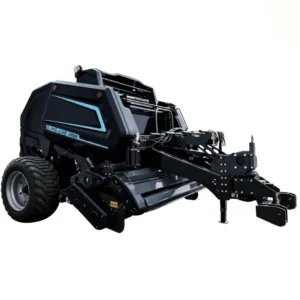
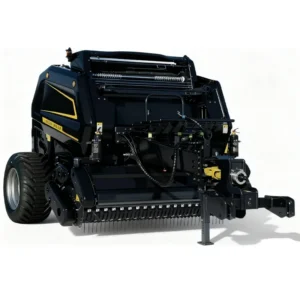
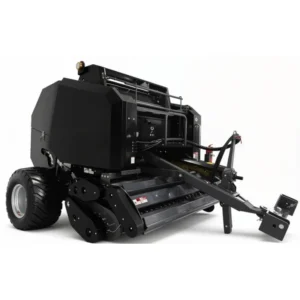
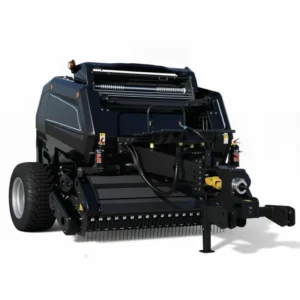
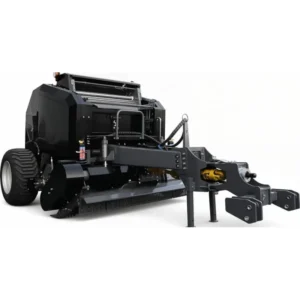
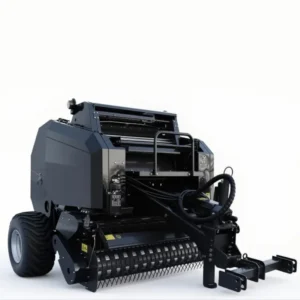
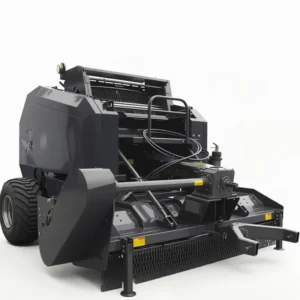
The dual-coupled gearbox tongue is featured on the 9YG-2.24D S9000 series. The following round baler machine models across the range address the full spectrum of Korean wheat straw operational scales, from small farm straw recovery to large-scale commercial straw contractor operations.
10. Regulatory Standards Governing Dual-Coupled Gearbox Design in Key Markets
The dual-coupled gearbox tongue on the 9YG-2.24D S9000 round baler machine series is subject to the same agricultural machinery safety standards as any other gearbox and PTO driveline system, with the additional consideration that the rotating tongue pivot introduces a new mechanical element that must be evaluated against the guarding and stability requirements that these standards impose. B2B buyers and fleet operators should confirm the regulatory status of the round baler dual gearbox tongue configuration before procurement, as the design’s novelty may require specific attention in the certification documentation beyond what a conventional fixed-tongue gearbox arrangement would need.
Korea
In Korea, round baler gearboxes including the dual-coupled gearbox tongue assembly are evaluated under the Agricultural Machinery Performance Test (농업기계 성능검정) process administered by the Rural Development Administration (RDA). The performance test covers the gearbox’s rated torque capacity, thermal performance under sustained load, and the PTO driveline guarding requirements specified in Korean Standard KS B ISO 4413. The pivot bearing and rotating tongue must be guarded or shrouded to prevent operator contact during operation, consistent with the general machinery guarding principle of KS B 6033 (Korean equivalent of EN 13857 machinery safety guarding distances). Machines holding a current Performance Test Certificate for the S9000 variant are eligible for MAFRA purchase subsidies of 30–50%, making the additional capital cost of the dual gearbox tongue more accessible to Korean wheat straw operators.
European Union
EU Machinery Directive 2006/42/EC (transitioning to EU Machinery Regulation 2023/1230 from January 2027) requires CE marking for round baler gearbox assemblies. EN 1553 specifies the agricultural gearbox safety requirements including the novel element assessment that would apply to the rotating tongue pivot bearing assembly as an element not addressed in the standard’s primary scope. The PTO shaft from tractor to primary gearbox must comply with EN ISO 4254-7 (agricultural machinery — safety for forage harvesters) and EN ISO 11684 for warning label requirements at the rotating tongue pivot.
United States
ASABE Standard ASAE S430 governs tractor PTO driveline safety and specifies the guarding requirements for PTO shafts and gearboxes in agricultural applications. The Engineering Practice ASABE EP408 provides specific guidance on PTO driveline operating angles that is directly relevant to the dual gearbox tongue’s primary benefit — it establishes the angle limits that the primary gearbox-to-tractor PTO shaft must not exceed, confirming that the dual gearbox design correctly addresses the constraint that would otherwise limit headland turning. OSHA 29 CFR 1928 covers agricultural machinery guarding in occupational settings.
Russia and CIS
For export markets in Russia, Kazakhstan, and other CIS countries — significant wheat-producing regions where round balers with headland recovery advantages are commercially relevant — the TR CU 010/2011 Technical Regulation under the EAC framework governs gearbox and driveline safety certification. The EAC Declaration of Conformity for the dual-coupled gearbox tongue assembly must address the pivot bearing and rotating tongue element as a specific mechanical feature requiring documented safety analysis, consistent with the TR CU framework’s requirement for comprehensive technical file documentation of novel mechanical elements.
| Region | Gearbox Standard | Pivot/Tongue Element Requirement | Subsidy / Market Access Note |
|---|---|---|---|
| Korea | KS B 1521 / KS B ISO 4413 / RDA test | KS B 6033 guarding distance at rotating tongue pivot | MAFRA subsidy 30–50% with RDA certificate |
| EU | Machinery Directive 2006/42/EC / EN 1553 | Novel element assessment under EN 1553 scope | CE marking required; DoC must address tongue pivot |
| USA | ASABE S430 / OSHA 29 CFR 1928 | ASABE EP408 angle limits verified at primary PTO shaft | Confirms dual gearbox architecture meets angle constraints |
| Russia / CIS | TR CU 010/2011 / EAC mark | EAC DoC technical file with pivot bearing safety analysis | Required for wheat straw market import clearance |
| International | ISO 4413:2010 / ISO 11684 | ISO 11684 warning label at rotating tongue pivot point | Standard international machinery safety baseline |
11. Field Operating Protocol for the Dual-Coupled Gearbox Tongue in Wheat
To realise the full headland loss reduction potential of the round baler machine dual-coupled gearbox tongue in Korean wheat straw baling, operators should configure their baling pattern and headland approach to make best use of the tongue’s rotation capability. The headland loss numbers modelled in Section 4 assume the operator is actively using the tongue rotation to extend windrow coverage at headland approaches — this does not happen automatically without the operator adjusting their baling technique relative to what they would use with a fixed-tongue round baler.
The most effective technique for minimising round baler headland losses with the dual gearbox tongue is the overrun approach: rather than stopping the baling pass at the same point where a fixed-tongue operator would have to begin their turn to avoid exceeding the PTO shaft angle limit, the dual gearbox tongue operator continues following the windrow for an additional 1.5–2.0 metres past this point while allowing the tongue to begin rotating toward the turn direction. This overrun approach captures the material that a fixed-tongue round baler would have been forced to leave behind. The return-pass engagement technique is the mirror image: the operator begins angling the tractor back toward the new windrow before the full headland arc is complete, allowing the tongue rotation to bring the pickup into position earlier in the return approach than a fixed-tongue arrangement would permit.
During the wheat straw campaign, the pivot mechanism should be inspected for freedom of rotation at each daily startup check. A pivot bearing that has stiffened due to contamination or insufficient lubrication will resist rotation and force the operator to use wider headland arcs than the design intends, gradually eroding the headland recovery advantage that the dual gearbox tongue was intended to provide. A 5-minute daily lubrication check and visual inspection of the pivot bearing area for chaff accumulation that could block the rotation arc is the maintenance investment that sustains the headland loss reduction performance across the full straw season.
Dual Gearbox Tongue Headland Operating Checklist — Wheat Straw
Pre-Season Setup
- Confirm pivot bearing rotates freely through full 90-degree arc
- Grease pivot bearing to positive-purge of old grease
- Check gearbox oil level in both primary and secondary gearboxes
- Verify intermediate shaft tube is undamaged and flanges torqued
- Practice overrun headland approach in empty field before campaign
Daily During Wheat Straw Campaign
- Inspect pivot area for chaff accumulation blocking rotation
- Apply lubricant to pivot housing grease point
- Check gearbox oil levels in both housings visually
- Listen for bearing noise or roughness in pivot rotation
- Measure uncollected headland strip width to verify performance
- Review tractor operator headland technique with overrun approach
Frequently Asked Questions
Q1. How much wheat straw headland loss can Korean farmers recover per season by switching to a dual-coupled gearbox round baler machine for Jeonnam or Jeonbuk wheat fields? +
Q2. What is the dual-coupled gearbox tongue on the 9YG-2.24D S9000 round baler machine and how does it differ from a standard fixed-drawbar round baler? +
Q3. Which round baler gearbox standard does the dual-coupled gearbox tongue on the 9YG-2.24D S9000 comply with for Korean MAFRA subsidy eligibility? +
Q4. Where can Korean wheat straw contractors and cooperatives get a supplier quote for the 9YG-2.24D S9000 dual-gearbox round baler with MAFRA subsidy documentation? +
Q5. What round baler parts in the dual-coupled gearbox tongue assembly require the most attention for a Korean wheat straw operator covering 100 hectares per season? +
Q6. How does the dual gearbox tongue on the 9YG-2.24D S9000 round baler machine improve headland efficiency in irregular small-field conditions typical of Korean wheat areas like Jeonnam? +
编辑:PXY