Farm Equipment Guide
How Do Round Balers Pick Up Crop from the Field?
A complete technical guide covering pickup mechanisms, structural design, material systems, and regulatory considerations — with real-world applications for hay, straw, and silage operations in Korea and globally.
If you’ve ever watched a 圓捆打捆機 rolling across a field and wondered exactly what’s happening at ground level — you’re not alone. The pickup process looks almost effortless from a tractor cab, but there’s a carefully engineered sequence of mechanical actions happening in the few seconds it takes for a windrow of cut hay or straw to disappear into the machine and eventually emerge as a compact cylindrical bale. Understanding how this works matters whether you’re a farmer choosing between a small round baler and a larger model, a procurement manager evaluating a round baler machine for an agricultural enterprise in Korea, or a technician sourcing round baler parts after field damage.
This guide walks through every stage of the crop pickup process — from the moment the tines touch the ground to the wrapping and ejection of a finished bale — including the mechanical structures involved, the materials used, applicable safety regulations, and an honest look at what separates well-designed machines from average ones.
1. What Is a Round Baler and Why Does the Pickup Mechanism Matter?
A 圓捆打捆機 is a tractor-towed or self-propelled machine that collects cut crop material from the ground, compresses it into a cylindrical bale, and binds it with twine, net, or plastic wrap for storage and transport. Unlike square balers — which produce rectangular blocks — round bales are self-draining, weather-resistant on the outside, and structurally stable when stacked or left in a field. This makes them the dominant choice for hay and silage operations across Northeast Asia, including the increasingly mechanized livestock and forage sectors in South Korea (한국 농업 기계화), where growing demand for efficient hay and straw handling is driving investment in modern round balers.
The pickup mechanism is the first and arguably the most critical stage of the whole process. A poorly designed or worn-out pickup leaves crop behind on the ground — directly reducing the yield recovered from every field pass. A well-engineered one lifts material cleanly at operating speeds of 5–35 km/h, handles varying crop densities and moisture levels, and feeds material evenly into the bale chamber without blockages. When Korean farmers or agribusinesses compare a mini round baler to a full-size commercial model, the pickup design and pickup width are among the first technical specifications to examine, because they directly determine field efficiency, bale quality, and maintenance frequency.
The following sections break down each functional zone of the pickup and feeding system, from tine design through the compression chamber and final bale ejection. Whether you’re researching a round hay baler for sale in the Korean market or evaluating spare part compatibility for an existing machine, this technical foundation will help you make better decisions.
2. Action Method: How the Round Baler Actually Picks Up Crop
The crop pickup process in a modern round baler involves four sequential mechanical actions that happen simultaneously as the machine moves forward: lifting, conveying, feeding, and forming. Understanding these as distinct phases helps explain why certain machine configurations work better in specific crop types or field conditions.
Phase 1 — Ground Pickup (The Tine Bar)
The front-most component of the pickup unit is a rotating reel fitted with spring-steel or hardened-wire tines (also called pickup teeth or spring tines). As the reel rotates, the tines sweep through the windrow in a forward-and-upward arc, gathering loose crop material from the ground surface. The tine geometry — specifically the angle at which tines enter and exit the crop mat — determines how cleanly material is lifted without picking up soil or leaving crop behind.
Two common tine configurations exist in commercial round balers: the spring-tooth pickup, where each tine is an individual coil-spring element that flexes independently on contact with the ground, and the cam-controlled pickup, where tines are mounted on a rotating drum and their angle is controlled by a cam mechanism to keep them perpendicular to the ground during the gathering phase before retracting as they pass the stripper guard. The 9YG-series round balers use a spring-tooth (弹齿式) pickup configuration across their full model range, providing reliable self-cleaning action — when a tine hits a hard obstacle or a clump of dense material, it deflects rather than transferring the impact force to the reel shaft, reducing breakage risk.
Pickup width directly affects the per-hectare capacity of the machine. Standard commercial round balers typically feature pickup widths from 1,900 mm to 2,400 mm — the 9YG-1.0 model, for example, has a 1,900 mm pickup width suited for paired windrows on smaller fields, while the 9YG-2.24D series uses a 2,240 mm pickup width for high-throughput operations on large grassland areas. Wider pickups gather more material per forward meter of travel, reducing the passes needed to clear a field.
Phase 2 — Crop Conveying (The Feed Auger or Roller)
After the tines lift the crop, it must be moved inward toward the center of the machine for even distribution across the full width of the bale chamber. This is handled by the feed conveying system, which in different machine designs consists of either a cross auger (screw conveyor) mounted above the pickup, a center-feed roller with aggressive surface profile, or a combination of both — a configuration sometimes called the “auger + roller” (绞龙+拨齿辊) system used on models like the 9YG-1.25 series. The auger collects material from the outer edges of the pickup and moves it inward, while the feed roller then passes it into the baling chamber. On models with a wider pickup relative to chamber width — such as the 9YG-1.25 series with a 2,240 mm pickup feeding into a 1,250 mm wide chamber — this cross-conveying step is particularly important for maintaining even bale density across the full bale width.
Phase 3 — Pre-Compression Feeding (The Rotor/Roller Feed System)
Once material is gathered and laterally distributed, it enters the pre-compression zone — the critical transition between loose gathered crop and the actively forming bale. In the 9YG series, this is handled by the proprietary “axial-flow semi-forced” (轴流式半强制) feeding mechanism: a patented system that uses a rotor without cam guards or protective rings to move material from the pickup zone into the bale chamber. Compared to conventional designs that rely solely on passive crop flow, this approach forces more material through per unit time, significantly reducing the risk of blockages (草堵 / plugging) and increasing throughput by approximately double compared to traditional systems. The absence of cam guards also reduces the number of wear parts needing periodic inspection.
Phase 4 — Bale Chamber Formation (The Drum/Roller Chamber)
All 9YG-series round balers use a fixed-diameter drum chamber (滚筒式压缩室 / roller-type compression chamber) rather than a variable-chamber belt design. The chamber contains 16 to 18 compression rollers — depending on model size — each approximately 222 mm in diameter. As incoming crop enters the rotating drum array, the rollers spin in coordinated directions to roll the material into a progressively tighter cylindrical bale. The density at which the bale is compressed is monitored by pressure sensors throughout the forming cycle, and the machine signals the operator (via indicator lights or buzzers) when the preset density is reached. On the larger 9YG-2.24D models, bale density can be controlled precisely with sensor feedback to achieve consistent 100–200 kg/m³ bale density, with finished bale dimensions of φ1,300 mm × 1,400 mm. Once forming is complete, net wrapping is applied automatically before the rear gate opens and the finished bale is ejected hydraulically.
3. Manufacturing Structure: How a Round Baler Is Built
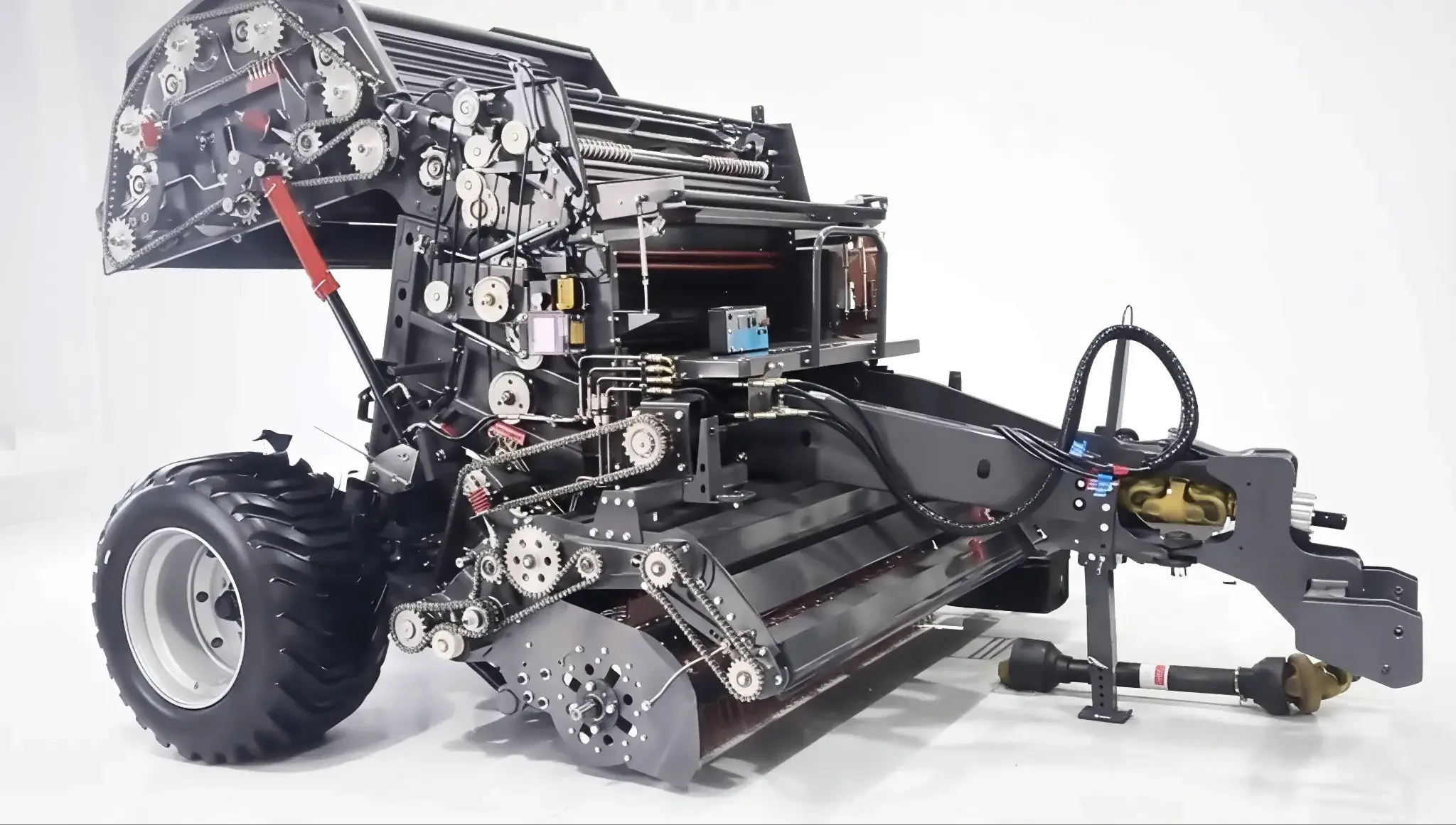
Understanding the structural architecture of a round baler matters both for buyers evaluating long-term durability and for maintenance teams sourcing round baler parts. Modern commercial round balers are built around several major structural sub-systems: the main frame, the pickup unit, the feed system, the bale chamber, the net wrapping system, the drive train, the hydraulic system, and the tow hitch. Each of these interacts with the others in ways that determine the machine’s overall reliability, ease of maintenance, and suitability for specific operating environments — including the varied terrain and crop conditions encountered across Korea’s rice paddy-adjacent grasslands and mountainous upland hay fields.
Main Frame Construction
The main structural frame is fabricated from heavy-section steel plate, typically laser-cut for precision and then MIG/MAG welded by automated welding lines. The frame must simultaneously support the weight of the machine itself (which ranges from approximately 2,640 kg for the compact 9YG-1.0 up to 4,570 kg for the large 9YG-2.24D S9000 model), resist torsional forces during field operation on uneven terrain, and provide secure mounting points for the pickup unit, chamber rollers, hydraulic cylinders, and tow hitch. Frames are treated with electrostatic powder coating after fabrication to provide corrosion resistance — important in coastal Korean operating environments where salt-laden air can accelerate rusting on unprotected steel.
Drive Train and Gearbox
Power from the tractor’s PTO (Power Take-Off) shaft — rotating at 720 r/min for most commercial models in this series — is transmitted to the baler through a propshaft and into the main gearbox. On the 9YG-2.24D S9000 model, the innovative dual-compound gearbox (双联齿轮箱) allows the tow hitch to rotate 90° left and right relative to the baler body, significantly reducing the turning radius required when working small field blocks — a practical advantage on Korean paddy field perimeters where headland space is limited. The gearbox is connected to the tow frame via a rigid integral connection, giving the assembly excellent stability on undulating ground and preventing the driveshaft jamming problems that can occur with conventional tow hitch designs when the machine articulates sharply during turns. A newly developed dual-cross universal joint driveshaft with integrated torque-limiter provides additional protection to drivetrain components under sudden load peaks.
液壓系統
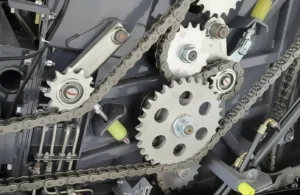
The hydraulic system manages the opening and closing of the rear chamber gate during bale ejection, the tension on the net wrapping system, and on some models, additional functions like pickup height adjustment. The 9YG-2.24D Classic uses H-type ferrule-style hydraulic fittings (H型卡套式接头) that sustain higher working pressures compared to standard push-on connectors, resulting in faster gate cycling times. A hydraulic buffer cylinder on the rear gate absorbs the closing impact force, protecting the gate structure from fatigue cracking that commonly affects machines operating at high bale-per-hour output rates. All models feature dual-sided sprocket chain drive (双侧链轮传动) on the rear bale chamber, ensuring even torque distribution to all compression rollers across the full chamber width — a key factor in achieving uniform bale density from edge to edge.
Key Specifications Comparison Table
| Model | Pickup Width (mm) | Chamber Dia. (mm) | Bale Size D×W (mm) | Power Req. (kW) | Output (bales/h) | Machine Weight (kg) |
|---|---|---|---|---|---|---|
| 9YG-1.0 | 1,900 | φ1,000 | φ1,100×1,000 | 48–80 | 40–100 | 2,640 |
| 9YG-1.0C | 2,400 | φ1,000 | φ1,000×1,250 | ≥69.8 | 40–80 | 3,198 |
| 9YG-1.25 | 2,240 | 1,200 | 1,300×1,250 | ≥75 | 40–100 | 4,060 |
| 9YG-1.25A | 2,150 | φ1,200 | φ1,300×1,250 | ≥75 | 40–100 | 4,472 |
| 9YG-2.24D | 2,240 | φ1,200 | φ1,300×1,400 | 55–100 | 40–100 | 3,922 |
| 9YG-2.24D Classic | 2,240 | φ1,200 | φ1,300×1,400 | 55–100 | 40–100 | 4,312 |
| 9YG-2.24D S9000 | 2,240 | φ1,200 | φ1,300×1,400 | 55–100 | 40–100 | 4,570 |
All dimensions in millimeters. Power requirements in kilowatts (kW). Bale density across all models: 100–200 kg/m³.
4. Material System: What Round Balers Are Made Of
The materials used in a round baler directly affect its service life, maintenance frequency, and suitability for different operating environments. Understanding the material choices behind key components helps buyers assess the long-term cost of ownership of any small round baler or large commercial round baler machine.
Frame and Structural Plates
All primary structural elements — the main side frames, rear gate structure, and tow hitch frame — are fabricated from high-strength low-alloy (HSLA) structural steel plate, typically S355 or equivalent grade. This offers a substantially higher yield strength than ordinary mild steel (S235), enabling frame sections to be made lighter without sacrificing structural rigidity. Frame components are cut using computer-numerically controlled (CNC) laser cutting machines, then formed on hydraulic press brakes before robotic MIG welding. After fabrication, frames undergo surface preparation (shot blasting) and electrostatic powder coating in a dedicated spray booth — the same process used in automotive body manufacturing — to achieve a coating thickness and adhesion quality that outperforms conventional brush-applied agricultural paints. This coating system is particularly relevant for round balers operating in Korea’s humid summer monsoon season, when unprotected steel machinery deteriorates rapidly.
Compression Rollers
The bale chamber compression rollers — 16 or 18 per machine depending on model — are the highest-wear components in a round baler. They are typically manufactured from medium-carbon steel tubes with precision-machined bearing journal ends. The outer surface may be plain smooth, profiled with longitudinal ridges, or fitted with replaceable wear strips depending on the intended crop type. Rollers on rear-chamber chain drives receive a heavier-duty surface treatment because they experience higher cyclic loading as the bale forms and density increases. On the 9YG-2.24D Classic and S9000 variants, the rear chamber uses dual-sided 20A heavy-duty roller chains — a specification heavier than the standard 16A chains used on the entry-level 9YG-1.0C — which increases compression pressure and achieves consistently denser bales suitable for long-term outdoor storage without protection.
Pickup Tines
Pickup spring tines are cold-formed from high-carbon spring steel wire (typically 65Mn or equivalent), heat-treated to achieve the precise balance of springback elasticity and fatigue resistance required for thousands of ground contact cycles per field hour. A worn or broken tine is one of the most common field service calls for any round hay baler — the tines gradually lose their spring temper after extended use in abrasive soil conditions. Well-designed replacement tine systems allow individual tine replacement without removing the entire tine bar, which reduces maintenance downtime. When researching round baler parts availability for a specific model in the Korean market, it’s worth confirming that spare tines are held locally or can be air-shipped quickly, as a broken tine bar at peak harvest time has a disproportionately large impact on the season’s output.
Net and Twine Binding System
All models in the range described here use automatic net wrapping (缠网) as the primary bale binding method. Baling net is a UV-stabilized polypropylene mesh, typically 2,000 mm wide, supplied in roll lengths matched to the model’s net specification (e.g., 2,000 × 1.4 m/bale for the 9YG-2.24D series, or 2,000 × 1.25 m/bale for the 1.25-series). Net wrapping completely encases the bale in approximately 2–3 wraps, protecting the outermost crop layer from weathering and mechanical damage during transport. For silage applications — where the bale must also be wrapped in oxygen-barrier stretch film after leaving the baler — the net wrap simply holds the bale shape long enough for it to reach the wrapper machine.
5. What Crops Can a Round Baler Handle?
One of the most common questions asked by Korean farmers evaluating a round baler machine for purchase is which crops the machine will actually handle reliably. The answer depends on both the pickup tine design and the feeding system. Most models in the standard range use spring-tooth pickups optimized for dried or semi-dried windrow material — the predominant form in which ryegrass, alfalfa, rice straw, and wheat straw are presented to the baler after mowing and field-drying. The 9YG-1.25 and 9YG-1.0C models take this further by offering interchangeable pickup heads: the standard spring-tooth bar can be swapped for a hammer-claw pickup rotor specifically designed for standing corn stover, which conventionally requires a separate raking step before baling. This optional claw-type pickup eliminates that additional field operation, reducing the overall harvest cost per tonne of material collected.
For Korean rice straw — one of the largest available biomass feedstocks in the country, generated after autumn rice harvest — the key considerations are moisture content at baling time and tine clearance above the soil surface. Rice straw is inherently slippery and prone to bridging in the feed channel when harvested slightly damp. Round balers with the axial-flow semi-forced feeding system handle wet straw significantly better than conventional passive-feed designs, as the positive conveying action continues to push material through even when the crop forms a mat across the pickup width. For completely dried straw baled several days after the harvest, any well-maintained round baler machine with a spring-tooth pickup will perform reliably.
6. Choosing the Right Round Baler Size for Your Operation
The most common mistake buyers make when selecting a round baler is focusing on bale output capacity without first assessing the horsepower available from the tractor they plan to use. A small round baler for a 40 hp tractor — such as the 9YG-1.0, which requires only 48–80 kW (approximately 65–108 hp) — is a very different purchase decision from a large-scale commercial round baler machine requiring a 100 kW tractor. In Korea, where many family farms operate compact tractors in the 40–75 hp range due to field size and terrain constraints, the 9YG-1.0 and 9YG-1.25A are typically the most suitable starting points for evaluation.
For larger operations — livestock farms with substantial hay requirements, custom baling contractors operating across multiple farms, or cooperative machinery pools in Korean agricultural districts — the 9YG-2.24D family provides the combination of high throughput (up to 100 bales per hour under ideal conditions), large bale size (φ1,300 × 1,400 mm), and wide pickup (2,240 mm) that makes commercial-scale hay production economically viable. The S9000 and Classic variants in this series offer progressively heavier-duty construction for operators who need maximum machine uptime in high-intensity seasonal campaigns.
Quick Selection Guide
Small farm / compact tractor (<80 kW)
9YG-1.0 or 9YG-1.0C — mini round baler range, bale weight 100–200 kg, suitable for paddy field perimeters and small grassland plots in Korea.
Medium farm / mid-range tractor (75–100 kW)
9YG-1.25 or 9YG-1.25A — balanced performance, 1,250 mm wide bale, multi-crop interchangeable pickups available.
Commercial / contractor (55–100 kW tractor, high output)
9YG-2.24D series — 1,400 mm wide bale, sensor-controlled density, 40–100 bales/h, suitable for large-scale Korean hay and straw operations.
7. Regulatory Standards and Compliance for Round Balers
Agricultural machinery sold globally — including round balers — is subject to a range of safety and environmental regulations that vary by market. Buyers importing round balers into Korea or sourcing machines for export to other markets should be aware of the following frameworks:
Republic of Korea — Agricultural Machinery Safety (농업기계 안전관리): Under the Act on the Promotion of Agricultural Mechanization (농업기계화 촉진법), agricultural machinery sold in Korea must comply with safety standards managed by the Rural Development Administration (농촌진흥청, RDA). Round balers used with PTO-driven tractors must be equipped with guarded PTO shafts conforming to KS B ISO 11684 (safety signs and hazard pictograms for agricultural machinery). Tractor-baler combinations must be assessed under KS R ISO 4254-7 (agricultural machinery — safety — Part 7: combine harvesters, forage harvesters and cotton harvesters), which also references round baler operational hazards including entanglement, ejection, and hydraulic system failures.
Republic of Korea — PTO Guard Requirements: Under KS B ISO 5673-1, PTO driveshaft guards must cover all rotating elements from the tractor output flange to the machine input flange. A broken, missing, or improperly attached PTO shield is among the most common machinery safety violations identified in Korean agricultural inspections. All machines in the 9YG series include factory-fitted PTO guards; these must be maintained in serviceable condition throughout the machine’s working life.
European Union — Machinery Directive 2006/42/EC and EN ISO 4254-7: Equipment exported to or marketed in the EU must carry CE marking, supported by a Declaration of Conformity addressing the essential health and safety requirements in Annex I of the Machinery Directive. For round balers specifically, EN ISO 4254-7 provides the harmonized standard covering design requirements, guarding of rotating components, and hydraulic system safety. Buyers in Korea sourcing machines for re-export to EU markets, or operating subsidiaries in EU countries, must verify that the specific model they purchase has been assessed and documented for CE marking compliance.
United States — ASABE Standard S296.5 (Agricultural Equipment): ASABE S296 specifies equipment identification numbering for agricultural machinery in the US market, and related ASABE standards cover PTO connection, hydraulic quick-coupling interfaces, and three-point hitch dimensions relevant to tractor-baler compatibility. Korean buyers exporting hay or straw bales to US markets may need to verify that bale dimensions and net wrapping materials meet USDA phytosanitary requirements for imported hay products in addition to the mechanical standards governing the baler itself.
ISO 11684 (Safety Signs) and ISO 4254 Series: These international standards are referenced by most national agricultural machinery regulations globally and provide the baseline framework for hazard identification, warning label placement, and operational safety instructions in operator manuals. A round baler marketed globally should include compliant safety decals in the language(s) of the target market — Korean-language decals (한국어 경고 표지) are required for machines sold to Korean end users.
8. Explore Our Round Baler Product Range
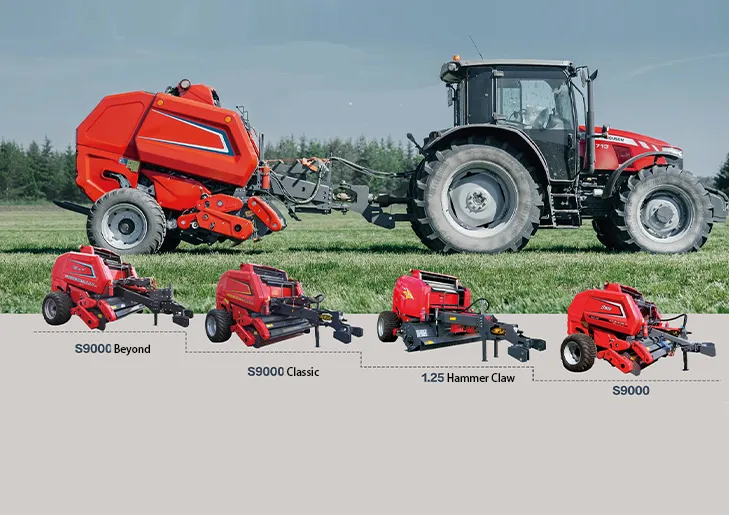
Whether you’re looking for a compact mini round baler suited to a small farm tractor or a high-output commercial machine for large grassland operations, the following models cover the full spectrum of round hay baler requirements. Browse the complete lineup to find the right specification for your operation.
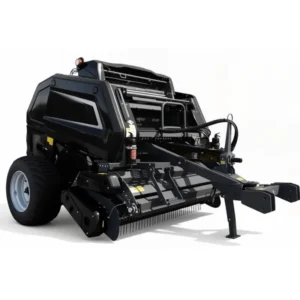
9YG-2.24D S9000
Premium heavy-duty round baler with dual compound gearbox
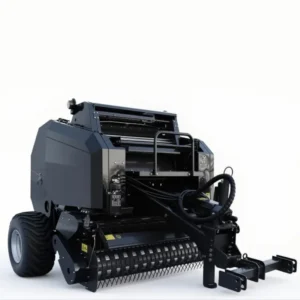
9YG-1.0
Compact small round baler for low-HP tractors and smaller farms
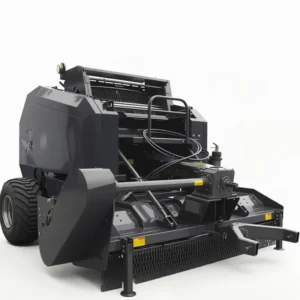
9YG-1.0C
Corn stover specialist with interchangeable hammer-claw pickup
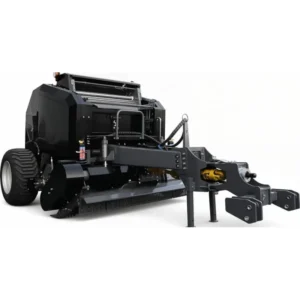
9YG-1.25
Mid-size versatile round baler, dual pickup options
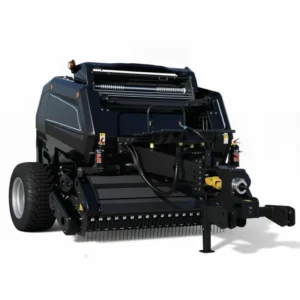
9YG-1.25A
Enhanced mid-size model with adjustable PTO speed range
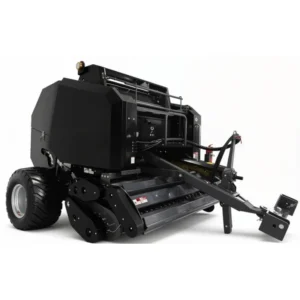
9YG-2.24D
Standard commercial large-format round baler machine
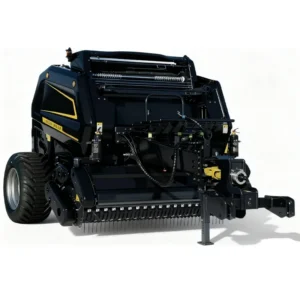
9YG-2.24D Classic
Heavy-duty chain drive, buffer hydraulics, high-density baling
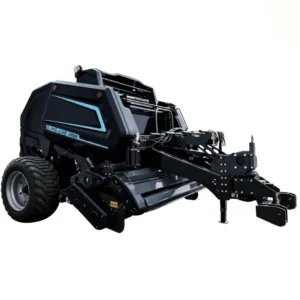
9YG-2.24D Transcend
Top-tier performance model with maximum drivetrain durability
9. Maintaining the Pickup System: What Fails and Why
The pickup and feeding zone of any round baler machine is the highest-wear area of the assembly. Understanding what typically fails — and the maintenance intervals to prevent it — is essential information for any operator or service technician working with round balers in the Korean agricultural sector or elsewhere. The following are the most common maintenance needs encountered in field service:
Broken or fatigued pickup tines: Individual tines crack or lose their spring temper after extended operation, particularly in stony soil conditions or when the pickup inadvertently contacts the ground at operating speed. Visual inspection should be performed before each operating day during peak season. Carry a set of replacement tines and the appropriate mounting hardware in the tractor toolkit during harvest campaigns.
Chain wear and stretch: The roller drive chains — 16A or 20A depending on model — elongate with use as pin and bushing surfaces wear. Stretched chain increases roller drive noise and eventually causes skip-tooth engagement on the sprockets, which accelerates sprocket wear exponentially. Check chain tension and link condition every 50–100 operating hours and replace when elongation reaches the manufacturer’s specified limit (typically 2–3% elongation beyond nominal pitch).
Net wrapping system jam: The net feed mechanism is sensitive to contamination by crop fibers that accumulate around the knife mechanism and feed rollers. A net jam at the wrong moment can leave a bale in the chamber unbound, requiring manual intervention and stopping work for 15–30 minutes. Clean the net knife and feed guide weekly during active baling seasons.
Bearing lubrication: All roller bearings, pickup reel bearings, and feed rotor bearings require regular grease replenishment via Zerk fittings. Operating hour-based greasing intervals vary by component — consult the machine’s operator manual for the specific schedule. In humid Korean summer conditions, bearing lubrication intervals should be reduced by 30–50% compared to dry-climate recommendations.
10. About Us
We are a dedicated round baler specialist with a full product range spanning compact small round balers through high-output commercial machines. Our product line is certified under ISO 9001 quality management standards, and all models are designed and manufactured under tight dimensional tolerances using CNC laser cutting, robotic welding, and electrostatic coating production lines. Our engineering team has extensive experience supporting round baler applications across diverse crop types — from northeastern Asian pasture grass and winter wheat straw through rice paddy residue and corn stover — and we provide full technical documentation, operator manuals, and spare parts support for every model we supply.
We export globally, including to customers in South Korea and across East Asia. For buyers in Korea looking for a reliable round baler manufacturer with a track record in demanding field conditions, we welcome inquiries about model specifications, availability, spare parts supply chains, and dealer network coverage. Our machines qualify for agricultural subsidy programs in their home market and are exported with full material certificates and inspection documentation to support import clearance and operator registration processes.
Frequently Asked Questions About Round Balers
編輯:PXY