
EP-4965×2640×1750mm Spring Tooth Type 1900mm Picking Width Square Baler
The EP-4965×2640×1750mm is a mid-mounted trailed square baler derived from the 9YF-1900 platform — a machine designed specifically for the harvesting conditions found across paddy fields, dryland grain farms, and mixed livestock operations in South Korea, Southeast Asia, Australia, and the broader international market. At 1850 kg and with an overall length of 4965mm, this is a notably compact square baler machine for the performance class it represents. The spring tooth pickup spans 1900mm, which is wide enough to clear windrows formed by most standard conditioner-mowers and side-delivery rakes in a single pass, while the machine’s total footprint remains manageable for farms with tighter lane and gateway dimensions that exclude wider models.
The machine’s matched power range of 36.8–73.5 kW (approximately 49–99 HP) covers a wide span of tractor configurations, from mid-size utility tractors common on Korean mixed farms to larger row-crop tractors used by Australian and Canadian commercial hay contractors.
Mid-Mounted Trailed Agricultural Square Baler
EP-4965×2640×1750mm (L×W×H)
Spring Tooth Type — 1900mm Picking Width
Square Baler
A mid-mounted trailed-type square baler built for efficient wheat straw, rice straw, cotton stalk, corn stalk, and forage grass baling — featuring a 1900mm spring tooth pickup, dual D-type knotters, 460×360mm compression chamber, and a matched power range of 36.8–73.5 kW for broad tractor compatibility across commercial and mixed farming operations worldwide.
1. 技術規格
All parameters below correspond to the EP-4965×2640×1750mm (L×W×H) Spring Tooth Type 1900mm Picking Width Square Baler, based on the 9YF-1900 engineering platform.
| 不。 | Parameter | 單元 | 規格 |
|---|---|---|---|
| 1 | 型號名稱 | — | EP Spring Tooth 1900mm Square Baler |
| 2 | 搭便車方法 | — | Towed-type |
| 3 | Picking Width | 毫米 | 1900 |
| 4 | Feeding Inlet Width | 毫米 | — |
| 5 | Picker Structure | — | 彈簧齒型 |
| 6 | Feeder Structure | — | Fork Feeding Mechanism |
| 7 | Knotter Type | — | D Type |
| 8 | Number of Knotters | 個人電腦 | 2 |
| 9 | Compression Chamber Section Size (W×H) | 毫米 | 460 × 360 |
| 10 | 打包方法 | — | Automatic Rope Baling |
| 11 | Matching Power Range | 千瓦 | 36.8 – 73.5 |
| 12 | 整體尺寸(長×寬×高) | 毫米 | 4965 × 2640 × 1750 |
| 13 | 機器重量 | 公斤 | 1850 |

2. Five Key Advantages of the EP 1900mm Spring Tooth Square Baler
01 — WIDE POWER COMPATIBILITY
The matching power range of 36.8–73.5 kW is unusually broad for a square baler machine with a 1900mm pickup and dual-knotter configuration. This range encompasses a very large proportion of the mid-size tractor fleet already operating on farms across South Korea, the Netherlands, Colombia, and Canada, making this square baler for compact tractor use an accessible option without the barrier of a high-horsepower tractor requirement. The lower end of this range (≥36.8 kW / 49 HP) even brings this machine within reach of well-specified compact utility tractors, addressing buyers who have historically been limited to smaller, lower-output baler formats.
02 — COMPACT TRANSPORT ENVELOPE
At 4965×2640×1750mm and 1850 kg, this square baler machine has a notably smaller transport footprint than many equivalent 1900mm-class balers. The 1750mm machine height is well below the road overheight threshold that triggers special permits in most markets, and the 2640mm transport width clears standard farm gateway widths without requiring full dismantling of pickup guards. For contractors in Korea, the Netherlands, and the UK who move between multiple farm clients on public roads, a compact machine profile reduces the logistical friction of equipment repositioning during the harvest season.
03 — SPRING TOOTH PICKUP
The Spring Tooth Type pickup is the right tool for the crop types this machine was built to handle — wheat straw, rice straw, forage grass, alfalfa, and cotton stalk windrows where a gentle, clean lift is more important than aggressive shredding action. Spring tines flex to absorb ground-contact shock and recover immediately, reducing tine breakage rates compared to rigid alternatives. Individual tines are bolted for field replacement without reel removal — a practical field serviceability advantage during harvests where stopping for maintenance is costly in both time and weather risk.
04 — DUAL D-TYPE KNOTTERS
Two D-type knotters apply two rope ties per bale simultaneously in each automatically triggered tying cycle. Dual knotters on a square hay baler produce structurally stronger bales than single-tied alternatives — each bale exits the chamber with two evenly spaced twine ties that resist breakage through mechanical handling, stacking, and transport. The D-type knotter design is a long-proven global standard on commercial square baler machines across Europe, North America, and Asia-Pacific, with a wide aftermarket twine supply and well-understood servicing requirements for dealer and farm maintenance teams.
05 — PADDY & DRYLAND VERSATILITY
The EP 1900mm is specifically described as suitable for operation in both paddy fields and dry fields, with best results on flat ground with flat ground and no stones or hard objects. For Korean, Japanese, and Southeast Asian farms where post-harvest paddy straw baling is a major annual operation alongside upland wheat and corn stover recovery, a single machine that reliably serves both paddy and dryland field types removes the need for multiple baler configurations across the farm's annual crop rotation. The dense bales produced by the 460×360mm chamber are suitable for storage, transport, and livestock feeding operations.
3. How Does a Square Baler Work — Operating Principle
The EP 1900mm Spring Tooth Square Baler operates as a PTO-driven towed machine behind the tractor. Drive power flows from the tractor through the PTO shaft to the square baler gearbox, which then distributes torque simultaneously to the pickup reel, the fork feeding mechanism, and the plunger-knotter assembly inside the compression chamber. As the tractor and baler advance along the windrow, the 1900mm wide spring tooth pickup rotates continuously, its flexible spring-steel tines lifting crop material from the field surface in a smooth, even arc that minimises leaf loss on delicate crops like alfalfa and minimises wrapping on fine-stemmed crops like rice straw. The mid-mounted machine layout positions the pickup and baling chamber closer to the tractor's rear axle than rear-mounted designs, improving tracking accuracy on curved windrows and providing a more balanced weight distribution during road transport between fields.
Crop lifted by the pickup is directed rearward into the fork feeding mechanism, which meters material into the compression chamber inlet in controlled charges. The fork mechanism's positive-feed action prevents bridging at the inlet throat — a common cause of blockages on machines with passive gravity-feed inlets when crop density in the windrow varies. Inside the 460×360mm rectangular compression chamber, a reciprocating plunger compresses each metered charge of crop against the growing bale in successive strokes, building pressure and density with each cycle. The plunger speed is governed by the tractor's PTO shaft rotational speed, meaning the operator can influence baling throughput by adjusting field travel speed relative to windrow density.
When the bale reaches the preset length — controlled by a mechanical star wheel measuring the bale against the operator's setting — the two D-type knotters activate simultaneously. Each knotter wraps twine around the bale and ties a secure knot in a single automated cycle before cutting the twine and resetting for the next bale. The finished square hay bale is then pushed rearward by the next incoming bale forming behind it, until it exits the bale chamber chute onto the field. The entire sequence from empty chamber to ejected finished bale repeats continuously without operator intervention beyond monitoring and tractor speed control — making sustained high-output baling a realistic single-operator operation across long field runs.
4. Materials & Build Quality
The EP 1900mm square baler is fabricated from structural steel sections and plate throughout, with the main chassis constructed from high-tensile welded steel to resist the cyclic loading generated by the plunger's continuous reciprocating action. The machine's relatively compact 1850 kg weight is achieved through careful material selection rather than material reduction — section profiles are optimised for the specific stress regime of each structural zone, placing material where it is needed and avoiding redundant mass that would increase transport weight and fuel consumption per bale produced. All primary structural welds are carried out under controlled production conditions, inspected before assembly progression, and then treated with corrosion-inhibiting primer and field-grade enamel topcoat to resist the moisture, UV exposure, and crop chemical contact typical of field-deployed agricultural machinery across Korea's humid summers, Australia's UV-intense seasons, and the Netherlands' wet maritime climate.
Spring tines on the 1900mm pickup are formed from high-carbon spring steel, heat-treated to the specific hardness and temper profile required for flex-recovery performance in the repetitive ground-contact cycle of a pickup reel. The tine mounting arrangement allows individual tine replacement by removing a single retaining bolt without disassembling the pickup reel shaft — meaning a broken tine can be swapped in the field in minutes, keeping downtime during critical harvest windows to an absolute minimum. Square baler parts at this wear point are standardised across the EP 1900mm and 2200mm platform range, which simplifies dealer stock management and reduces the number of distinct part numbers importers need to carry in their service inventory.
The two D-type knotters are precision-cast components that follow the D-type design standard adopted across European and North American square hay baler manufacture since the mid-20th century. This means knotter service knowledge, twine compatibility, and individual knotter component availability is well-established through the global agricultural machinery aftermarket — a significant advantage in markets like Brazil and Colombia where local aftermarket supply of specialist components is more limited and access to the original manufacturer's supply chain for spare parts is the primary logistics route. The compression chamber bore uses hardened wear-plate steel to maintain a smooth, consistent bore surface over multiple seasons of abrasive crop contact.
5. Application Scenarios
The EP 1900mm Spring Tooth Square Baler is described as essential equipment for animal husbandry and straw recycling industries — and those two sectors define the primary commercial contexts where this machine delivers its strongest value.
Rice & Wheat Straw Baling (Paddy Fields)
Post-harvest paddy straw and wheat straw baling is the primary commercial application for this machine type in South Korea, Japan, and across Southeast Asia. The 1900mm spring tooth pickup performs cleanly on the short, fine straw fibre left after combine harvesting, lifting and channelling material efficiently without the crop loss that occurs with mismatched pickup widths or aggressive hammer-claw configurations. Dense square bales of hay and straw at 460×360mm cross-section are the preferred format for mushroom cultivation substrate buyers, livestock bedding suppliers, and biomass fuel procurers who specify consistent bale dimensions and weight.
Wheat Straw on Dryland Grain Farms
On dryland grain farms in Australia, Canada, the Netherlands, and Korea, wheat straw recovery after combine harvest is a separate income stream and a soil management tool when straw is removed to manage stubble burden ahead of the next seeding. The EP 1900mm spring tooth square baler machine works on flat, stone-free fields at the travel speeds typical of commercial post-harvest straw baling, producing small square bales of hay-grade straw density that stack efficiently in covered storage or load into bale trucks for delivery to feedlots and livestock operations. How much does a square bale of hay weigh from this machine? Dry wheat straw bales at 460×360mm and 40 cm length typically weigh 15–22 kg, within comfortable manual handling range for farm staff without mechanical assistance.
Alfalfa & Mixed Grass Forage
Spring tooth pickups are the standard choice for alfalfa baling because they handle the leafy, moisture-sensitive nature of conditioned alfalfa windrows with lower leaf fraction loss than aggressive pickup types. On Korean dairy farms, alfalfa baling directly to small square hay bales allows twice-daily TMR ration preparation without the waste associated with cutting sections from large round bales. For horse farms in the Netherlands and equine operations in the UK, the small square bale of hay format is the commercial standard — it portions accurately for daily feeding, stores compactly in narrow stable loft spaces, and handles easily by a single person without mechanical bale handling equipment.
Cotton Stalk Baling
Cotton stalk recovery after picking is an important residue management operation in cotton-producing regions of Brazil, Colombia, and parts of Korea's upland farming zones. This square baler machine is designed to handle cotton stalk material with the spring tooth pickup, producing dense bales suitable for biomass fuel supply or industrial fibre processing. The automatic rope baling system ties each bale securely without operator involvement, maintaining continuous field operation throughout the cotton stalk clearance window — important for farms that need to complete residue removal before the next crop establishment date.
Corn Stalk Recovery for Livestock Feed
Corn stalk baling for beef cattle and dairy roughage supply is a growing application across Korea's livestock sector and the broader Asia-Pacific region. At the matched power range of 36.8–73.5 kW, this square baler machine covers the tractor fleet typical on mixed grain-and-livestock farms that grow corn for both grain and stover. Baled corn stover at 460×360mm cross-section feeds well in standard ring or cradle feeders, and the small square bale format allows accurate daily ration allocation by weight — an operational advantage on farms tracking dry matter intake per head for production recording or veterinary nutrition management.
6. Regulatory Compliance & Market Standards
Buyers importing and deploying square baler machines in international markets need to ensure compliance with the machinery safety, gearbox mechanical, and agricultural equipment registration frameworks applicable in their country. Below is a region-by-region reference for the most relevant standards.
韓國
The Agricultural Mechanization Promotion Act mandates RDA (Rural Development Administration) type approval for square baler machines sold through subsidy programmes in Korea. Safety requirements cover PTO shaft guards, hitching system structural integrity, and knotter guard enclosures. The matched power range of 36.8–73.5 kW encompasses a large portion of the Korean tractor fleet, potentially improving subsidy eligibility scope for this model. Korean-language operator manuals and RDA-compatible technical data sheets are standard deliverables for this market.
European Union
CE marking under EU Machinery Directive 2006/42/EC (transitioning to EU Machinery Regulation 2023/1230) is mandatory for this square baler machine placed on any EU market, including the Netherlands, Belgium, Germany, and France. EN ISO 4254-7 is the harmonised standard for balers and baling presses, addressing knotter guards, PTO guarding, and rear bale ejection safety. The square baler gearbox must comply with EN 13463 series standards for non-electrical machinery in potentially dusty grain and crop environments.
Australia
Safe Work Australia and state WHS legislation govern trailed PTO-driven farm machinery. AS 1410 applies to PTO shaft guarding. At 2640mm transport width, this square baler machine falls within the standard overwidth road movement category in most Australian states, typically requiring notification to the relevant state roads authority and compliance with convoy lighting requirements during daylight hours. Machine height at 1750mm is within the clearance envelope for most rural road overhead obstacles.
Canada
Provincial occupational health and safety Acts and CEMA (Canadian Equipment Manufacturers Association) technical standards apply to square baler machines in Canada. The power range lower end of 36.8 kW (49 HP) is compatible with many compact and utility tractors used on smaller Ontario and Quebec mixed farms, broadening the addressable market for this machine in eastern Canada where farm sizes tend toward the smaller end. Import duty status should be confirmed under CUSMA or any applicable agricultural machinery tariff schedules at time of procurement.
Brazil & Colombia
In Brazil, ABNT standards and MAPA Ministry of Agriculture import registration apply. INMETRO certification requirements should be confirmed by category. In Colombia, ICA and INVIMA frameworks govern agricultural machinery imports. Both markets offer growing demand for square baler machines driven by expanding commercial cattle ranching, forage crop production, and biomass energy development — sectors where the square bale format is increasingly preferred for logistics and feed quality management reasons over round bale alternatives.
United Kingdom
Post-Brexit UKCA marking under UK Machinery Regulations (SI 2008/1597 as amended) is required for the Great Britain market. PUWER 1998 applies to farm machinery use, and HSE Approved Codes of Practice cover knotter guarding and PTO shaft compliance for agricultural balers. The 2640mm machine width falls into the standard overwidth notification category for road movements on English, Scottish, and Welsh public roads above a certain route classification, requiring advance notice to the relevant highways authority.
Regulatory frameworks are subject to periodic revision. Confirm current requirements with local agricultural machinery authorities or a qualified import compliance consultant before finalising your purchase.
7. Compatible Accessories & Drivetrain Components
We supply the EP 1900mm Square Baler alongside matched gearbox and PTO shaft components, enabling one-stop procurement with verified drivetrain compatibility from tractor PTO to bale chamber.
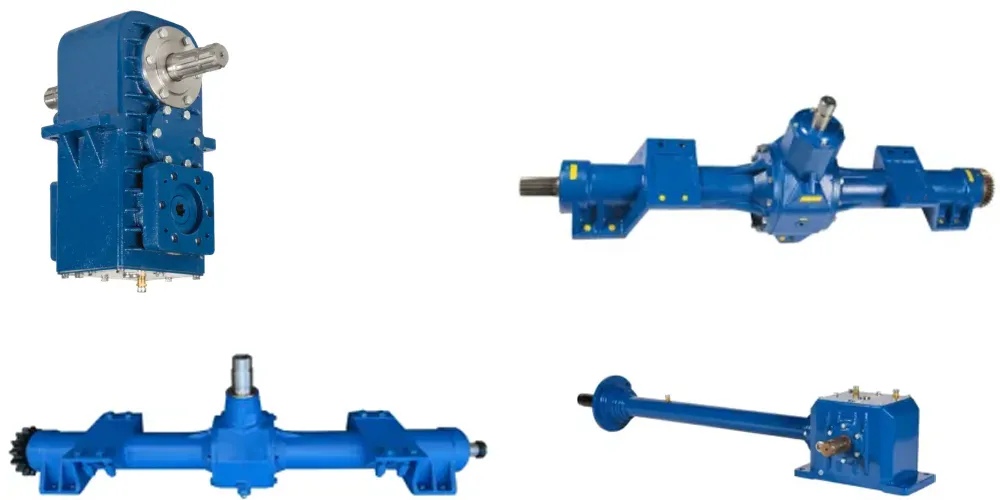
Square Baler Gearbox
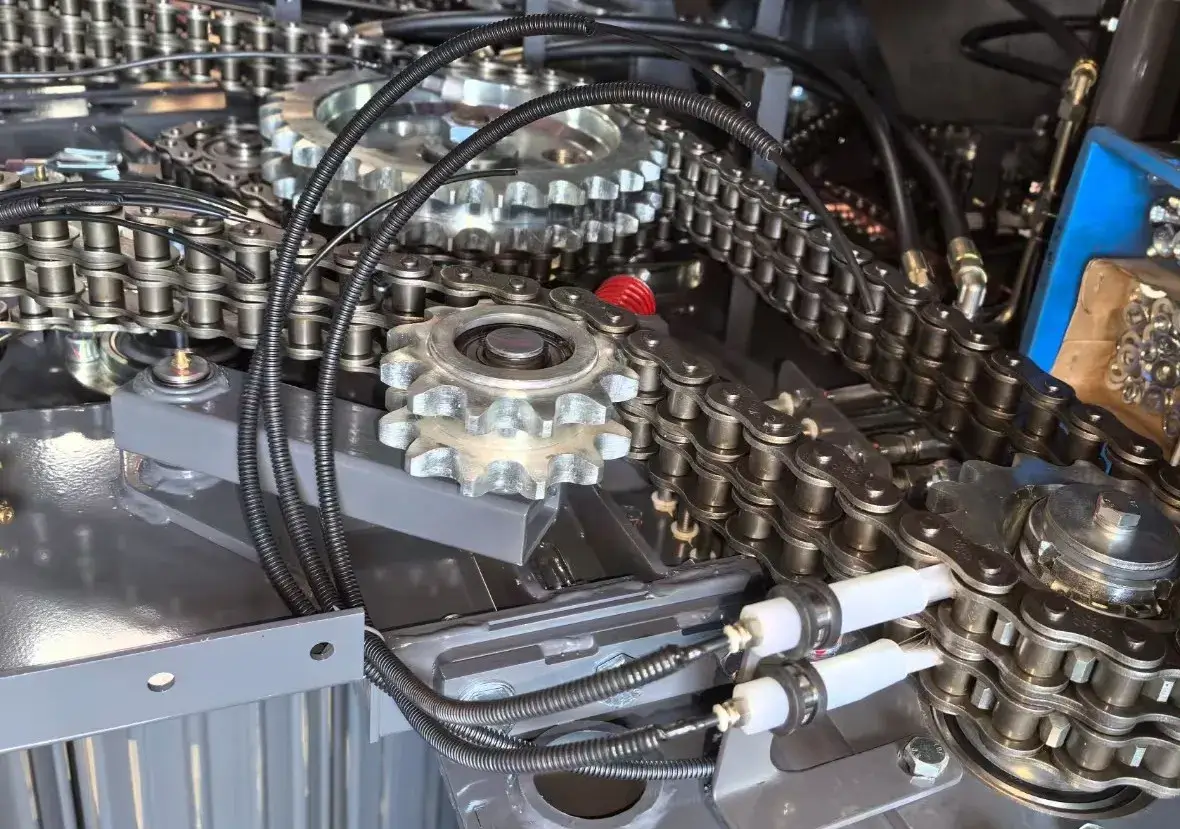
The gearbox on this square baler machine must handle the continuous shock-load cycling of the reciprocating plunger while distributing torque to the pickup reel and fork feeding mechanism simultaneously. Our matched square baler gearbox is engineered to the torque and speed specifications of the EP 1900mm platform, with case-hardened gear sets running in a sealed oil-bath housing. Internal bearing sizing accounts for the combined radial and axial loads generated during the plunger reversal phases, where gearbox stress is highest. For buyers in South Korea and the Netherlands who require CE or RDA compliance documentation, we supply full gearbox technical data sheets as part of the standard export package, ensuring buyers have everything they need for machinery registration without requesting documentation separately.
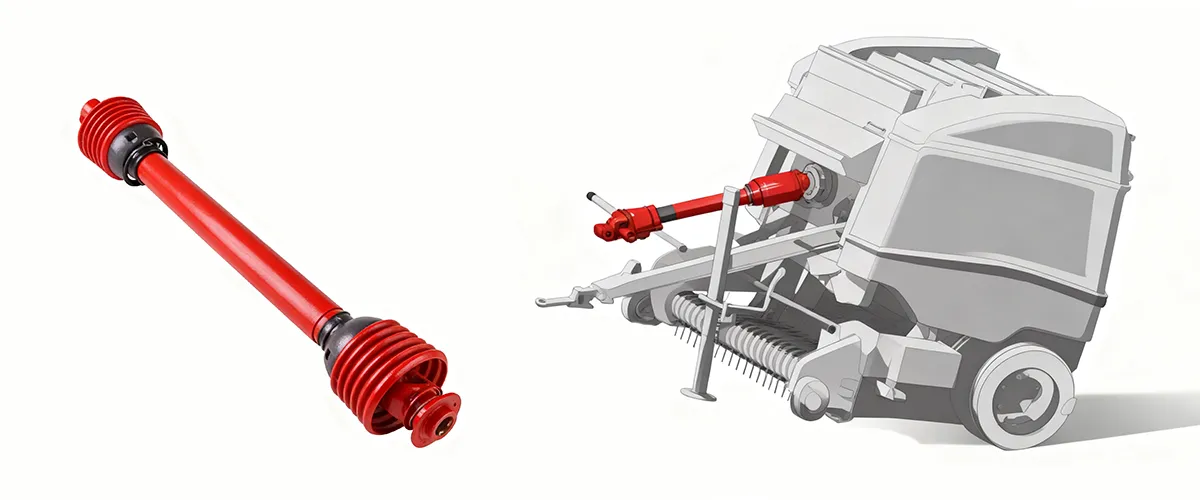
PTO Drive Shaft
Correct PTO shaft specification is critical on a square baler machine because the plunger's reciprocating action generates torque pulses that can shorten shaft and gearbox life if the shaft is underrated or if the overrun clutch specification is inadequate. Our EP PTO shaft for square balers is rated to the EP 1900mm platform's full power range with an overrun clutch torque limit matched to the gearbox input shaft specification, protecting both components from peak plunger impact loads at the upper end of the tractor power range. Safety guarding complies with EN 12965 for EU and UK market deployment, and with equivalent national standards applied in Australia (AS 1410) and Canada. All cross-and-bearing universal joints include grease nipple service points at intervals aligned with the baler's own maintenance schedule, reducing the total number of separate service operations per season and simplifying the maintenance checklist for operators running multiple pieces of PTO-driven equipment.
8. About Us — Over 10 Years of Agricultural Machinery Manufacturing
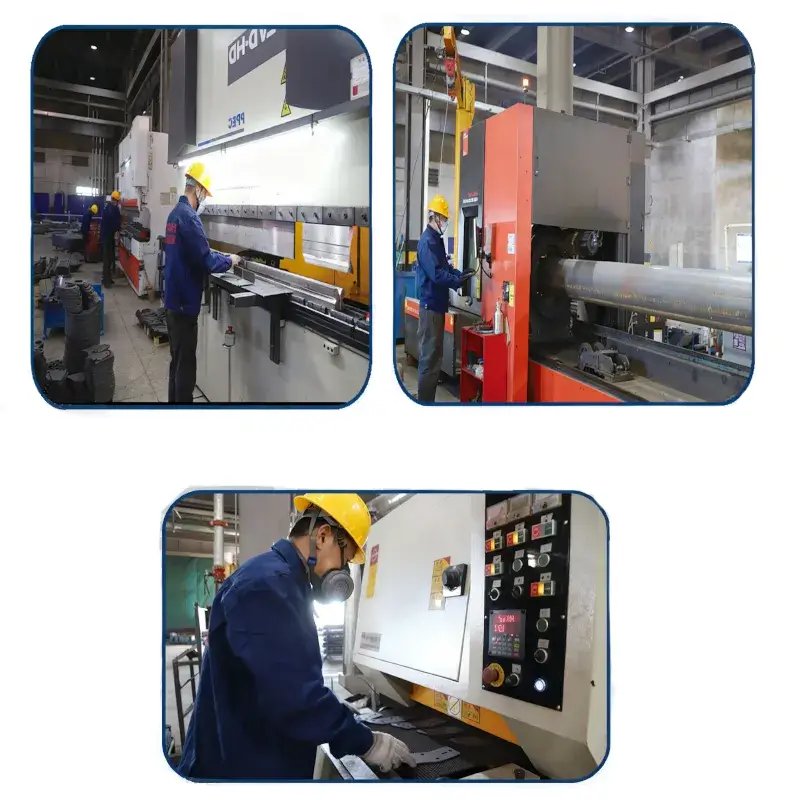
In operation since 2013, we are a modern agricultural and animal husbandry machinery manufacturing enterprise holding independent import and export rights and certified under ISO 9001 Quality Management System. Our product range spans the full breadth of commercial baling and harvesting equipment: light and heavy round balers, single and double-chamber square baler machines including the EP 1900mm and larger platforms, single and double-blade mowers, disc rotary mowers, and single and double-side rakes. Over the past decade-plus of operation, our manufacturing base has grown to over 60 sets of large-scale production equipment, with an annual design output capacity of 2,000 machines — underpinned by continuous investment in advanced international production technology aligned with the precision manufacturing standards that modern square baler machine and round baler design demands.
Our export footprint covers South Korea, Australia, the United Kingdom, the Netherlands, Brazil, Colombia, Canada, and markets across Southeast Asia, the Middle East, and beyond.
WorkShop

Frequently Asked Questions
編輯:PXY


