
Cotton Stalk Baling — Transport Economics Guide
A practical analysis for cotton farmers, agricultural contractors, and biomass logistics operators on the direct relationship between round baler output density, truck payload utilisation, and transport cost per tonne of cotton stalk — with calculation frameworks for Korean and regional biomass supply chain conditions.
1. Why Bale Density Is a Transport Economics Variable, Not Just a Buyer Specification
When cotton stalk operators focus on bale density, the conversation usually centres on the buyer’s minimum specification — what the biomass energy plant requires, what the livestock feed cooperative will accept, what the direct payment programme mandates. These are real and important thresholds. But there is a second, equally significant financial dimension to bale density that receives far less attention in most operational planning discussions: the direct impact of bale density on transport cost per tonne of material delivered.
Road freight in Korea and across the major cotton-producing regions of Asia is purchased primarily on two bases: a per-trip flat rate regardless of payload weight, or a per-tonne rate that varies with distance and commodity type. In either pricing structure, the density of the bales loaded onto the truck determines how many tonnes of dry cotton stalk material fit within the truck’s permitted volume — and therefore what the effective cost per tonne of delivered material is. A round baler machine producing bales at 80 kg per cubic metre fills a standard 5-tonne flatbed truck with roughly 4.5–5 tonnes of straw material. The same truck loaded with bales produced at 150 kg per cubic metre carries approximately 8–9 tonnes of the same straw. The transport cost per trip is essentially the same. The cost per tonne delivered is roughly half. This is the transport economics argument for investing in a round baler with reliable, sensor-controlled high-density output — and it is an argument that becomes more powerful with every kilometre between the field and the buyer.
This guide works through the transport cost calculation methodically, establishes the density-to-payload relationship for common Korean truck formats used in cotton stalk logistics, and connects the bale density output capability of specific round baler models in the 9YG series to the transport cost outcomes they generate across realistic supply chain distances. The goal is to give you a practical tool for including transport economics in your round baler selection and calibration decisions.
2. The Physics: How Bale Density Determines Truck Payload
A round bale’s physical dimensions are set by the machine’s chamber size — for the 9YG-2.24D series, the standard bale is phi 1300 mm diameter by 1400 mm width, with a volume of approximately 1.86 cubic metres per bale. The bale’s gross weight is the product of that volume and the bulk density achieved during bale formation. At 100 kg per cubic metre, a single phi 1300 x 1400 mm bale weighs approximately 186 kg. At 150 kg per cubic metre, the same dimensional bale weighs approximately 279 kg. The bale’s outer envelope — its volumetric footprint on the truck bed — is identical in both cases. The payload mass per bale differs by 50%.
Korean flatbed trucks used for agricultural biomass transport are typically 5-tonne, 8-tonne, or 11-tonne gross vehicle weight class vehicles with flatbed platforms of approximately 6 m x 2.1 m (5-tonne class) or 8 m x 2.3 m (8-tonne class). A 5-tonne flatbed can physically carry a 2 x 4 arrangement of phi 1300 bales — 8 bales per layer, typically stacked one or two layers high depending on load height regulations. At single-layer loading with 8 bales and 100 kg per cubic metre density, the payload is approximately 1,488 kg of cotton stalk material. At the same single-layer arrangement with 150 kg per cubic metre density, payload rises to approximately 2,232 kg — a 50% increase in delivered mass at identical trip cost. The transport cost per tonne decreases proportionally.
Vehicle load regulations in Korea are enforced under the Road Traffic Act and the Road Act, with axle load limits and gross vehicle weight limits that apply independently of the product being transported. A 5-tonne-class truck has a maximum gross vehicle weight of approximately 5,000 kg, meaning the net payload capacity after deducting vehicle tare weight is typically 2,800–3,200 kg depending on the specific vehicle configuration. At 150 kg per cubic metre bale density and 8 bales per load, the cotton stalk payload of 2,232 kg sits comfortably within this payload capacity — meaning the truck is not constrained by weight for this load profile. At lower bale densities, the constraint shifts entirely to truck volume and stack configuration, with the weight limit never reached because the bales simply do not weigh enough to approach it. Higher density is therefore entirely payload-positive within the standard Korean truck fleet weight limit framework for this bale size and configuration.
3. Transport Cost Per Tonne at Different Bale Densities: The Calculation
The following table calculates transport cost per tonne delivered for a phi 1300 x 1400 mm round bale using a standard 5-tonne Korean flatbed truck, across three bale density levels and three representative supply chain distances from cotton field to biomass facility. The trip cost assumption uses a realistic Korean road freight rate for agricultural commodity loads. The calculation illustrates how the density premium — the additional cost of producing denser bales — interacts with the transport saving to determine net financial benefit.
| Scenario | Bale Density (kg/m3) | Gross Bale Weight (kg) | Payload / Trip (8 bales, kg) | Relative Transport Cost/tonne at 50 km | Relative Transport Cost/tonne at 150 km |
|---|---|---|---|---|---|
| Low density bale | 80 kg/m3 | ~149 kg | ~1,190 kg | 100 (index) | 100 (index) |
| Standard density | 120 kg/m3 | ~223 kg | ~1,785 kg | 67 | 67 |
| High density bale | 160 kg/m3 | ~298 kg | ~2,380 kg | 50 | 50 |
| Premium density bale | 200 kg/m3 | ~372 kg | ~2,975 kg | 40 | 40 |
Note: Transport cost index is relative to the 80 kg/m3 baseline scenario. Bale volume assumes phi 1300 x 1400 mm format (9YG-2.24D series). Payload figures assume 8 bales per single-layer truck load. Actual trip cost varies with distance, fuel price, and carrier rate.
4. Why Distance Amplifies the Financial Impact of Density
The relationship between bale density and transport cost per tonne is constant regardless of distance in proportional terms — doubling density halves the transport cost per tonne for any given trip cost. But the absolute financial value of this saving grows with distance because trip cost increases with distance while the volume-based payload stays constant. At short distances of 20–30 km, the absolute transport cost per tonne is low enough that density’s role in reducing it is financially modest. At distances of 100–300 km — which represent realistic supply chain lengths for many Korean and Central Asian cotton stalk biomass operations where the field-to-facility gap reflects regional geography rather than inefficiency — the density premium generates a cumulative saving that significantly alters the economics of the entire biomass supply operation.
Consider a seasonal cotton stalk collection operation supplying a biomass energy facility 180 km from the primary cotton growing area. If the operation bales and delivers 2,000 tonnes of dry cotton stalk per season, the number of truck trips required to move this volume depends entirely on the payload per trip — which depends on bale density. At 80 kg per cubic metre bale density, payload is approximately 1.19 tonnes per trip, requiring approximately 1,681 trips to deliver 2,000 tonnes. At 160 kg per cubic metre, payload approximately doubles to 2.38 tonnes per trip, requiring approximately 840 trips for the same 2,000 tonnes. At a realistic Korean road freight rate for a 180 km agricultural commodity run, the reduction from 1,681 to 840 trips represents a very significant transport cost saving across the season — one that far exceeds the cost of operating the round baler’s sensor-controlled density system at the higher target setting.
For cooperatives and contractors pricing cotton stalk supply agreements with biomass facilities, this calculation is a genuine competitive differentiator. A supplier who consistently delivers high-density bales at the top of the specification range can price their delivered material more competitively — absorbing the transport cost saving into a lower delivered rate that makes their supply more attractive to the plant buyer — while maintaining or improving their own margin. A supplier delivering variable-density or low-density bales is competing at a structural cost disadvantage on any supply agreement that includes transportation, because they are effectively subsidising the buyer’s logistics problem with lower payload efficiency per trip.
5. How the Round Baler Achieves Consistent High Density for Transport Efficiency
The transport cost argument makes clear that higher bale density is financially valuable beyond simply meeting the buyer’s minimum specification — the denser the bale, the lower the transport cost per tonne, and this saving compounds over distance and seasonal volume. The question then becomes: how does the round baler machine reliably produce bales at the high end of the density range, and which machine configurations are best suited to the consistent high-density output that maximises transport efficiency?
The answer lies in two mechanical systems working in combination: the sensor-controlled density system and the forming chamber configuration. The sensor system monitors internal chamber pressure continuously, triggering the net-wrap cycle only when the preset target pressure is reached. For a target of 150–160 kg per cubic metre on cotton stalk, the operator sets the sensor target at the corresponding pressure level, and the baler consistently forms bales within a narrow density band around that target. Without sensor control, the baler relies on operator timing to judge when the bale is full — a method that produces density variation of plus or minus 20–40 kg per cubic metre across a production day, meaning a meaningful fraction of bales fall below the transport-efficiency target. Across a 2,000-tonne seasonal operation, this density variance represents wasted payload capacity across hundreds of truck trips.
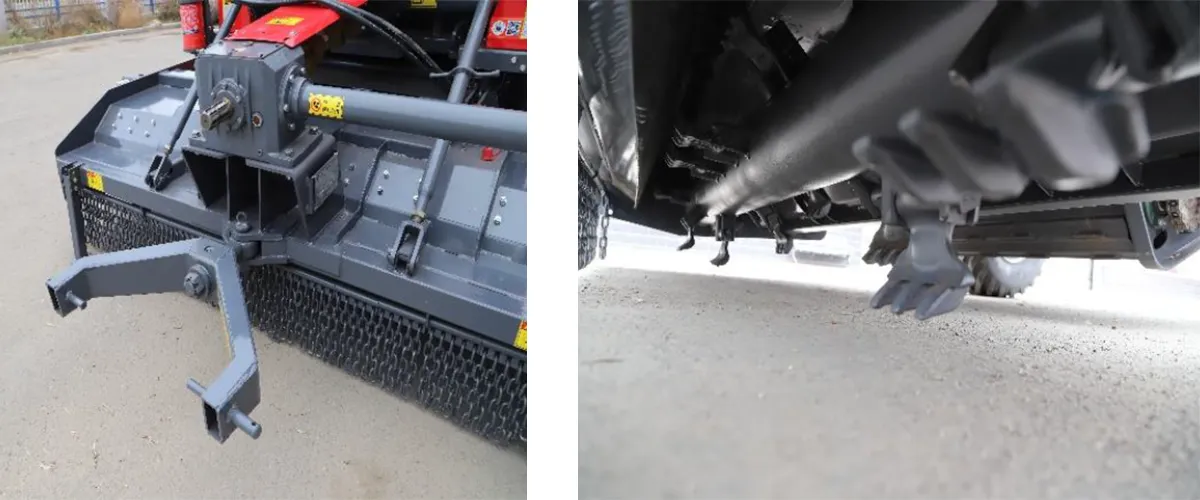
The forming chamber’s roller configuration determines how effectively compression force is applied against cotton stalk’s variable material resistance. The 9YG-2.24D series uses 18 compression rollers of phi 222 mm diameter, applying continuous circumferential pressure as the bale develops. This multi-point contact geometry produces more consistent compression across the bale’s cross-section than designs with fewer rollers or with belt-type forming mechanisms — which is why the 9YG-2.24D’s rated density range of 100–200 kg per cubic metre represents achievable output rather than a theoretical ceiling. In cotton stalk applications with good windrow preparation and a correctly set sensor target, consistent production at 130–160 kg per cubic metre is realistic across a full operating day.
6. Manufacturing Structure: Designed for Sustained High-Density Output
The ability to produce bales at 130–160 kg per cubic metre continuously through a full operating day on cotton stalk depends on the mechanical integrity of the round baler’s forming system under sustained high-compression-force conditions. Cotton stalk is mechanically more demanding than cereal straw because the woody main stems generate higher instantaneous compressive loads against the roller system when they pass through the maximum-compression zone of the forming chamber. A machine that cannot sustain its density output consistently through a long operating day is not delivering the transport cost saving that the density-payload calculation promises.
Pickup System
The 9YG-1.0C model uses 20 hammer claw elements across a 2400 mm pickup width — the widest and most positively driven pickup in the 9YG range. For cotton stalk, where the branched woody structure creates bridging across passive spring-tine pickups and causes intake inconsistency that translates directly into density variation within the bale, the hammer claw system provides a meaningful structural advantage. Consistent intake flow is the upstream precondition for consistent compression — the sensor system can only regulate the bale-eject timing based on what material has actually entered the chamber, and a pickup that delivers inconsistent flow produces density variation that the sensor cannot fully compensate. The 9YG-2.24D series with its axial-flow camless pickup achieves consistent intake for pre-windrow-merged cotton stalk material without requiring the additional capital of a hammer claw system.
Roller Compression Chamber
Eighteen compression rollers of phi 222 mm diameter in a phi 1200 mm chamber diameter create the continuous circumferential loading that presses the developing bale to its target density. The roller surfaces maintain their geometry under the sustained load conditions of cotton stalk baling — unlike rubber belt systems, which can deflect locally under the point-load forces from thick cotton main stems and create density voids in the affected bale sectors. Consistent roller geometry throughout a long operating day is what keeps the bale’s density profile uniform from the core to the outer surface — which matters for the transport cost calculation because density probes inserted at the outer surface of a bale will not detect a lower-density core that reduces the bale’s average mass below the expected transport payload calculation.
Automatic Net Wrap for Payload Preservation
The automatic net wrap system does more than secure the bale for handling — it preserves the bale’s density and shape through loading, transport, and storage. A bale that relaxes and deforms after ejection loses internal density as the compressed material expands against the wrap. Two-layer net wrap, which is advisable for cotton stalk bales intended for long-distance transport, provides higher wrap tension and better shape retention than single-layer, preserving the density achieved during bale formation through the full logistics chain to the biomass facility. Bales delivered with visible shape deformation are often subject to density discount by buyers who use dimensional inspection to infer density rather than weighbridge measurement — an outcome that negates the transport savings from high-density baling if the bales do not hold their shape.
7. Material System: Sustaining High Density Through an Intensive Baling Season
The transport cost saving from high-density baling is a seasonal benefit that accumulates across every trip taken throughout the collection season. Realising this benefit requires that the round baler maintains its density output capability from the first day of baling to the last. A machine that starts the season producing consistent 150 kg per cubic metre bales and degrades to 110 kg per cubic metre by week three — because of chain elongation changing roller timing, or worn pickup elements introducing intake inconsistency — does not deliver the transport cost saving the opening calculation promises. Material specification in the machine’s drivetrain components is what determines whether high-density output is maintained through the full season.
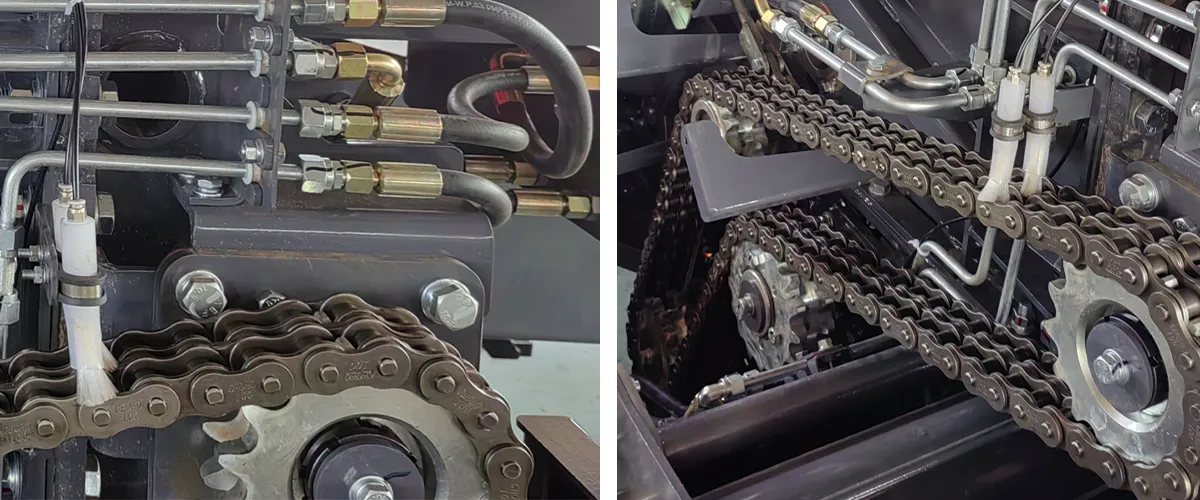
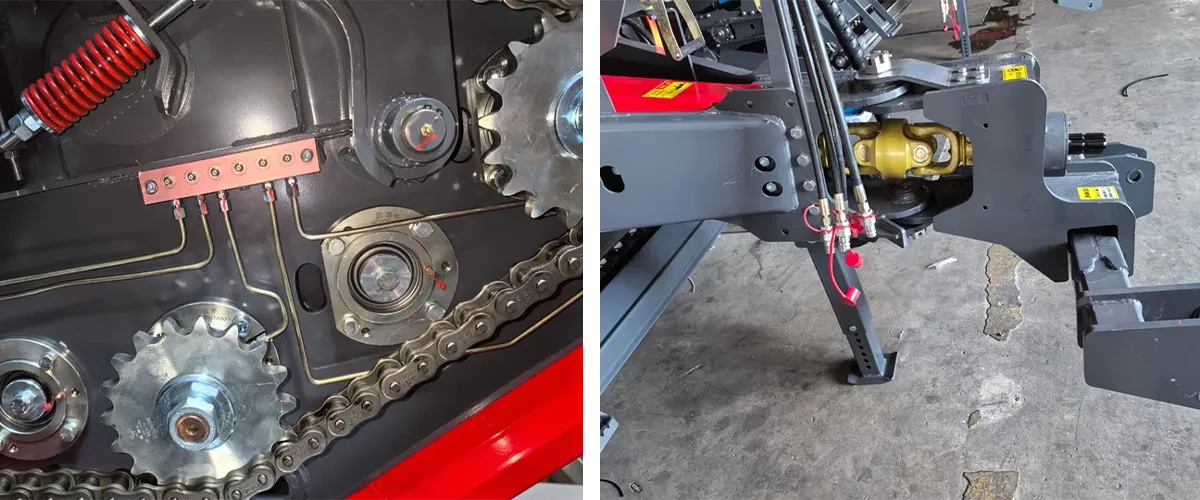
The 9YG-2.24D Classic model uses dual-side 20A heavy-duty roller chain throughout the rear chamber drive. Chain elongation is the primary mechanism by which drive timing drifts in a high-intensity baling application — as links elongate under repeated load cycling, the effective pitch of the chain increases, changing the sprocket engagement geometry and eventually producing roller speed variation that translates into density inconsistency. Standard 16A chain elongates measurably within a single intensive cotton stalk season. 20A chain in the same application maintains its specification across three to four seasons before elongation reaches the point where timing correction is needed. The round baler parts cost differential between 16A and 20A chain over a five-year ownership period is substantially less than the transport cost penalty of running a season with density-degraded bales — making the 20A specification a genuinely cost-effective investment in transport efficiency rather than an incremental premium for its own sake.
The structural frame produced from CNC laser-cut sections with automated welding maintains its dimensional accuracy at all structural joints through the repeated compression force cycles of cotton stalk baling. Frame distortion at the chamber mounting points can subtly alter the roller alignment geometry, producing non-cylindrical bale formation that manifests as irregular density distribution even when the sensor reports a satisfactory compression pressure at the measurement point. The electrostatic powder coating protects against the corrosive environment of cotton stalk field operations, where abrasive fibre fragments and alkaline soil particles would otherwise attack painted surfaces and eventually penetrate to base metal, creating the surface pitting and localised corrosion that precedes structural degradation. Maintaining frame integrity over a ten-year amortisation period is part of what keeps the density output assumption valid across the machine’s full financial life.
8. Round Baler Gearbox Design and the Regulatory Framework for Cotton Stalk Logistics
The round baler gearbox’s primary role in the transport cost context is ensuring that the drive system delivers consistent roller speed through a full operating day — which is the mechanical precondition for consistent bale density, which is the precondition for payload maximisation per truck trip. A gearbox that operates with degraded oil, a breather filter blocked by cotton fibre dust, or worn gear surfaces will produce inconsistent drive torque at the roller chain sprocket, which translates into roller speed variation and density inconsistency in the finished bales.
The standard gearbox on the 9YG-2.24D series outputs at 720 revolutions per minute from a bevel gear set. Correct lubricant specification — SAE 90 GL-4 gear oil, available from Korean market suppliers including GS Caltex, S-OIL, and SK Lubricants — maintains the gear surface film thickness needed for consistent load-bearing at cotton stalk compression forces. The gearbox breather filter, which prevents cotton fibre dust from entering the lubricant, must be inspected and cleaned at the start of each baling session in cotton stalk applications, where airborne fragment density near the machine is higher than in cereal straw operations.
The dual gearbox on the 9YG-2.24D Transcend model adds a second dimension of operational productivity: by allowing independent lateral rotation of up to 90 degrees at each gearbox, the machine maintains PTO drive through headland turns without power interruption. In a high-density baling operation where throughput directly determines the total number of transport trips available per day — because fewer, heavier bales can be produced in the same operating time with high density — reducing headland-turn downtime improves both daily bale count and average bale weight.
| Region | Key Transport and Machinery Regulation | Cotton Stalk Logistics Relevance |
|---|---|---|
| 韓國 | Road Traffic Act; Road Act (axle load and GVW limits); Agricultural Mechanisation Promotion Act; Clean Air Conservation Act | 5-tonne class truck GVW limit; cotton stalk burning banned — baling and transport are legally required disposal routes; agricultural machinery subsidy for certified round balers |
| European Union | EU Machinery Regulation 2023/1230; Directive 96/53/EC (vehicle dimensions and weight); RED III biomass sustainability | 44-tonne maximum GVW for 5-axle trucks in most member states; cotton stalk biomass eligible under RED III; CE-marked baler gearbox required for EU market |
| India | Motor Vehicles Act 1988 (axle load norms revised 2018); National Policy on Biofuels 2018; state-level burning prohibition acts | Revised 2018 axle load norms increased payload capacity for agricultural vehicles — higher density bales can now realise greater payload benefit per trip; cotton stalk biomass REC available |
| Uzbekistan | GOST machinery and transport standards; Presidential Decree No. 5285 on cotton stalk burning restriction | GOST vehicle load standards apply; cotton stalk burning restricted; bale transport to CHP facilities in Tashkent and Fergana regions is primary disposal route |
| Turkey | Turkish Highway Code (Karayollari Trafik Kanunu); YEKDEM renewable energy law No. 5346 | Vehicle axle load limits consistent with EU norms; cotton stalk biomass eligible under YEKDEM; higher bale density reduces transport cost per tonne to Aegean and Marmara region CHP facilities |
9. Storage Density and Supply Chain Timing: The Additional Benefit of High-Density Bales
The transport cost saving from high bale density is not the only financial benefit that accrues across a long-distance supply chain. High-density bales also provide storage efficiency benefits that compound the total economic advantage, particularly for operations that batch-deliver cotton stalk to biomass facilities over an extended post-harvest supply period rather than delivering immediately after baling.
Storage footprint per tonne of cotton stalk material is directly proportional to bale density: a tonne of cotton stalk baled at 160 kg per cubic metre occupies 6.25 cubic metres of storage space, while the same tonne baled at 80 kg per cubic metre occupies 12.5 cubic metres. For operators storing bales on concrete pads, in open storage rows, or in rented facilities awaiting delivery to a biomass plant under a forward supply agreement, this storage footprint directly translates into land area or facility cost per tonne of material held. Operations with limited storage area near the field site can hold more than twice the cotton stalk tonnage in the same physical space at high density versus low density — effectively doubling the biomass supply capacity that a given storage area can support.
Bale stability during multi-layer stacking is also density-dependent. High-density bales maintain a firmer circular cross-section that resists the deformation caused by stacking weight. Low-density bales flatten measurably under the weight of upper layers in a multi-row stack, reducing the effective storage density of the stack below even the bale’s own stated bulk density. For long-distance supply chain operators maintaining buffer stocks of cotton stalk bales between harvest and delivery, the combination of higher bale density, better shape retention, and lower per-tonne storage footprint creates a supply chain cost advantage that adds to the transport saving and justifies the investment in consistent high-density output from the round baler machine.
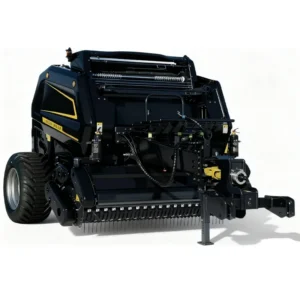
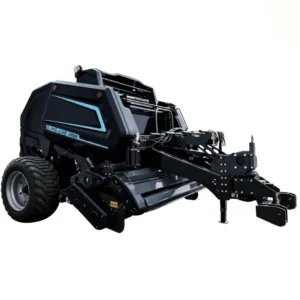
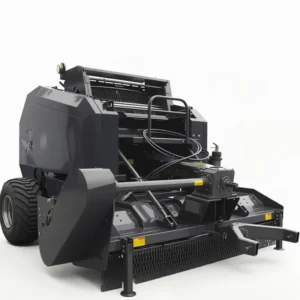
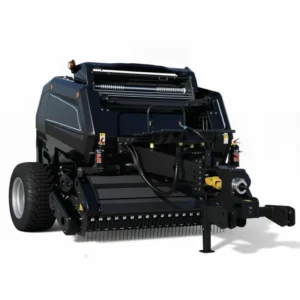
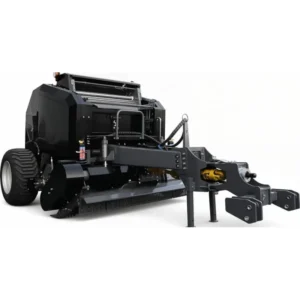
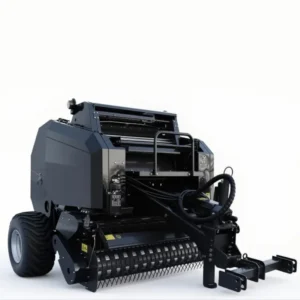
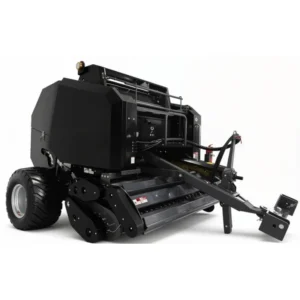
10. Round Baler Models for Cotton Stalk High-Density Transport Efficiency
Each model below is described with specific reference to its density output capability and its relevance to the transport cost calculation for long-distance cotton stalk supply operations. Model selection should prioritise sensor-controlled density capability and drivetrain specification for sustained high-density output in cotton stalk applications.
11. Compatible Systems: PTO Shafts and Agricultural Chain for Sustained High-Density Output
Achieving and maintaining high bale density through a full cotton stalk season depends on the complete drivetrain performing within specification from end to end. Our matched PTO shaft and agricultural chain supply ensures every component in the drive path operates within its rated range — protecting the density output that delivers the transport cost saving you are counting on.
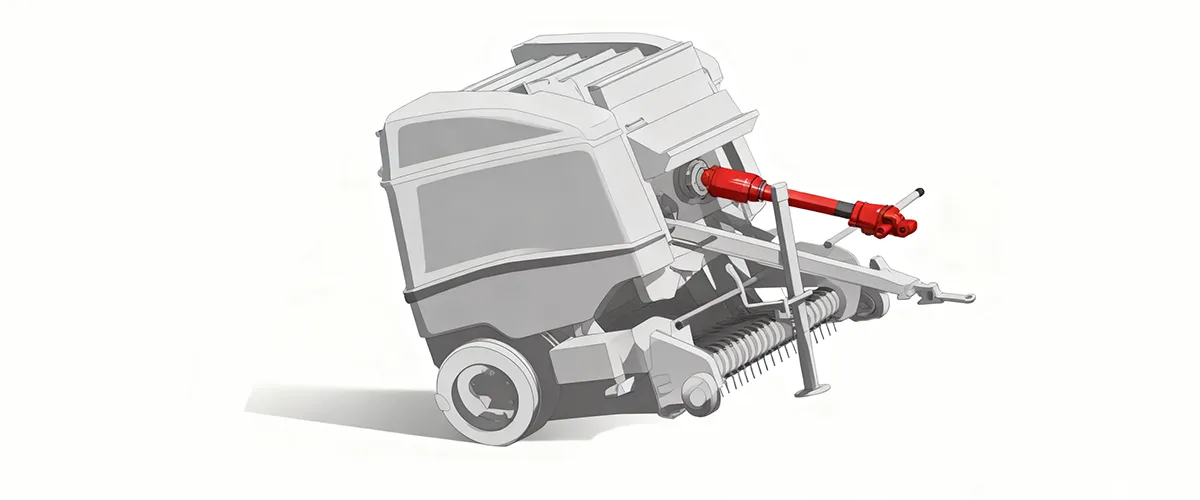
Agricultural PTO Shaft — Torque-Matched for Cotton Stalk High-Density Operation
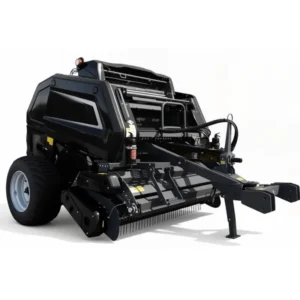
Consistent high-density bale output requires consistent torque delivery from the tractor PTO through to the baler’s roller chamber drive. An under-rated or worn PTO shaft introduces torsional variation that translates into roller speed fluctuation and therefore density inconsistency across the bale. Our Agricultural PTO Shaft range for Round Balers is torque-rated for the sustained high-compression demands of cotton stalk baling at 130–160 kg per cubic metre target density. Safety clutch settings are matched to peak Korean tractor PTO outputs for models including LS Mtron, TYM, Kukje, and Branson — ensuring the safety clutch engages at the correct threshold to protect the gearbox without nuisance-tripping during legitimate peak loads. A correctly rated PTO shaft is part of what keeps density output stable across the full baling day, preserving the payload maximisation and transport cost saving that your supply chain economics depend on.
Agricultural Drive Chain — Specification-Matched to Prevent Density Drift
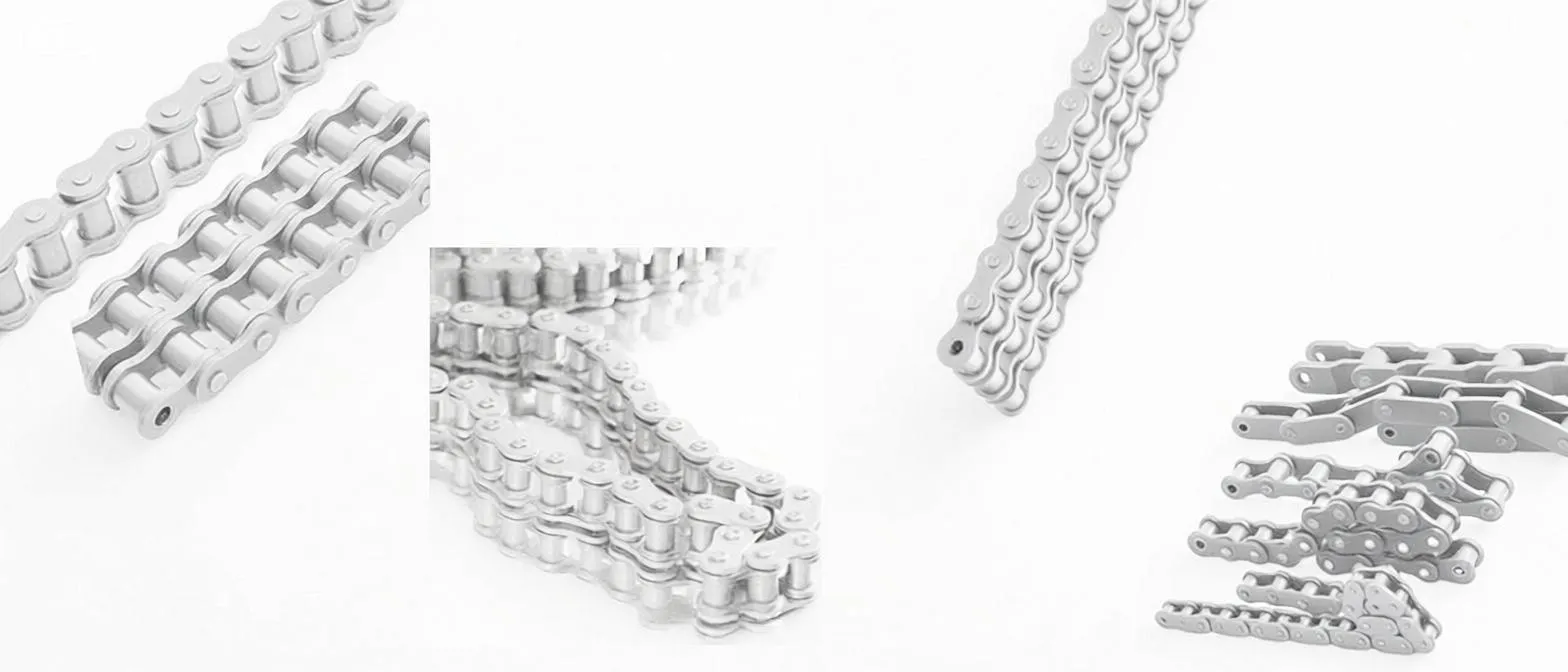
Chain elongation is the single most common cause of density drift in a round baler machine operating on cotton stalk through a long harvest season. As chain links elongate under repeated compression load cycles, the drive sprocket engagement geometry shifts, introducing roller speed variation that gradually degrades bale density consistency below the target setting. Our agricultural drive chain supply covers 16A standard and 20A heavy-duty specification for the 9YG series — both using Korean-market sprocket profiles that allow field-side replacement from industrial hardware suppliers without specialist ordering. Including a matched drive chain in the initial equipment procurement ensures the chain pitch tolerance and surface hardness specification are consistent with the baler manufacturer’s design intent — which is what keeps the density output prediction in your transport cost calculation accurate across the machine’s operating life. Pre-season elongation measurement and a spare chain section kept on the machine are the two most effective low-cost measures for protecting seasonal density performance.
Frequently Asked Questions
編輯:PXY