
Wheat Straw End-Use Optimization Series
A technical reference guide covering the density requirements of every major wheat straw end-use sector, the mechanical systems that achieve them, and how to configure your round baler for consistent, specification-compliant bale output
1. Why Bale Density Is the Most Important Single Parameter for Wheat Straw Producers
Ask any wheat straw buyer in the livestock bedding or biomass energy sector what separates a good supplier from a frustrating one, and the answer is almost always consistency — specifically, consistent bale density. Density determines shipping economics, storage behavior, handling requirements, and end-use performance all at once. A bale that is too light wastes container space and costs more per unit of straw delivered; a bale that is excessively dense creates problems at the point of use, whether that means a dairy barn that cannot break the bale without a mechanical loader or a biomass boiler that jams its automatic feed auger on an over-compressed block. Getting bale density right is not simply about matching a number — it is about understanding the specific downstream process that will consume the straw, and then configuring a round baler machine to produce bales that fit that process reliably, batch after batch, field after field.
For Korean wheat producers who supply straw into domestic livestock operations, export the product to Japanese or Southeast Asian feed supplement buyers, or increasingly sell into the growing Korean biomass energy sector under the Renewable Energy Act (신재생에너지법), the density question is a genuine commercial priority. Korean biomass plants operating under the RPS (Renewable Portfolio Standard / 신재생에너지 공급의무화제도) system have begun specifying wheat straw bale density ranges in their supply contracts because bale density directly affects the combustion efficiency, handling throughput, and transport cost calculations of their operations. Getting a round baler configured to hit these targets consistently is therefore not a technical nicety — it has a direct effect on whether wheat straw can be sold into these growing markets at all.
2. What Bale Density Actually Means Mechanically — and How a Round Baler Controls It
Bale density — expressed in kilograms per cubic meter (kg/m³) — is the mass of dry straw compressed into a given volume of bale. For a round bale, the volume is calculated from the bale diameter and bale width: a standard 9YG-2.24D bale at φ1,300 mm diameter and 1,400 mm width has a volume of approximately 1.86 m³. If that bale weighs 280 kg, the density is approximately 150 kg/m³. If it weighs 370 kg, the density is approximately 199 kg/m³. The difference between these two bales is invisible to the eye — they look identical in the field — but it is commercially significant in every downstream supply chain that the straw enters.
Inside a drum-type (roller-type) round baler, bale density is controlled by the resistance that the compression chamber applies to the growing bale as material is added from the pickup. In spring-tension systems, this resistance is set by the mechanical spring force on the variable chamber element — a fixed force that does not respond to changes in crop moisture, windrow density, or forward travel speed. In sensor-controlled systems like those fitted to the 9YG series round balers, a pressure sensor mounted on the chamber frame continuously measures the actual force being applied to the bale surface and feeds this signal to an electronic controller that adjusts the chamber variable in real time. The result is that the density control system responds to every variation in material input and maintains a substantially tighter density distribution across the bale population than a spring system can achieve. The 9YG series specifies a density range of 100–200 kg/m³ (115–200 kg/m³ on smaller models), and the sensor system’s job is to hold the bale output within a narrow window inside this range, at whatever setpoint the operator programs for their specific buyer requirement.
The number of compression rollers and their diameter also affect density distribution within an individual bale. The 9YG-2.24D series uses 18 rollers of φ222 mm diameter, distributed around the full circumference of the 1,200 mm diameter chamber. This arrangement provides a high total contact area between the rollers and the bale surface, meaning the compression force measured by the pressure sensor is representative of the whole bale cross-section rather than a single contact point. Bales formed under high contact area compression are more uniform in their density from core to outer surface — a quality characteristic that affects how livestock bedding bales break apart when opened and how biomass bales feed into automated combustion systems.
3. Density Requirements by End-Use Sector — What Buyers Actually Need
Different end-use sectors for wheat straw have genuinely different density requirements, and the range across all sectors is wide enough that the same density setpoint cannot serve all buyers. Understanding where the requirement differences come from — the logistics, the processing equipment, or the end-use performance need — helps producers make informed decisions about which markets to target and how to configure their round baler for each supply relationship.
| End-Use Sector | Target Density (kg/m³) | Tolerance | Moisture Limit | Reason for Density Requirement |
|---|---|---|---|---|
| Equine bedding (export) | 165–200 | ±5% | ≤14% | Maximum shipping density; bale must survive sea container stacking without deforming |
| Dairy cattle bedding (domestic) | 140–175 | ±8% | ≤18% | Manual or loader-assisted break-open; moderate density supports both handling and storage |
| Broiler chicken litter base | 130–160 | ±8% | ≤15% | Loose spread distribution needed; too dense prevents uniform floor coverage in poultry houses |
| Biomass co-firing (pellet pre-cursor) | 150–200 | ±10% | ≤20% | Higher density reduces transport cost per GJ energy content; balance against grinder throughput |
| Direct combustion boiler feed | 140–185 | ±10% | ≤20% | Automated bale conveyor specifications; overly dense bales jam conveyor systems |
| Mushroom substrate | 125–155 | ±6% | ≤15% | Inoculation penetration depth; dense core prevents mycelium colonization in the center |
| Erosion control mat export | 115–145 | ±8% | ≤18% | Processing machinery requires intact stem structure; high density crushes stem and reduces mat coverage |
Looking at this table, one point stands out: the livestock bedding density requirements and the biomass fuel requirements overlap significantly in the 150–185 kg/m³ range. This is a practical advantage for Korean wheat producers who serve both markets from the same harvest — it is possible to configure a round baler’s sensor density setpoint to produce bales that fall within the acceptable range for both end uses simultaneously, reducing the need for market segregation at the field level. The mushroom substrate and erosion control sectors require lower density settings that sit outside the overlap zone, so batches intended for those buyers should be produced in dedicated runs with an adjusted setpoint.

4. Manufacturing Structure — Chamber Design, Roller Configuration, and Frame Stiffness for Density Control Accuracy
Achieving consistent bale density across an entire harvest season requires more than just a functional sensor system. The mechanical structure of the round baler’s compression chamber must be capable of maintaining the target pressure throughout every bale cycle — which means the frame must not deflect under load, the roller mounting must remain concentric despite vibration and thermal cycling, and the tailgate assembly must close with repeatable geometry every time. Each of these structural requirements interacts with the sensor density control system in ways that are not immediately obvious but become apparent through the performance differences between well-engineered and poorly-engineered round baler machines over a multi-year operating life.
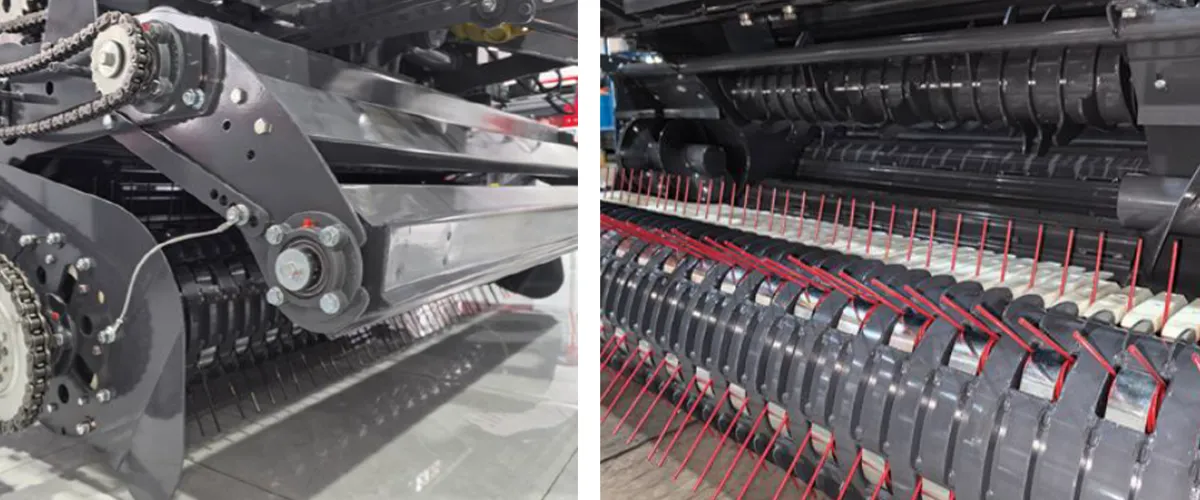
The drum-type compression chamber used across the 9YG series places 16 or 18 rollers of φ222 mm diameter around the inner circumference of the bale chamber. The rollers are mounted on bearing-supported axles attached to the main frame and the tailgate frame. Because the tailgate constitutes the back half of the roller ring, its opening and closing geometry directly affects the effective chamber pressure during the bale formation cycle. On the 9YG-2.24D Classic and S9000 variants, the tailgate hydraulic system uses H-type ferrule fittings that hold consistent fluid pressure across the temperature range of a full harvest day — preventing the micro-leakage that causes tailgate preload variation in lower-specification hydraulic circuits. The buffer cylinder on these models absorbs the closure shock that would otherwise create a false pressure spike at the beginning of each new bale cycle, which the sensor system could misinterpret as early density achievement and trigger premature ejection.
Frame stiffness is the structural parameter that determines whether the pressure sensor reading is a reliable representation of the actual bale density. On a stiff frame, the load cell or pressure sensor measures the force being applied to the bale through the chamber structure, and this force is a consistent function of bale density. On a frame that deflects significantly under compression load, the sensor measures the combined force of bale compression plus frame elastic energy storage — a sum that varies with the rate of compression change, not just the bale density level. Round baler manufacturers who use thinner frame plates to reduce machine weight often compromise frame stiffness in ways that degrade density control accuracy over time, particularly after weld fatigue cracks develop at high-stress frame joints. The 9YG series uses high-tensile Q355B structural plate with CNC-laser-cut profiles that maintain weld fit-up precision and minimize the stress concentration factors that drive early fatigue cracking at frame joints.
5. Material System — Steel Grade, Chain Specification, and Surface Finish for Reliable Density Output Over Time
The material system of a round baler determines how well the machine’s density control capability is retained over multiple seasons of wheat straw operation. A baler that produces precisely consistent bales in the first year but drifts significantly in its third year because of chain wear, frame corrosion, or bearing degradation is a commercial liability for any producer building long-term supply relationships with density-sensitive buyers. Understanding the material decisions that underpin long-term density control performance helps buyers make more informed purchasing decisions when comparing round baler models on initial specification alone.
Chain grade is the most directly maintenance-relevant material decision. The rear chamber dual-side drive on the 9YG-2.24D S9000 and Classic uses 20A heavy-duty chain (1.25-inch pitch) rated for higher tensile load than the 16A chain used in lighter-duty configurations. The significance for density control is that chain stretch directly introduces backlash into the drive system — a looseness that delays the mechanical response to electronic control commands and causes the density loop to oscillate around the target rather than converging on it. The lower stretch rate of 20A chain relative to 16A chain under the same compression loads means the density control system maintains its designed closed-loop bandwidth for a significantly longer service interval, producing consistent density output without requiring frequent chain replacement. Smaller platform models — the 9YG-1.0 with 16A chain and the 9YG-1.0C with dual-side 16A chain — still deliver reliable density control within their intended bale weight range, but the 20A specification is the appropriate choice for sustained high-throughput wheat straw production where chain wear accumulates faster.
Surface treatment of the frame determines the long-term calibration stability of the sensor mounting points. The electrostatic spray painting process used on the 9YG series applies a uniform, adhesion-optimized coating across all frame surfaces including weld heat-affected zones and interior surfaces that brush painting cannot reliably reach. Over a 10-year operating life in the outdoor conditions of Korean grain farming — where the machine is exposed to summer heat, monsoon humidity, winter cold, and the abrasive dust of wheat harvest — this coating prevents the localized corrosion that can cause wall thickness reduction at sensor boss locations. Even a 0.5 mm reduction in wall thickness at a sensor mount changes the local stiffness and alters the sensor calibration. For operations committed to meeting tight buyer density tolerances across the full service life of the machine, frame surface treatment is a relevant procurement specification, not a cosmetic detail.
6. Round Baler Gearbox Requirements and Regulatory Frameworks — Korea and Global Market Context
Achieving consistent bale density across a high-throughput wheat straw operation requires that the PTO gearbox deliver stable, consistent power to the compression roller drive across the full range of bale formation loads. When the gearbox output torque varies — due to worn gear teeth, low oil viscosity at midday temperatures, or excessive backlash from worn shaft journals — the roller surface speed fluctuates, and roller surface speed variation directly translates into bale density variation. This is why the gearbox specification is not a separate issue from density performance: the two are mechanically coupled through the chain drive that connects the gearbox output to the compression roller drive.
韓國: Round baler gearboxes sold in South Korea must comply with RDA type approval requirements under the Agricultural Mechanization Promotion Act (농업기계화 촉진법). The RDA testing protocol includes functional performance assessment at rated PTO speed, verification of operator guard coverage over all rotating elements, and noise measurement. Machines with RDA type approval appear on the approved equipment list eligible for the Agricultural Machinery Subsidy Program (농기계지원사업), which currently covers up to 50% of the purchase cost for qualifying smallholders. Supplementary safety requirements for PTO-driven gearboxes are set by the Industrial Safety and Health Act (산업안전보건법), which specifies minimum guard dimensions and inspection requirements for exposed shaft sections. Wheat straw producers supplying biomass energy plants under the Korean RPS system may additionally need to demonstrate that the equipment used in production meets quality management standards — ISO 9001 certification at the machinery manufacturer level supports this documentation requirement.
European Union: CE marking under Machinery Directive 2006/42/EC is mandatory for round balers and gearboxes marketed in EU member states. EN ISO 4254-1 and EN ISO 4254-7 set the specific safety requirements for agricultural machinery drives and baling equipment respectively, including PTO shaft guard coverage, torque overload protection, and Declaration of Conformity documentation. The updated Machinery Regulation EU 2023/1230 introduces digital documentation requirements from January 2027. German operators are additionally subject to DGUV Rule 114-015, which requires documented inspection of agricultural machinery gearboxes at defined operating hour intervals.
EAEU Markets (Russia, Kazakhstan, Belarus): EAC certification under TR CU 010/2011 is required for gearboxes and complete round baler machines. GOST 21354 specifies gear reliability standards and fatigue life documentation requirements. GOST R 12.2.111 covers agricultural machinery safety, including guarding of power transmission elements. ISO 9001 certification at the manufacturing facility provides a recognized quality management foundation for EAEU conformity assessment through accredited third-party testing bodies.
North America: ASABE Standard S493 and ANSI/ASABE S296 set the design safety framework for round baler drives and PTO assemblies in the US and Canadian markets. OSHA 29 CFR 1928.57 specifies guarding requirements for PTO shafts on agricultural equipment. California’s CARB (California Air Resources Board) additionally regulates dust emission from agricultural field operations, which may apply to high-speed wheat straw baling in sensitive air quality management areas.
Japan: Round baler gearboxes sold or used in Japan must meet MAFF (Ministry of Agriculture, Forestry and Fisheries / 農林水産省) type approval standards and JIS B 9700 machinery safety requirements. Documentation for MAFF type approval is required for eligibility under Japan’s Farm Machinery Promotion subsidy program — relevant for Korean exporters whose equipment is re-exported or whose straw buyers in Japan request production equipment certification.
Australia and New Zealand: The Work Health and Safety Act and AS 4024 machinery safety standards govern round baler power transmission guarding and gearbox safety in these markets. AS 2205 provides the welded assembly quality standard relevant to frame construction documentation.
| Region | Key Standard (Gearbox / Drive) | Mark / Certification | Subsidy Available? |
|---|---|---|---|
| 韓國 | Agricultural Mechanization Promotion Act; RDA Protocol; Industrial Safety and Health Act | RDA 농기계 형식검정 | Yes — up to 50% |
| European Union | Machinery Directive 2006/42/EC; EN ISO 4254-1; EN ISO 4254-7 | CE Mark + DoC | CAP member-state programs |
| Russia / Kazakhstan / Belarus | TR CU 010/2011; GOST 21354; GOST R 12.2.111 | EAC Mark | State agri programs |
| USA / Canada | ASABE S493; ANSI/ASABE S296; OSHA 29 CFR 1928.57 | ASABE Conformance | USDA EQIP |
| Japan | MAFF Agricultural Machinery Safety; JIS B 9700 | MAFF Type Approval | Farm Machinery Promotion |
| Australia / New Zealand | WHS Act; AS 4024; AS 2205 | WHS Compliance Docs | State rebate schemes |
7. Wheat Straw as Biomass Fuel — Density Requirements and the Energy Calculation Behind Them
The biomass energy sector approaches bale density from an energy economics standpoint rather than a handling or animal welfare perspective. For a biomass plant purchasing wheat straw under a supply contract priced per metric ton, the delivered cost per gigajoule (GJ) of energy is the critical metric, and bale density directly affects it by determining how many GJ of energy are delivered per truck or container load. Wheat straw has a lower heating value (LHV) of approximately 14.5–15.5 MJ/kg at 15% moisture content — roughly 40% of the LHV of coal on a weight basis. This means that maximizing bale density reduces the per-GJ transport cost, which is why biomass buyers tend to specify higher density ranges than livestock bedding buyers.
However, there is an upper density limit for biomass applications that is often less well understood. Biomass plants that use automated bale handling systems — conveyor belts, bale shredders, or rotary knife breakup units — are designed around a maximum bale weight and bale structural integrity specification. Bales that exceed the maximum density for a given bale diameter can create mechanical overload conditions in the bale breaking equipment, particularly in fully automated lines where a dense bale arriving on a conveyor cannot be manually redirected. For direct combustion boiler feeding systems, the bale must also break apart into pieces small enough for the fire grate or pneumatic transport system — bales above approximately 185 kg/m³ in wheat straw often require an extra shredder pass that adds processing time and cost. The practical biomass fuel density target for Korean RPS-compliant biomass plants, based on their equipment specifications, typically sits in the 150–185 kg/m³ range — a target that the 9YG series sensor density control system can be reliably programmed to hit.
8. 9YG Round Baler Models — Density Range Capabilities and End-Use Matching
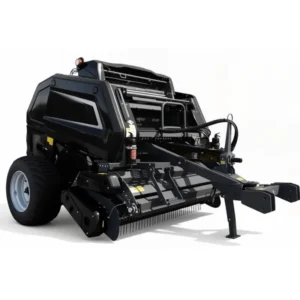
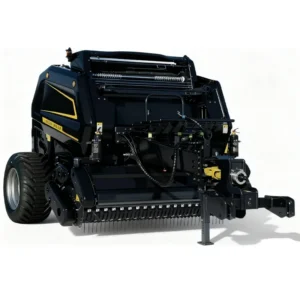
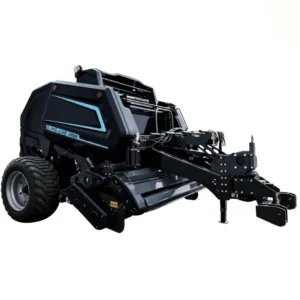
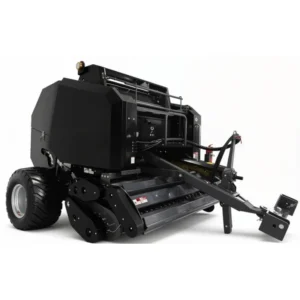
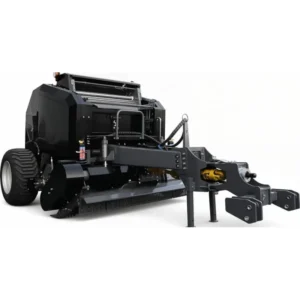
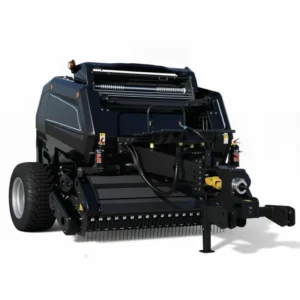
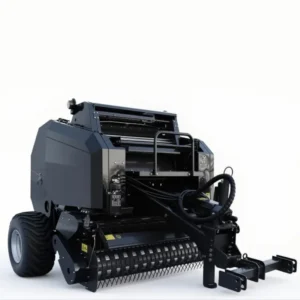
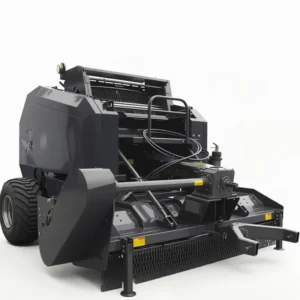
Choosing the right round baler model for a wheat straw operation that serves both livestock bedding and biomass fuel buyers starts with understanding each model’s density control range and the mechanical capability that underpins it. The following product overview maps each model to the density targets of the main wheat straw end-use sectors. For the complete technical specification of each model, visit the full round baler product listing.
9. Complete Model Specifications and Density Range Summary
| Model | Bale Diameter (mm) | Bale Width (mm) | Density Range (kg/m³) | Power (kW) | Rollers | Chain Grade | Output (bales/hr) |
|---|---|---|---|---|---|---|---|
| 9YG-2.24D S9000 | 1,300 | 1,400 | 100–200 | 55–100 | 18 | Dual 20A | 40–100 |
| 9YG-2.24D Classic | 1,300 | 1,400 | 100–200 | 55–100 | 18 | Dual 20A | 40–100 |
| 9YG-2.24D Standard | 1,300 | 1,400 | 100–200 | 55–100 | 18 | Standard | 40–100 |
| 9YG-1.25 (Double) | 1,200 | 1,250 | 115–200 | ≥88 | 18 | Standard | 40–80 |
| 9YG-1.25A | 1,300 | 1,250 | 100–200 | ≥75 | 18 | Standard | 40–100 |
| 9YG-1.0 | 1,100 | 1,000 | 115–200 | 48–80 | 16 | Standard | 40–100 |
| 9YG-1.0C | 1,000 | 1,250 | 115–200 | ≥70 | 16 | Dual 16A | 40–80 |

Frequently Asked Questions
Q1. What is the optimal bale density for wheat straw sold to equine bedding exporters from Korean grain farms targeting Japanese and Southeast Asian buyers?
Equine bedding export buyers — particularly those supplying Japanese stables and Southeast Asian racing facilities — typically specify bale density in the 165–200 kg/m³ range with a weight tolerance of ±5% per bale. High density is required because it minimizes shipping volume per unit of straw weight and allows bales to withstand the stacking forces in a fully loaded sea container without deforming. The 9YG-2.24D S9000 and Classic, with sensor density control and 20A heavy chain drives, can consistently hold bale output within this tolerance across a full day’s production on Korean wheat fields.
Q2. How does the round baler machine sensor density control system adjust bale density when wheat straw moisture changes throughout the Korean harvest day?
As straw moisture decreases from morning to afternoon — typically dropping from 18–20% at 8:00 AM to 12–14% by early afternoon in Korean summer harvest conditions — the same bale density setpoint produces bales of different actual weight with a spring-tension system, because lighter dry material requires the chamber to work harder to reach the same compression force. The electronic sensor control system on the 9YG series compensates automatically: as lighter straw enters, the sensor detects falling chamber pressure and adjusts the chamber variable to maintain the target force level, producing bales of consistent density regardless of the moisture variation across the day.
Q3. Which round baler is best suited for Korean wheat producers supplying both livestock bedding and RPS-compliant biomass fuel plants in the same season?
The 9YG-2.24D Standard or S9000 is the most practical single-machine solution for this dual-market scenario. Both the dairy bedding target (140–175 kg/m³) and the Korean RPS biomass plant specification (150–185 kg/m³) sit within a shared overlap zone of approximately 150–175 kg/m³. Programming the sensor density control to a setpoint in this shared zone allows the same production run to satisfy both buyers, eliminating the need for dedicated runs and minimizing the setpoint adjustment frequency. For buyers with tighter specifications outside the overlap zone — such as equine bedding at 165–200 kg/m³ — a separate dedicated run with an adjusted setpoint is recommended.
Q4. How does bale density affect the energy content per truckload when selling wheat straw to a Korean biomass facility, and what is the break-even density for transport optimization?
Wheat straw has a lower heating value of approximately 14.5–15.5 MJ/kg at 15% moisture. A truckload of round bales from a 9YG-2.24D at 165 kg/m³ versus 140 kg/m³ carries approximately 18% more energy content per trip — a meaningful reduction in per-GJ transport cost that directly improves the commercial margin of biomass contracts. The break-even density above which this transport benefit no longer increases is typically around 185–195 kg/m³ for wheat straw, beyond which bale weight begins to push against load limit regulations and automated handling equipment begins to experience mechanical strain. Setting the sensor density target at 165–175 kg/m³ captures the transport optimization benefit without approaching the problematic upper limit.
Q5. What is the difference in bale weight between a 9YG-2.24D large-format bale and a 9YG-1.0 compact bale at the same density setting, and which format suits Korean domestic livestock bedding buyers?
At 160 kg/m³ density, a 9YG-2.24D bale of φ1,300×1,400 mm has a volume of approximately 1.86 m³ and weighs roughly 298 kg. A 9YG-1.0 bale of φ1,100×1,000 mm has a volume of approximately 0.95 m³ and weighs approximately 152 kg. For Korean domestic livestock bedding buyers who handle bales without mechanical equipment — common in smaller dairy and poultry operations in Chungcheong and Jeollanam-do provinces — the 9YG-1.0 compact format is significantly more practical. For buyers with loader equipment or for export containerization, the larger format from the 9YG-2.24D reduces handling frequency per unit of straw volume and is more economical at scale.
Q6. How does the round baler application for mushroom substrate production require a different density setpoint compared to biomass fuel, and which 9YG model is most suitable for small batch substrate baling?
Mushroom substrate buyers need bale density in the 125–155 kg/m³ range — significantly lower than the 150–185 kg/m³ required for biomass fuel. This is because mushroom substrate processing involves breaking the bale open and inoculating the straw with mycelium spawn, and overly dense bales inhibit spawn penetration into the bale core, reducing colonization efficiency. For Korean producers making small-batch substrate deliveries to mushroom farms in Gyeonggi or Chungcheong, the 9YG-1.25 with its 1,250 mm bale width produces lighter bales at the target lower density — making them practical for single-person handling at the substrate processing facility. Program the sensor density setpoint to approximately 135–140 kg/m³ for substrate batches and verify against test bales before committing to a supply run.
編輯:PXY