Cotton Stalk Baling — Gearbox Maintenance Guide
Round Baler Gearbox Maintenance Schedule for Heavy-Duty Cotton Stalk Operations
A complete, interval-based gearbox maintenance guide for cotton stalk baling contractors and farm operators — covering daily, 50-hour, 250-hour, and seasonal inspection schedules, lubricant specifications, failure mode recognition, and component service procedures for the 9YG round baler series in sustained heavy-duty cotton stalk applications.

1. Why Cotton Stalk Operations Demand a More Rigorous Gearbox Maintenance Approach
The round baler gearbox is the most mechanically stressed component in a cotton stalk baling operation. It receives tractor PTO power at the input shaft, splits and distributes it to the forming chamber rollers, the pickup reel drive, and the net-wrap mechanism — all while the baler compresses woody, abrasive cotton stalk material at forces well above what the same machine experiences during standard hay or cereal straw baling. Cotton stalk’s multi-stemmed woody structure, with main stem base diameters of 15–40 mm, generates instantaneous compressive force spikes every time a thick section passes through the forming chamber’s maximum-compression zone. These spikes transmit through the drive chain, through the roller bearings, and ultimately into the gearbox’s gear mesh surfaces. Their cumulative effect on gear flank wear and lubricant degradation is substantially higher than the published ratings for machines operating on lighter crop residues.
Korean cotton stalk baling operations face an additional pressure that makes the gearbox maintenance case more urgent: the collection window is short and intense. The autumn cotton harvest in Korea’s southern agricultural research zones and the equivalent periods in Central Asia’s commercial cotton regions run for 4–8 weeks of near-continuous machine operation. During this window, there is no convenient off-season maintenance interval — downtime during the active season means lost contracts, unsatisfied biomass supply agreements, and uncollected straw left to deteriorate in the field. A round baler gearbox that fails at week three of the baling season cannot be rebuilt in time to recover the remaining weeks’ productivity.
This guide establishes a structured gearbox maintenance schedule specifically calibrated for heavy-duty cotton stalk operations using the 9YG round baler series. The schedule covers daily pre-operation checks, 50-hour service intervals, 250-hour inspection procedures, and season-end overhaul tasks. It also covers lubricant specification, the specific failure modes that cotton stalk’s operating environment accelerates, and the early warning signs that allow corrective action before a fault becomes a major repair. Following this schedule is what keeps the round baler machine operational from the first day of cotton stalk harvest to the last.
2. How Cotton Stalk’s Physical Properties Accelerate Gearbox Wear
Understanding why cotton stalk is harder on the round baler gearbox than other crop residues is the starting point for understanding why the maintenance schedule must be more rigorous. Three specific properties of cotton stalk — its woody density, its silica content, and the fine fibre fragment dust it generates during baling — each contribute to accelerated gearbox degradation through distinct mechanisms.
Woody main stem density means the forming chamber rollers encounter peak compressive loads that are 40–80% higher than those generated by equivalent volumes of cereal straw. These peak loads transmit through the entire drive system — from roller to chain to sprocket to gearbox output shaft to gear mesh — as instantaneous torque spikes. Over thousands of cycles per operating day, these spikes cause fatigue accumulation on gear flank surfaces at a rate proportional to the cube of the peak load above the baseline. This is why cotton stalk operations cause visible gear surface pitting within a single season on machines designed exclusively for light crop applications, while the same machines handle cereal straw for several seasons without detectable flank wear.
Cotton stalk’s silica content — similar in origin to the amorphous silica found in rice straw — generates fine abrasive particles when stalk sections are fractured and compressed in the baler chamber. These particles become airborne in the immediate vicinity of the machine’s working zone. The round baler gearbox breather cap and oil filler — the two points through which the gearbox exchanges air with its environment — are potential entry points for these particles if the breather filter element is not maintained. Airborne silica particles entering the gearbox oil contaminate the lubricant film between gear flanks and bearing races, converting it from a load-bearing hydrodynamic film into an abrasive slurry that accelerates surface removal by orders of magnitude compared to clean oil operation.
Cotton fibre fragment dust — the short fibrous material generated as the stalk’s bast fibre fraction is separated during baling — accumulates on all external surfaces of the round baler, including the gearbox housing, ventilation surfaces, and breather cap exterior. This accumulation creates an insulating layer that raises the operating temperature of the gearbox oil beyond the manufacturer’s rated thermal range, reducing oil viscosity and increasing wear rate on all lubricated surfaces. In ambient temperatures above 25 degrees Celsius — common during late-summer and autumn cotton stalk collection periods in Korea’s southern regions — the combination of ambient heat and cotton dust insulation can push gearbox oil temperature into a zone where viscosity-dependent gear protection is meaningfully compromised without operator awareness.
3. Lubricant Specification: Getting the Oil Right for Cotton Stalk Conditions
Lubricant selection for the round baler gearbox in a cotton stalk application is not a commodity decision. The correct specification simultaneously addresses the gear load rating, the thermal stability at cotton-season operating temperatures, and the filtration system’s ability to capture the fine particulate contamination that enters despite proper breather maintenance. Using an incorrect or lower-specification lubricant in cotton stalk service — even if it is the correct viscosity — is a false economy that manifests as accelerated gear wear within one or two seasons.
The correct lubricant specification for the 9YG series gearbox is SAE 90 gear oil meeting the GL-4 performance standard under API classification. GL-4 specification oil contains extreme pressure (EP) additive packages that provide a protective layer on gear flank surfaces under the high-contact-stress conditions generated by bevel and spur gear meshes operating at cotton stalk peak torque loads. GL-4 is specifically suitable for transmissions with bronze or yellow metal components in the gear train — which is the configuration used in the 9YG series bevel gear sets. Using GL-5 specification oil in GL-4-rated gearboxes is a common field error that causes corrosive attack on yellow metal gear components through the GL-5 formulation’s higher sulphur-phosphorus additive content.
Viscosity grade selection within the SAE 90 specification should account for the operating temperature in cotton stalk seasons. In Korean autumn conditions with ambient temperatures of 15–28 degrees Celsius, SAE 90 mono-grade oil provides appropriate viscosity at operating temperature. In warmer cotton-growing regions — Uzbekistan, India, Turkey — where ambient temperatures during the baling window can reach 35–45 degrees Celsius, an SAE 90 or SAE 140 grade with a higher viscosity index is preferable to ensure adequate film thickness at peak operating temperature. Korean market suppliers offering suitable products include GS Caltex Gear Master GL-4, S-OIL Seven Gear GL-4 90, and SK ZIC G-F TOP 85W-140 GL-4 — all of which are commercially available through Korean agricultural machinery and industrial supply channels without special ordering.
4. Complete Gearbox Maintenance Schedule for Cotton Stalk Round Baler Operations
The following schedule is structured around four service intervals calibrated for heavy-duty cotton stalk baling intensity. In normal hay or cereal straw baling, some of these intervals would be extended. Cotton stalk conditions compress them. Follow this schedule from the first day of cotton stalk collection to maintain gearbox reliability through the harvest window.
| Service Interval | Task | Procedure | Tool / Material |
|---|---|---|---|
| Daily (Before Each Session) | Oil level check | Remove dipstick or check sight glass; level should be at marked operating range. Top up if below lower mark. Do not overfill. | Dipstick, SAE 90 GL-4 oil |
| Breather cap inspection | Remove breather cap, clear any cotton fibre accumulation from cap exterior and filter element. Reinstall securely. A blocked breather creates internal overpressure that accelerates seal failure. | Compressed air, brush | |
| Housing exterior cleaning | Remove cotton fibre and dust accumulation from gearbox housing surfaces. Cotton fibre insulates the housing and raises internal temperature. Clean with brush or compressed air. | Brush, compressed air | |
| Seal and joint visual check | Inspect all gearbox seals, flange joints, and output shaft seals for fresh oil weeping. Any fresh staining indicates seal deterioration requiring attention before the operating day. | Visual, paper cloth | |
| Every 50 Operating Hours | Oil condition check | Draw a small sample from the drain plug area. Inspect for metallic particle content (visible sheen or particles), colour darkening, and milky emulsification indicating water ingress. Any of these conditions requires immediate full oil change. | Clean sample jar, magnet |
| Breather filter element replacement | Replace breather filter element (not just clean exterior). Cotton dust loading saturates the filter medium over 50 hours of cotton stalk operation in most field conditions. | Replacement filter element | |
| Input shaft coupling check | Inspect PTO input shaft coupling for wear at the spline interface. Fretting wear at the spline connection introduces torsional play that causes impact loading at the gearbox input bevel gear. | Visual, feel for play | |
| Operating temperature check | After 30 minutes of operation, touch the gearbox housing at a standard location. Should be warm but not too hot to hold. Sustained high temperature indicates contaminated oil, insufficient oil level, or blocked cooling surfaces. | Contact thermometer or hand check | |
| Every 250 Operating Hours | Full oil change | Drain completely while warm to carry suspended particles out with the oil. Flush with a small volume of fresh oil before refilling to the correct level with new SAE 90 GL-4. Record oil change date and hours. | Drain pan, SAE 90 GL-4, rags |
| Gear backlash measurement | Access the inspection port and measure backlash at the bevel gear mesh using a dial gauge or feeler gauge. Compare to manufacturer’s specification. Excessive backlash indicates gear flank wear requiring gear set inspection. | Dial gauge or feeler gauge | |
| Bearing noise check | With the machine running at PTO speed without baling, listen for irregular rumble or high-frequency whine from gearbox bearings. Compare with sound from early-season baseline check. Increasing roughness indicates bearing race wear. | Stethoscope or rod held against housing | |
| Seal replacement | Replace all dynamic shaft seals as a precautionary measure at 250-hour intervals in cotton stalk service, regardless of whether weeping is visible. Seal material fatigue in cotton fibre dust environments progresses faster than in clean conditions. | Replacement seal set, seal driver | |
| Season-End Overhaul | Full disassembly inspection | Disassemble gearbox completely. Inspect gear flank surfaces for pitting, spalling, or micro-fracture. Measure tooth profile against new-part drawings. Replace gear sets showing measurable flank removal at the pitch line. | Workshop bench, gear measurement tools |
| Bearing replacement | Replace all tapered roller bearings and deep groove ball bearings with new items regardless of measured condition. Cotton stalk season bearing fatigue is not reliably detectable until failure is imminent. Pre-emptive replacement is more cost-effective than mid-season failure. | Bearing puller, hydraulic press | |
| Torque limiter safety check | Test torque limiter engagement at its rated slip torque using a torque wrench applied at the PTO coupling. If slip occurs below rated value, replace friction discs. If slip does not occur within the rated range, investigate spring pre-load and disc surface condition. | Torque wrench, replacement discs |
5. Recognising Early Gearbox Failure Warning Signs in Cotton Stalk Operations
Recognising gearbox failure early — before a developing problem becomes a full seizure or gear set fracture — is the most practically valuable skill a cotton stalk baling operator can develop. Gearbox failures in the field during the active harvest window generate two costs: the repair cost and the opportunity cost of the days lost. The repair cost can often be contained if the failure is caught at the gear wear stage rather than at the bearing seizure or gear fracture stage. The opportunity cost is harder to recover. Early recognition makes the difference between a scheduled service stop and an unrecoverable mid-season breakdown.
Gear mesh noise changes are the earliest and most reliable early warning signal. A healthy bevel gear set running at 720 revolutions per minute produces a consistent, low-pitched whirring sound with no modulation. Developing flank wear introduces a slight roughness to this sound at first, progressing to a rhythmic clicking or knocking that corresponds to the gear tooth engagement frequency as pitting develops on tooth flanks. Operators who establish a mental baseline of their gearbox’s normal sound during pre-season commissioning are well-positioned to notice deviations from that baseline within the first few minutes of a daily session. Any new noise component that was not present the previous day warrants stopping immediately and checking oil level, oil condition, and the breather status before resuming operation.
Operating temperature increase is the second reliable warning sign. A gearbox in good condition at the correct oil level reaches a stable thermal plateau within 30 minutes of operation and maintains it throughout the working day. A gearbox with contaminated oil, deteriorated gear surfaces, or a developing bearing problem runs progressively warmer, reaching its thermal plateau at a higher temperature than on previous days. Without a baseline temperature reading from early in the season, this progression can be missed. Establishing a daily housing temperature record at a fixed point on the housing after 30 minutes of operation — using a contact thermometer or even a consistent hand-touch assessment — creates the trend data needed to identify a deteriorating thermal profile before it becomes a catastrophic failure event.
Oil appearance at the 50-hour condition check provides a third early warning dimension. New SAE 90 GL-4 oil is amber and translucent. Oil in normal service darkens progressively as oxidation products accumulate. Cotton stalk service oil darkens faster than standard hay service because of the higher operating loads and temperatures. However, certain appearance changes are not normal and indicate specific developing problems: metallic sheen or visible metallic particles indicate active gear or bearing wear; milky or creamy emulsification indicates water ingress through a deteriorating seal or condensation event; an unusually burnt smell indicates localised overheating in the gear mesh. Any of these conditions requires an immediate oil change and a gear inspection before the machine continues in service.
6. Manufacturing Structure: How the 9YG Series Gearbox Is Designed for Cotton Stalk Service
The gearbox design philosophy of the 9YG series reflects the demands of heavy agricultural residue applications. Unlike machines designed primarily for hay baling and then adapted for straw or stalk applications, the 9YG series gearbox specifications — particularly in the Classic and S9000 configurations — incorporate design choices that address the torque spike environment of woody crop residue baling from the ground up.
Standard Gearbox Configuration
The standard gearbox on the 9YG-2.24D, 9YG-1.25A, 9YG-1.25, 9YG-1.0, and 9YG-1.0C models outputs at 720 revolutions per minute from a bevel gear set. The housing is cast in a configuration that keeps the oil filler, drain, and breather points accessible from outside the machine without requiring significant disassembly — a practical accessibility decision that directly supports compliance with the daily maintenance schedule. In cotton stalk operations, where daily breather clearing is a hard requirement rather than an optional convenience, this accessibility is operationally significant. The housing material and casting quality are consistent with the automated welding and precision manufacturing standards applied across the 9YG product range, providing the dimensional consistency needed for reliable gear mesh geometry through the machine’s operating life.
Dual Gearbox Configuration (Transcend)
The 9YG-2.24D Transcend model uses a dual gearbox configuration with each gearbox capable of independent lateral rotation up to 90 degrees. This design distributes the PTO shaft’s angular deflection across two universal joints rather than concentrating it at one, which reduces the angular velocity variation transmitted to the gearbox input shaft during headland turns. In a single-gearbox machine, tight headland turns cause cyclic velocity variation at the gearbox input that produces a rhythmic torque surge through the gear mesh — a low-frequency but high-amplitude loading that is superimposed on the already demanding cotton stalk compression loads. The dual gearbox design substantially reduces this superimposed loading, which is beneficial for gear flank fatigue life and for the bearing race load history in an intensive cotton stalk baling application. From a maintenance perspective, the dual gearbox configuration means two gearboxes require servicing, but each individual gearbox operates under lower peak load conditions than a single-gearbox equivalent.
Torque Limiter Drive Shaft
The torque limiter drive shaft — used as standard on the 9YG-2.24D S9000 and Classic models — provides the last line of gearbox protection against the overload events generated when an unexpectedly dense cotton stalk section enters the pickup and creates an instantaneous torque spike that exceeds the gearbox’s rated capacity. The torque limiter is a friction-disc mechanism calibrated to slip at a force level just below the gearbox’s damage threshold. When a cotton stalk overload event occurs, the limiter slips for the fraction of a second needed to allow the spike to pass, then re-engages automatically. This prevents the spike energy from reaching the gear mesh as a destructive overload event. Checking the torque limiter’s engagement threshold at the season-end overhaul — as described in the maintenance schedule above — ensures it remains calibrated to protect the gearbox rather than either slipping unnecessarily or failing to protect when a real overload occurs.
7. Material System: What the Gearbox Housing and Drivetrain Are Made From
The gearbox housing material determines how effectively it dissipates the heat generated by gear mesh friction and how well it maintains its dimensional accuracy under repeated thermal cycling. Cast iron housing is the standard material for the 9YG series gearbox, providing good thermal mass and adequate conductivity for the operating temperature range encountered in Korean autumn cotton stalk baling conditions. Cast iron’s inherent damping property also reduces vibration transmission from the gear mesh to the housing exterior, which is a secondary benefit for bearing seat integrity over the machine’s operating life.
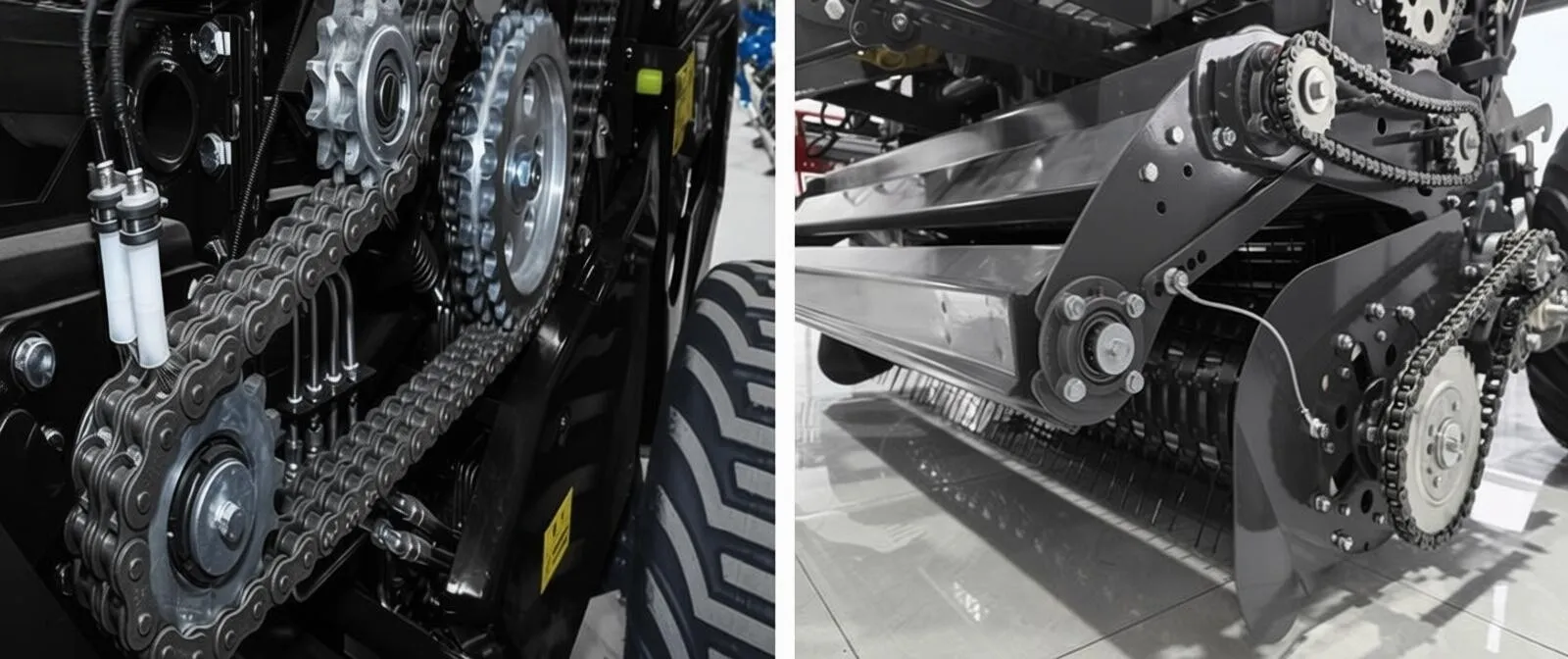
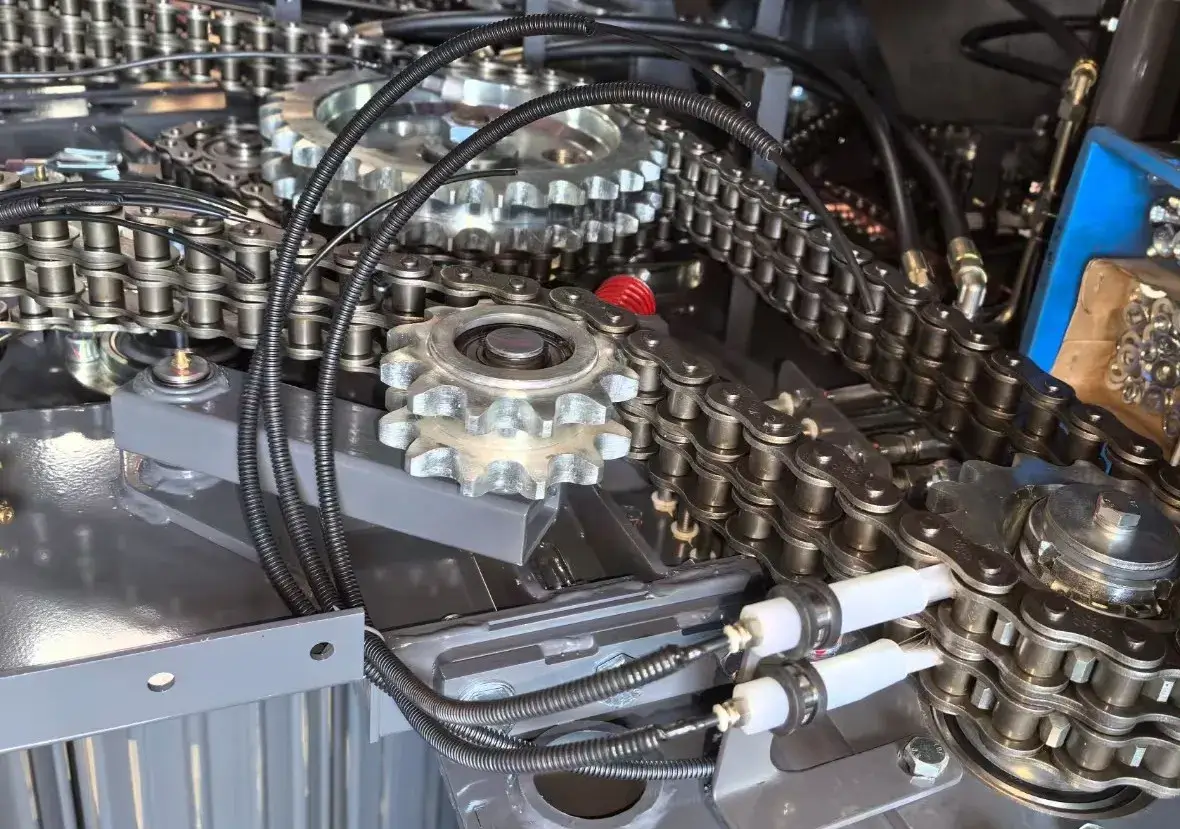
The drive chain system that connects the gearbox output to the forming chamber roller sprockets uses standard industrial roller chain in two primary specifications across the 9YG range. The 9YG-1.0 and 9YG-1.0C models use 16A chain in the forming chamber front and rear drives — a specification adequate for the smaller bale chamber’s compression force range. The 9YG-2.24D Classic uses dual-side 20A heavy-duty roller chain in the rear chamber drive — a specification selected because 20A chain’s larger pitch, greater cross-section, and higher tensile rating tolerate the compressive load spikes from woody cotton main stems over a full season without the elongation that progressively degrades roller drive timing and bale density consistency. The 20A specification is the material system’s direct response to cotton stalk’s demanding torque profile, and it is the specific round baler parts choice that connects the gearbox’s performance to the forming chamber’s density output over time.
The structural frame of the 9YG series machines is manufactured from CNC laser-cut structural steel sections joined by automated welding processes. The automated welding ensures consistent weld quality — uniform penetration depth, absence of undercut or porosity defects — at all structural joints, including the gearbox mounting brackets. Frame dimensional accuracy at the gearbox mount directly affects gear mesh alignment: any deformation of the mounting bracket shifts the gearbox’s position relative to the drive sprocket axis, introducing a misalignment load that accelerates bearing wear in a pattern different from normal service wear. The electrostatic powder coating over the complete structure, including gearbox mounting surfaces, protects against the corrosive environment of cotton field operation and maintains the surface contact integrity between the gearbox housing and its mounting bracket through years of seasonal vibration and thermal cycling.
8. Regulatory Framework: Gearbox Standards and Agricultural Machinery Compliance for Cotton Stalk Operations
Gearbox maintenance is not only a mechanical and financial obligation — in several markets it is also tied to regulatory compliance requirements that affect machinery subsidy eligibility, liability in the event of operator injury, and the machine’s legal status on public roads during transport between fields. Understanding the regulatory framework applicable to your operating region is part of responsible round baler gearbox maintenance practice.
| Region | Key Standard or Regulation | Gearbox and Maintenance Compliance Requirement |
|---|---|---|
| 韓國 | Agricultural Mechanisation Promotion Act; Safety Standards for Agricultural Machinery; Agricultural Products Quality Control Act | Certified machines receiving agricultural machinery purchase subsidy must be maintained to manufacturer specification to retain warranty and subsidy compliance; PTO shaft guard must be in place during all field operation; gearbox oil change documentation recommended for subsidy audit compliance |
| European Union | EU Machinery Regulation 2023/1230; EN ISO 11684 (safety signs); EN 15811 (agricultural machinery maintenance); ATEX Directive 2014/34/EU (dust explosion risk) | CE-marked machinery must be maintained per the operator manual to maintain CE compliance; cotton fibre dust is classified as a combustible dust under ATEX — gearbox heat generation and cotton dust accumulation in proximity is a risk factor requiring documented management |
| India | Bureau of Indian Standards (BIS) IS 9898 (agricultural machinery safety); Factories Act 1948 (machinery maintenance in organised farm operations); National Policy on Biofuels 2018 | BIS-compliant machinery must have documented maintenance records for subsidy retention; cotton stalk biomass operations involving employed workers fall under Factories Act maintenance record obligations for machinery |
| Uzbekistan | GOST 12.2.019 (agricultural machinery safety); State Technical Inspection requirements for registered farm machinery | Farm machinery registered with State Technical Inspection must pass annual mechanical condition review; gearbox oil condition and seal integrity are inspection points; cotton stalk burning restriction makes baler maintenance compliance directly linked to legal residue disposal |
| Turkey | TS EN ISO 4254 series (agricultural machinery safety); YEKDEM biomass certification requirements | Agricultural machinery gearboxes must meet TS EN ISO safety design standards; biomass supply contract compliance under YEKDEM may require production documentation of maintenance records to verify operational continuity of supply |
9. Dual Gearbox Specific Maintenance: Additional Considerations for the Transcend Configuration
Operators using the 9YG-2.24D Transcend model with its dual gearbox configuration should apply the maintenance schedule above to both gearboxes independently. Each gearbox has its own oil fill, drain, and breather point. The two gearboxes may operate at slightly different load distributions depending on field conditions and PTO shaft alignment — meaning one may show faster oil darkening or higher operating temperature than the other within the same season. Checking each independently at every service interval, rather than assuming both are in the same condition, is the correct approach.
The pivot joints that allow each gearbox’s independent lateral rotation require separate lubrication attention. These joints use grease-filled sealed pivot bearings that should be greased at the 50-hour service interval using a standard NLGI No. 2 multi-purpose EP grease — the same grease used for the pickup reel bearings and other machine pivot points. Grease fittings on the pivot bearing housings are accessible from outside the machine without disassembly. In cotton stalk applications where the machine spends significant time at elevated PTO shaft angles during tight headland turns, the pivot joint grease is consumed faster than in standard field conditions. A grease shortage at this joint allows fretting corrosion between the pivot bearing housing and its race, which eventually introduces angular play into the gearbox’s rotation range — reducing the precision of the dual gearbox system’s turning-radius benefit.
The dual gearbox configuration’s input shaft connection between the two units also deserves specific inspection attention at the 250-hour interval. This connecting shaft experiences the PTO input torque at the same amplitude as the primary input, with the additional angular loading from the independent pivot rotation. Spline connection wear at this shaft’s coupling ends can introduce backlash that generates impact loading in the gear mesh of both units simultaneously during engagement cycles. Spline surface condition inspection and lubrication with molybdenum disulphide paste at the 250-hour interval keeps this connection within its design tolerance throughout the cotton stalk season.
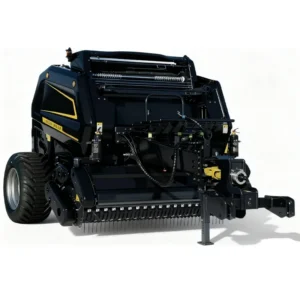
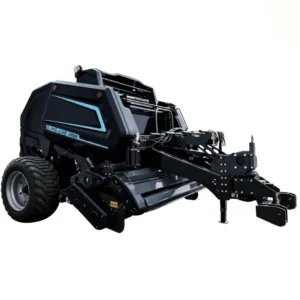
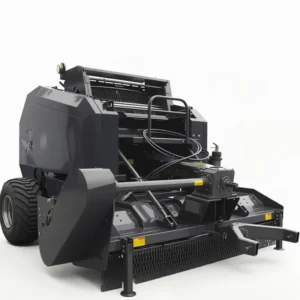
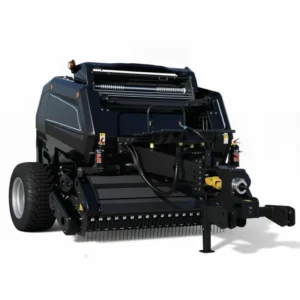
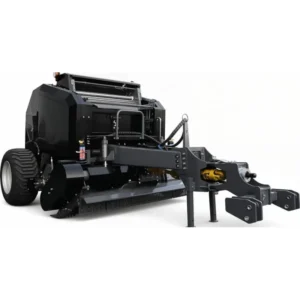
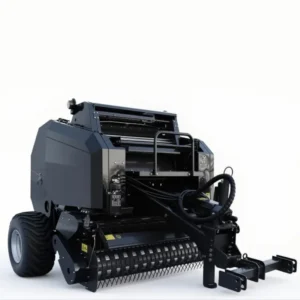
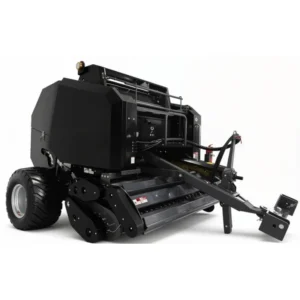
10. Round Baler Models: Gearbox Specifications Across the 9YG Range
The following models are listed with their gearbox configuration and specific cotton stalk maintenance notes. Matching the right model to your cotton stalk operation scale is the starting point for a maintenance programme that is both practical to execute and protective of the machine’s long-term performance.
11. Compatible Systems: PTO Shafts and Agricultural Chain for Complete Drivetrain Protection
Gearbox maintenance is most effective when the complete drivetrain upstream and downstream of the gearbox is also maintained to specification. A correctly rated PTO shaft and fresh matched agricultural drive chain are the two components that directly protect the gearbox from overload events and drive timing drift — making them an integral part of any cotton stalk gearbox maintenance programme.
Agricultural PTO Shaft — Gearbox Protection Starts Here
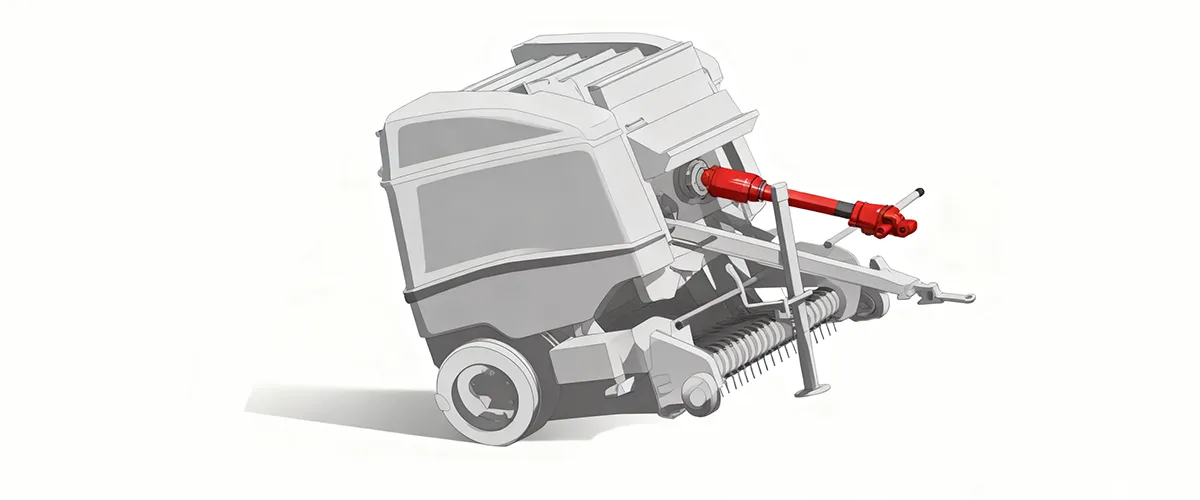
The gearbox cannot be protected by its own design alone if the PTO shaft transmitting power to it is incorrectly rated or worn. A torque limiter at the PTO shaft clutch is the first line of gearbox defence against the overload spikes generated by woody cotton stalk sections — and its protection function only operates correctly when the shaft is in good mechanical condition with properly rated friction discs. Our Agricultural PTO Shaft for Round Balers is torque-rated and dimensioned to match the 9YG series input shaft specifications, with safety clutch engagement thresholds verified for Korean tractor PTO outputs. Including the PTO shaft in the annual pre-season inspection and the 50-hour service schedule — checking spline wear, universal joint play, and friction disc condition — extends the gearbox’s protection from the full torque limiter torque specification rather than the reduced value that a worn or unserviced clutch delivers. One-stop procurement of baler, PTO shaft, and drive chain from the same supply source simplifies specification verification and ensures the complete drivetrain operates as an integrated system.
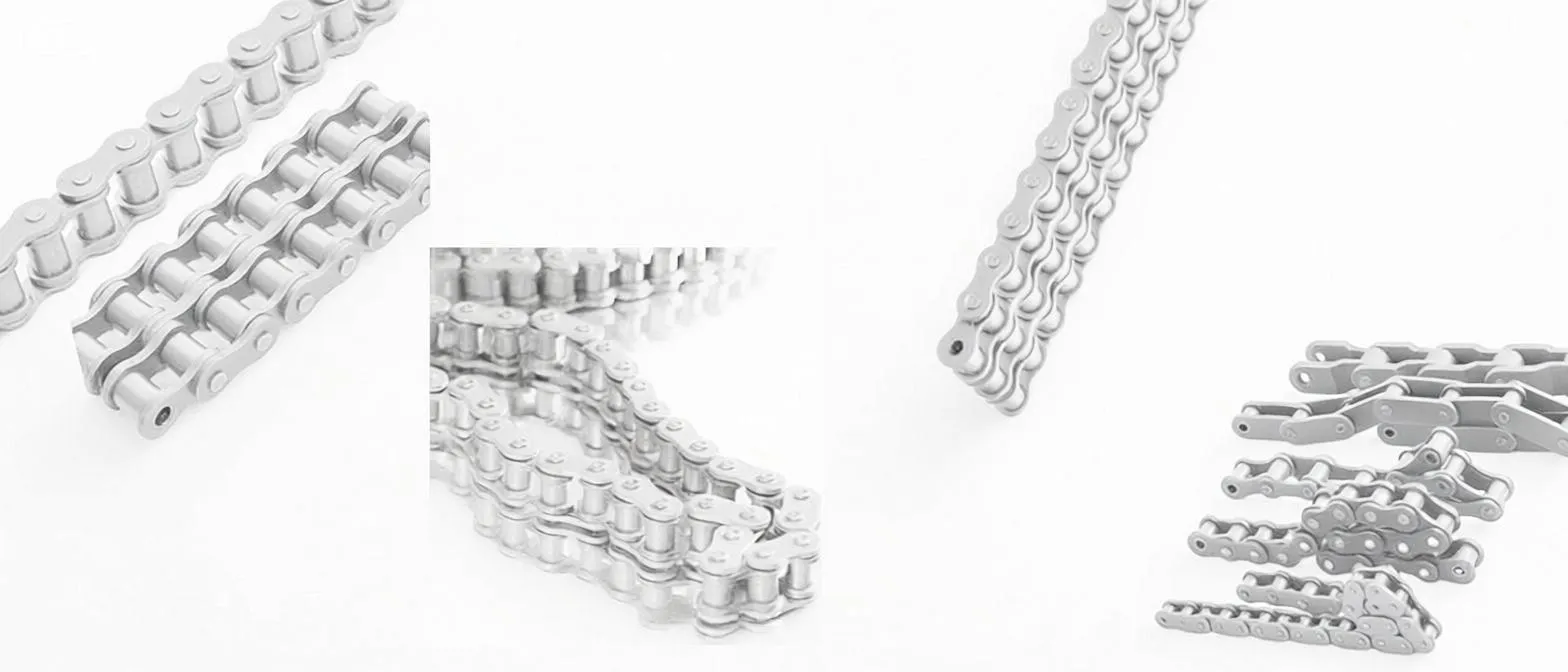
Agricultural Drive Chain — The Downstream Gearbox Protection Layer
Chain elongation downstream of the gearbox output affects the gearbox in two ways: it changes the chain-sprocket mesh geometry, introducing impact loading at the sprocket that transmits back through the chain to the gearbox output shaft and bearing; and it allows chain whip that creates dynamic loads in the housing mounting. Replacing chain before it reaches the elongation limit specified by the manufacturer is therefore a gearbox protection measure as much as a chain maintenance measure. Our agricultural drive chain supply covers both 16A standard and 20A heavy-duty specification for the 9YG series — both manufactured to consistent pitch tolerance that maintains the correct sprocket engagement geometry throughout the chain’s rated service life. Pre-season chain elongation measurement using a chain wear gauge and replacement of any chain showing elongation above 2% of the manufacturer’s new-pitch specification ensures that the gearbox output shaft operates without the impact loading that worn chain introduces. Including a spare chain section on the machine during the cotton stalk season is the lowest-cost insurance against a mid-season chain failure that takes the machine out of service.
Frequently Asked Questions
編輯:PXY