Farm Baler Knowledge Guide
What Is the Difference Between Fixed Chamber and Variable Chamber Round Balers?
A complete technical comparison — action mode, structural design, material systems, and practical selection guidance for farmers and contractors in South Korea and beyond.
Introduction
1. Understanding the Two Core Round Baler Technologies
When it comes to selecting a round baler for forage, hay, straw, or silage operations, the single most consequential decision a farmer or contractor makes is choosing between the two principal baling technologies: the fixed chamber round baler and the variable chamber round baler. These two designs dominate the global market, used by small farms running a mini round baler on a compact tractor through to large commercial operations with high-output variable chamber machines running double shifts during harvest season. Yet despite their prevalence, many buyers — particularly those encountering round baler equipment for the first time or upgrading from an older machine — have questions about what actually sets the two apart technically, operationally, and economically.
The fundamental difference sits in how the bale-forming chamber is engineered. In a fixed chamber round baler, the internal space where the bale forms is sized to produce one predetermined bale diameter — the bale grows until it fills the fixed chamber, at which point the machine signals the operator to stop, wrap, and eject. In a variable chamber round baler, a system of expanding belts or a combination of belts and rollers allows the chamber to grow progressively as the bale forms, giving the operator meaningful control over the final bale diameter and, crucially, enabling more uniform density distribution throughout the bale from core to outer shell.
In South Korea’s agricultural sector — where rice straw management, silage production for cattle farming in Gangwon-do, and hay baling for the growing horse industry in Gyeonggi-do all create distinct baling requirements — understanding the practical differences between these two technologies is directly relevant to making a commercially sound equipment investment. This guide covers the operating mechanisms, structural construction, material systems, bale quality outcomes, maintenance demands, and the crop and application conditions that favour each type.

Action Mode
2. How Each Round Baler Type Forms a Bale — The Core Operating Mechanism
Fixed Chamber — Chain-and-Slat or Roller Action
In a fixed chamber round baler, the forming chamber is defined by a fixed arrangement of steel rollers, chains, and slats — or a combination of these elements — mounted in a rigid housing. When crop material is fed into the chamber by the pickup assembly, the chain-and-slat system begins tumbling the incoming material, causing it to rotate and start forming a cylindrical core. As the bale grows against the fixed chamber walls, increasing back pressure develops between the bale’s outer surface and the unyielding chamber. This progressive densification of the outer layers — combined with a softer, lower-density core that forms first before the pressure builds — is a characteristic bale profile of most fixed chamber designs. Once the bale reaches the diameter set by the chamber geometry, the baler signals full, the operator stops forward travel, the netting or twine wraps, and the tailgate opens to eject the bale. The entire forming process in a fixed chamber machine is mechanically direct and relatively straightforward: there are no expanding elements, no complex belt geometry changes, and no actuators adjusting the chamber size during the baling cycle.
Variable Chamber — Belt Expansion and Progressive Density
The variable chamber round baler uses a set of wide belts — typically three to five depending on the model — arranged in a loop around the forming chamber. When baling begins, the belts form a tight, small-diameter starting zone; as crop material feeds in and the bale grows, the belt loop expands progressively under a spring or hydraulic tensioning system. This expansion is the defining feature of the variable chamber design: the bale is always in contact with the belt tension across its full diameter, meaning that density is applied consistently from the earliest moment of core formation through to the final outer shell. The result is a bale with more uniform density from inside to outside compared to the fixed chamber machine. The operator can choose to stop baling at any point in the diameter range — say, after forming a 0.9-metre bale on a light crop day — or continue to the machine’s maximum chamber diameter of 1.6 metres or more on a high-yield day. This operational flexibility is one of the variable chamber design’s most commercially valuable features, particularly for contractors managing diverse crop types and field conditions across a season.
Bale Formation Sequence Comparison
| Formation Stage | Fixed Chamber | Variable Chamber |
|---|---|---|
| Core formation mechanism | Chain-and-slat tumbling action | Tight belt loop, immediate tension |
| Chamber size during baling | Fixed — set by hardware geometry | Expands as bale grows |
| Density distribution | Soft core, dense outer shell | Consistent throughout |
| Operator control over bale size | None (fixed diameter) | Full — any diameter in range |
| Wrapping trigger | Automatic (full chamber) | Operator-set diameter reached |
| Wet crop performance | Generally good; no belt gumming | Improved on modern machines |
| Optimal forward speed | Varies — slower for dense crops | More consistent throughput |
Manufacturing Structure
3. How Fixed and Variable Chamber Balers Are Constructed — Key Structural Differences
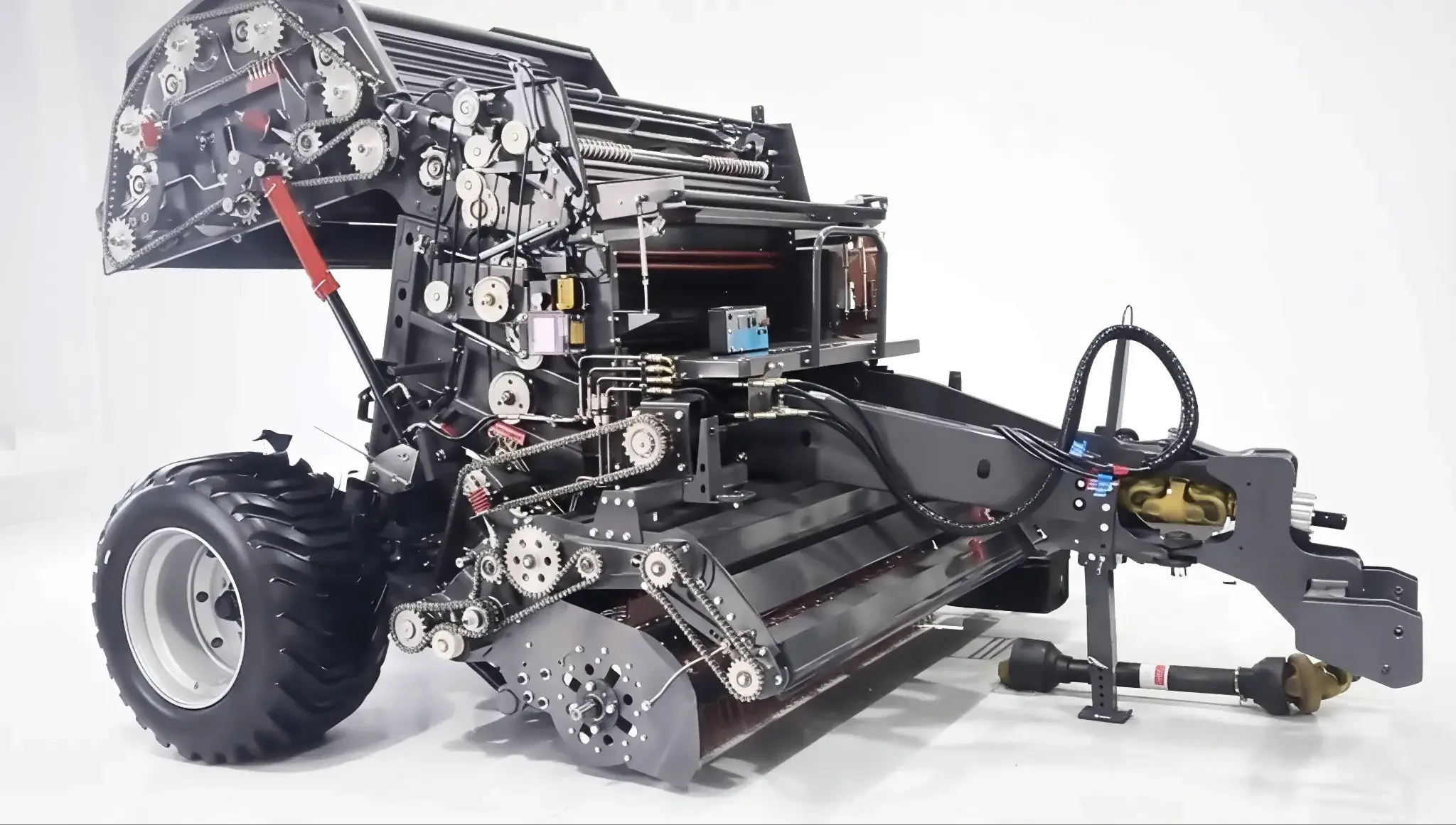
The structural difference between the two baler types begins with the forming chamber itself and radiates outward into the frame design, drivetrain layout, and tailgate mechanism. A fixed chamber round baler’s forming section is built around a rigid steel framework that houses the chain-and-slat conveyor system or the fixed rollers. Because the forming chamber dimensions never change during operation, the structural loads on the housing are highly predictable — the frame needs to withstand the pressure of a fully formed bale pressing outward against the chamber walls, but that load pattern is consistent and well-characterised. This predictability allows fixed chamber frames to be engineered with relatively straightforward structural profiles, and the result is a machine that tends to be lighter, more compact, and simpler to manufacture than an equivalent-capacity variable chamber machine.
In the variable chamber round baler, the forming section must accommodate the continuously changing geometry of the expanding belt loop. The belt tensioning mechanism — whether spring-loaded idler arms, hydraulic cylinders, or a combination — is integrated into the main chassis structure and must be both strong enough to maintain belt tension under maximum baling loads and flexible enough to allow the chamber to expand smoothly across its full diameter range without binding or belt alignment errors. The result is a structurally more complex machine with additional articulated components, a larger number of adjustable tension points, and a tailgate design that must accommodate the full range of bale diameters that the chamber can produce. Modern small round baler models in the variable chamber category have become increasingly compact and lighter as engineering improvements have reduced the belt tensioning mechanism mass, but they remain structurally more complex than their fixed chamber equivalents at comparable capacity levels.
The pickup assembly — the component that gathers crop from the windrow and feeds it into the forming chamber — is broadly similar between the two types: a rotating pickup reel with spring steel tines that lift and convey crop material into a rotor or auger feeding system. The pickup width on most mid-range round hay baler models ranges from 2.0 to 2.5 metres, wide enough to efficiently collect standard windrow widths from most forage harvesting systems. The 9YG round baler series on the farm-balers.com product range includes models in both 1.0-metre and 1.25-metre bale diameter categories, reflecting the range from compact small round baler configurations suitable for 40–60 hp tractors through to larger capacity designs requiring 100+ hp tractors.
Material Systems
4. Rollers, Chains, Belts, and Slats — The Materials That Form the Bale
The forming elements inside a round baler are the highest-wear components in the entire machine, and their material specification determines both bale quality consistency and the machine’s long-term operating cost. In a fixed chamber round baler using the chain-and-slat system, the chains are typically heavy-duty agricultural roller chains — equivalent to the standards covered by ASME/ANSI B29.1 or ISO 606 — running on hardened steel sprockets. The slats themselves are formed steel or cast steel bars welded or bolted to the chain links at regular intervals. These slats contact the bale surface continuously during forming, and their surface condition — whether smooth-faced or serrated — affects how aggressively the machine tumbles the incoming crop material and how well it handles lodged or tangled crop in difficult harvesting conditions.
For variable chamber round balers, the core forming element is the belt — a wide, reinforced rubber-and-textile composite strap running in a continuous loop through the belt tensioning system. Agricultural baler belts must resist abrasion from the crop material passing against them, withstand the continuous flexing around the drive and idler rollers, maintain consistent width under tension to avoid tracking errors, and resist the specific degradation mechanisms encountered in silage baling — particularly moisture absorption and the acidic fermentation environment inside a sealed silage bale. Modern baler belts use reinforced rubber compounds with polyester or aramid fibre carcasses and aggressive surface groove patterns that grip crop material without clogging in wet conditions. The drive rollers in a variable chamber baler are precision-machined steel cylinders, ground and hardened to maintain dimensional accuracy under the sustained contact pressure of the belt and bale combination.
Bale wrapping materials — twine, net wrap, or stretch film — are consumed regardless of which chamber type is used. The choice of wrapping material interacts with the chamber type in important ways: variable chamber balers produce denser, more uniformly shaped bales that often wrap more cleanly with net wrap because the bale surface is more consistently round and firm, while fixed chamber balers — with their softer cores — may benefit from twine wrapping for dry hay applications where bale shape regularity is less critical. For silage applications in Korean livestock farming, stretch film wrapping using an integrated or trailed wrapper is the norm for both baler types, as the anaerobic seal provided by stretch film layers is what enables successful fermentation and long-term storage of high-moisture forage.
Bale Quality
5. How the Chamber Type Affects the Bale You Get
Bale quality is ultimately what the farmer or end-user cares about — the structural integrity of the bale during storage, the density and consistency of the forage inside it, the ease with which it can be handled, transported, and fed out. The differences in bale quality between the two chamber types are real and practically significant, though the gap has narrowed considerably as fixed chamber machines have improved and variable chamber machines have become more affordable.
Variable chamber round balers consistently produce bales with more uniform density throughout the cross-section. Because the belts apply tension to the growing bale from its earliest formation stage, the core of the bale is compacted at a higher density than the soft core produced by fixed chamber action. This higher and more consistent density is particularly valuable for silage baling: a dense bale expels oxygen more effectively when wrapped, accelerating the anaerobic fermentation process and reducing the risk of aerobic spoilage that begins at the bale surface. For Korean cattle farmers storing baleage for winter feeding, this density advantage directly affects silage nutritional quality and storage losses over the months between baling and feeding.
Fixed chamber balers, by contrast, tend to produce bales with a distinctly softer core and a very dense outer shell — sometimes described as a “tough on the outside, fluffy in the middle” profile. For dry hay storage, this density distribution is less critical: the outer shell’s density and surface texture forms an effective weather-resistant shell that protects the interior from precipitation, and the softer core actually facilitates faster drying of any residual moisture that was present at baling. Many users of fixed chamber round hay balers find the bale shape consistency and surface density entirely adequate for their storage and feeding requirements, particularly when baling thoroughly dry hay that will not ferment regardless of its core density.
Bale shape — how cylindrical and round the bale is — matters for wrapping film adhesion in silage applications and for stacking stability in storage. Variable chamber balers produce consistently round bales because the uniform belt tension acts symmetrically around the full circumference. Fixed chamber balers can produce slightly out-of-round bales if the crop feed rate is uneven or if the chamber is not completely filled at the time of wrapping — this is a more significant issue at lower crop volumes and with operators who do not consistently fill the chamber to maximum capacity before triggering the wrap cycle.
Full Comparison
6. Fixed vs Variable Chamber Round Baler — Side-by-Side Technical Summary
| Characteristic | Fixed Chamber | Variable Chamber |
|---|---|---|
| Primary forming element | Chains, slats, fixed rollers | Expanding belts + rollers |
| Bale diameter options | One fixed size | Full range (e.g., 0.8–1.6 m) |
| Core density | Lower (soft core) | Higher (dense throughout) |
| Overall bale density | Dense outer shell | Uniform high density |
| Silage / baleage suitability | Moderate | Excellent |
| Dry hay performance | Excellent | Excellent |
| Rice straw / crop residue | Very good | Good to very good |
| Mechanical complexity | Lower | Higher |
| Maintenance frequency | Lower | Belt and roller attention needed |
| Tractor power requirement | Generally lower | Generally higher |
| Noise during operation | Higher (chain on idlers) | Quieter |
| Suitability: small round baler | Excellent (simple, compact) | Available in mini models |
| Suitability: large commercial | Limited to fixed bale size | Ideal — flexible and productive |
Crop Guidance
7. Which Round Baler Type Works Best for Each Crop Type?
The right choice depends heavily on what you are baling. Here is how each type performs across the major crop categories relevant to South Korean farming:
Rice Straw (볏짚)
Rice straw is the dominant baling crop in South Korea by volume, produced at enormous scale during the autumn harvest across the rice paddies of the southern plains. Rice straw is dry, lightweight, and highly abrasive due to its high silica content. Fixed chamber round balers handle rice straw very well — the chain-and-slat action breaks up the flattened straw strands and tumbles them effectively into a dense, well-formed bale. Variable chamber balers also perform well in rice straw, and the ability to produce different-sized bales is useful for the diverse end uses of rice straw in Korea, from livestock bedding to industrial uses. For small farms with compact tractors, a small round baler in the fixed chamber configuration is the most common choice for rice straw baling.
Grass Silage (사일리지)
For Korean cattle and dairy farmers who produce grass silage from rye grass, fescue, or orchard grass grown on upland plots, the variable chamber round baler is the professional’s choice. High-moisture silage baling at 50–70% moisture content puts maximum demands on the forming system — the bale must be as dense as possible before wrapping to minimise trapped oxygen and maximise fermentation quality. Variable chamber machines with their uniform density and belt tension applied from core formation onwards consistently produce better silage bales than fixed chamber equivalents. The round baler machine for silage use also needs to be matched with a stretch film wrapper, either as a combined baler-wrapper unit or as a separate trailed wrapper positioned immediately after the baler.
Dry Hay (건초)
Hay baling — from alfalfa, mixed grasses, or clover — is a key activity for the growing horse and small livestock sector in South Korea, particularly around Gyeonggi-do, Chungnam, and the warmer southern provinces. For thoroughly dry hay at moisture content below 20%, both fixed and variable chamber balers perform well, and the fixed chamber round hay baler’s lower cost and simpler maintenance can make it the more economical choice for smaller operations. For farms producing hay for sale or export where bale uniformity and presentation matter, the variable chamber machine’s consistent bale diameter and density are a commercial advantage. A small round baler for 40 hp tractor in the fixed chamber configuration suits hobby farms and small livestock operations where bale volume requirements are modest.
Crop Residues (작물 잔재)
Beyond rice straw, Korean farmers also bale soybean straw, maize stover, wheat straw, and other crop residues for livestock feed, bedding, and mushroom cultivation substrate. These residues vary enormously in stalk diameter, moisture content, and surface texture — from fine-stranded wheat straw to coarse, thick-walled maize stover. Fixed chamber machines handle mixed residues effectively because the robust chain-and-slat action is tolerant of variable crop types without fine-tuning. Variable chamber machines can be more sensitive to crop type changes and may require belt tension adjustments when switching between very different residue types. For a mixed-crop farm baling multiple residue types across the season, the simpler fixed chamber machine may provide more consistent results with less operator adjustment.
Drivetrain, Gearbox, and Regulations
8. Round Baler Gearbox Design, Maintenance, and Regulatory Context
The round baler gearbox is a central component in both fixed and variable chamber designs, responsible for dividing the tractor’s PTO input into the separate rotational drives required by the pickup reel, the feed rotor or auger, and the bale-forming elements. In most round baler designs, the gearbox incorporates a shear bolt or slip clutch overload protection device on the pickup drive, designed to disengage under sudden shock loads — such as the pickup striking a rock or a dense clump of tangled crop — before the torque level reaches a damaging threshold for the downstream drivetrain components. The shear bolt is a deliberate weak point; its replacement after a shear event is intentional and inexpensive compared to the cost of repairing a snapped chain, a stripped gear, or a fractured pickup reel shaft.
In South Korea, agricultural machinery including round balers is subject to the Agricultural Mechanization Promotion Act (농업기계화촉진법) administered by the Rural Development Administration (농촌진흥청, RDA). The RDA oversees agricultural machinery safety testing and may require type approval or safety certification for round balers sold commercially in Korea. The Korean Occupational Safety and Health Act (산업안전보건법) and associated Ministerial Decree also apply to the operation of agricultural machinery by employed farm workers, requiring that machinery is operated with functional PTO shaft guards and that operators receive documented safety training before using PTO-driven implements. All round baler models intended for commercial sale in South Korea should comply with KS (Korean Standards) safety sign requirements aligned with ISO 11684, which governs safety markings on agricultural machinery.
In the European Union — relevant for Korean farmers importing European-brand round balers or for Korean manufacturers exporting to Europe — round balers must comply with the EU Machinery Directive 2006/42/EC (and its successor, EU Machinery Regulation 2023/1230, applicable from January 2027). This requires CE marking attesting to conformity with Essential Health and Safety Requirements covering guarding of rotating parts, PTO driveline protection, and operator safety systems. The harmonised standard EN ISO 4254-7 specifically addresses the safety requirements for agricultural balers.
In the United States, OSHA Standard 29 CFR 1928.57 (Guarding of farm field equipment, farmstead equipment, and cotton gins) requires that rotating PTO shafts, drive belts, and chains on farm equipment be guarded to prevent operator contact. The ASABE Standard S397 covers the safety requirements specifically for agricultural balers and applies to machines sold in the US market. Japanese Industrial Standard JIS B 9700-series covers safety of machinery, and is relevant for baler equipment sold through Japanese agricultural dealers who also supply the Korean market.
Tractor Matching
9. Matching the Round Baler Type to Your Tractor — A Practical Framework
Tractor compatibility is one of the most commonly overlooked factors in round baler selection. Every round baler — whether fixed or variable chamber, mini hay baler or large commercial machine — has a minimum and often a maximum recommended tractor PTO horsepower rating. Operating a round baler consistently below its minimum power requirement produces underperforming, poorly shaped bales with a slow cycle time that cuts into field productivity. Operating above the maximum can overstress the drivetrain components, particularly the gearbox and the PTO shaft, and may shorten the machine’s service life significantly.
The mini round baler and small round baler category — designed for tractors in the 40–60 hp range — are almost exclusively fixed chamber machines. Variable chamber belt technology, at this small scale, adds cost and complexity that is difficult to justify for the bale volume output of a 40 hp tractor. The 9YG-1.0 and 9YG-1.0C models in the farm-balers.com product range, with their 1.0-metre bale diameter capability, fall in this category and are appropriate for Korean hobby farms, small livestock operations, and rural land managers who need to deal with hay and straw on a limited area without the investment of a full commercial round baler machine. These machines are also well matched to Korean compact tractors from domestic brands as well as imported compact utility tractors in the 50–80 hp class.
For mid-range operations, the 9YG-1.25 and 9YG-1.25A round baler models — producing 1.25-metre bales — represent the step up to a larger working capacity suitable for 80–120 hp tractors. These machines suit Korean medium-scale livestock farms where silage production is a significant seasonal activity and where the higher bale volume justifies a more capable baler. The 9YG-2.24D series, representing the top of the product range, is designed for commercial-scale operations and agricultural contractors requiring high-throughput baling with the larger bale diameter of a round hay baler for sale in the professional segment.
Our Round Baler Range
10. Round Baler Models for Every Farm Scale
EP-9YG-1.0 Round Baler
Compact 1.0 m bale diameter. Ideal for small farms and mini hay baler applications with tractors from 50 hp.
EP-9YG-1.0C 圓捆打捆機
1.0 m variable diameter range with net wrap option. 100+ hp tractor. Suited to hay, straw, and silage.
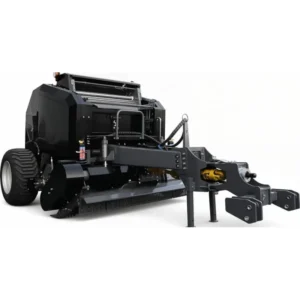
EP-9YG-1.25 Round Baler Double
1.25 m bale diameter for higher-volume operations. Double configuration for efficiency in large fields.
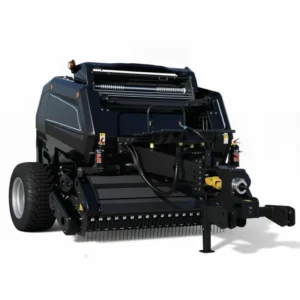
EP-9YG-1.25A 圓捆打捆機
1.25 m capacity. Versatile mid-range round baler machine for hay and silage on medium-scale Korean farms.
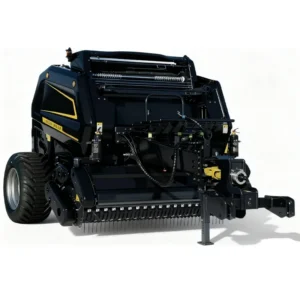
EP-9YG-2.24D Round Baler Classic
Professional-grade large-diameter round baler for commercial round hay baler for sale enquiries.
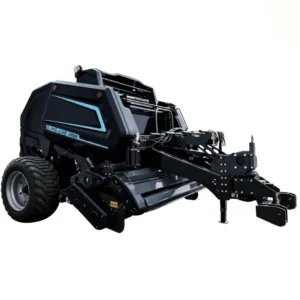
EP-9YG-2.24D Transcend
High-specification commercial round baler. Advanced wrapping system. Best-in-class output for contractors.
Selection Guide
11. Which Round Baler Is Right for Your Farm? A Decision Framework
After comparing the two technologies across mechanism, structure, material systems, bale quality, and regulatory context, the practical question remains: which type should a South Korean farmer or contractor choose for their specific situation? The answer depends on a combination of tractor size, primary crop, bale use, operating scale, and budget — and there is genuinely no universally correct answer. Here is a practical framework to guide the decision:
Choose Fixed Chamber If:
Your primary crop is rice straw or dry hay where bale size variability is not important. Your tractor is in the 40–80 hp range where variable chamber complexity adds disproportionate cost. Your farm scale is modest and you do not need to produce bales of different sizes across the season. Maintenance simplicity is a priority, and you prefer a machine with fewer wearing components to manage. You are looking for a mini round baler for sale with a lower initial investment and lower ongoing belt replacement costs.
Choose Variable Chamber If:
You bale silage or high-moisture crops where uniform bale density directly affects fermentation quality and storage losses. You operate across multiple crop types and benefit from the ability to set different bale diameters for different crops and customers. Your operation is commercial scale — agricultural contractor or large livestock farm — where the higher initial investment is recoverable against the productivity and bale quality advantages. You have the workshop infrastructure and operator skill to manage belt maintenance effectively across a busy baling season.
Whichever technology you select, matching the machine to your tractor’s actual PTO output — not just the gross engine horsepower — is the most important single selection criterion. The PTO horsepower available at the tractor’s output shaft is typically 80–85% of the gross engine power; verify that your tractor’s actual PTO output matches or exceeds the minimum requirement of the round baler you are considering before finalising the purchase. Contact our team through the link below for model-specific tractor compatibility guidance tailored to your farm situation.
FAQ
Frequently Asked Questions
Q1. What is the main difference between a fixed chamber and a variable chamber round baler for Korean rice straw baling operations?
For Korean rice straw baling, both chamber types work effectively. The fixed chamber round baler is simpler, requires less maintenance, and is more compact — making it ideal for the smaller tractors and tight field conditions common in Korea’s terraced and narrow rice paddy areas. The variable chamber round baler produces more uniformly dense bales, which can be an advantage if the straw is destined for silage wrapping or commercial sale where bale consistency matters. For most domestic use (livestock bedding, mushroom substrate, compost), the fixed chamber machine with its lower cost and simpler operation is the practical choice.
Q2. Which round baler type produces better silage bales for Korean cattle farms in the Gangwon-do region?
Variable chamber round balers consistently produce better silage bales because their uniform density — applied from core formation outward — minimises trapped oxygen within the bale before wrapping. Less oxygen means faster onset of anaerobic fermentation, lower dry matter losses during storage, and better nutritional value retention over the winter feeding period. For Gangwon-do cattle farmers producing baleage from Italian ryegrass or mixed forage grasses, the investment in a variable chamber machine is justified by measurable improvements in silage quality and reductions in storage losses compared to fixed chamber-produced bales of equivalent crop.
Q3. What is a round baler, and how does it work for someone new to hay harvesting equipment in South Korea?
A round baler is a PTO-driven agricultural machine towed behind a tractor that gathers cut and dried crop material — hay, straw, or silage — from windrows on the field surface and compresses it into large cylindrical bales. The pickup reel lifts the crop into the forming chamber, where rollers, chains, slats, or belts roll the material into a rotating cylinder, progressively building a round bale of the desired size. When the bale is complete, the machine wraps it in twine, net, or film and ejects it to the field surface, then begins the next bale immediately. Modern round balers range from small round baler models for compact tractors up to large commercial machines capable of producing 100+ bales per day in high-yield crops.
Q4. How often do belts need replacing on a variable chamber round baler used in Korean summer baling conditions?
Belt replacement frequency depends on annual bale count, crop type, and operating conditions. Under moderate South Korean conditions baling 2,000–3,000 bales per year from mixed grass, straw, and silage crops, baler belts on a well-maintained variable chamber machine typically last 3–5 seasons before replacement is needed. Summer Korea’s high humidity and warm temperatures can slightly accelerate belt degradation compared to cooler climates, so annual inspection at season end is advisable. Carrying a spare belt set during the main baling season is good practice to avoid critical downtime during the tight weather windows that characterise Korean summer forage harvesting.
Q5. What round baler parts are most commonly needed as spares for Korean farms running mini hay balers through the harvest season?
The most frequently consumed spare parts on a mini hay baler or small round baler during Korean harvest season are: pickup tine fingers (bent or broken from debris strikes), shear bolts on the PTO and pickup drives, baler twine or net wrap, chains and sprockets on the forming system, and drive belts on belt-type machines. Keeping a season’s supply of shear bolts and a set of replacement pickup tines on hand is standard practice for any operator expecting a full season of use. For parts specific to the 9YG series models, our after-sales team can advise on compatible consumable parts and delivery lead times to Korean customers.
Q6. Where can I find a reliable round baler manufacturer that supplies replacement parts to agricultural dealers in South Korea?
We supply round baler equipment and compatible spare parts to agricultural dealers, cooperatives, and direct-buying farms across South Korea through our established logistics network servicing Korean ports at Busan and Incheon. For dealers interested in establishing a supply relationship for our 9YG round baler range, and for individual farm buyers seeking after-sales parts support, please contact our export team using the contact details on this page. We maintain parts inventory for all current round baler models in the 9YG series and can advise on stock availability, lead times, and shipping options for Korean buyers.
Q7. What Korean agricultural regulations apply to the round baler gearbox and PTO drive system when using the machine with employed workers?
Under the Korean Occupational Safety and Health Act (산업안전보건법), agricultural machinery used in workplaces where employees are present must have functional PTO shaft guards covering all rotating driveline components between the tractor and the baler gearbox. The gearbox shear bolt overload protection must be in working order, and employees must be trained in safe operation including understanding the hazards of PTO shafts and moving machine components. The Rural Development Administration’s safety guidance for agricultural machinery operation applies to all farm workers in Korea regardless of whether they are operating on their own land or under an employment relationship.
Q8. How does bale wrapping with net vs twine affect the suitability of a round baler for Korean silage production?
For silage baling in Korea, neither twine nor net wrap provides an adequate oxygen barrier on its own — both require the bale to be covered in stretch film wrapping after ejection to achieve the anaerobic seal needed for fermentation. The choice between net wrap and twine on the round baler affects baling speed (net wrap typically takes fewer revolutions and faster cycle time) and bale surface preparation for film wrapping (net wrap provides a more even, stable surface that holds stretch film more reliably). For high-moisture baleage production in Gangwon-do and other silage-producing regions of Korea, net wrap is the preferred baler wrapping medium and most modern 9YG series models with net wrap capability are the recommended specification.
編輯:PXY