Alfalfa / Hay Baling — Drivetrain Engineering Guide
A technical deep-dive for hay producers and round baler operators: understanding how round baler gearbox torque capacity is selected, what happens when the rating is mismatched to the operation, and how to maintain drivetrain integrity across a full multi-cut alfalfa season in hot, dusty conditions.
In a multi-cut alfalfa operation running four or five cuttings per year in a dry climate — the kind of system increasingly common in South Korea’s highlands and irrigated lowland zones, and throughout the premium hay-producing regions of Australia, the western United States, and the Middle East — the round baler machine runs more hours per season than in almost any other hay baling application. Each cutting cycle demands 10 to 14 hours of continuous daily operation across several consecutive days, repeated through a season that may run from April through September. At this intensity, the gearbox is not simply a supporting component — it is the limiting factor that determines whether the machine runs through to the end of the season or requires an unscheduled rebuild that costs the farm operator not only the repair bill but the value of bales that were not produced during the downtime window. Understanding gearbox torque ratings, how they relate to the loads generated in dry-climate alfalfa baling, and what maintenance practices preserve torque capacity across a full season is one of the more undervalued technical competencies in round baler operation.
What a Round Baler Gearbox Torque Rating Actually Means in Practice
A round baler gearbox torque rating is the maximum torque that the gearbox input shaft, gear set, and output shaft can transmit continuously without experiencing progressive mechanical failure. It is typically expressed in newton-metres (Nm) and represents a design threshold established through engineering calculation and physical testing of gear tooth bending strength, contact stress capacity, shaft deflection limits, and bearing load ratings across the full gear set geometry. The number published in a machine’s technical specification is usually the continuous-duty torque rating — the load the gearbox can sustain indefinitely at operating temperature under stable conditions.
What that number does not directly state is the overload tolerance, which is the short-duration torque multiple the gearbox can withstand above its continuous rating before damage begins accumulating. Most agricultural gearboxes are designed with an overload tolerance of 1.5 to 2.5 times the continuous rating for events lasting less than 2 seconds — a property referred to as short-term overload capacity. This overload tolerance is what allows a round baler machine to survive the torque spikes generated when a slug of dense alfalfa enters the chamber, or when the pickup tines contact a rock or a dense windrow section. The shear bolt or friction clutch on the PTO shaft is the first line of protection — it is calibrated to release at a torque value above the normal working range but below the gearbox’s structural limit. If the shear bolt is calibrated too high, or if the friction clutch is glazed and no longer releasing correctly, those spike events transmit their full torque directly to the gear teeth and bearing inner rings.
In dry climates specifically, an additional complication arises that is less relevant in temperate humid hay regions: thermal torque degradation. As gearbox operating temperature rises above the gear oil’s optimal viscosity range — which can happen within 3 to 4 hours of continuous operation in ambient temperatures above 35°C — the oil film between gear tooth contact surfaces thins. A thinner film reduces the hydrodynamic cushion that separates the gear flanks during the engagement cycle, effectively reducing the practical continuous torque rating of the gearbox below its nameplate value even though no mechanical changes have occurred. The gearbox rated at 2,000 Nm under controlled laboratory conditions may only sustain 1,600 to 1,750 Nm continuously in a 40°C ambient environment with standard gear oil — a 15 to 20% capacity reduction that is invisible to the operator until gear tooth surface pitting begins to appear.
Manufacturing Structure: How Round Baler Gearbox and Drivetrain Components Are Built for Multi-Cut Duty
A round baler machine intended for multi-cut alfalfa operations in demanding conditions needs a gearbox and drivetrain system that is engineered — not merely sized — for the application. The following table breaks down the key structural components of a professional-grade round baler drivetrain and explains how design choices at each point contribute to or subtract from seasonal uptime.
| Drivetrain Component | Construction Specification for Dry-Climate Multi-Cut Duty | Uptime Impact if Under-Specified |
|---|---|---|
| Main Gearbox Casing | Cast iron or high-strength cast aluminium with integral oil sump; drain and fill plugs accessible for in-field oil change | Thin-wall housings crack under sustained vibration; inaccessible drain plugs prevent seasonal oil changes that are critical in dry-climate high-hour operation |
| Gear Set Material | Case-hardened alloy steel gears; minimum surface hardness HRC 58–62; ground tooth profile for consistent contact geometry | Soft-core gears with shallow case depth begin to pit on tooth flanks within 200–300 hours of multi-cut duty; ground profile ensures even load sharing across tooth face width |
| Bearing Selection | Tapered roller bearings on input and output shafts; sealed deep groove bearings on intermediate shafts; C3 clearance class for thermal expansion | Standard C0 clearance bearings run tight in elevated gearbox temperatures, generating additional internal friction that further raises operating temperature — a self-accelerating failure mode |
| Oil Seal Design | Radial lip seals with nitrile or PTFE lip material rated to 120°C; double-lip design on input shaft where chaff and dust are highest | Single-lip seals in dusty alfalfa environments allow fine chaff abrasive to enter alongside the lip, accelerating gearbox oil contamination to failure-level within 100–150 hours |
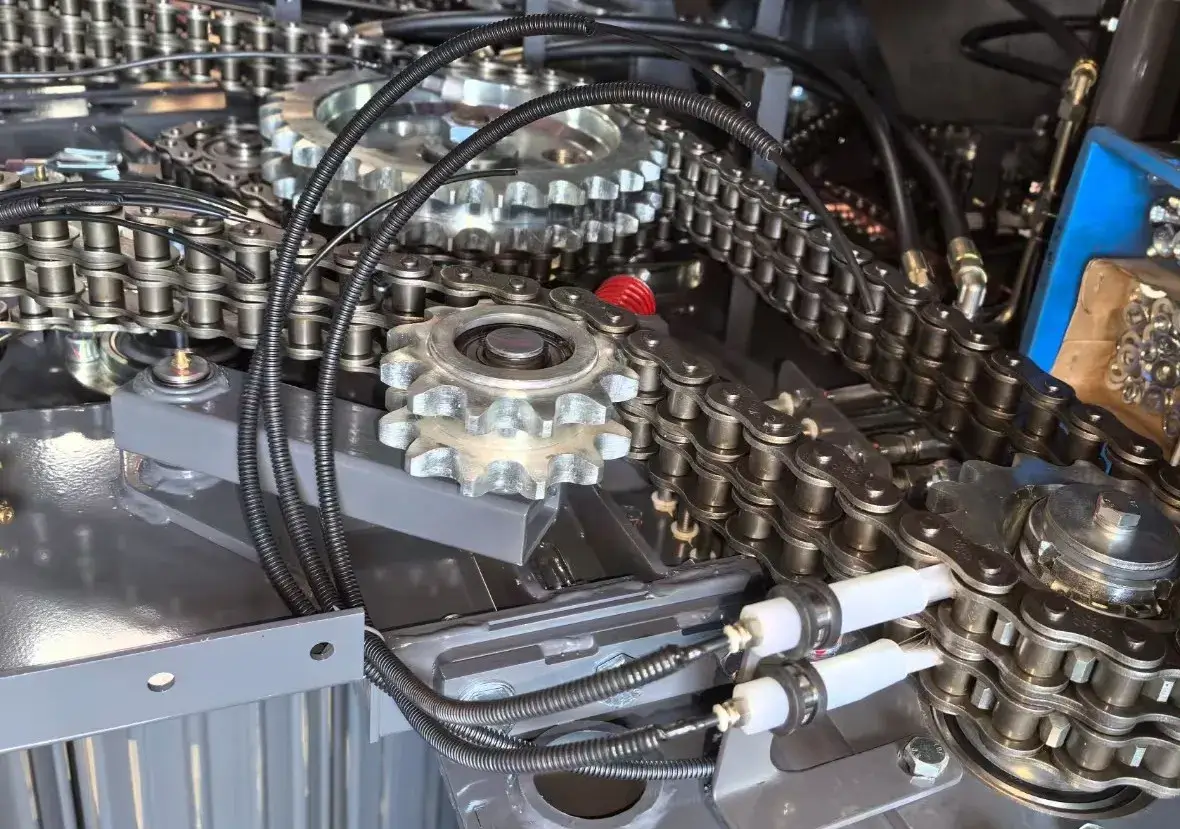
| Roller Chain (Chamber Drive) | ISO heavy-duty roller chain; minimum tensile strength 5× calculated working load; pre-stretched to remove manufacturing elongation | Unstretched chain elongates rapidly under cyclic load, causing shock loading on sprocket teeth that transfers vibration back into the gearbox output bearing in each engagement cycle |
| PTO Input Shaft Overload Protection | Calibrated shear bolt assembly or friction torque limiter; rated release torque not more than 1.3× maximum continuous gearbox rating | An overload protector calibrated too high transmits damaging spike torques directly to gear teeth; one rated too low causes nuisance trips on normal windrow density variation |
| Compression Roller Drive Chain | Auto-lubricated; 16–18 rollers per chamber; chain tension maintained by spring-loaded tensioner | Dry or slack roller chain allows rollers to run at different speeds, creating asymmetric bale density that requires higher gate pressure to correct — which increases gearbox input torque requirement further |
| Gearbox Mounting Interface | Rigid flanged mount with vibration-isolation pads; alignment maintained by precision-machined register fit | Loose or misaligned gearbox mounting generates bending moment on the input and output shafts, adding radial load to the shaft bearings that is not accounted for in the torque rating |
Each of these design elements contributes to the effective operational torque capacity available across a full multi-cut season. A machine that meets its nameplate torque rating on day one of the season may be operating significantly below that capacity by the end of the third cutting if the gear oil has not been changed, the input shaft seal has been compromised by dust, or the roller chain has elongated beyond the tensioner’s compensation range. These are not exotic failure modes — they are the routine degradation pattern of any round baler gearbox operating at high seasonal hours in a dusty environment.
Material System: How Dry-Climate Alfalfa Creates Specific Gearbox Load Profiles
Alfalfa baled in dry conditions — moisture below 14% at harvest, ambient temperatures above 30°C, and low-humidity air moving through the machine at volume — presents a distinct load profile to the round baler gearbox compared to humid-climate hay baling. Understanding this load profile is the foundation for selecting a gearbox specification and maintenance schedule that matches the application.
Dry alfalfa at 10 to 14% moisture is mechanically very different from alfalfa at 18 to 22%. At low moisture, the stem material has lost its cellular turgor and flexibility — it behaves more like a collection of fine fibrous rods than a bundle of flexible stems. When a mass of this material enters the compression chamber, it does not progressively bend and conform to the growing bale shape the way moist material does. Instead, it tends to accumulate as a loosely interlocked matrix that resists compression until the gate pressure is high enough to collapse the interlock, at which point the density increases rapidly and the resistance to further compression drops suddenly. This non-linear compression response creates a characteristic torque signature on the gearbox input — periods of moderate steady torque as the chamber fills, punctuated by brief spikes as each layer collapses, followed by a rapid load drop when the gate opens and the bale is ejected.
The dry alfalfa dust environment amplifies the thermal load on the gearbox. Fine alfalfa leaf particles and stem fragments generated by the shatter-prone dry material pass through every gap and seal on the machine. Any lubrication point that is not positively sealed will accumulate a mixture of gear oil and alfalfa dust that forms a mildly abrasive paste — visible as a grey-green deposit around gearbox seals, chain sprocket teeth, and roller bearing housings. This paste acts as an abrasive compound in any lubrication surface where it enters, progressively wearing the contact surfaces it was meant to protect. In a humid climate the same volume of material is heavier and less airborne, reducing this contamination pathway significantly.
For the gearbox specifically, the combination of spike torque from non-linear compression and thermal degradation from elevated ambient temperature and contaminated oil means that the effective torque capacity margin — the gap between the continuous load being placed on the gearbox and its rated capacity — is lower in dry-climate multi-cut alfalfa work than any other common round baler application. This is why gearbox failures in alfalfa operations are concentrated in the second and subsequent cuttings of the season, not the first: the first cutting typically runs on clean oil and cool bearings, while by the third cutting the oil is contaminated, the bearings are slightly worn, and the oil temperature is consistently reaching the upper end of its operating range.
Matching Gearbox Torque Rating to Tractor Power and Operating Conditions
The first and most consequential decision in round baler gearbox selection is the torque rating relative to the tractor’s PTO output. The following table provides a practical matching framework for multi-cut alfalfa operations, accounting for the dry-climate operating efficiency reduction discussed above. In each category, the minimum gearbox continuous torque rating shown includes a 25% margin above the calculated tractor PTO torque to account for thermal degradation and overload spike frequency in dry alfalfa work.
| Tractor PTO Rating | Calculated Max PTO Torque at 540 RPM | Recommended Min. Gearbox Rating (Dry Climate +25%) | Appropriate Round Baler Class |
|---|---|---|---|
| 40–55 kW (55–75 HP) | approx. 700–970 Nm | 900–1,200 Nm continuous | Small round baler; 1.0–1.25 m bale diameter class; compact alfalfa operations |
| 55–75 kW (75–100 HP) | approx. 970–1,320 Nm | 1,200–1,650 Nm continuous | Mid-class round baler; 1.25–1.5 m diameter; most Korean alfalfa farm operations |
| 75–100 kW (100–135 HP) | approx. 1,320–1,760 Nm | 1,650–2,200 Nm continuous | Large round baler machine; 1.5–2.24 m pickup; commercial alfalfa operations |
| 100–130 kW (135–175 HP) | approx. 1,760–2,290 Nm | 2,200–2,870 Nm continuous | Heavy commercial round baler; 2.24 m pickup; large-scale multi-cut export operations |
The 25% dry-climate margin in this table is a practical guideline, not a fixed rule. Operations baling in ambient temperatures consistently above 40°C should increase the margin to 30 to 35%. Operations with high seasonal hour targets — above 600 hours per season — should consider an additional 10% margin on top of the climate adjustment. The cost difference between a gearbox rated at the minimum adequate level and one rated one step higher is typically 8 to 15% of the total gearbox purchase cost; the cost of an unscheduled gearbox rebuild during peak alfalfa season — including labour, parts, delay, and bales not produced — is routinely 4 to 8 times that figure.
It is also worth noting that the torque rating calculation above is based on 540 RPM PTO input. Round baler machines adapted for 1000 RPM PTO input — increasingly common on modern high-horsepower tractors — deliver the same power at approximately half the torque. A 100 kW tractor driving a 1000 RPM PTO delivers roughly 955 Nm rather than the 1,760 Nm at 540 RPM, which places it in a lower gearbox torque bracket while maintaining the same power delivery to the machine. Always confirm which PTO speed the gearbox is rated for when cross-referencing these figures.
Recommended Round Baler for Multi-Cut Alfalfa Operations in Demanding Conditions
9YG-2.24D Round Baler — S9000
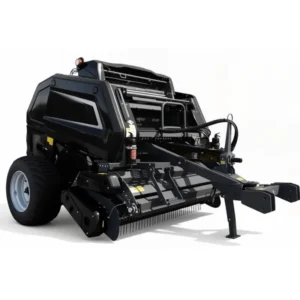
The 9YG-2.24D S9000 is a heavy-duty round baler machine with a 2.24 m pickup width, 18-roller fixed compression chamber, and a drivetrain system engineered for the sustained high-torque demands of commercial multi-cut alfalfa operations. The gearbox used in this machine is sized with the operating margin required for dry-climate, extended-season use — its continuous torque rating accounts for the thermal load reduction in hot ambient conditions rather than being specified only for controlled laboratory conditions. The auto-lubrication system maintains continuous chain and bearing lubrication through the long daily operating periods common in alfalfa contracting work, addressing one of the primary causes of mid-season gearbox degradation in dry climates. With a structural mass of 3,922 kg and 18 heavy-duty steel rollers at Φ222 mm diameter, this machine produces bale densities of 100 to 200 kg/m³ at production rates of 40 to 100 bales per hour depending on windrow density and ground speed. CE and ISO 9001 certification documents are available for Korean and Japanese import registration requirements.
18 × Φ222 mm Rollers
40–100 Bales/hr
Auto Lubrication
CE & ISO 9001
Seasonal Maintenance Protocol for Gearbox Uptime in Multi-Cut Operations
The maintenance protocol for a round baler gearbox in a multi-cut alfalfa operation is more demanding than the calendar-based schedule in the standard operator manual, which is typically written for moderate-use conditions. The following protocol is designed specifically for dry-climate operations running 4 to 5 cuttings per year with 10 to 14 hours of daily machine operation per cutting. Applying this protocol consistently is the single most effective action a farm operator can take to extend gearbox service life in this application.
Pre-Season Gearbox Oil Change (Before First Cutting)
Drain and refill the gearbox with fresh gear oil meeting the manufacturer’s GL-4 or GL-5 specification at the SAE viscosity grade appropriate for your summer ambient temperature range. In Korean highland zones where late-season cuttings occur in temperatures around 25 to 30°C, a standard 80W-90 grade is typically adequate. In lowland zones where July and August temperatures reach 35 to 38°C, consider a 85W-140 grade or a synthetic equivalent rated for higher temperature stability. Do not blend old and new oil — drain completely, including the sump plug area, before refilling. Take a 50 ml sample of the drained oil in a clean container and retain it for comparison with mid-season samples if gear noise develops later.
Between-Cutting Gearbox Inspection (After Each Cutting)
After each cutting cycle, while the machine is still warm from the final day’s operation, check the gearbox housing temperature by hand contact — if you cannot maintain contact for 3 seconds comfortably, the operating temperature is too high and requires investigation before the next cutting begins. Check the oil level through the sight glass or dipstick and top up if below the minimum mark. Inspect all shaft seal areas for oil weeping — any visible oil film around a shaft seal is early evidence of seal lip wear that should be monitored and addressed before it reaches the point of oil loss in the field. Check the drain plug for tightness and for any metallic debris on the magnetic plug if your machine uses one.
Mid-Season Oil Sample Analysis (After Second or Third Cutting)
In a 4 to 5 cutting season, send a 50 ml oil sample to a laboratory offering spectrographic oil analysis by the mid-point of the season. The analysis will report wear metal concentrations in parts per million — specifically iron, chromium, and nickel from gear tooth surfaces; copper and tin from bronze thrust washers or bushings; and silicon as an indicator of external contamination. Elevated silicon levels in a gearbox oil sample in a dry-climate operation almost always indicate seal breaching — fine alfalfa dust (which contains silica) has entered the gearbox and is abrading contact surfaces. Acting on a spectrographic report prevents the scenario where the gearbox shows no external symptoms until a catastrophic failure occurs mid-season.
Roller Chain Tension and Lubrication Between Every Cutting
The roller chain transmitting drive from the gearbox output to the compression rollers elongates under cyclic load and thermal cycling across a season. Measure mid-span sag on the longest exposed chain run — anything exceeding 2% of span length indicates elongation requiring re-tensioning or replacement. In dry alfalfa operations where fine dust contamination is high, the auto-lubrication oil that reaches the chain may be only partially effective if delivery lines are partially blocked by dust-oil deposits from previous cuttings. Physically inspect the chain surface for dry spots — a chain with correct lubrication has a continuous, thin oil film on every link; a chain with dry spots will show surface corrosion or a matte appearance on the affected links. Dry links under load develop micro-cracks in the pin surface that cause progressive fatigue failure without visible warning.
End-of-Season Gearbox Oil Drain and Inspection
At the end of the alfalfa season, drain gearbox oil while the machine is still warm from the final day’s operation. This warm drain removes significantly more suspended wear debris and contamination than a cold drain on a stored machine. Inspect the drained oil for colour, odour, and visible debris — dark brown or black oil with a burnt smell indicates gear oil has exceeded its thermal service life and should prompt investigation of operating temperatures for the following season. Metal particles visible without magnification are always a serious finding requiring immediate inspection of gear tooth surfaces before the next season begins. After draining, refill with fresh oil to protect against internal corrosion during storage, or leave drained and dry if the machine will be thoroughly inspected for overhaul during the off-season.
Dry-Climate Alfalfa Baling Across Regions: How Operating Conditions Vary and What They Demand from the Round Baler Gearbox
The dry-climate multi-cut alfalfa profile described in this article is not unique to any single country — it describes the operating environment in a growing range of markets where alfalfa production is expanding for domestic livestock feed or export. The following comparison shows how the gearbox challenge varies across the main producing and importing regions, with implications for how round baler machine specifications should be adapted to each context.
| Region / Country | Typical Alfalfa Season Profile | Key Gearbox Stress Factor | Recommended Gearbox Practice |
|---|---|---|---|
| South Korea (Highland) | 3–4 cuttings; April–September; 25–33°C peak ambient | Moderate thermal load; high fine-particle contamination in summer; irregular field shapes create frequent PTO engagement events | Change oil pre-season and mid-season; inspect seals after each cutting; use 80W-90 or synthetic 75W-140 for summer cuttings |
| South Korea (Lowland / Irrigated) | 4–5 cuttings; April–October; 32–38°C peak ambient; high humidity June–August | High ambient temperature reduces oil film strength; humidity causes condensation in stored gearbox between cuttings | Synthetic gear oil recommended for summer cuttings; change between 2nd and 3rd cut; check for water emulsion in oil after humid periods |
| Australia (Murray-Darling Basin) | 8–10 cuttings under irrigation; year-round; 35–44°C peak ambient; very low humidity | Extreme thermal load; highest seasonal hour accumulation; fine silica dust contamination from bare soil between windrows | Synthetic gear oil mandatory; change every 200 hours; spectrographic analysis every 2nd change; gearbox seal inspection monthly during active season |
| Western United States | 6–8 cuttings; April–October; 35–42°C peak in central valley; very low humidity | Very high thermal load; large contiguous fields enable long daily operating periods without breaks that would allow gearbox cooling | Gearbox torque rating typically one class above minimum for tractor power; synthetic oil standard; direct-mount temperature monitoring on commercial operations |
| Netherlands / Northern Europe | 3–4 cuttings; May–September; 18–25°C peak; high humidity | Low thermal load; primary gearbox stress is moisture ingress in seal areas during wet-season operation; corrosion of gear surfaces in poorly sealed units during winter storage | Annual pre-season oil change adequate; inspect seals for water ingress after wet cuttings; drain and refill before winter storage |
| Canada (Saskatchewan / Alberta) | 3–4 cuttings; May–September; 28–35°C peak; low humidity in interior prairie regions | Moderate thermal load; very fine mineral dust from prairie soils can breach single-lip seals; large operations accumulate high seasonal hours on fewer machines | Between-cutting oil check; mid-season sample if running above 300 hours per season; verify seal condition before storing in temperatures below minus 20°C — cold-temperature seal hardening can cause cracking on spring startup |
Regulatory Framework: Agricultural Machinery Gearbox Standards Across Key Markets
Round baler gearboxes are not simply mechanical components — in several markets they are subject to specific regulatory requirements covering design safety, load rating declaration, and maintenance documentation. Operators and purchasers in regulated markets need to understand which standards apply to their machines and what compliance documentation they should request from suppliers.
| Market | Relevant Regulation for Agricultural Gearboxes | Practical Compliance Requirement |
|---|---|---|
| كوريا الجنوبية | Agricultural Mechanisation Promotion Act; Occupational Safety and Health Act; MAFRA machinery registration requirements for round balers and their drivetrain systems | The Agricultural Mechanisation Promotion Act requires that agricultural machinery used commercially meets applicable safety standards covering guarding of PTO shafts and gearbox power transmission components. Round balers registered for the RDA mechanisation subsidy programme must have their gearbox and drivetrain components meet applicable safety criteria as part of the machine’s CE or equivalent certification. Maintenance records for gearboxes may be requested in the event of a workplace incident review under the Occupational Safety and Health Act — operators who maintain documented oil change and inspection records are in a significantly stronger compliance position. |
| European Union | EU Machinery Regulation 2023/1230; EN ISO 11684 (safety signs and safety labelling for agricultural machinery); ISO 8210 standard for agricultural machinery PTO shaft connections and guarding | Under the EU Machinery Regulation, gearboxes integrated into agricultural machinery must be designed to withstand the maximum torque that can be transmitted from the tractor’s PTO — not just the rated working torque. Documentation requirements include torque rating declarations in the technical file, guard specifications for all power transmission components, and maintenance instructions specifying oil change intervals in the operator manual. EN ISO 11684 governs how torque rating, oil specification, and service interval information must be communicated on labels attached to the machine. |
| United Kingdom | PUWER 1998 (Provision and Use of Work Equipment Regulations); Supply of Machinery (Safety) Regulations 2008; HSE guidance on PTO and power transmission safety in agricultural machinery | PUWER requires that all work equipment, including round balers and their gearboxes, is maintained in efficient working order with records kept of maintenance activities. The HSE (Health and Safety Executive) publishes specific guidance on PTO shaft guarding and gearbox power transmission safety for agricultural machines — failure of a gearbox output shaft guard is a notifiable PUWER deficiency during a workplace inspection. Round baler gearboxes must be UKCA marked as part of the machine’s overall marking, or CE marked under current transitional arrangements. |
| Australia | State Work Health and Safety Acts; AS 4024.3 series (guarding of machinery, power transmission); Safe Work Australia model code of practice for plant and machinery | Australian state WHS Acts require that all plant and equipment, including round baler machines and their drivetrain components, is designed, constructed, and maintained to be safe. AS 4024.3 specifies guarding requirements for power transmission components including gearboxes and roller chain drives. Safe Work Australia’s model code of practice for plant requires that operators of agricultural machinery maintain and inspect power transmission components at intervals not greater than those specified in the operator manual — and more frequently where operating conditions are more demanding than those assumed by the standard interval. |
| Japan | Industrial Safety and Health Act (労働安全衛生法); MAFF agricultural machinery performance standards; JIS B 1501 / JIS B 1520 bearing standards referenced in agricultural gearbox design | Japan’s Industrial Safety and Health Act applies to round balers used in commercial agricultural enterprises with employed workers — it requires that machinery is maintained in safe condition and that power transmission hazards are guarded to the relevant JIS standards. MAFF performance certification standards for agricultural machinery reference JIS bearing standards in their design criteria for gearboxes and power transmission components. Operators running round balers in commercial employment contexts must document machinery maintenance including gearbox servicing as part of their general workplace safety management obligations. |
| United States | OSHA 29 CFR Part 1928 (Agricultural Operations); ASABE S318 (Safety for Agricultural Equipment); ASABE EP391 (Safety and Health for Farm, Ranch, and Rural Home) | OSHA Part 1928 requires that agricultural machinery used with employed farm workers meets applicable safety standards for guarding of power take-off systems including gearbox input and output shafts. ASABE S318 specifies safety labelling and guarding requirements for power transmission components on agricultural machinery marketed in the United States. Many US round baler manufacturers design to ASABE standards in the absence of mandatory federal certification — buyers can request ASABE S318 compliance documentation as part of a purchase specification. |
Diagnosing Gearbox Torque Problems in the Field During Alfalfa Season
Several warning signs indicate that a round baler gearbox is approaching its torque capacity limit or that its effective torque capacity has been reduced by thermal degradation or contamination. Recognising these signs early — before a failure occurs — allows the operator to take corrective action during a planned maintenance window rather than responding to an unscheduled breakdown in the middle of peak harvest.
| Warning Sign | Most Probable Cause | Immediate Action |
|---|---|---|
| Increasing gear whine that varies with PTO speed | Gear tooth micro-pitting from oil film failure; early-stage surface fatigue | Check oil level and temperature; take oil sample; do not continue operating if noise has changed significantly since last inspection |
| Oil weeping around input shaft seal | Seal lip wear from abrasive alfalfa dust; possible overpressure from blocked breather | Check and clear breather plug; replace seal at end of current cutting; do not continue into next cutting with a weeping seal in dusty conditions |
| Frequent shear bolt trips on normal windrows | Chain stretch causing shock loading that triggers overload protection at lower-than-designed threshold; or shear bolt grade drift requiring replacement | Measure chain elongation; re-tension or replace chain before continuing; replace shear bolts with correct grade and torque specification if chain is within tolerance |
| Housing too hot to maintain hand contact | Oil level low; oil grade too light for current ambient temperature; bearing inner race failure adding friction heat | Stop immediately; check oil level; if level is correct, investigate bearing condition before restarting — operating an overheating gearbox accelerates all wear mechanisms simultaneously |
| Bale density inconsistent run-to-run with no crop change | Roller chain speed variation from elongation or dry spots; indirect indicator of gearbox output speed instability | Inspect chain tension and lubrication; inspect gearbox output bearing for wear (listen for irregular rotation); address chain before investigating gearbox further |
Drivetrain Support Products: Protecting Your Round Baler Gearbox Investment
The gearbox in a round baler machine does not operate in isolation — its service life is directly influenced by the quality and condition of every component upstream and downstream in the drivetrain. Selecting correctly rated PTO shaft and chain components is not just a convenience — it is part of the engineering system that determines how long the gearbox itself survives in a demanding multi-cut alfalfa application.
Agricultural PTO Shaft for Round Balers
The PTO shaft is the primary torque transmission path between tractor and round baler gearbox, and its condition has a direct bearing on the torque spike profile the gearbox experiences during operation. A worn PTO shaft with a degraded overrun clutch allows back-driving events — where the bale’s rotational momentum reverses the عمود نقل الحركة direction momentarily when the gate opens — to reach the gearbox input gear. These reverse-torque events are not factored into the gearbox continuous torque rating and cause tooth flank stress in the direction opposite to the designed load-carrying side, progressively damaging the unloaded tooth face. In a multi-cut alfalfa season with hundreds of gate-opening events per cutting, the cumulative damage from even small reverse-torque events is significant. An overrun clutch in good condition is the primary preventive for this specific failure mode.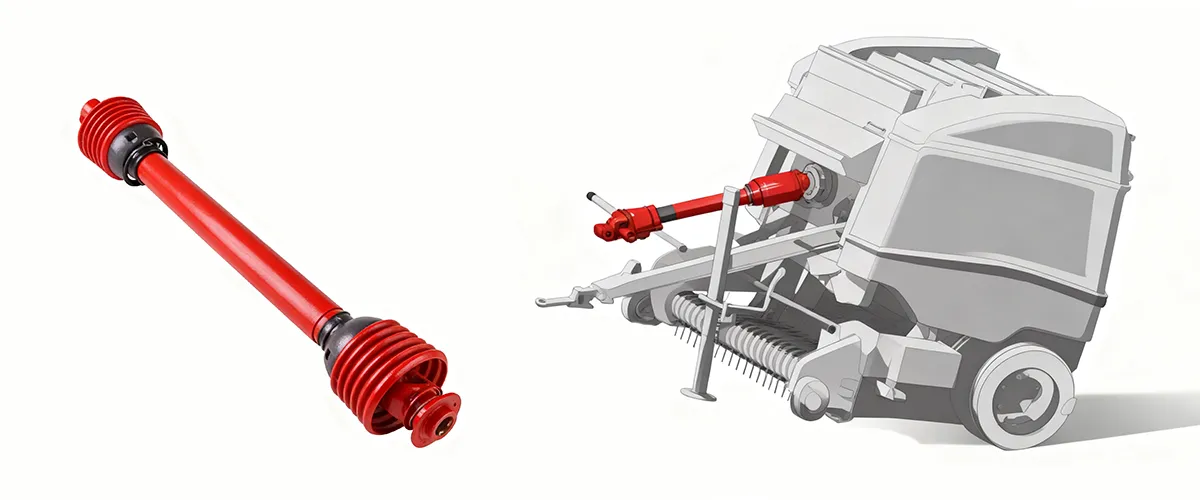
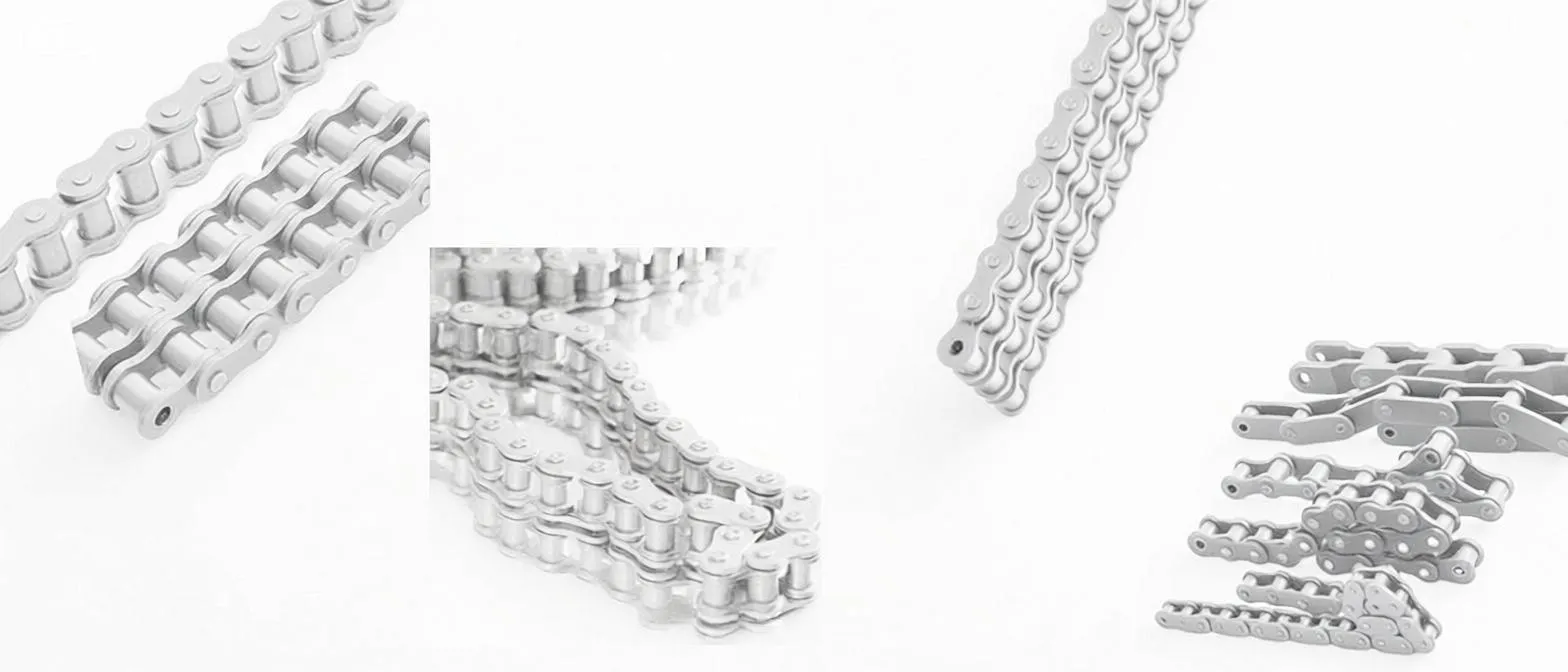
Agricultural Chain Drive System
The roller chain between the gearbox output and the compression rollers is the last link in the torque transmission chain before energy reaches the bale. In a multi-cut alfalfa season, this chain is subjected to a very high number of engagement cycles — each bale involves hundreds of chain-to-sprocket engagement events across the four to eight compression rollers it drives. Using a correctly specified agricultural chain with adequate tensile rating, pre-stretched to remove manufacturing elongation, and kept properly lubricated through the auto-lubrication system, protects the gearbox output shaft bearing from the shock loads that result from chain-driven sprocket impact. A properly tensioned chain running on clean sprocket teeth transmits drive smoothly; a slack or worn chain creates a knock at each engagement that is felt as a cyclic vibration back through the output shaft bearing — one of the few mechanical stresses that cannot be filtered by the gearbox housing itself.
About Us
Founded in 2013, we are a modern intelligent manufacturing enterprise focused on agriculture and livestock harvesting equipment. Over more than a decade of product development and production, we have built a portfolio covering light and heavy round balers, single and double-blade mowers, disc rotary mowers, and single and double-side rakes, with full independent import and export rights and ISO 9001 Quality Management System certification.
Our manufacturing facility operates more than 60 sets of large-scale production equipment — including CNC laser cutting systems, automated welding lines, and electrostatic spray finishing lines — with an annual design production capacity of 2,000 units. The gearbox and drivetrain systems in our round baler range are engineered to the operational torque demands of the markets our machines serve, with continuous-duty ratings that include the real-world margin for dry-climate thermal operation rather than laboratory-only conditions. Close to 100 registered technology patents cover our engineering innovations across the full product range.
Frequently Asked Questions
المحرر: PXY