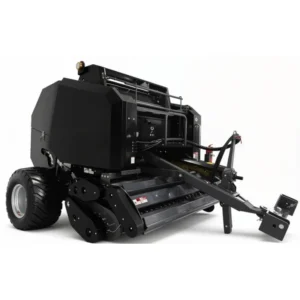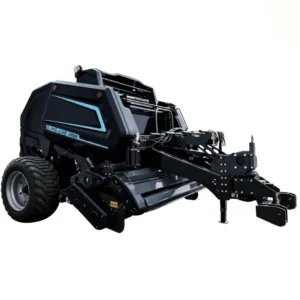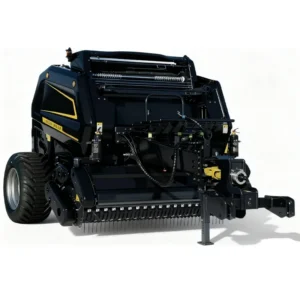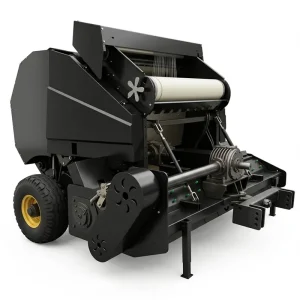
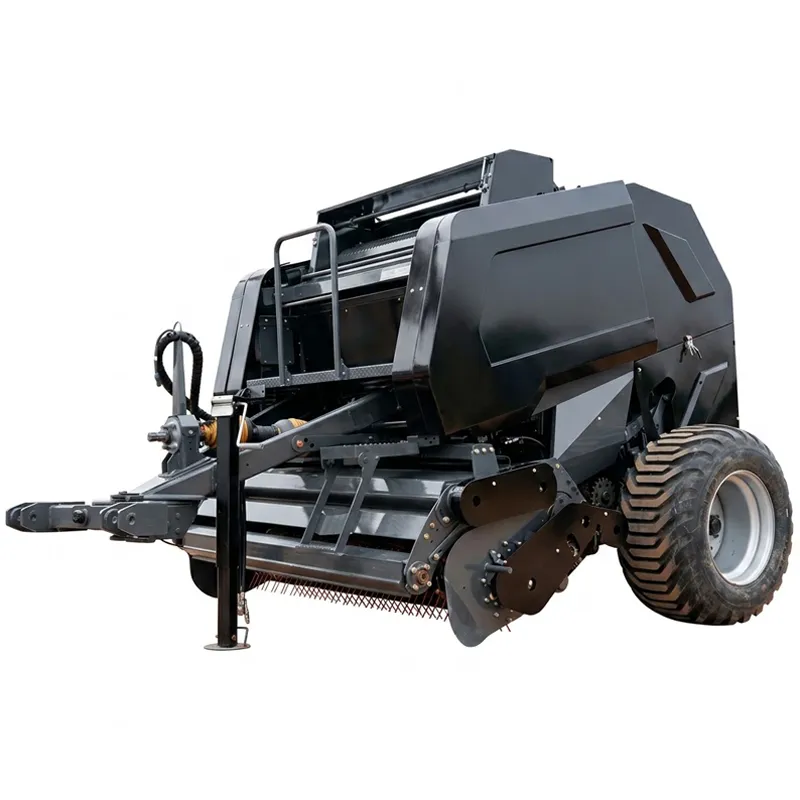
EP Round Baler -Φ1220 mm Compression 4100×2900×2400 mm (L×W×H)
The EP 9YG-2.2 Round Baler is a heavy-duty, towed-type machine engineered for high-volume forage harvesting. It features a wide 2200mm spring-tooth pickup and a continuous screw feeding mechanism that directs material into a spacious roll drum chamber (1400mm width, Φ1220mm diameter). Equipped with 18 pressing rollers (Φ222mm) and automatic net wrapping, it produces large, dense bales efficiently. The system requires 110–150 kW of power and weighs 3800 kg. Advanced features include a handheld color touch screen for precise bale weight control, a hydraulic floating pickup for terrain adaptation, and a centralized lubrication system. With overall dimensions of 4100×2900×2400 mm, this baler ensures reliable performance and easy maintenance for large-scale agricultural operations.
Premium Heavy-Duty Agricultural Round Baler
EP Round Baler — Φ1220 mm Compression
4100×2900×2400 mm (L×W×H)
A flagship-class, tractor-trailed agricultural round baler engineered for 110–150 kW tractors, delivering large-format Φ1220 mm hay round bales through an advanced continuous screw feeding system, 18-roller compression chamber, automatic net wrapping, and a handheld colour touchscreen control interface for precise bale weight management.
1. المواصفات الفنية
All dimensions in millimetres unless otherwise stated. Power is listed in kW; for horsepower, multiply by 1.341. Confirm tractor PTO, hydraulic output, and drawbar rating before ordering.
| لا. | Parameter | وحدة | مواصفة |
|---|---|---|---|
| 1 | اسم الطراز | — | EP Round Baler (Φ1220 mm Compression) |
| 2 | طريقة الربط | — | Towed-type |
| 3 | Picking Width | مم | 2200 |
| 4 | Feed Inlet Width | مم | — |
| 5 | Picker Structure | — | Spring tooth type |
| 6 | Feeder Structure | — | Continuous screw feeding mechanism |
| 7 | Type of Compressing Bale Chamber | — | Roll drum type |
| 8 | Width of Compressing Room | مم | 1400 |
| 9 | Diameter of Compression | مم | Φ1220 |
| 10 | Quantity of Roll-Pressing Working Components | قطع | 18 |
| 11 | Diameter of Roll-Pressing Roller | مم | Φ222 |
| 12 | Bundling Type | — | Automatic net wrapping |
| 13 | Matching Power Range | كيلوواط | 110 ~ 150 |
| 14 | الأبعاد الكلية (الطول × العرض × الارتفاع) | مم | 4100×2900×2400 |
| 15 | وزن الآلة | كيلوغرام | 3800 |
2. The EP Φ1220 mm Round Baler — Flagship Performance for Demanding Operations
What is a round baler at this level of specification? It is a precision-engineered field machine that goes well beyond the basic function of gathering and compressing crop into a cylindrical form. The EP round baler at Φ1220 mm compression diameter represents the top of our agricultural round baler range — a machine built specifically for high-volume commercial operations that bale through thousands of hectares each season and need intelligent control, heavy-duty construction, and minimal downtime. The handheld colour touch screen operating interface, high-precision displacement sensors, and fully automatic thin oil lubrication system place this machine firmly in the category of modern intelligent agricultural machinery rather than a conventional mechanical baler.
At 3800 kg and an overall footprint of 4100×2900×2400 mm, this round baler machine is a significant piece of field equipment matched to 110–150 kW (approximately 148–201 hp) tractors — the large-frame, high-torque machines used by professional farming enterprises, cooperatives, and contract baling operations. The 2200 mm spring tooth picking width means the machine can tackle wide swaths left by double rotary mowers or windrow mergers in a single pass, reducing total field passes and keeping fuel cost per bale at a minimum. For farm operations in South Korea's Honam Plain (호남평야), Australia's Victorian dairy belt, the Netherlands' Flevoland polder farms, or Brazil's Cerrado grain-livestock systems, this kind of field efficiency has a direct and measurable impact on the bottom line.
Operators often want to understand how much does a round bale of hay weigh at this bale diameter before they commit to this format. A Φ1220 mm × 1400 mm bale of dry grass typically weighs 500–750 kg, while high-moisture silage bales at the same dimensions can exceed 900–1100 kg. These are genuinely heavy bales by any standard — they require a telehandler or a loader with rated capacity appropriate to the upper weight estimate, not just the nominal average. In terms of how many square bales in a round bale of this size, a single Φ1220 mm bale from this machine contains the rough equivalent of 75–110 conventional small square bales (15–20 kg each), which transforms how a large livestock operation thinks about feed inventory, storage layout, and daily feeding logistics.
3. Five Key Advantages of This Flagship Round Baler Machine
The integrated handheld colour touch screen communicates with a high-precision displacement sensor to monitor bale diameter in real time and trigger the net wrapping sequence at the exact programmed diameter. This removes the guesswork from bale size management — every hay round bale ejected by this machine is consistent in diameter, weight, and density regardless of crop variation or operator experience level. The touchscreen interface also displays live operational data including current bale progress, wrap counter, and system alerts, keeping the tractor operator fully informed without leaving the cab. This level of digital integration is increasingly expected by commercial operations managing multiple machines across large acreages.
The continuous screw feeding mechanism on this round baler is engineered to maintain a constant, metered flow of crop into the 1400 mm wide compression chamber without the stop-start interruptions that interrupt belt or fork-only feeder systems. In dense ryegrass, thick lucerne, or tall maize residue, where conventional feeders frequently bridge and clog, the screw conveyor's positive displacement action keeps material moving regardless of windrow density variation. Commercial baling contractors operating this agricultural round baler in high-yield crop seasons — common in South Korea's autumn rice straw harvest and in Brazilian soybean stubble collection — report substantially fewer blockage-related stoppages than with earlier-generation machines.
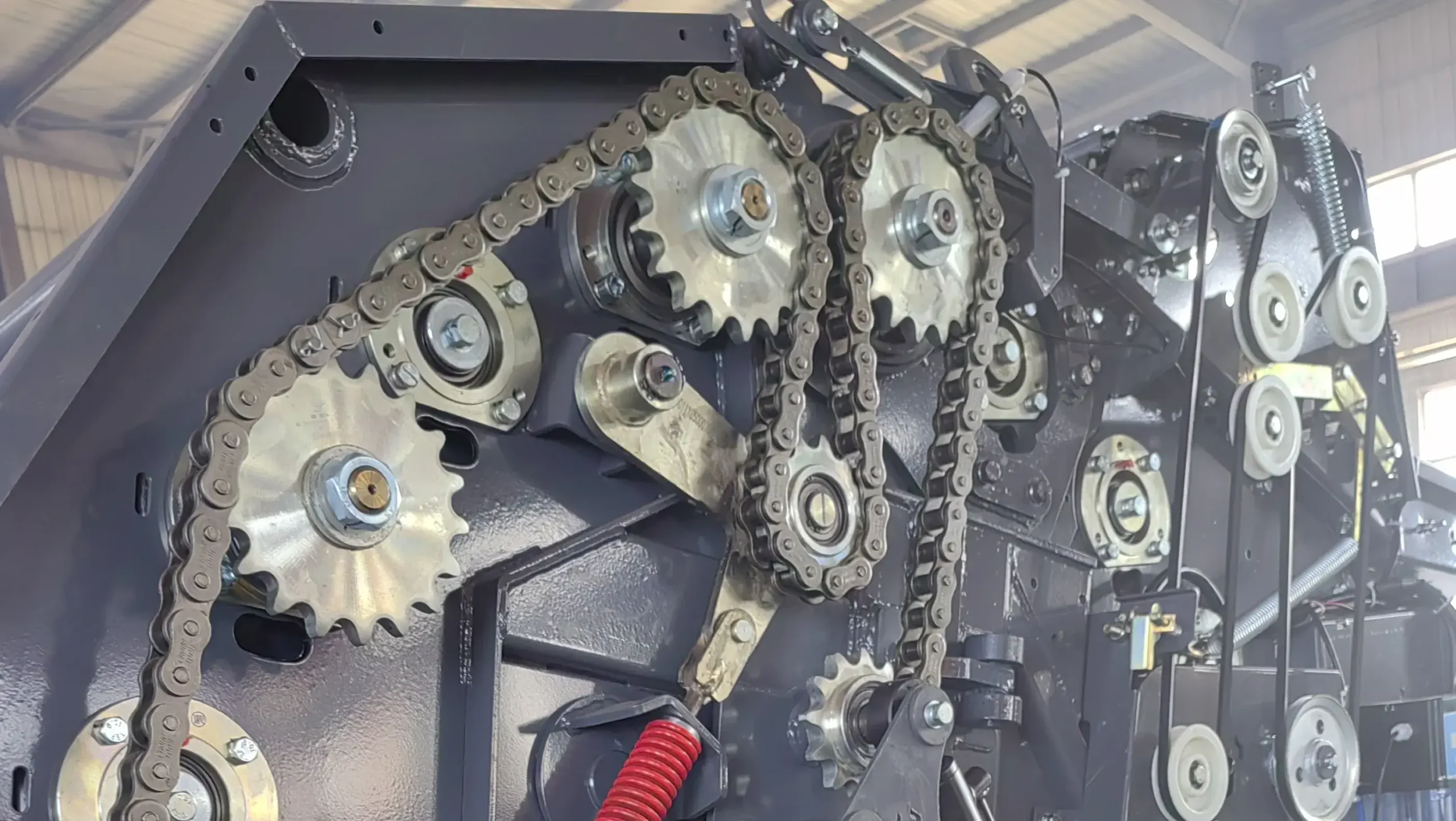
Manual greasing of a round baler machine of this complexity — 18 pressing rollers, pickup reel bearings, feeder shaft journals, chain drive tensioners, and tailgate hinges — would consume 30–45 minutes per day and is frequently skipped under harvest pressure, leading to accelerated bearing wear and unplanned breakdowns. The fully automatic thin oil lubrication system on this machine delivers precisely metered lubricant to all chain drive components on a programmed schedule, while dry-sump grease points use a centralised manifold supply that reduces individual zerking from dozens of points to a single fill location. This extends service intervals and protects round baler parts that are expensive and time-consuming to replace mid-season.
The hydraulic system on this round baler adjusts pickup height dynamically, providing a floating action that keeps the spring tooth tines at the correct ground clearance as the machine traverses uneven terrain, furrows, and headland transitions. Without this feature, the pickup either scalps the soil surface — damaging tines and contaminating bales with soil — or rides too high and leaves crop behind on irregular ground. Floating pickup adjustment is particularly valuable in paddocks with irrigation channels, Korean terraced rice fields (계단식 논), and Dutch polders where the field surface is rarely perfectly planar. The hydraulic adjustment also makes pre-season setup faster and more precise than manual mechanical stops.
The drive shaft, bearings, clutch, chain drive, and electronic control system on this machine are sourced from internationally recognised OEM suppliers. This matters for buyers in markets where the supply of generic replacement parts is unreliable or where machinery warranty claims require documented component traceability. Using branded bearings and clutch components also means that when parts do eventually need replacement, the specifications are publicly available and the components are stocked by agricultural engineering suppliers in South Korea, Australia, the Netherlands, Brazil, Canada, and Colombia — shortening the supply chain and reducing the risk of extended downtime waiting for obscure proprietary parts.
4. How This Round Baler Works — Intelligent Control Meets Heavy-Duty Mechanics
The operating cycle of this round baler machine integrates smart electronics with a robust mechanical drivetrain to produce a fully controlled baling sequence. Unlike older-generation machines where the operator judged bale fullness by feel or a simple mechanical indicator, this model uses sensor data and touchscreen feedback throughout every cycle. The process runs as follows across six stages from crop entry to bale ejection.
The 2200 mm spring tooth pickup reel, riding at hydraulically controlled floating height, sweeps a wide path ahead of the machine. Spring tines lift windrow material cleanly from the ground and transfer it rearward. The hydraulic float adapts to surface undulation in real time without operator adjustment during the pass.
The continuous screw feeding mechanism receives crop from the pickup and meters it into the compression chamber at a controlled rate regardless of windrow density variation. Dense sections of the windrow do not create a surge that can jam the intake; instead, the screw geometry disperses the excess material uniformly across the 1400 mm chamber width.
Eighteen Φ222 mm pressing rollers grip and rotate incoming crop, building the bale radially from the centre outward. As the bale grows in diameter, the high-precision displacement sensor tracks its progression toward the Φ1220 mm target and transmits live data to the touchscreen display in the tractor cab.
When the displacement sensor confirms Φ1220 mm has been reached, the touchscreen alerts the operator and initiates the automatic net wrapping sequence. The programmed number of net passes is applied at consistent tension across the full bale width, and the high-precision sensor monitors net wrap loop count to ensure every bale receives exactly the correct coverage.
After the final wrap pass, the automatic cutter severs the net cleanly and the free end is guided against the bale surface. The wrapping system then resets to the standby position, ready for the next bale cycle. The full wrapping and cutting sequence is completed in under 25 seconds.
The rear tailgate opens under hydraulic control and the completed hay round bale rolls to the ground. The tailgate closes as the tractor moves forward and the next bale begins accumulating immediately. The automatic lubrication system delivers its next scheduled dose to chain drive components in the background throughout each cycle.

5. Material Specification — Built for the Long Term
A machine weighing 3800 kg and capable of accepting 150 kW of continuous PTO input must be built from materials that match that duty level. The primary structural frame is fabricated from high-strength low-alloy structural steel with a minimum yield strength of 420 MPa, with main longitudinal members formed from box-section steel to maximise torsional stiffness under the asymmetric loads generated during bale formation. Frame joints are fully penetration-welded using certified welding procedures and are then shot-blasted to Sa 2.5 surface cleanliness before epoxy primer and topcoat application — a coating specification normally found on construction equipment rather than agricultural machinery, reflecting the design intent of long service life in wet field environments.
The 18 pressing rollers are made from seamless steel tube, precision-ground to dimensional tolerances that ensure even load distribution across the full 1400 mm chamber width. Roller surface hardness is 52–56 HRC after induction hardening, providing the wear resistance needed for sustained contact with abrasive crop material such as rice straw and cereal residues. Roller bearings are sealed spherical roller type with extended grease capacity, connected to the centralised lubrication manifold as part of the automatic thin oil lubrication system rather than relying on manual greasing at each individual point. At 3800 kg total machine weight, the wheel axle assembly uses oversized forged steel spindles with rated load capacity well above the static weight to accommodate the additional dynamic loads generated during field transit over rough terrain.
Key components — drive shaft, bearings, clutch assemblies, chain drives, and the electronic control unit — are globally sourced from internationally recognised brands. This specification decision is significant for buyers in markets where after-market round baler parts supply is limited, because branded components with publicly available specifications can be locally sourced in an emergency rather than requiring air freight from the original manufacturer. The handheld touchscreen controller is an industrial-grade sealed unit rated to IP65, resistant to dust ingress and water jets encountered during field operation and machine cleaning. All electrical connections in the field-facing harness use sealed automotive-grade connectors with locking retention to prevent moisture intrusion and vibration-induced disconnection.
6. Round Baler Application — High-Volume Field Scenarios
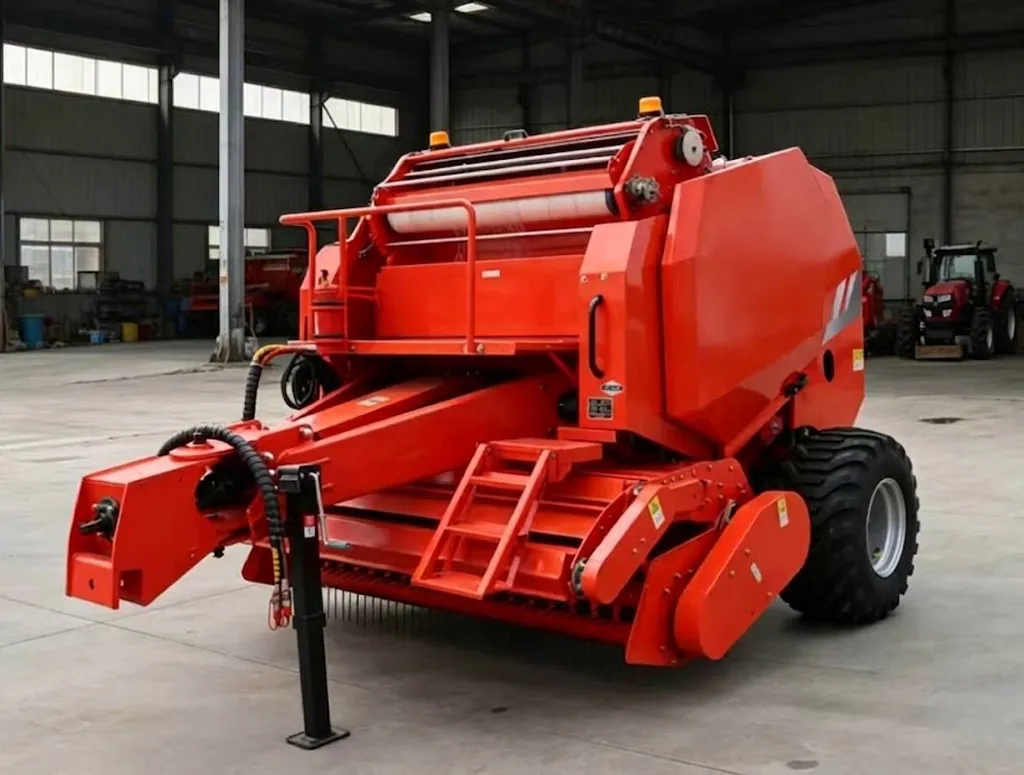
The purpose of a round baler at this scale is to industrialise forage and residue management — to bring machine speed, consistency, and intelligence to operations where manual or small-format equipment creates bottlenecks. The following application scenarios represent the primary round baler application contexts where this EP Φ1220 mm model outperforms lighter-duty alternatives.
Australian hay exporters shipping to markets in Southeast Asia and the Middle East routinely bale at Φ1200–1250 mm diameter because the bale density and weight utilise container space more efficiently than smaller round formats. This round hay baler produces bales in exactly that size class, with the consistent Φ1220 mm diameter that container loading plans require for uniform layer stacking. The automatic net wrapping with sensor-controlled loop counts ensures every bale in a shipping container is wrapped to the same standard — a requirement when end customers in Japan and South Korea pay a premium for verified hay quality and presentation.
South Korean agricultural cooperatives (농업협동조합) operating shared machinery services increasingly invest in commercial-scale round balers to provide cost-effective baling services across multiple member farms during compressed harvest windows. The 2200 mm picking width and intelligent touchscreen control on this agricultural round baler allow a single skilled operator to service significantly more member farms per day than is achievable with smaller machines. The consistent bale weight output — monitored by the high-precision displacement sensor — also simplifies the co-operative's billing calculation when charging members per tonne of baled material rather than per bale. Korean target regions include 충남 (Chungnam), 전남 (Jeonnam), and 경북 (Gyeongbuk) grain and forage belts.
The purpose of a round baler in intensive dairy silage systems is to process cut grass into sealed, fermentable bales fast enough to keep pace with the mower and to maintain optimal harvest moisture for silage quality. At 110–150 kW, this round baler machine matches the tractor sizes deployed on large European and Korean dairy farms and runs fast enough to avoid crop wilting delays at the critical cutting stage. The Φ1220 mm bale format holds a significant quantity of high-moisture silage per bale, reducing the total number of individual film-wrapping events needed per hectare — the film wrapping step is typically the rate-limiting factor in silage bale production, so minimising bale count directly speeds the overall operation.
What is a baler used for in industrial biomass contexts? At this scale, it is a critical first step in a supply chain that converts agricultural residues into renewable energy feedstocks, animal bedding, or specialty materials. Rice straw collected in South Korea's autumn harvest window, wheat and barley straw from Australian grain farms, sugarcane tops from Brazilian operations, and energy grass from Dutch marginal land all become commercially viable biomass feedstocks when the collection and transport step is this efficient. The Φ1220 mm bale format is compatible with most industrial bale shredders and pre-processors used at biogas and pellet manufacturing plants, making this machine a natural fit for contracted residue supply agreements.
Contract baling businesses in the Netherlands (Flevoland, Friesland), Canada (Saskatchewan, Alberta), Colombia (Llanos Orientales), and Brazil (Mato Grosso do Sul) charge per bale or per hectare and depend on machine productivity to generate the margins that justify the capital cost of premium equipment. The digital control system on this round baler allows easy job logging — bale count and estimated weight per farm — which simplifies invoicing and provides data for the contractor's seasonal production records. Combined with the automatic lubrication system's downtime reduction, this machine delivers the field efficiency and management data that serious commercial operators require. This is not a machine you buy to bale a few paddocks; it is one you buy when baling is a core business activity.
7. Compliance — Machinery, Gearbox & Transport Regulations by Market
At 3800 kg, 4100 mm long, and 2900 mm wide, this round baler machine falls within regulatory scope across multiple frameworks in each target market — machinery safety, gearbox lubrication standards, and road transport width limits all apply. The following summaries cover the principal regulatory considerations for key markets. Always consult the relevant authority in your country before importing and operating this equipment.
The Agricultural Mechanization Promotion Act (농업기계화 촉진법) governs safety testing and approval of agricultural machinery including large round balers. The Rural Development Administration (농촌진흥청) administers performance evaluation programmes that Korean buyers use as a reference for purchasing decisions. At 2900 mm working width, road transport in Korea requires an overwidth permit under the Road Traffic Act (도로교통법); the standard non-permit road width limit is 2.5 m. The round baler gearbox and PTO driveline must comply with Korean Industrial Standards (KS B) for mechanical transmission components, and PTO guarding must meet the Agricultural Machinery Safety Management Regulations' dimensional and material requirements.
EU Machinery Directive 2006/42/EC (transitioning to Machinery Regulation EU 2023/1230 from January 2027) mandates CE marking, Declaration of Conformity, and a full technical construction file. EN ISO 4254-1 (agricultural machinery safety — general requirements) and EN ISO 11684 (safety signs) both apply. Whole Vehicle Type Approval under Regulation EU 167/2013 is required for trailed machinery above standard transport width on public roads in the Netherlands, Germany, Belgium, and France. The round baler gearbox falls under the Ecodesign Regulation for energy-related products if its lubricant sump exceeds the applicable volume threshold in Commission Regulation (EU) 2019/1781. Dutch buyers in Noord-Holland and Flevoland should confirm regional road transport permit procedures with their provincial authority (provincie).
Safe Work Australia's Model Code of Practice for Managing the Risks of Plant in the Workplace and corresponding state WHS Act regulations cover guarding, PTO safety, and operator exclusion zones during baling operations. At 2900 mm, this machine exceeds the standard 2.5 m road width limit in all Australian states, requiring an Oversize and Overmass (OSOM) permit and potentially a pilot vehicle depending on state and route. Queensland Transport and Main Roads and Victoria's VicRoads have specific escort requirements for agricultural machinery above 3 m; buyers should confirm transport arrangements before delivery. Agricultural show and demonstration permits are separate and handled through state agriculture departments.
INMETRO Resolution 488/2021 and ABNT NBR standards govern agricultural machinery conformity assessment in Brazil. At this machine weight and power class, a Technical Evaluation Report (Laudo Técnico de Avaliação) from an INMETRO-accredited body is likely required. MAPA (Ministério da Agricultura, Pecuária e Abastecimento) handles import registration for agricultural equipment, and the gearbox and PTO shaft components must comply with relevant ABNT NBR standards for mechanical transmission safety. Brazilian state road authorities (DENATRAN) apply width restrictions of 2.6 m for agricultural machinery on state highways; special transport authorisation (Autorização Especial de Trânsito) is required for widths exceeding this limit, which applies to this machine.
Canadian Agricultural Safety Association (CASA) guidelines and provincial OHS regulations govern machinery safety standards for agricultural equipment. Alberta OHS Code Chapter 18, Ontario Regulation 851, and Saskatchewan's Occupational Health and Safety Regulations all include provisions for machinery guarding and PTO shaft protection relevant to this machine. At 2900 mm transport width, special transport permits are required in all provinces — standard non-permit width is 2.6 m in most provinces. Saskatchewan Highway Traffic Act and Alberta Transportation regulations set specific procedures for agricultural machinery overwidth transit. Buyers in the Canadian Prairies should confirm permit procedures with their provincial ministry of transportation before delivery is finalised.
Colombia's Ministry of Transport (Ministerio de Transporte) requires prior route authorisation for oversize loads on national highways. ICONTEC NTC 4116 sets safety sign and guarding requirements for agricultural machinery placed on the Colombian market. The Andean Community's harmonised technical regulations (Decisión 562 de la Comunidad Andina) also cover machinery safety labelling and are directly applicable. Key Colombian agricultural regions where this round baler application is growing include Córdoba, Sucre, and Meta, where expanding cattle and forage industries are driving demand for commercial hay baling capacity beyond what smaller machines can supply. Buyers should consult AGROSAVIA (Colombia's agricultural research agency) for current machinery import guidance.
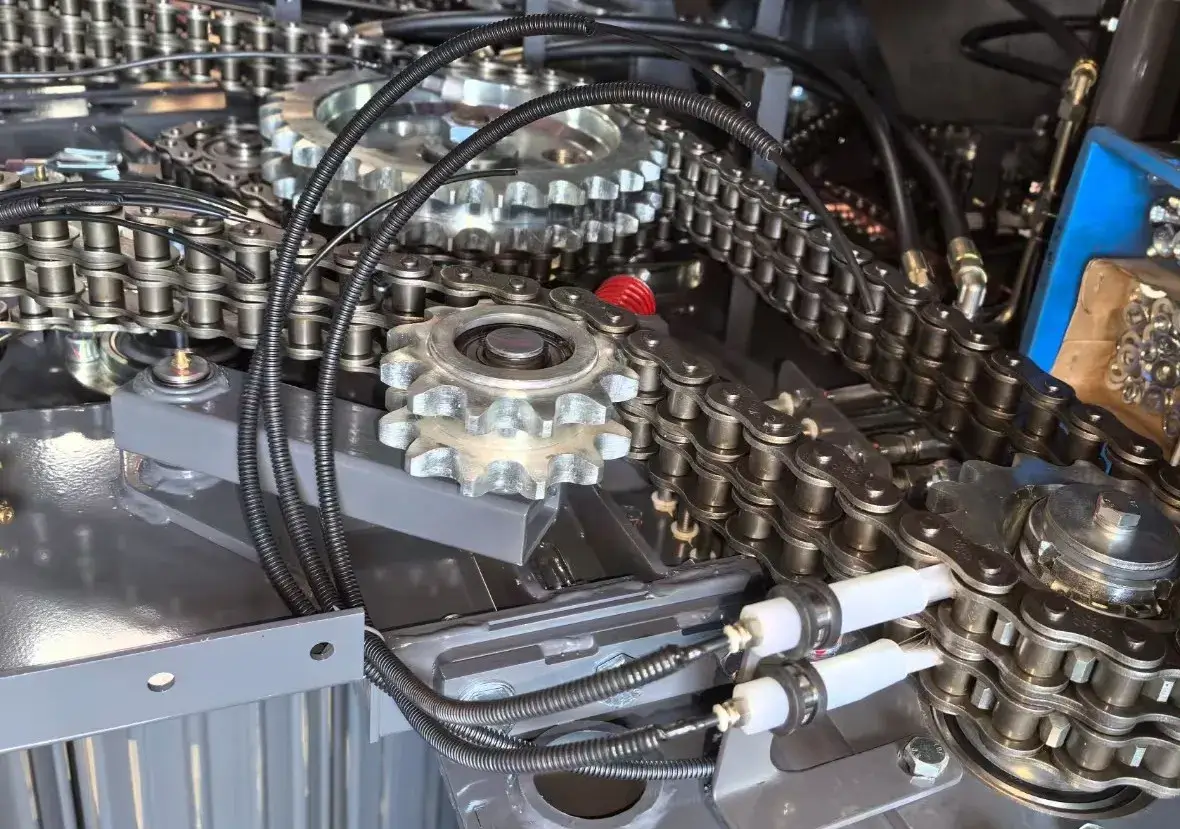
8. System Accessories — One-Stop Drivetrain Supply
A round baler machine at this power and size specification places demands on the connecting drivetrain that exceed what standard off-the-shelf components can reliably meet. We supply matched accessories designed and rated for the torque levels involved in operating a Φ1220 mm agricultural round baler at full commercial duty.
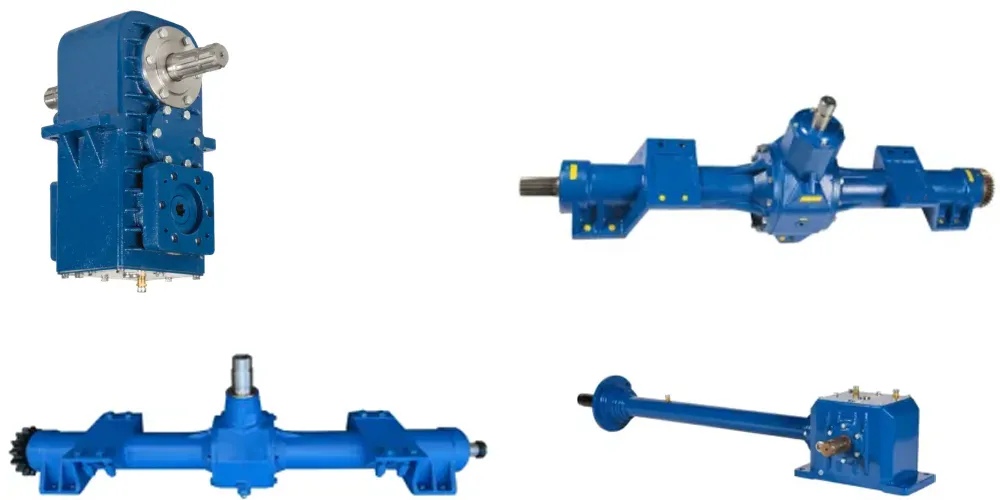
The internal round baler gearbox transmits power from the PTO input to the pickup reel drive, screw feeding mechanism, 18 compression rollers, and automatic net wrap unit simultaneously. At 110–150 kW input, the gearbox must handle sustained torque loads that significantly exceed those of smaller-format machines. Our matched gearboxes for this model use case-hardened helical gears in a ductile iron housing with a heat-dissipating ribbed exterior, suitable for continuous high-load operation across full commercial working days. Oil specification, fill volume, and service interval are clearly documented in the technical manual provided with each machine.
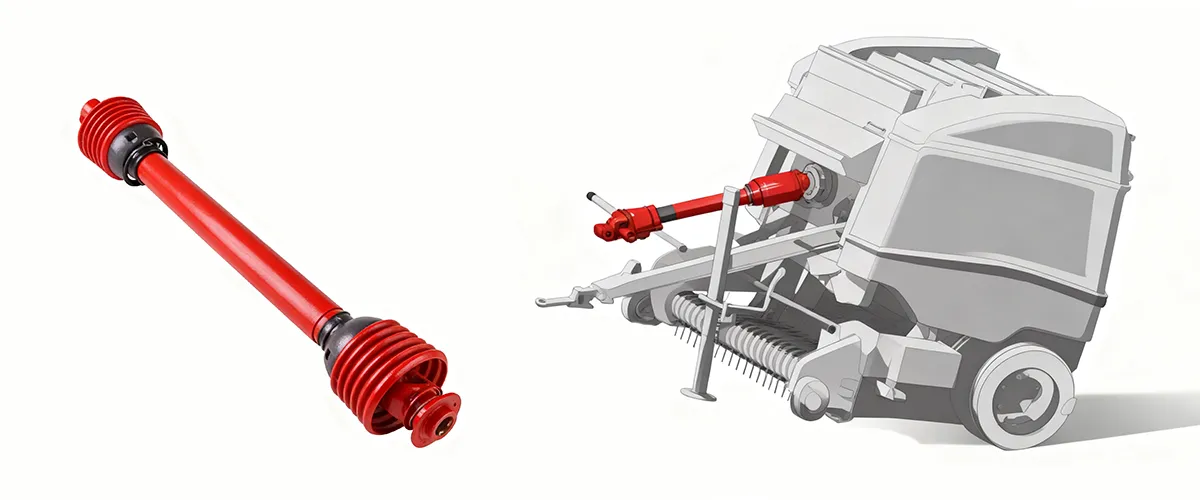
The PTO shaft connecting a 110–150 kW tractor to this round baler must be rated for peak torque inputs above 3000 Nm at 540 or 1000 rpm PTO speed. An undersized or worn shaft is a safety risk and a leading cause of drivetrain damage in commercial baling operations. Our matched PTO shafts for this application incorporate wide-angle constant-velocity joints that accommodate the full range of tractor-to-baler angular positions, an overrun clutch for baler protection during sudden stops, a shear bolt torque limiter for pickup protection, and full-length CE-compliant PTO guarding. Specify your tractor model and drawbar-to-PTO-output distance when ordering to receive the correct shaft length.
9. About Us — Over a Decade of Agricultural Machinery Expertise
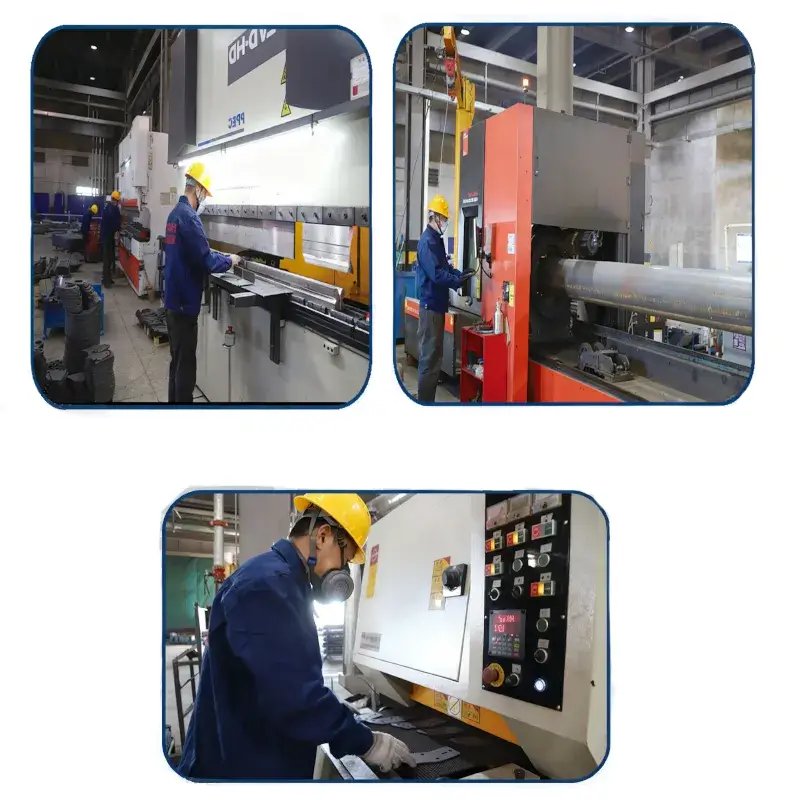
Founded in 2013, our manufacturing enterprise has spent more than a decade building a focused reputation in agricultural and animal husbandry harvesting machinery. Our operations are certified under the ISO 9001 Quality Management System, which provides the framework for consistent production quality across a design output capacity of 2,000 units annually.
The company's guiding objective is to build internationally competitive machinery that earns recognition as a genuine industry standard — not a budget alternative. To support this, we continuously integrate advanced international production equipment into our facility, which currently operates more than 60 sets of large-scale machinery across fabrication, machining, assembly, and testing departments. Every round baler machine that leaves our production line is function-tested before despatch, and our technical team provides documentation in English and Korean to support buyers in our primary export markets.
WorkShop
Frequently Asked Questions
Q1. What is a round baler of this Φ1220 mm size, and what type of farm operation does it best suit in South Korea or Australia?
A round baler is a tractor-trailed field machine that compresses cut crop into a cylindrical bale for storage, transport, and feeding. At Φ1220 mm, this model produces one of the larger bale formats available in the agricultural round baler market. It best suits large commercial hay farms, rice straw collection cooperatives in South Korea (충남, 전남), dairy silage operations with 200 or more cows, and professional contract baling businesses. The intelligent touchscreen control and automatic lubrication system make it viable to run continuously across long commercial working days without the maintenance stoppages that affect simpler machines at this output rate.
Q2. How many HP do you need to run a round baler of this size without risking PTO overload or gearbox damage?
This round baler machine has a matching power range of 110–150 kW (approximately 148–201 hp). In practice, operating at the lower end of this range — around 115–125 kW — is sufficient for most dry crop baling conditions at normal field speeds. The upper power range becomes relevant when baling dense, high-moisture silage crops or working at the maximum field speed to maximise daily output. Using a tractor with power below 110 kW risks sustained PTO slip and accelerated round baler gearbox wear; using one well above 150 kW provides no performance benefit and increases the risk of torque surge damage during abrupt blockage events unless the PTO shaft overrun clutch is correctly adjusted.
Q3. How much does a round bale of hay weigh when produced by this Φ1220 mm machine, and what handling equipment is needed?
How much does a round bale of hay weigh from this machine? Dry hay bales at Φ1220 mm × 1400 mm chamber width typically weigh 500–750 kg depending on crop species and baling moisture. Silage bales in the same format reach 900–1100 kg. For safe and efficient handling, a telehandler rated at 1500 kg minimum lift capacity at full reach is the appropriate tool, though a tractor front-end loader with rated lift above 1200 kg and a bale spike or 4-in-1 bucket can manage the lighter end of the dry hay range. Korean farm cooperatives (농협) should confirm their shared equipment loader rating against the expected bale weight range for their main crop type before purchasing this machine.
Q4. How many square bales are in a round bale of this Φ1220 mm size, and how does that affect feeding management for a large cattle herd?
How many square bales in a round bale at this size? A Φ1220 mm × 1400 mm bale typically holds the equivalent of 75–110 small square bales (15–20 kg each) or approximately 12–18 large square bales (250–350 kg each). For a 500-head beef operation in Brazil or a large Australian feedlot, one of these hay round bales can supply 2–4 days of supplementary roughage feed for a mob of 100 cattle. The practical implication is a significant reduction in daily feeding events and loader operating time per week — a real labour saving for operations where feed-out is a daily chore. A bale roller or self-propelled unroller makes rationing these large bales efficient without leaving excess exposed to weather or wastage.
Q5. What is the purpose of a round baler with intelligent touchscreen control, and how does sensor technology improve bale consistency?
The purpose of a round baler in any application is consistent bale production — every bale should be the same diameter, density, and weight so that storage, transport, and feeding logistics can be planned reliably. The handheld colour touch screen on this machine, combined with the high-precision displacement sensor, delivers that consistency by replacing operator judgment with objective measurement. The sensor detects Φ1220 mm diameter at the sub-millimetre level and triggers wrapping at exactly the right moment regardless of windrow density variation, tractor speed fluctuations, or crop species differences during the session. Commercial operations that invoice hay sales by the tonne — or cooperatives that charge baling service fees by weight — gain a significant advantage from this precision, as each bale's weight can be accurately estimated from its known diameter and density.
Q6. Which round baler parts on this machine require the most attention during a full commercial season, and how should I plan for servicing?
The primary wear items on this agricultural round baler over a full commercial season are the pickup spring tines, the screw feeding mechanism flights, the automatic net wrap cutter blade, and the drive chain tensioner springs. The automatic thin oil lubrication system significantly extends the service interval on chain and sprocket components compared to machines requiring manual chain oiling, but the lubrication reservoir level should be checked weekly. The centralised grease manifold should be inspected and topped up at 50-hour intervals. We provide a recommended pre-season spare parts kit for this model covering fast-moving items, which can be ordered alongside the machine to ensure availability during the harvest season without relying on local supply.
Q7. What round bale net wrap specification is compatible with this machine, and which suppliers offer suitable products in South Korea and Australia?
The automatic net wrap system on this round baler accepts standard round bale net wrap rolls in 1.23 m and 1.25 m width formats at roll core dimensions of 75 mm or 150 mm inner diameter — the two most common global supply specifications. For outdoor storage of hay round bales, 23–28 gsm polyethylene net with UV-B stabiliser rated for 12 months of sun exposure is appropriate in Australian and Korean conditions. Korean agricultural supply cooperatives (농협 하나로마트) stock compatible net wrap from domestic and imported sources. Australian buyers can source net wrap through their local rural supply chain. We can confirm specific roll width and tension compatibility for your local supplier's products on request.
Q8. When is the right time to commission a round baler of this size for a large Korean rice straw recovery operation or an Australian hay farm?
For South Korean rice straw recovery operations, the main baling window runs from late October through November, immediately after the autumn rice harvest. Ordering the machine with sufficient lead time for shipping and pre-season setup means placing your order by July or August at the latest to ensure arrival before the harvest window opens. For Australian hay farms in the Victorian and South Australian temperate regions, the primary hay cutting and baling window runs September to December; ordering in May or June ensures delivery before the season. We coordinate ocean freight schedules to align with your regional harvest calendar and can advise on approximate transit times to your destination port based on current shipping conditions.
Q9. What is a baler used for in Korean livestock hay import substitution programmes, and how does local baling compare to imported hay on a cost basis?
South Korea imports a significant volume of hay annually from Australia, the United States, and other suppliers to feed its dairy and beef herds. What is a baler used for in a domestic substitution context? It is the machine that makes domestically produced forage economically competitive with imported hay by reducing the cost of collection, consolidation, and storage. Korean rice straw — abundant and otherwise often burned — becomes a marketable feed and bedding product when baled using a machine of this capacity. Domestic ryegrass, Italian ryegrass, and mixed pasture hay round bales produced by this round baler machine can undercut the landed cost of imported product, especially when considering the risk premium of currency fluctuation and international freight volatility that affects the price of round hay baler for sale product from overseas suppliers.
المحرر: PXY