Corn Silage & Stover Baling | Buyer Specification Guide
Round Baler for Corn Silage: What Specifications Do Feedlot and Dairy Buyers Require?
A practical specification guide for Korean dairy cooperatives, feedlot operators, and agricultural machinery buyers — covering the engineering requirements, material systems, density targets, and regulatory compliance factors that distinguish a feedlot-grade round baler from a general-purpose baling machine.
Corn stover and corn silage baling places a different set of demands on a round baler than any other crop type in commercial livestock feed production. Feedlot operators and dairy farmers do not evaluate a baling machine the way a grain farmer evaluates a cereal straw round baler — their priorities are shaped by nutritional targets, fermentation performance, bale integrity under anaerobic wrapping, and handling logistics through feed lanes that may run for months after harvest. A round baler that performs adequately on wheat stubble may be entirely unsuitable for corn stover silage when the buyer’s specification calls for bale densities above 180 kg/m³, moisture uniformity within ±3%, and wrap-cycle repeatability that guarantees an airtight bale surface on every ejection.
This guide examines exactly what feedlot and dairy buyers in Korea, Central Asia, and globally specify when procuring a round baler for corn silage duty. It covers the structural differences between silage-grade and general-purpose round baler machines, the material specifications that matter most in high-moisture corn crop baling, the net wrap and twine performance thresholds that protect silage quality, and the regulatory environment that shapes equipment procurement decisions in key markets. Product specifications referenced throughout are drawn from the current EP series round baler range.
For Korean dairy cooperatives in the Gangwon and North Chungcheong regions — where corn silage baling season runs from late August through October — choosing the right round baler model and setting it up correctly for high-moisture crop can mean the difference between a silage season that hits nutritional targets and one that generates significant wastage through aerobic spoilage and bale structural failure.

1. What Feedlot Buyers Specify in a Round Baler for Corn Stover
Feedlot operations procuring a round baler for corn stover — the above-ground biomass remaining after grain harvest — are primarily concerned with three outcomes: bale density high enough to minimise transport cost per tonne of dry matter, structural integrity sufficient to allow outdoor storage through winter without waterlogging, and machine availability across the full stover harvest window, which typically spans 8 to 14 days in a given region before field conditions deteriorate. A round baler machine that requires frequent unscheduled stops during this window imposes a disproportionate economic penalty relative to a higher-capital machine with demonstrated reliability.
On the density specification, most feedlot procurement standards for corn stover call for a minimum bale core density of 160 to 200 kg/m³ at 25 to 35% moisture content. Achieving this in the upper part of the range — above 185 kg/m³ — requires a round baler with a hydraulic density control system that can maintain consistent chamber pressure as the bale diameter increases from core to full size. Spring-tension systems, while adequate at cereal straw densities, tend to produce a density gradient across the bale radius in high-moisture corn stover that falls outside what larger feedlot buyers will accept under their silage quality audits.
Structural integrity for outdoor storage through Korean winters demands that bales exiting the round baler have a smooth, even cylindrical surface profile with no flat-spot deformation. Flat spots — caused by bale ejection while the forming chamber still holds partial spring tension — allow water pooling that penetrates net wrap and initiates aerobic spoilage at the contact zone. Feedlot procurement officers frequently inspect incoming loads for surface deformation as a quality gate before accepting silage bale deliveries.
Machine availability specification typically requires a round baler to operate for a minimum of 10 to 12 hours per day across the full stover window without drive-system overheating or chain fatigue failures. This places direct requirements on the thermal management of the bale chamber gearbox, the lubrication specification for the 20A agricultural drive chain, and the bearing grade used at the pickup and auger drive shafts.
Feedlot vs Dairy Buyer Specification Comparison — Round Baler for Corn Crop
| Specification Parameter | Feedlot Buyer | Dairy Buyer | Notes |
|---|---|---|---|
| Target bale density (kg/m³) | 160 – 200 | 175 – 220 | Dairy requires higher DM density for fermentation |
| Acceptable bale moisture (%) | 25 – 40% | 30 – 50% | Higher moisture tolerates better at dairy for ensiling |
| Density control system | Hydraulic preferred | Hydraulic required | Spring-tension inadequate at high moisture |
| Wrap type | Net wrap or twine | Net wrap + stretch film | Dairy silage requires full anaerobic seal |
| Wrap layers per bale | 2 – 3 | 4 – 6 (stretch film) | Fermentation quality requirement |
| Bale diameter standard | 1,250 – 2,240 mm | 1,000 – 1,250 mm | Smaller diameter = faster fermentation through-and-through |
| Daily bale output target | 300 – 600 bales/day | 80 – 200 bales/day | Dairy smaller volumes, higher quality standard |
| PTO input requirement | 540 / 1000 RPM | 540 / 1000 RPM | Both require overrunning clutch on PTO shaft |
2. Dairy Buyer Requirements — Where Silage Quality Enters the Round Baler Specification
Dairy procurement officers applying a quality specification to corn silage baling equipment are, in effect, specifying the conditions necessary for lactic acid fermentation to proceed reliably within the bale after wrapping. This means the round baler must produce a bale with sufficient core density that the remaining oxygen in the bale structure is depleted by aerobic microorganisms within 24 to 48 hours of wrapping — before acetate-type fermentation can establish. Bales that fail this threshold develop surface spoilage zones that reduce digestible dry matter by 8 to 15% per bale, and this loss multiplies across a 500-bale silage season into a significant feed cost differential.
Smaller bale diameters — the 1,000 to 1,250 mm range — are frequently specified by dairy operations precisely because the ratio of surface area to volume is more favourable for rapid anaerobic establishment through the full bale cross-section. A 1,000 mm diameter silage bale achieves oxygen depletion through its core approximately 30 to 40% faster than a 2,240 mm diameter bale of the same crop density, assuming equivalent wrapping conditions. This makes the mini round baler and small round baler categories relevant for high-quality dairy silage production even on farms that have sufficient acreage to justify larger equipment.
Korean dairy cooperatives — particularly those in the Jeju, Gangwon, and Gyeonggi regions that produce premium fresh milk for Seoul metropolitan markets — have implemented silage quality audit systems that include bale density measurement, fermentation pH sampling, and dry matter loss assessment at feed-out. A round baler used by contract baling services supplying these cooperatives is expected to produce consistent bale weights within ±5 kg per bale across a full field run. Achieving this level of consistency requires both a calibrated density control system and an experienced operator who adjusts forward speed continuously to match windrow density variation.
On the technical side, the round baler’s net wrap system must apply wrap under consistent tension across the full bale face, with uniform overlap at each successive wrap pass. Inconsistent wrap tension — often caused by worn net wrap guide rollers or incorrect knife clearance — creates gaps in the wrap surface that allow oxygen ingress even before the stretch film overlay is applied. Dairy procurement specifications sometimes explicitly call for documented net wrap system inspection records as part of the machinery qualification process for contract baling services.
3. Manufacturing Structure of a Silage-Grade Round Baler
The structural demands on baling equipment operating in high-moisture corn silage conditions are substantially different from those encountered in dry cereal straw service. High moisture content — 30 to 50% on a wet weight basis — means the crop has significantly greater mass per unit volume, the corrosion environment inside the bale chamber is more aggressive, and the torque peaks during bale formation are larger and more frequent. A machine built to a silage-grade structural specification addresses each of these factors through specific design choices in the mainframe, the bale chamber assembly, and the drive transmission.
The mainframe of a silage-capable round baler uses Q345B or higher-grade structural steel with minimum wall thickness of 8 mm in the box-section main rails and 6 mm in the secondary structural members. Cruciform crossmember joints at the pickup subframe are fully seam-welded rather than plug-welded, providing the fatigue resistance necessary to handle the higher impulse loads generated when large-diameter corn stalks enter the pickup. All external structural joints exposed to silage crop juice — which is mildly acidic at pH 3.8 to 4.5 — receive a two-component epoxy primer coat before the topcoat is applied, providing a chemical barrier that significantly extends structural service life compared to single-coat finishes.
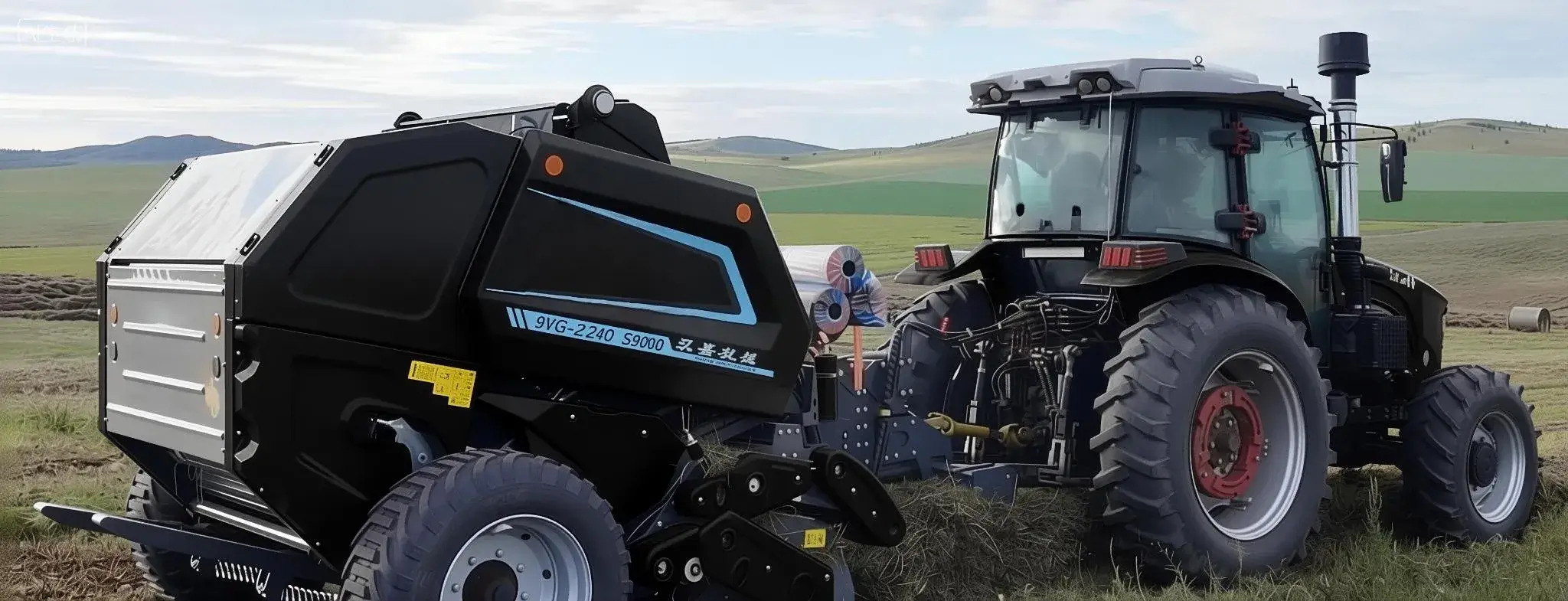
The bale chamber roller assembly on the 9YG and EP-9YG series uses 18 to 22 individual steel rollers arranged around the forming zone. In silage-grade service, roller shaft seals are upgraded from standard lip-type to labyrinth-style seals with integrated dust exclusion lips, preventing the abrasive mix of crop fiber and acidic moisture from reaching the roller bearing races. Roller surface finish on silage-grade machines uses a deeper knurl pattern — 3.0 to 4.0 mm profile depth — because the higher surface friction is needed to move the denser, heavier wet corn silage material through the forming zone without slip events that reduce bale formation speed.
The tailgate mechanism on a commercial silage round baler must handle bale ejection weights that can reach 450 to 650 kg for large-diameter, high-moisture corn silage bales — significantly more than the 180 to 280 kg typical of dry cereal straw bales. Tailgate hydraulic cylinders on the 9YG-2.24D series are rated for the full bale ejection force at maximum density, with a safety factor of 1.5 applied to the cylinder rod force calculation. The tailgate latch mechanism uses a dual-latch design with independent spring-loaded engagement on both latch arms, ensuring the tailgate cannot partially open under pressure differential loads during bale formation.

4. Material System: Silage-Resistant Component Specification
The mildly acidic environment created by corn silage juice inside the bale chamber and on all crop-contact surfaces makes material selection one of the most consequential decisions in specifying a round baler for this application. Corrosion from prolonged silage juice exposure degrades unprotected carbon steel at a rate of 0.2 to 0.4 mm per season in tropical or humid conditions, and 0.1 to 0.2 mm per season in Korean continental conditions. Over a five-year service life, this translates to structural section loss that can compromise frame integrity in high-load baling scenarios. The following material specifications apply to key component zones on silage-service round balers.
Bale Chamber Interior Surfaces
Chamber roller surfaces and sidewall panels that contact silage crop directly should carry a minimum anti-corrosion specification of hot-dip galvanised steel (Z275 coating weight) or equivalent two-component epoxy coating on the inner face. Galvanised chamber side panels resist acidic crop juice exposure for 8 to 12 seasons in typical Korean dairy silage service, versus 3 to 5 seasons for plain-painted mild steel surfaces.
Drive Chain (20A Series)
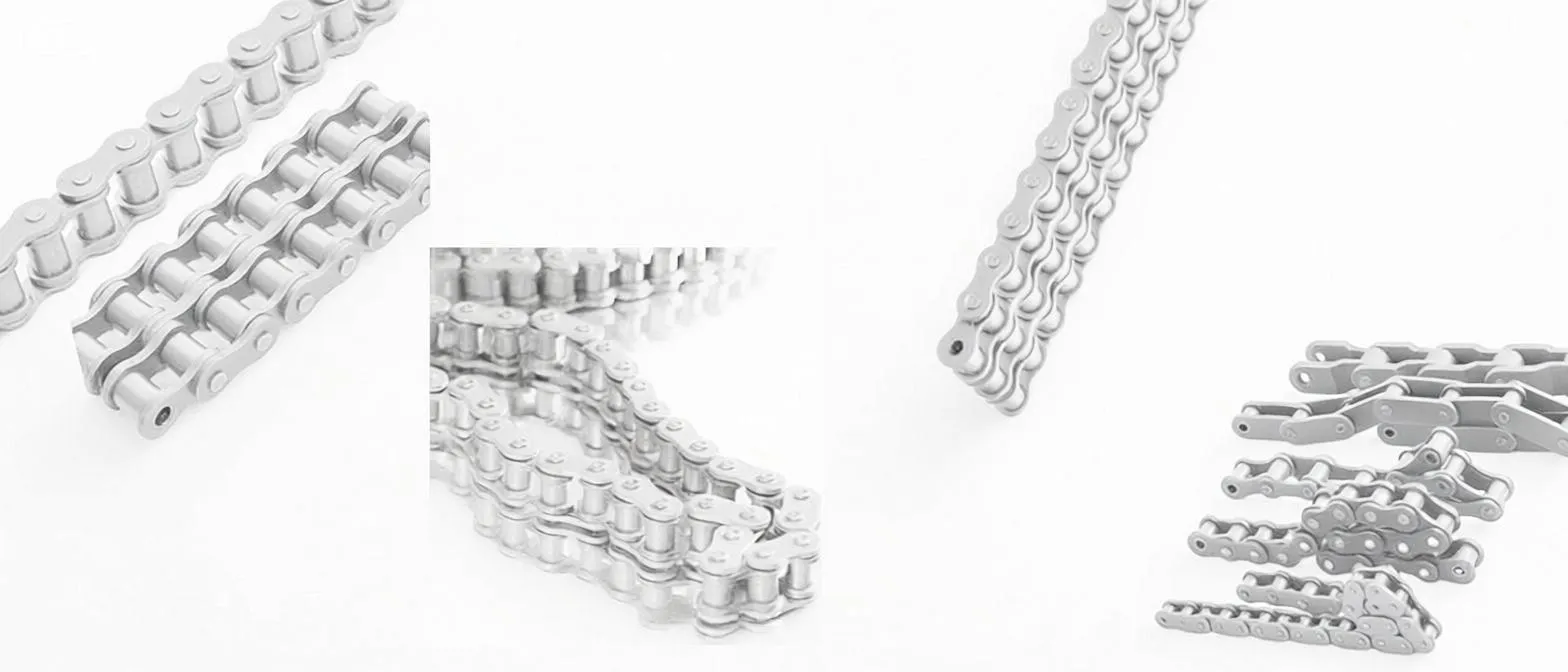
The 20A agricultural roller chain operating in the bale chamber drive circuit should be specified with sealed O-ring joints and pre-lubricated with a moisture-resistant grease compound rather than standard chain oil. In corn silage duty, moisture ingress into unsealed chain joints accelerates pin and bushing wear significantly. O-ring sealed 20A chain with nickel-plated link plates has demonstrated 40 to 60% longer intervals before reaching the 3% elongation replacement threshold in wet silage conditions.
Pickup Tine Specification
65Mn spring steel tines heat-treated to 42 to 48 HRC are standard for corn stover and silage pickup service. Corn stover at 30 to 40% moisture is less abrasive than dry cotton stalk but presents a higher bulk density per unit of pickup width, increasing the bending stress on each tine during engagement. Tine bar pitch of 60 to 70 mm handles the variable diameter of corn stover effectively without bridging at the pickup-to-auger transfer zone.
Roller Bearing and Seal Grade
Chamber roller bearings in silage service should be sealed 6300-series deep-groove bearings with contact seals (2RS designation) rated for continuous operation at the relevant shaft speed and load. Standard open-type bearings fail within 200 to 400 hours in silage conditions due to moisture and acidic crop juice contamination. Sealed bearings in the same duty cycle typically run to 1,200 to 2,000 hours before requiring replacement.
Choosing the right material specification across all four zones — chamber surfaces, drive chain, pickup tines, and roller bearings — is not a question of premium versus standard. It is a question of whether the machine remains productive through the full silage season or requires a mid-season component replacement during the 10 to 14-day harvest window when downtime cost is highest.
5. Bale Density and Moisture Management in Corn Silage Round Baling
Bale density in corn silage production is not simply a transport economics variable — it is the primary driver of fermentation quality and feed-out dry matter recovery. At the minimum feedlot specification of 160 kg/m³, a corn silage bale at 35% moisture contains approximately 104 kg of dry matter per bale. At the upper dairy specification of 220 kg/m³ and 45% moisture, a bale of the same physical dimensions contains 121 kg of dry matter. This 16% increase in dry matter per bale directly reduces the number of bales required to meet a given feeding program, lowering both transport and wrapping material costs per tonne of dry matter delivered.
The relationship between round baler chamber tension and achievable bale density at high moisture is non-linear. At 25% moisture, a standard spring-tension round baler at maximum spring setting typically achieves 155 to 170 kg/m³. The same machine at 40% moisture achieves 180 to 200 kg/m³ — but only if the spring tension is increased proportionally and forward speed reduced to allow complete bale formation before the chamber triggers the wrap cycle. Hydraulic density control systems in the 9YG-2.24D S9000 model automatically compensate for moisture-driven density changes by adjusting chamber pressure throughout the forming cycle, producing density variation of less than ±10 kg/m³ across a full day’s baling in mixed-moisture corn stover windrows.
Moisture uniformity across the windrow is itself a variable that affects round baler output rate in silage service. Corn stover windrows at harvest often have a moisture gradient — wetter near the soil surface where leaf material accumulates, drier at the top of the windrow where stalks have cured in sunlight. A machine without active density compensation responds to this moisture gradient with density variation across successive bales, creating batches of inconsistent silage quality in the same stack. Operators using the 9YG-2.24D Transcend model can monitor real-time bale formation pressure on the cab display and adjust tractor speed proactively as the windrow moisture condition changes.
The practical guidance for silage round baler operators in Korea is to target a bale formation time of 55 to 80 seconds — longer than the 35 to 50 seconds typical in dry straw — to allow the high-moisture corn material to compact properly before triggering the wrap cycle. Attempting to match cereal straw production rates in corn silage conditions consistently produces undercompacted bales that fail the density threshold of their buyer’s silage quality specification.
6. Net Wrap vs Twine Wrap for Corn Silage Bales
The choice between net wrap and twine in corn silage round baling is not simply a cost question — it has direct implications for fermentation quality, handling logistics, and the downstream decision about whether to apply stretch film over-wrap. Net wrap applied by the round baler before the bale exits the chamber creates a cohesive structural skin that holds the wet, heavy corn silage mass in shape during ejection, transport to the wrapping station, and satellite wrapper loading. Twine-wrapped silage bales at densities above 175 kg/m³ frequently develop flat spots during the 50 to 200-metre field transport phase because twine tension alone cannot resist the lateral deformation forces of a heavy, wet, partially compressed bale mass.
For feedlot buyers accepting corn stover bales that will be stored in covered conditions or under silage tarps, a net-wrapped round baler bale with two to three wrap layers is typically sufficient if the storage period is less than 60 days. For dairy buyers requiring preserved silage quality across storage periods of 90 to 300 days, stretch film wrapping — typically 4 to 6 layers applied by a satellite wrapper immediately after baling — is the standard system. In this case, the round baler’s net wrap system provides the structural coherence needed for satellite wrapper handling, and the stretch film provides the oxygen barrier.
The round baler’s net wrap guide system directly affects the quality of the film wrap applied subsequently. Equipment that produces bales with irregular surface profile — caused by uneven net wrap tension or pickup density variation — creates ridges in the bale surface that stretch film cannot fully conform to, leaving small air pockets that initiate aerobic spoilage. Specifying a round baler with an adjustable-tension net wrap dispensing system — available on the 9YG-2.24D series — allows operators to dial in the correct net wrap tension for the specific crop moisture and density conditions of each silage season.
In Korean dairy operations, the practice of applying biodegradable net wrap before stretch film is growing in line with the Ministry of Environment’s guidance on agricultural plastic waste management. Biodegradable net wrap rated for 12 months outdoor UV exposure eliminates the need to separate net and film at feed-out, reducing labour at the feed lane while meeting Korea’s Waste Management Act requirements for on-farm plastic minimisation.
7. Regulatory Framework for Round Baler Procurement in Key Markets
Agricultural machinery procurement for corn silage and stover baling is regulated at both the equipment level and the agronomic practice level in most key markets. Understanding which regulatory bodies apply to round baler equipment in each destination market — and what documentation is required — is essential for buyers, importers, and contract baling service providers who procure machinery across international supply chains.
Korea — RDA, KMST, and Ministry of Agriculture
The Rural Development Administration (RDA) administers the performance evaluation and safety certification of agricultural machinery sold in Korea, including round baler equipment. The Korean Machinery Safety Testing (KMST) protocol covers dynamic load performance, PTO shaft guard compliance (KS B 6906 interface), and operator visibility standards. Under Korea’s Act on Promotion of Development and Support of Agricultural Machinery, machinery not registered in the RDA national machinery database cannot receive government-subsidised financing through the Korea Agricultural Equipment Subsidy Program — directly affecting purchase economics for Korean dairy and feedlot buyers.
Korea — Crop Residue and Silage Plastic Regulations
Under Korea’s Waste Management Act and Ministry of Environment guidance on agricultural plastics, all wrapping film applied in round baler silage operations — net wrap and stretch film — must be collected after feed-out and disposed of through approved agricultural plastic collection programs operated by municipalities and provincial governments. As of 2024, several Gyeonggi and Gangwon municipalities have implemented mandatory producer responsibility schemes requiring proof of plastic waste disposal before agricultural subsidy applications can be processed.
EU — Machinery Directive 2006/42/EC and 2023/1230
Round baler models supplied into EU member states must hold CE Declaration of Conformity under the Machinery Directive, covering PTO and drive component guarding, emergency stop provisions, noise and vibration documentation, and operator instruction requirements. The new EU Machinery Regulation (EU) 2023/1230 — applicable from January 2027 — introduces enhanced requirements for digital documentation of risk assessments and mandatory incident reporting for mobile agricultural machinery, including baling equipment used in commercial silage production.
EAEU — TR TS 010/2011 (Kazakhstan, Uzbekistan, Russia)
Central Asian markets — major corn silage producing regions for livestock feeding — require round baler equipment to carry EAEU conformity declarations under Technical Regulation TR TS 010/2011 on Machinery Safety. Kazakhstan and Uzbekistan customs authorities require this documentation at point of import. EAEU conformity testing for round baler machines covers PTO guard dimensions, gearbox housing integrity under rated torque, and marking requirements in Russian and Kazakh languages.
USA — ASABE S540.1 and OSHA 29 CFR 1928
American buyers specifying a round baler machine for corn silage operations reference ASABE S540.1 for performance test methodology and OSHA 29 CFR 1928.57 for agricultural equipment guarding requirements, including PTO shaft and bale chamber drive component shielding. US feedlot procurement contracts often reference ASABE S540.1 bale density repeatability requirements as part of the machinery acceptance criteria for contract baling services.
Japan — JIS B 9960-1 and Agricultural Machinery Act
Japanese agricultural buyers procuring a round baler for corn silage must comply with the Agricultural Machinery Safety Act administered by the Ministry of Agriculture, Forestry and Fisheries (MAFF), as well as safety standards under JIS B 9960-1 for electrical safety in machinery with electronic density monitoring systems. Japan’s grassland and silage corn baling sector operates primarily in Hokkaido, where heavy-duty round baler equipment for wet silage conditions is routinely sourced from international suppliers with MAFF-compatible documentation packages.
Across all markets, the combination of CE marking (or equivalent national approval), ISO 9001 production certification, and complete material traceability documentation provides the strongest foundation for a round baler procurement that passes enterprise buyer qualification processes without delay.
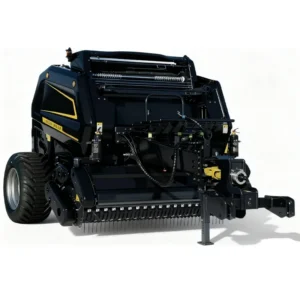
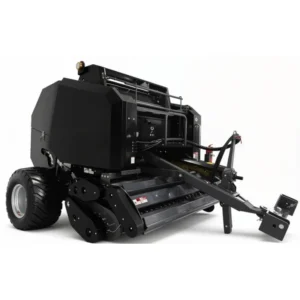
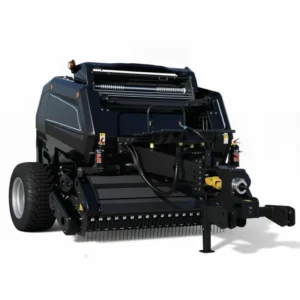
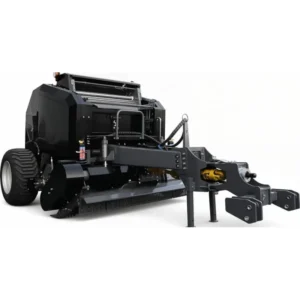
8. Round Baler Models Matched to Corn Silage and Stover Applications
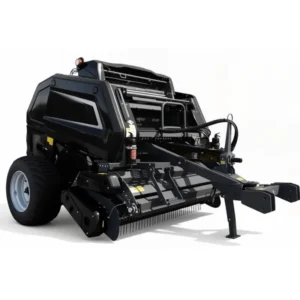
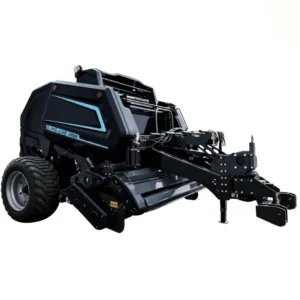
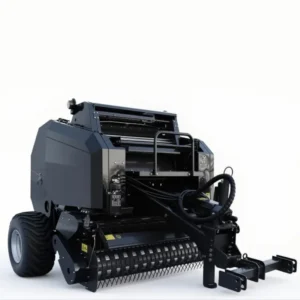
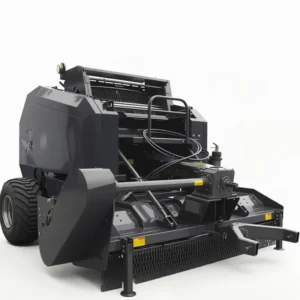
Selecting the correct round baler for corn silage duty starts with matching bale diameter, density control system, and pickup specification to the scale of operation and the buyer’s quality standard. The following models are presented with their primary corn silage application context, from highest to lowest output capacity.
9. System Components: PTO Shaft and Agricultural Drive Chain
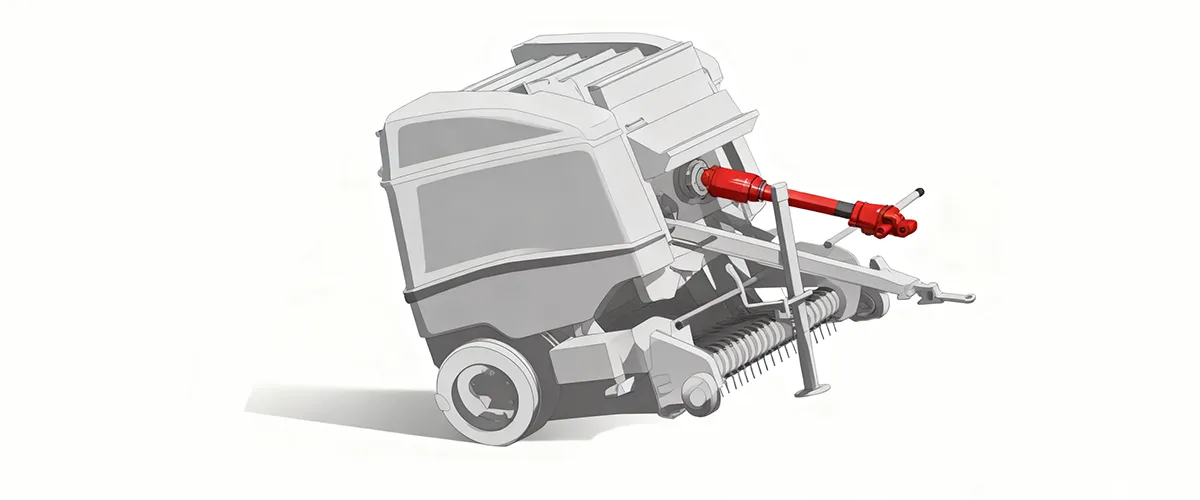
Corn silage baling places higher sustained torque demands on every component in the power transmission chain between the tractor and the bale chamber than most other crop types. Sourcing the PTO shaft and agricultural drive chain alongside the round baler from a matched supply system removes the engineering uncertainty of cross-sourcing and provides a single technical contact for drive system sizing, installation, and warranty service.
11. Frequently Asked Questions
Q1. What bale density does a Korean dairy buyer typically require from a round baler operating in corn silage conditions?
Q2. Which round baler machine specifications should a feedlot operator in Korea prioritise when buying equipment for corn stover baling?
Q3. How do I find a reliable round baler supplier who provides after-sales spare parts support to agricultural buyers in South Korea?
What is the difference between a small round baler for 40 hp tractor and a full-size round baler machine for commercial corn silage production?
Q5. How many wrap layers does a dairy silage buyer in Korea require when using a round baler followed by a satellite stretch film wrapper?
Q6. What round baler gearbox maintenance is required when baling high-moisture corn silage compared to dry cereal straw?
Q7. Where can I find round balers for sale near me that are suitable for Korean corn silage and dairy silage production requirements?
Q8. What are the key round baler parts that need to be replaced most frequently in corn silage baling service in humid Korean conditions?
المحرر: PXY