1. Why Wheat Straw Imposes Unique Demands on the Round Baler Gearbox
Wheat straw is one of the most demanding materials a round baler machine processes in routine agricultural service, not because of its density or moisture content — both of which are relatively modest compared to silage grass or green hemp — but because of its physical properties in relation to the baler’s internal mechanisms and its production context. Wheat straw has a silica content of 4–8% of dry matter, significantly higher than the 1–2% typical of ryegrass hay, and this silica — concentrated in the stem epidermal cells and particularly at the nodal joints — acts as a fine abrasive that contacts every steel surface inside the round baler at high frequency and under compression. At the gearbox, the effect of this abrasive crop material is felt indirectly through the cyclic torque loading it creates at the pickup, through the compression rollers, and through the PTO driveline back to the gear mesh itself.
Beyond the abrasive character of the material, wheat straw presents the gearbox with a specific loading pattern that differs from many other baling applications. After combine harvest, wheat straw lies in well-formed windrows of relatively uniform density across large, flat paddocks. This uniformity means the round baler can operate at consistently high ground speeds without the density variation that would require the operator to modulate tractor speed. The result is that the gearbox runs at near-rated torque load continuously rather than cycling between high-load and low-load states as it would in a patchy or sparse windrow. Continuous high-load operation is thermally more demanding than intermittent loading, particularly for the gear oil’s ability to maintain an adequate lubricant film between gear tooth flanks across an extended harvest day. The gearbox of a round baler on large Korean wheat farms may run at full load for 10–14 hours per operating day during the post-harvest straw campaign in June and July — a duty cycle that only a properly specified and maintained gearbox can sustain without progressive heat-related degradation.
2. How Continuous Operation Changes the Gearbox Duty Cycle
The concept of duty cycle is critical to understanding why large-farm wheat straw operations stress the round baler machine gearbox more than the same machine used for seasonal farm-scale hay baling. A duty cycle describes the relationship between the time a component operates at rated load and the time it has available to cool, shed stress, and replenish lubricant film. In short-session small-farm baling, the duty cycle may be 40–60%: the machine operates for a few hours, stops for meal breaks, travel time, and non-baling tasks, giving the gearbox extended recovery periods within each day. In a large-farm wheat straw campaign where the objective is to clear a 500–2000 hectare straw field as rapidly as possible after combine harvest, the gearbox duty cycle can approach 85–95%, with operational stops limited to fuel refilling, net roll changes, and brief breakdowns.
At high duty cycles, the thermal equilibrium temperature of the gear oil increases substantially. The heat generated by gear mesh friction and churning loss in the oil is removed by convection from the gearbox housing and by conduction through the oil into the housing walls, but the rate of heat removal is fixed by the housing geometry and the ambient air temperature. At a duty cycle of 90%, the gearbox temperature will settle at an equilibrium value 15–30 degrees C higher than it would at a 50% duty cycle under otherwise identical conditions. This temperature difference dramatically accelerates the oxidation rate of the gear oil’s base stock and additive package, because oil oxidation rate approximately doubles for every 10 degrees C of temperature increase above the oil’s rated operating temperature. For a Korean summer harvest campaign in June–July, when ambient temperatures in the major wheat-growing regions of Gyeonggi, Jeonbuk, and Chungnam provinces regularly reach 30–35 degrees C, the gearbox oil in a continuously operating round baler may be working at peak temperatures that compromise additive life after as little as 80–100 hours of sustained operation rather than the standard 200-hour change interval specified for moderate-duty farm baling service.
Understanding the relationship between duty cycle, oil temperature, and oil service life is the foundation of effective round baler machine gearbox management in large-farm wheat straw operations. It explains why the standard annual oil change that suffices for a small farm’s round baler is inadequate for a large-farm machine running a continuous straw campaign, and it provides the technical basis for the more intensive maintenance protocols discussed later in this guide.
3. Gearbox Architecture and Design Standards for High-Throughput Straw Baling
The architectural design of the round baler machine gearbox — the arrangement of gear stages, shaft layouts, bearing selection, and housing configuration — determines how well the unit handles the specific combination of sustained torque, thermal load, and vibration that continuous wheat straw baling generates. Not all round baler machine gearbox designs are equally suited to this application, and the differences between a gearbox designed for occasional farm use and one engineered for commercial continuous-operation straw campaigns are visible both in the gear mesh specifications and in the service documentation the manufacturer provides.
A gearbox designed for continuous wheat straw operations must be able to transmit the rated PTO torque from the tractor — at 720 r/min input for all 9YG series round baler models — to multiple output shafts driving the compression rollers, the pickup reel, and the net-wrap mechanism simultaneously, without the gear tooth contact stress at the input mesh exceeding the material’s endurance limit for the expected number of loading cycles across a full season. Given that a large-farm round baler in continuous straw service may accumulate 200–400 operating hours in a single wheat straw season, the cumulative tooth loading cycles at 720 r/min input reach into the hundreds of millions — placing the design firmly in the high-cycle fatigue regime where material selection and gear geometry become critical, rather than the relatively benign low-cycle regime where most small-farm duty accumulates.
The dual gearbox architecture of the 9YG-2.24D S9000 series adds the 90-degree lateral tongue rotation capability that is particularly valuable on large, flat wheat paddocks where the round baler must navigate around combine windrow swaths, field margins, and headland headrows with minimum turning radius. The rigid gearbox-to-drawbar connection maintained through this dual gearbox design limits the PTO shaft angle on turns, reducing the vibration and cyclic torsional loading that excessive PTO shaft angularity imposes on the gearbox input shaft bearing races during headland turns — a loading event that, in continuous operation, accumulates faster than in normal farm baling service and can initiate bearing fatigue earlier than the bearing catalogue rating suggests.
| Design Parameter | Small-Farm Duty Specification | Large-Farm Continuous Specification | 9YG Series Standard |
|---|---|---|---|
| PTO input speed | 540 r/min standard | 720 r/min for higher throughput | 720 r/min rated input (all models) |
| Duty cycle design point | 40–60% typical farm use | 85–95% continuous campaign | Commercial duty rated |
| Overload protection | Basic shear bolt | Integrated torque-limiting clutch | Safety torque shaft (Transcend) |
| Oil change interval (straw) | Annual (200 h typical) | Post-season or 100–150 h max | Post-campaign minimum |
| Tongue articulation | Standard drawbar only | 90-degree dual gearbox tongue | S9000 series standard |
4. Manufacturing Structure: What Makes a Round Baler Built for Large-Farm Straw Work
The manufacturing quality of the round baler machine structural elements determines how well the machine sustains continuous high-throughput wheat straw baling across a full season without developing the progressive mechanical degradation — loose bearings, worn roller surfaces, cracked chassis welds — that force unscheduled downtime during the critical narrow window between wheat combine harvest and autumn rain that defines the Korean straw collection season. A round baler that looks equivalent to a premium machine on a specification sheet may reveal significant quality differences in its structural fabrication once placed under the cumulative stress of a large-farm straw campaign.
The chassis frame is fabricated from high-strength structural steel plate cut to precision by CNC laser systems that produce clean, dimensional accurate cuts at all plate intersections and bracket attachment points. Post-weld precision machining of the compression roller mounting bores — typically 16 or 18 roller positions in the 9YG-2.24D series — maintains the geometric accuracy of the roller array despite the thermal distortion that welding introduces into the plate structure. This bore accuracy is critical for two reasons in wheat straw service: it ensures that rollers are parallel across the full bale width, producing even compression that prevents the off-centre bale density distribution that makes bales difficult to handle and store at large scale; and it ensures that roller bearing outer races seat correctly, preventing the false brinelling on bearing raceways that initiates from out-of-round bore geometry under the sustained vibration of continuous straw operation.
The rear gate carries a particularly large share of structural loading in continuous wheat straw baling on large farms because gate cycle frequency is high. A round baler producing 100 bales per hour on a dense wheat straw windrow opens and closes its gate 100 times per hour — 600–900 times in a 6–9 hour operating day, and potentially 15,000–20,000 times over a full straw season. The gusseted gate hinge flange design distributes the cylinder reaction force across a broad area of the gate plate rather than concentrating it at a single attachment boss, and the cushion cylinder fitted as standard to S9000 Classic and Transcend models decelerates the gate in the final degrees of its closing arc, eliminating the impact shock that would otherwise accumulate as weld fatigue at the hinge plate connection at these extreme cycle rates.
CNC Laser-Cut Chassis
Dimensional accuracy at all weld joints. Post-weld bore machining maintains roller geometry despite thermal distortion from welding — essential for balanced bale density in high-volume straw.
Cushion Gate Cylinder
Standard on S9000 Classic and Transcend. Absorbs gate closing shock at 15,000–20,000 cycles per straw season. Prevents hinge weld fatigue that would cause gate misalignment in late-season operation.
Dual Gearbox Tongue
90-degree lateral rotation on S9000 series. Minimises PTO shaft angularity on headland turns, reducing cyclic torsional bearing loading that accumulates rapidly in continuous large-farm straw campaigns.
Cam-Free Feed Design
Axial-flow semi-forced feed eliminates cam ring constriction. In wheat straw, where brittle stem fragments create slug-type blockage risk in conventional designs, this anti-blockage geometry sustains throughput without stoppages.
5. Material Systems in Round Baler Gearboxes for Wheat Straw Service
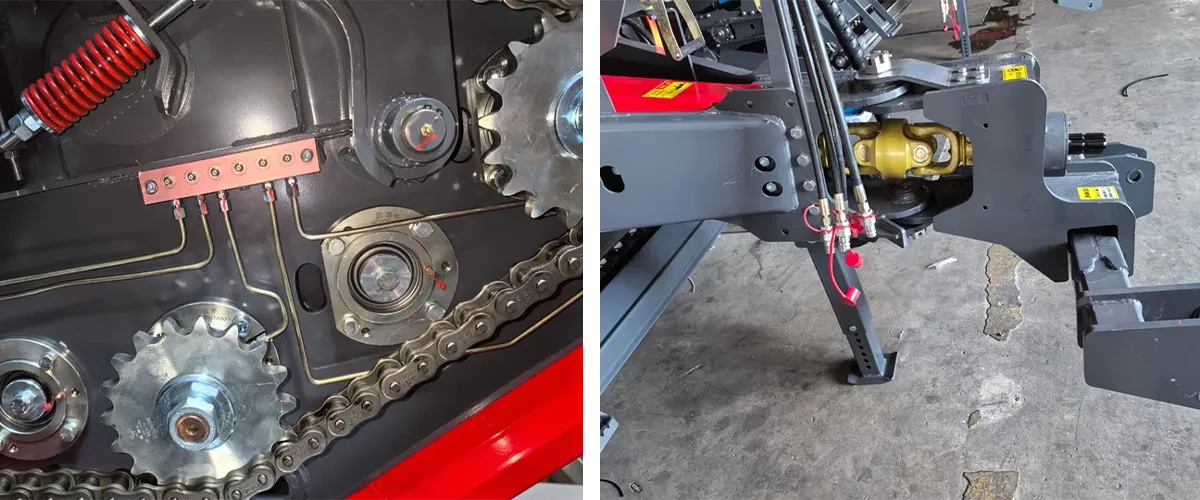
The gearbox of a round baler machine in continuous wheat straw service is a precision mechanical assembly in a thermally and chemically challenging environment, and the material choices made in its construction — for the gear blanks, the bearing races, the shaft materials, and the housing alloy — determine its service life under the combined stresses of sustained high-torque operation, elevated temperature, and the vibration transmitted from the straw feed mechanism. Understanding these material choices helps large-farm operators evaluate whether the round baler machine gearbox they are specifying will last the 5–8 years of continuous straw season service they need from their capital investment.
The gear blanks in a high-specification round baler machine gearbox are machined from case-hardening steel — typically 20CrMnTi or equivalent alloy — that is carburised and hardened to produce a surface case of 58–62 HRC hardness over a tough, lower-hardness core. This combination of surface hardness and core toughness is specifically designed to resist the two primary gear tooth failure modes: pitting fatigue at the tooth contact surface, driven by the Hertz contact stress between mating teeth at high torque; and bending fatigue at the tooth root fillet, driven by the cyclic bending stress that tooth loading creates at the fillet radius. For a round baler gearbox running at 720 r/min input across 300 hours of wheat straw campaign per season, the gear tooth mesh at the input stage accumulates approximately 12.96 million load cycles per season — comfortably within the high-cycle fatigue regime that case-hardened gear steels are specifically designed to endure.
Roller bearings in the round baler gearbox must accommodate both the radial loads from gear tooth mesh forces and the axial loads from helical gear thrust, while maintaining accurate shaft positioning under the sustained thermal expansion that long operating sessions produce. Chrome steel bearing rings (100Cr6 or equivalent) at 60–66 HRC provide the combination of hardness and fracture toughness needed for this duty. In continuous wheat straw operation, the bearing grease or oil supply must maintain adequate viscosity at the elevated operating temperatures to prevent metal-to-metal contact in the rolling element raceways — a condition that produces surface smearing and rapid bearing degradation. Using a high-viscosity-index (VI above 150) gear oil rated for the maximum expected operating temperature ensures the gearbox oil film remains adequate across the full range of ambient temperatures encountered in Korean summer straw campaigns.
| Gearbox Component | Material / Treatment | Wheat Straw Relevance | Inspection Interval |
|---|---|---|---|
| Gear blanks | 20CrMnTi case-hardened, 58–62 HRC surface | High-cycle pitting and bending fatigue resistance at 720 r/min | Visual at each oil change; chip analysis recommended |
| Shaft material | 42CrMo4 alloy steel, induction hardened at journals | Sustained torsion under full-load straw feed cycle | Check run-out after 300 h continuous use |
| Roller bearings | 100Cr6 chrome steel, 60–66 HRC | Combined radial (mesh) and axial (helical thrust) load | Temperature check first 2 h of each session |
| Housing alloy | GG25 grey cast iron or equivalent aluminium alloy | Thermal mass and conduction for heat dissipation | Check seals and vent filter monthly in season |
| Gear oil | API GL-4 or GL-5, VI above 150, synthetic or semi-synthetic | Sustained film at elevated temperature; EP additive protection | Change at end of straw season (100–150 h max in continuous use) |
6. PTO Speed, Torque Peaks, and Overload Protection in Wheat Straw Operations
All 9YG round baler series models are rated for 720 r/min PTO input, and maintaining full PTO speed throughout continuous wheat straw operations is more important than many large-farm operators realise. The instinct to reduce tractor engine speed as a fuel-saving measure in light windrow sections is counterproductive in wheat straw baling because the pickup tine speed at less than rated PTO rpm drops below the crop factor threshold for clean material lifting, causing the spring tines to push windrow material forward rather than sweeping it cleanly into the feed zone. This results in accumulation of straw ahead of the pickup that then enters as a slug when the tractor speed naturally increases — generating the exact torque spike at the gearbox input that the design was dimensioned to tolerate only intermittently rather than repeatedly.
Torque peaks in continuous wheat straw operations arise from several distinct sources. Windrow density variation — even in well-formed wheat straw windrows, the volume of material per linear metre varies by 30–60% between the lighter headrow sections and the dense centre-field swaths — generates torque variation at the compression roller drive shaft that propagates to the gearbox output. Bale formation transitions — particularly the moment when the bale is approaching full diameter and the compression resistance builds rapidly — create brief but high torque events at the output as the hydraulic density control system reaches its set-point pressure. And pickup encounters with clumped material or stem bundles that have compacted at windrow intersections create the impulsive torque events that produce the highest instantaneous gearbox input loads of the operational day.
The safety torque shaft on the 9YG-2.24D S9000 Transcend variant — a dual cross-joint drive shaft design with an integrated slip-element torque limiter — is the mechanical response to this variety of torque peak sources. When any of the above events generates a torque spike exceeding the set threshold, the slip element decouples momentarily, absorbing the peak without transmitting it to the gear mesh. The gearbox teeth and input shaft bearing, which would otherwise accumulate a fatigue loading event at each torque peak, receive instead a near-normal loading transition because the limiter has clipped the spike. For a large-farm round baler machine accumulating 300–400 hours of straw season service per year and encountering hundreds of torque peak events per day, this protection translates into a measurably extended gearbox service life compared to an equivalent machine without overload protection.
7. Hydraulic Integration with the Gearbox Under Sustained Straw Load
The round baler machine gearbox and its hydraulic system are mechanically distinct but functionally interdependent in continuous wheat straw operations, because the hydraulic density control system directly determines the compressive load that the compression rollers impose on the bale — and therefore the torque that the roller drive shaft draws from the gearbox output. When the density control circuit is set to the high pressure needed for dense, specification-compliant wheat straw bales (typically 140–180 bar on the density control circuit), the roller drive torque requirement is significantly higher than at the lower pressures used for light forage applications. A gearbox that is thermally adequate at 100 bar hydraulic back-pressure may run noticeably hotter at 170 bar, and this interaction must be considered when specifying both the gearbox service schedule and the hydraulic fluid change interval for large-farm wheat straw operations.
The H-type hydraulic fitting on the Transcend round baler variant of the 9YG-2.24D round baler simplifies the tractor coupling process during multi-tractor operations — common on large Korean wheat farms where the round baler may switch between tractors of different makes across the course of the straw campaign. Standardised H-type couplings reduce the risk of coupling errors that can introduce air into the hydraulic density control circuit, which would cause the hydraulic density system to deliver inconsistent compression pressure. Inconsistent compression pressure in turn causes bale-to-bale density variation that not only affects straw bale quality but also produces the irregular torque loading on the gearbox output shaft that accumulates into accelerated fatigue damage over a high-volume straw season.
The hydraulic float sub-circuit that controls pickup height is a less obvious but important hydraulic-gearbox interaction point in wheat straw operations. Wheat straw windrows often lie at varying heights due to the combine’s straw chopper setting and wind-driven redistribution of material. A pickup float set too stiff for the windrow variation will contact the soil surface on downslope sections, incorporating soil and stones into the crop stream that then pass through the feed zone and enter the compression chamber as abrasive contamination. Soil-contaminated bales have lower buyer acceptance in the Korean straw market, and the abrasive soil particles accelerate wear on the compression rollers and the feed zone surfaces that connect mechanically to the gearbox output. Maintaining the round baler pickup float at the lightest effective setting simultaneously protects bale quality and gearbox-connected component longevity in large-farm wheat straw work.
8. Bale Density Control and Its Relationship to Gearbox Loading in Wheat Straw
The density specification required for wheat straw round baler bales in Korean large-farm applications is driven primarily by transport economics: a denser bale contains more dry matter per bale, reducing the number of transport trips per tonne delivered to the end user — whether that end user is a livestock feed market, a mushroom cultivation substrate supplier, a biomass energy facility, or a bedding materials distributor. Korean wheat straw bale buyers in the commercial market typically expect dry matter densities of 130–180 kg/m3 for round bales destined for commercial distribution, with the higher end of this range commanded by bales sold to biomass pelleting facilities that need maximum dry matter per transport unit.
| End-Use Market | Target Density | Gearbox Pressure Load | Notes |
|---|---|---|---|
| Livestock bedding (cattle) | 100–130 kg/m3 | Low (100–130 bar) | Lower gearbox thermal load; higher throughput rate |
| Mushroom cultivation substrate | 120–150 kg/m3 | Moderate (130–155 bar) | Mid-range gearbox output torque |
| Biomass energy / pelleting | 150–180 kg/m3 | High (155–180 bar) | Maximum gearbox thermal load; prioritise oil cooling |
| Export compressed straw block | 160–200 kg/m3 | Very high (170–190 bar) | Shortened gearbox oil interval mandatory at these pressures |
The sensor-controlled hydraulic density management system on all 9YG round baler models measures bale growth through a star-wheel position sensor and regulates the compression circuit pressure to maintain the operator-set density target. In high-density applications such as biomass pelleting supply (150–180 kg/m3), the gearbox output shaft runs at sustained high torque corresponding to the elevated hydraulic back-pressure, and the oil temperature must be monitored more carefully than at lower density settings. For large-farm round baler operations at high density targets, manage the gearbox oil more intensively — monitoring temperature at the gearbox housing surface after the first two operating hours of each day, and shortening the oil change interval from the standard seasonal recommendation to a campaign-midpoint change if temperatures consistently approach or exceed 90 degrees C at the housing surface.
9. Round Baler Models for Large-Farm Continuous Wheat Straw Operations
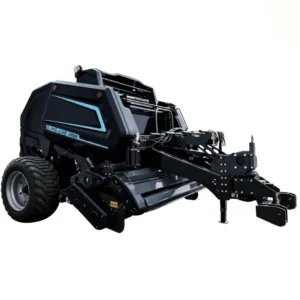
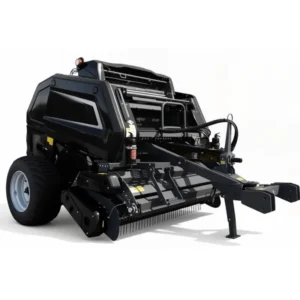
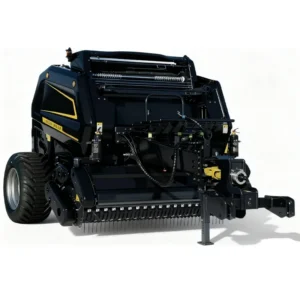
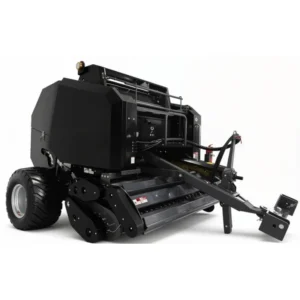
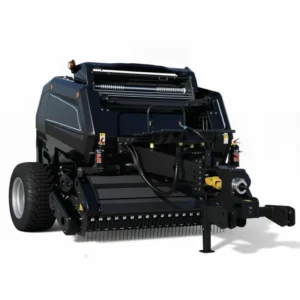
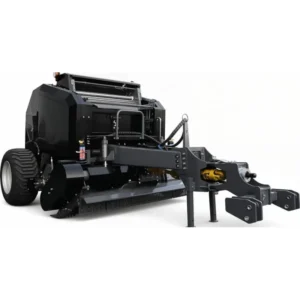
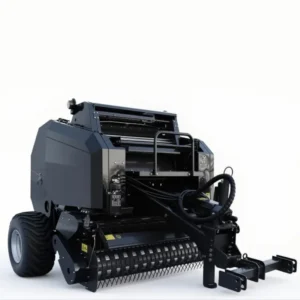
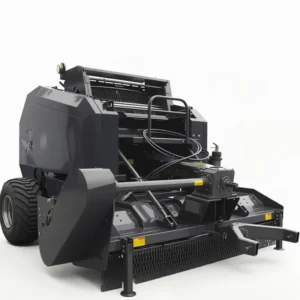
The following round baler models are matched to the range of large-farm wheat straw operational scales — from multi-tractor cooperative straw campaigns on Korea’s largest grain-producing farms to smaller dedicated straw baler units for single-farm continuous operations.
10. Regulatory Standards Governing Round Baler Gearboxes in Key Markets
The round baler gearbox and its associated driveline are subject to safety and performance standards in each of the major markets where large-farm wheat straw operations occur. These regulations govern the rated capacity marking, guarding requirements, oil specification documentation, and overload protection provisions that the gearbox must meet. For Korean large-farm operators purchasing or specifying a round baler machine for continuous wheat straw operations, understanding which standards apply to both the machine and its gearbox ensures that the investment is compliant with national machinery safety requirements and eligible for the subsidy programmes that make major equipment purchases more accessible.
Korea
In South Korea, round baler machines must comply with the Act on the Promotion of Agricultural Mechanisation (농업기계화 촉진법) and hold a valid Agricultural Machinery Performance Test Certificate (농업기계 성능검정서) from the Rural Development Administration (RDA) to qualify for MAFRA equipment purchase subsidies covering 30–50% of the purchase price. The performance test certification specifically evaluates the round baler gearbox under rated torque conditions, confirming that the gearbox can sustain its rated input torque without overheating or developing excessive tooth contact noise — two indicators of inadequate gear margin that would manifest as premature failure in a large-farm continuous straw campaign. Korean standard KS B 1521 governs the performance testing of agricultural machinery gearboxes, and KS B ISO 4413 covers the hydraulic system safety requirements including the density control circuit that interacts with gearbox loading as described earlier in this guide.
European Union
EU Machinery Directive 2006/42/EC, transitioning to EU Machinery Regulation 2023/1230 from January 2027, requires CE marking for round baler machines and their integral gearboxes. European standard EN 1553 specifically covers agricultural machinery gearboxes and specifies requirements for rated torque labelling, vent system design, fill and drain plug accessibility, oil level indication, and PTO shaft guard integration. The EN 1553 standard is particularly relevant to large-farm continuous wheat straw applications because it addresses the vent system design that prevents pressure build-up from the elevated oil temperatures of sustained operation — a safety requirement that also has direct relevance to gearbox longevity. EN ISO 4413 covers the hydraulic system, and its requirements for filter ratings and contamination control levels are relevant to the hydraulic density control circuit’s interaction with gearbox loading as described in this guide.
United States
ASABE Standard ASAE S430 covers the safety of tractor-powered implement drivelines including the PTO shaft that connects the tractor to the round baler gearbox. For large-scale wheat straw operations in the US Plains states where round baler gearboxes face continuous duty requirements comparable to those described for Korea, OSHA 29 CFR 1928 establishes the agricultural machinery guarding requirements that ensure the driveline safety in high-cycle commercial operation. The ASABE Engineering Practice EP408 provides specific guidance on PTO driveline operating angle limitations that are directly relevant to the gearbox bearing fatigue discussion in Section 3 of this guide.
Russia and CIS Markets
Round baler gearboxes exported to Russia, Kazakhstan, and other CIS countries must carry the EAC mark under Technical Regulation TR CU 010/2011 on the safety of machinery and equipment. The TR CU technical requirement for gearbox rated torque documentation, oil specification marking, and overload protection features aligns substantially with the EN 1553 requirements, reflecting the harmonisation effort undertaken through the EAC framework. For Korean manufacturers and traders supplying round baler machines to these markets for wheat straw applications, EAC Declaration of Conformity documentation for the gearbox is a specific requirement of the import clearance process in addition to the product-level EAC certificate.
| Region | Machinery Standard | Gearbox-Specific Standard | Large-Farm Straw Note |
|---|---|---|---|
| Korea | Agricultural Mechanisation Act / KS B ISO 4413 | KS B 1521 gearbox performance testing | MAFRA subsidy requires RDA Performance Test Certificate |
| EU | Machinery Directive 2006/42/EC / EN ISO 4413 | EN 1553 agricultural gearbox standard | Vent design requirement critical for continuous-duty straw |
| USA | ASABE S430 / OSHA 29 CFR 1928 | ASABE EP408 PTO angle limits | PTO angle limit directly affects gearbox bearing life |
| Russia / CIS | TR CU 010/2011 / EAC mark | EAC Declaration of Conformity for gearbox | Separate gearbox DoC required for import clearance |
| International | ISO 4413:2010 / ISO 11684 | ISO 4413 hydraulic system including density control | Contamination control level for density circuit oil |
11. Gearbox Maintenance Protocol for Large-Scale Wheat Straw Campaigns
The gearbox maintenance protocol for a round baler machine in large-farm continuous wheat straw service must be adapted from the standard annual schedule that applies to moderate-duty farm baling. Given the elevated oil temperatures, higher duty cycle, and greater annual hour accumulation of commercial straw operations, the standard annual oil change — which may be adequate for a machine accumulating 50–80 hours per year in hay baling — is entirely inadequate for a machine accumulating 300–400 hours in a concentrated 6–8 week straw campaign. Applying the annual schedule to a commercial straw baler is the single most common cause of premature gearbox bearing failure and gear surface pitting that forces expensive mid-season repairs at the worst possible time — during the narrow post-harvest window when every operating day has high economic value.
The pre-campaign gearbox check is the most important maintenance event for a large-farm straw round baler machine. Before the first day of the straw campaign, the gearbox oil should be drained and inspected for the dark discolouration, suspended particle content, and petroleum-burnt odour that indicate the previous campaign’s oil has undergone significant oxidation. Fresh oil should be filled to the correct level using the manufacturer-specified grade (API GL-4 or GL-5, with VI above 150 for high-temperature straw applications). All gearbox shaft oil seals should be visually inspected for weeping oil — even a minor seal leak becomes a rapid oil loss at sustained operating temperatures, and a gearbox that loses oil level mid-campaign without the operator noticing will suffer severe gear and bearing damage. The vent filter — which prevents dust and straw chaff from entering the gearbox while allowing the internal pressure equalisation that prevents seal blowout — should be inspected for blockage and replaced if there is any doubt about its permeability.
During the straw campaign, a daily temperature check of the gearbox housing at the standard monitoring point (typically the outer face of the housing between the two output shaft positions) provides a quick indication of whether the oil is maintaining adequate viscosity. A housing temperature consistently above 70–75 degrees C at the monitoring point suggests that the operating temperature inside the housing is approaching or exceeding the oil’s rated maximum, and the oil change interval should be brought forward. Housing temperature checks should be performed after the first two hours of morning operation when the gearbox has reached thermal equilibrium for the day’s conditions — not during a cold start or immediately after a period of very low-load operation such as transport between fields.
Large-Farm Wheat Straw Round Baler Gearbox Maintenance Schedule
Pre-Campaign (before first straw day)
- Drain and inspect previous oil — discard if oxidised
- Fill fresh API GL-4 or GL-5, VI above 150
- Inspect all shaft seals for weeping
- Check and replace vent filter if blocked
- Verify gearbox mounting bolts torqued to specification
- Confirm safety torque shaft slip element engages correctly
Daily During Campaign and End-of-Season
- Check gearbox housing temperature after 2 h operation
- Inspect oil level daily — refill immediately if low
- Listen for gear noise change after dense windrow encounters
- Change oil at 100–150 h or if temperature exceeds 90 degrees C at housing
- Post-season: full drain, inspect for metallic particles, chip analysis
- Post-season: replace shaft seals if any weeping detected in-season
Frequently Asked Questions
Q1. Which round baler gearbox specification is best suited for continuous 10–14 hour per day wheat straw operations on large Korean grain farms in Gyeonggi and Jeonbuk provinces? +
Q2. What round baler machine gearbox oil specification should Korean large-farm straw contractors use during the hot summer wheat harvest season in June and July? +
Q3. How does the round baler machine safety torque shaft on the 9YG-2.24D Transcend protect the gearbox during wheat straw slug events on large Korean farms? +
Q4. Where can Korean large-farm grain cooperatives get a supplier quote for commercial round baler machines configured for continuous wheat straw baling at high tonnage targets? +
Q5. What round baler parts experience the most accelerated wear in continuous wheat straw campaigns and how should large-farm Korean contractors plan their seasonal parts inventory? +
Q6. How does the round baler machine gearbox duty cycle on a Korean large wheat farm differ from standard hay baling and why does this matter for maintenance scheduling? +
Q7. What bale density should Korean wheat straw contractors target for biomass pelleting supply contracts and how does this affect round baler gearbox thermal load? +
Q8. How does the small round baler for 40 hp tractor option compare to larger commercial models for Korean individual wheat farmers versus cooperative straw operations? +
ایڈیٹر: PXY